
Itinerary
Day 4 – This morning you will begin with a walking tour of Florence. During the time that the Medici family was powerful in this area (14th -16th centuries), Florence was at the cultural and intellectual heart of Europe. You’ll stroll along Ponte Vecchio, the beautiful old bridge lined with shops spanning the Arno. You will then proceed to the Duomo, the spiritual, geographical, and historical heart of the city.
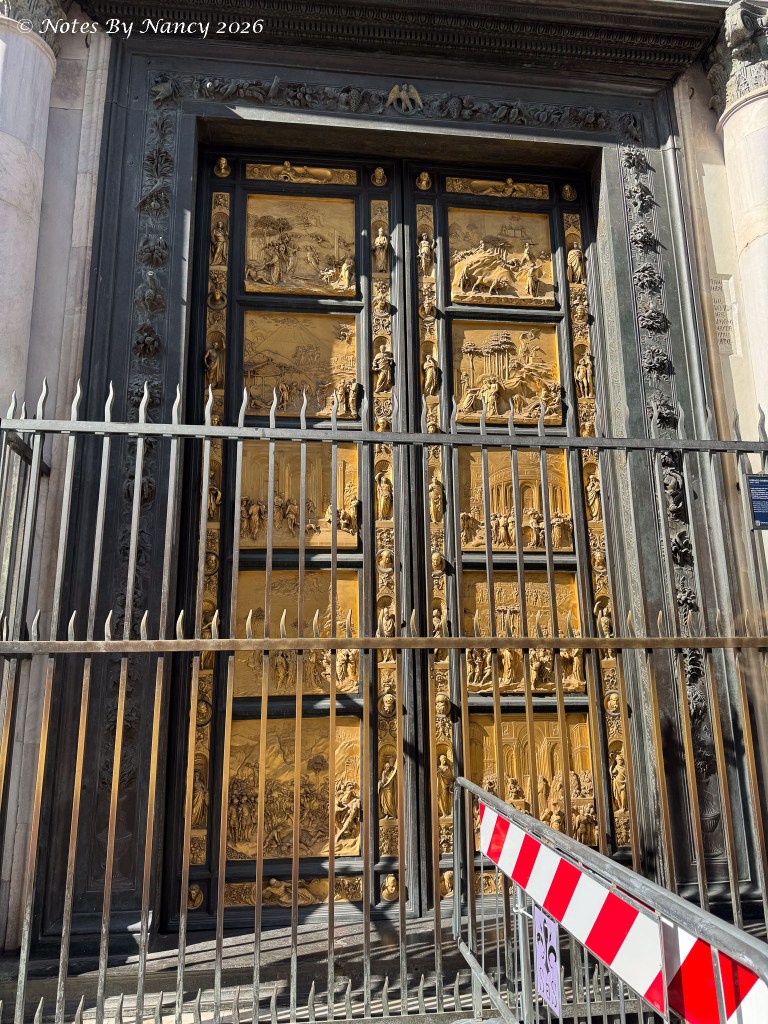
This cathedral is the fourth largest in Europe and is still the tallest building in Florence, as well as one of the oldest. You’ll see the Baptistery with its celebrated bronze doors by Pisano and Ghiberti, (Dante was baptized here), the Campanile, designed by Giotto in 1334, the great Dome by Brunelleschi and finished in 1463, as well as many other features and famous works of art at the Cathedral Works Museum near this amazing structure. From there you will visit the Academia Museum. Founded in 1563, it was the first school established in Europe specifically to teach the techniques of drawing, painting, and sculpture. The most famous work on display is Michelangelo’s David, which established Michelangelo at the age of 29 as the foremost sculptor of his time. After your visit there, you will return to the hotel to freshen up before going to dinner at a local restaurant. Overnight at your hotel.
Discovering Michelangelo’s David
We awoke to another cool day – 44 degrees Fahrenheit heading to upper 60s. After breakfast at the hotel, we all met to begin our 30-minute walk to meet our guide for the morning, Enza, outside the La Galleria dell’Accademia di Firenze – the study gallery for students of the Academy of Fine Arts. Since 1873, it has housed Michelangelo’s original David to protect it from vandals, weather, and bombs. A replica statue now resides in the original location in Piazza della Signoria.
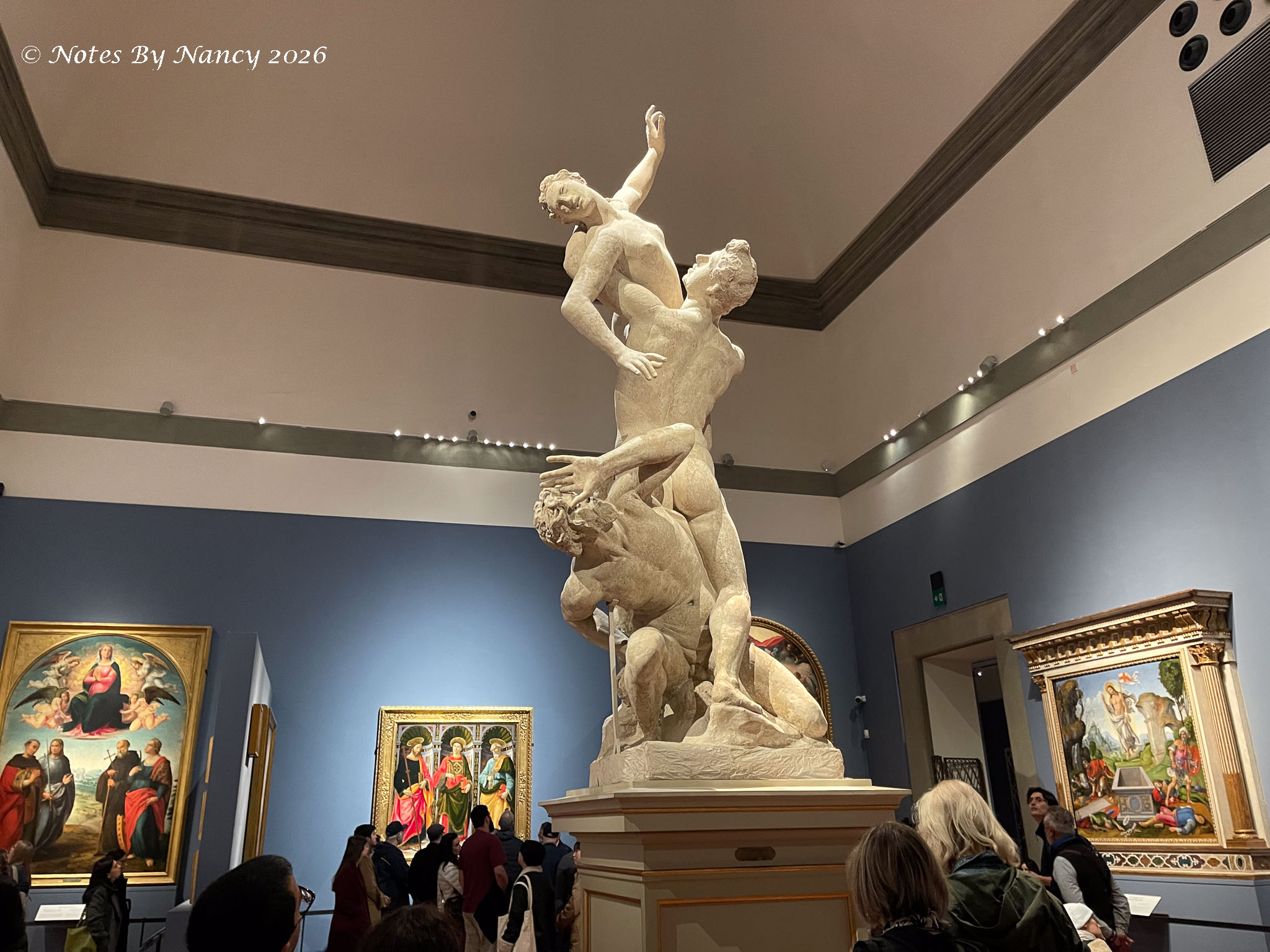
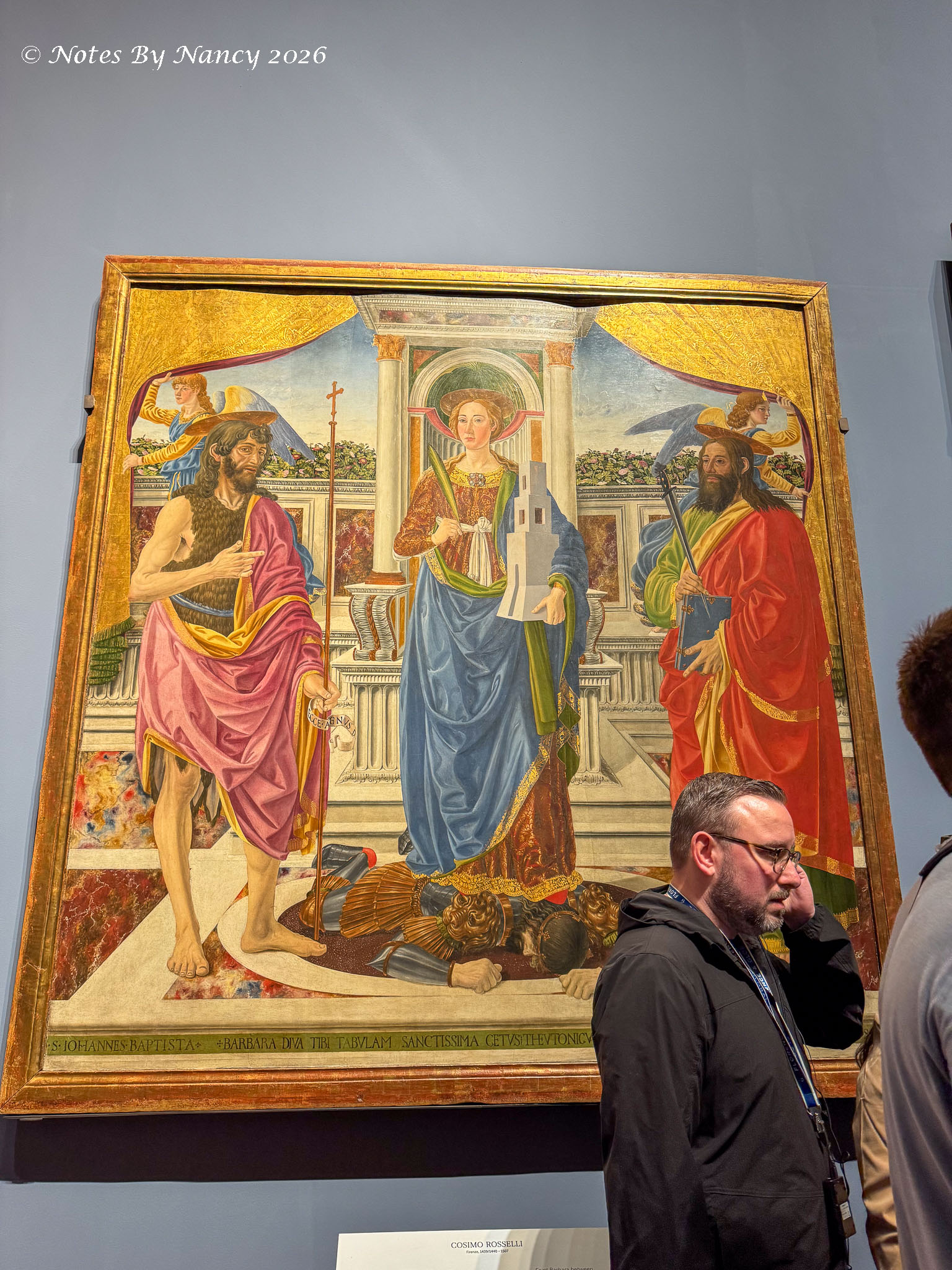
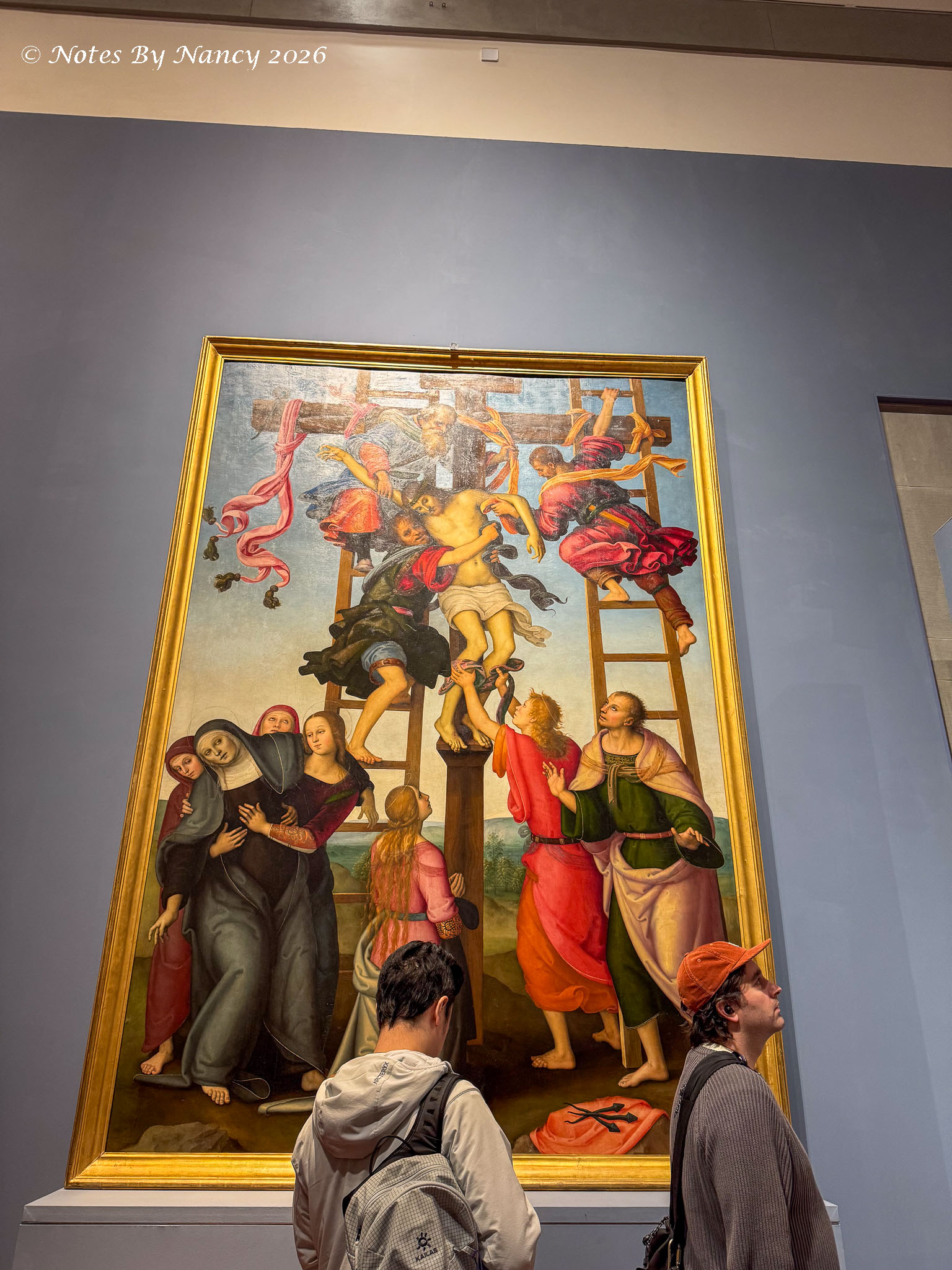
However, the first statue encountered as you enter the first gallery is a full-size unfired clay version of The Abduction of the Sabine Women by Flemish sculptor Jean de Boulogne, known in Italian as Giambologna, an official sculptor to the Medici. The final marble version (c. 1583) is in the Loggia at the Piazza della Signoria. The name of this statue is often mistranslated as The Rape of the Sabine Women. Many religious-based paintings are displayed on the surrounding walls, including Cosimo Rosselli’s Saint Barbara between Saint John the Baptist and Saint Matthias (c. 1468-70) and Deposition from the Cross by Lippo and Perugino (c. 1506) shown below.
Then you turn and enter the gallery to the left…
I have to say when you enter the hall and see the statue looming above the crowds at the end of the gallery, it does nearly take your breath away. Having seen countless pictures, I was not prepared for the effect of seeing the David in person. And this picture doesn’t capture the awe, either, but here you go!
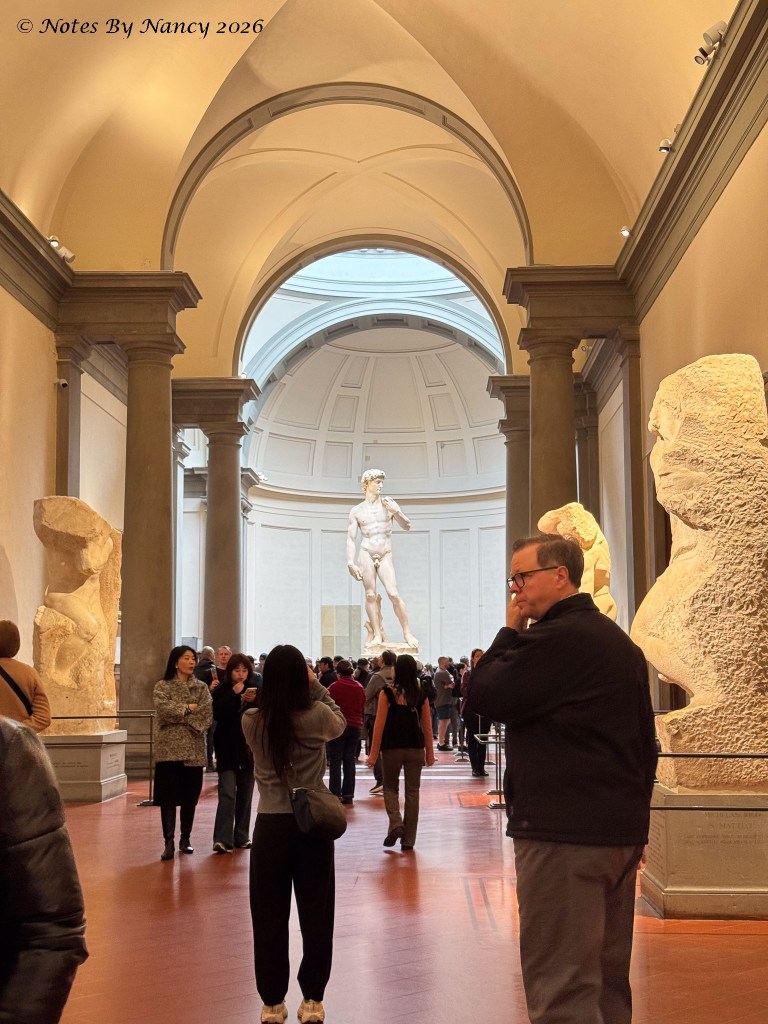
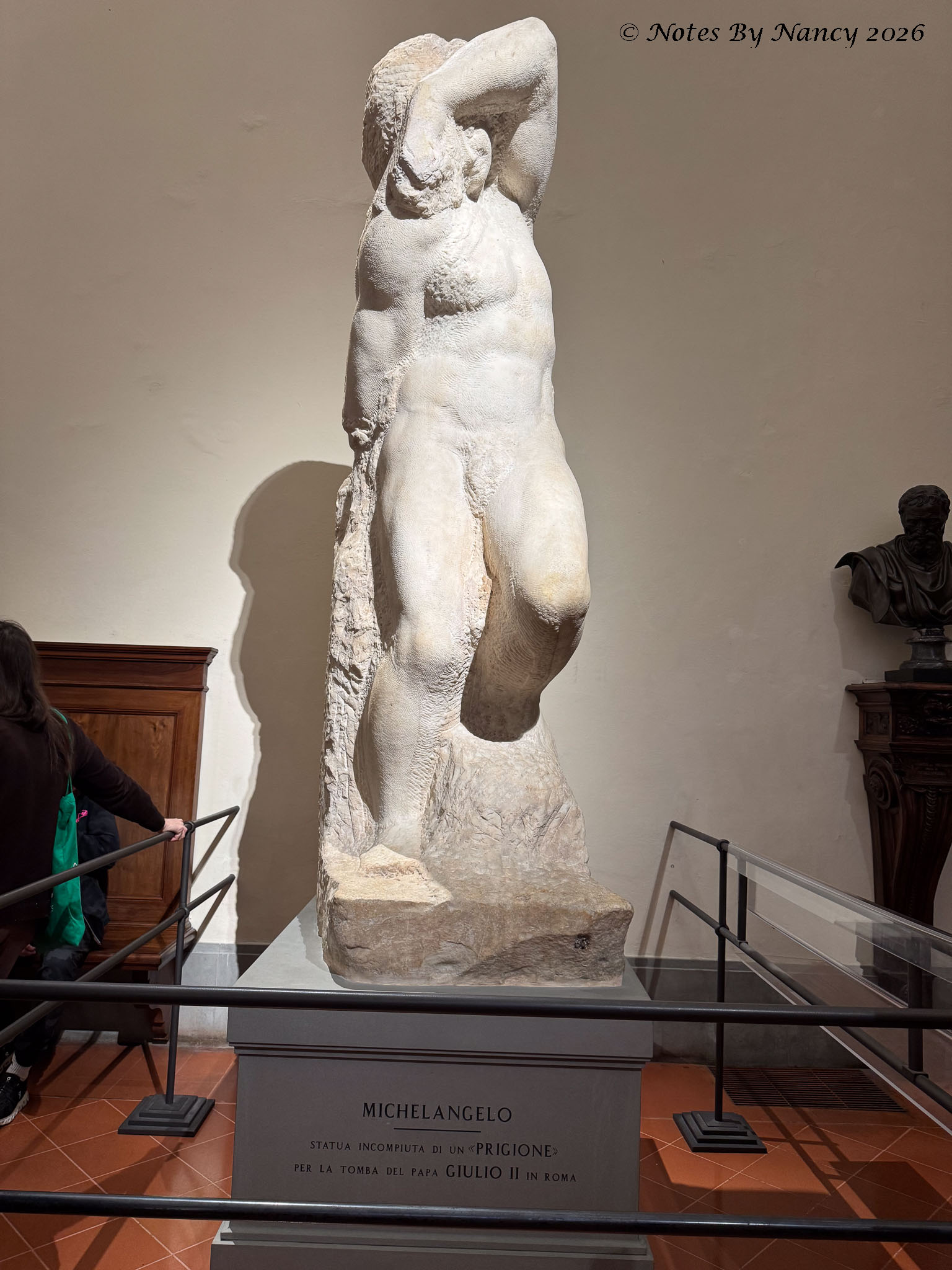
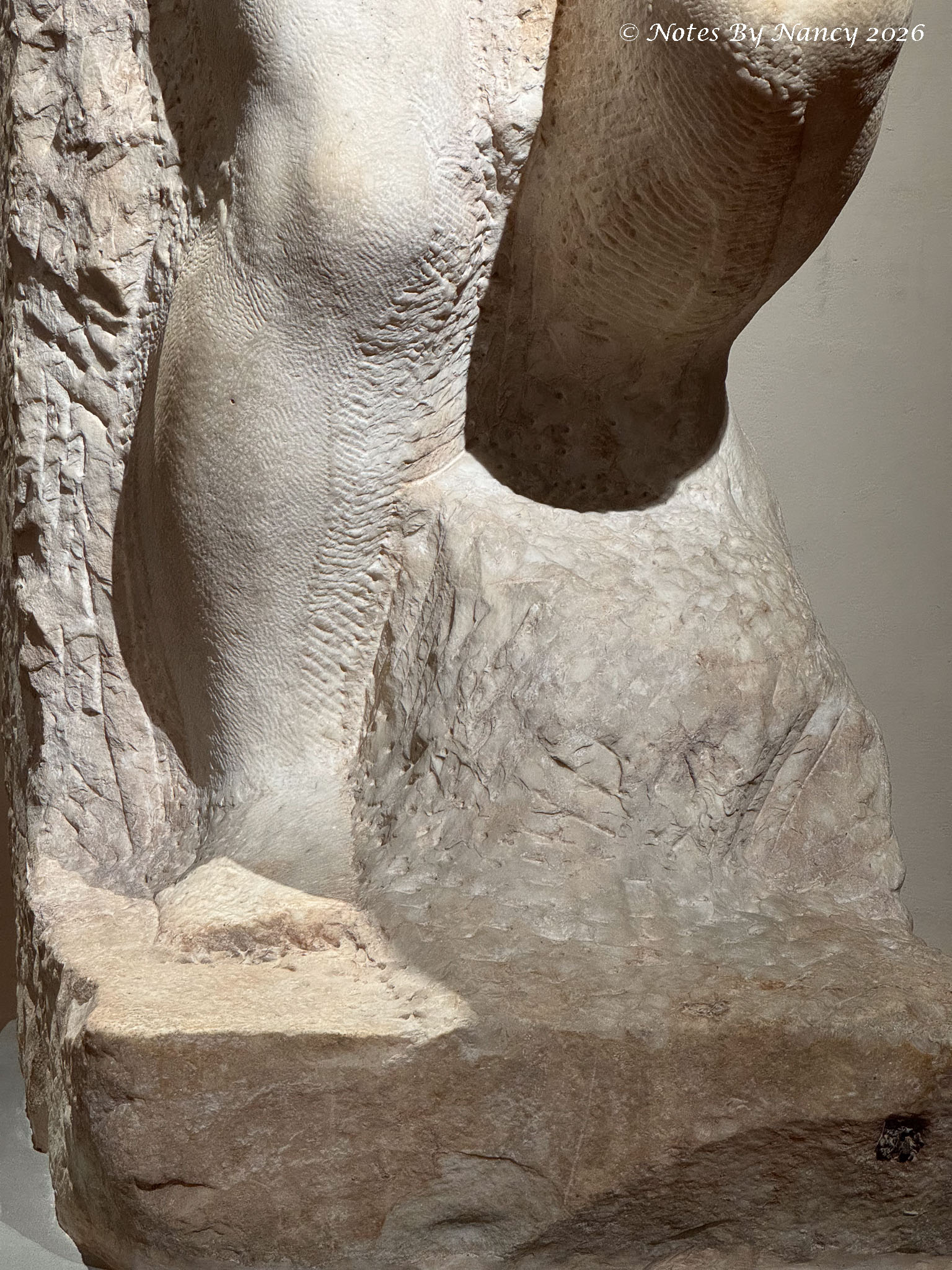
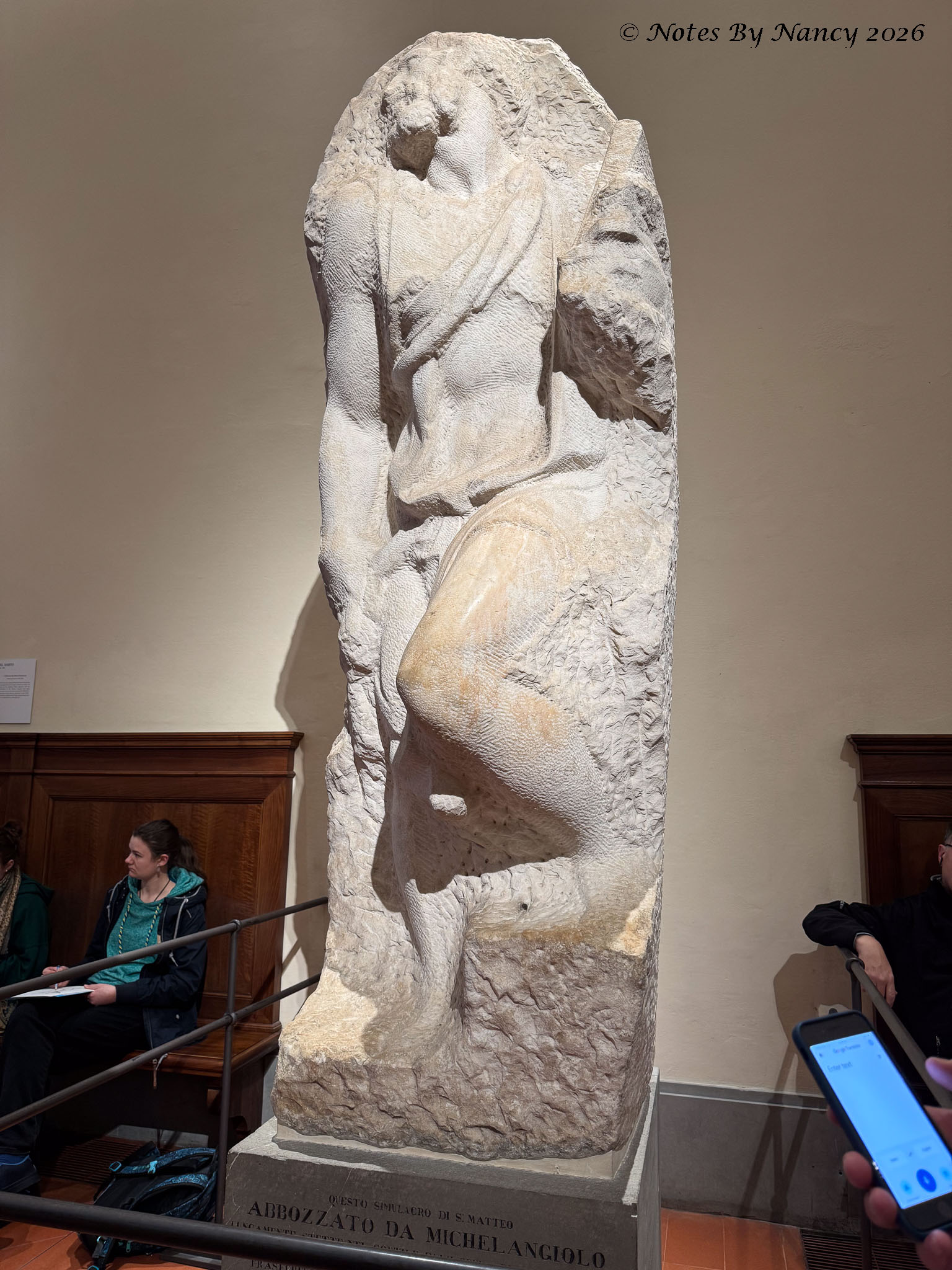
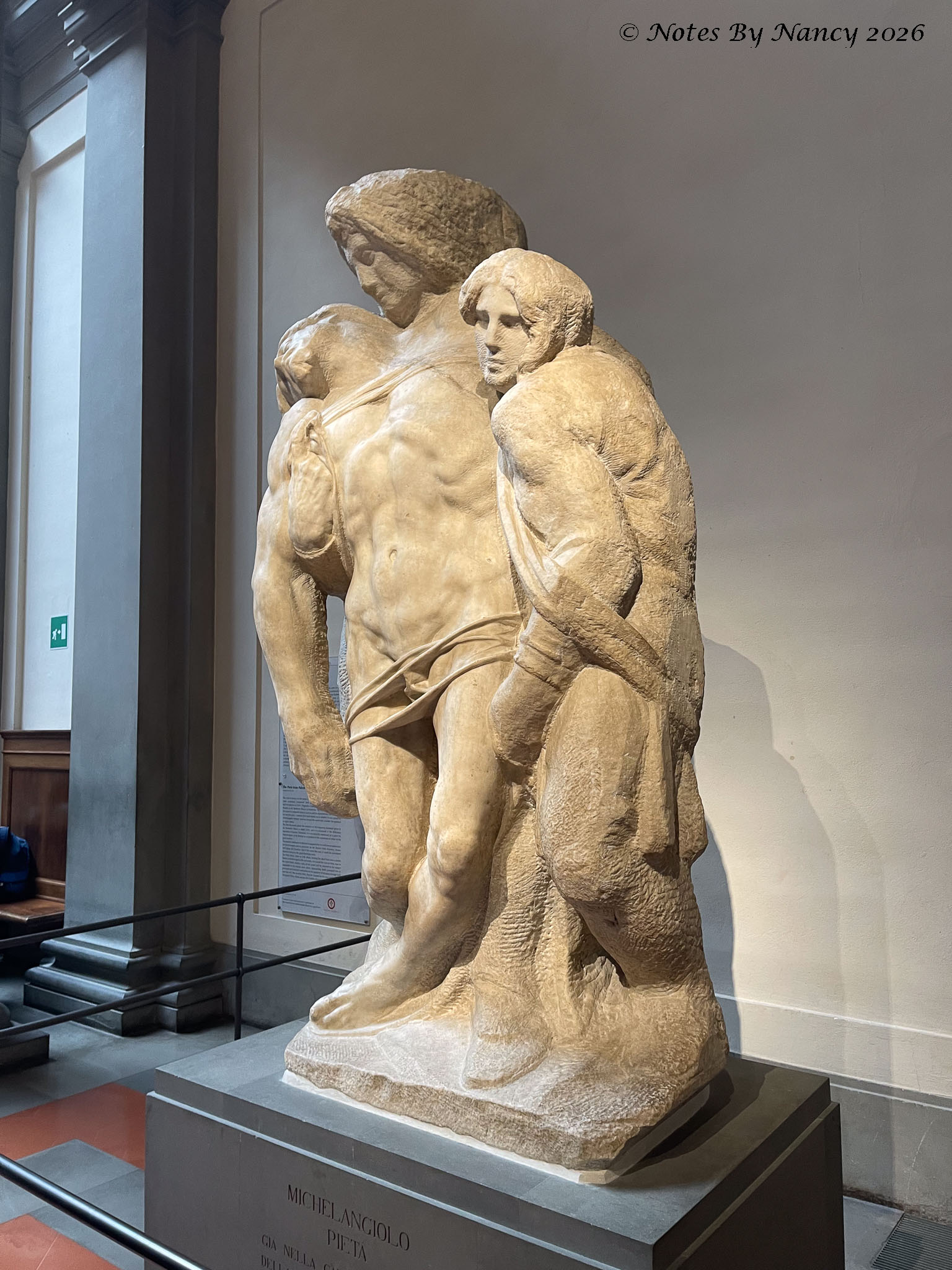
However, before approaching up close, there are several other Michelangelo works – most intended for Pope Julius II’s tomb until he changed his mind about needing a grand tomb and requested the ceiling of the Sistine Chapel be painted instead. Merica explained to us the processes and tools used to chisel away the marble and reach the final presentation.
But your eyes just keep getting drawn to the end of the gallery to what is probably the most famous sculpture in the world.
Then, seeing David up close – the piercing, determined eyes, the muscular torso, the veins in the arms and neck, etc. etc. etc. – and realizing this exquisite image emerged from a block of marble – not something molded. It is simply amazing. While the 13-foot body is perfectly polished, the sling he holds has been left rough resembling leather and the 3-foot tree stump behind his right leg looks like you could peel the bark off. Again, I’m including pictures – but you really do have to see it in person to fully appreciate it.
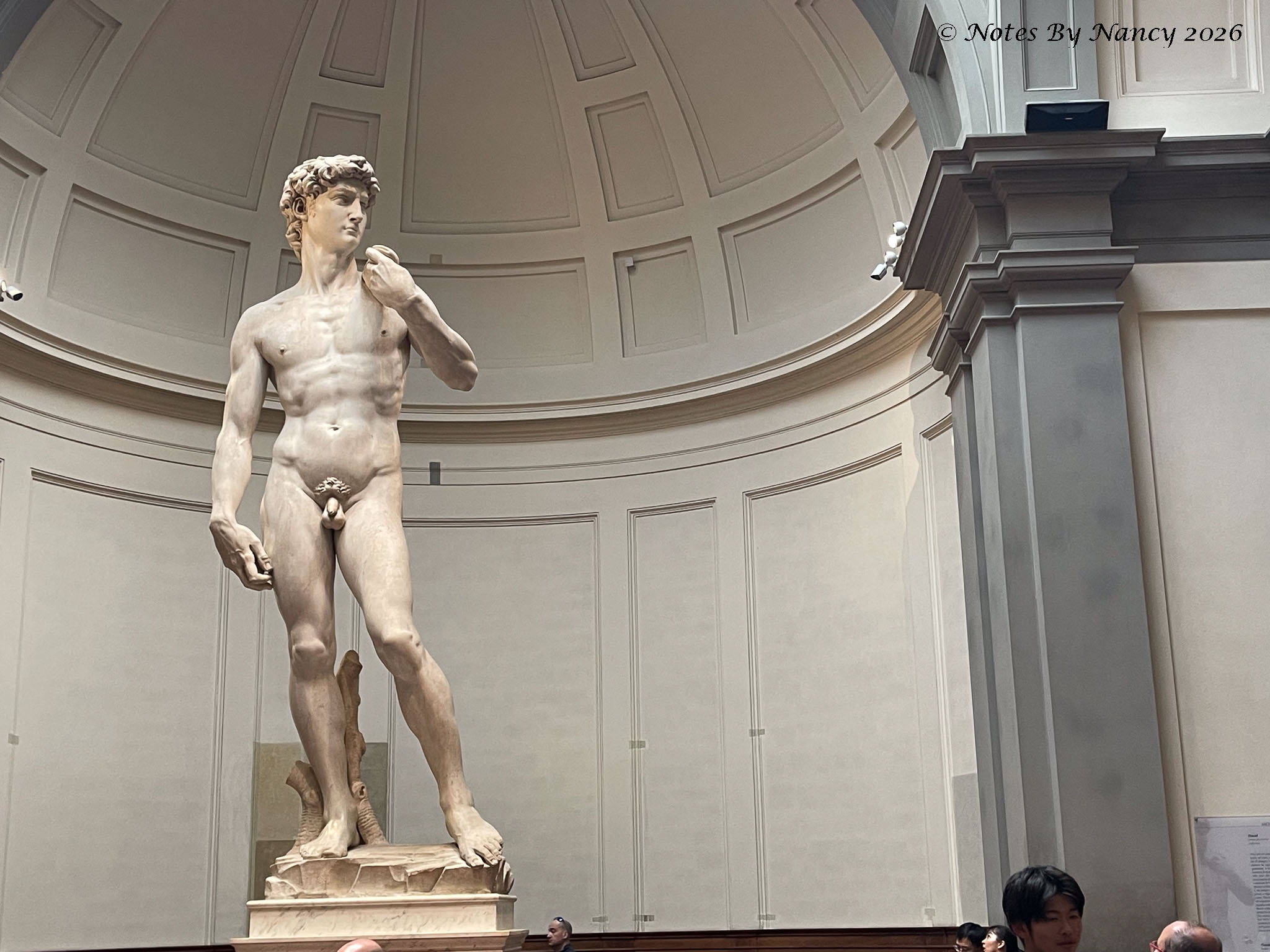
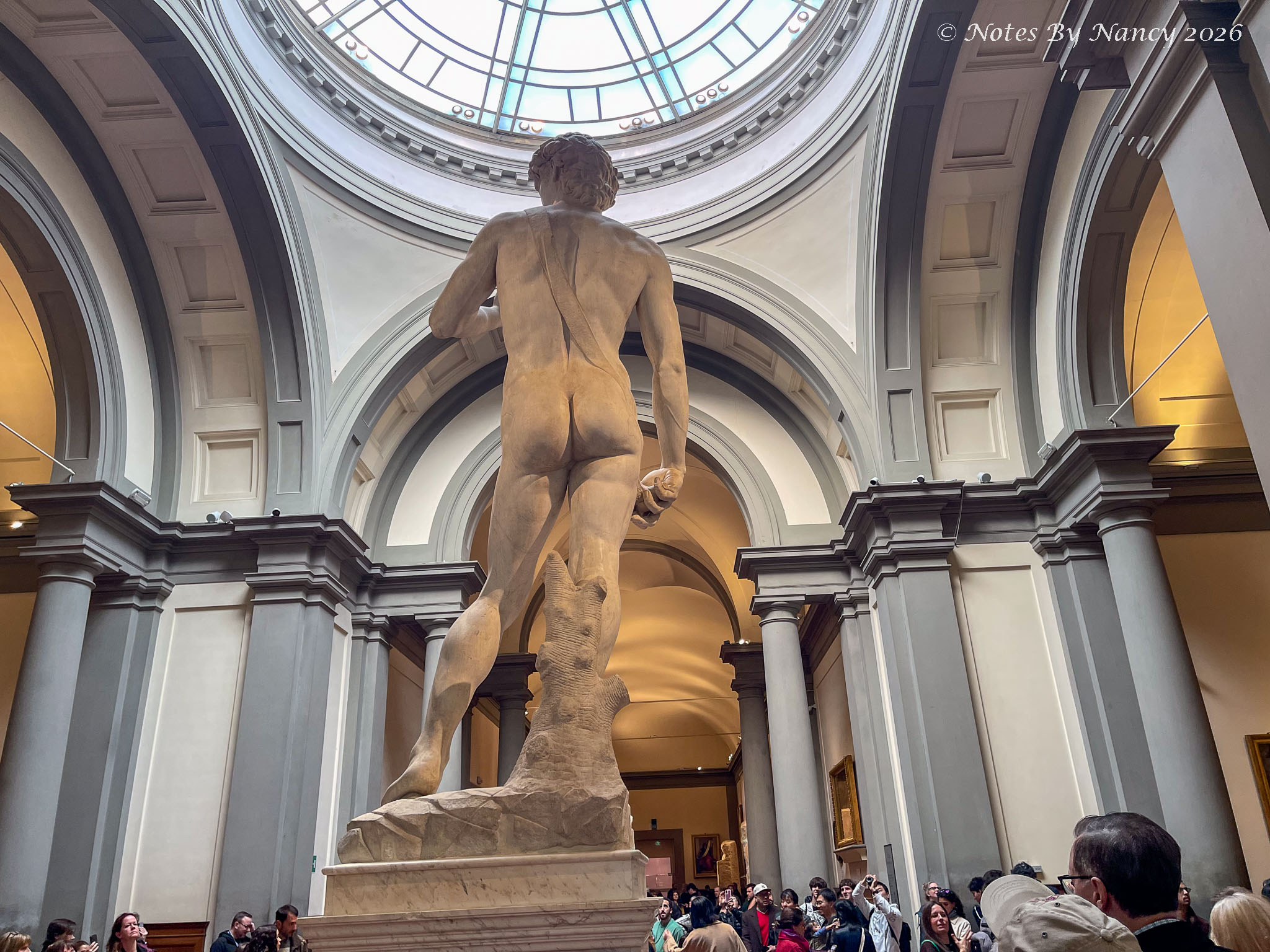
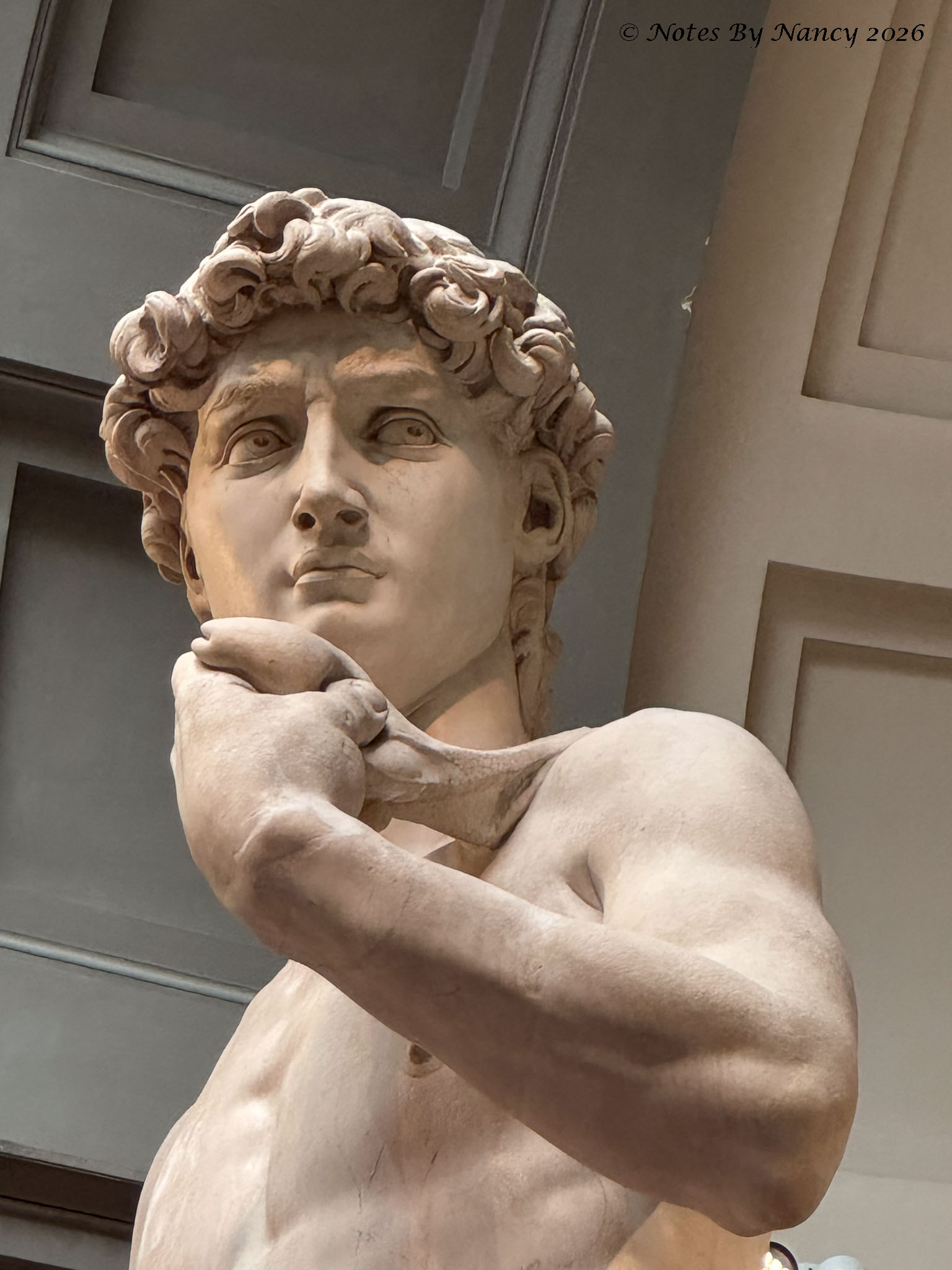
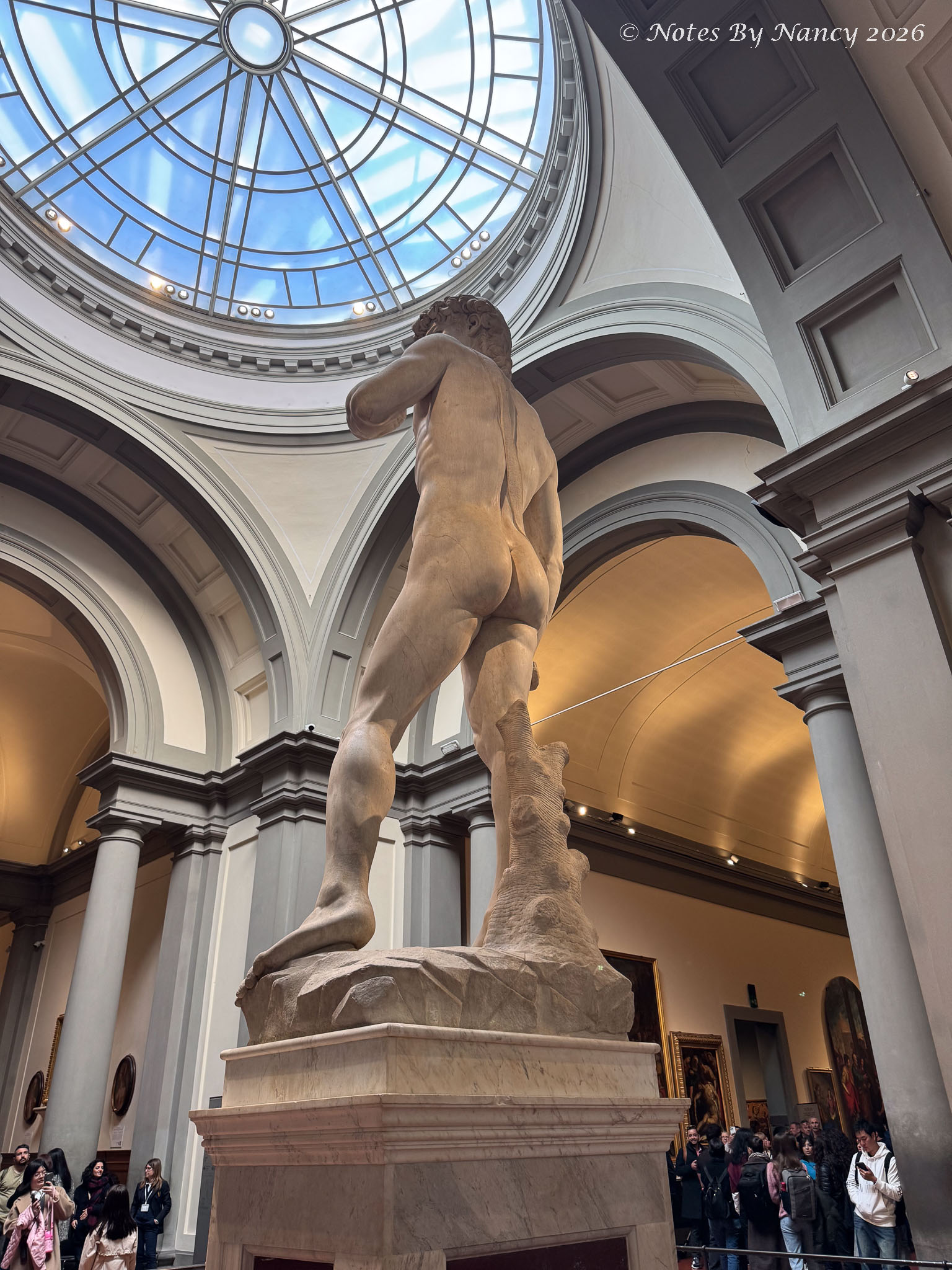
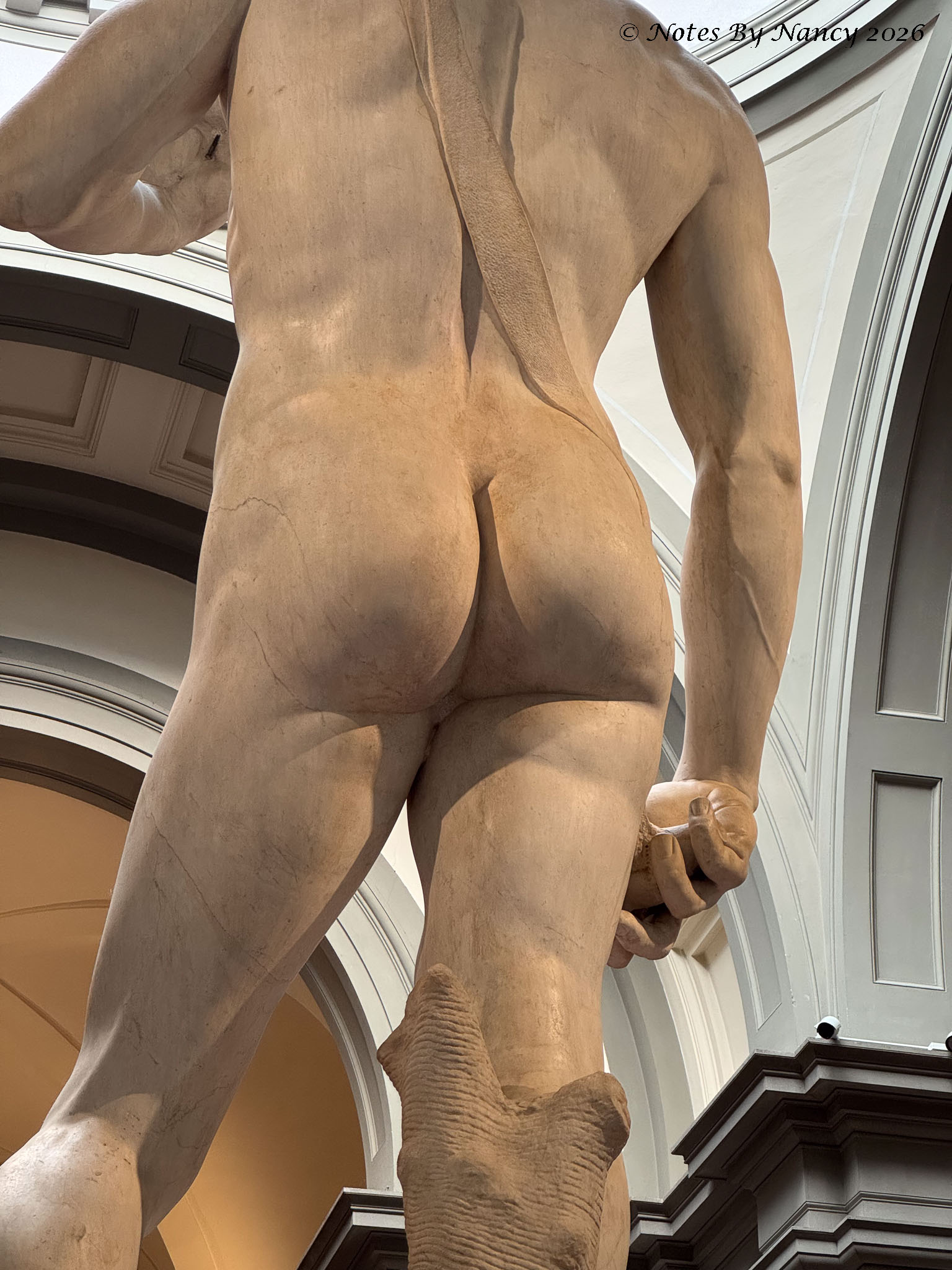
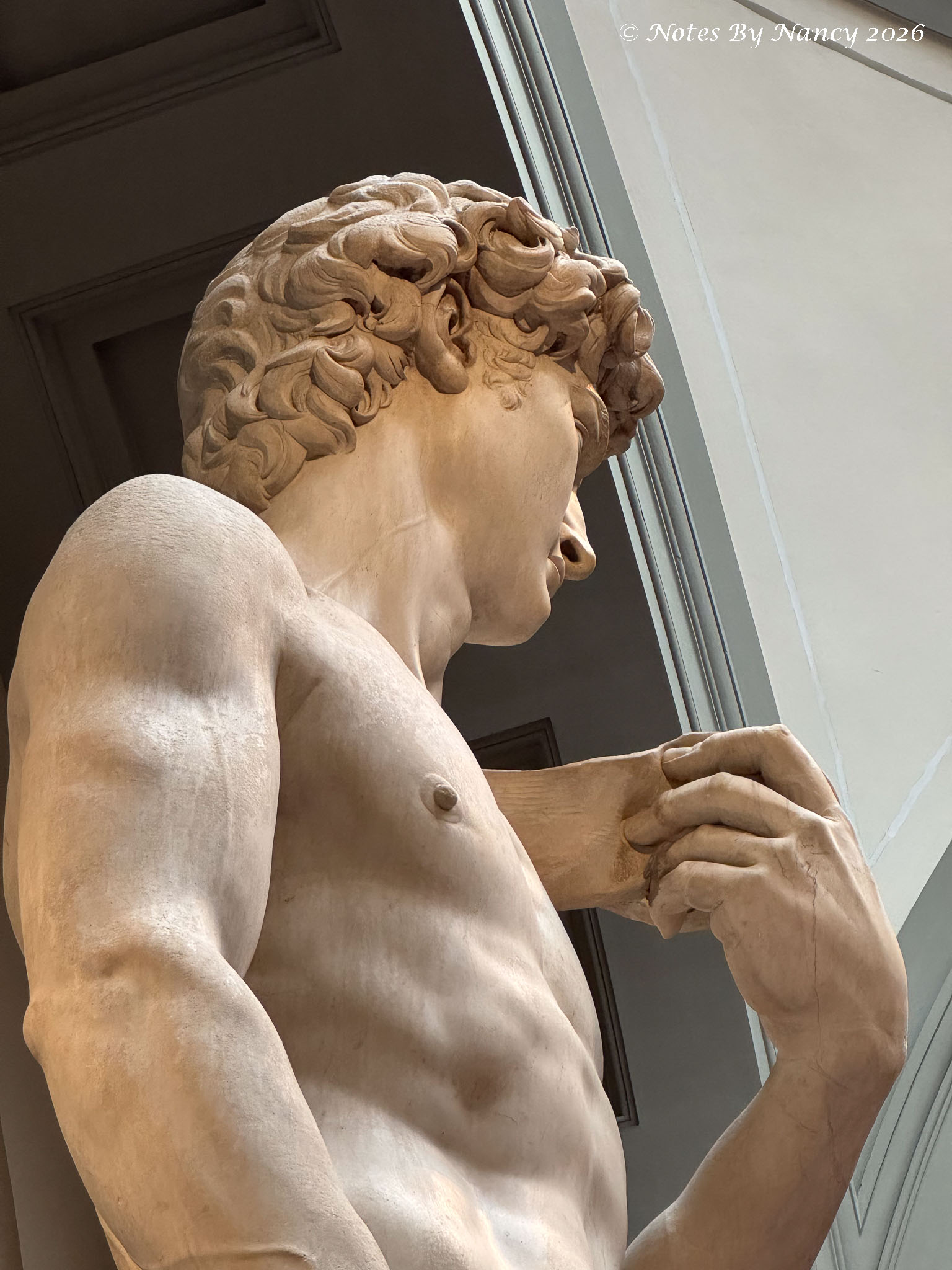
Enza also explained that this is not meant to be the literal David for many reasons, among them – representations of real people included clothing; David was a young teenager when he confronted Goliath, not the grown man seen in the statue. There is a disconnect in proportions – especially the hands – because the statue was originally planned to be placed on the cathedral roof and the perspective when viewed from that distance and angle it would have appeared proportional. However, the statue ended up placed at the entrance to the Palazzo Vecchio as a political statement of the small Florentine republic’s resolve when facing stronger rivals.
Gipsoteca Bartolini
This “Hall of Models” recreates the 19th century studio of Lorenzo Bartolini who taught at the Academy. It includes over 250 plaster cast models by Bartolini, his pupil Luigi Pampaloni, and others.
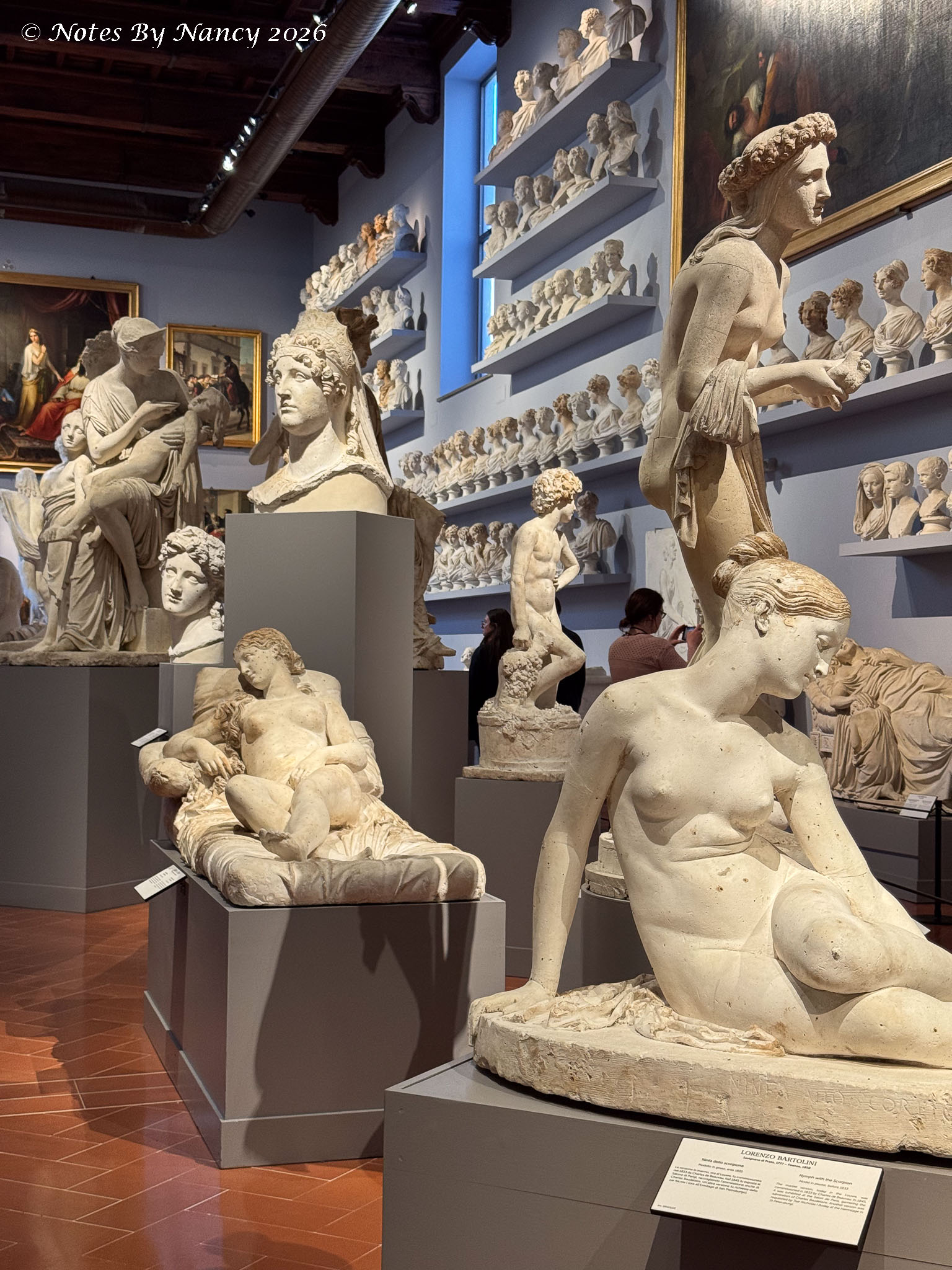
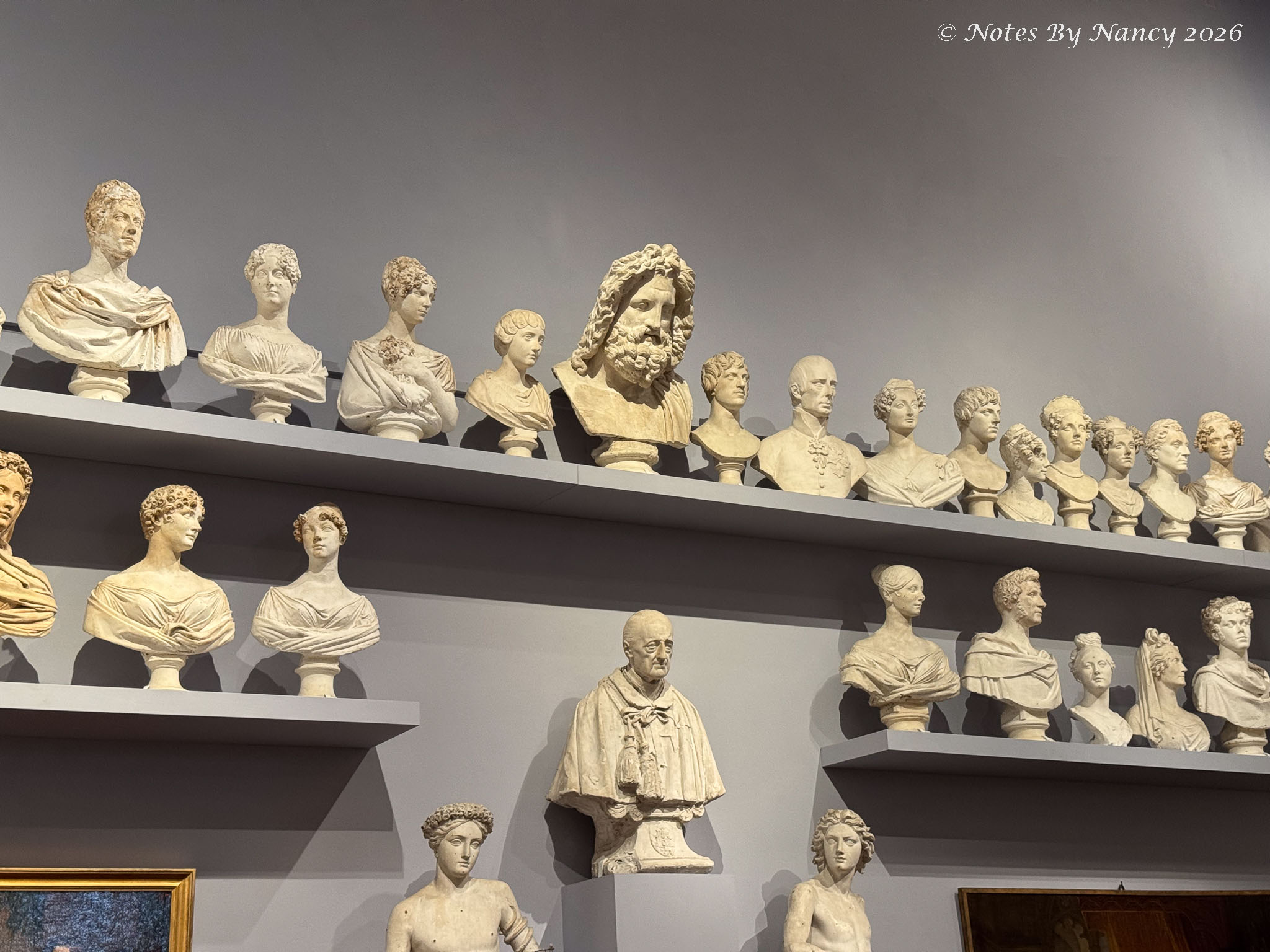
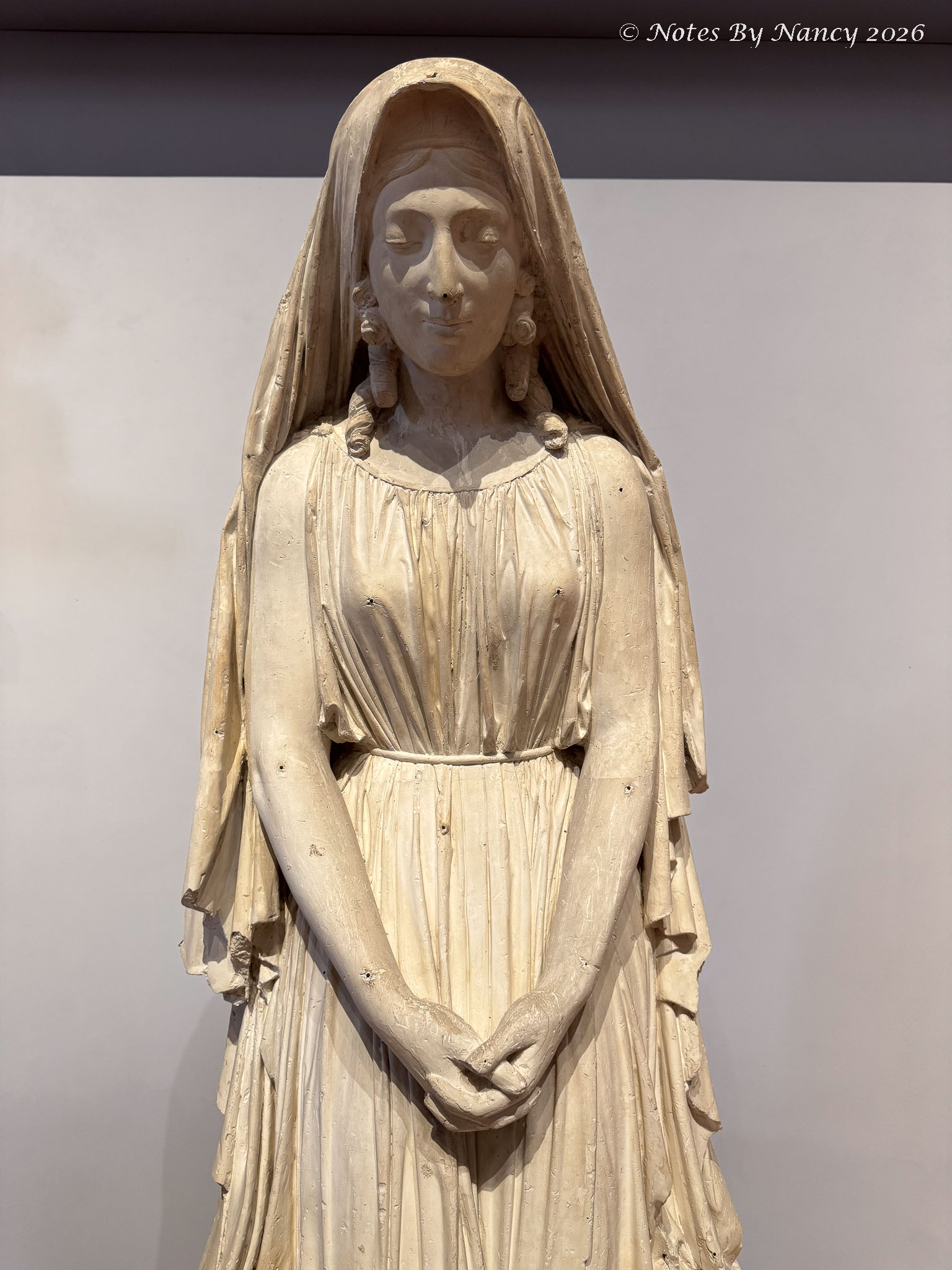
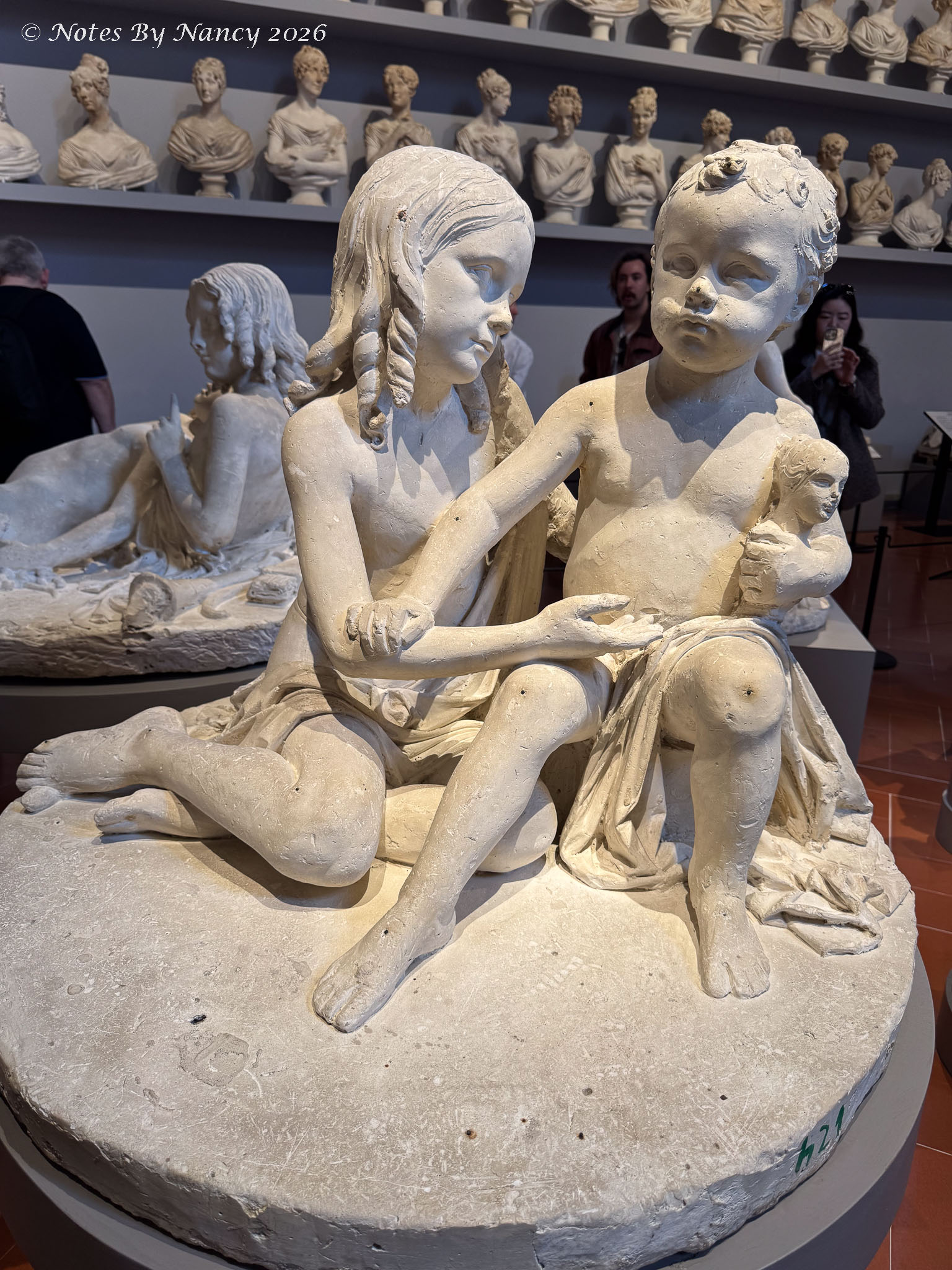
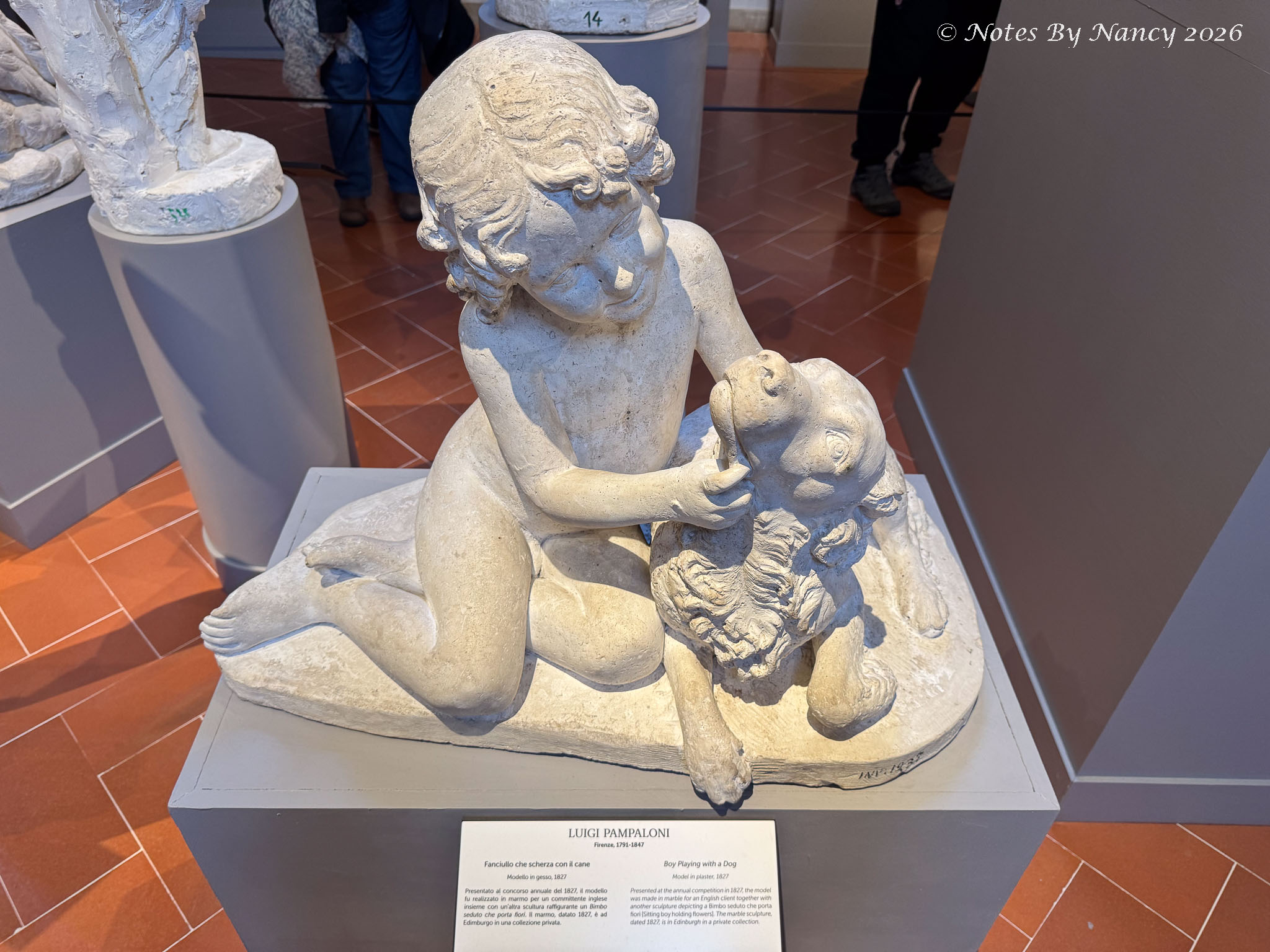
My favorite is Table with Lady Bingham’s Children (The Competition Between Siblings) c. pre-1847 for its realistic depiction of one kid wanting what the other has. Pampaloni’s Boy with a Dog c. 1827 is sweetly sentimental reflecting the love between a boy and his dog.
Museum of Musical Instruments
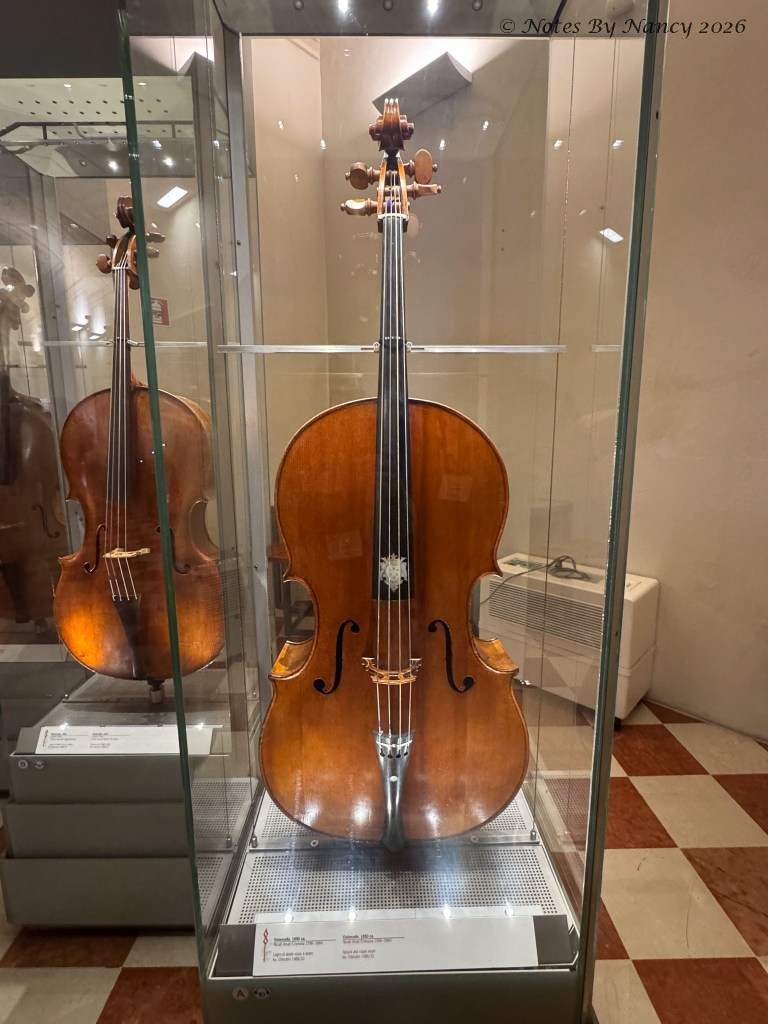
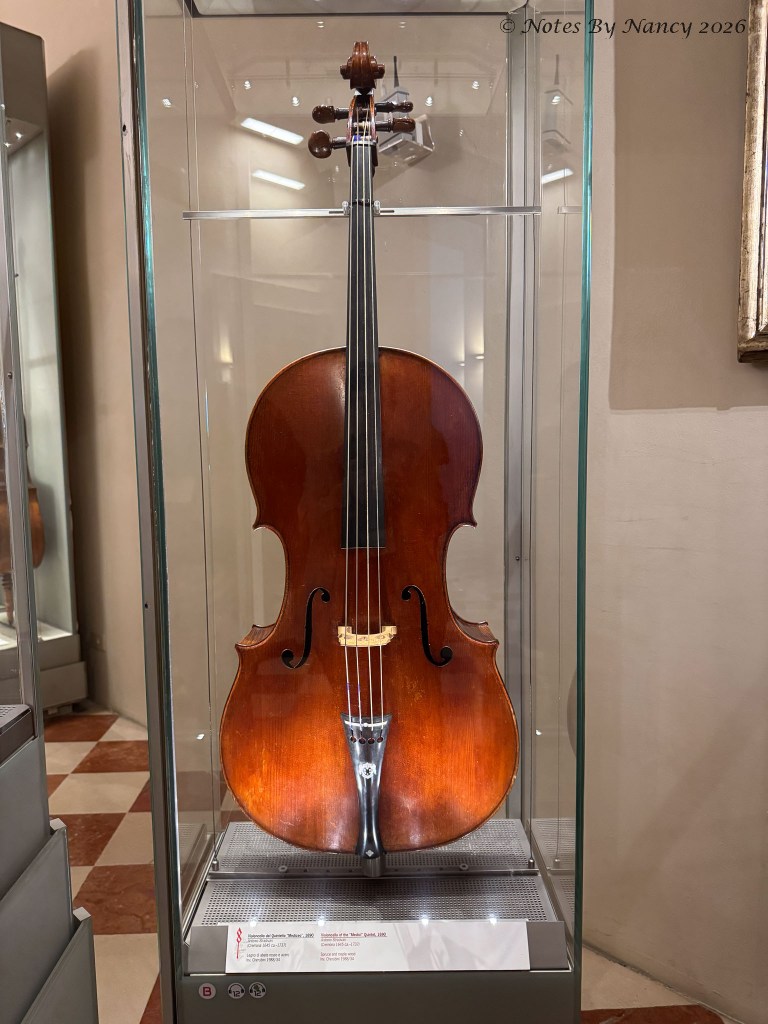
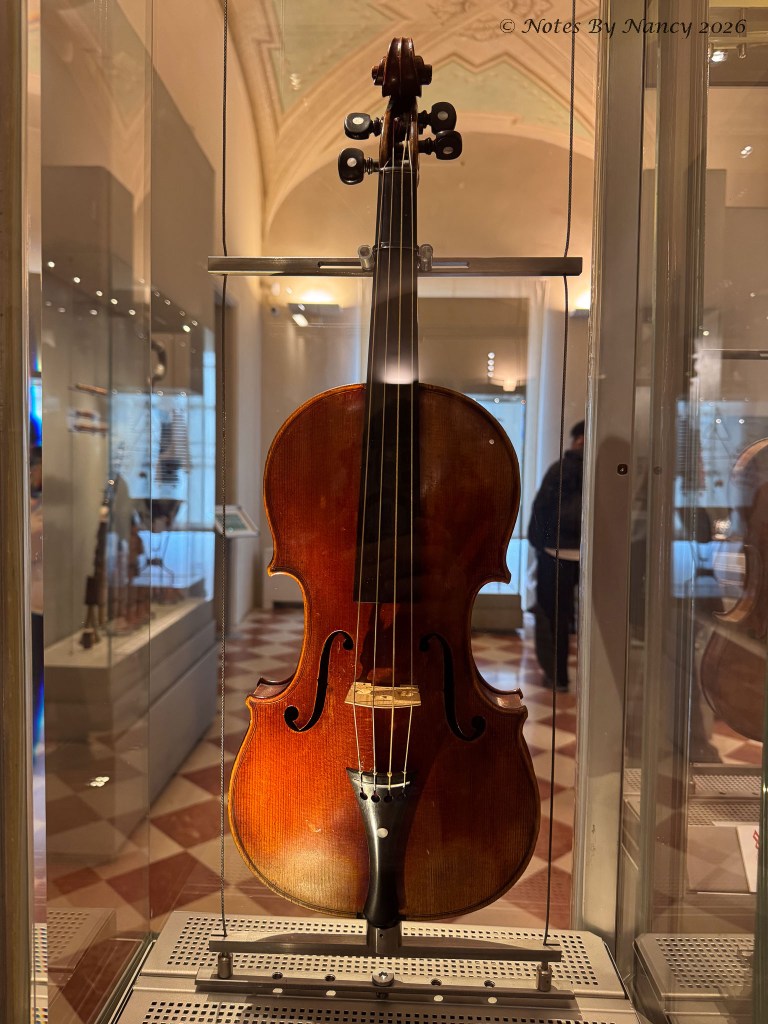
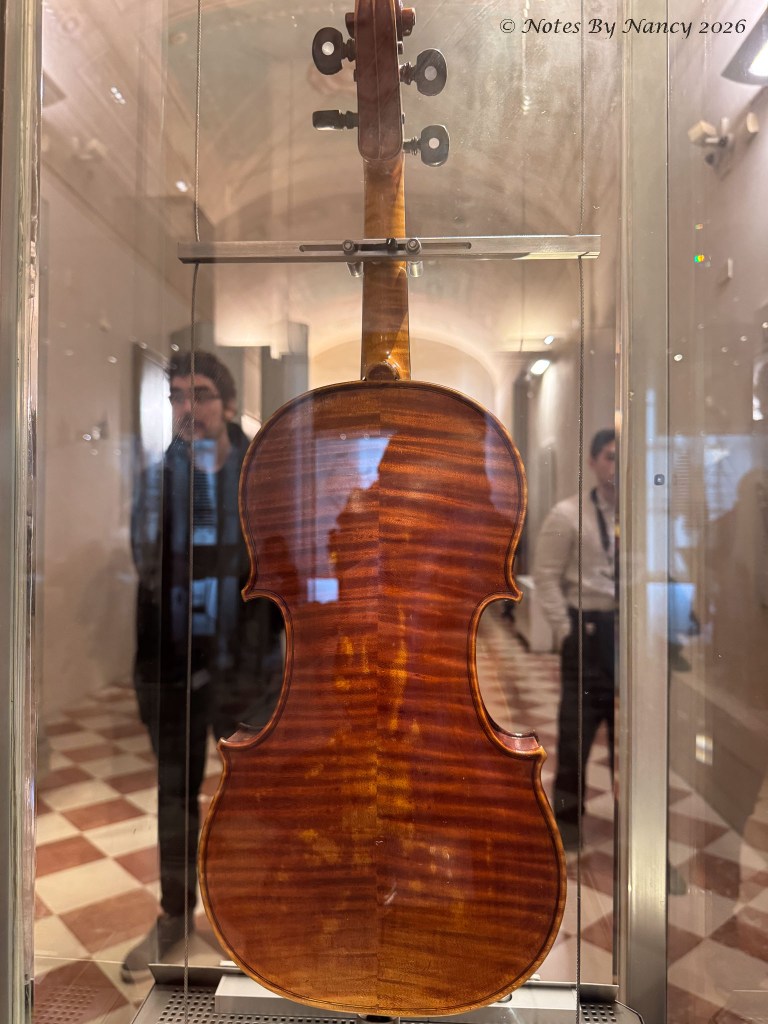
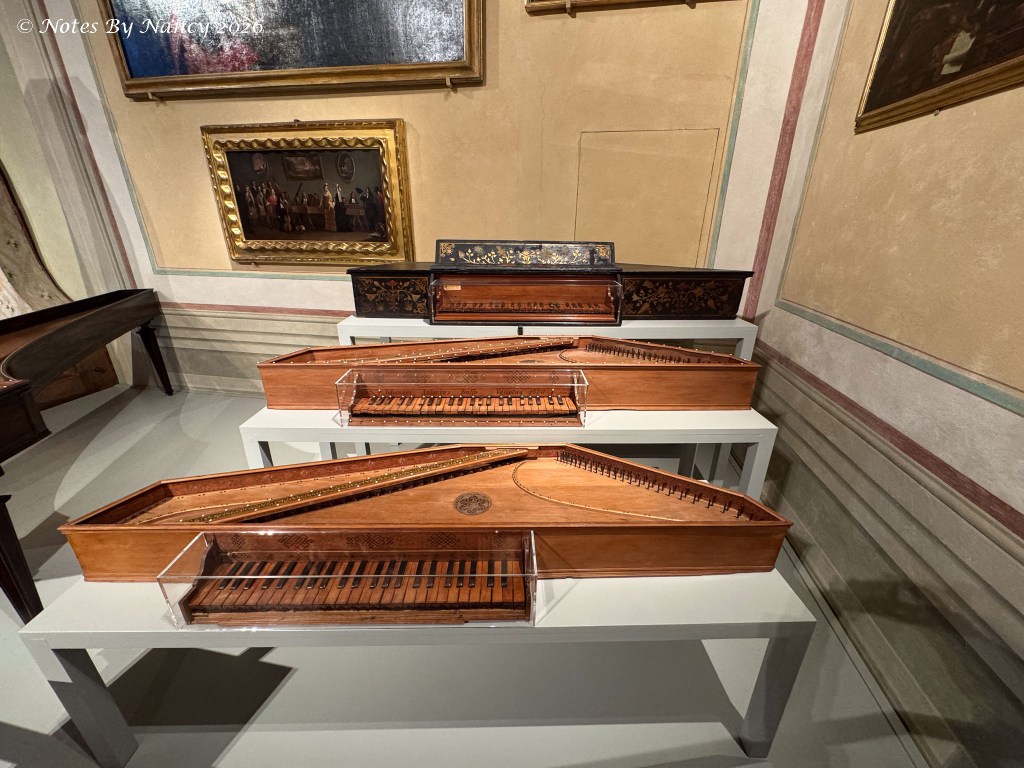
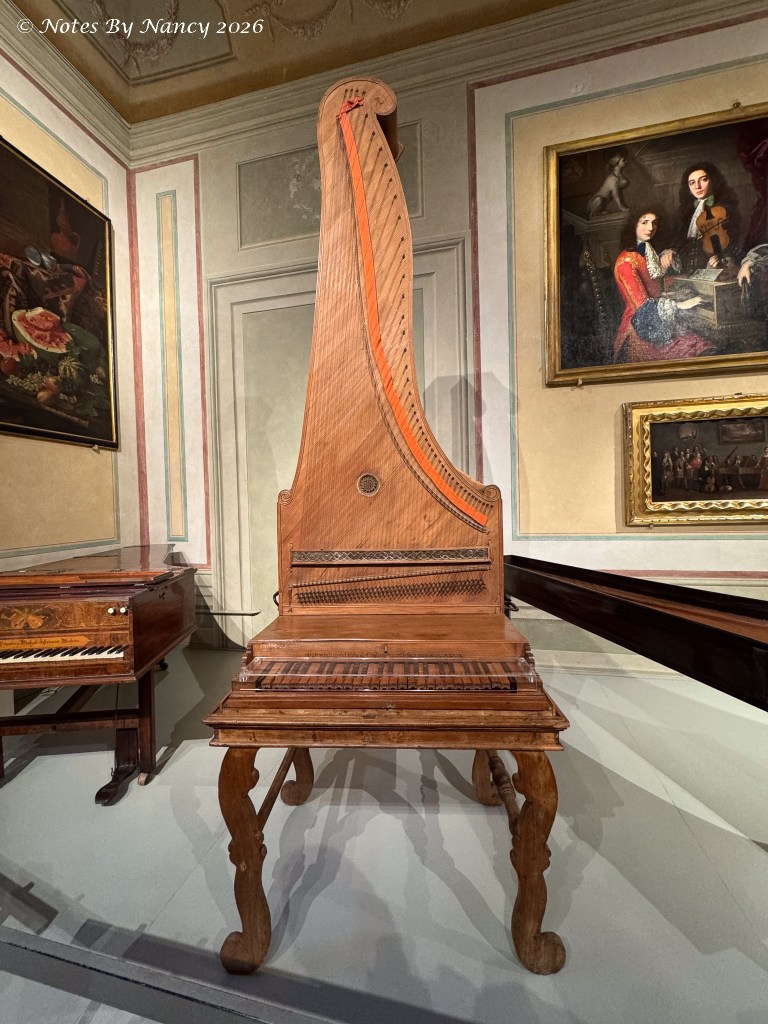
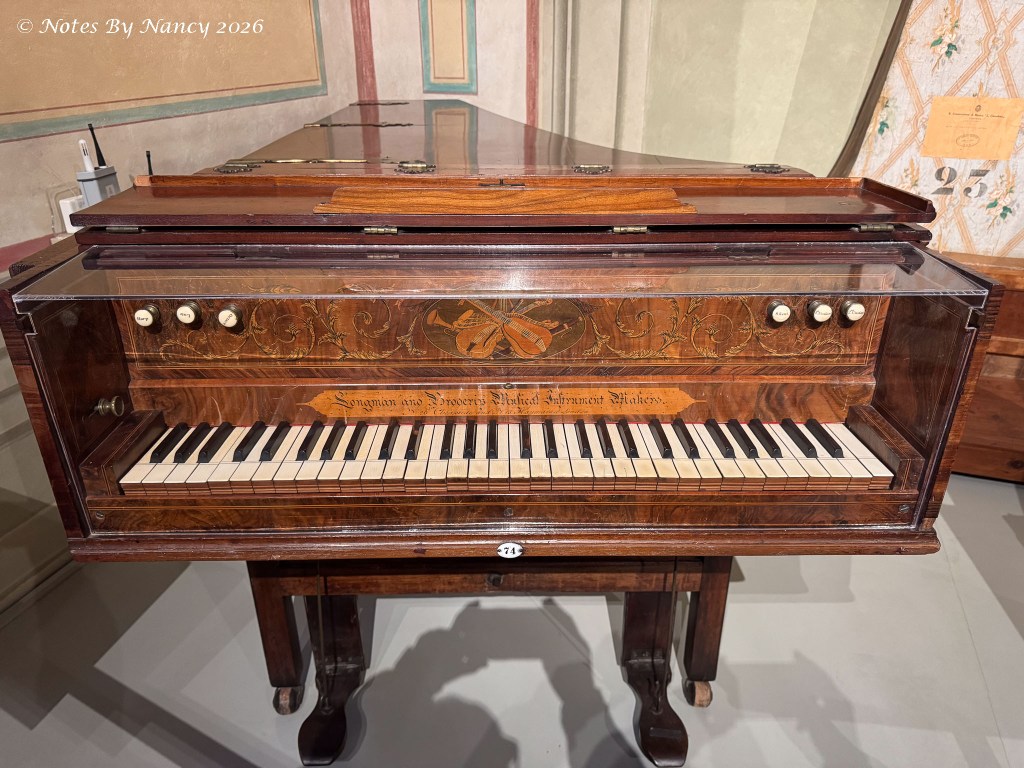
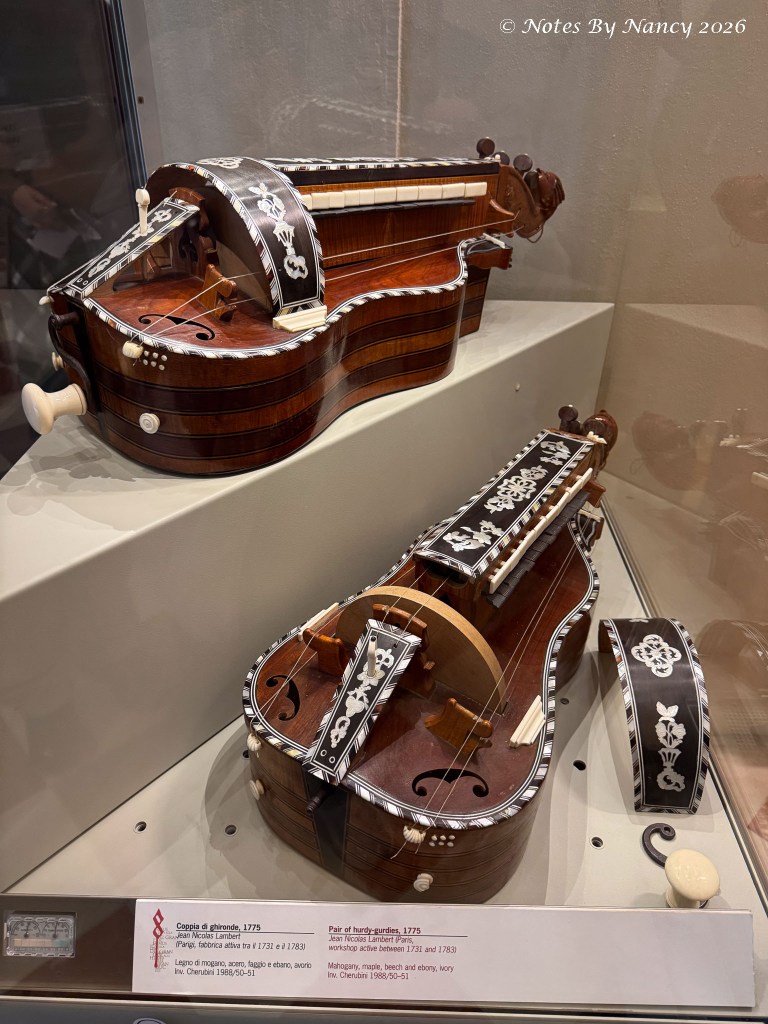
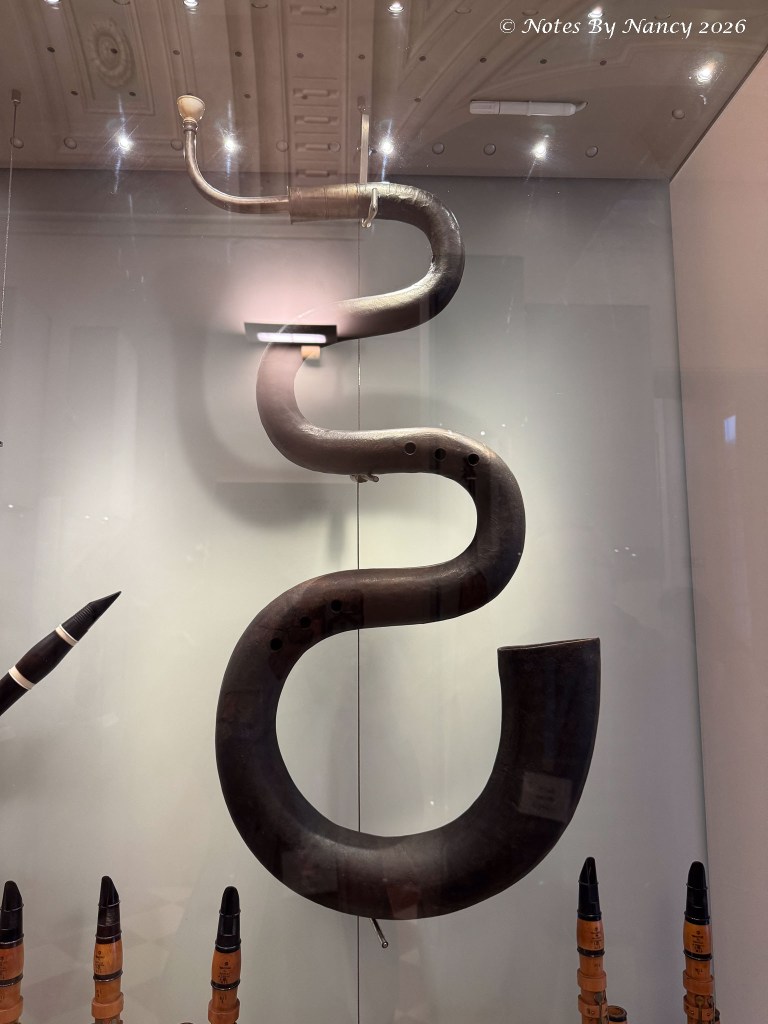
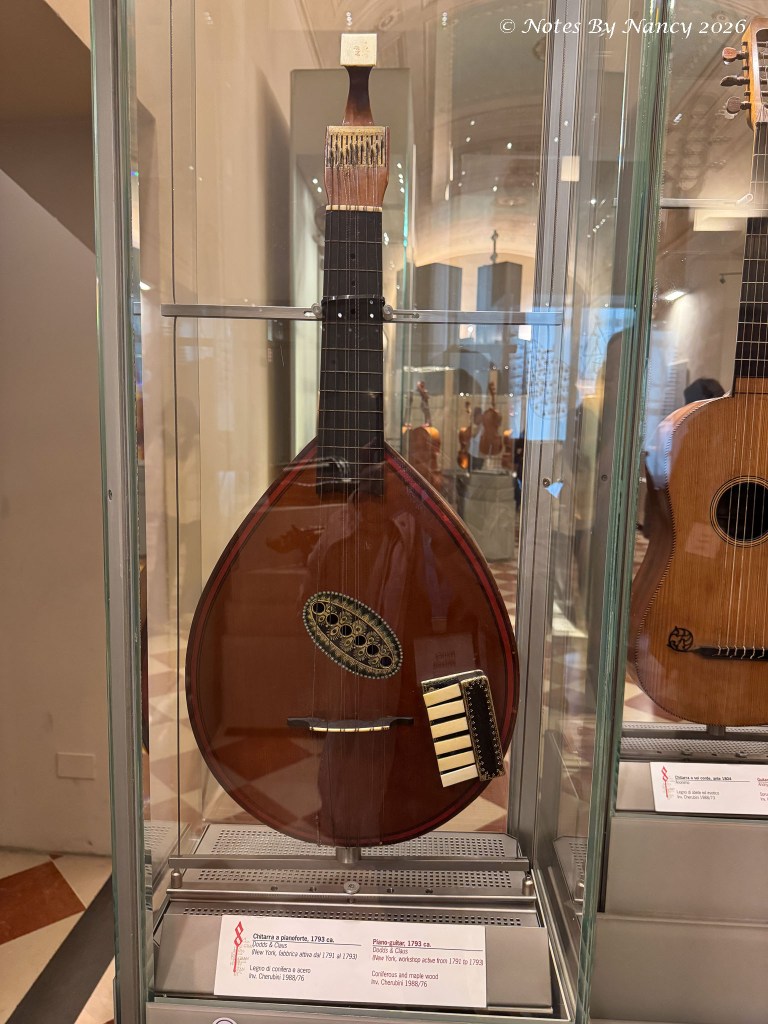
In the gallery back to the right of The Abduction of the Sabine Women, is a Musical Instrument Museum. The bulk of the collection is from the Medici and Habsburg-Lorraine families from the 17th to 19th centuries. It contains violins, violas, and cellos by Stradivari, Amati, and other famous luthiers, in addition to some other interesting instruments such as a full upright piano, hurdy-gurdies, and a serpent(ine). The chance to view these was an unexpected opportunity.
Florence’s Duomo
“Duomo” means “cathedral” in Italian, but whenever most of us hear the word – this cathedral in Florence is the one we envision. (Anyone else recall Sandra Bullock’s dream trip and snow globe in While You Were Sleeping?).
Leaving La Galleria dell’Accademia, Enza led us back towards the Duomo, which we had previously passed on the way to the gallery. Florence’s iconic domed Cathedral can hold 30,000 worshipers. She explained that the population of Florence at the time it was built exceeded the populations of London, Paris, and Rome.
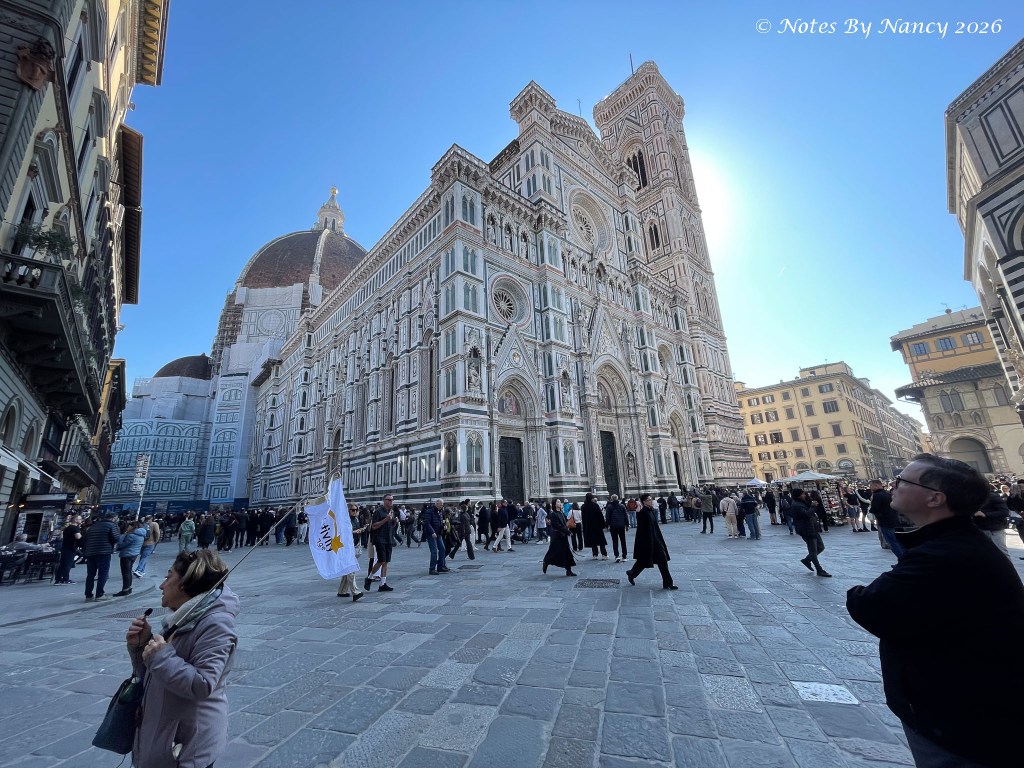
Its official name is Cathedral of Saint Mary of the Flower as Florence is known as the city of flowers. The roof of this cathedral was to have been the location of Michelangelo’s David.
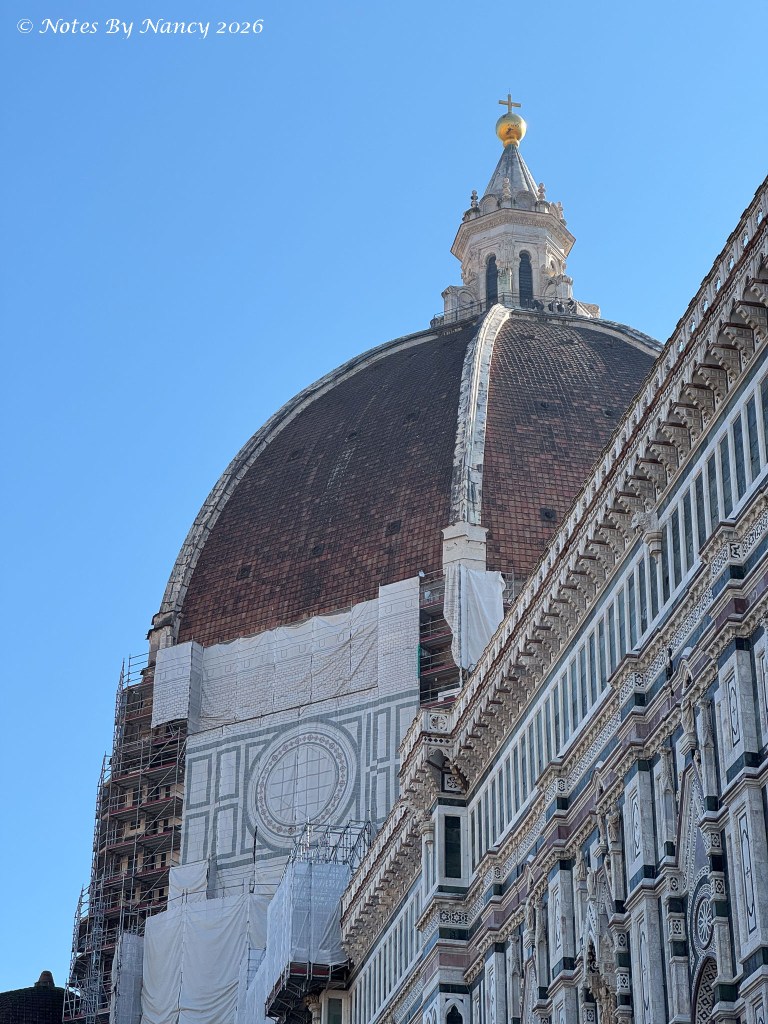
The cathedral is located on the site of several prior churches. Construction began in the late 1290s using a design by Arnolfo di Cambrio, but it wasn’t until 1436 that Brunelleschi designed and oversaw the completion of the famous dome – still the largest brick dome in the world. You can climb the 463 steps to the top of the dome for the best views of Florence, but we declined! If you look closely, you can see people up there!
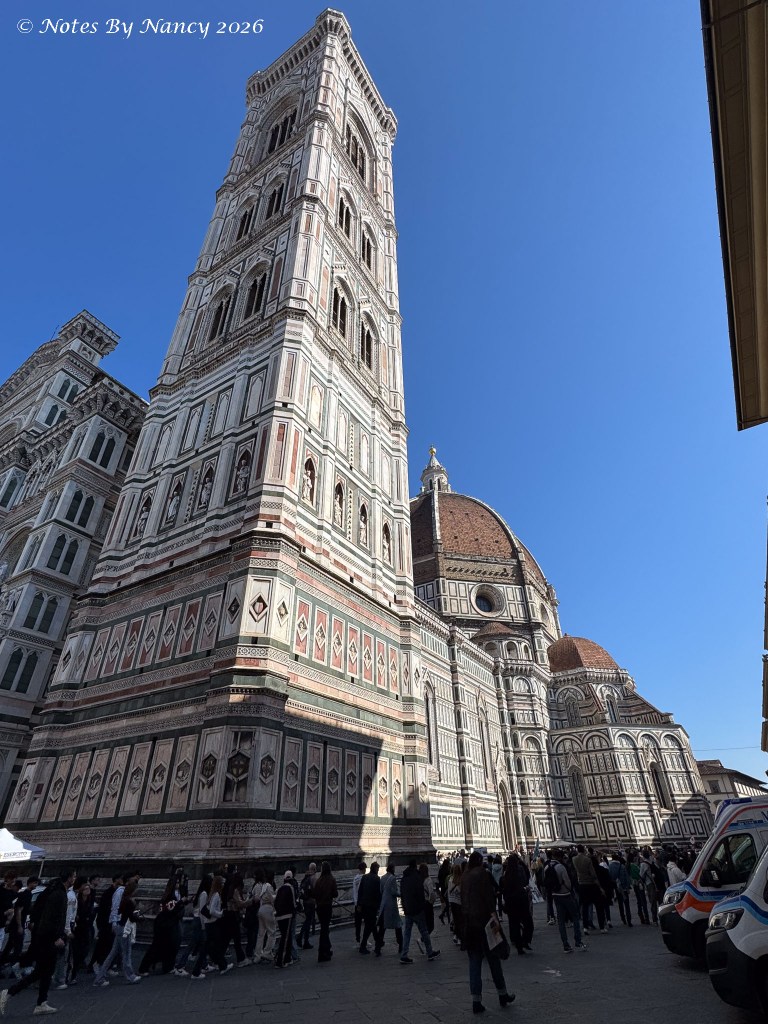
The campanile (bell tower) was designed by Giotto and completed after his death in 1349.
The main façade wasn’t completed until 1887 resulting in the cathedral’s overall mix of architectural flavors from Gothic to Romanesque to Baroque to neo-Gothic or Gothic Revival. These pictures don’t do justice to the beautiful white, pink and green marble used.
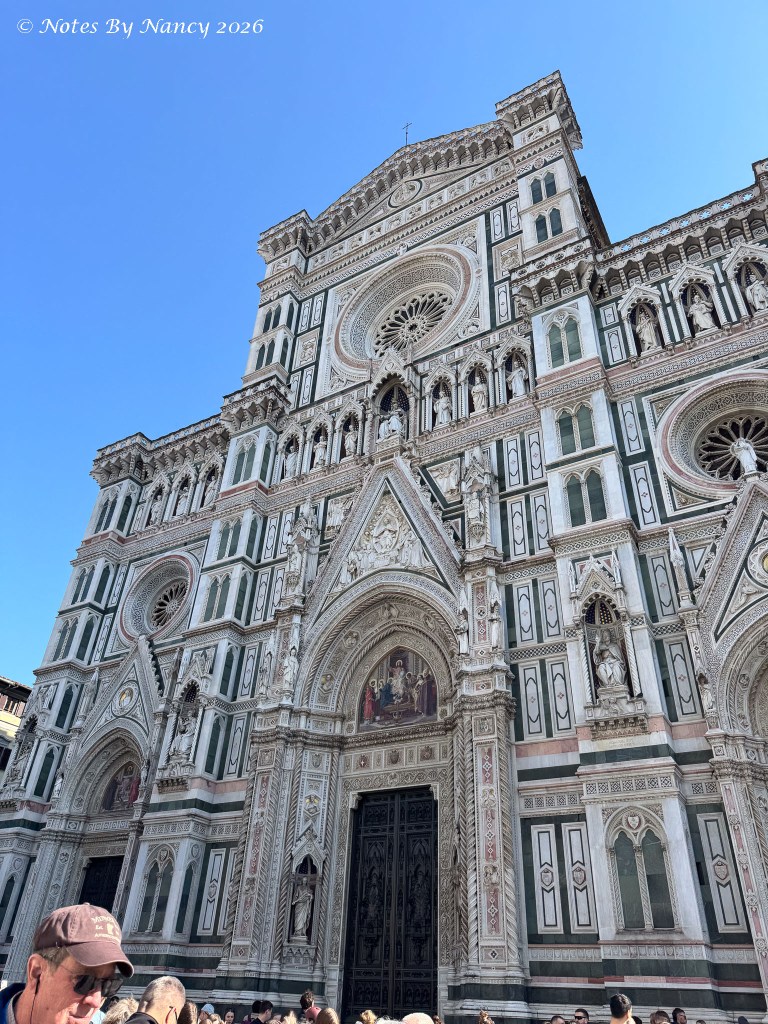
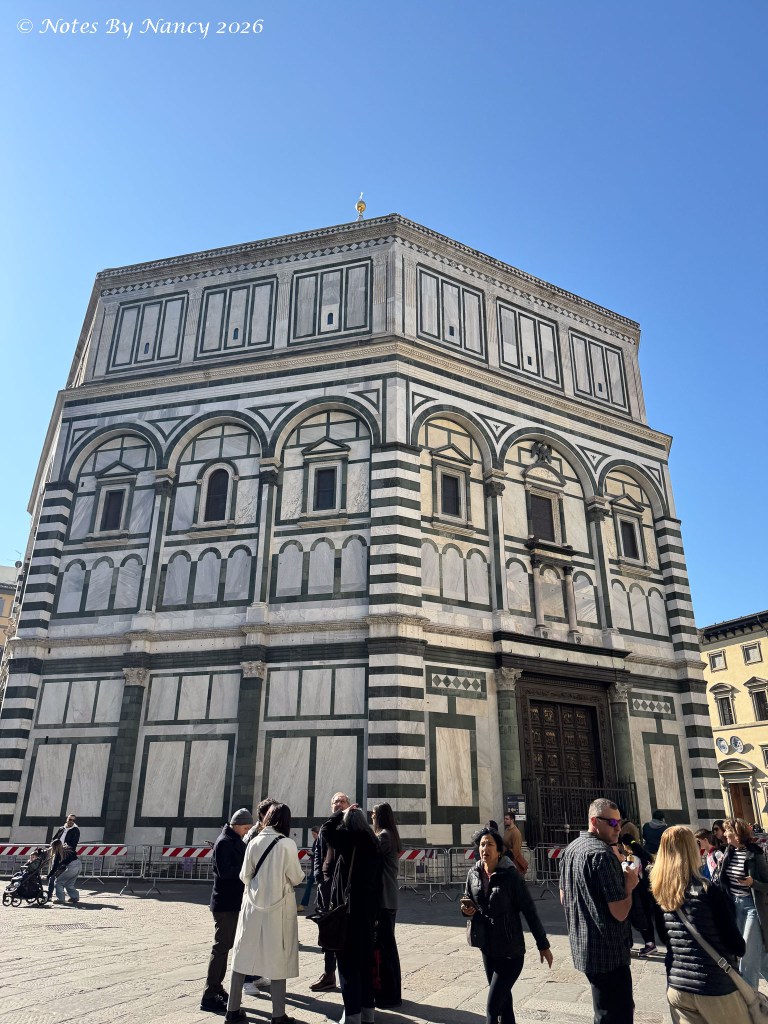
Across from the main façade sits the octagonal Baptistery of St. John, consecrated in 1059. In those times, the baptistry was located outside of the church because you weren’t allowed in the church until you were baptized!
Other Florence Sights
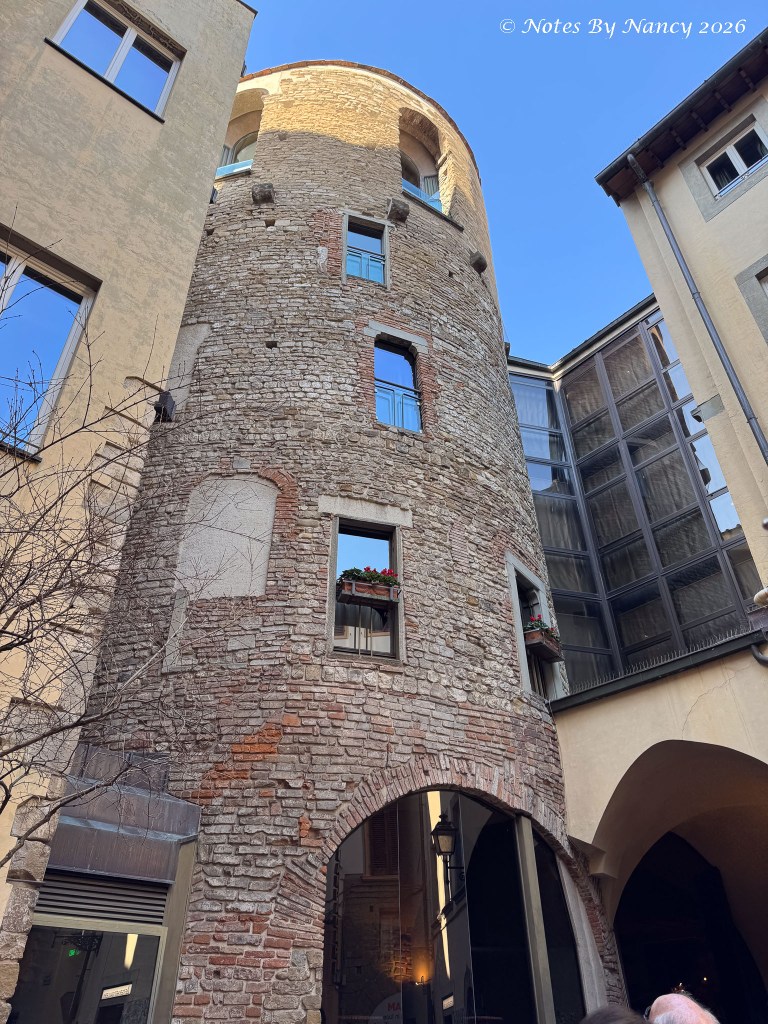
The Pagliazza Tower or Tower of the Straw from the 6th or 7th century has led an interesting life and is now part of the Brunelleschi Hotel. You can read its history here.
The site of the birthplace of Dante Alighieri (1265-1321) author of The Divine Comedy and Inferno. Today, it’s the House of Dante museum.
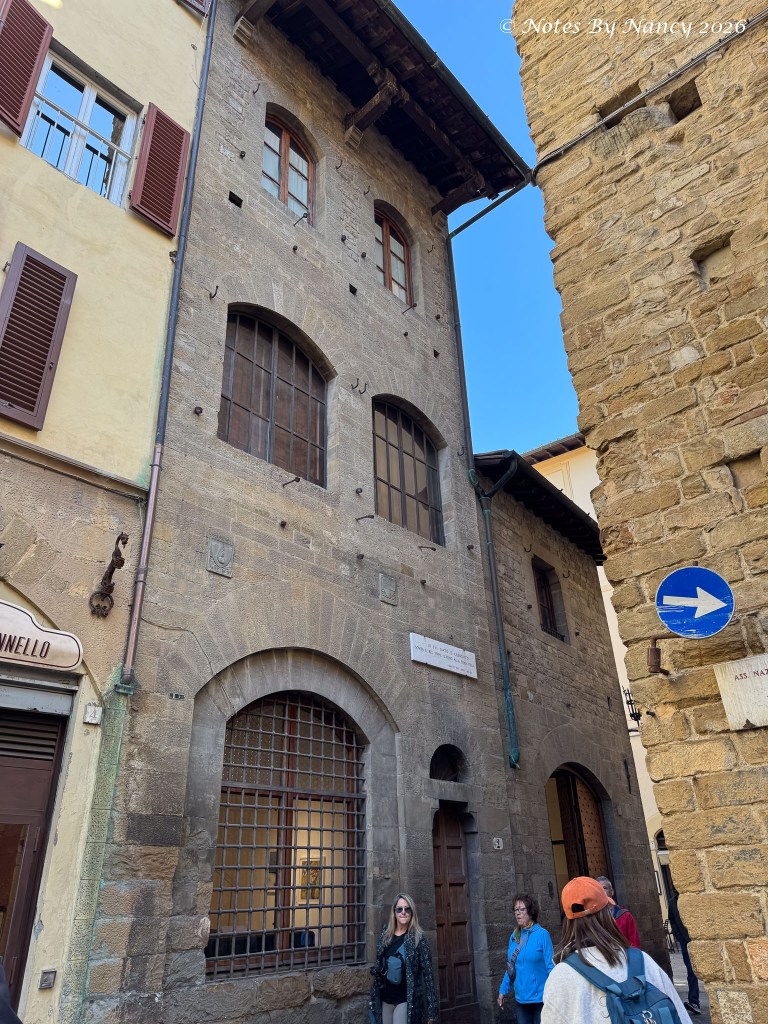
Piazza della Signoria
From there we continued to the Piazza della Signoria. The central government of the Republic of Florence, the Signoria, met here in the Town Hall (Palazzo Vecchio) which stands from 1299. Arnolfo di Cambrio was also its architect. This is where the original David statue was located (to the left of the entry) until moved to the La Galleria dell’Accademia. There are many other statues here in the Loggia dei Lanzi – some reproductions but many are still the originals.
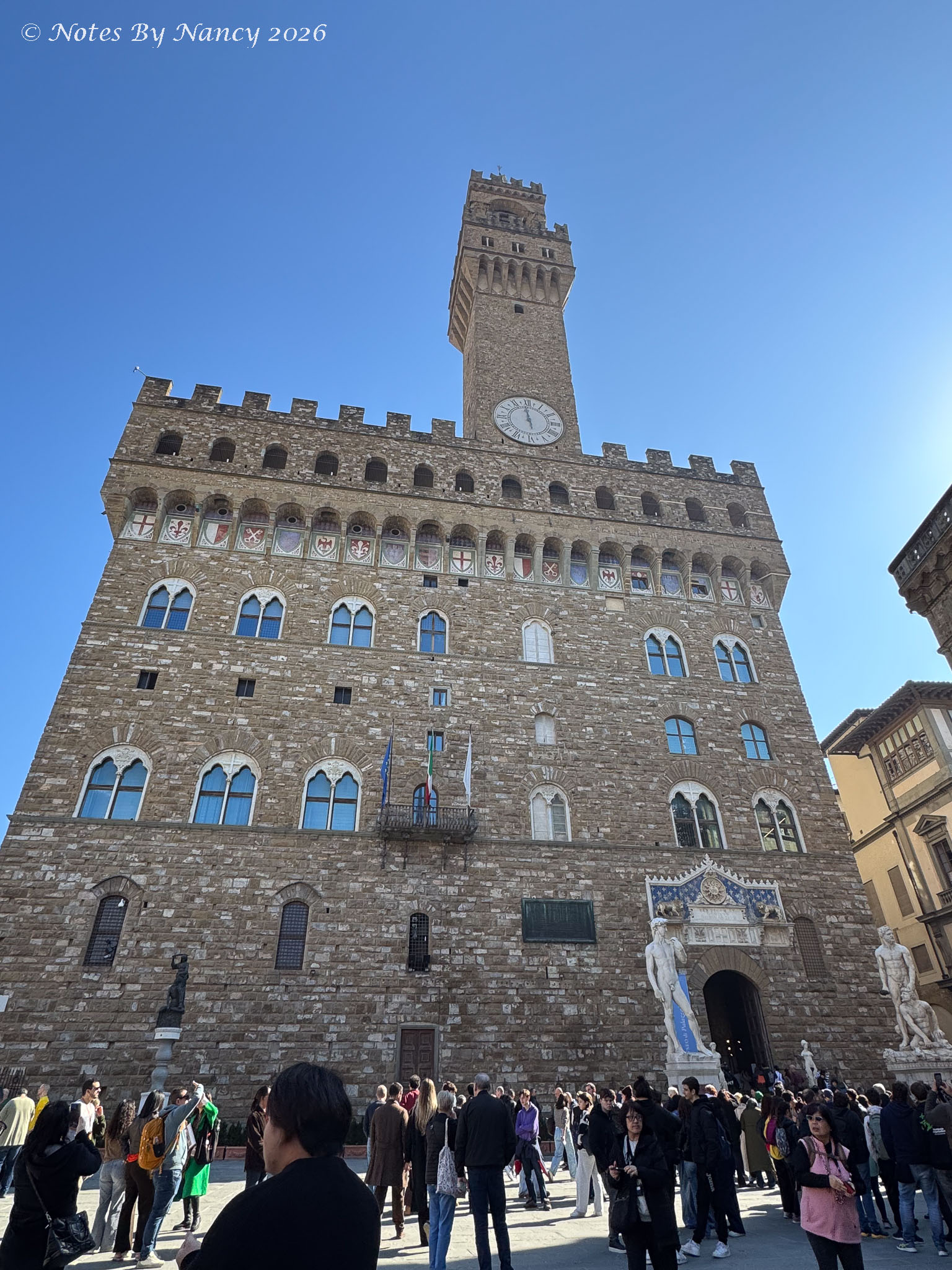
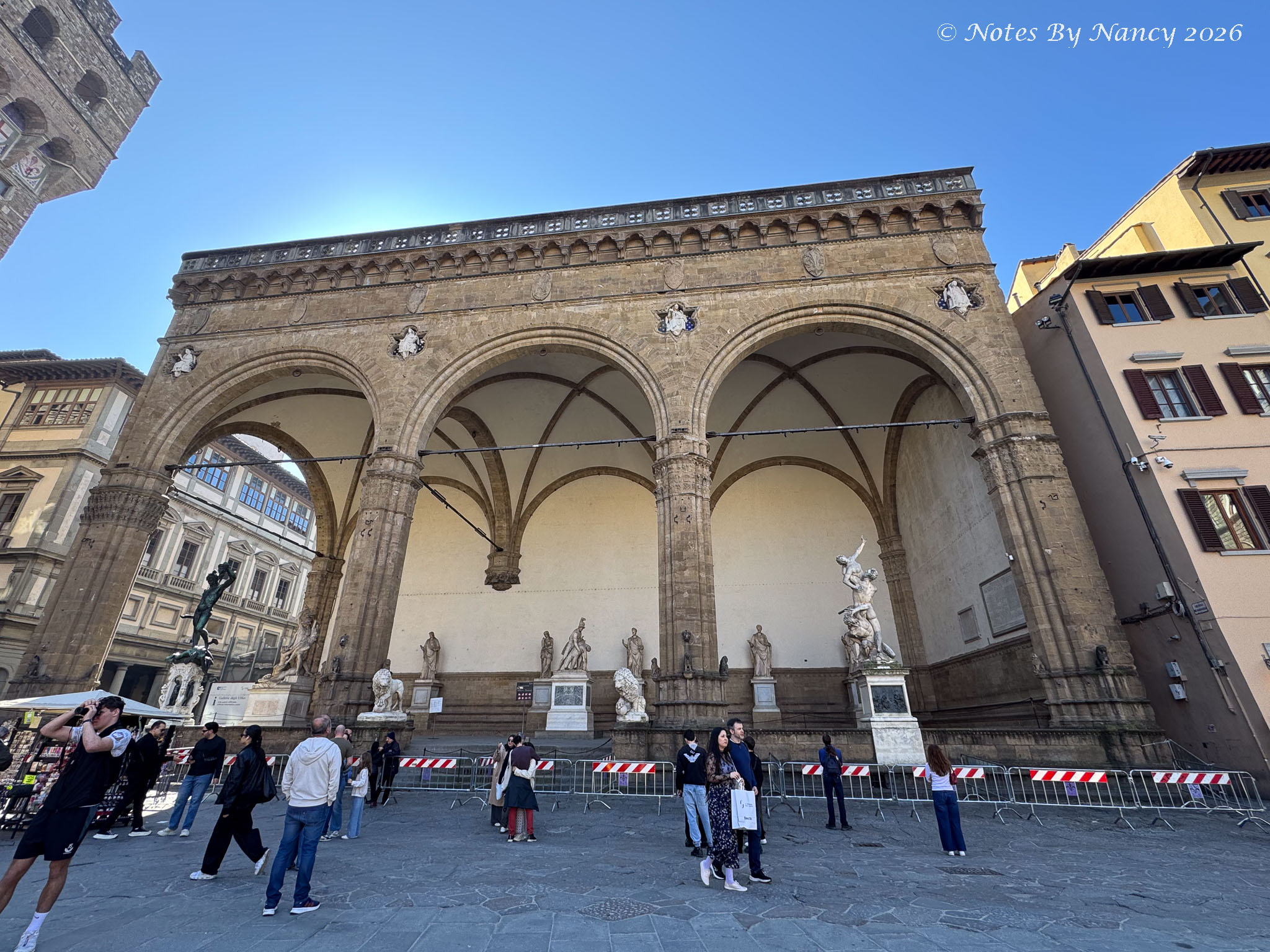
Palazzo Vecchio (L); Loggia dei Lanzi (R)
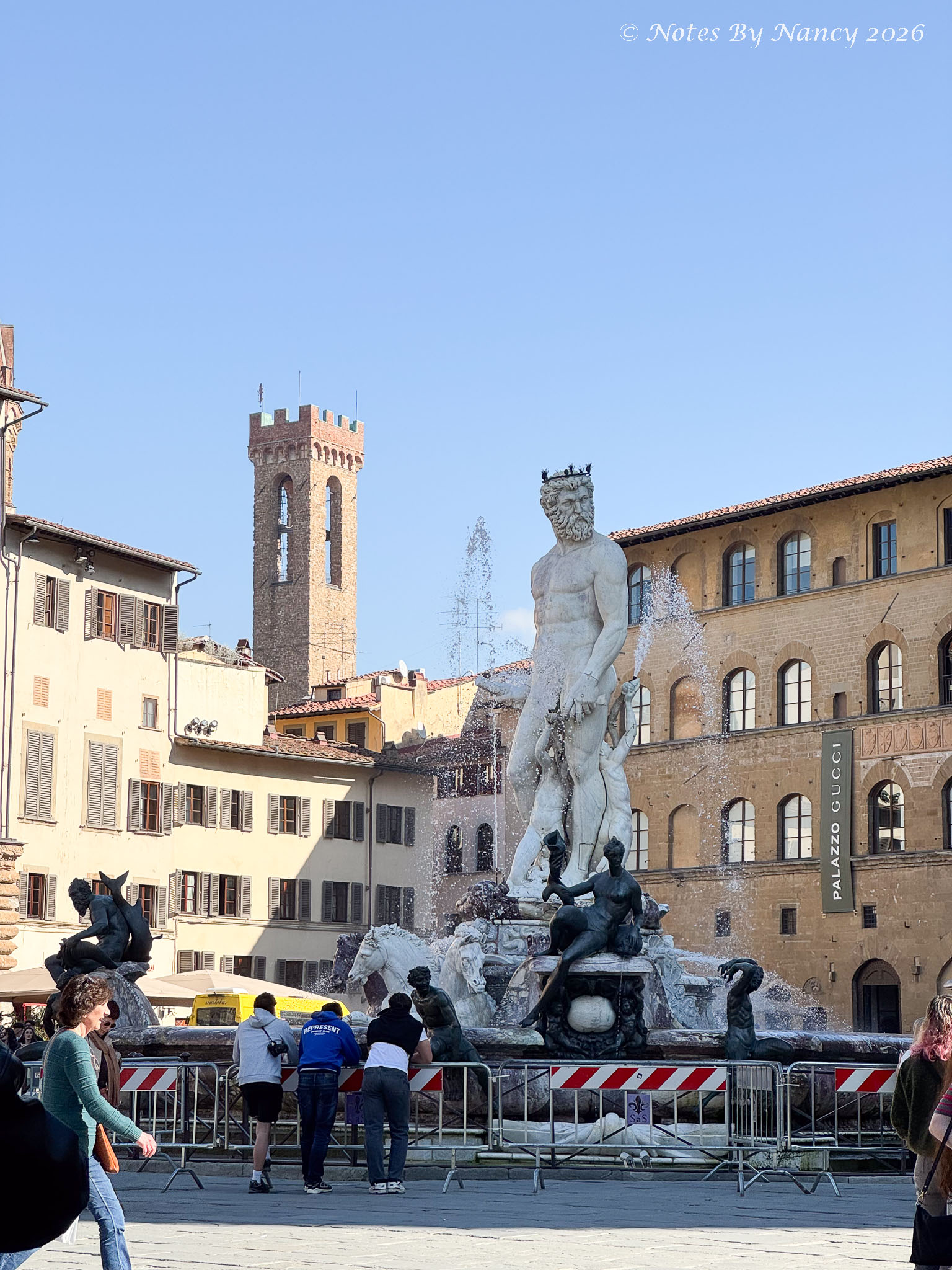
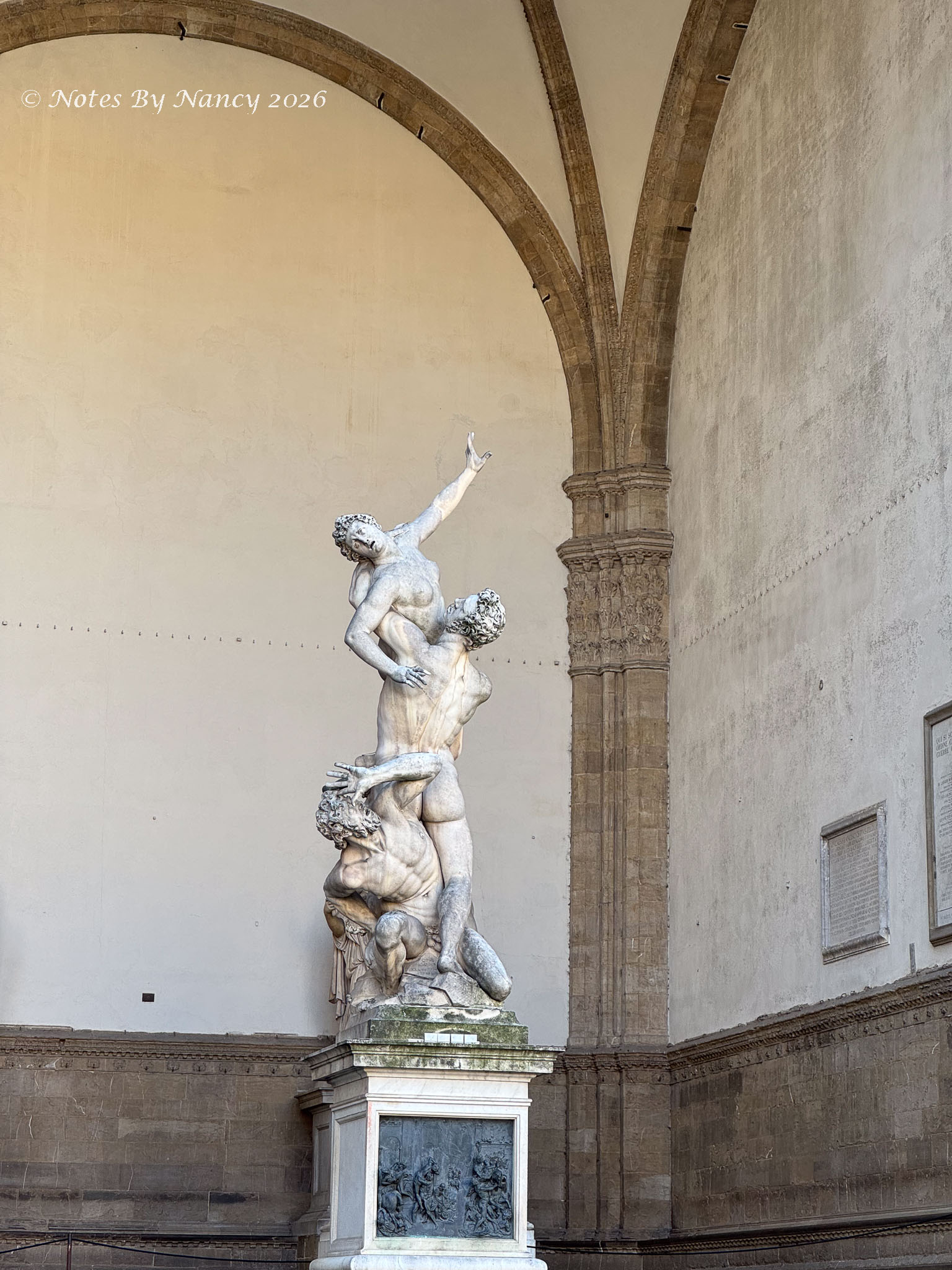
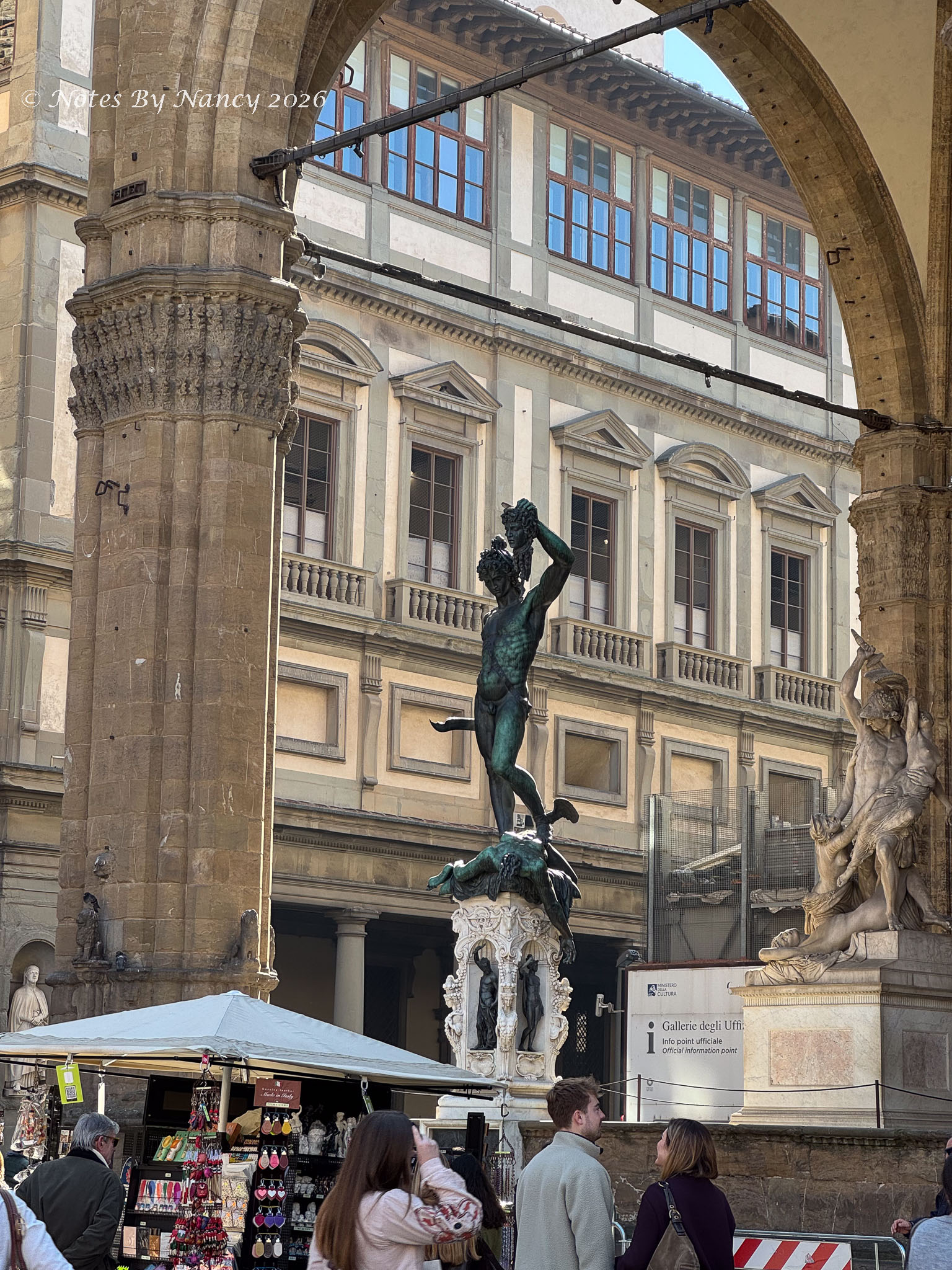
King Neptune Fountain (16th C.); The Abduction of the Sabine Women; Perseus with the Head of Medusa (Cellini c. 1554)
Ponte Vecchio
Another highlight of Florence is the Ponte Vecchio (“Old Bridge”) across the Arno River, built in 1345 and originally containing butcher shops – following a 1565 decree, only jewelers and goldsmiths are allowed! It was the only bridge in Florence not destroyed by the Germans in WWII.
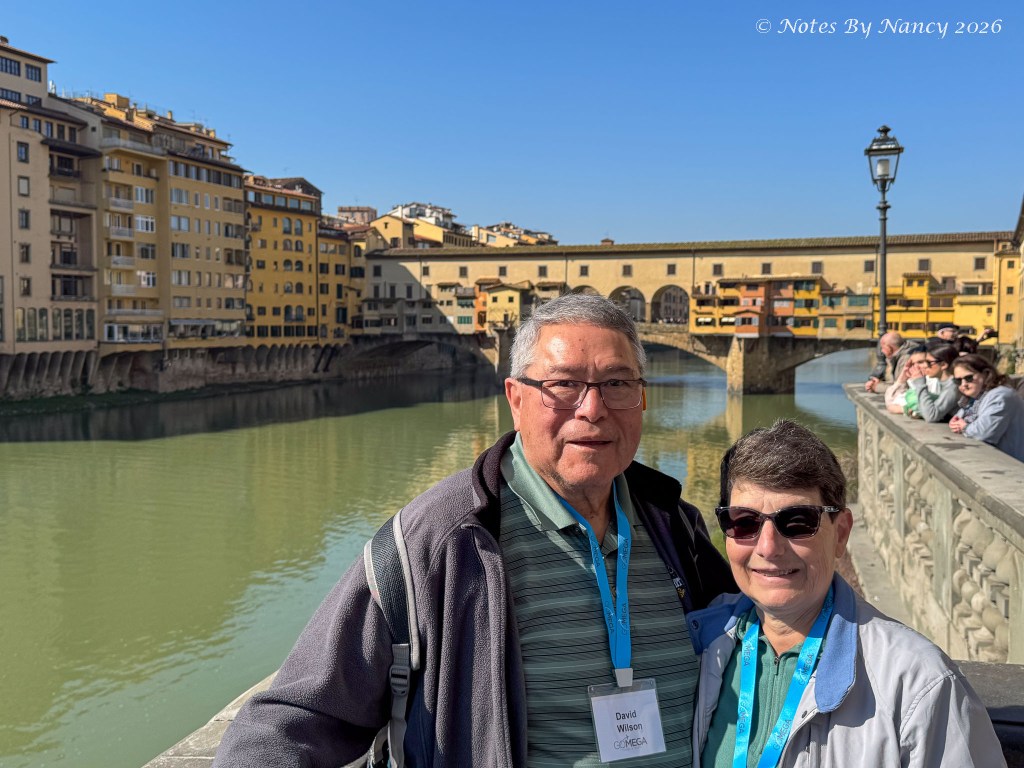
The Vasari Corridor is the “secret” passageway across Ponte Vecchio – built in 1565 for the Medici family to travel between the Palazzo Vecchio and Uffizi (their offices) and Palazzo Pitti (their home) without mixing with the common folk!
Piazza di Santa Croce
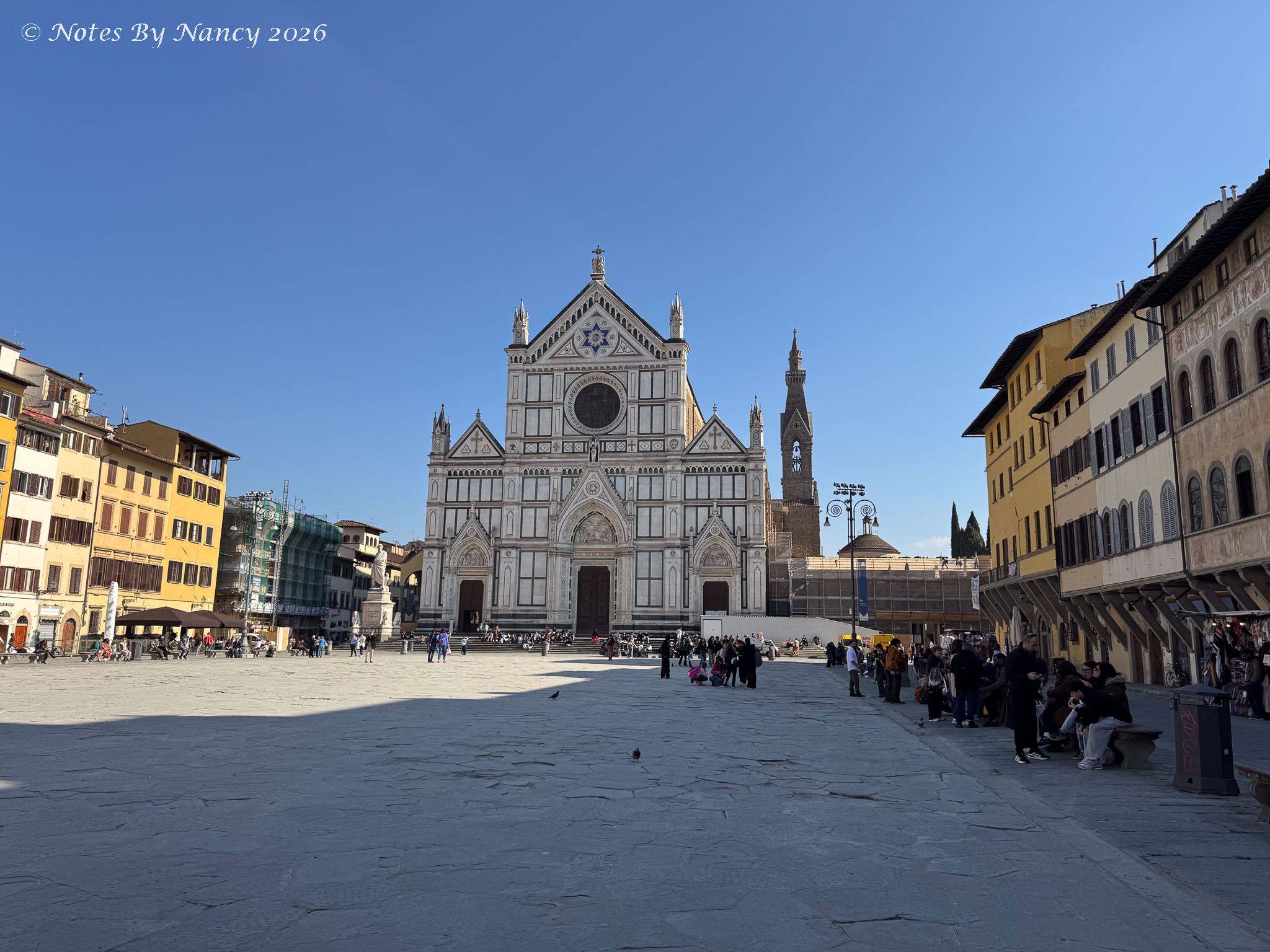
Our final destination was the Piazza di Santa Croce by the Basilica di Santa Croce di Firenze where our guide left us for the rest of the day on our own. The church was designed by di Cambria (started in 1294; completed 1385) and the main cloister with the Pazzi Chapel was designed by Brunelleschi and completed in the 1470s. Many famous people are buried here: Michelangelo, Galileo Galilei, Niccolò Machiavelli, Gioachino Rossini, and Lorenzo Ghiberti – to name a few.
Around this square and nearby are several shops and restaurants.
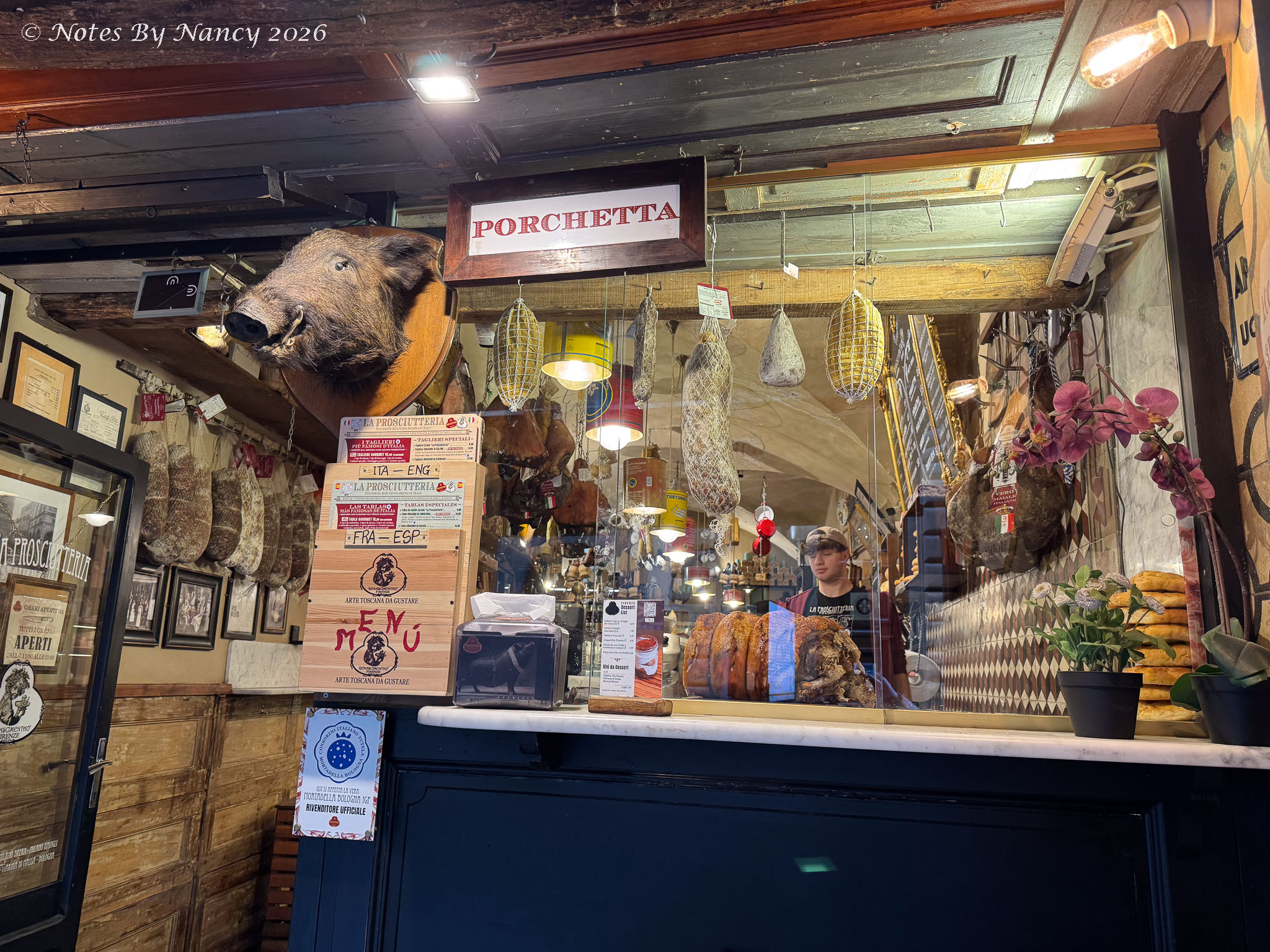
A small group of us selected one of the restaurants with outdoor seating as it was a beautiful day with comfortable temps for al fresco dining. While eating and visiting with our friends, Dave and I decided to spend the afternoon at the Uffizi Gallery. Before leaving the restaurant, I ordered our tickets on my phone for a 2:15pm entry to give us plenty of time to get a gelato on the 10-minute walk to the gallery. From what I hear, this would not have been possible in high season – so if a visit here is on your must-do list, then order your tickets well ahead of time!
Uffizi Gallery
Originally the offices (uffizi is Italian for “offices”) of the Medici family but also used to house their extensive collections, it became one of the first public art museums after the last Medici bequeathed the collection to the state of Tuscany stipulating that it never leave the city of Florence.
You could spend a week or more in this place – it is huge and it is crowded; but it could have been worse since I was able to get tickets only an hour before – and we walked right in at 2pm ahead of our ticketed time. By 3:30, we were done – not with the museum – but physically! All the walking the past few days had definitely caught up with us.
We opted for the “quick” A route, spotting along the way “The Birth of Venus” by Botticelli (c. mid-1480s) and his “La Primavera”, Leonardo di Vinci’s “The Annunciation”, Michelangelo’s “Doni Tondo”, and Raphael’s “Madonna of the Goldfinch” among hundreds of other paintings, ancient Roman and Greek sculptures, and more. If I ever go back, I want a private guide, as we totally missed (or overlooked) seeing any of Caravaggio’s works.
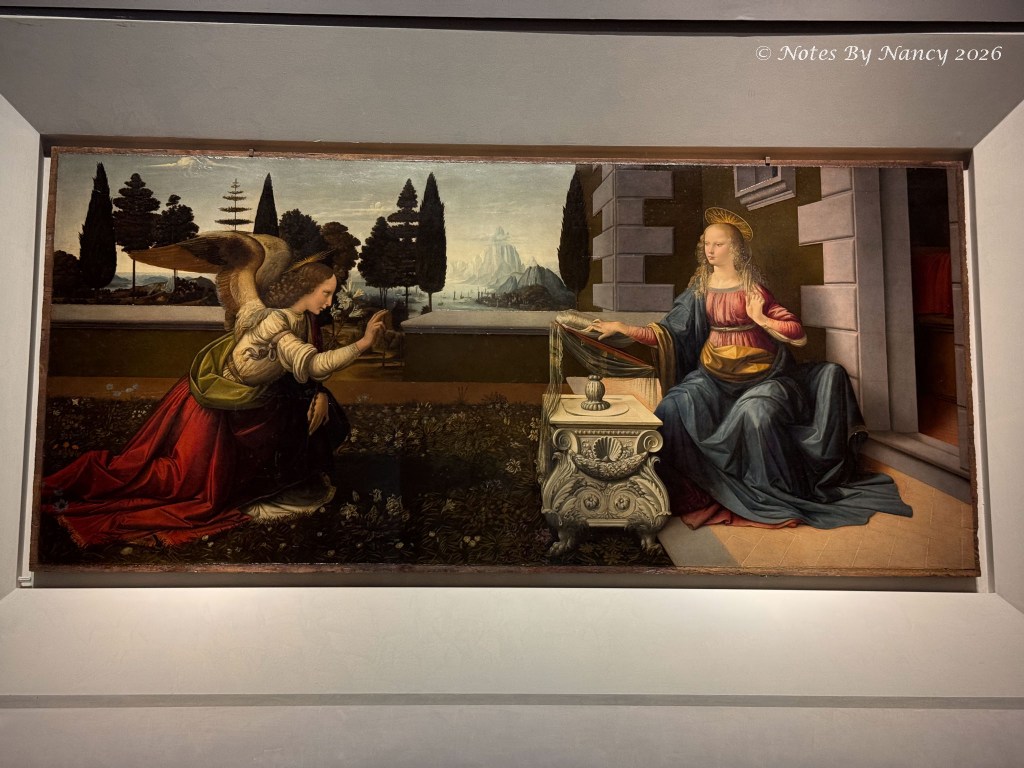
On our Mediterranean Odyssey cruise last fall, we attended a lecture onboard (see Note 108) which used da Vinci’s “The Annunciation” to demonstrate his progression as an artist – so it was fun to see it in person!
Then we went in search of a taxi stand to get back to the hotel to rest before dinner.
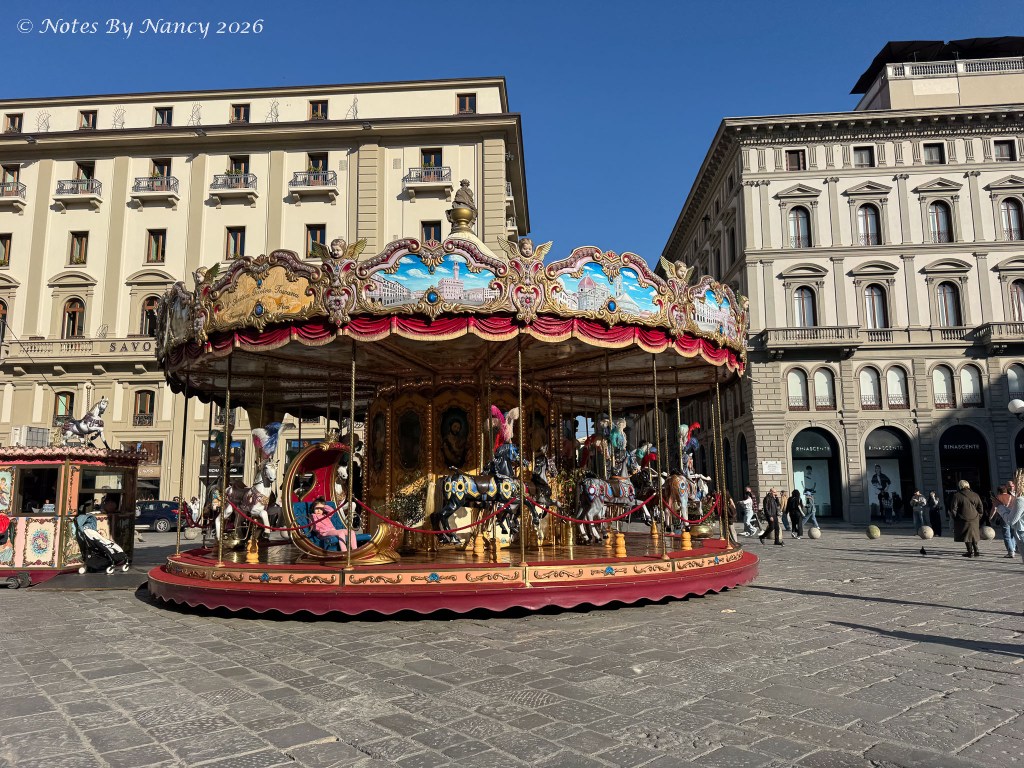
We found one at the nearby Piazza del Repubblica which also contained another merry-go-round!
We had yet another 15-minute walk to tonight’s restaurant – Trattoria Il Giardino – where we enjoyed getting to know more people in our group.
Today was a wonderful day seeing all the iconic sights in Florence. All the artists and architects, popes and secular rulers, places and food that you’ve read about or seen depicted in movies and other media all came to life today in a personal way.
I’m looking forward to a lighter day tomorrow as we travel to Pisa, then on to Rome.


 Notes By Nancy
Leave a reply to Nancy Cancel reply