
Itinerary
Day 8 – Today you will go to visit the ruins of Pompeii, which was destroyed completely by the eruption of Mt. Vesuvius 79 AD. It was covered with hot lava because of its close proximity to the volcano and lay undiscovered until the 17th century. Pompeii was a Roman city, which existed at the time of Christ and was ruled by the same powers that ruled in the land of Jesus at that time. In this visit you will gain insight into daily life in Roman times and thus have new understandings of the prevailing culture at the time of Jesus. After your visit there, you will return to Rome. Dinner at a local restaurant. Overnight at your hotel.
An Early Start
With a long drive to Pompeii ahead of us, today was another early start at the breakfast buffet.
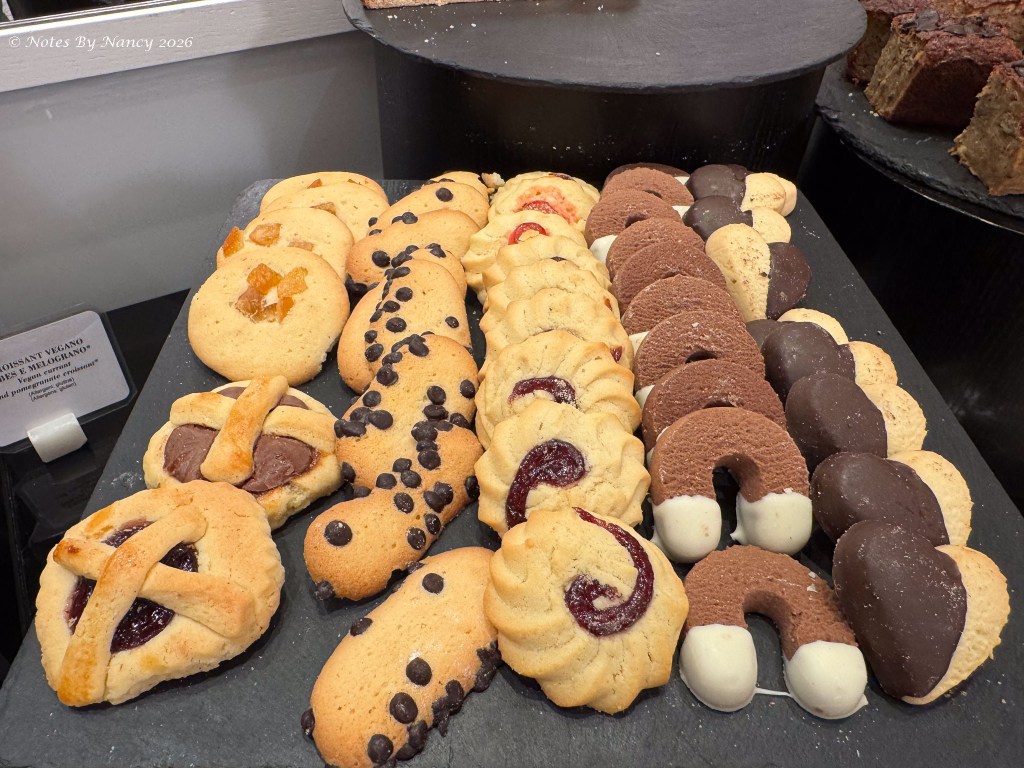
My mom would love this selection of cookies for breakfast!
We were all back on the bus and headed across the Tiber River by 7:45am.
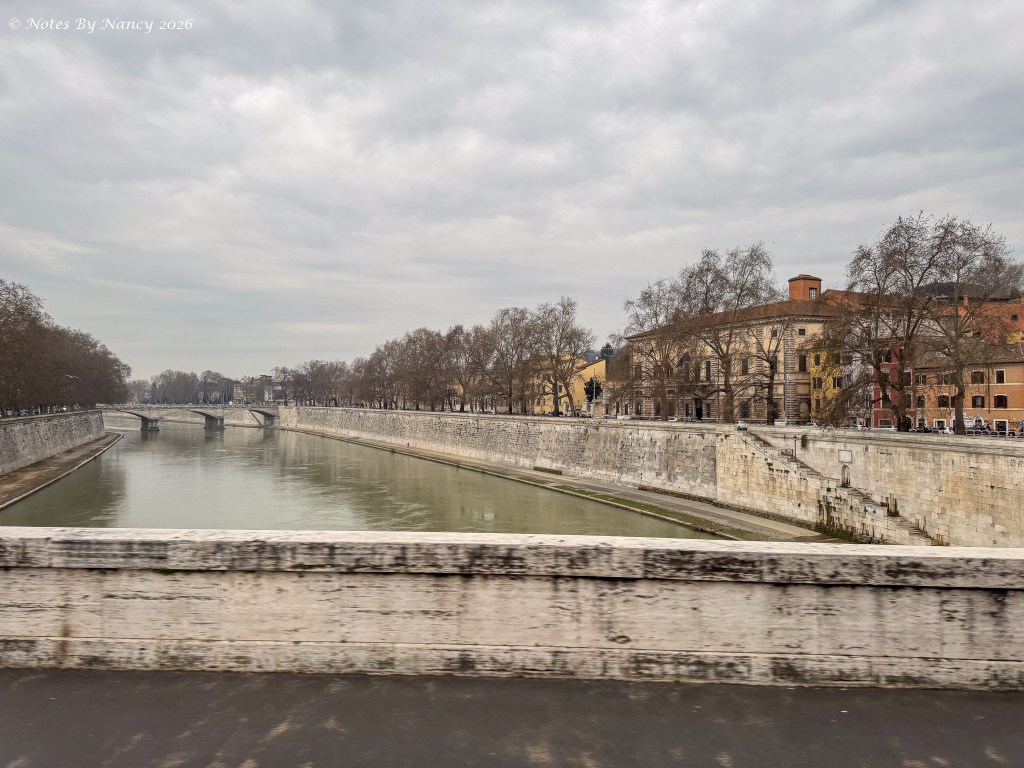
With the 2.5-3-hour ride ahead of us there (and back) – I brought along my laptop to keep working on prior blog entries. As we left Rome, Todd provided context around our visit to Pompeii – essentially it provides a “freeze-frame” of Roman life during the time (1st Century AD) of Christianity’s early development. He went on to elaborate about what we know of these times not only from the New Testament letters of Paul, but also the Book of Hebrews in which the author closes in Hebrews 13:24-25 with “Greet all your leaders and all the saints. Those from Italy send you their greetings. Grace be with you all.”.
The Buried City
We have been looking forward to seeing Pompeii and comparing it to its sister buried city, Herculaneum, which we visited last fall (Note 106). Here are a few comparisons.
- Area: Herculaneum – approximately 11.12 acres; Pompeii – approximately 163 acres
- Population: Herculaneum – 4,000; Pompeii – 12,000-20,000
- Atmosphere: Herculaneum – residential/resort; Pompeii – commercial
- Burial: Herculaneum – 20-25 meters of volcanic mud; Pompeii – 4-6 meters of ash and pumice
- Preservation: Herculaneum – organic material like wood, food, and upper floors intact; Pompeii – roofs collapsed from weight of pumice
Having now been to both, I’m glad we were able to see both as they are very different experiences. While each can be visited independently, in my opinion, a guide is a must to understand everything that you see in context of the 1st century and to point out things you might easily overlook at both sites.
Interestingly, even with historical writings describing the 79 AD eruption and mentioning both cities, they laid buried and forgotten for centuries before being “discovered” in 1709 (Herculaneum) and 1599 (Pompeii). However, it wasn’t until the mid-1700s that excavations began at both sites – mostly in search of treasures. In 1860, the first systematic archeology of Pompeii was organized by Italian archeologist Guiseppe Fiorelli. He created the sections and addressing seen today as well as the famous plaster casts from the voids left by victims. Pompeii is the world’s longest continuously excavated site – and there is still more to uncover.
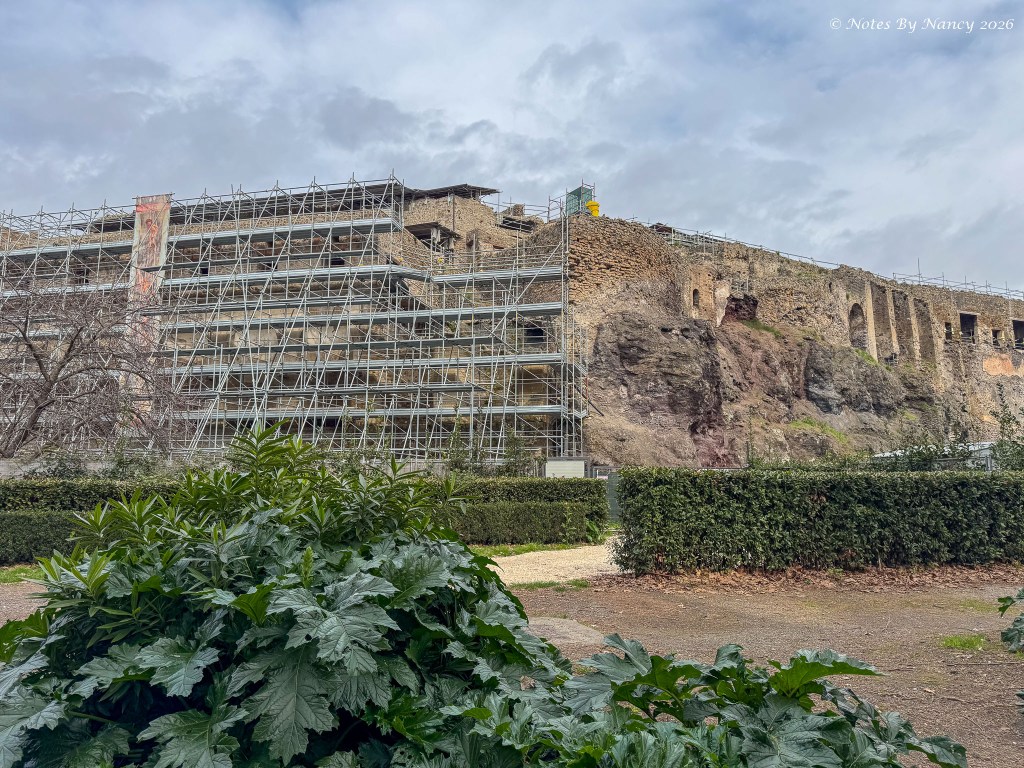
We entered along the Viale della Ginestre (Avenue of the Brooms) where we could see scaffolding supporting ongoing excavations and repairs.
Not much remains of the Temple of Venus
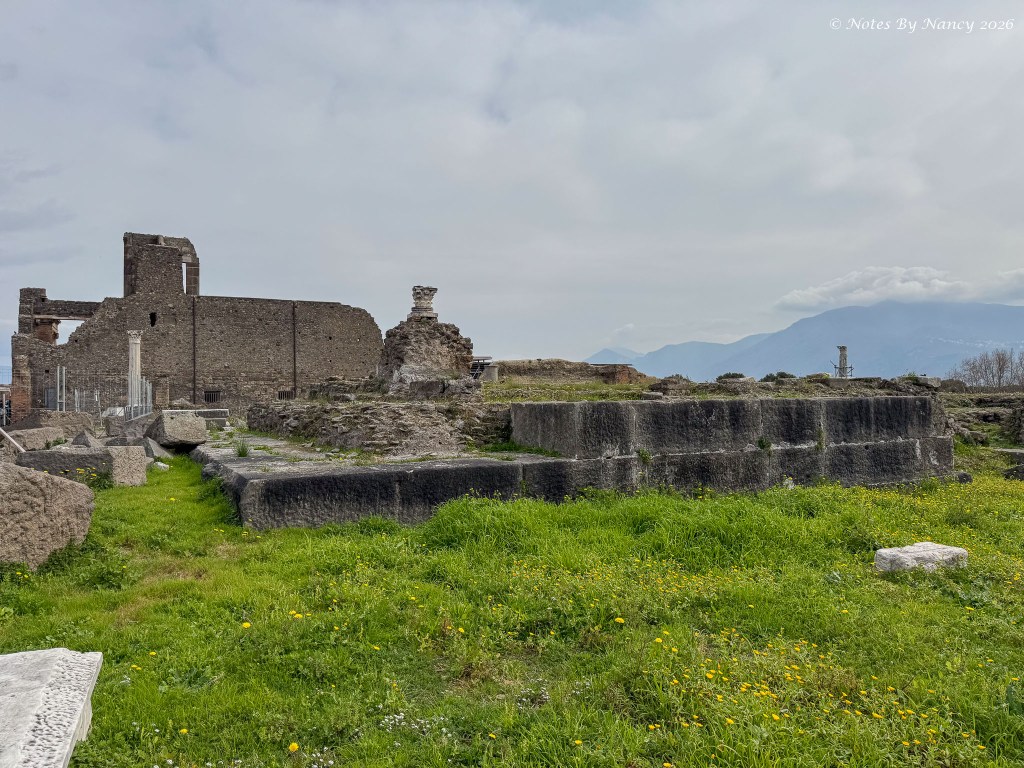
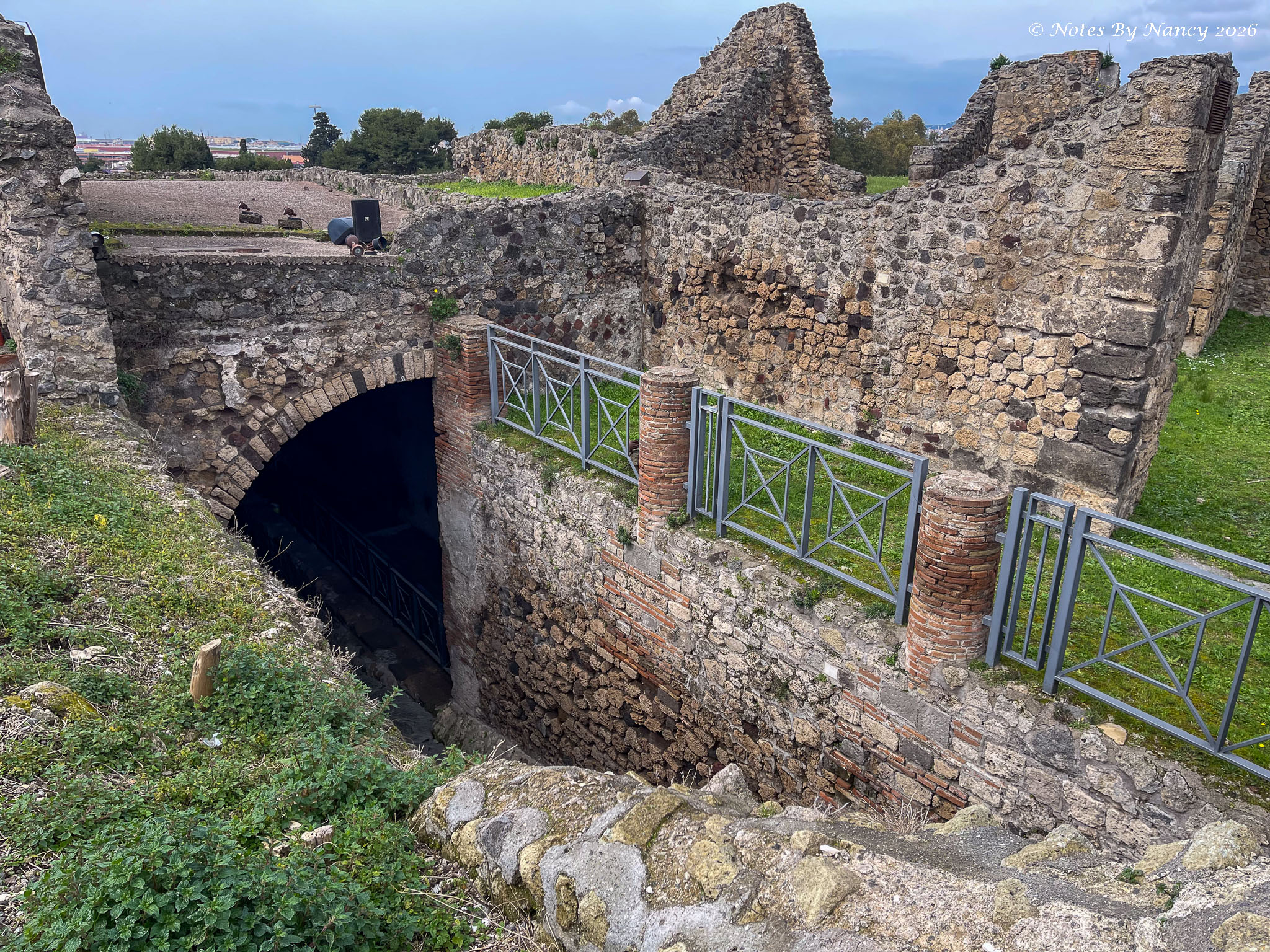
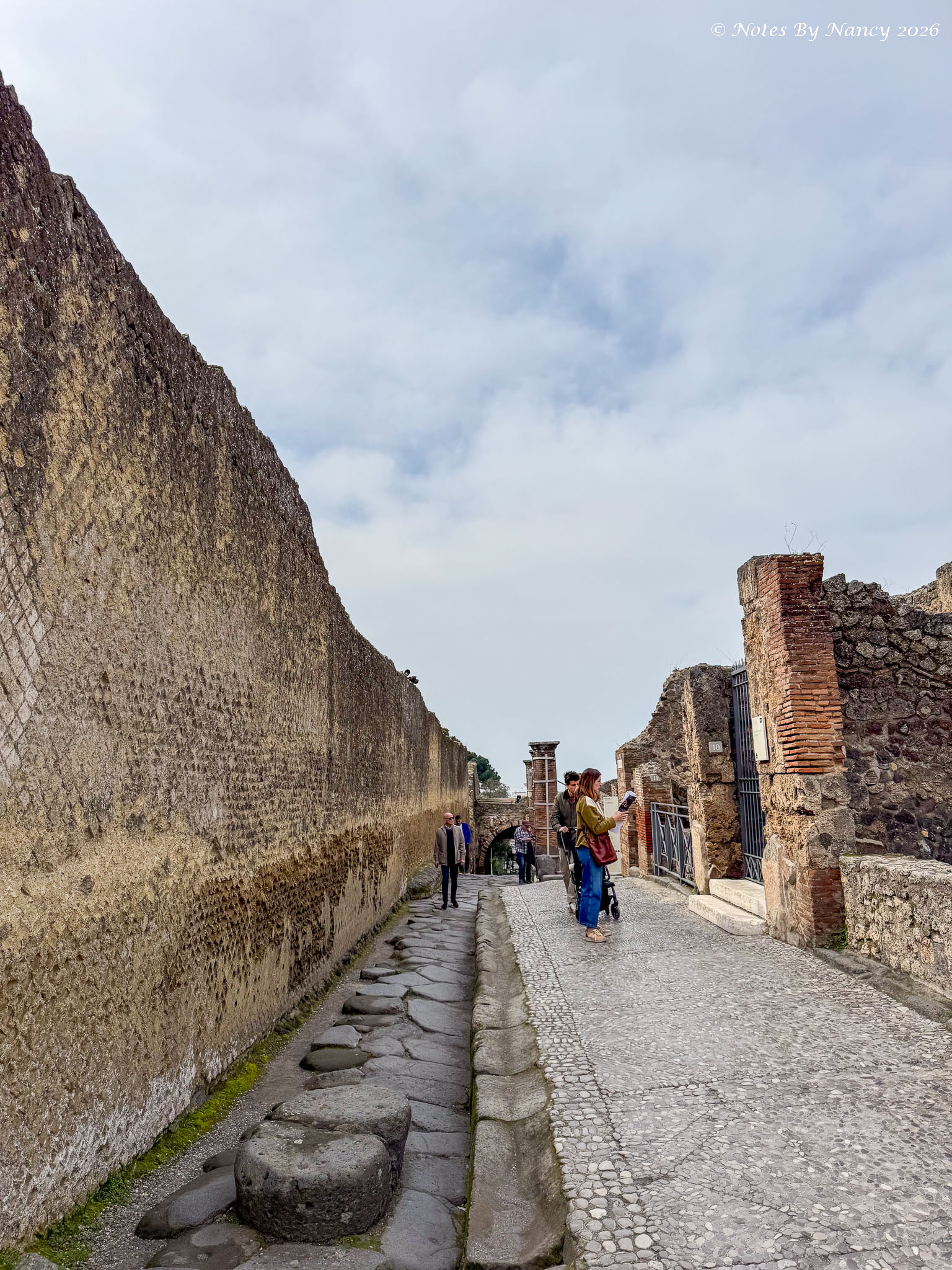
City Walls and Path to the Marina Gate (Left – path down; Right – path leading down). The water is now 1 mile away, but was just outside this gate prior to the 79 AD eruption.
Stepping Stones to avoid the street muck!
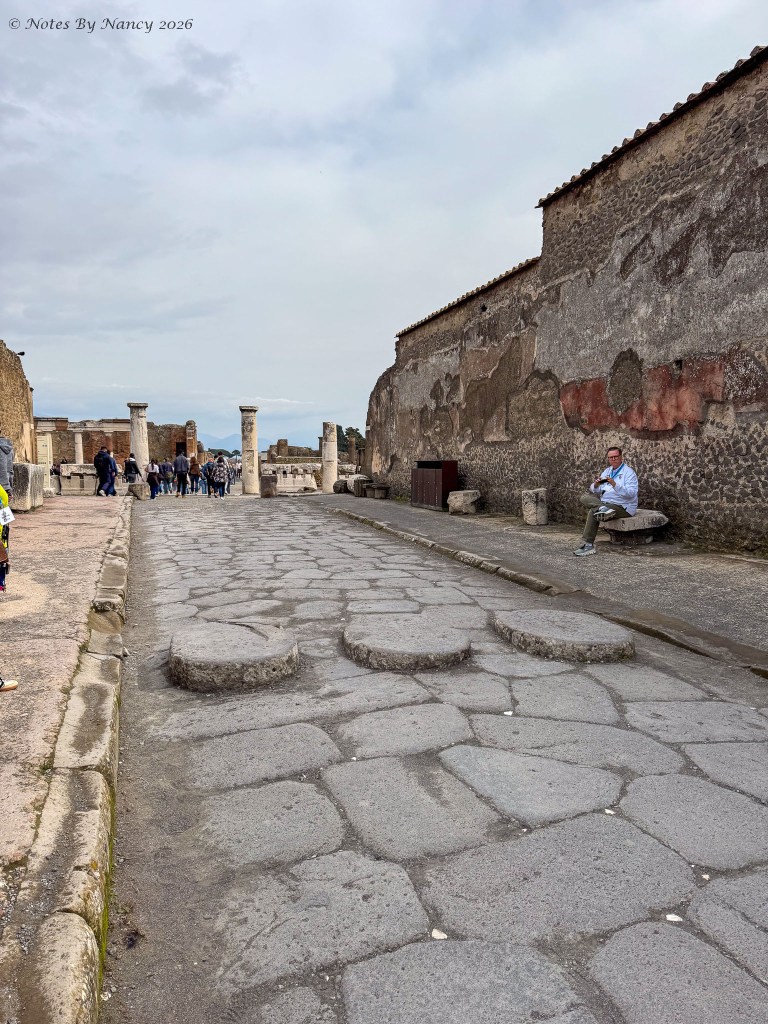
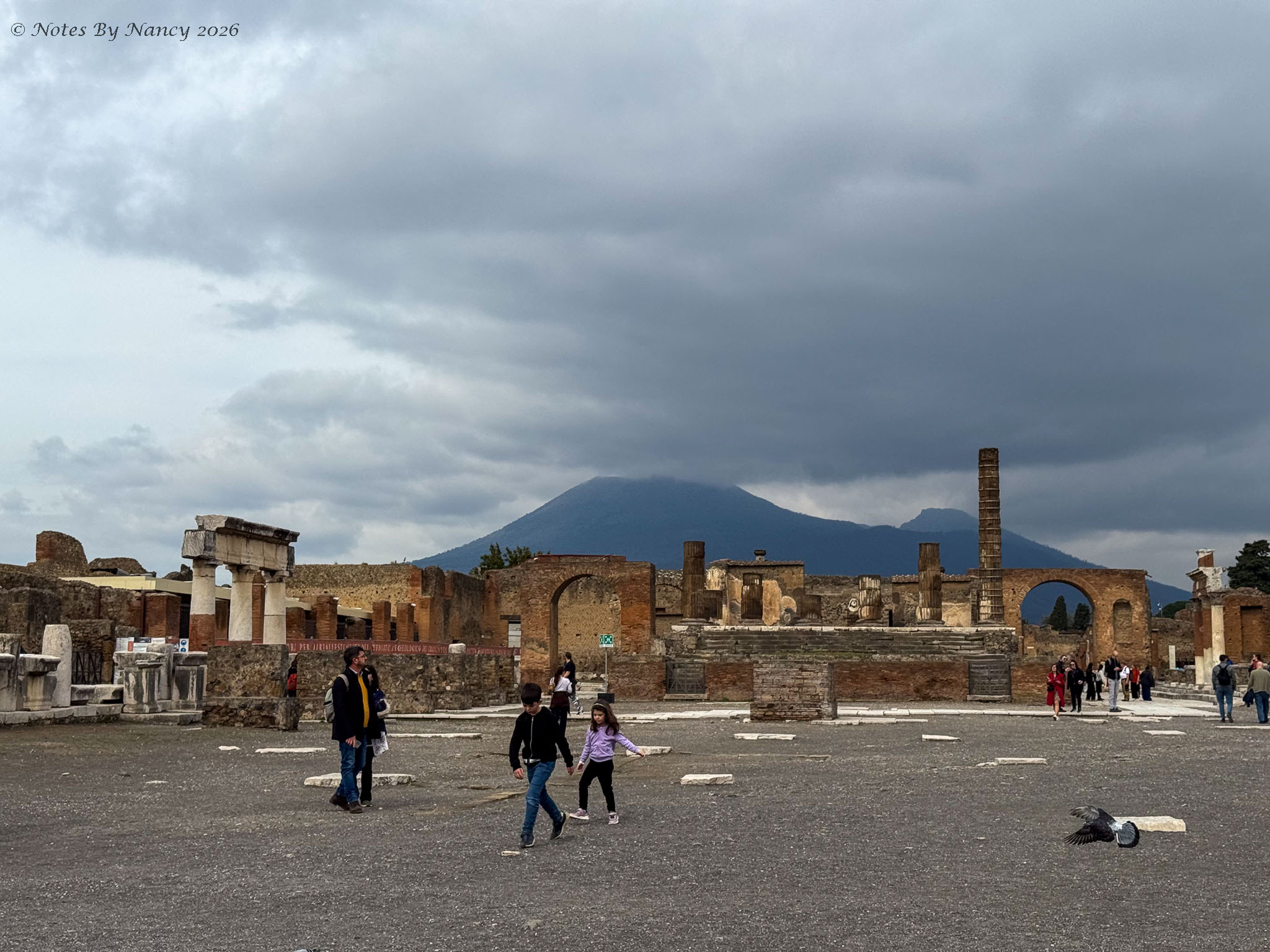
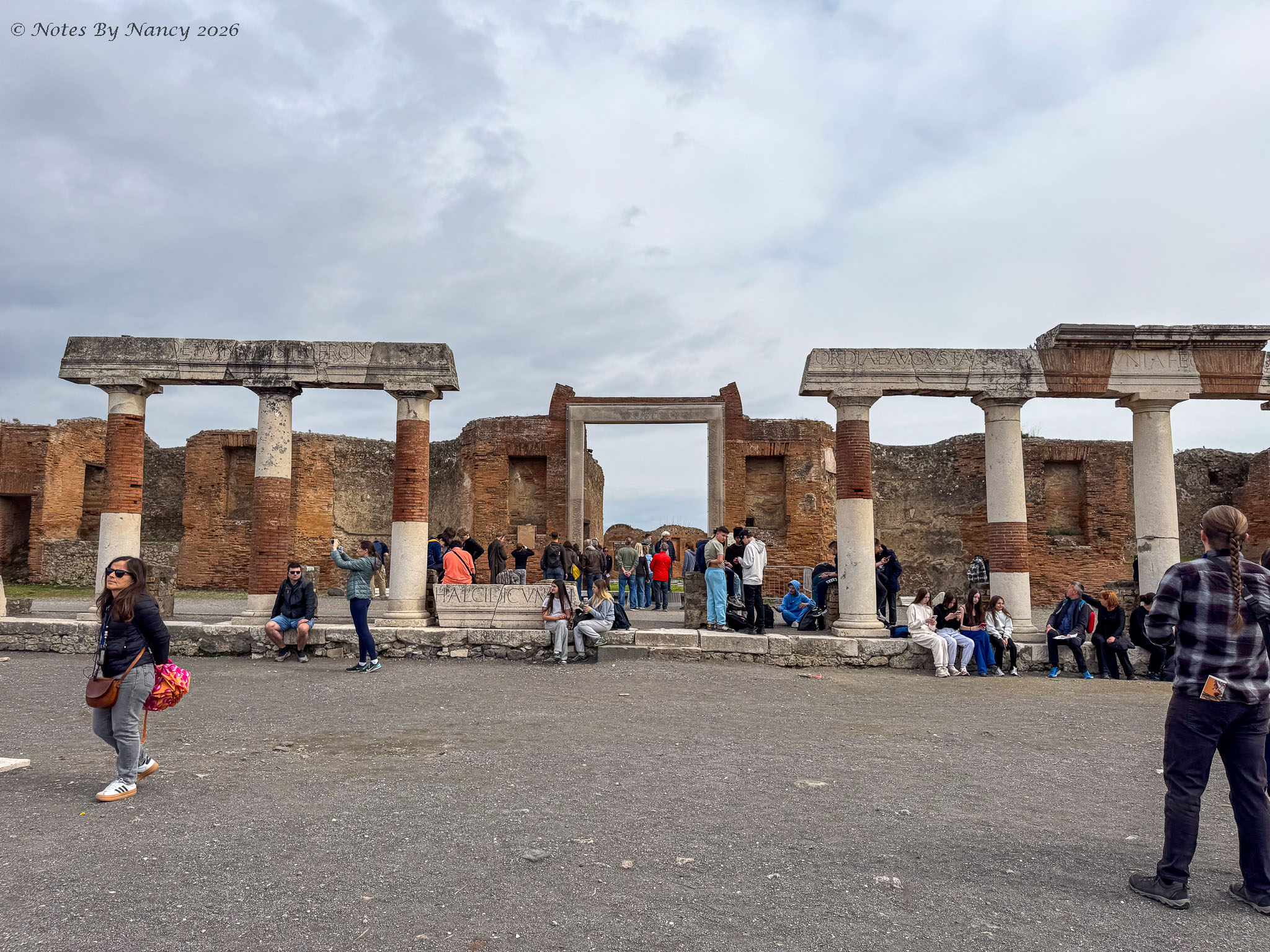
Forum repairs were still in progress from the great earthquake of 62 AD when Vesuvius erupted in 79 AD.
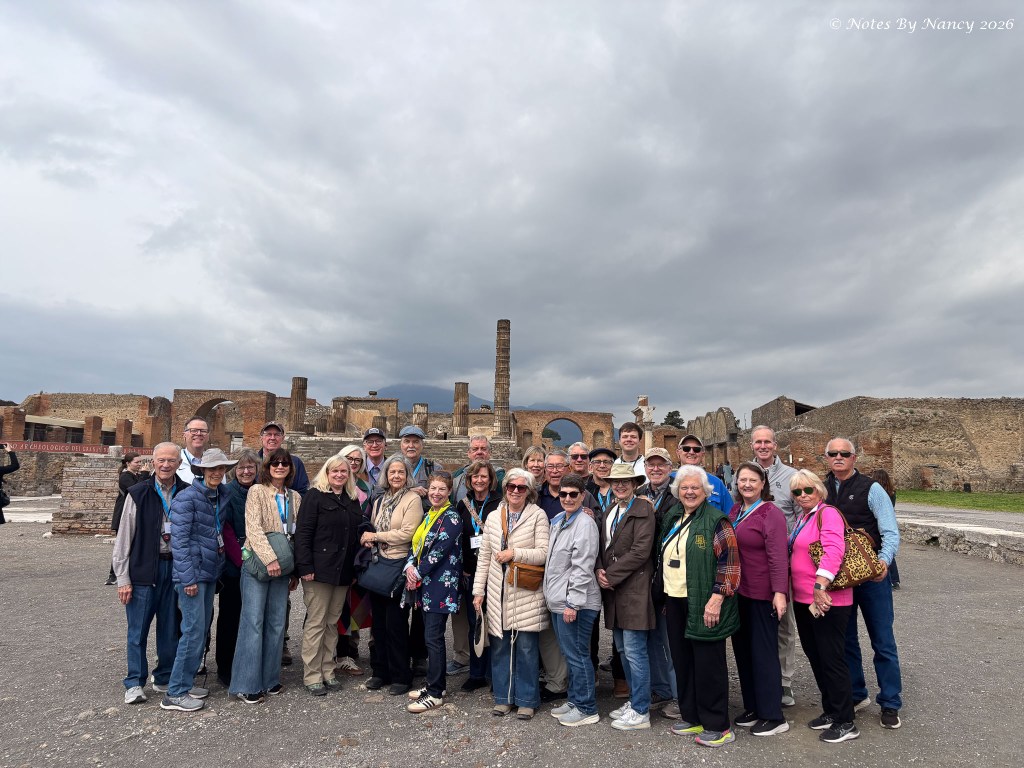
Our group at Pompeii’s Forum with Vesuvius looming in the background.
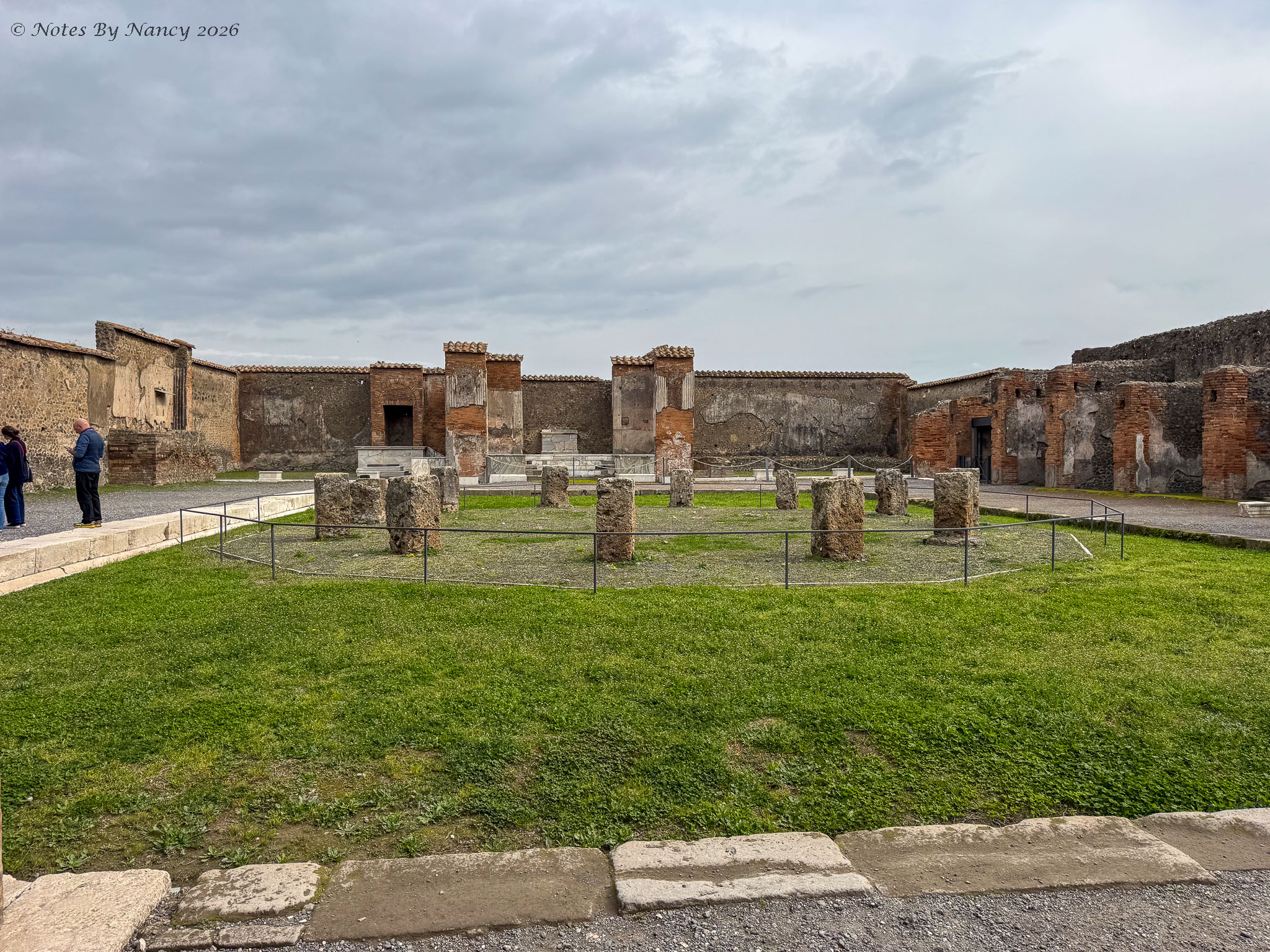
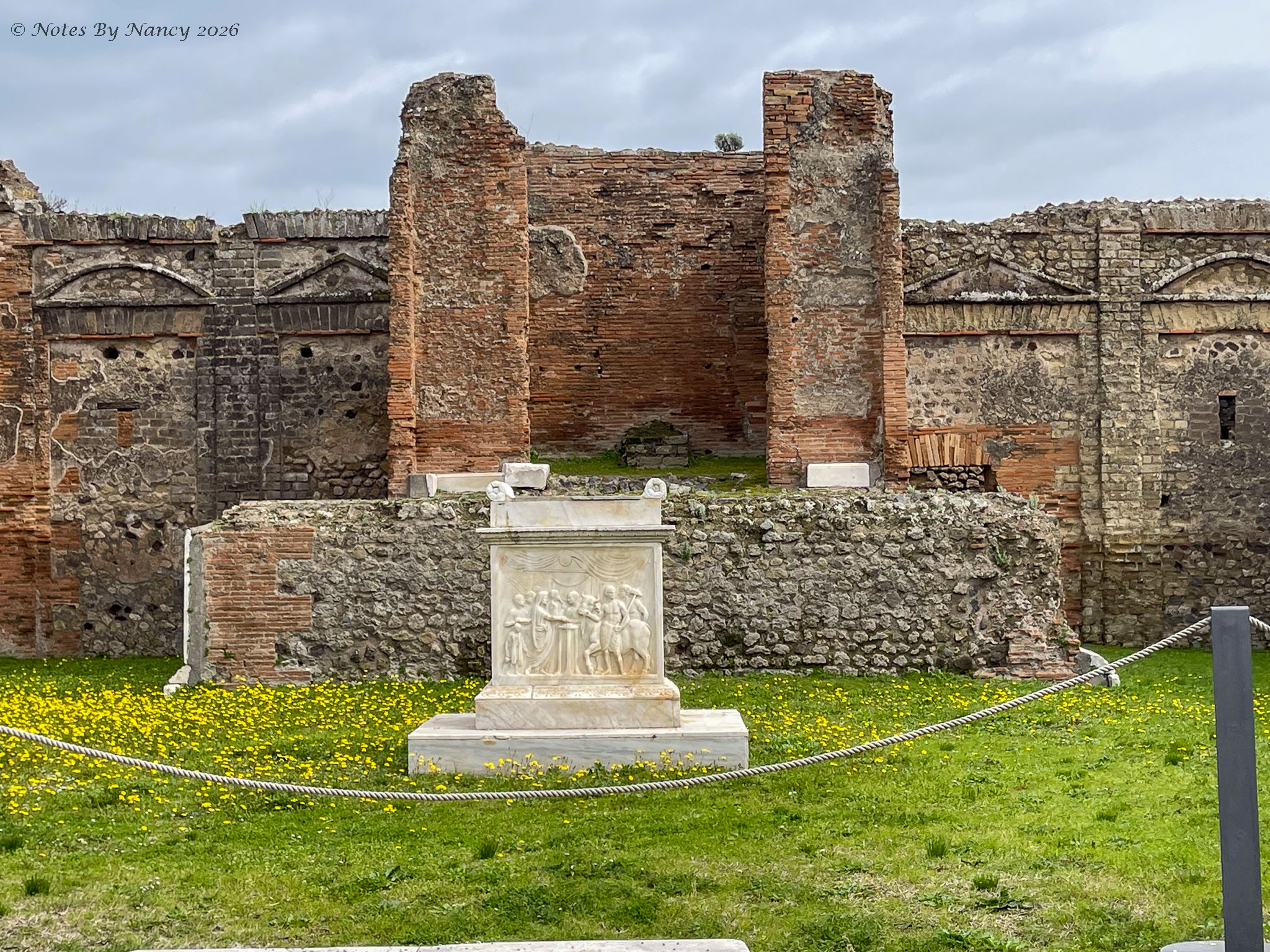
The Macellum, meaning market, contains the Temple of Vespasian – remember the emperors were worshiped as gods. Vespasian reigned from 69-79 AD.
Also in the market area there is a small display of plaster casts – the ash hardened around the bodies which then decayed leaving voids which when filled with plaster show in detail the excruciating positions in which these people died. This process was developed by Giuseppe Fiorelli, the Italian archaeologist who directed excavations from 1860-1875.
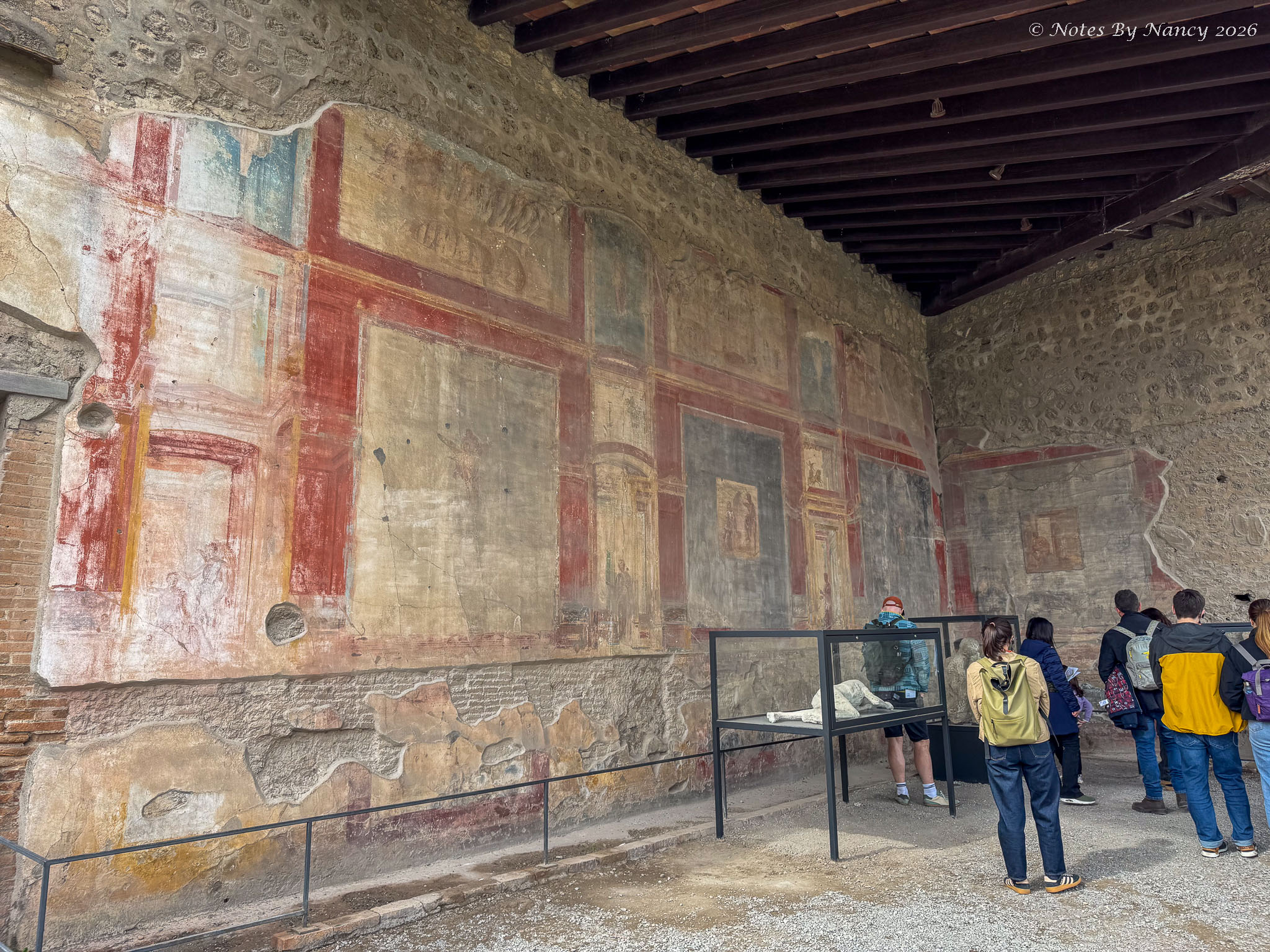
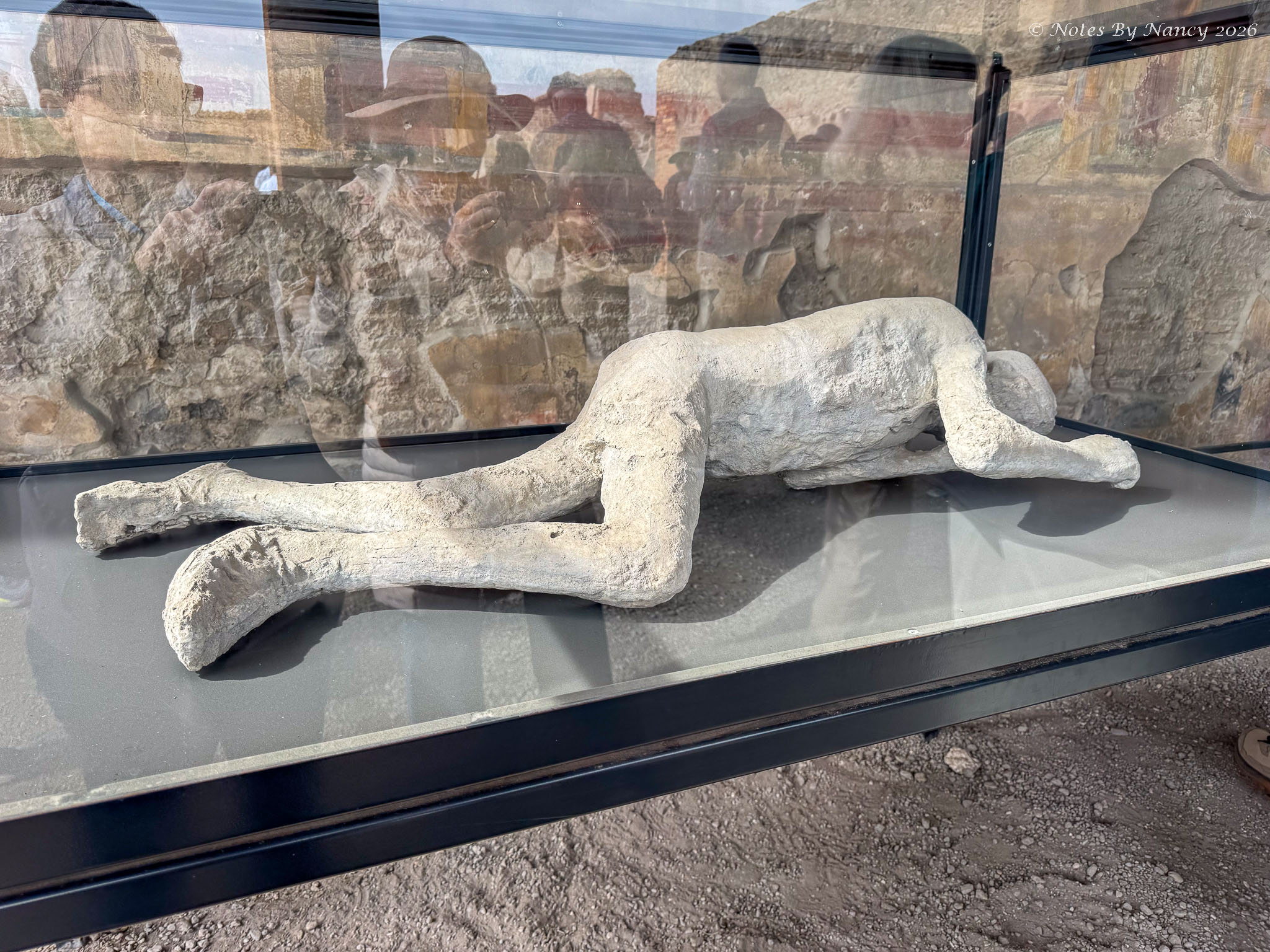
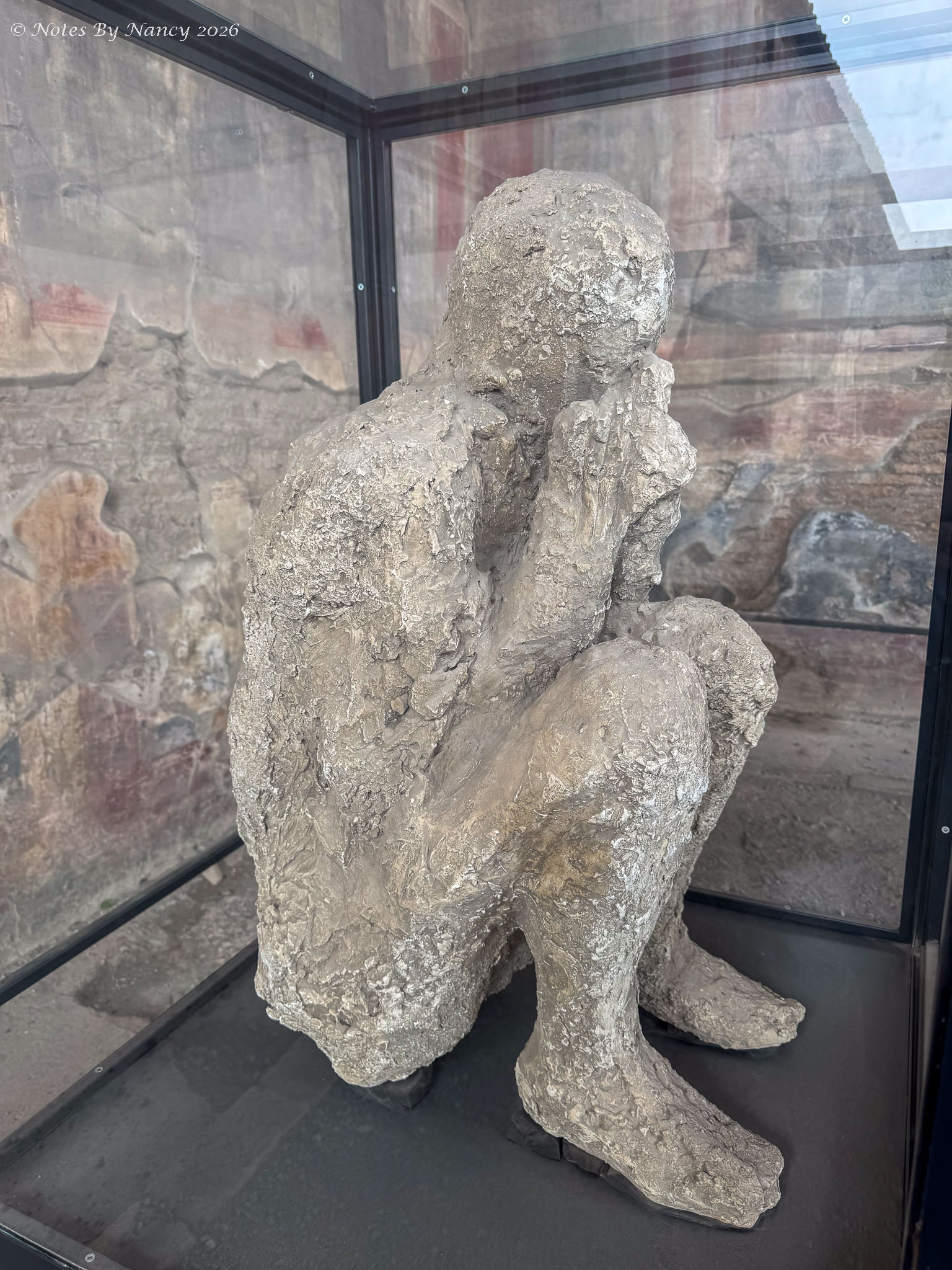
It’s one thing to see the remains of the buildings – this is a whole other level of perspective and it is quite sobering to imagine the horror.
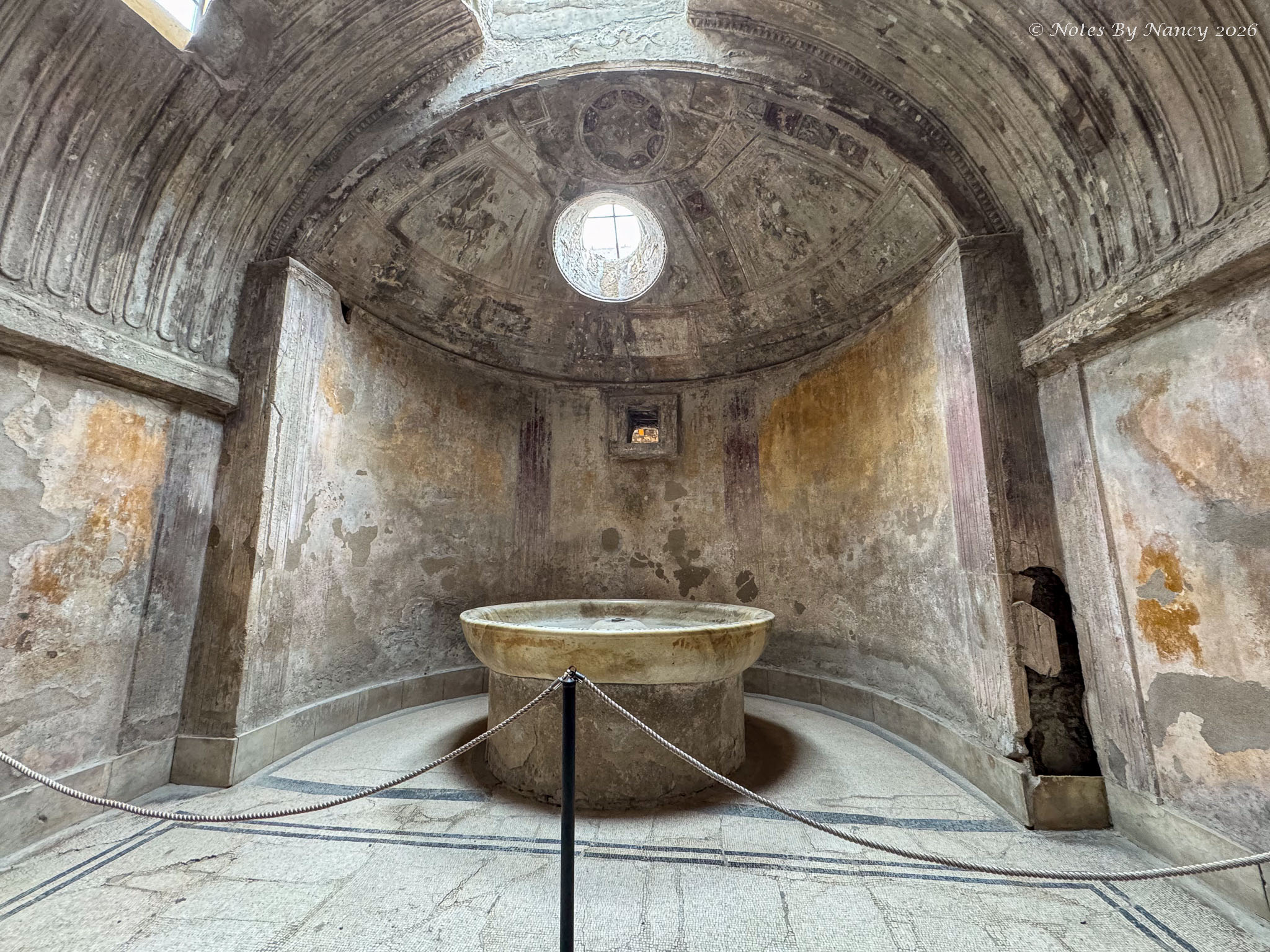
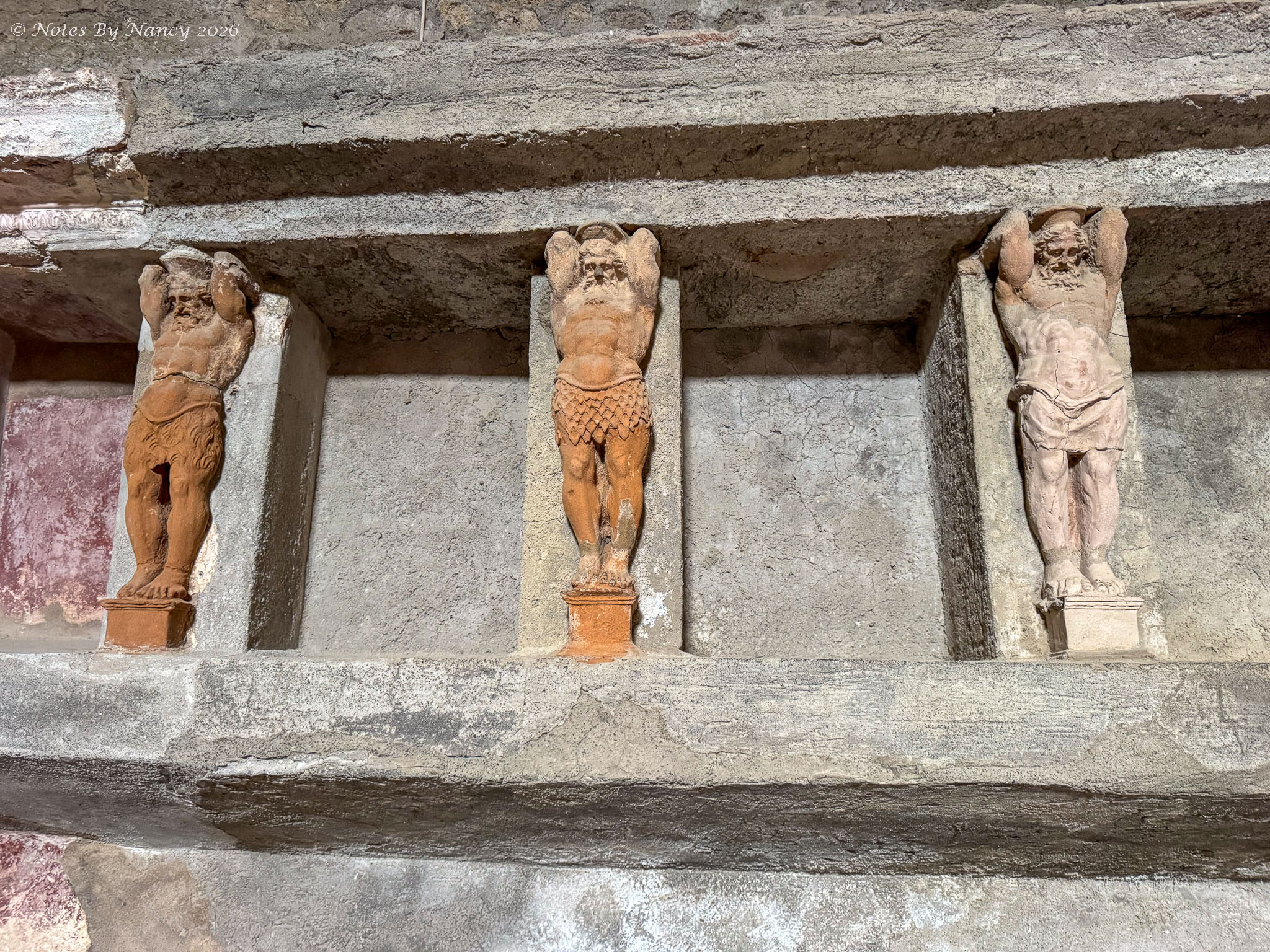
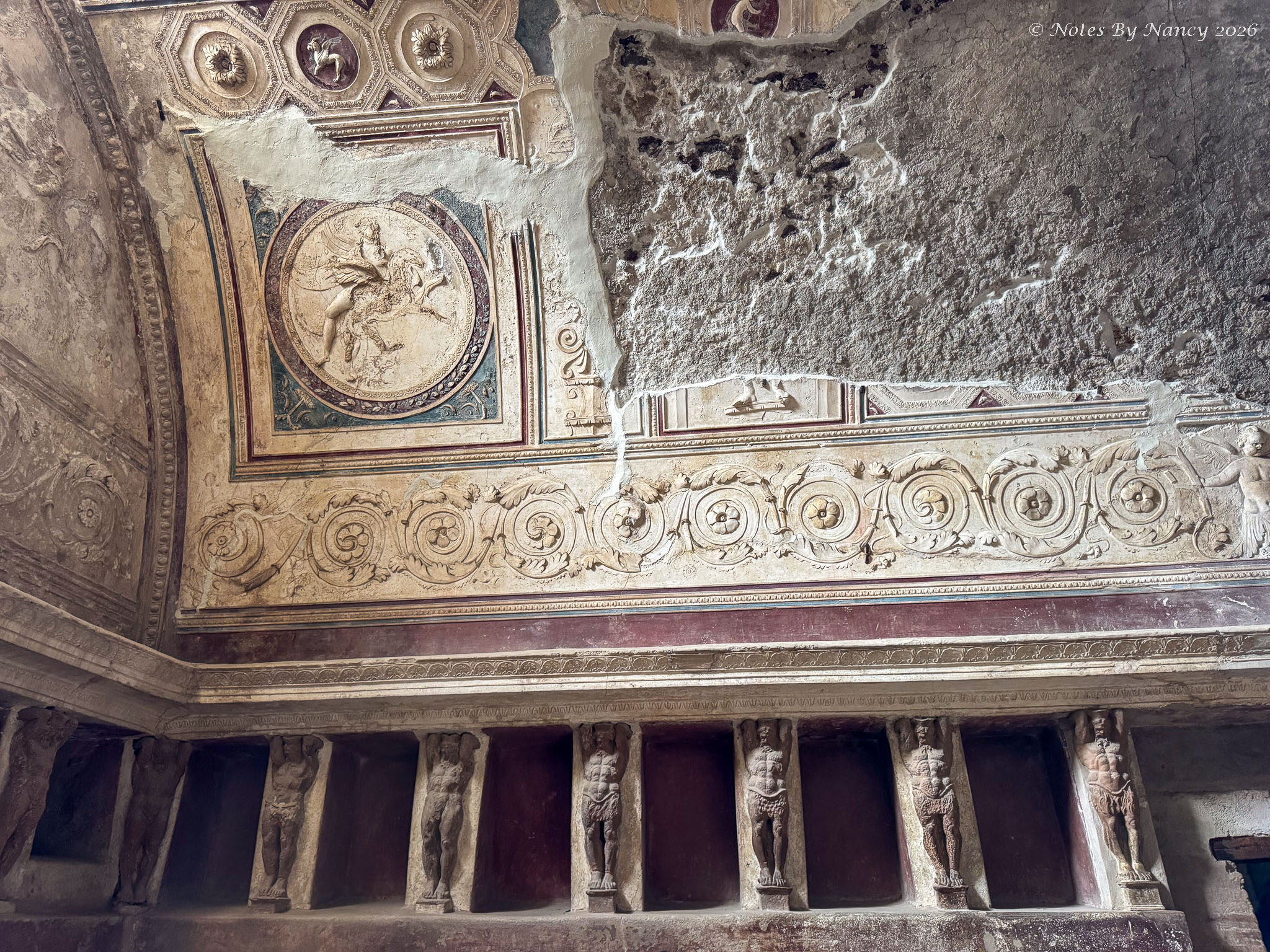
Images from inside the Forum Bath House.
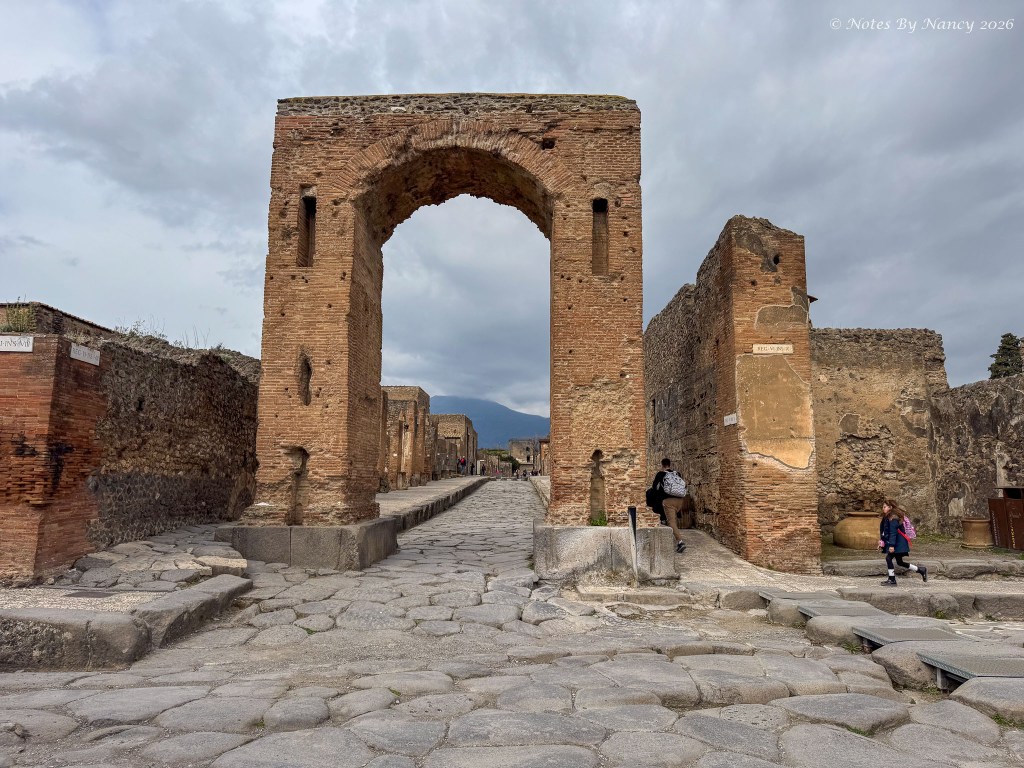
Arch of Caligula (ruled 37 AD – 41 AD)
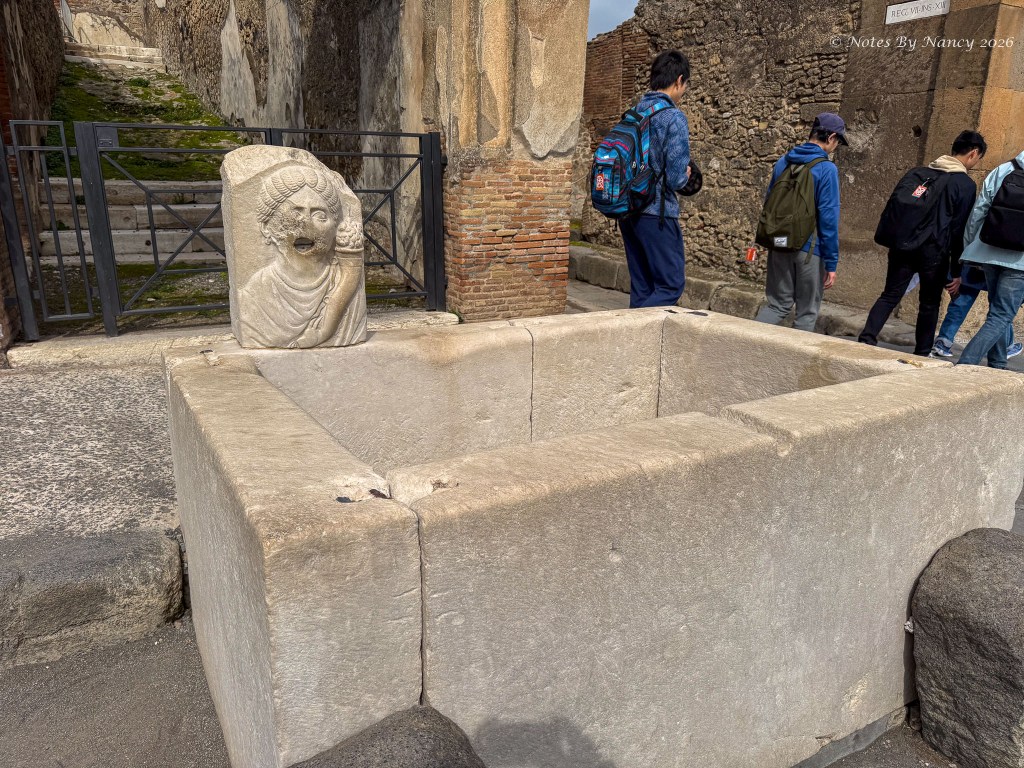
Water fountain troughs similar to this were scattered throughout the city.
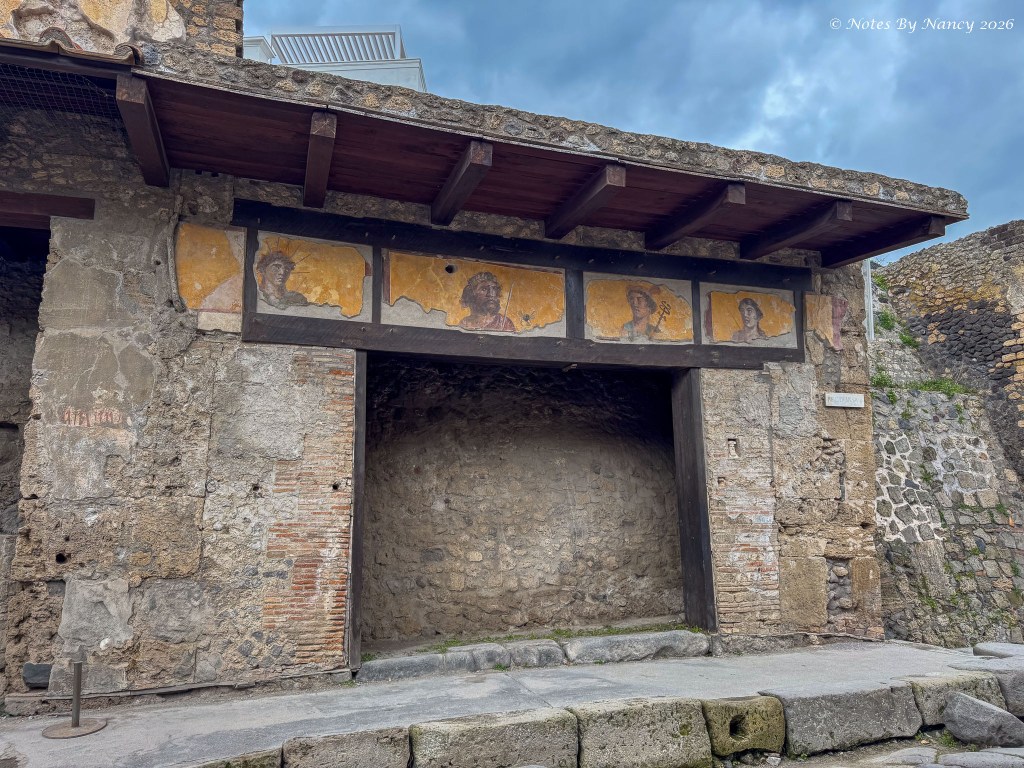
House of Venus and the 4 Gods – depicts opening days of shop – Apollo (Sunday), Jupiter (Thursday), Mercury (Wednesday), Luna (Monday)
House of Fabius Amandio with its elaborate mosaic flooring
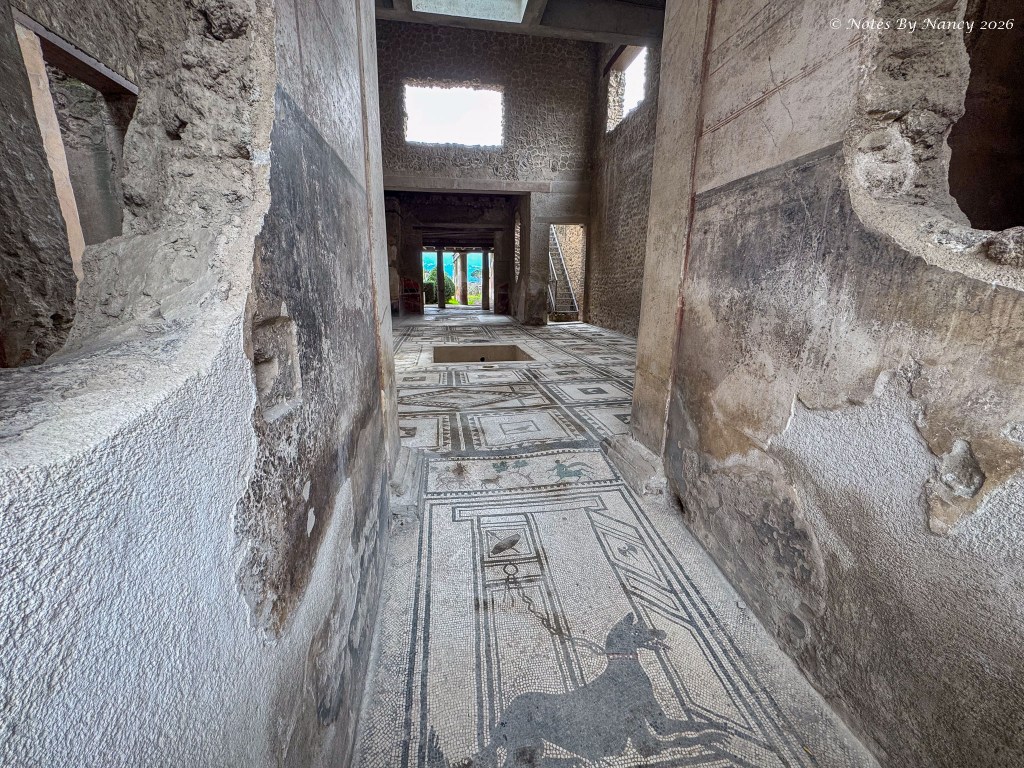
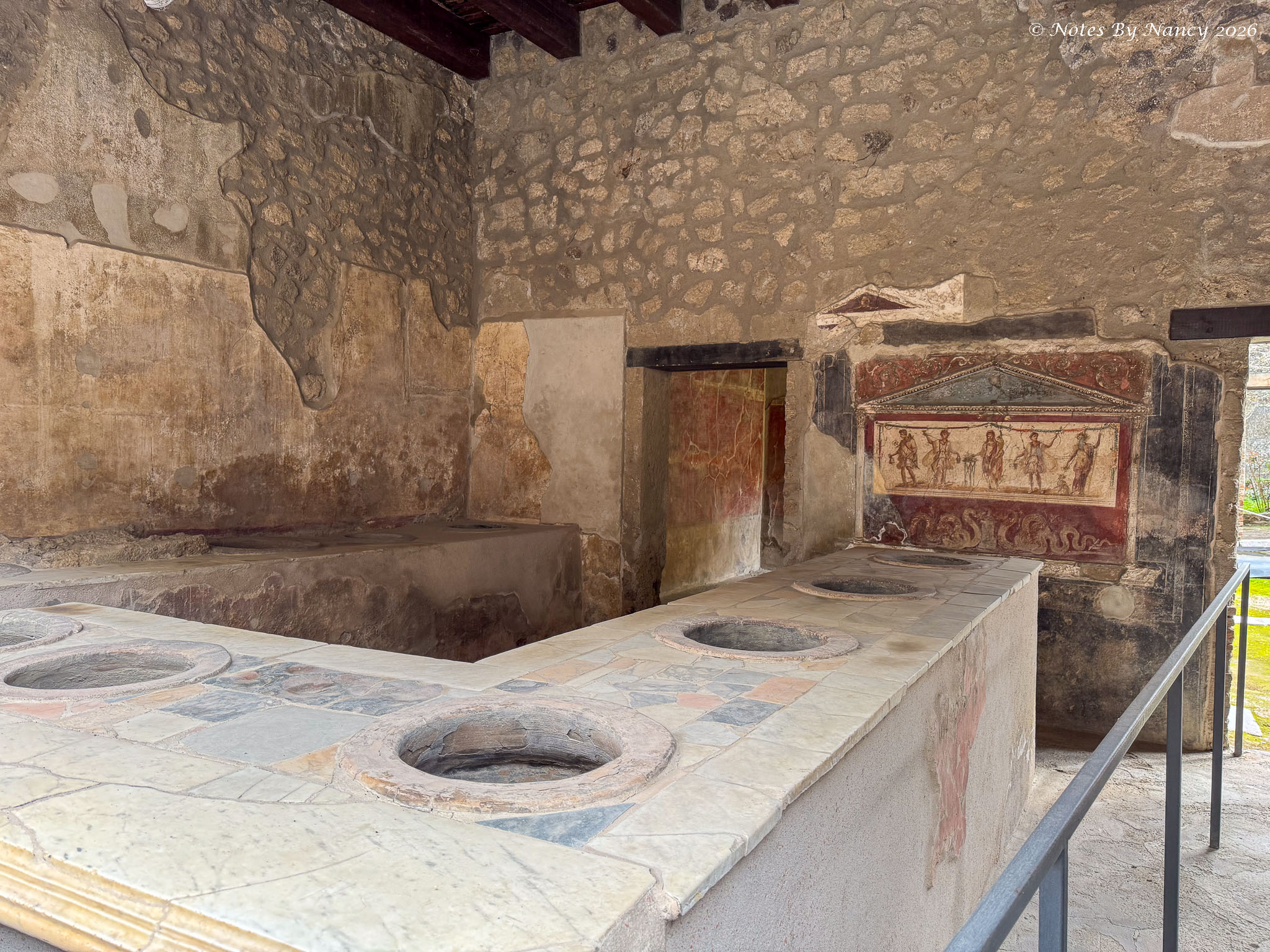
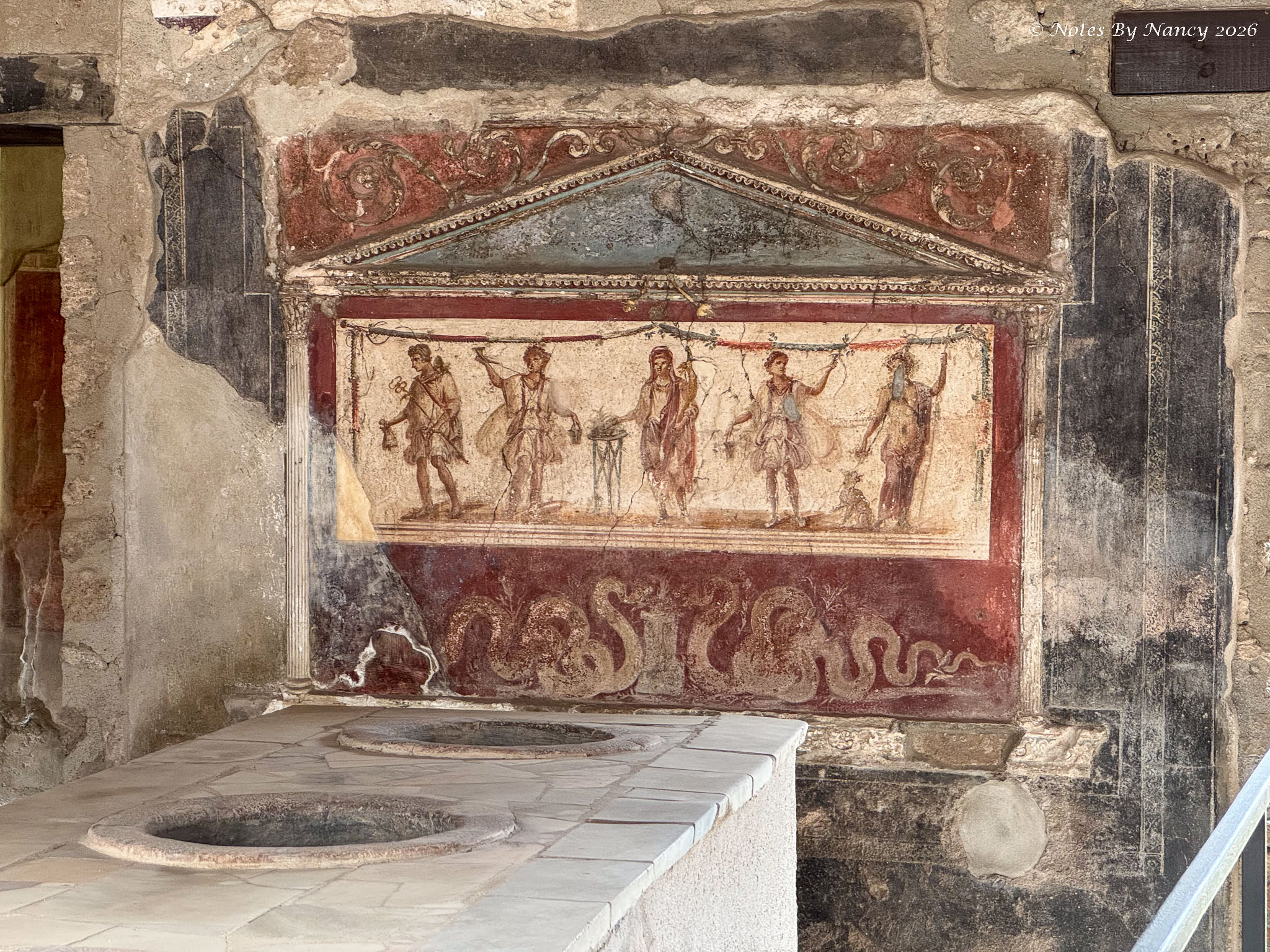
House and Thermopolium (a fast food joint!) of Vetutius Placidus
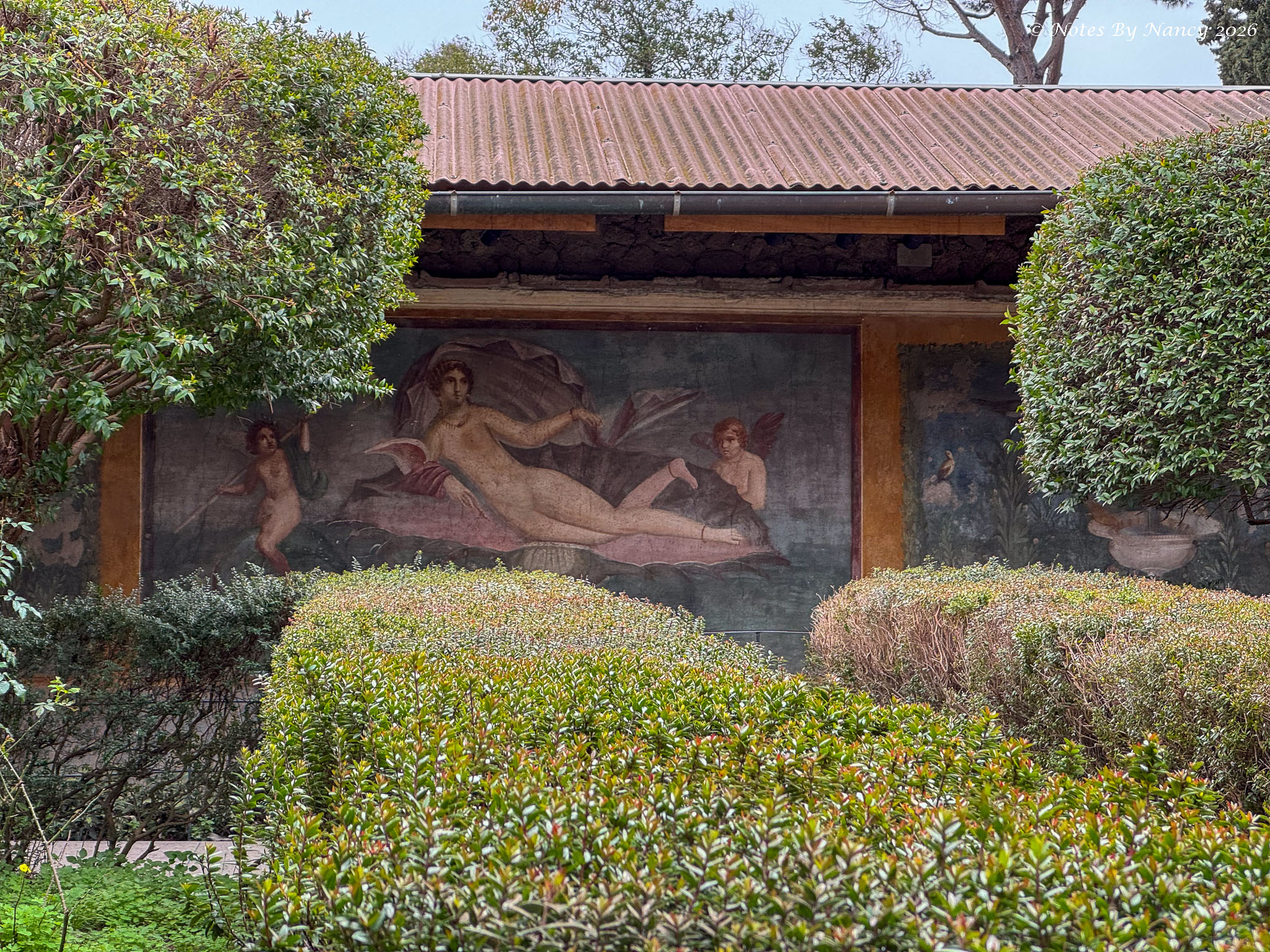
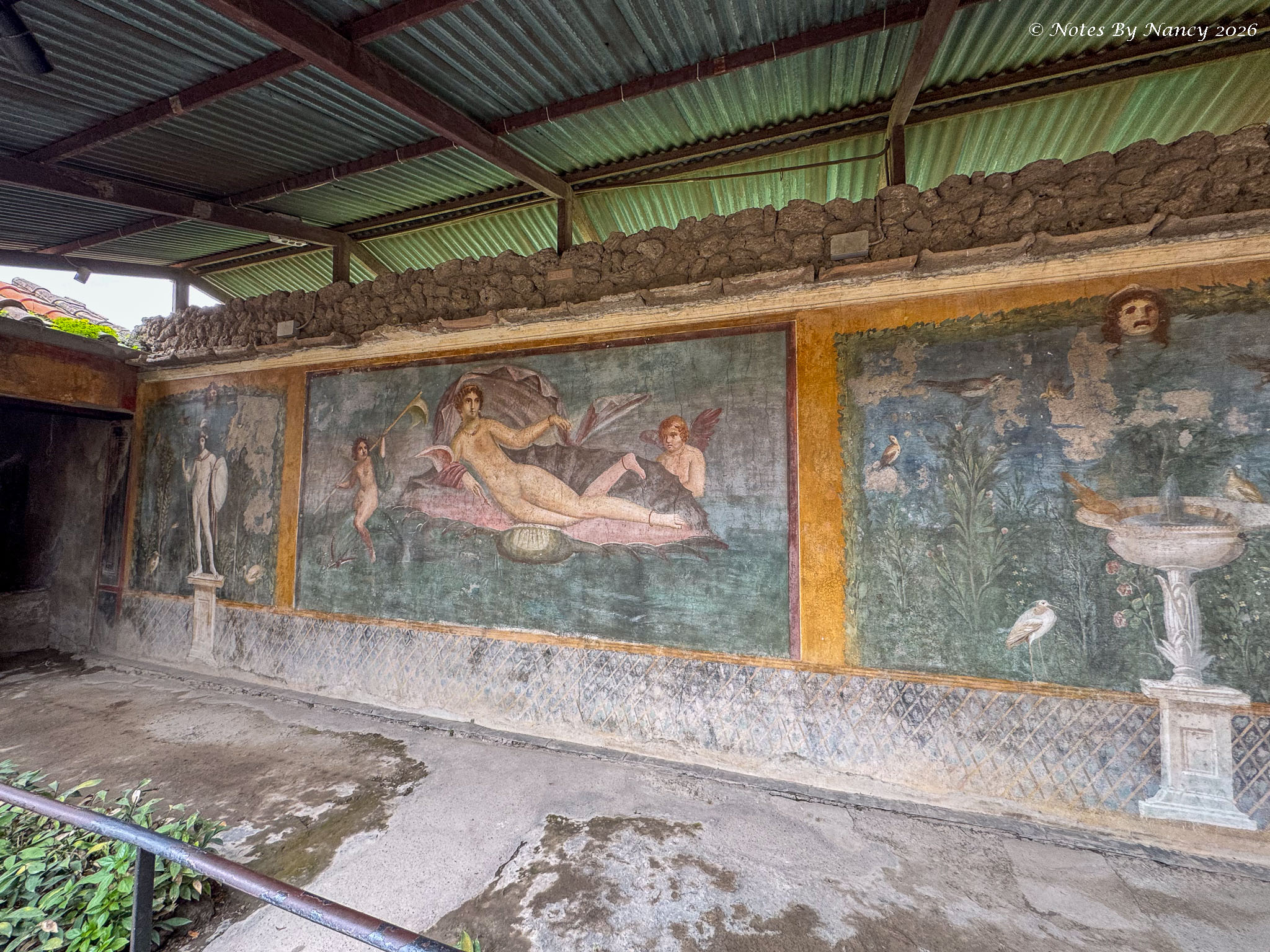
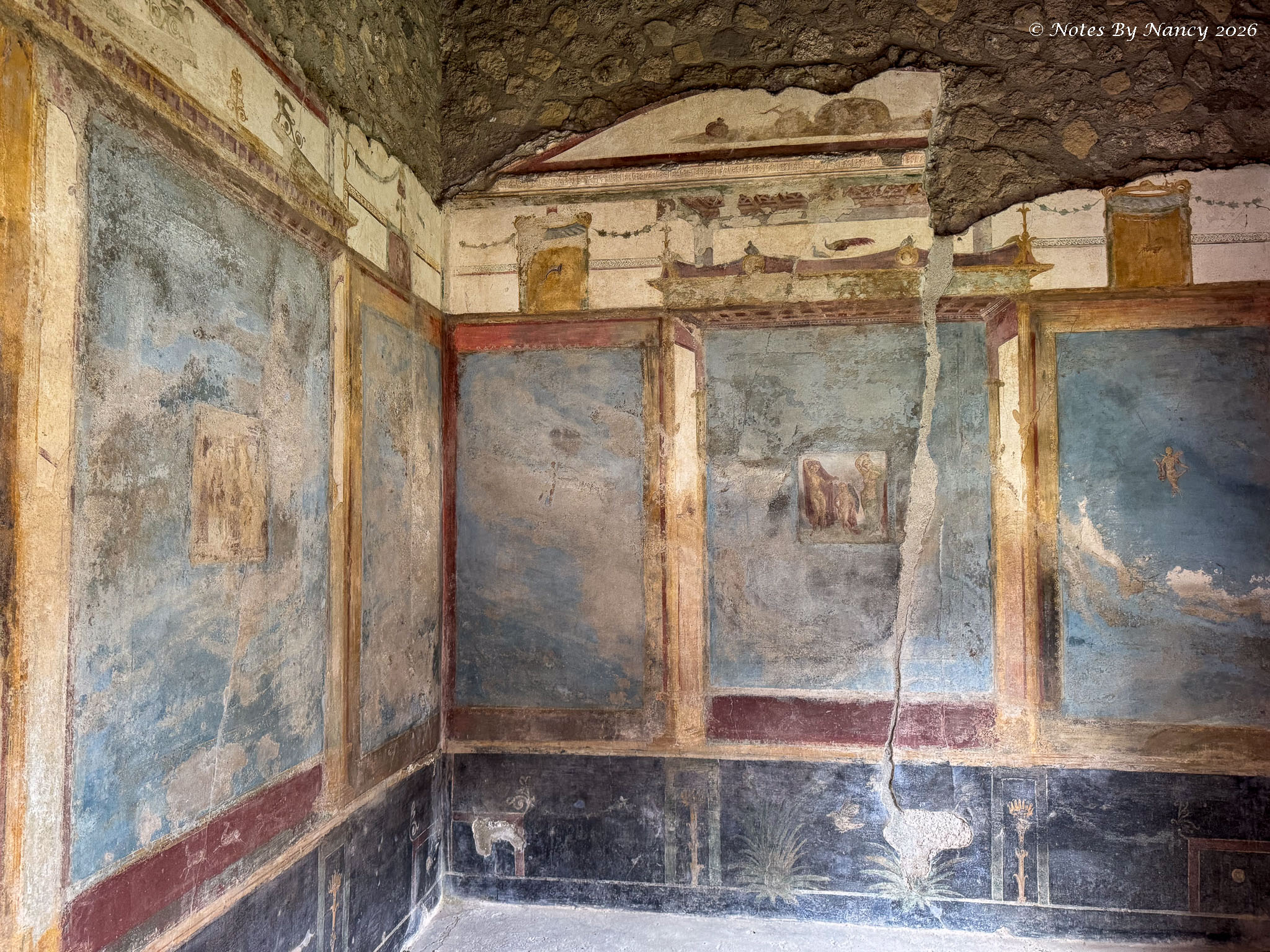
Some of the best preserved fresco paintings are at the House of Venus in a Shell.
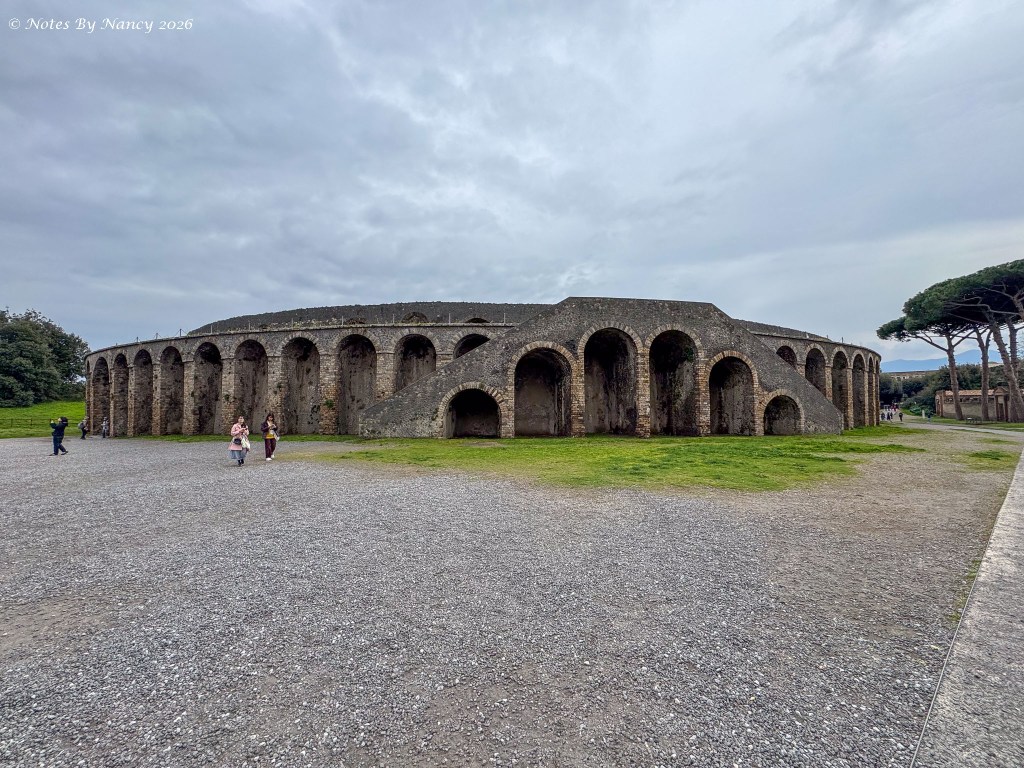
Pompeii’s amphitheater was built around 70 BC and was one of the first built in stone instead of wood and therefore one of the oldest surviving examples of this architecture. It has been used to record/film several performers, perhaps most famously Pink Floyd: Live at Pompeii in 1971.
We spent about 2.5 hours with our local guide seeing as much as we could in that amount of time – you could easily spend twice that amount of time – but we still had to eat lunch and get back to Rome at a reasonable hour to eat dinner!
We walked a few blocks to a nearby restaurant where they had setup a very long table for our group of 30! This was a group lunch, but not a pre-set menu. Everyone ordered separately and later paid separately – so it took a while – but it was nice to sit and visit and discuss our visit to Pompeii and the trip so far with those around us.
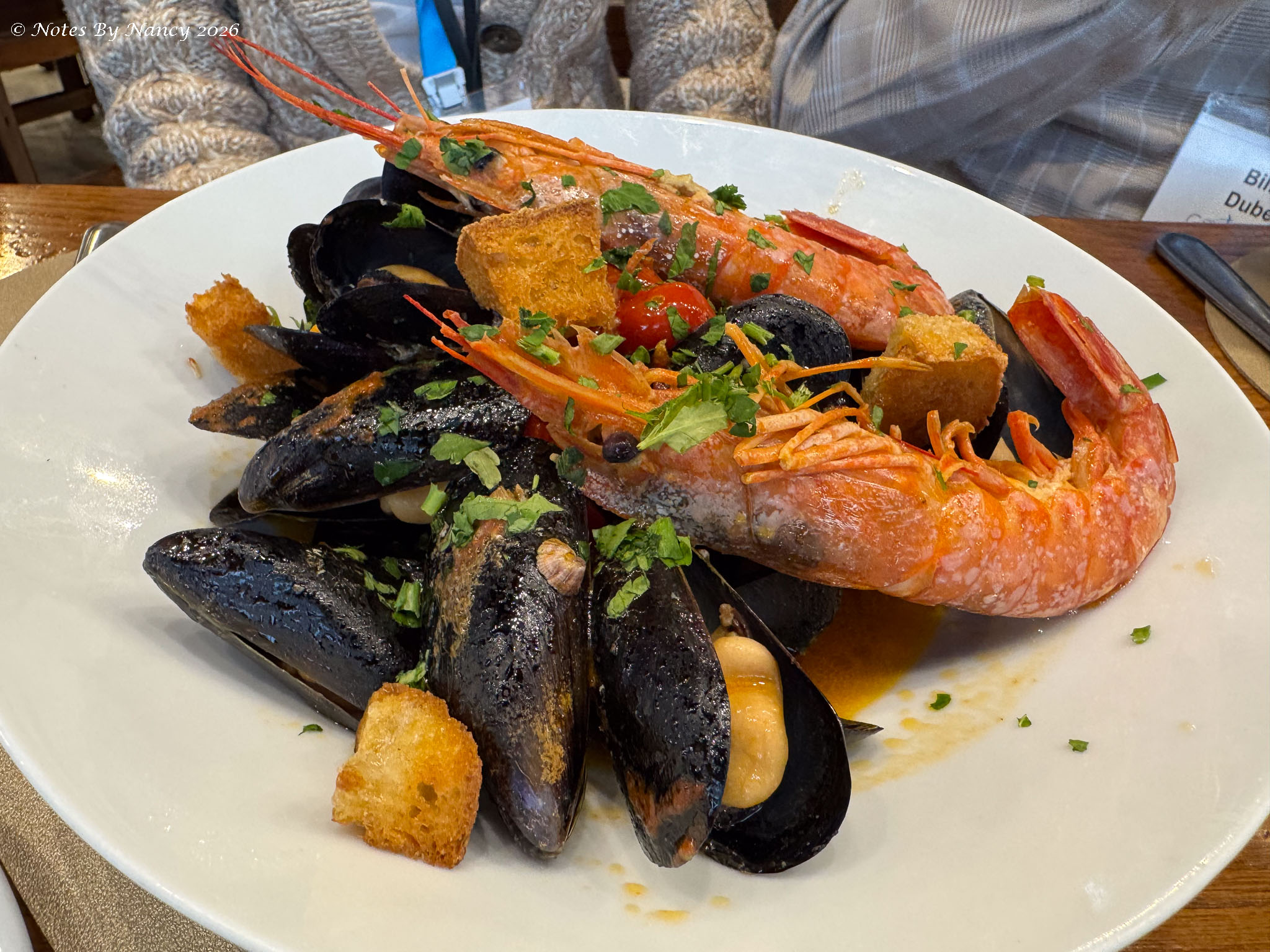
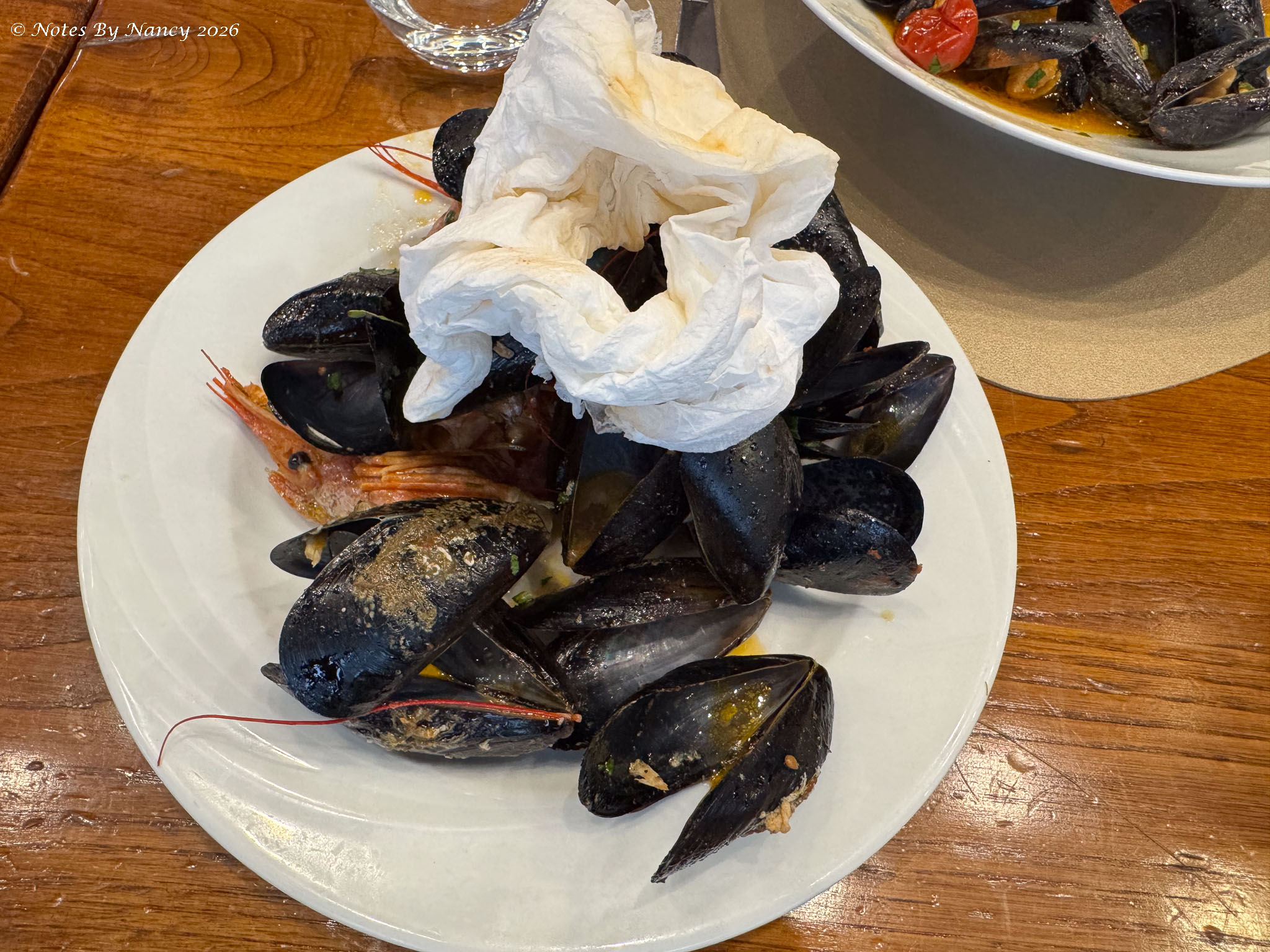
Dave and I both ordered pizza – again. Not a very interesting picture although very tasty. So here’s a before and after picture of one of our new friend’s seafood meal of prawns and mussels!
It was a long ride back to Rome. We had a little time to freshen up before heading to our group dinner. It feels like all we have done is walk and eat, walk and eat! But, now we are down to one final day tomorrow.
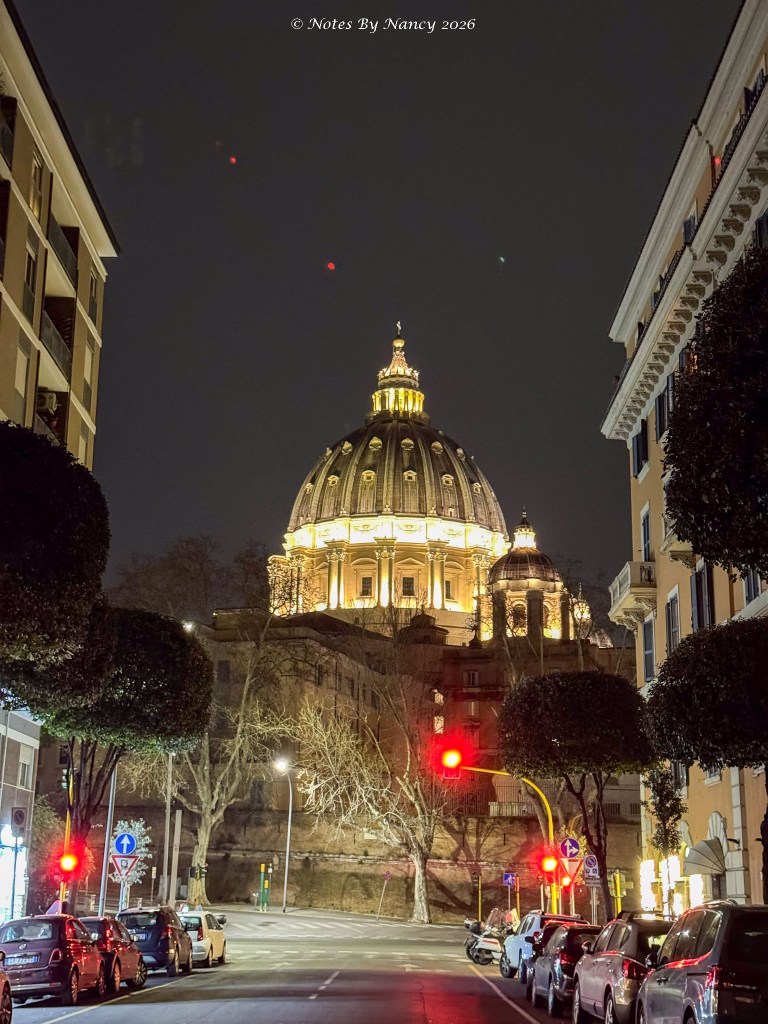
I took this picture outside the hotel when we returned from dinner. The end of another memorable day.




 Notes By Nancy
Leave a comment