
Yes, I’m finally posting this 2 months after the fact…
Viking Ocean’s Mediterranean Odyssey Day 7 of 13
Weather Report
Partly Cloudy, Low to mid-70s
Today’s Plan
Dave and I are taking the Viking optional tour, Ancient Herculaneum, in the morning. Keith and Paula are going on the Viking optional tour, Naples, Above & Below: A Walking Tour. Originally, we signed up for the afternoon included walking tour of Naples but decided to cancel it as we weren’t sure we’d get back from the morning tour in time to eat lunch and meet for that tour. If we feel like it after lunch, we will just DIY it.
Viking Daily
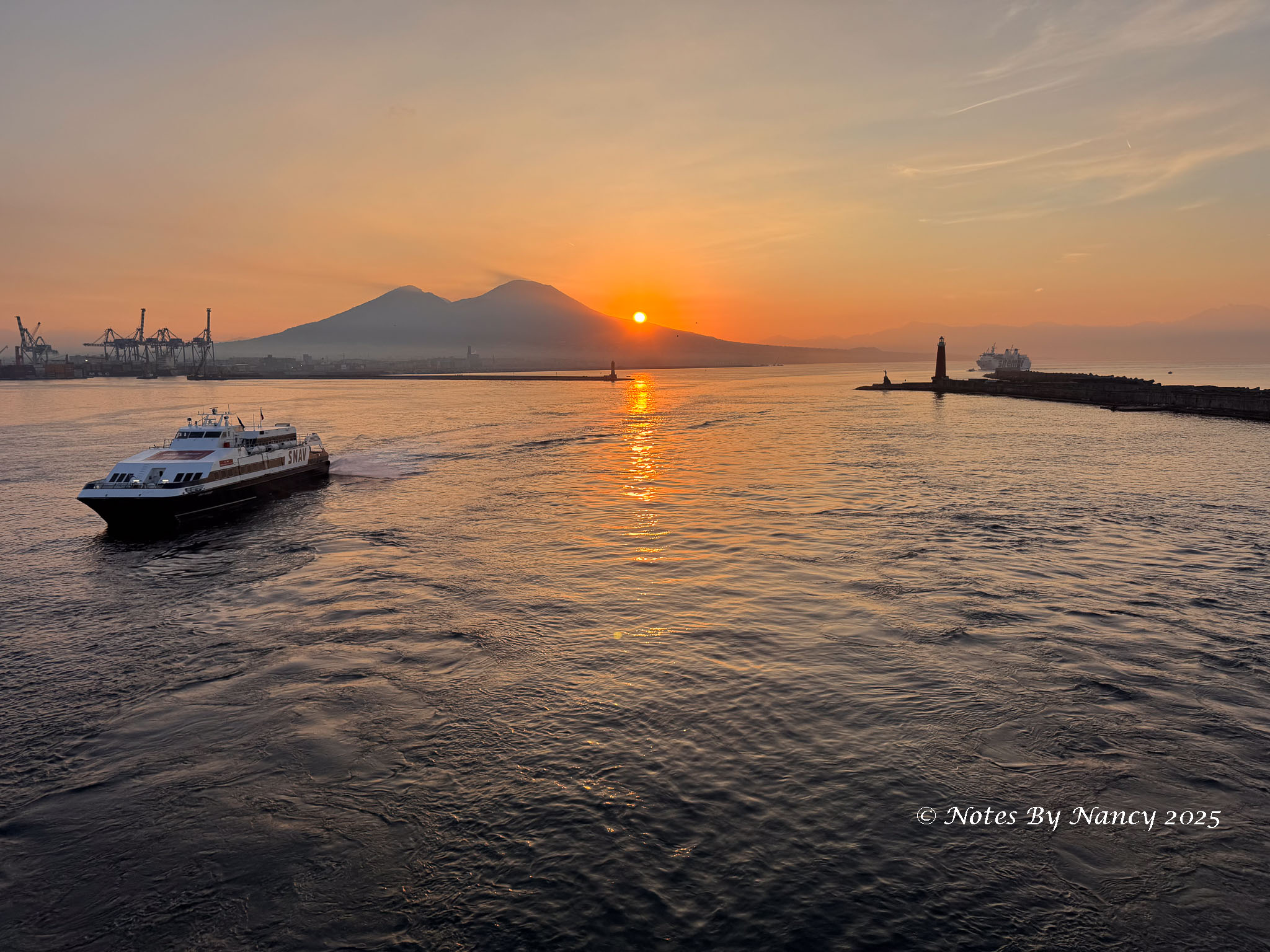
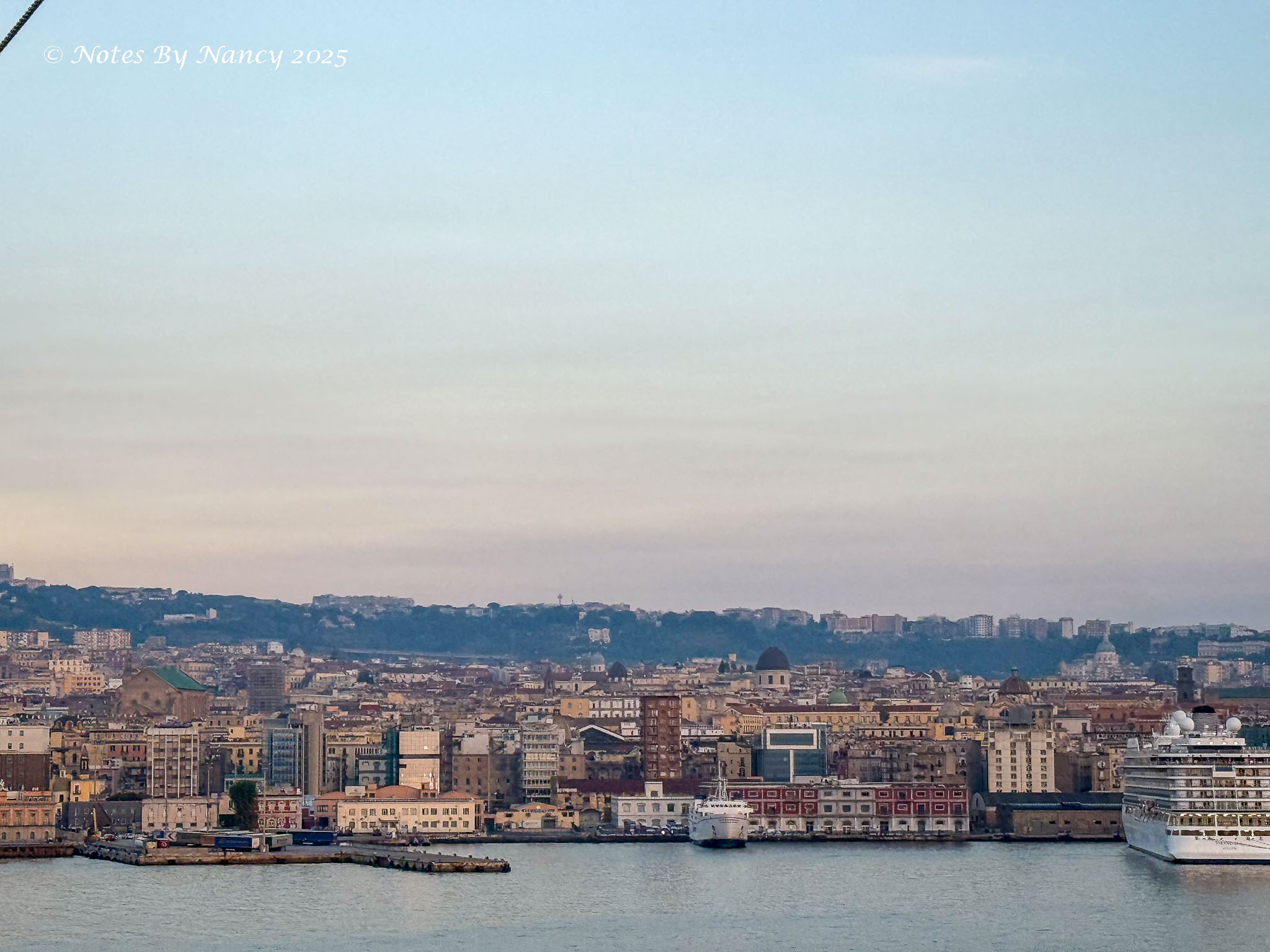
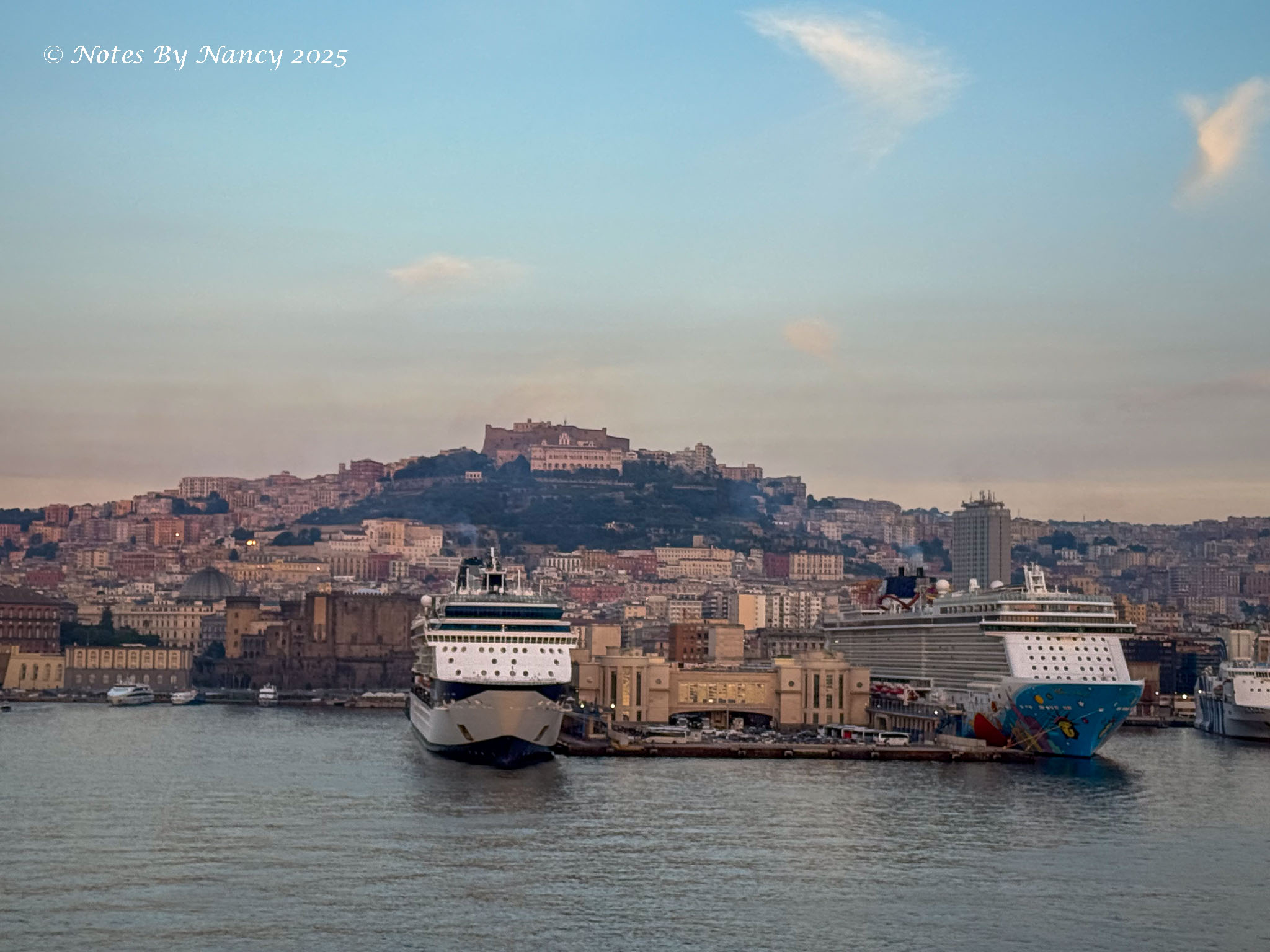
Dawn Arrival in Naples
Multiple cruise ships are in port today, including a sister Viking ship, Viking Sea. Mount Vesuvius looms beyond the city and bay.
Ancient Herculaneum
- Cost/person: $149
- Viking Difficulty Rating: Demanding
- Duration: 4 Hours
Discover the “other Pompeii,” often overlooked for its more famous neighbor but equally fascinating.
Situated close to Mt. Vesuvius, the upper-class seafront town of Herculaneum was also destroyed by the great eruption of 79 AD, but not by fire and ash. Rather, flowing hot mud engulfed the town, poured into its buildings and preserved them from total destruction. The town remained buried for 1,600 years. As you explore this UNESCO World Heritage Site in its stunning setting between mountains and ocean, you will admire mosaics and frescoes that have retained their rich colors and details; and buildings and bathhouses that are remarkably intact with complete roofs, beds and doors. Step back in time during a walking tour of this incredible site with your guide, who will share stories of daily life here. Then enjoy free time on your own before returning to your ship.
As previously mentioned, this is the first time for Dave and I to be in Italy, but we have a land trip booked in 2026. Therefore, when looking at the tours from Naples, we decided to see Herculaneum now as Pompeii is on the itinerary for the next trip. Herculaneum was primarily a seaside resort for the wealthy with a population around 5000, much smaller than Pompeii, a major commercial center with an estimated population of 10,000-20,000.
We had a fabulous guide who explained that Herculaneum was destroyed by the pyroclastic flow of mud from the AD 79 eruption of Mount Vesuvius which covered Pompeii in ash. Thus, the impacts of what was destroyed versus preserved differ between the two sites. Herculaneum was “discovered” in the early 1700s, and excavations have been ongoing intermittently since.
Herculaneum is only about 7 miles (11 kilometers) from the port of Naples, but with traffic getting out of and into the port, it took us 20-30 minutes each way. Pompeii is about 15 miles from the port and located on the southeast side of Mount Vesuvius. Herculaneum is on the west-southwest side of Mount Vesuvius.
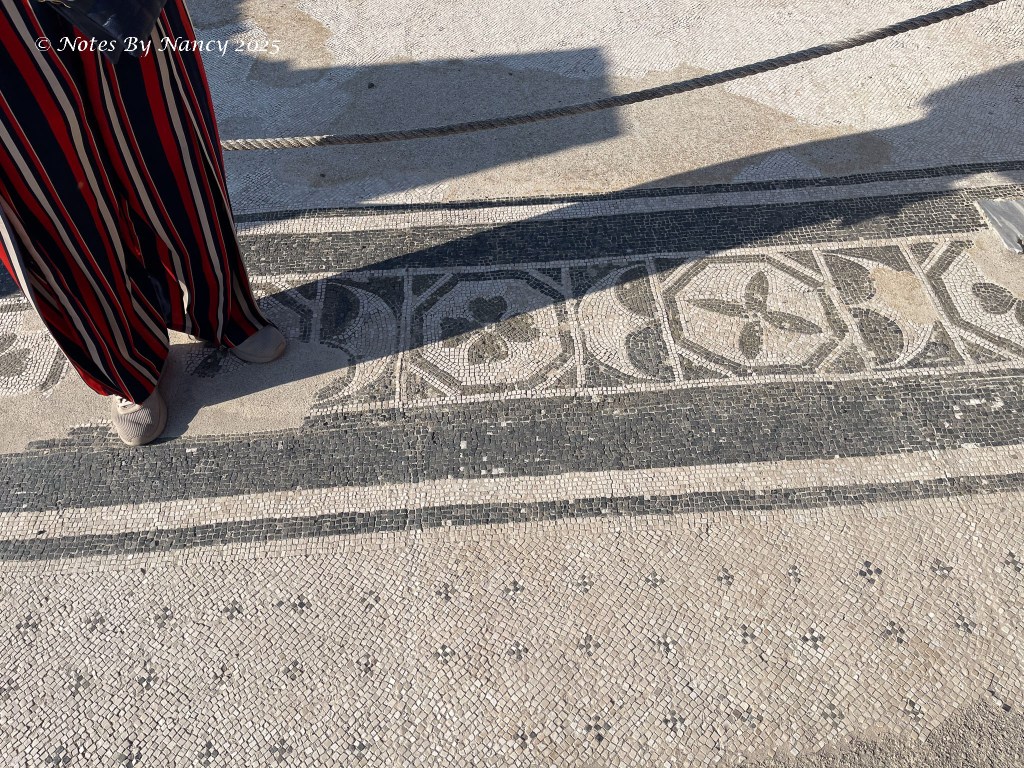
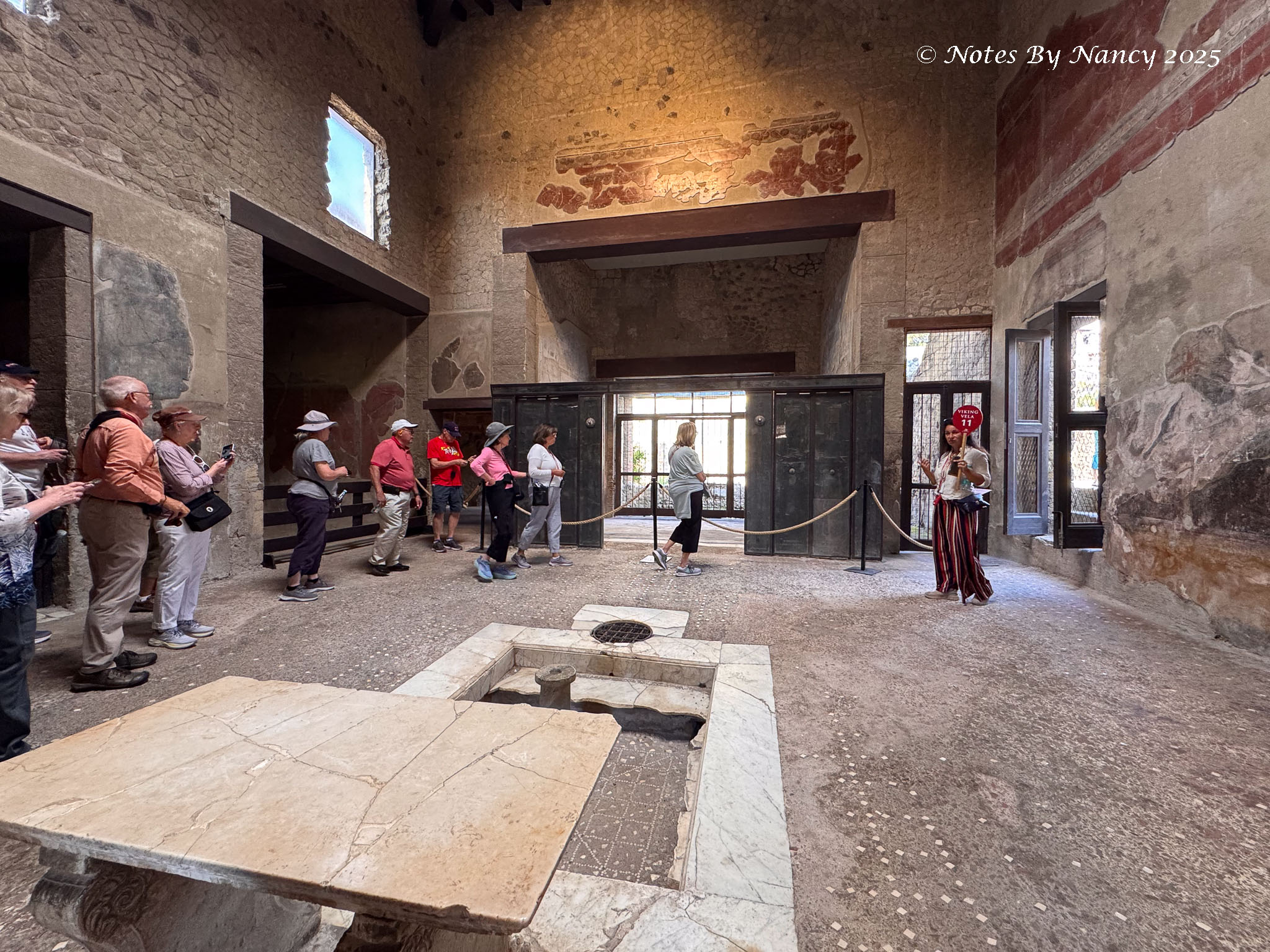
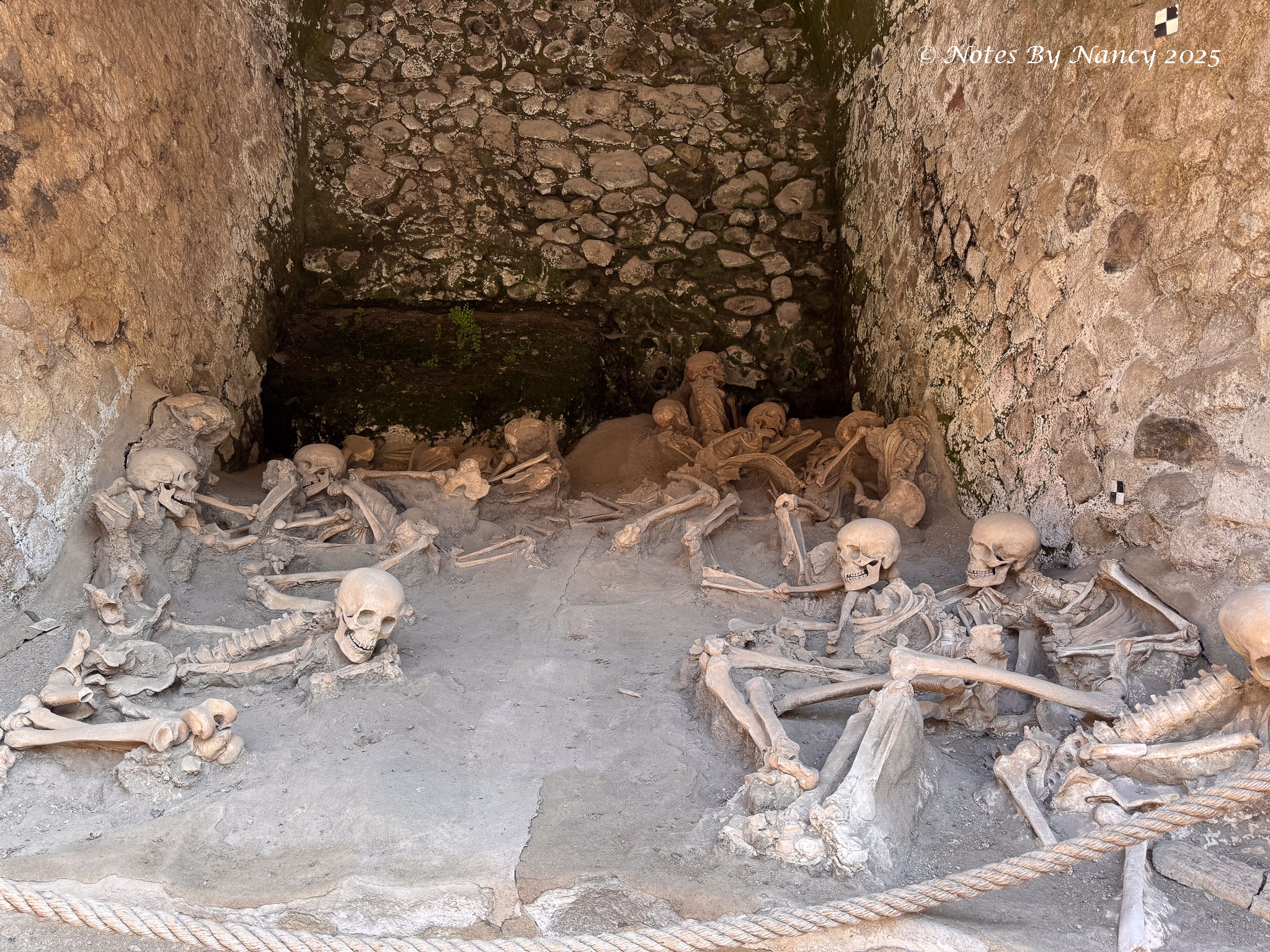
At Herculaneum, we were able to see original wooden beams supporting the buildings, amazing frescoes, skeletal remains (now replicas), and detailed mosaics. Our guide pointed out repairs to the mosaic flooring from major earthquakes a few years prior to the 79 AD eruption. Small white and black tiles indicated pre-earthquake, while more colorful and larger tiles were used after the earthquake.
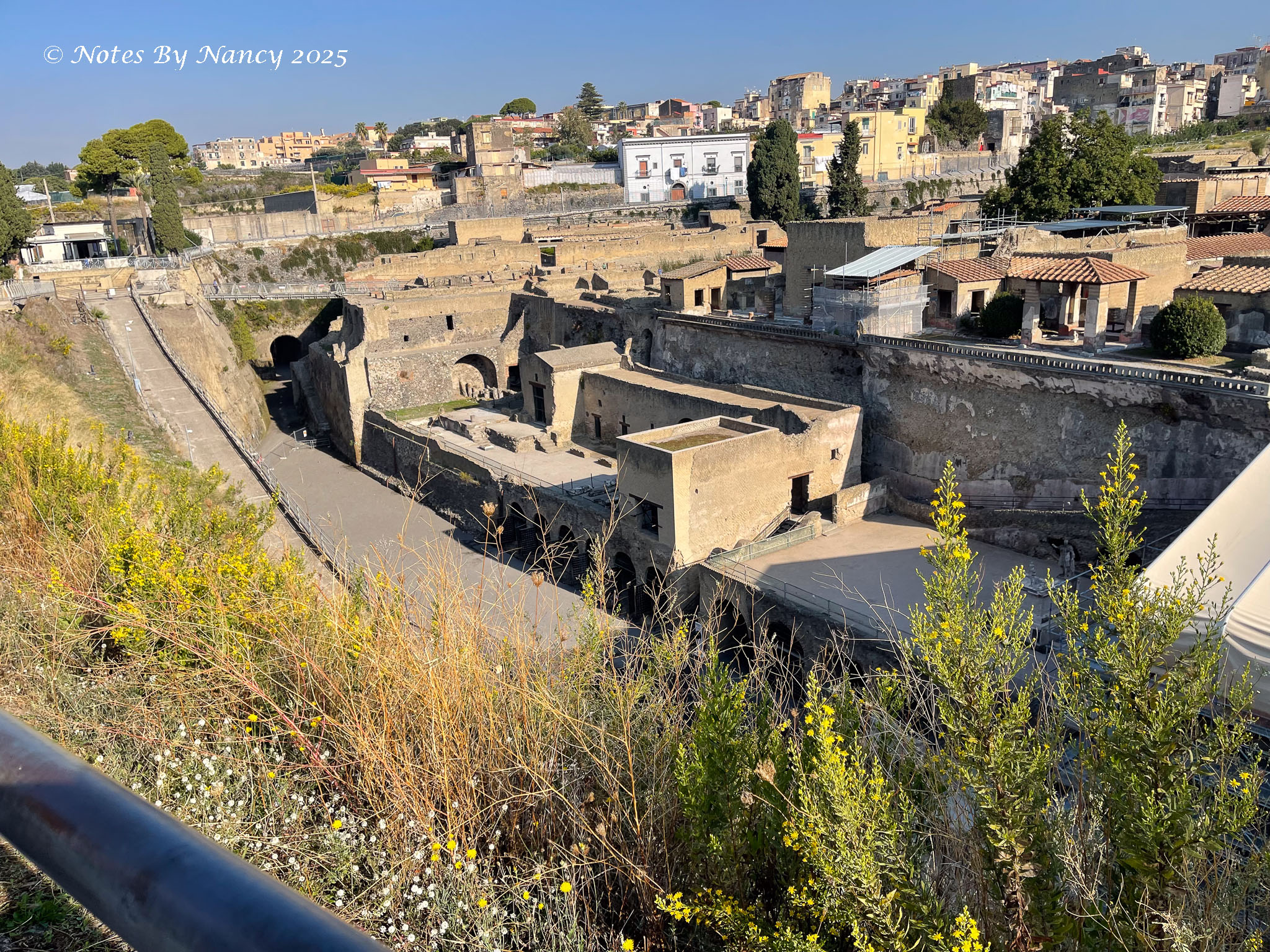
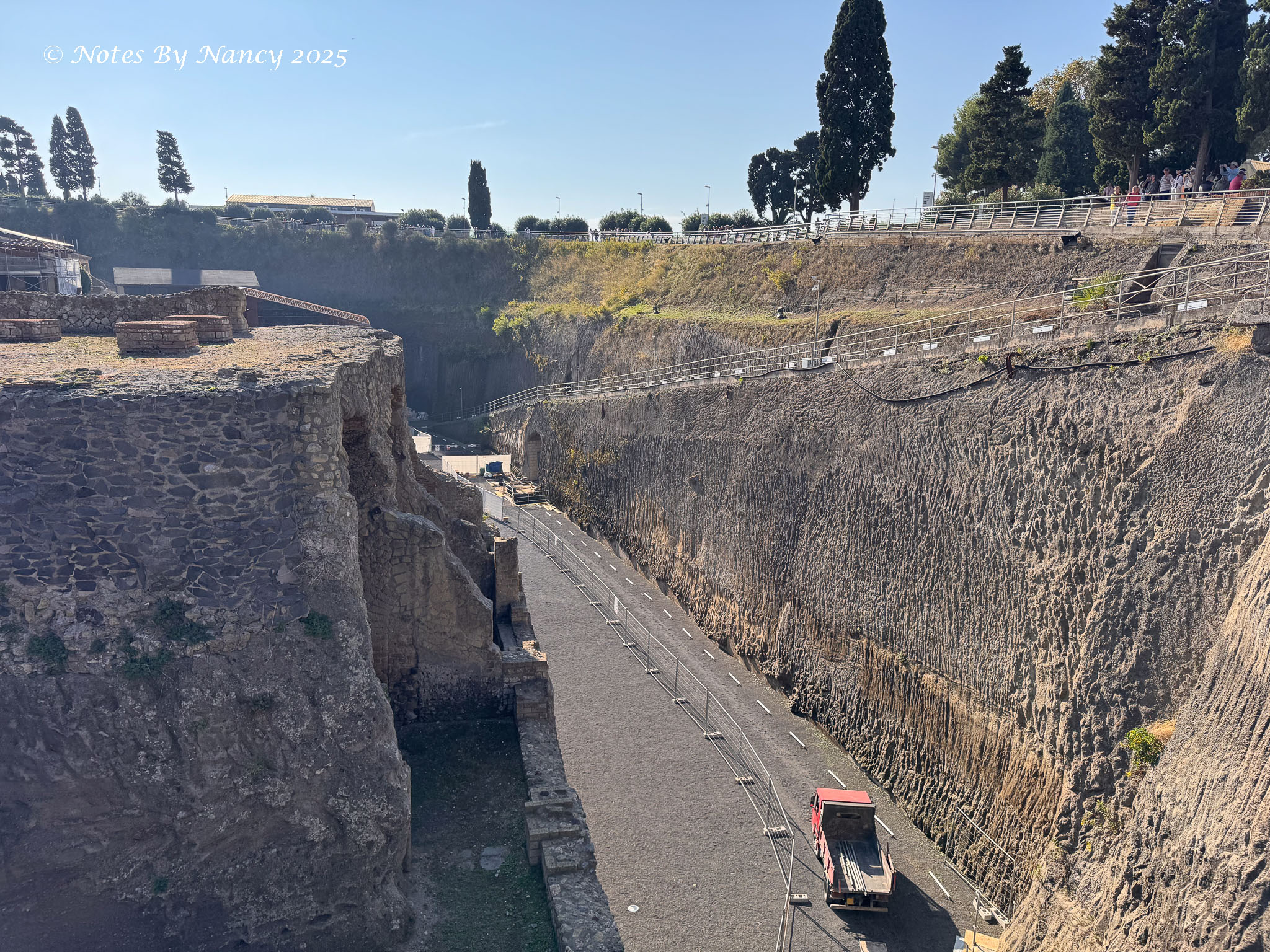
These images help get perspective on how deep Herculaneum was buried – estimated at 66 feet or 20 meters.
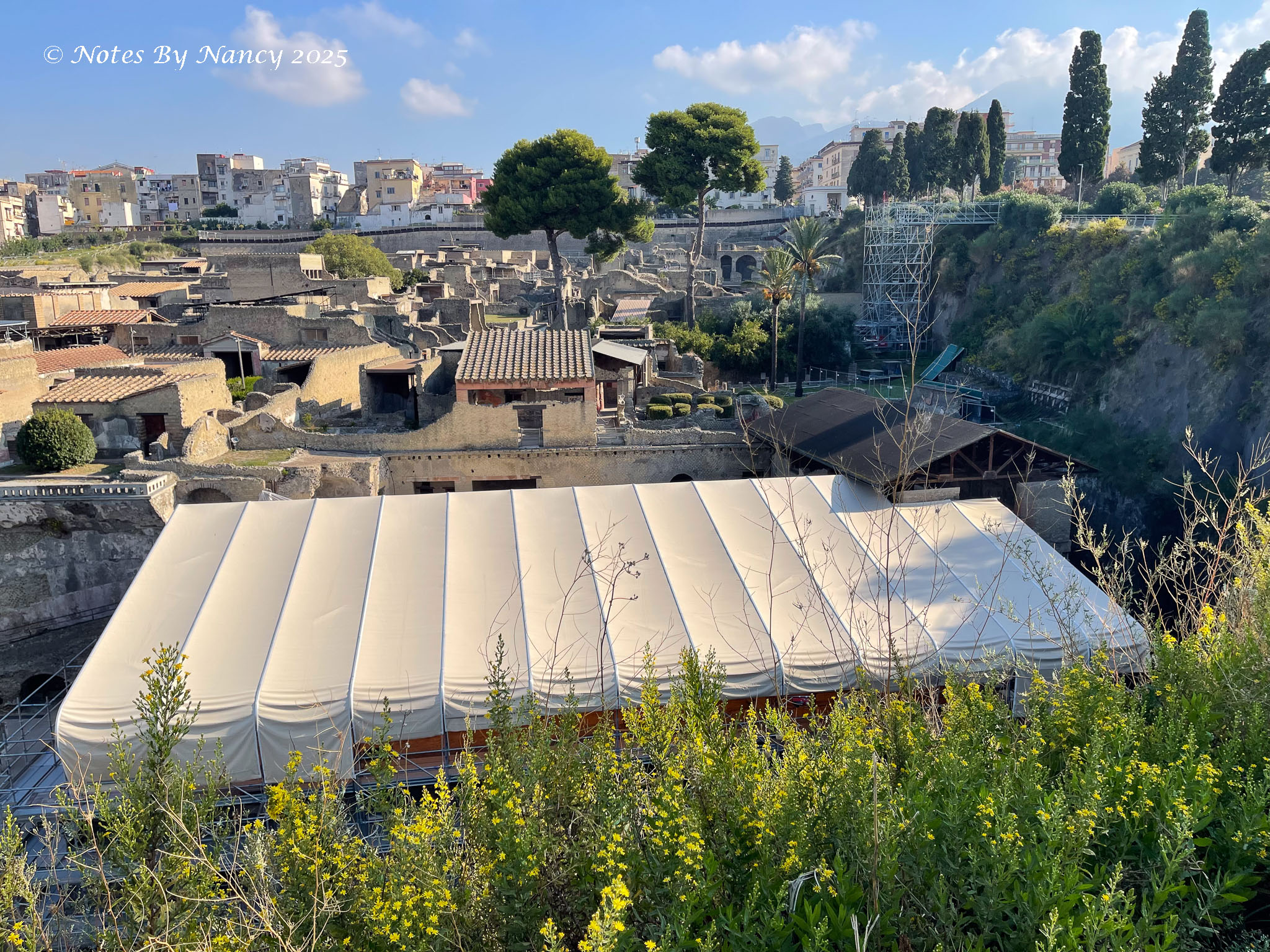
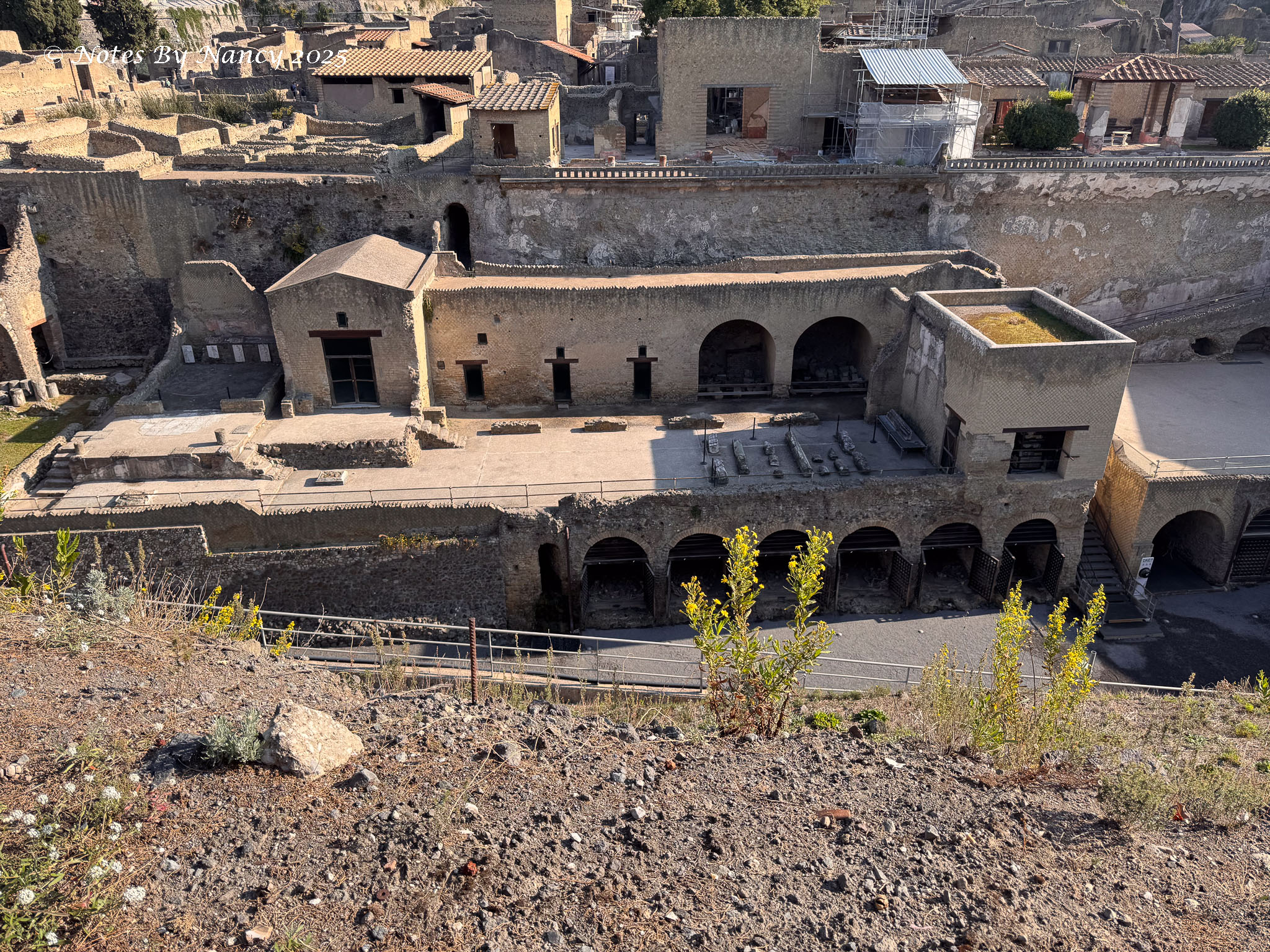
Check out the fine mosaic pieces laid in the first and second pictures below.
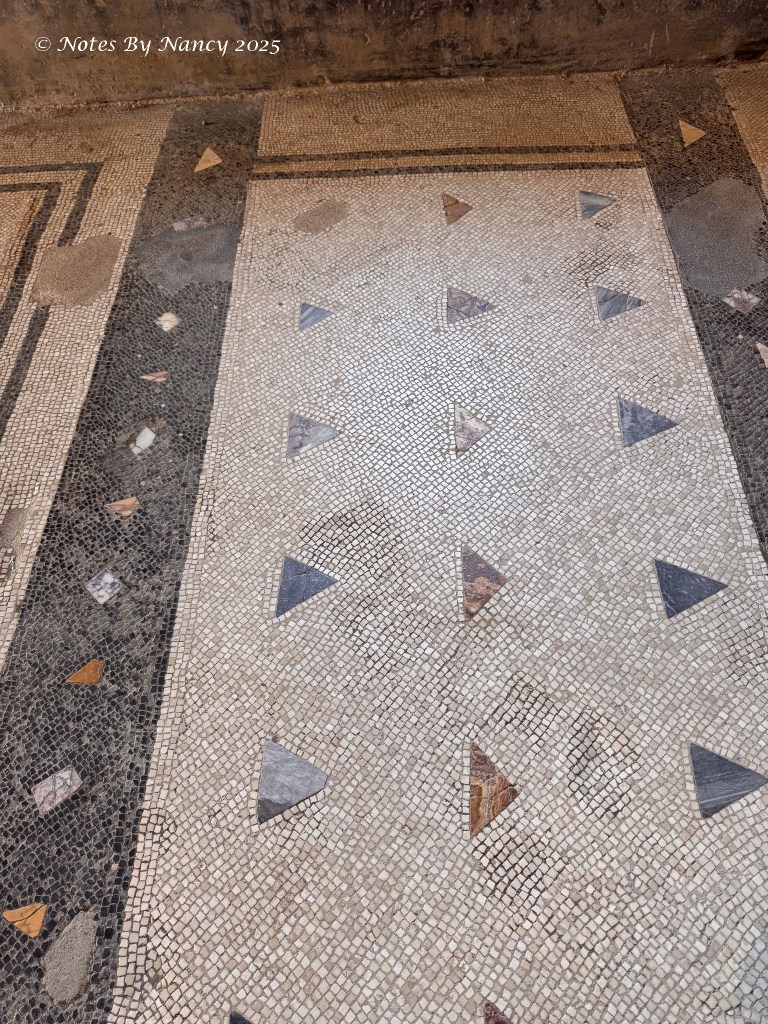
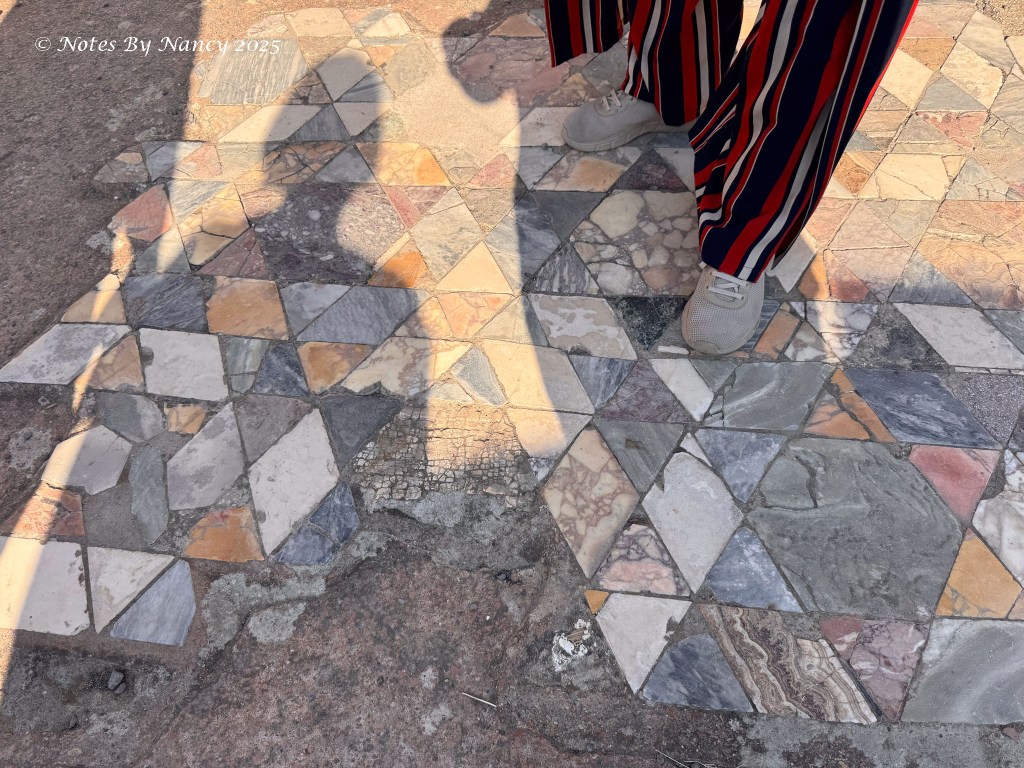
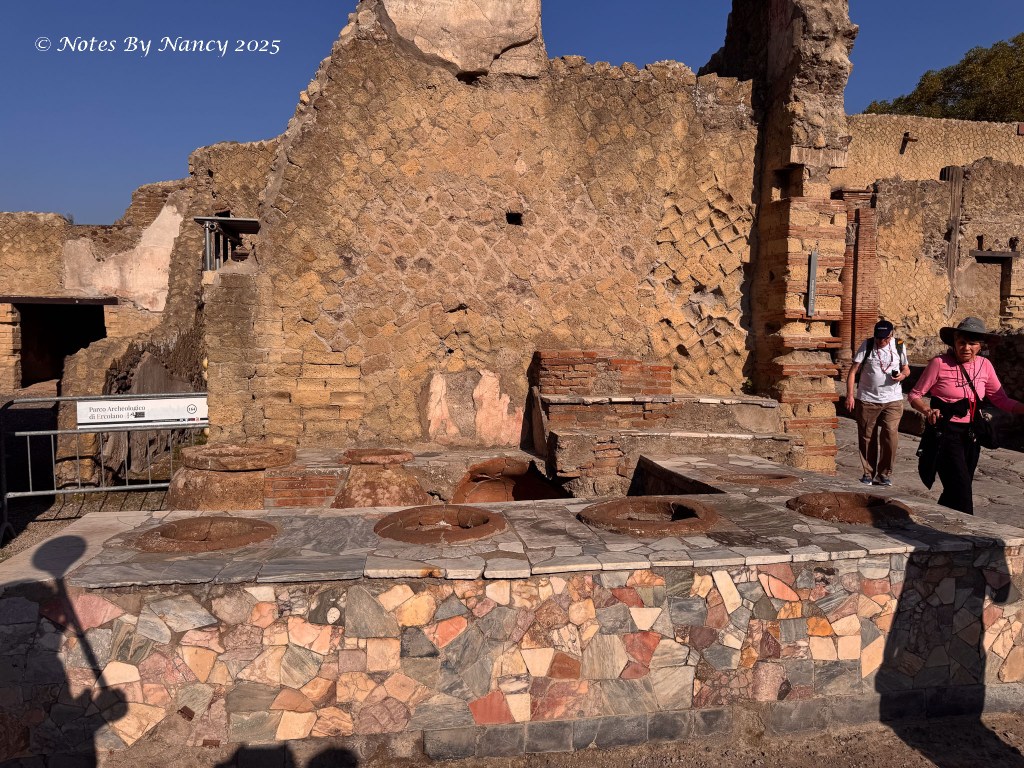
This would have been a “fast-food” restaurant back in the day. Foods were kept hot in the vessels in the countertop.
The houses of the wealthy were intricately decorated.
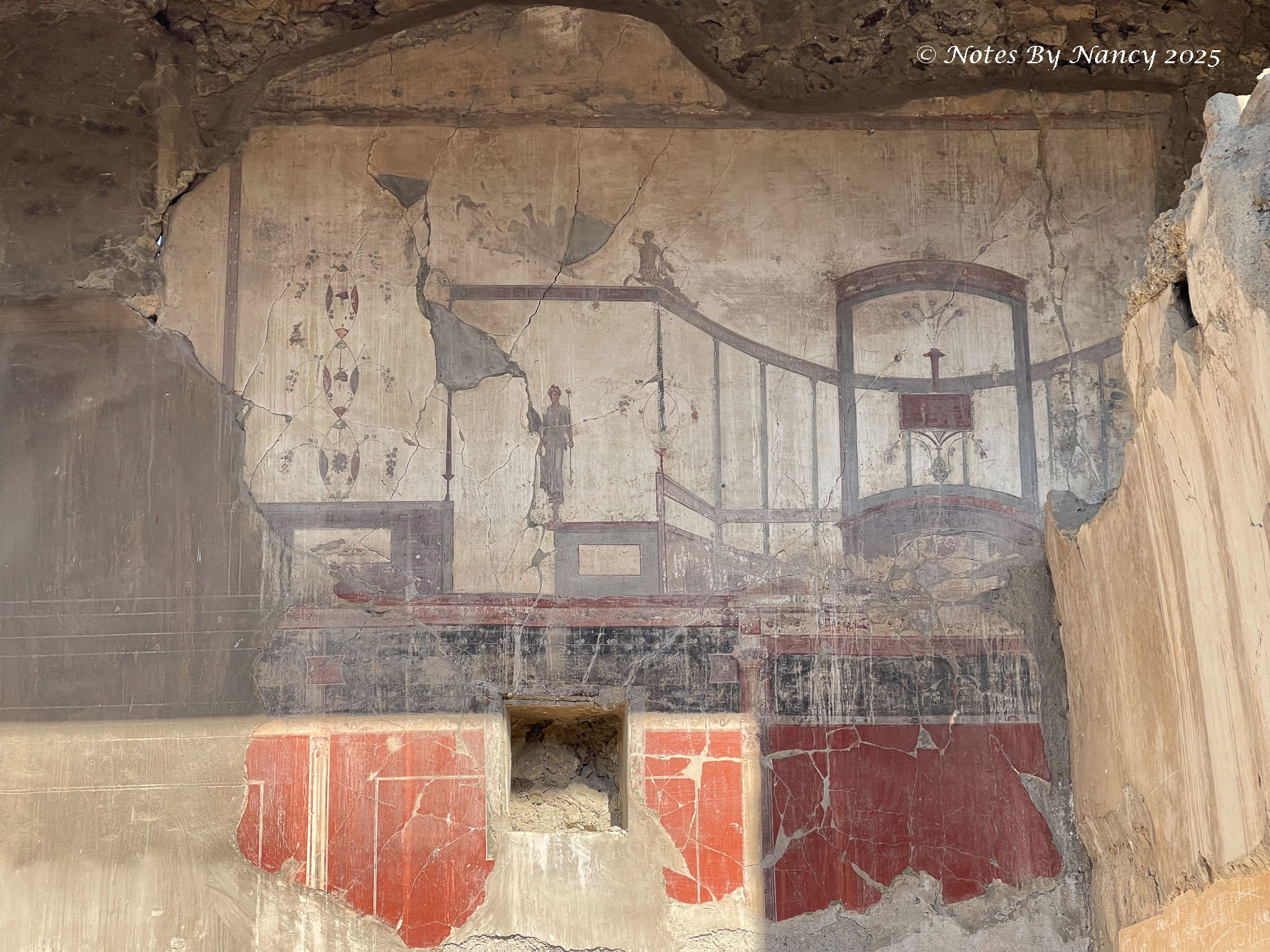
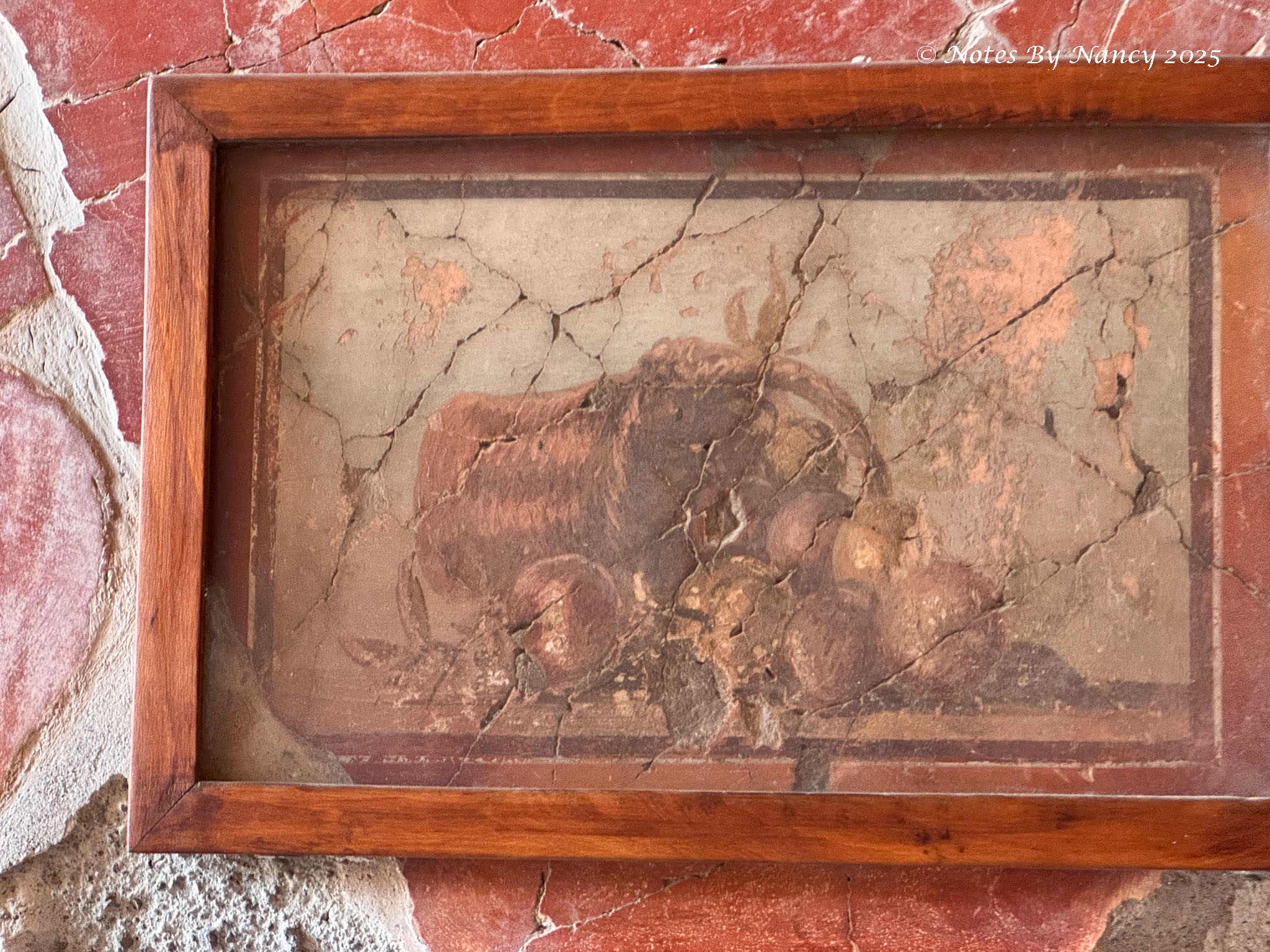
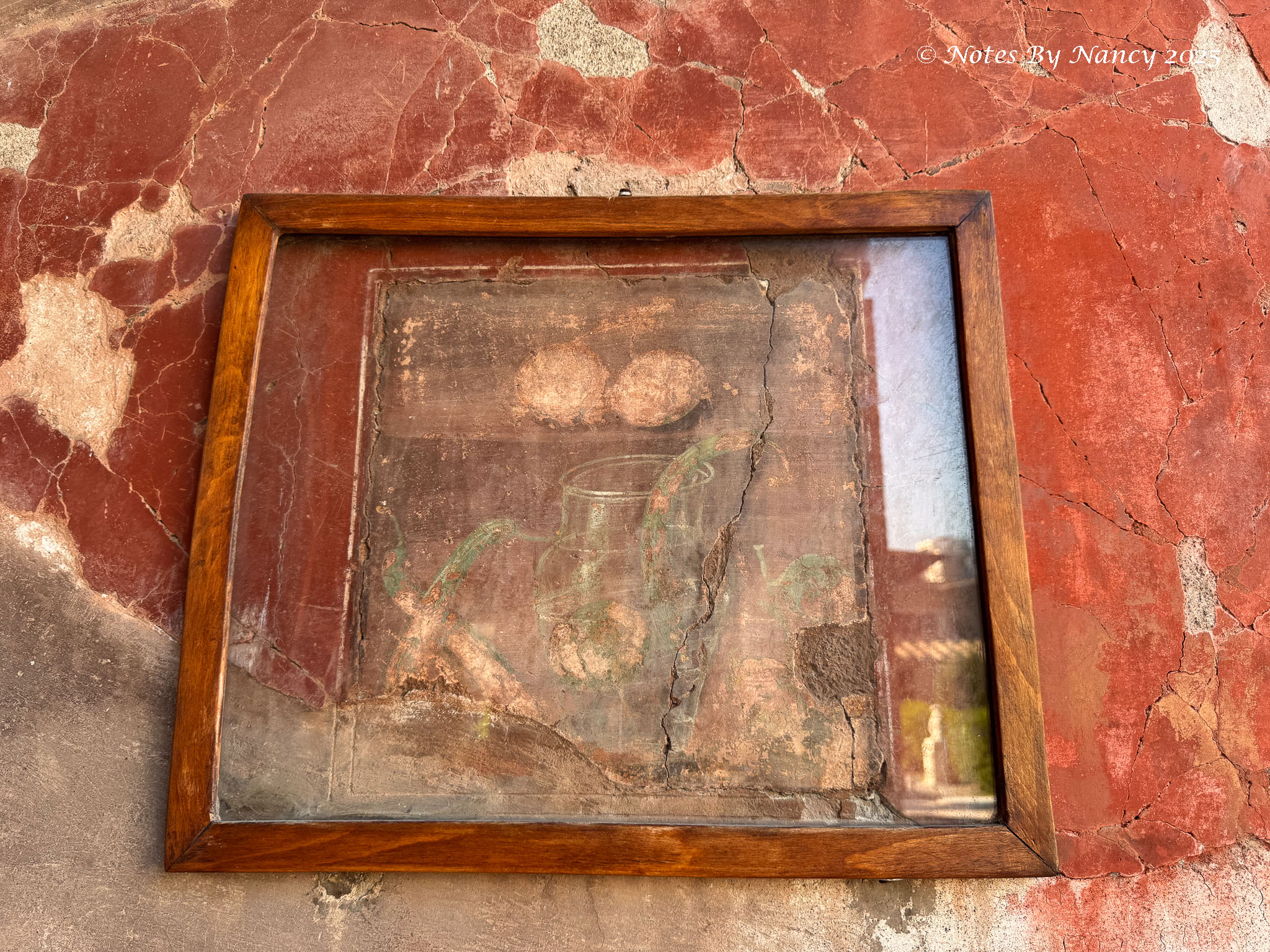
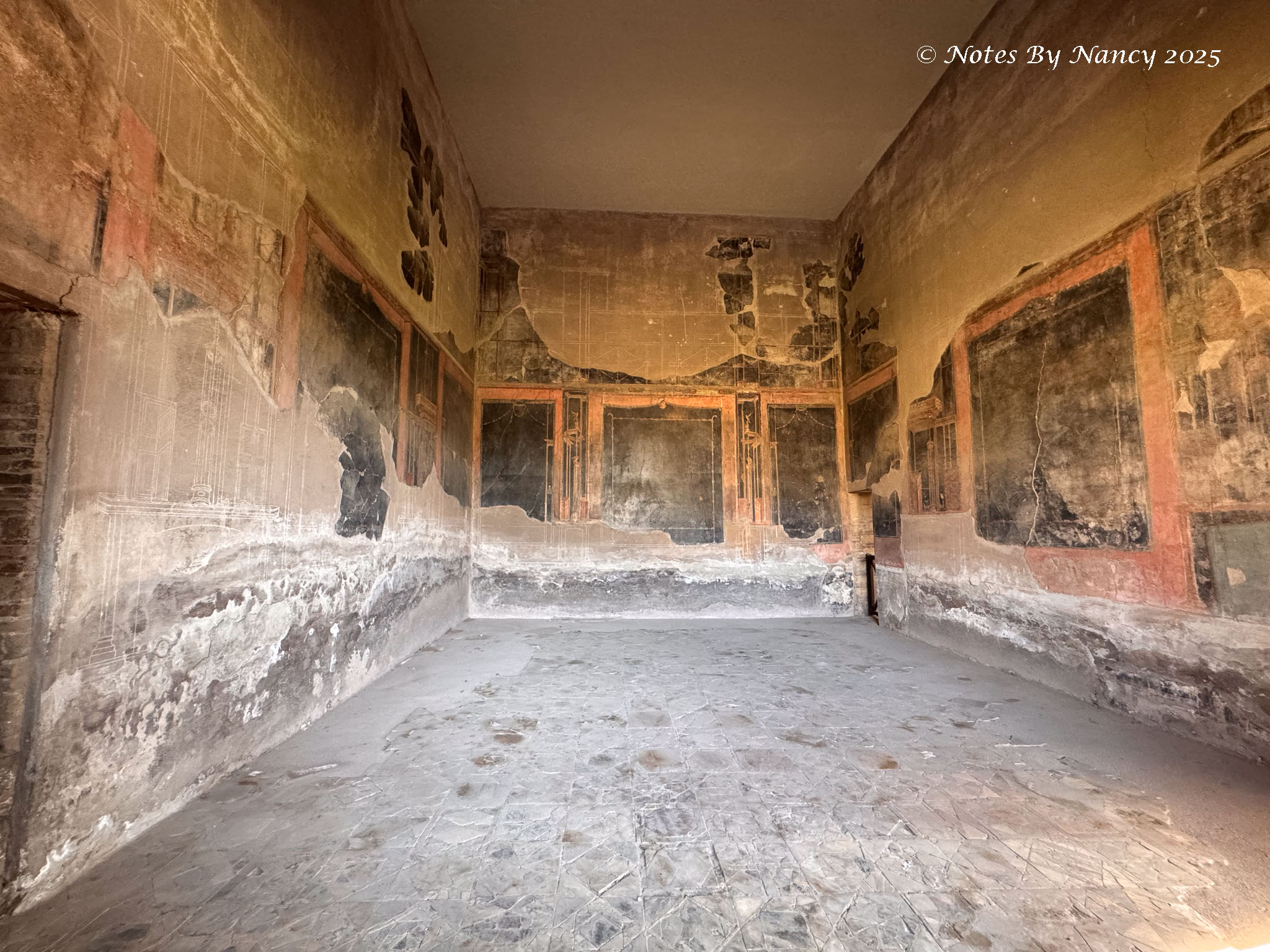
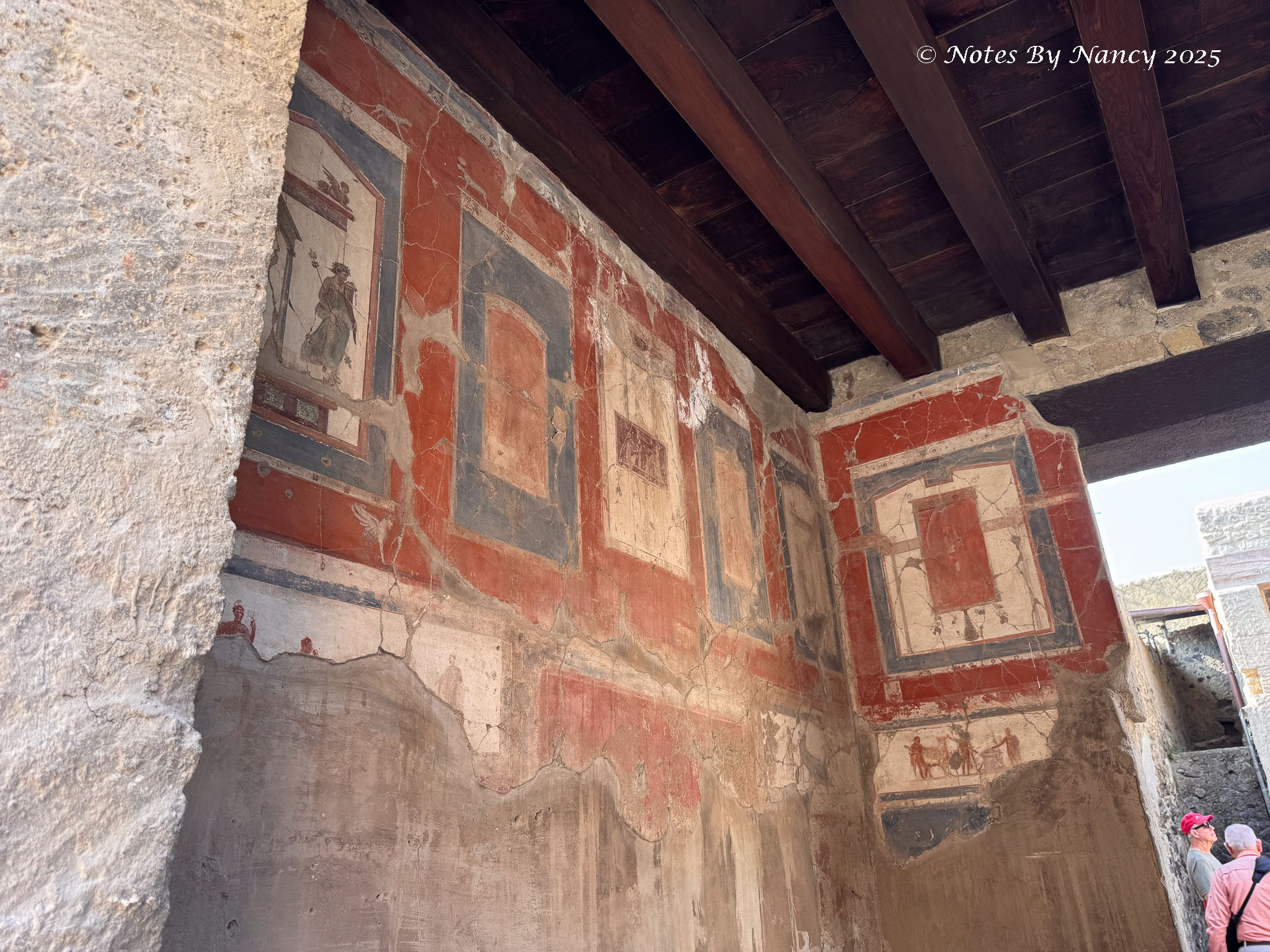
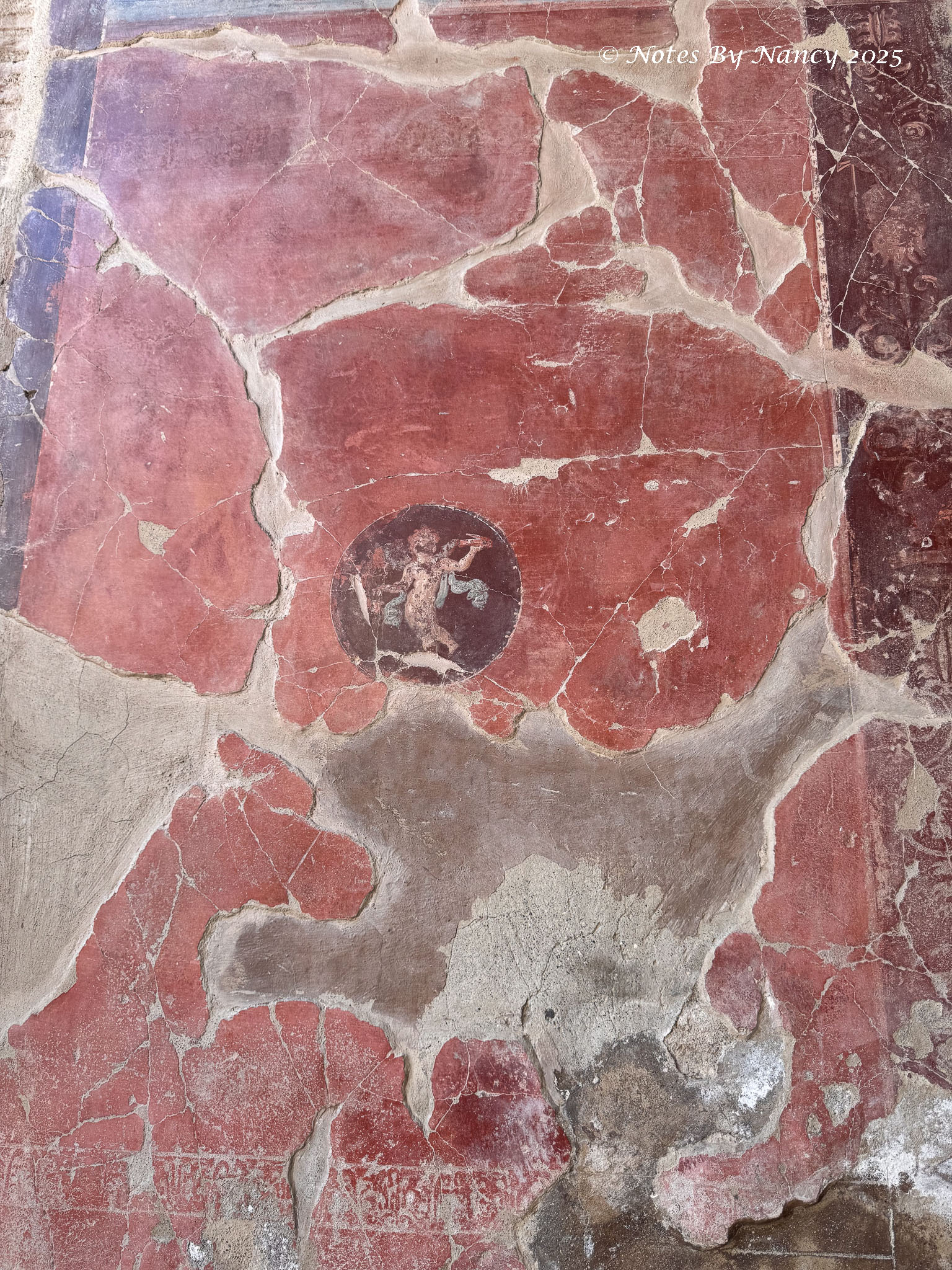
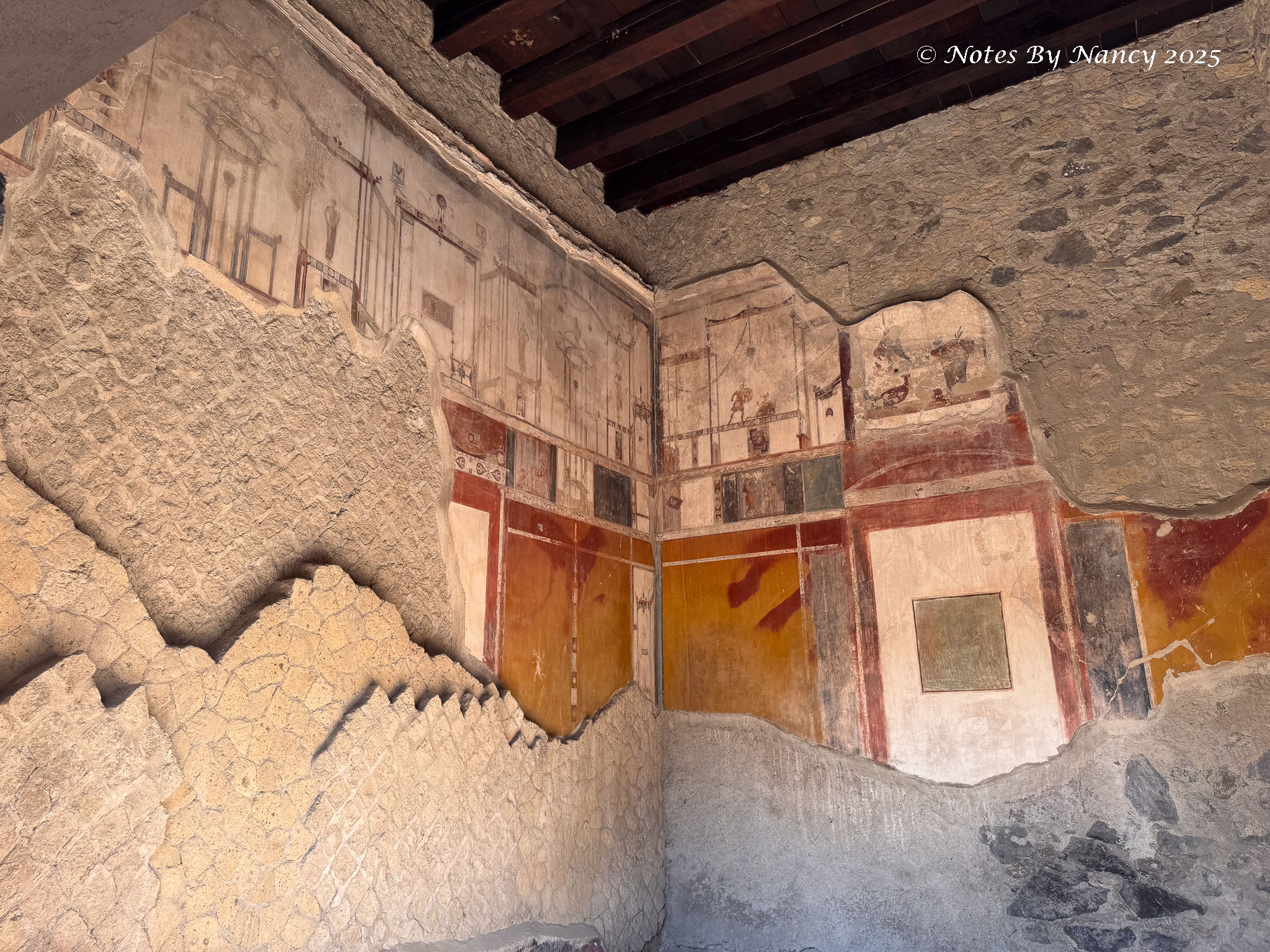
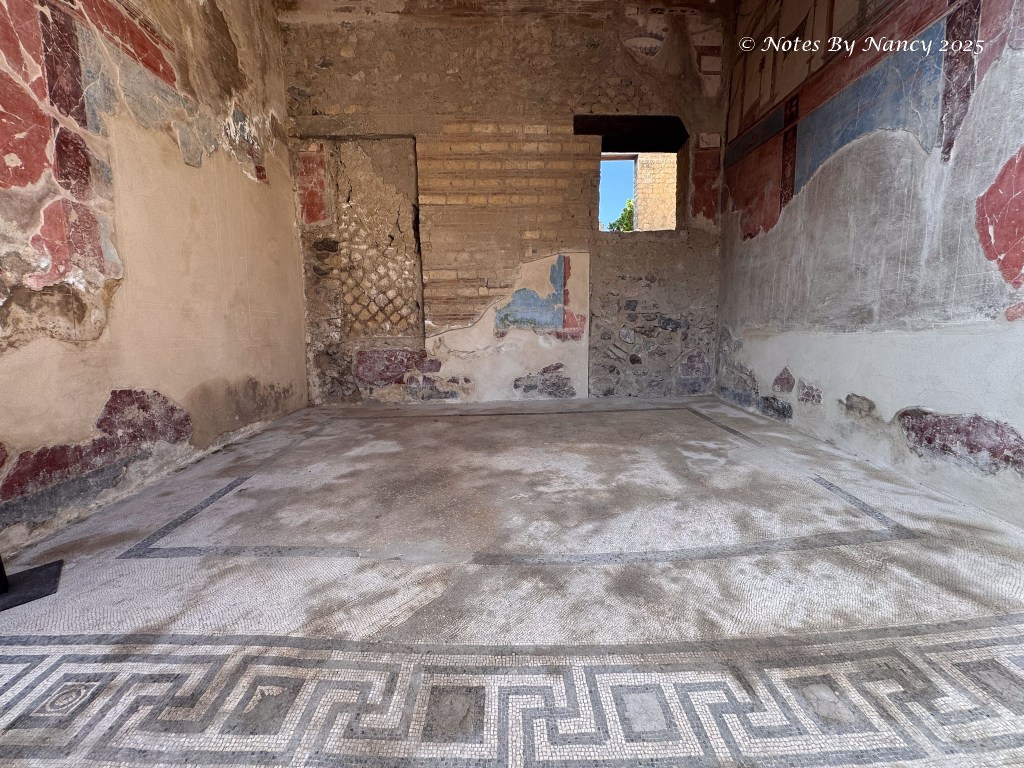
Look closely at the floor and you can see “waves” caused by the earthquakes in the years prior to the eruption.
The pattern variations in the walls helps to disperse the impact of the earthquake waves.
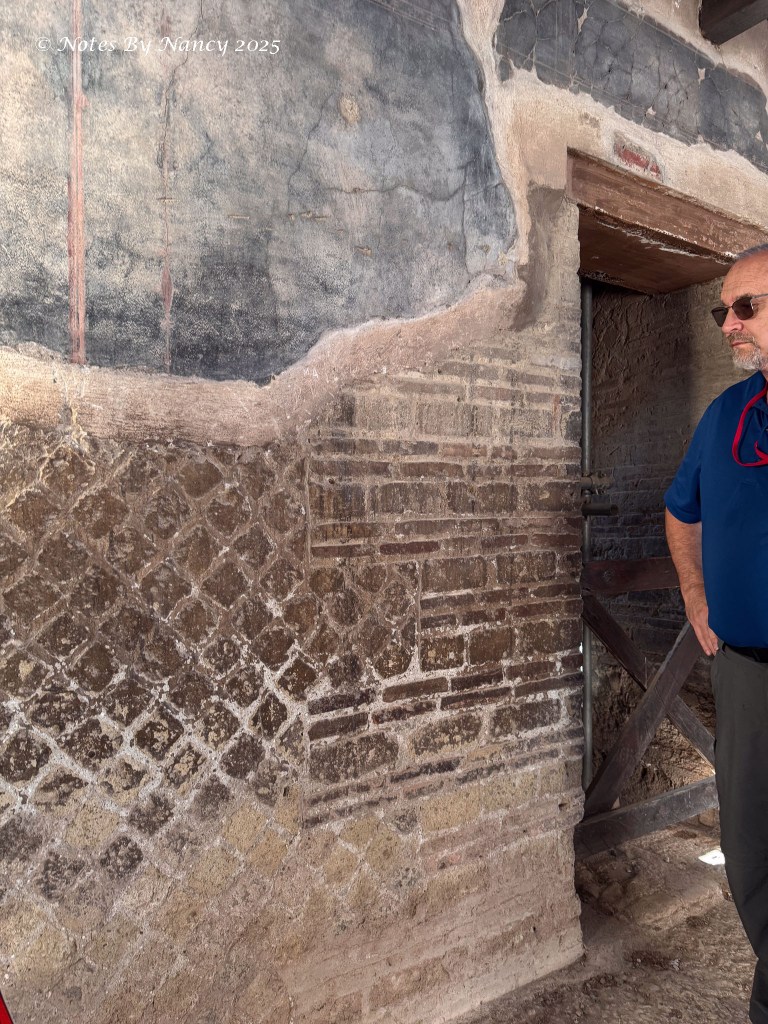
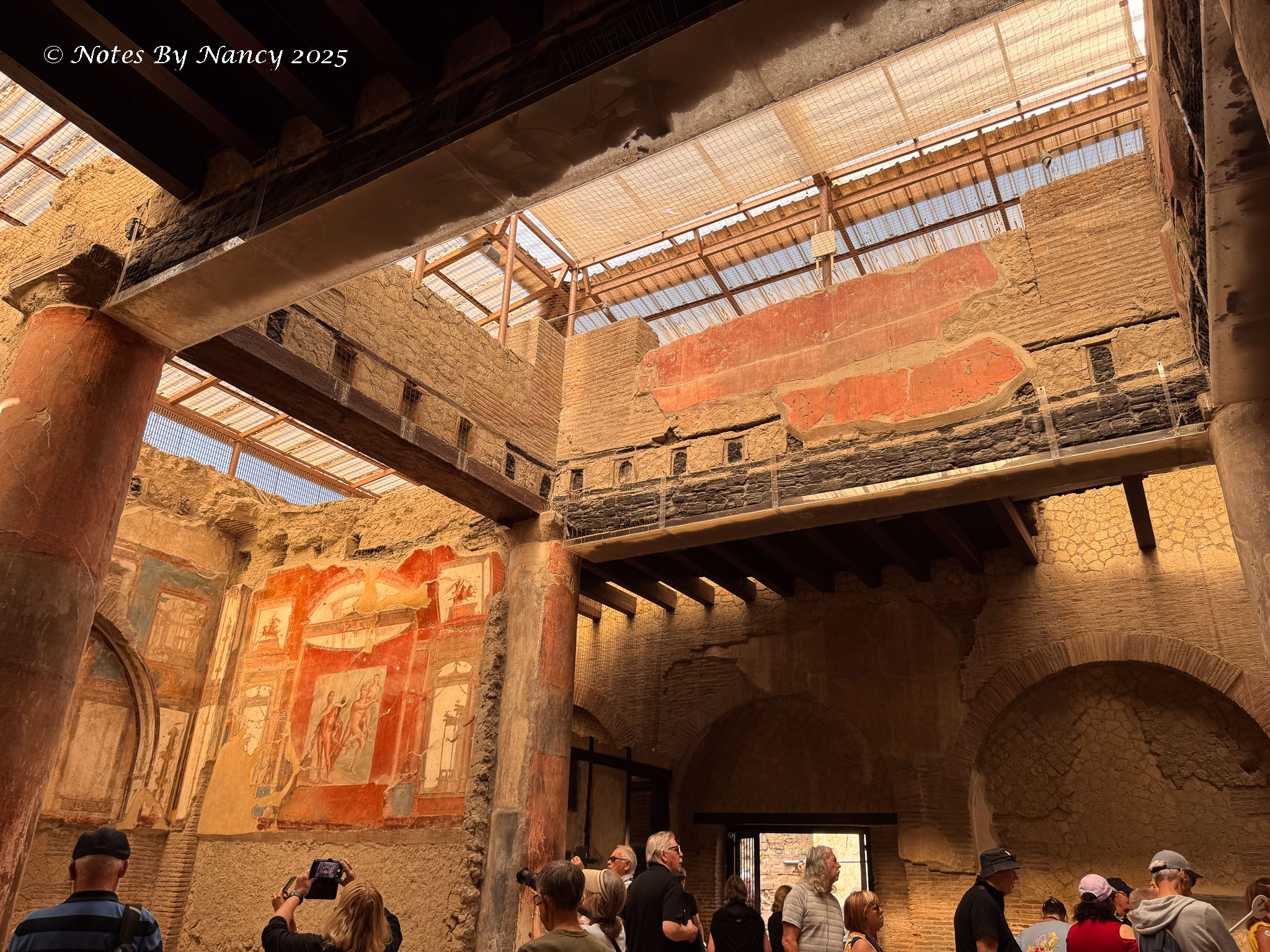
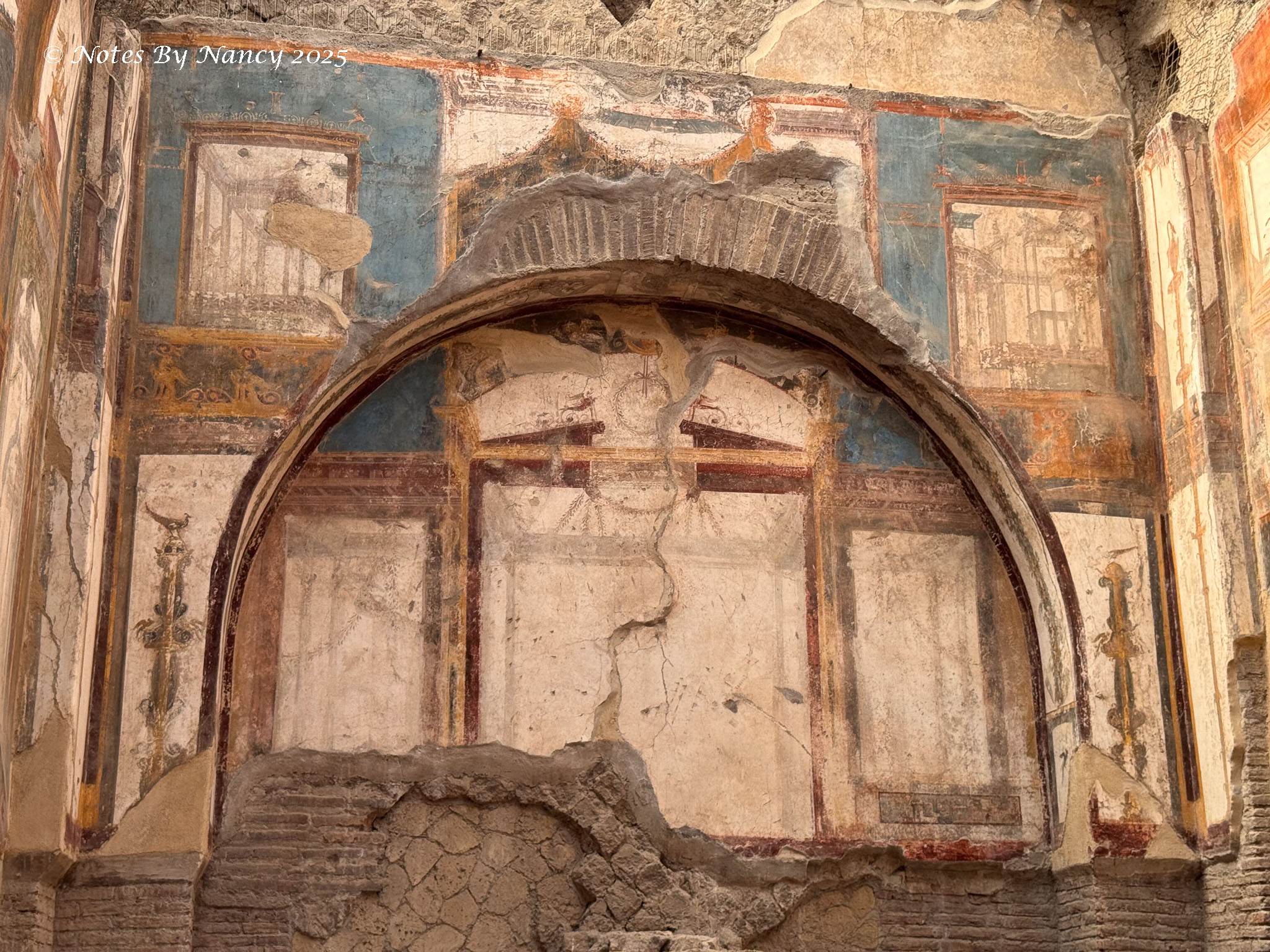
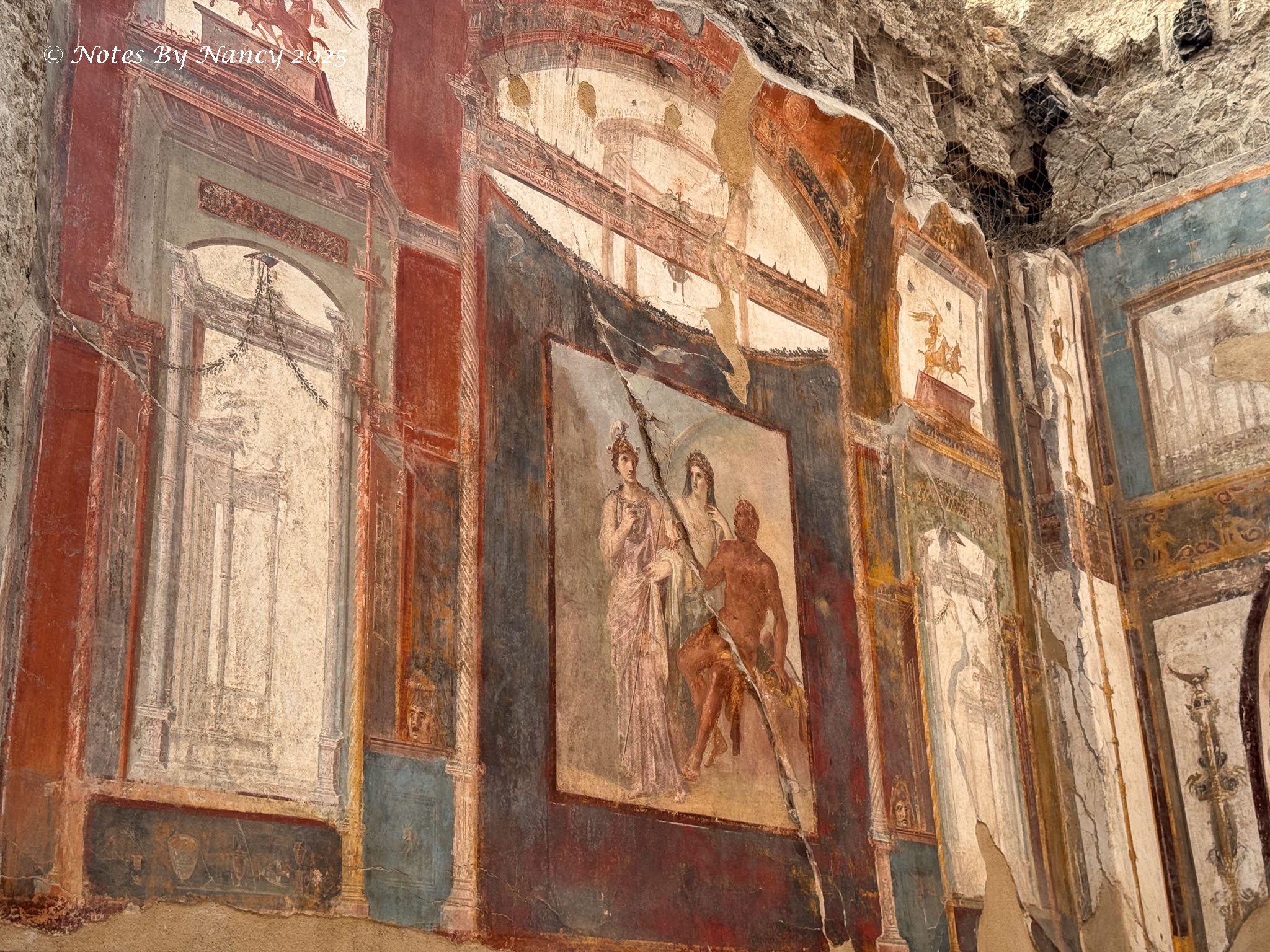
Inside a temple.
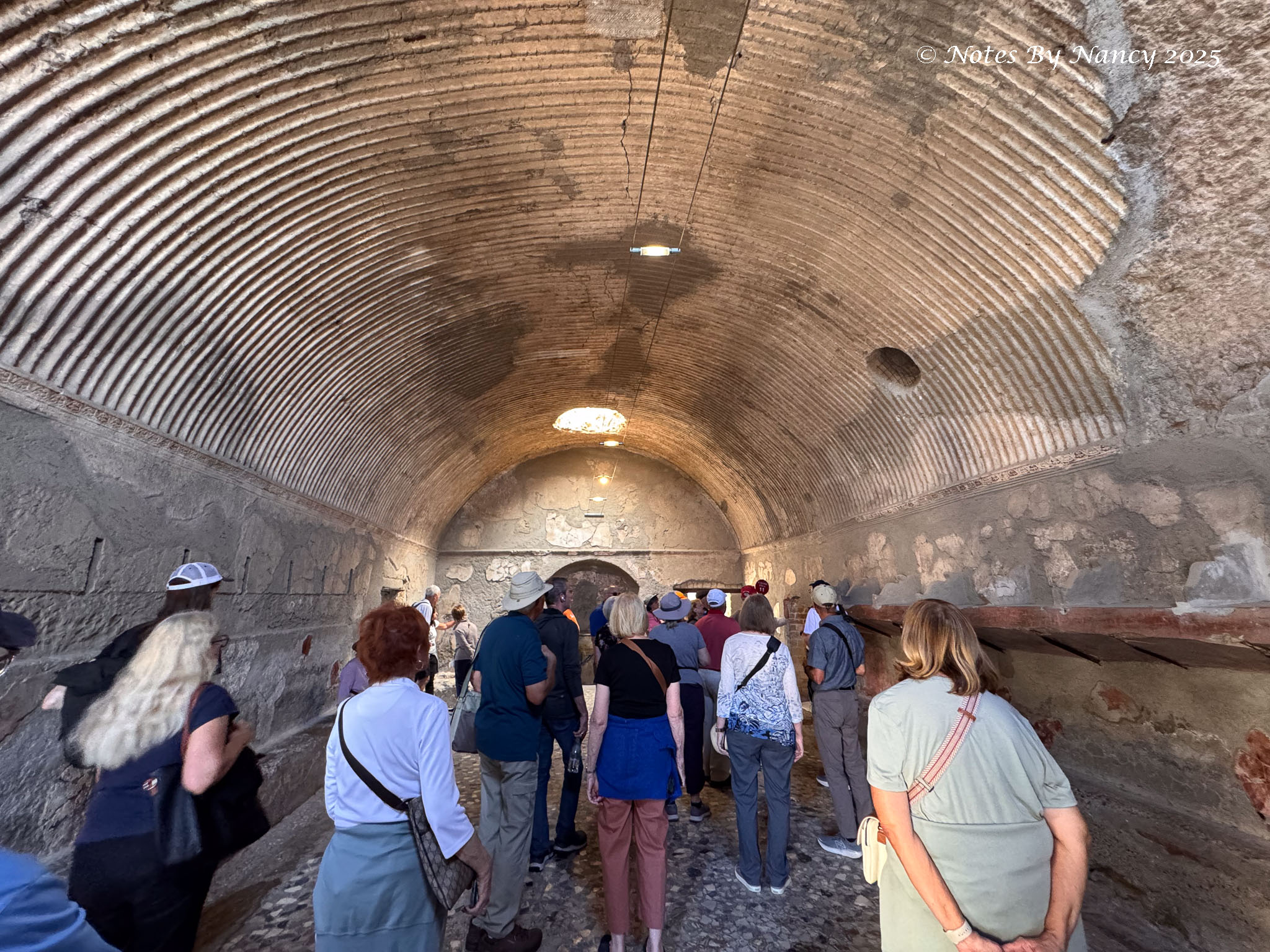
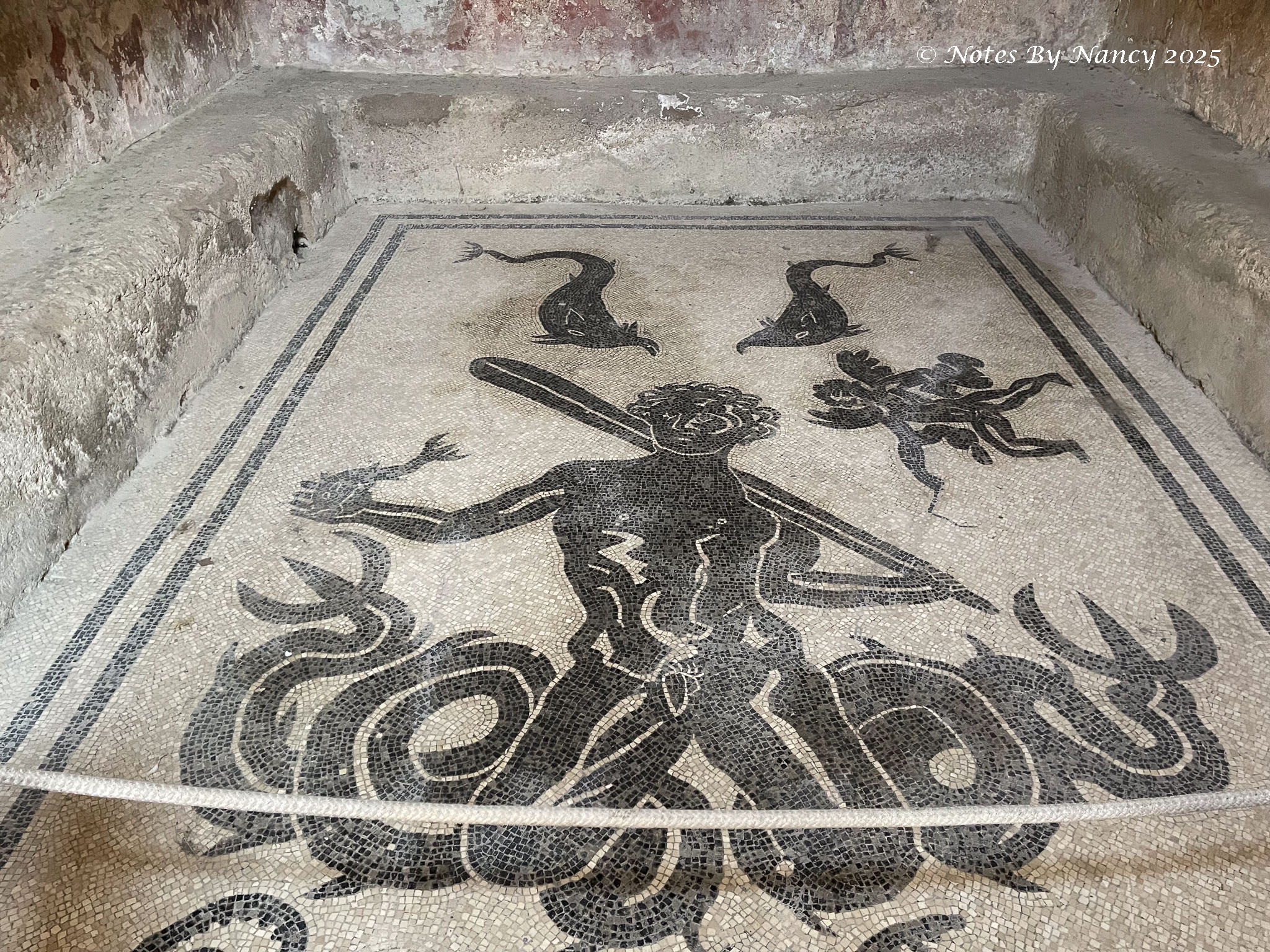
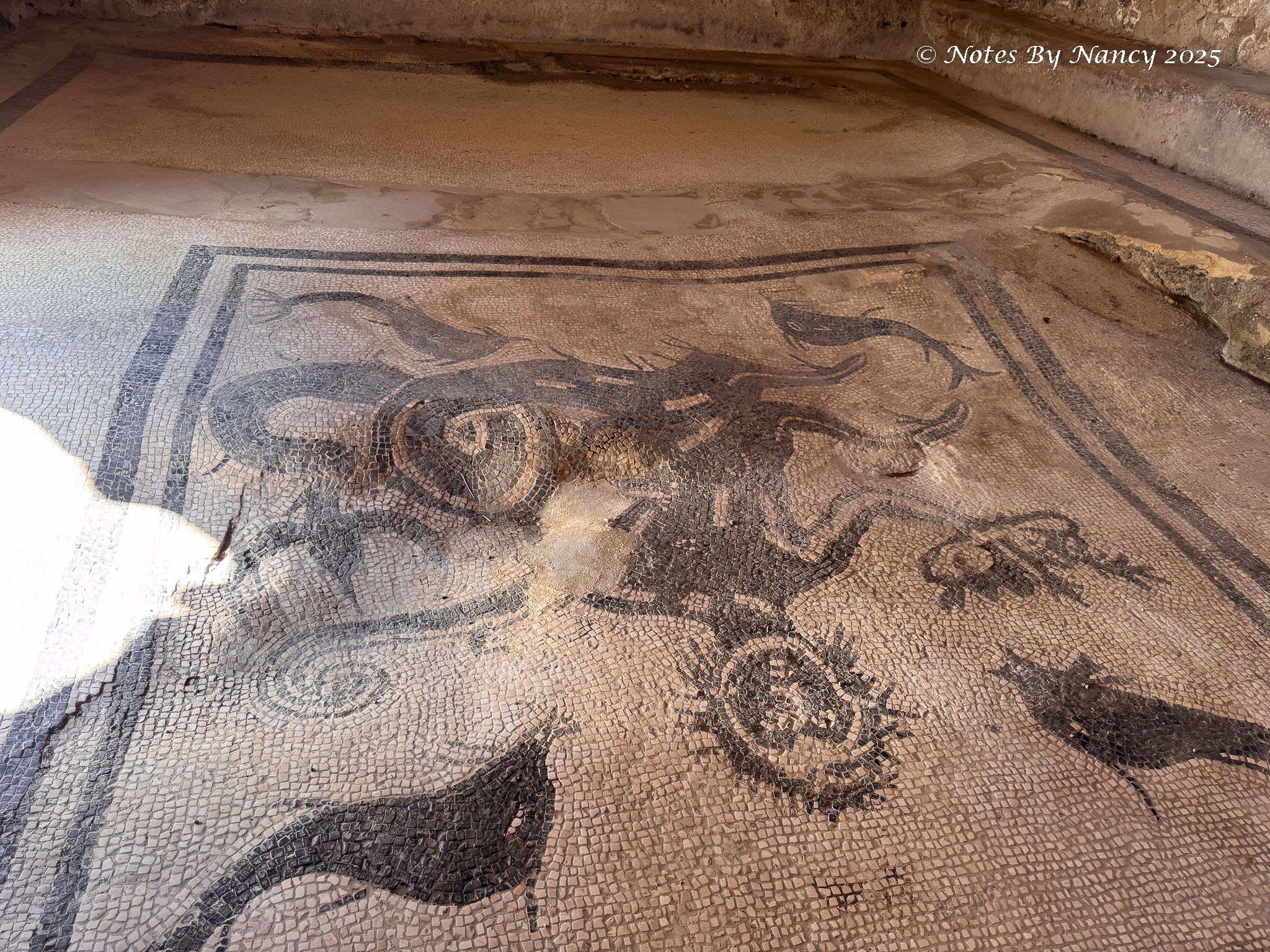
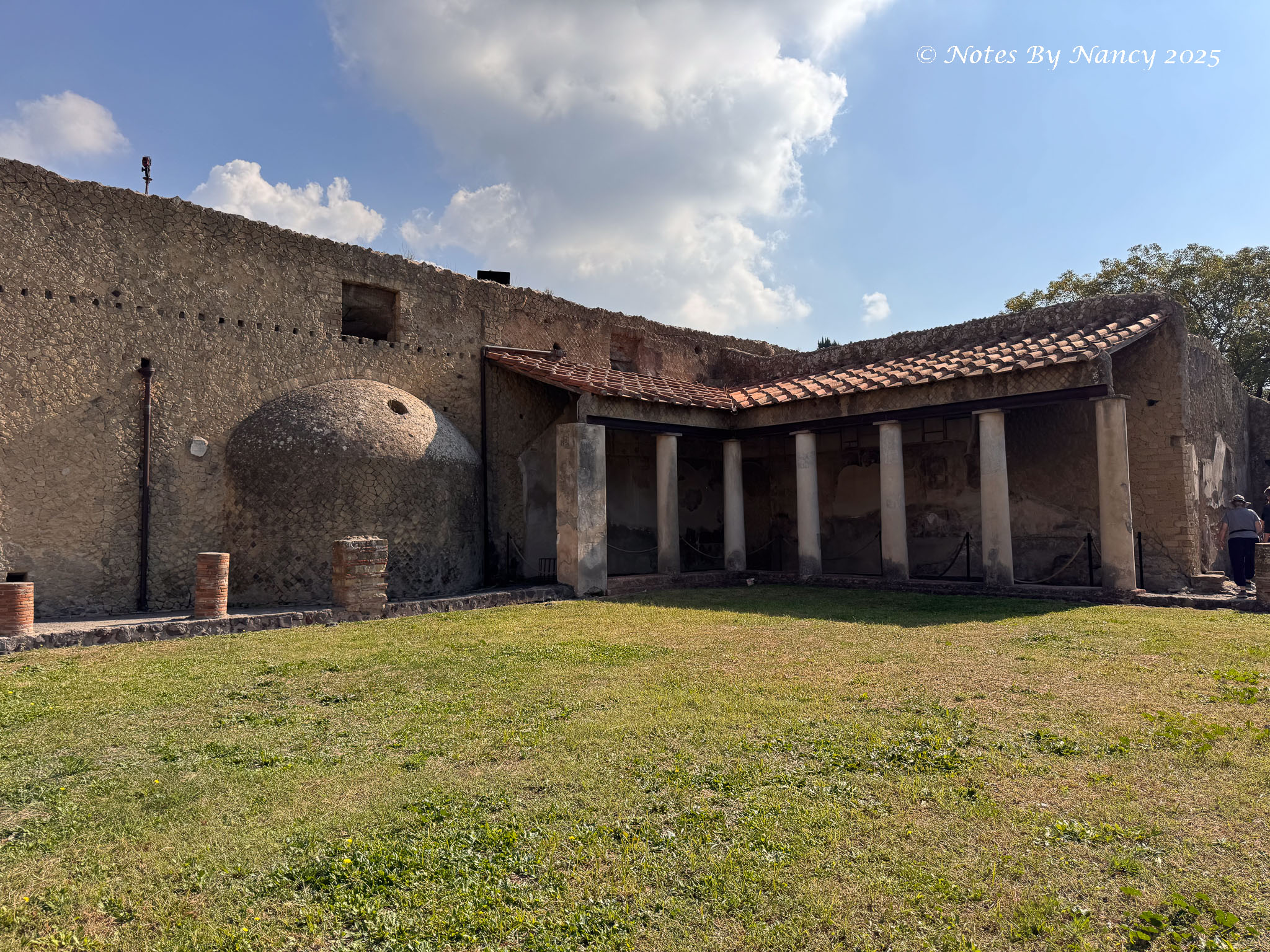
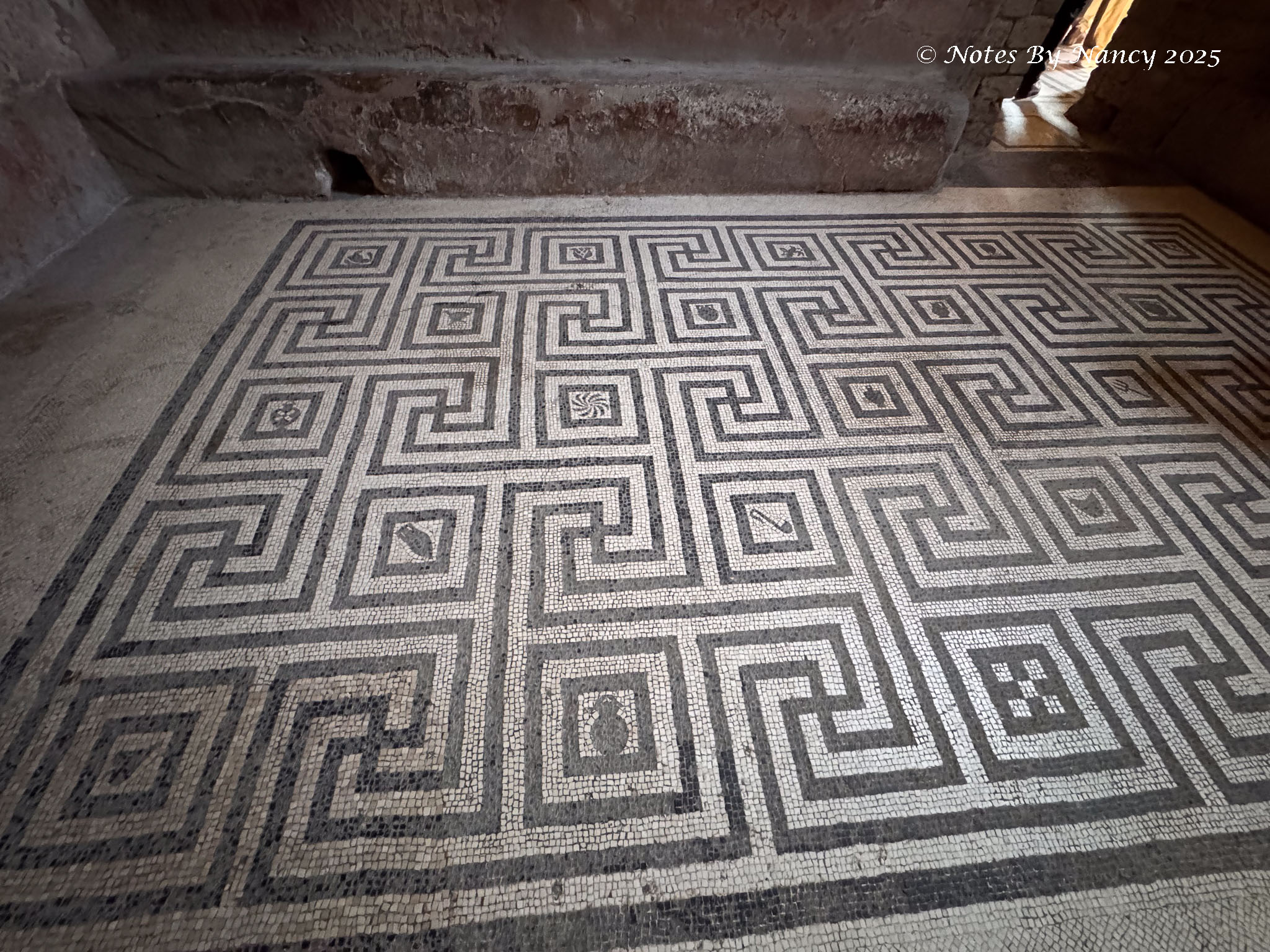
The bathhouses and sauna
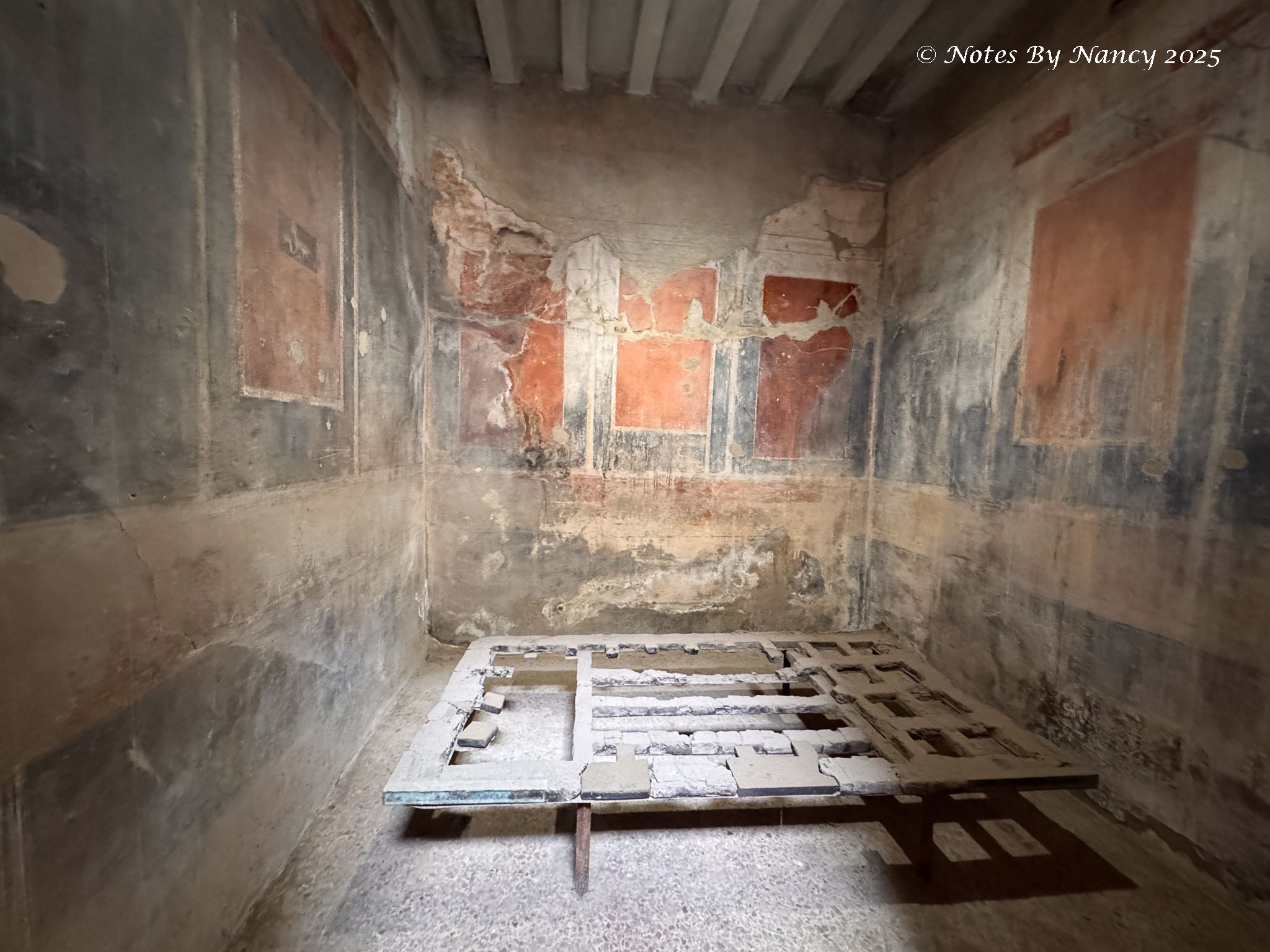
Unlike Pompeii, bio-materials like wooden beams, door frames, and even bed frames survived in Herculaneum.
Approximately 300 skeletons were discovered hiding in the boathouses awaiting rescue by sea – whose shoreline is now 1.5 kilometers away – as the town was covered in mud and ash.
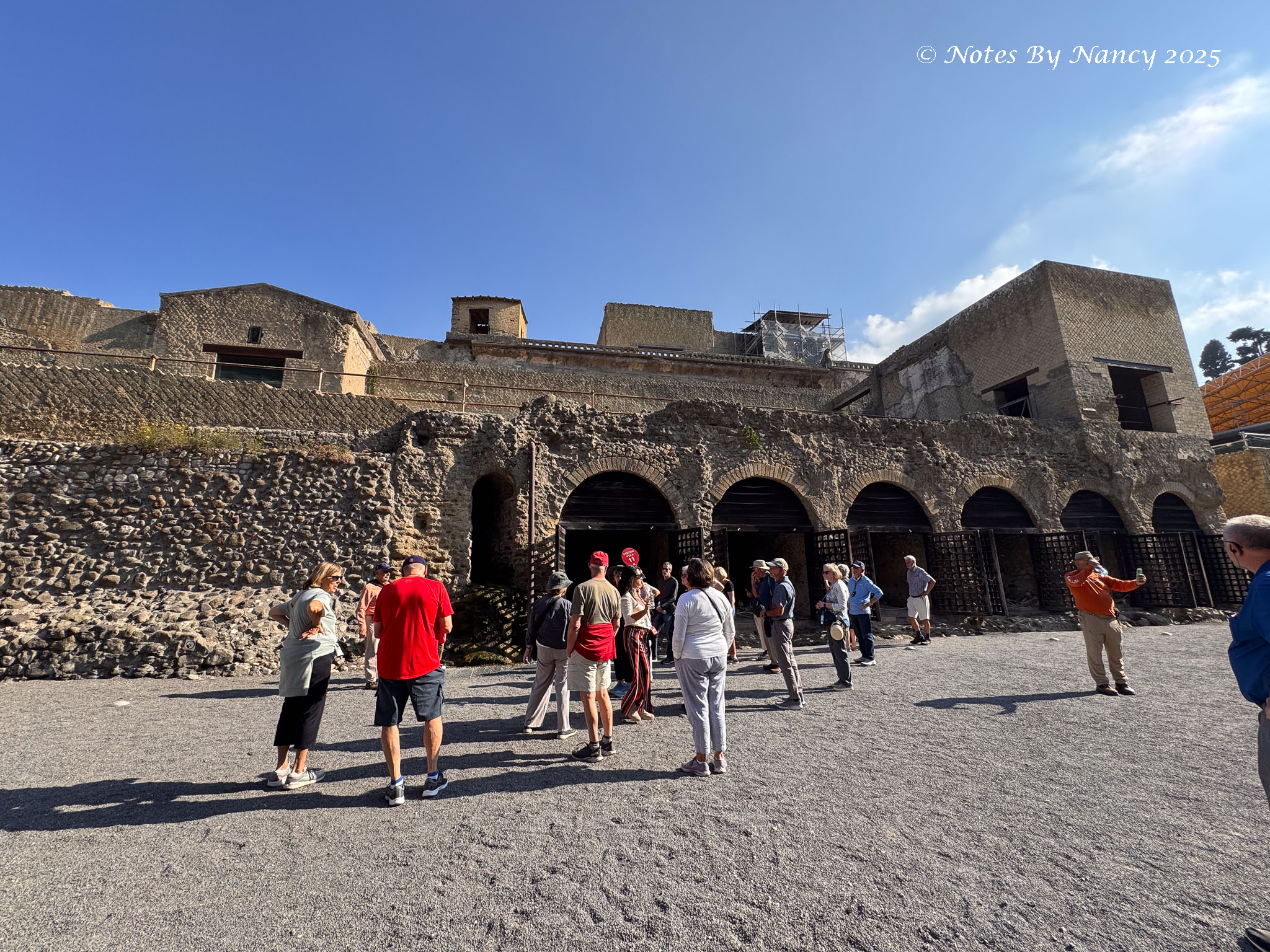
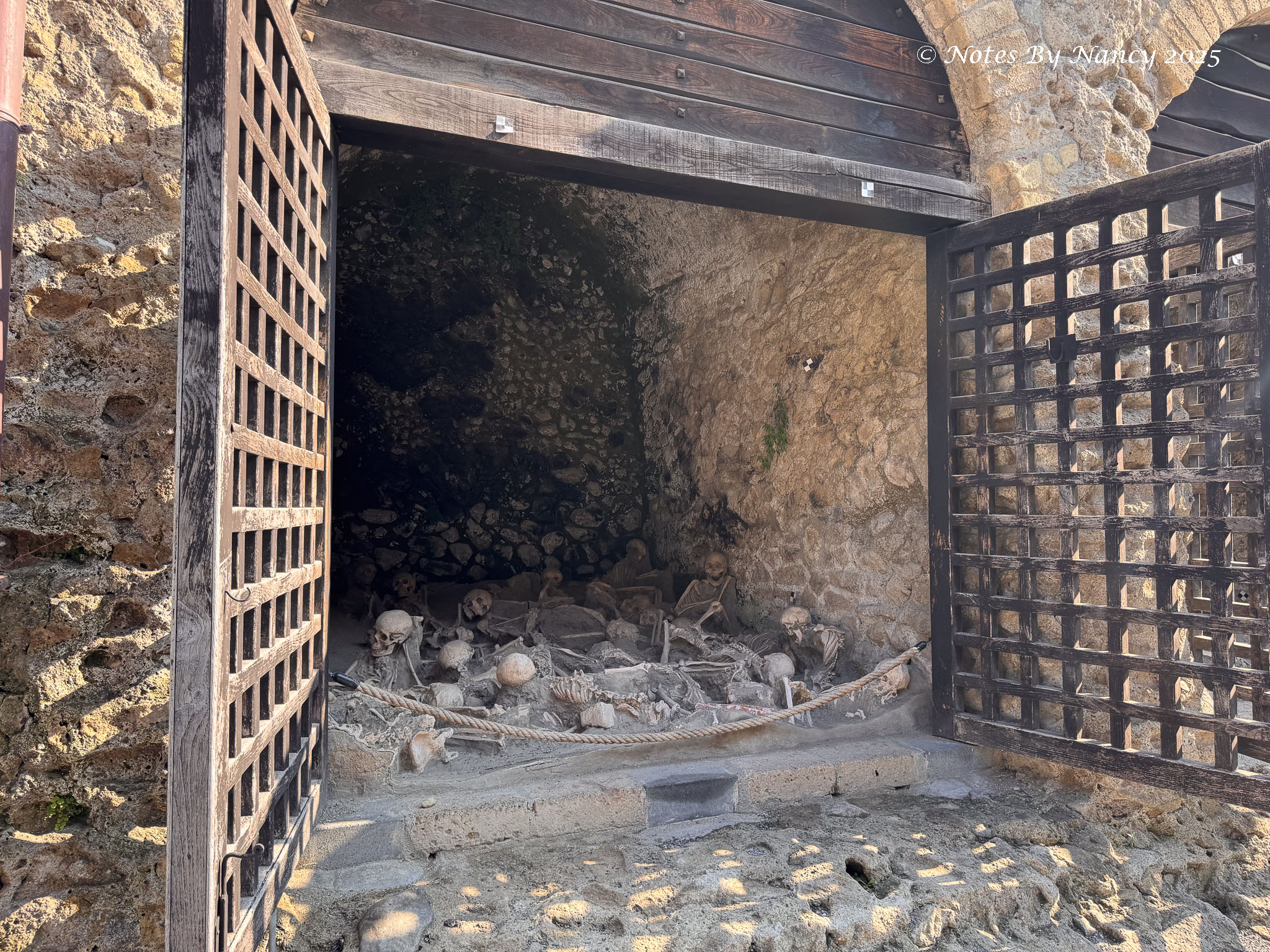
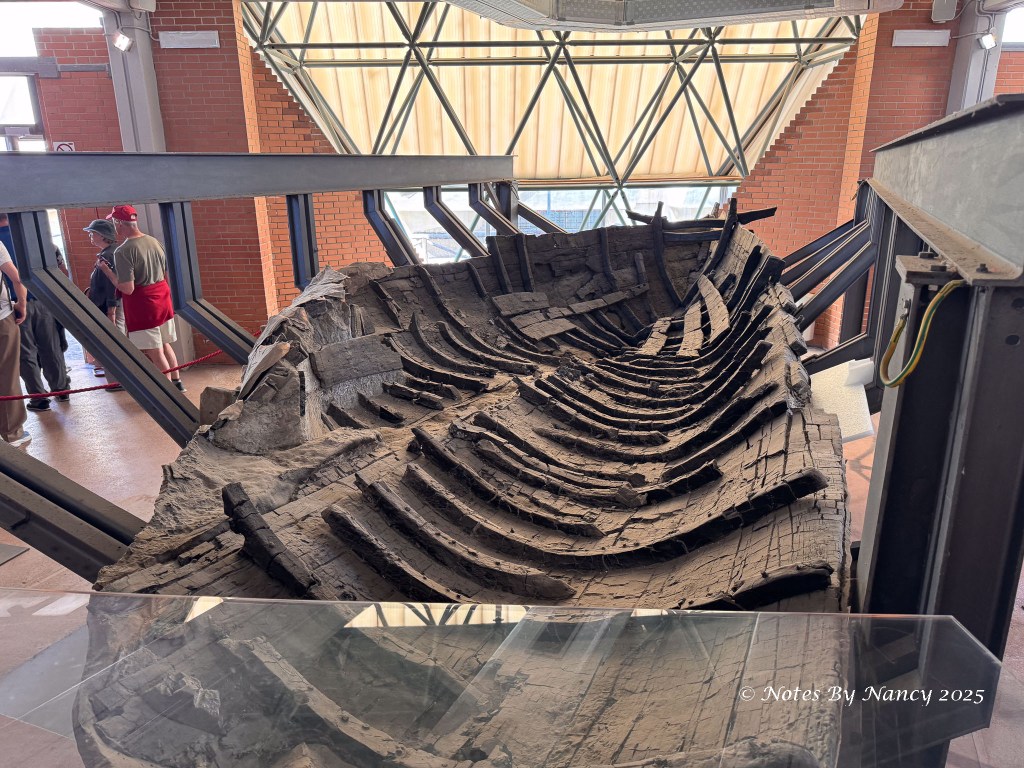
Even a boat somewhat survived – it is now housed in its own climate-controlled pavilion.
We had about 30 people on the tour, but with our QuietVox listening devices, it was always easy to hear the guide and not have to stay right by her. I was glad we did this excursion as we really were able to see the entire site and get a great feel for how the people here lived and died.
Naples, Above & Below: A Walking Tour
- Cost/person: $119
- Viking Difficulty Rating: Demanding
- Duration: 4 Hours
Explore Naples, from Soaring Castles to Subterranean Tunnels
Join a walking tour illuminating Naples’s heights and depths, from a 13th-century castle to subterranean tunnels. Leaving the port on foot, see the rugged medieval Castel Nuovo (New Castle). Continuing to the Piazza del Plebiscito, enjoy free time in Naples’s grandest public square, perhaps admiring statues and architecture, shopping, or people-watching. Next, venture underground via a palace escape route excavated by Ferdinand II of Bourbon. Descending around 100 feet into the soft volcanic rock underlying Naples, the cavernous Bourbon Tunnel interconnects with the extensive 17th-century Carmignano Aqueduct system. During World War II, this subterranean network was expanded to include bomb shelters. Emerging, visit the Santa Lucia area to see the Castel dell’Ovo (Castle of the Egg) and enjoy stunning seaside views. You will dine on classic Margherita pizza before returning to your ship. Please note that the order of visits may vary.
Keith and Paula did this tour and really enjoyed it as well. They shared a few pictures with me to post.
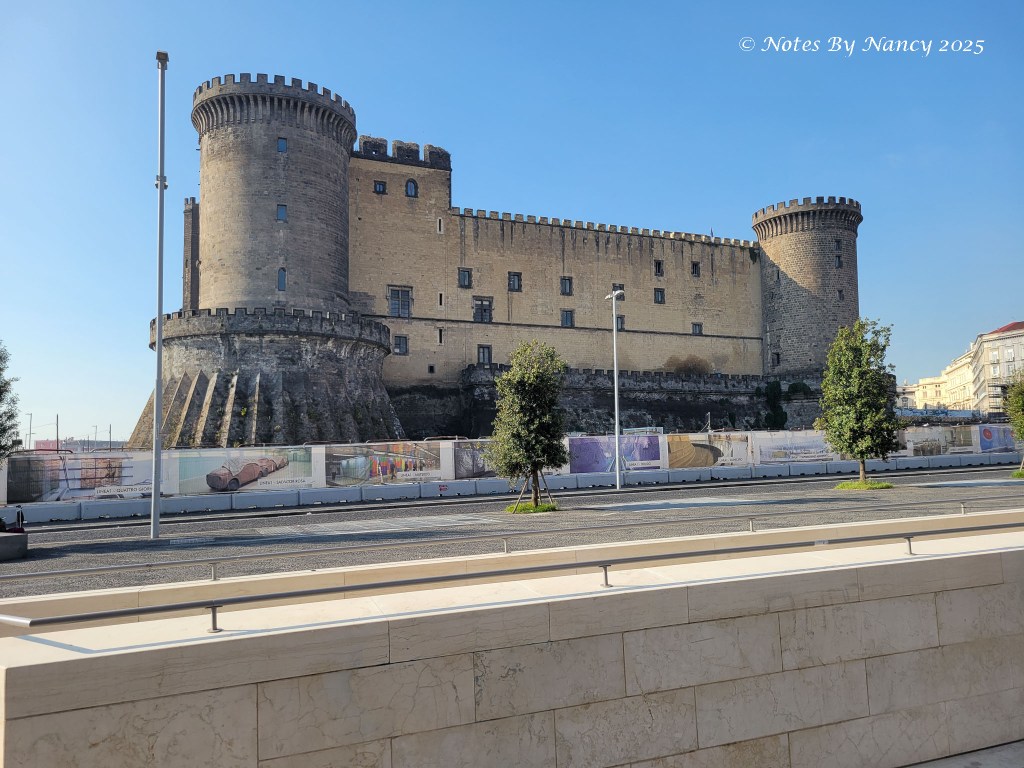
13th C. Castel Nuovo (New Castle) – Naples, Above & Below: A Walking Tour 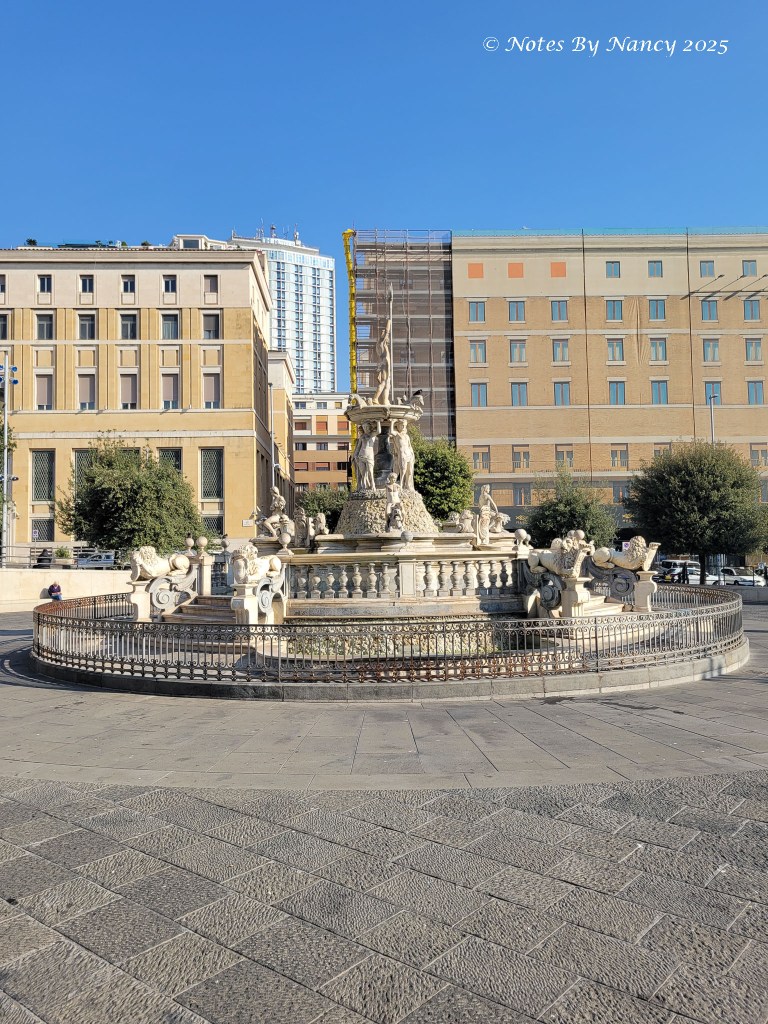
The Fountain of Neptune – Naples 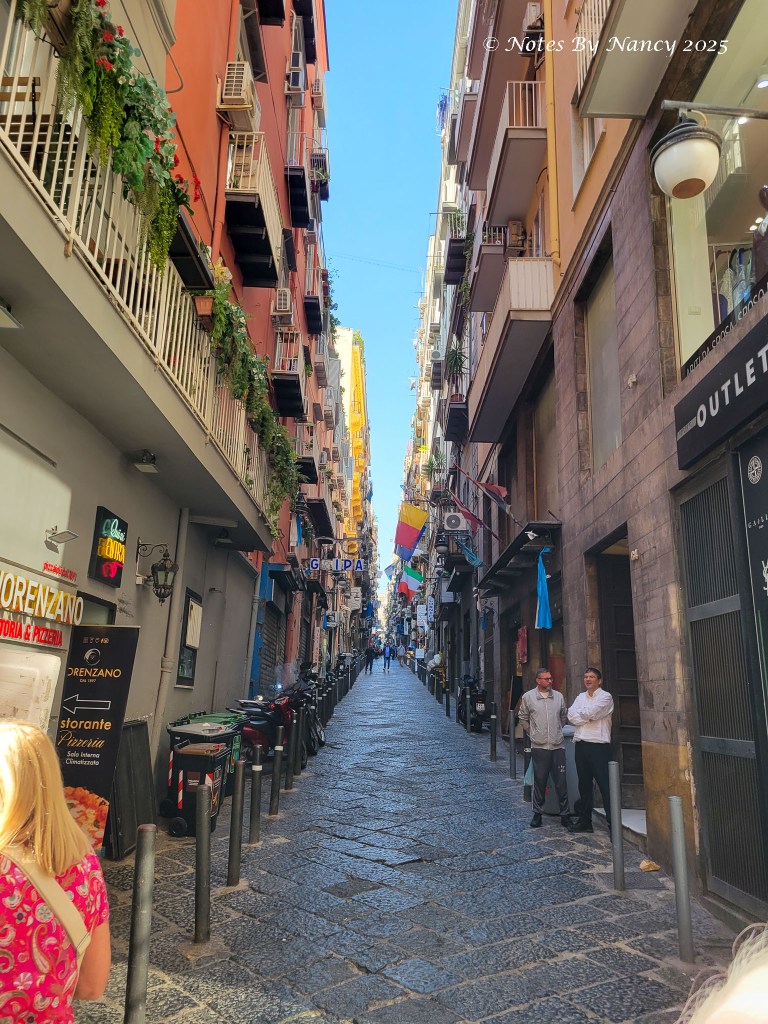
Naples, Above & Below: A Walking Tour 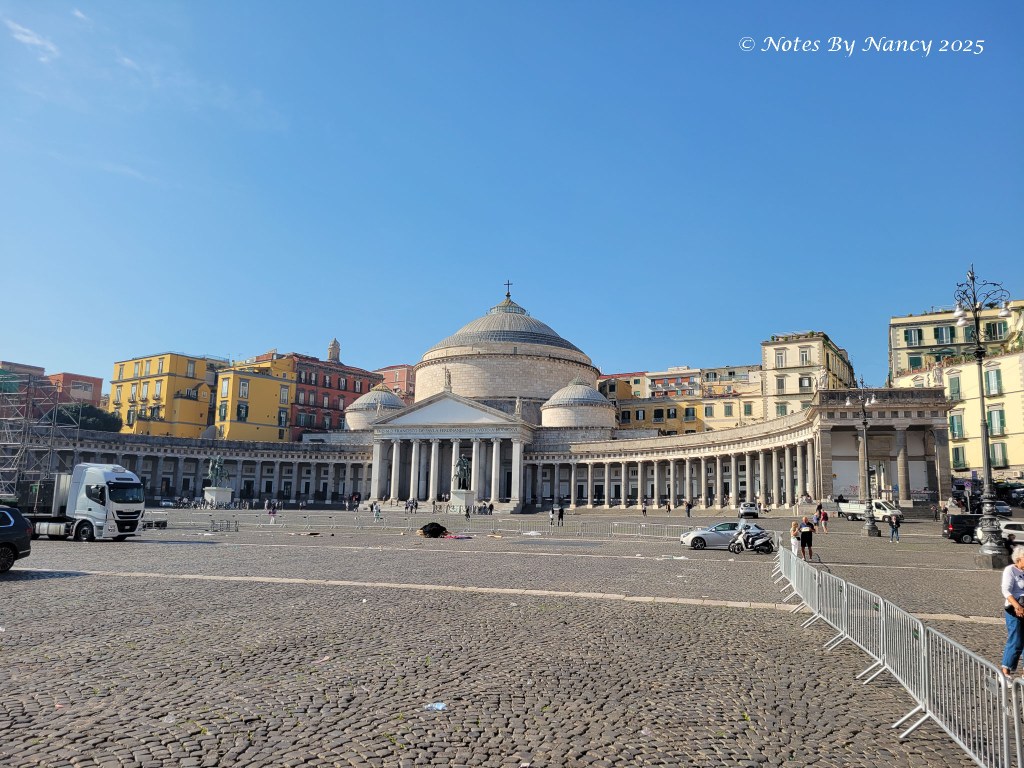
Piazza del Plebiscito – Naples, Above & Below: A Walking Tour 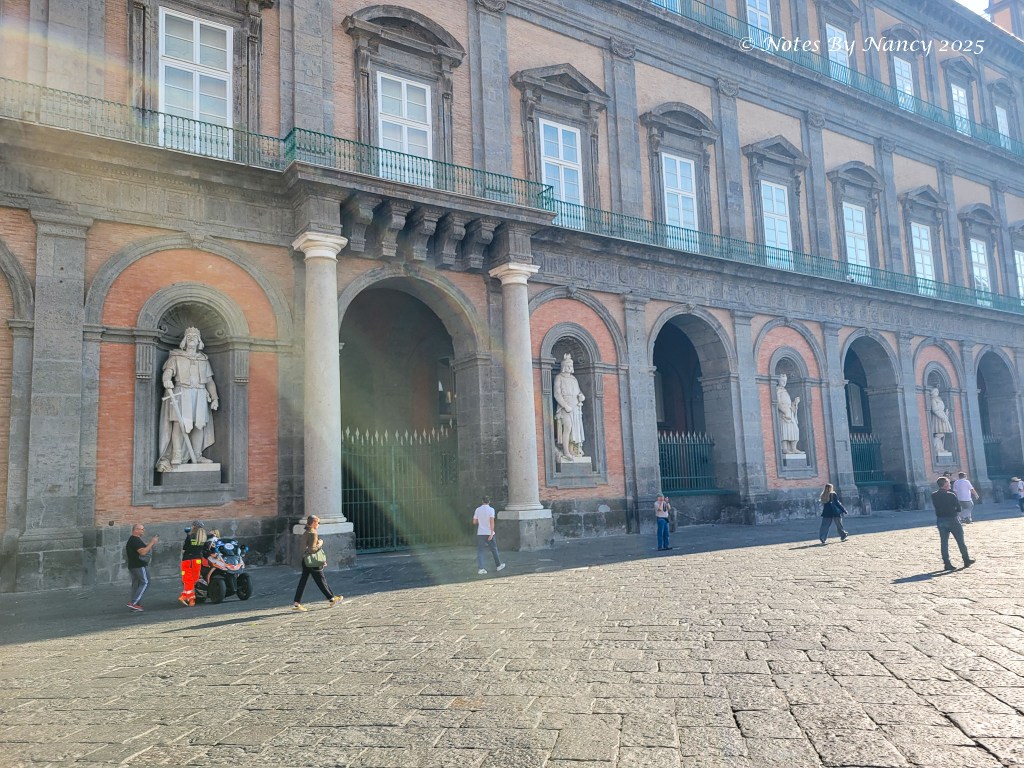
Royal Palace – Naples, Above & Below: A Walking Tour 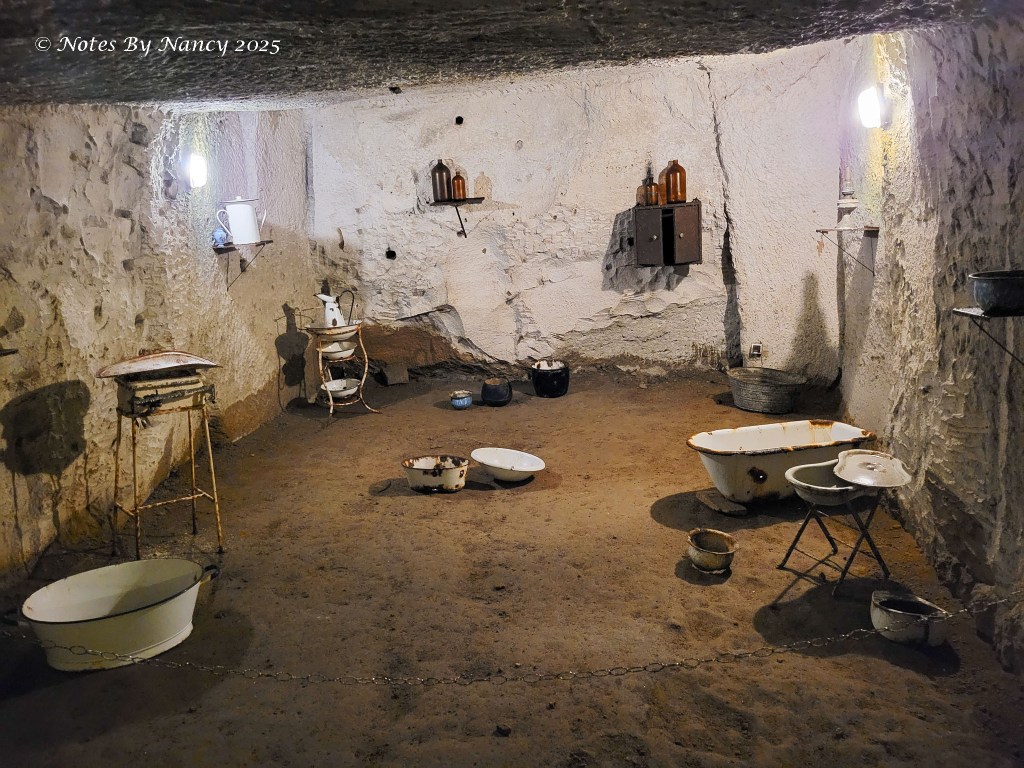
Naples, Above & Below: A Walking Tour 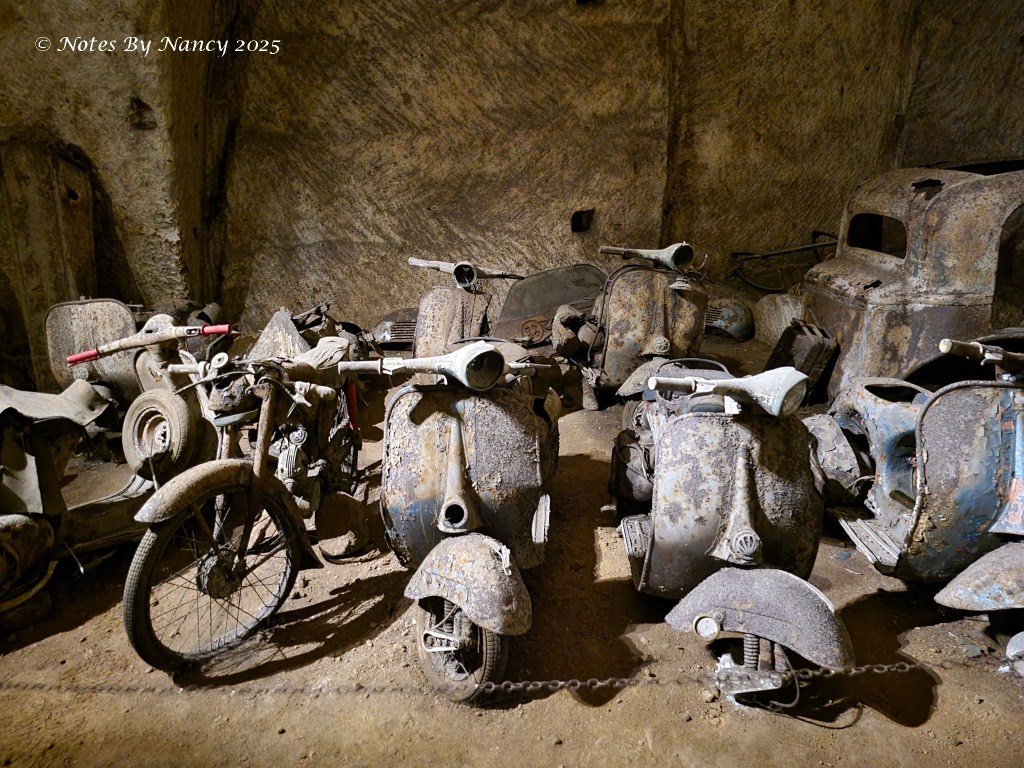
Naples, Above & Below: A Walking Tour 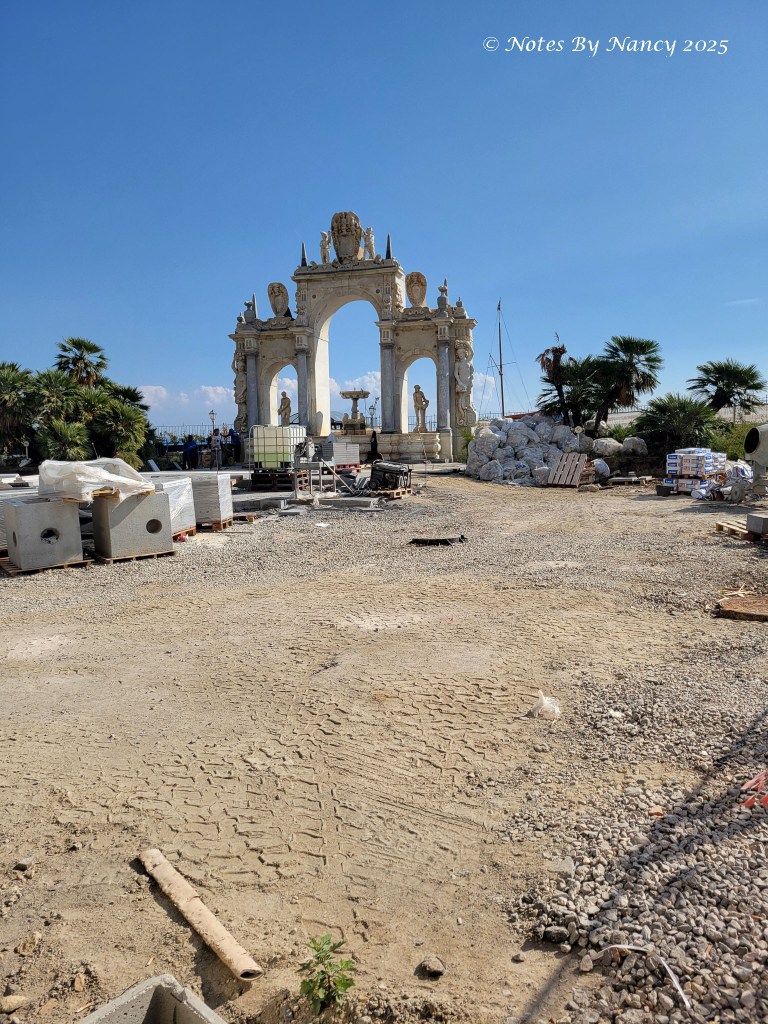
Fountain of the Giant – Naples, Above & Below: A Walking Tour
A Relaxing Afternoon
After eating lunch back onboard, I worked to get caught up on the first few days of the trip on the blog. Then we played some cards with Keith and Paula in the late afternoon.
Sail Away, Manfredi’s, and Harry the Piano
We departed Naples near sunset and enjoyed the evening view of the port of Naples, Mount Vesuvius, and the island of Capri.
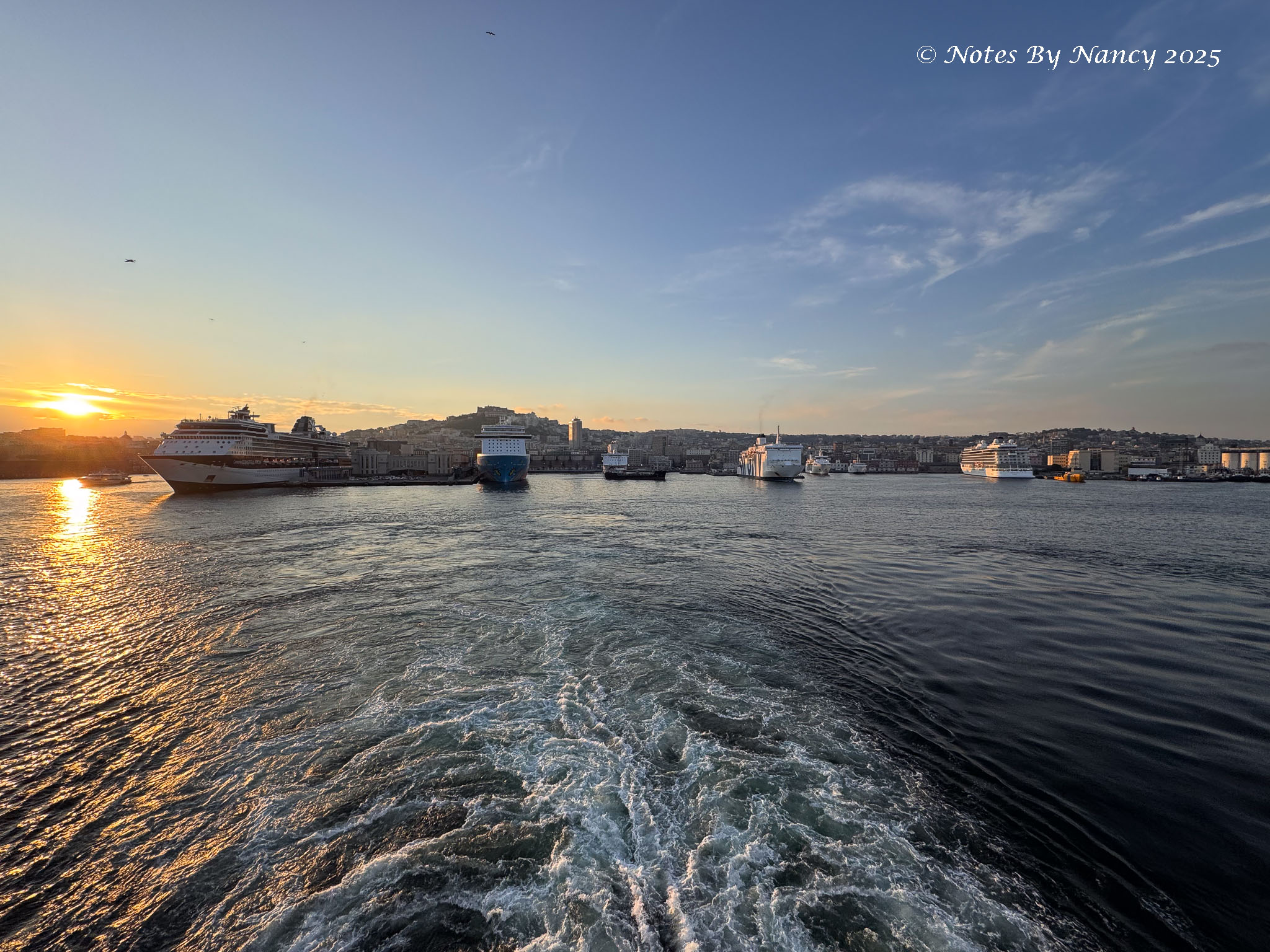
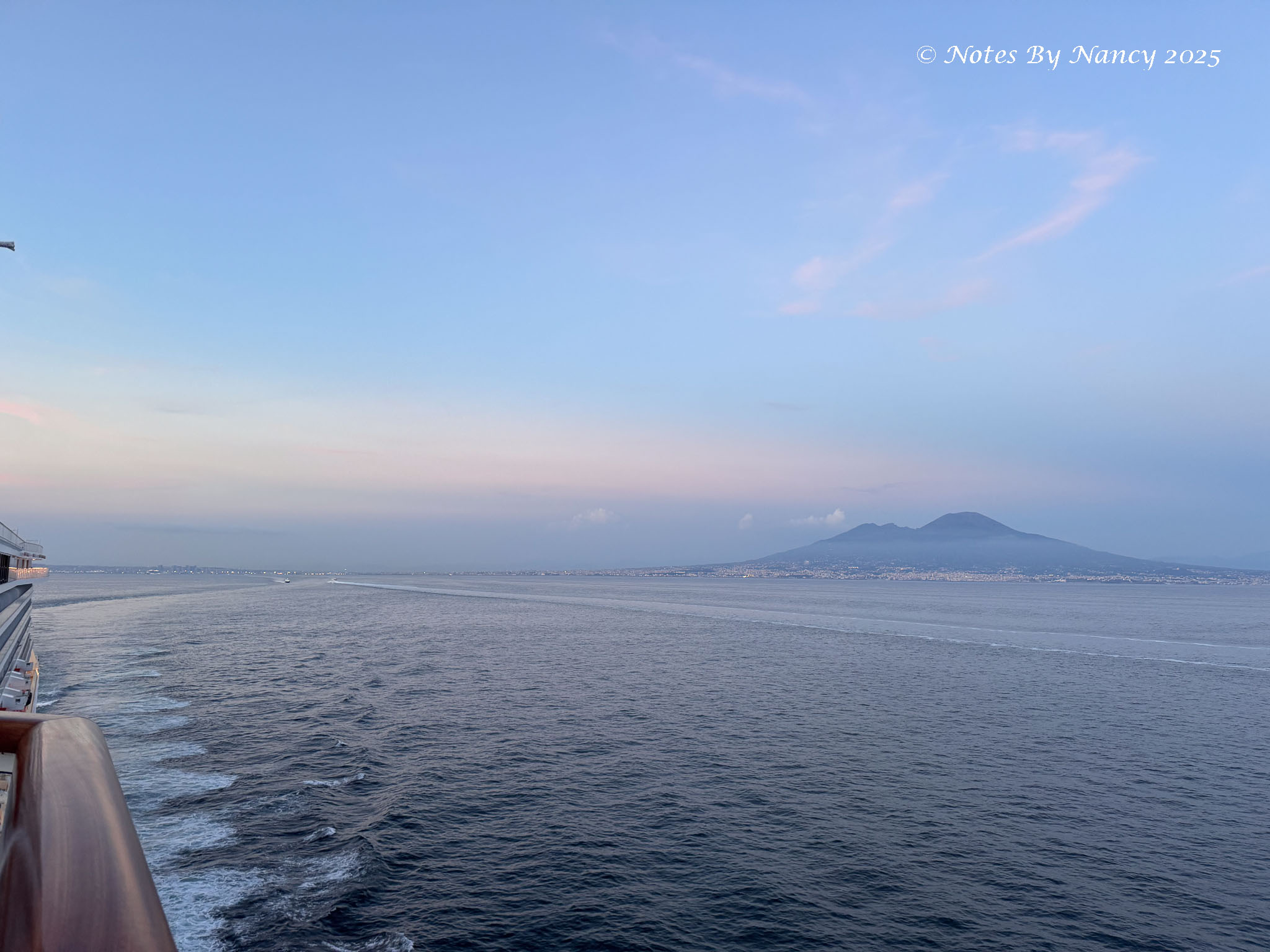
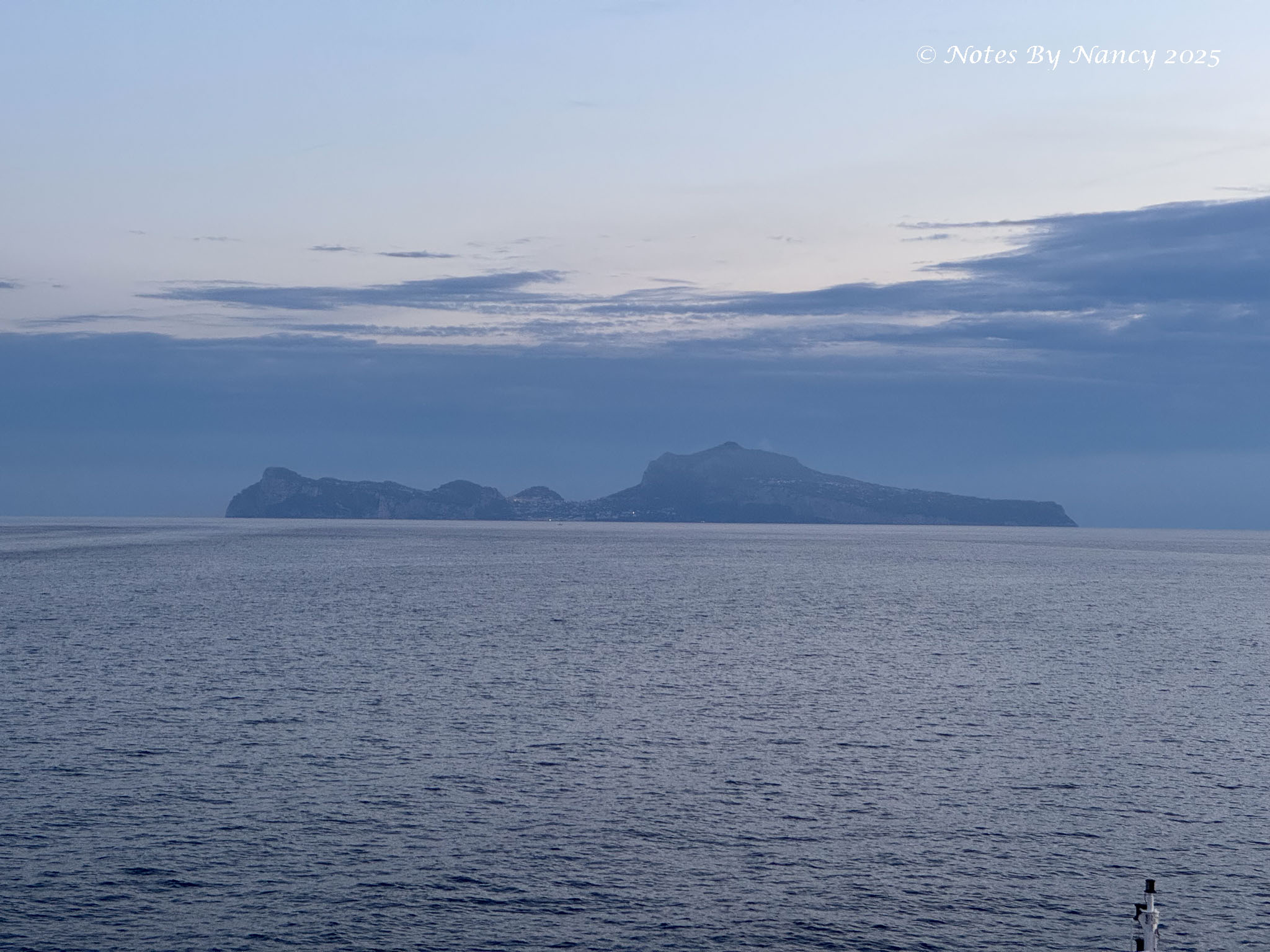
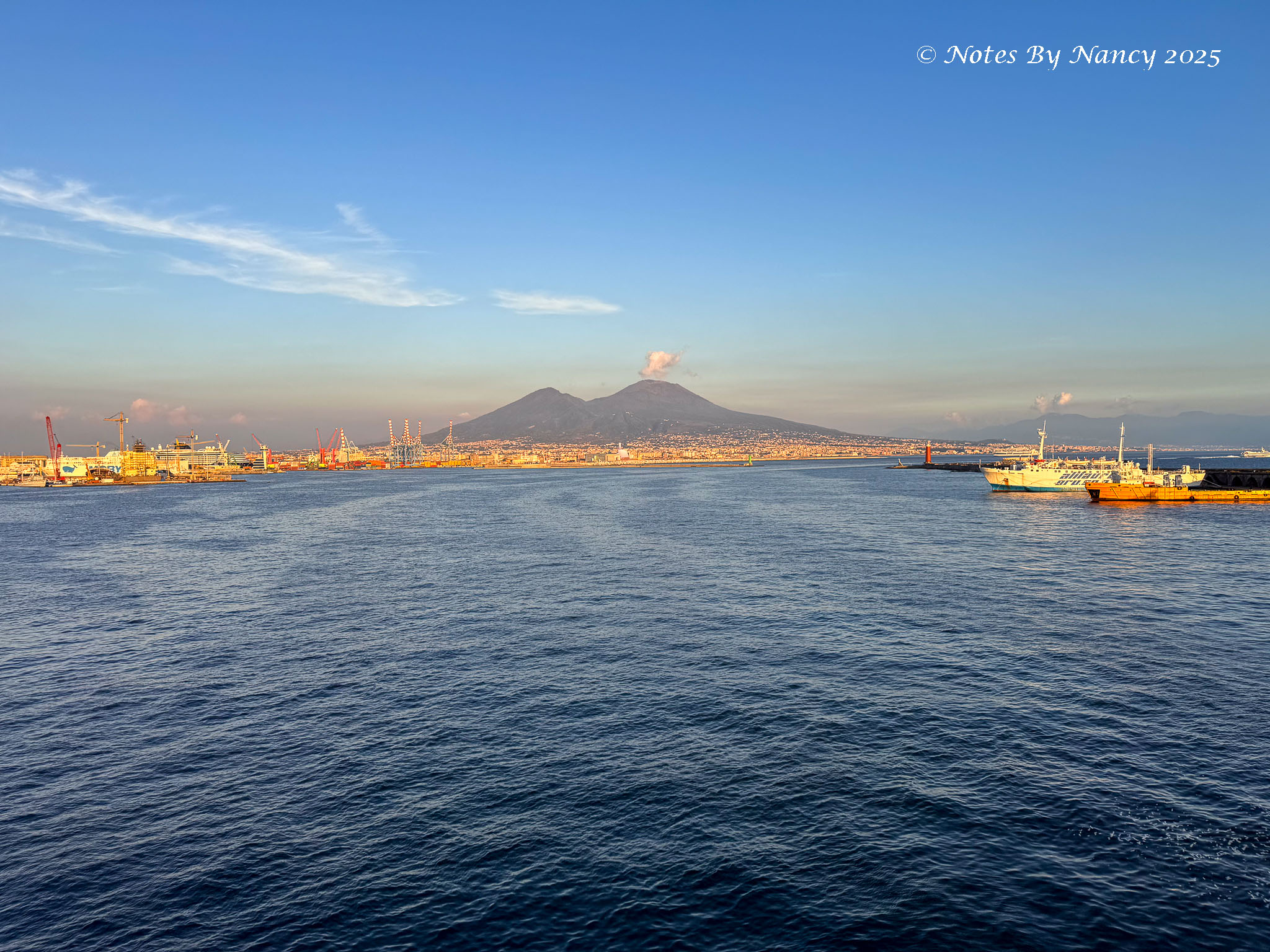
Tonight, we ate in Manfredi’s for the second time, enjoying different dishes and wines as recommended by Tariro, “the Wine Guy”.
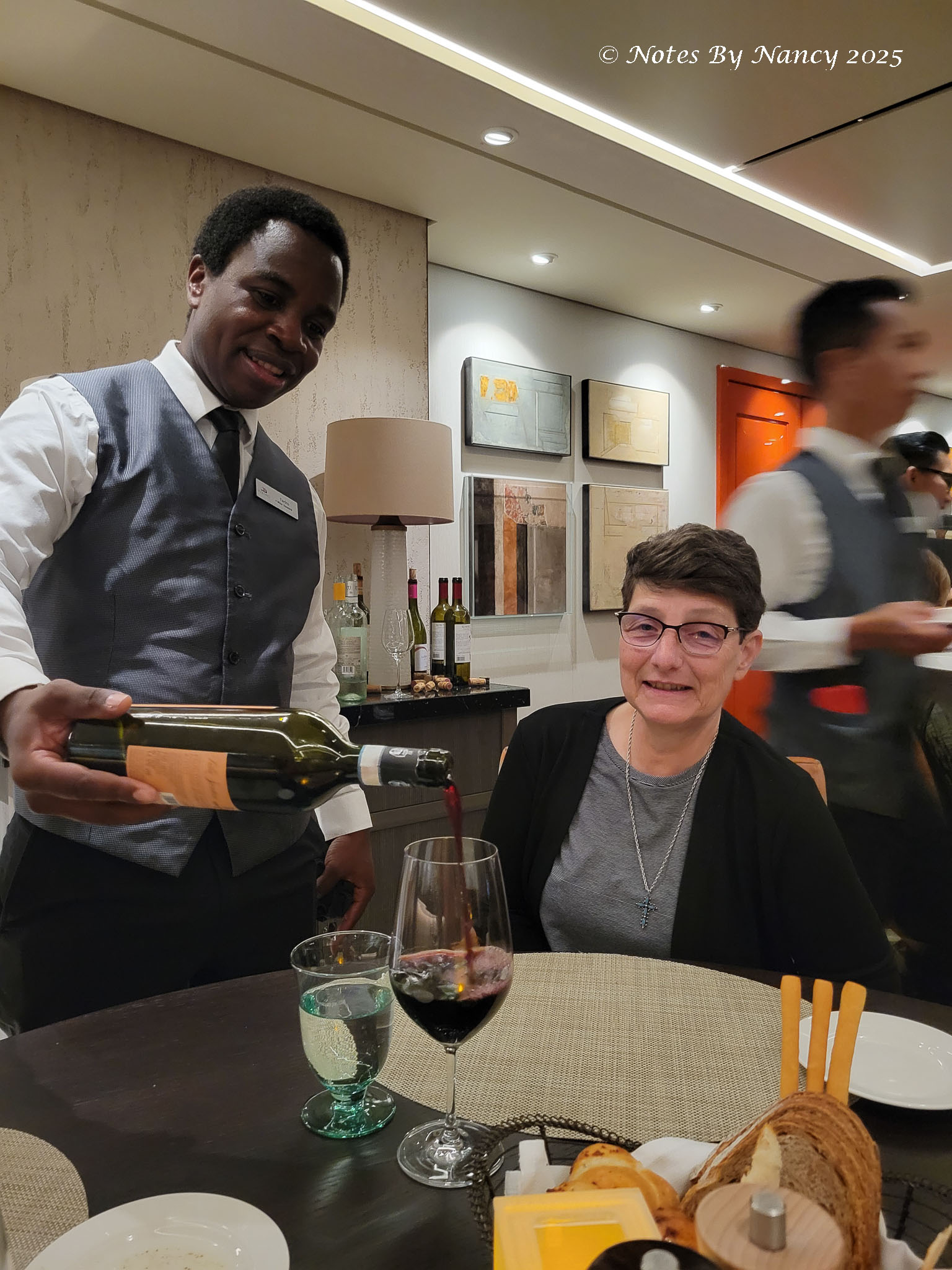
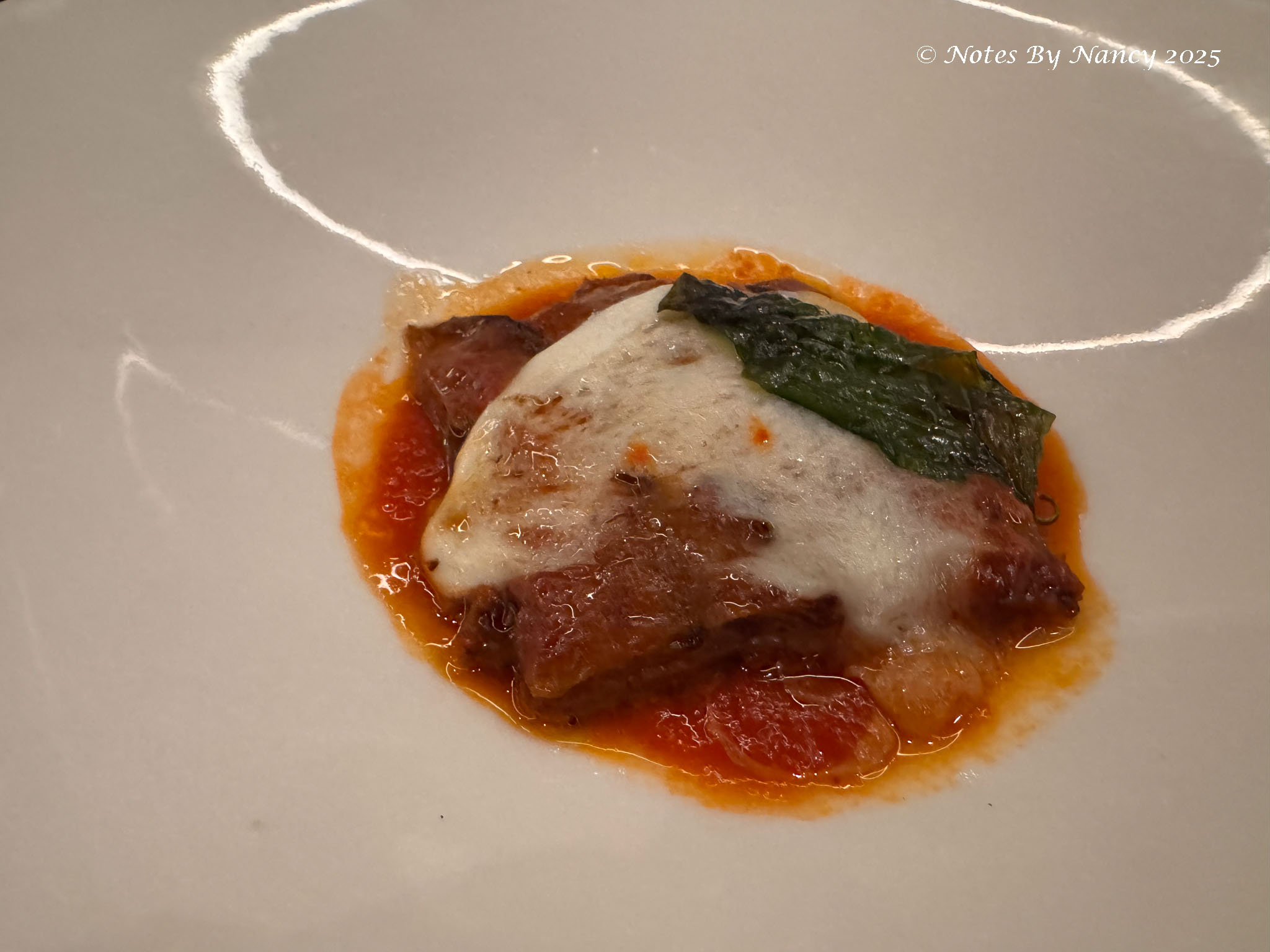
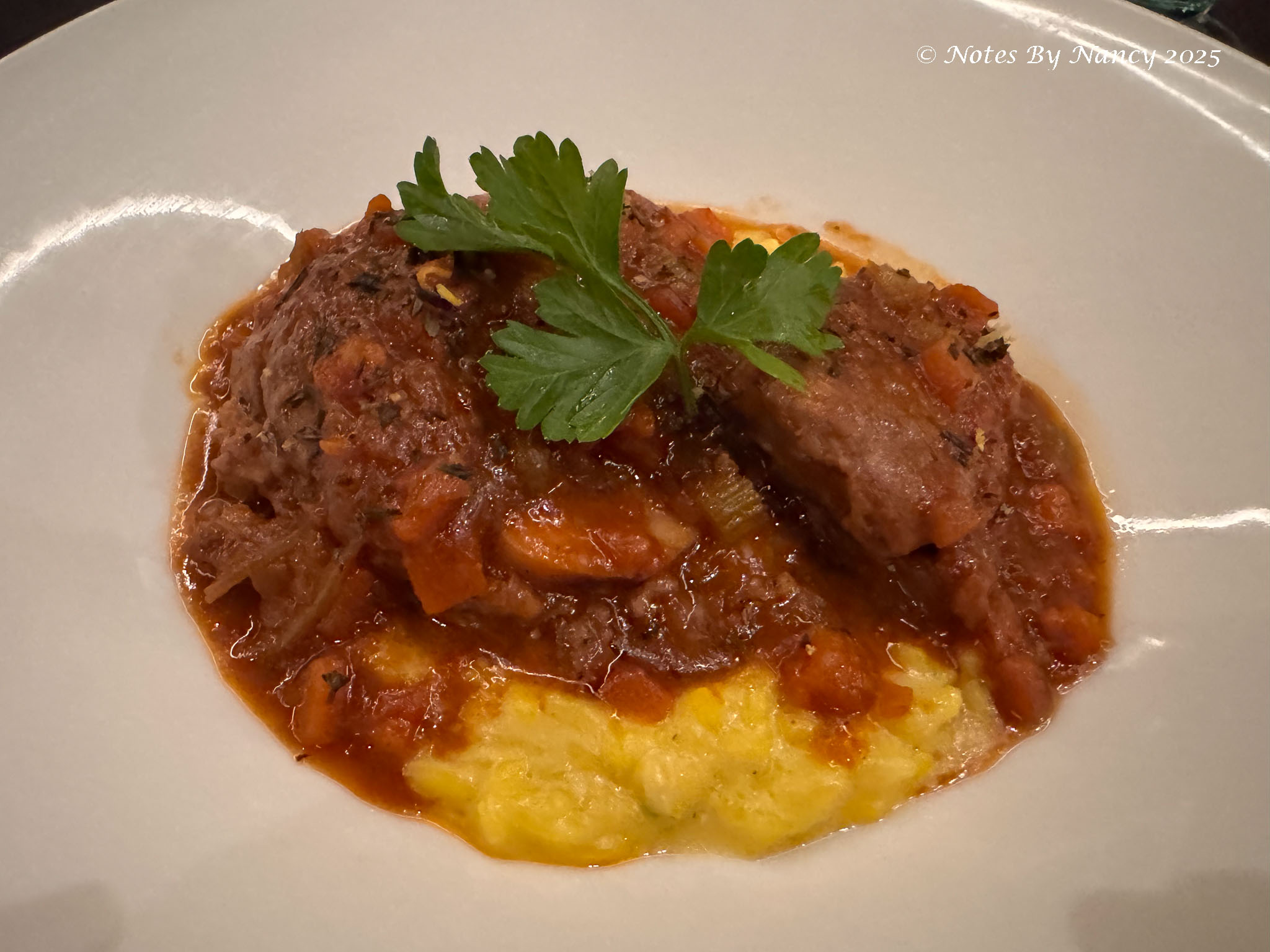
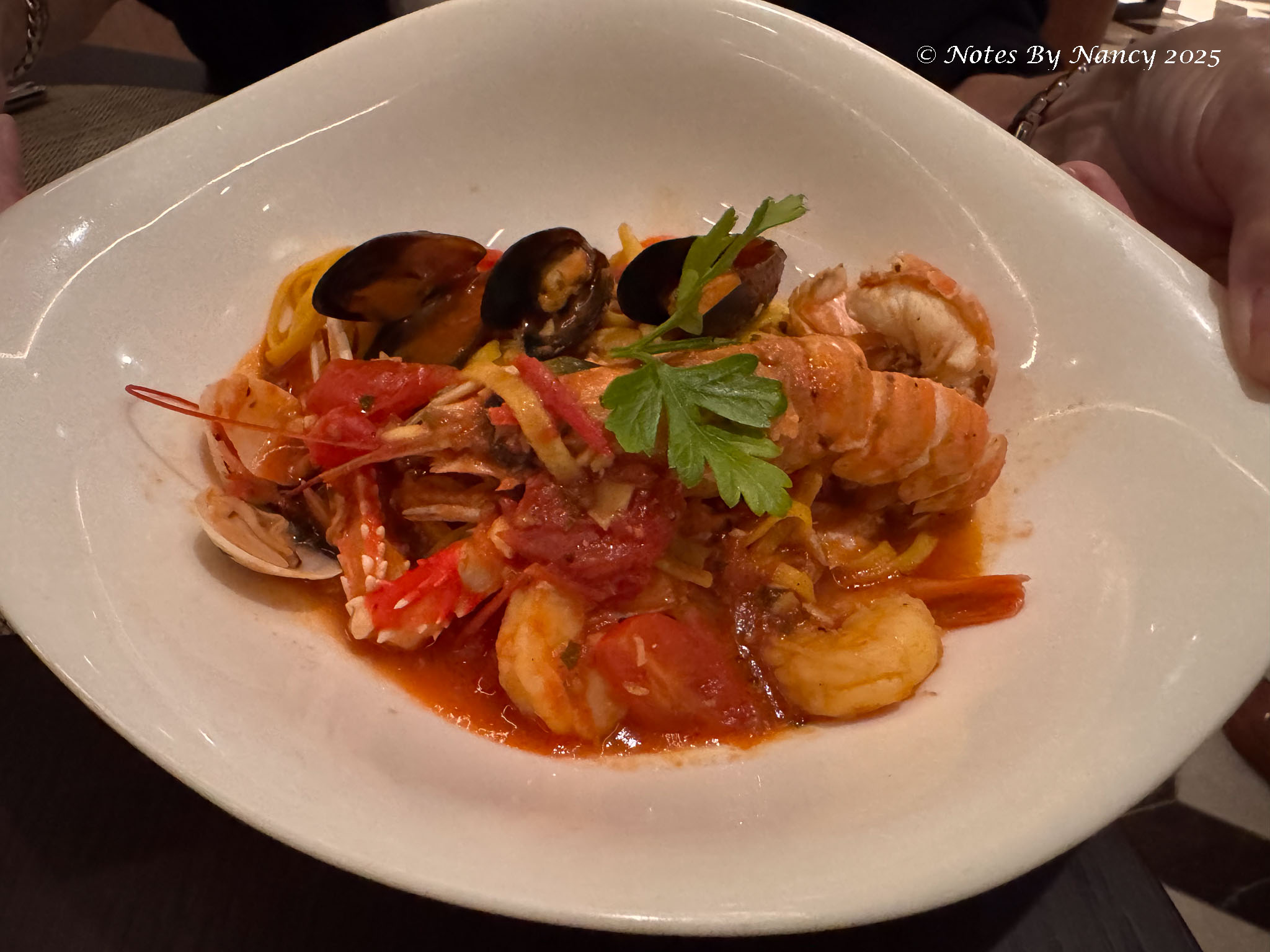
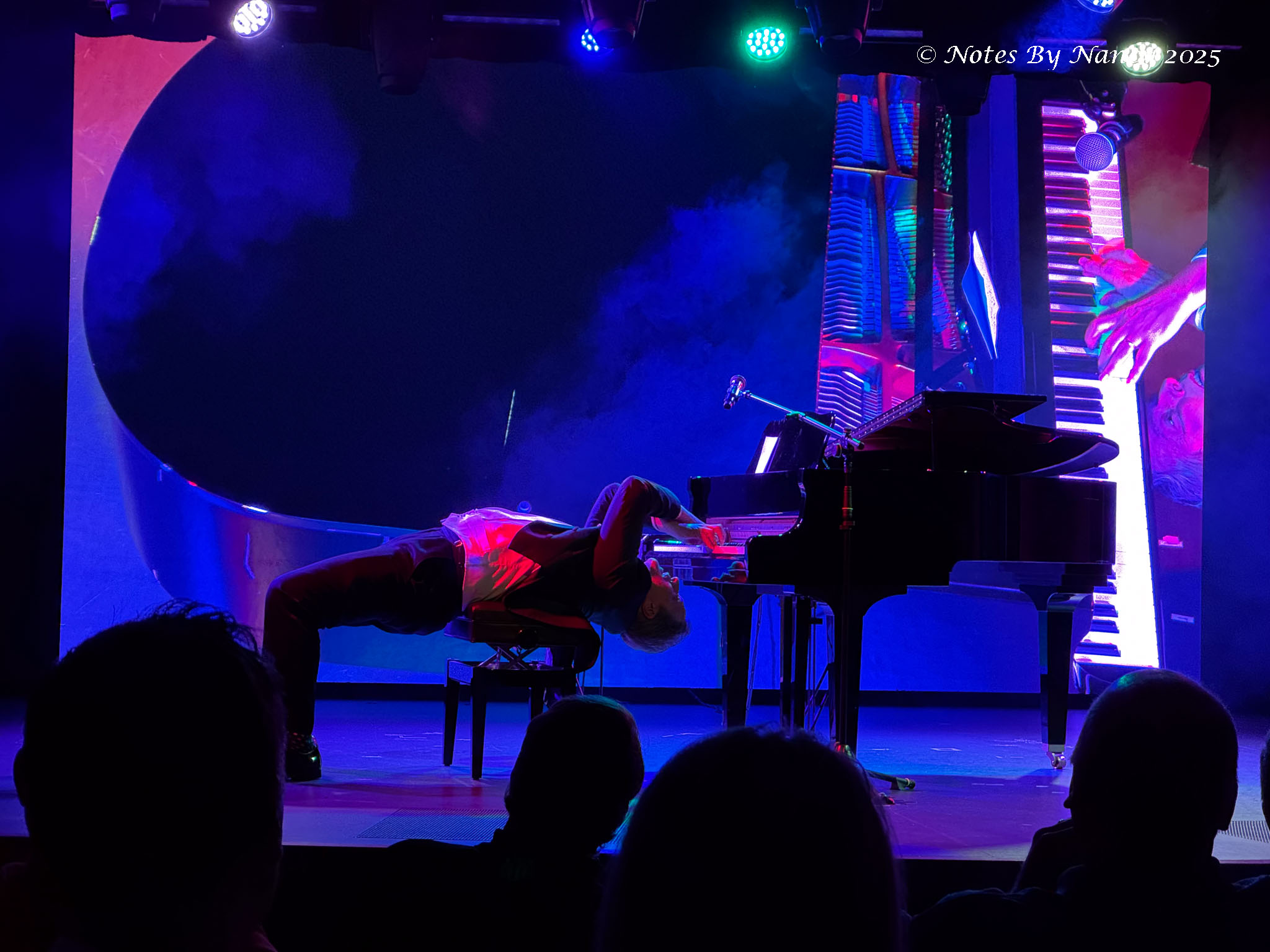
Following dinner, we headed to the Star Theater where we enjoyed the stylings and creativity of “Harry the Piano”. He has some set pieces, but then will accept several suggestions from the audience and combine them into a ingenious medley. How about Queen’s Bohemian Rhapsody in a Bluegrass style or Mozart’s Sonata in C played backwards? Harry is the guy to do it! I love how there is a camera above the keyboard projected as the backdrop.
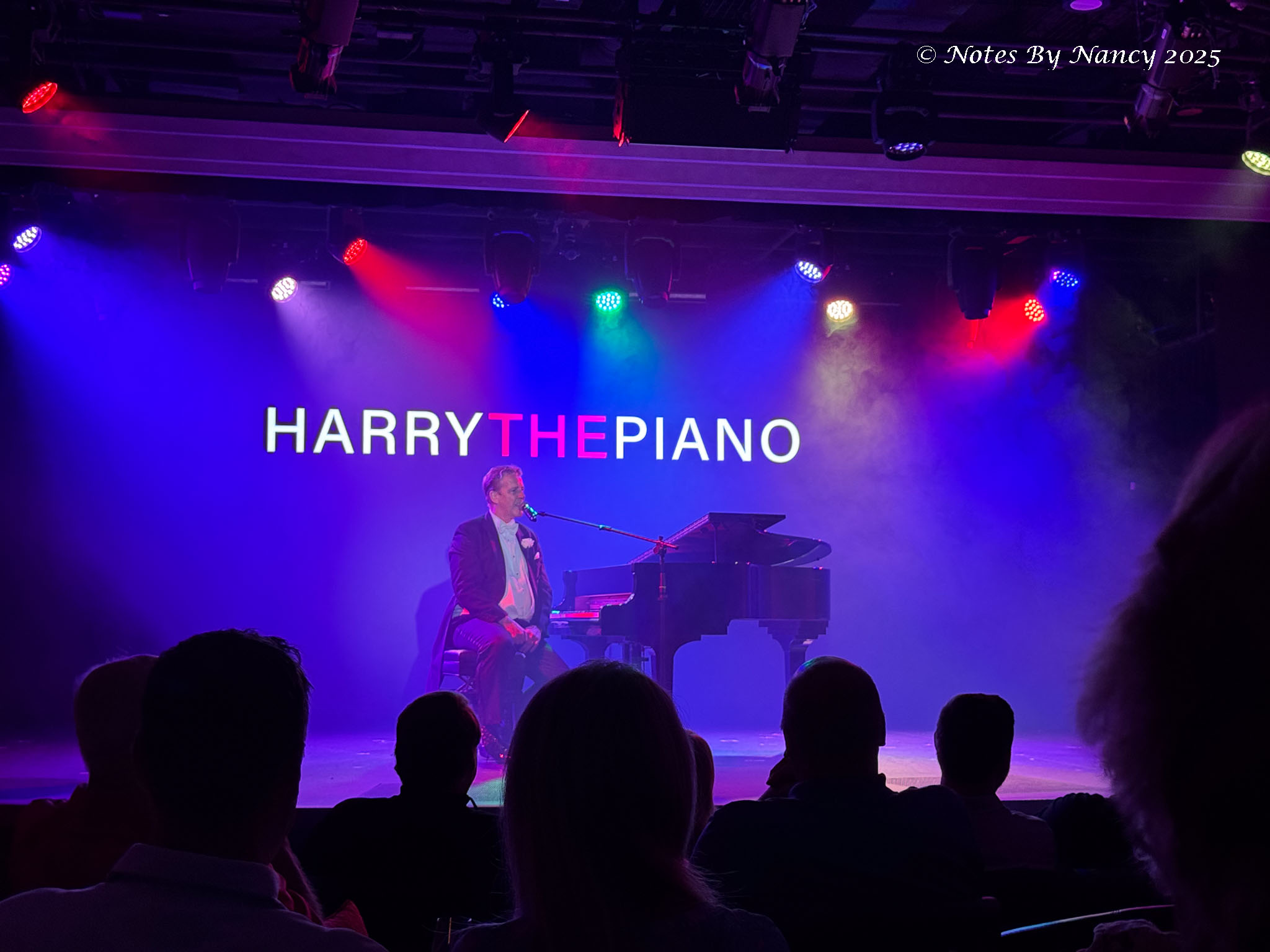
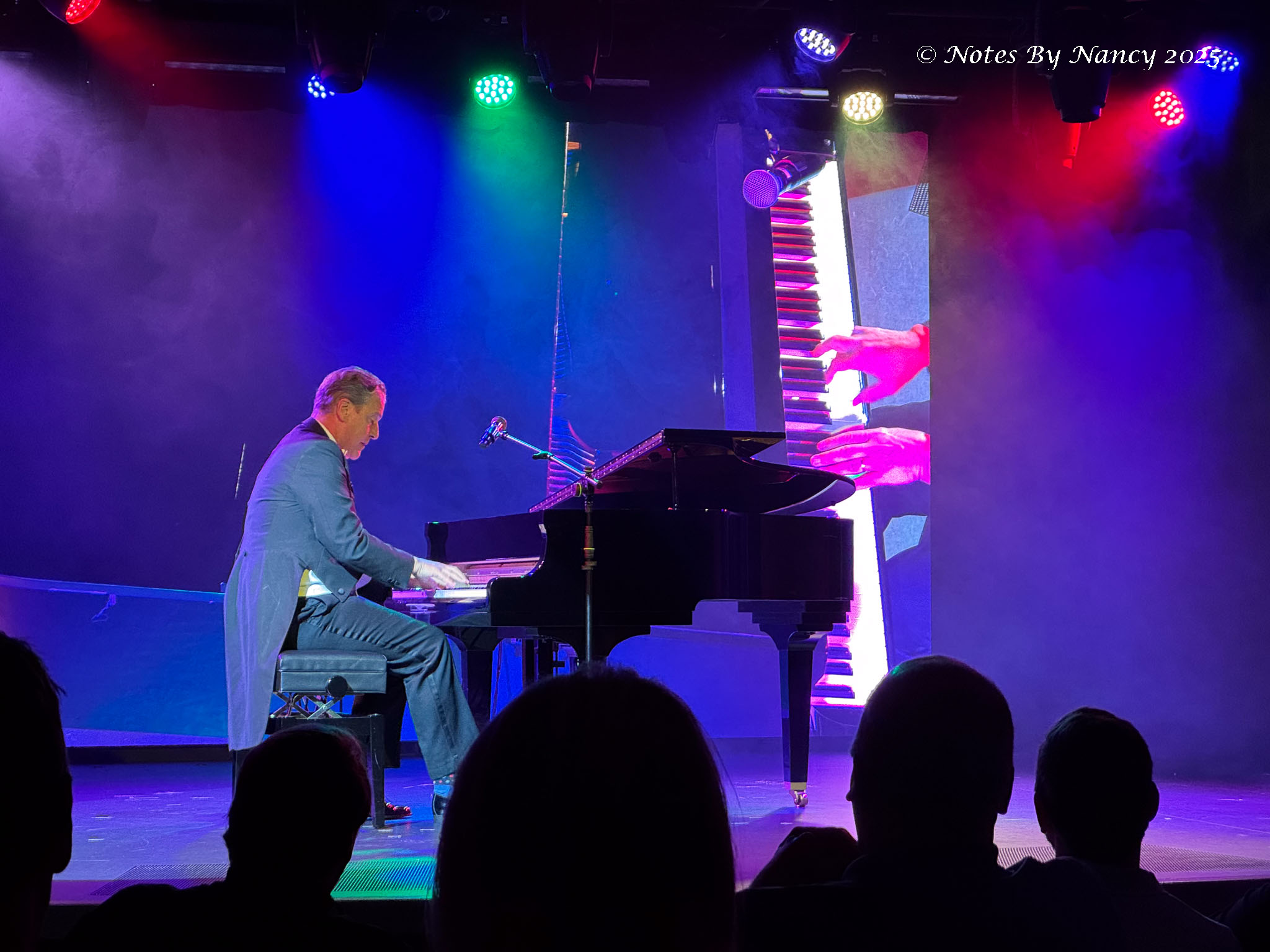
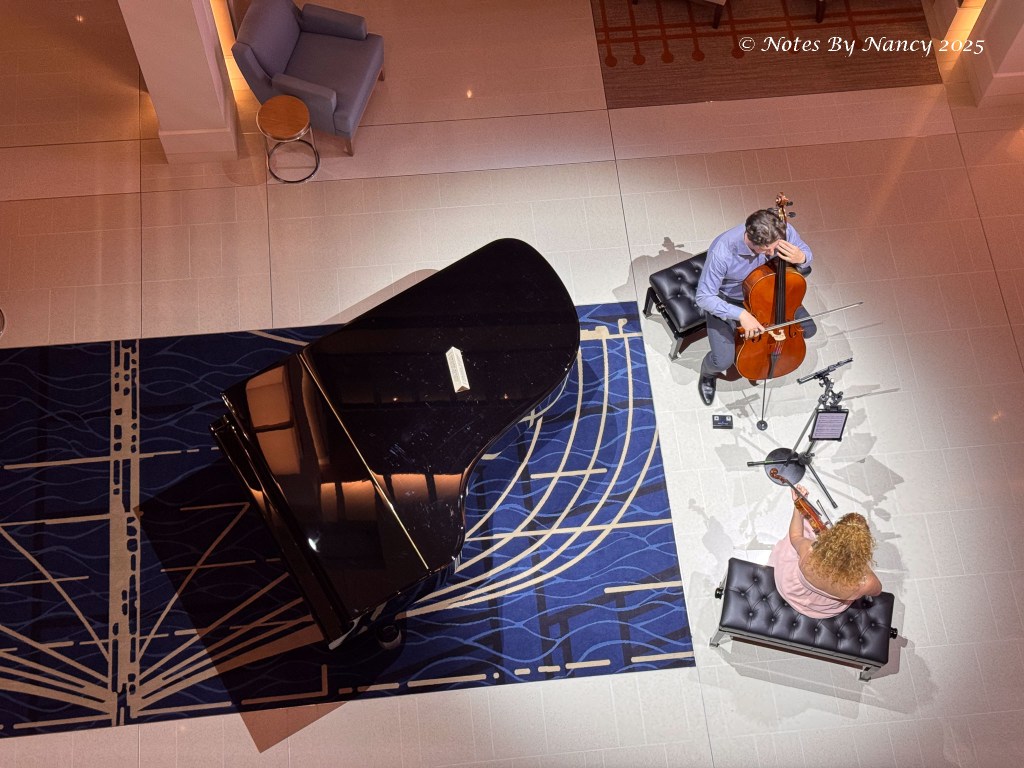
On the way back to our aft stateroom, we enjoyed a few minutes of the classical duo as we walked through the 3rd floor of the Atrium.

 Notes By Nancy
Leave a reply to Anonymous Cancel reply