Itinerary
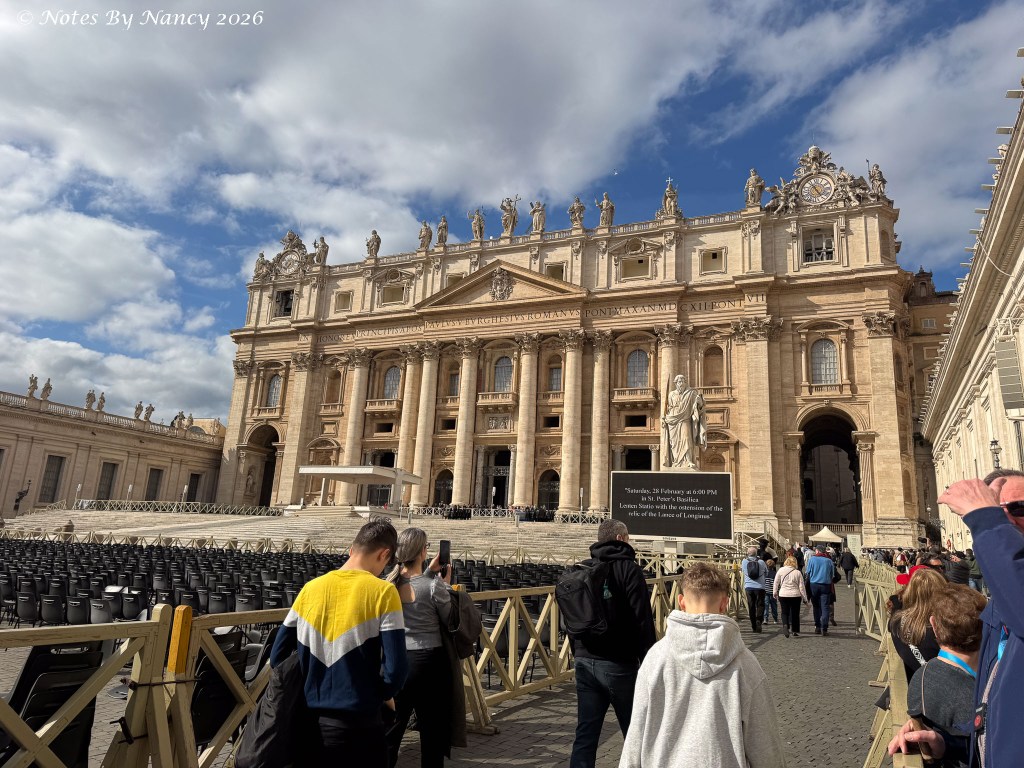
Day 6 – Today, after your breakfast at the hotel, you will start the day with the visit to the Vatican Museums and Sistine Chapel. Then, you will proceed with the visit of St. Peter’s Basilica. Lunch on your own.
In the afternoon, you will go to the Coliseum, Rome’s greatest amphitheater, commissioned by Emperor Vespasian in 72 AD. It was here that the Romans watched as the early Christians suffered and died as they were thrown in the arena with lions and other wild animals. You will proceed through the Roman Forum where you will see several ruined temples, triumphal arches, and basilicas. The Arch of Titus was erected in 81 AD to commemorate the destruction of Jerusalem in 70 AD. After your visit to the Forum, you will be on your own for a free afternoon of shopping or additional sightseeing and dinner on your own. Overnight at your hotel in Rome.
This post is covering the second half of the day – the Forum and Coliseum, plus a bonus site, and then our “dinner on your own”. But first, some history.
Imperial Rome Key Rulers
- In 27 BC, Augustus established himself as emperor following the fall of the Roman Republic starting an expansion of an empire that lasted 500 years – until 476 AD – and spread from Great Britain to the Middle East and all around the Mediterranean Sea.
- The first 105 years saw only 5 rulers – Augustus (40 years), Tiberius (22 years), Caligula (almost 4 years), Claudius (13 years), and Nero (13 years). All very recognizable names.
- Over the next 18 months – there were 3 different emperors – all met sad fates, but then so did most emperors!
- Vespasian took over in 69 AD – he commissioned the building of the Colosseum (or Coliseum) which was completed during the 2-year reign of his son and successor Titus, who was followed by his brother Domitian (15-year reign).
- The next set known as the “Five Good Emperors” under which the empire reached its peak geographically (96-180 AD) were: Nerva, Trajan, Hadrian, Antonius Pius, and Marcus Aurelius (co-emperor with brother, Lucius Verus).
- In 284 AD, Diocletian’s 20-year reign began (we visited his palace in Split in Note 113). He instituted the “Tetrarchy” dividing the empire in two parts with two emperors and two successors.
- In 306 AD, when Constantine I (aka “the Great) began his 30-year rule as part of the Tetrarchy, but by 324 had conquered his co-ruling rivals and became the sole ruling emperor.
- He was the first emperor to become a Christian, ending official persecution of Christians and in the Edict of Milan legalizing Christianity and allowing freedom to worship any deity.
- He moved the capital to Byzantium due to its strategic location in protecting and defending the eastern empire. Of course, Byzantium was later renamed Constantinople, now Istanbul.
- And, as mentioned in Note 122, he had the original “Old” St. Peter’s Basilica built over St. Peter’s tomb.
History of The Forum
The Forum was the center of life in the ancient city from the 8th Century BC until being abandoned in the 7th Century AD. From royal residences to civic and judicial basilicas to pagan temples to monumental arches – the remaining ruins today are quite impressive – especially when you consider how much was excavated and used to construct “new” buildings during medieval and Renaissance times (e.g. St. Peter’s Basilica). We learned that the word “basilica” comes from the Greek word for “royal” as in the Stoa Basileios or “royal stoa” in Athens. Thus, the original basilicas here were large colonnaded buildings with porticos like those in Greece. The term began to take on its current meaning of a large church granted special status by the Pope during the time of Constantine.
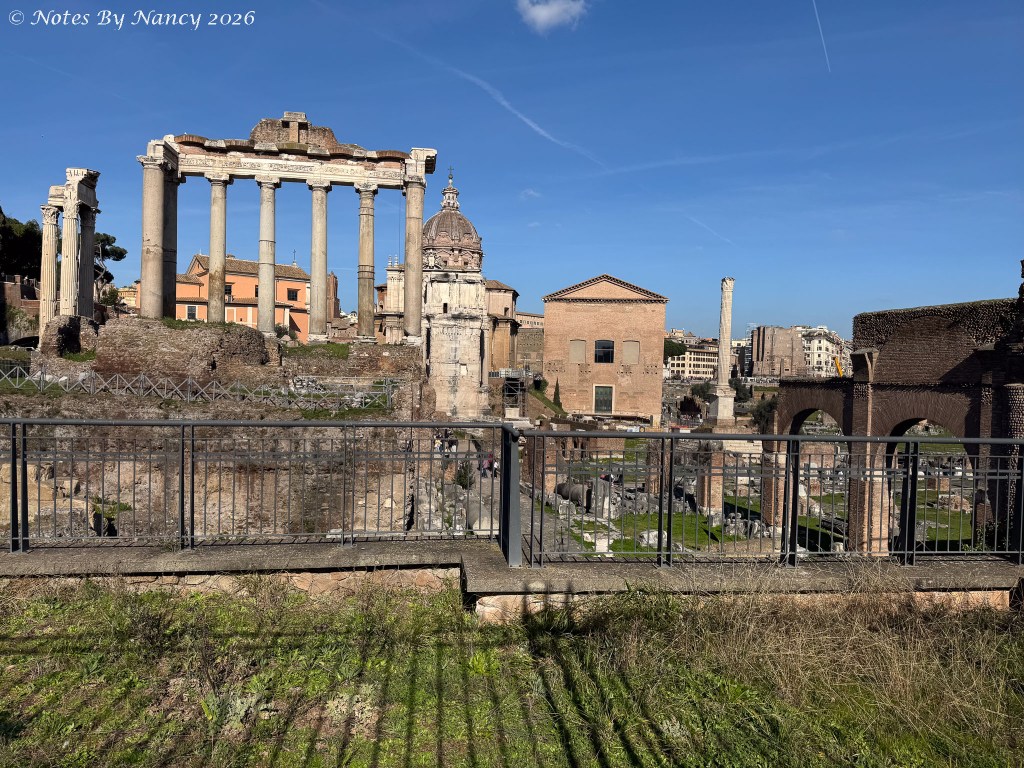
Temple of Saturn – tradition says it was built around 497 BC, these ruins are from a rebuild following a fire in 360 AD.
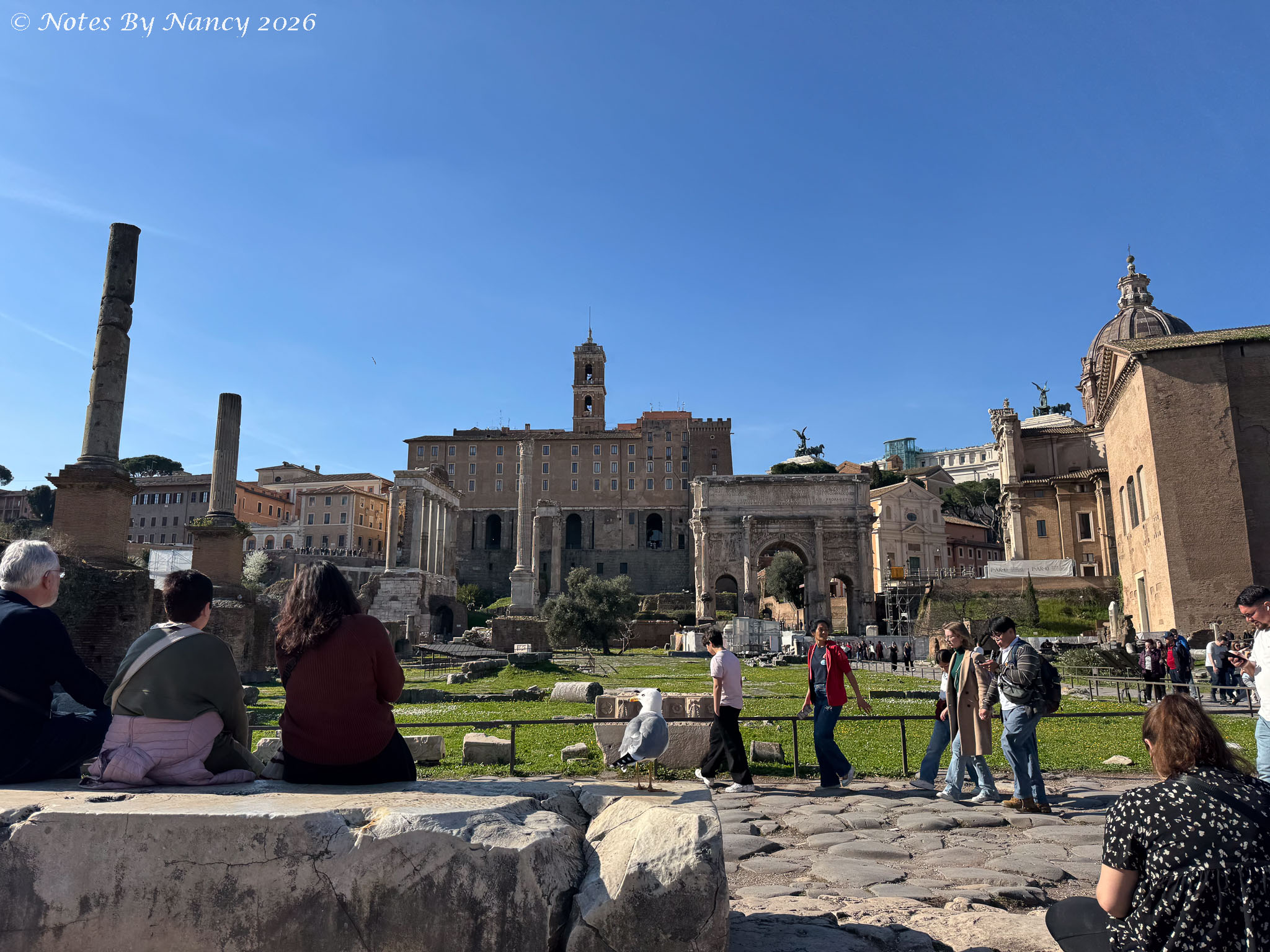
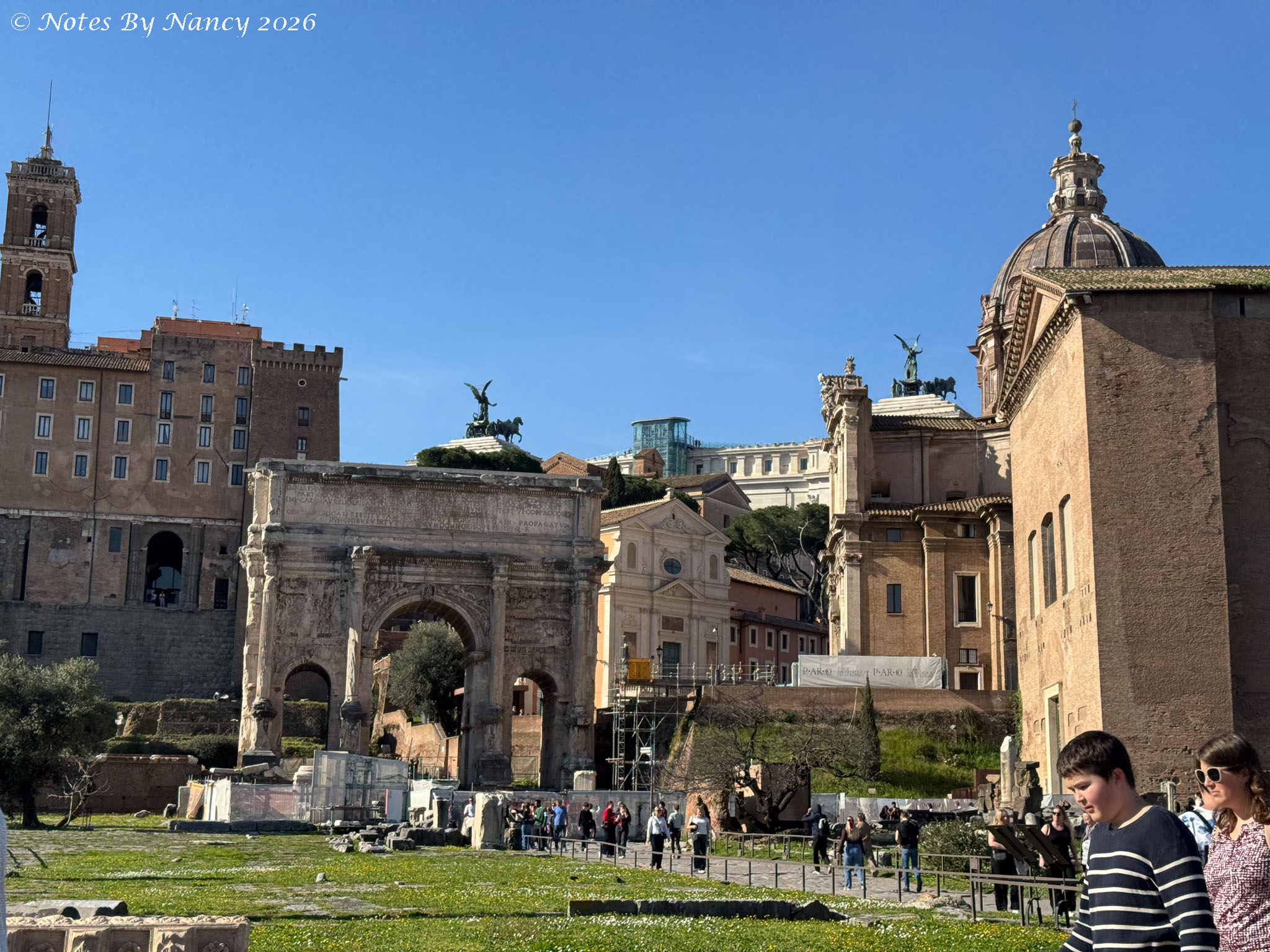
Roman Forum West End – Arch of Septimius Severus – the 75-foot arch dedicated in 203 AD commemorates the Parthian victories of Emperor Septimius Severus and his sons a decade earlier. The Parthian Empire was located in ancient Iran.
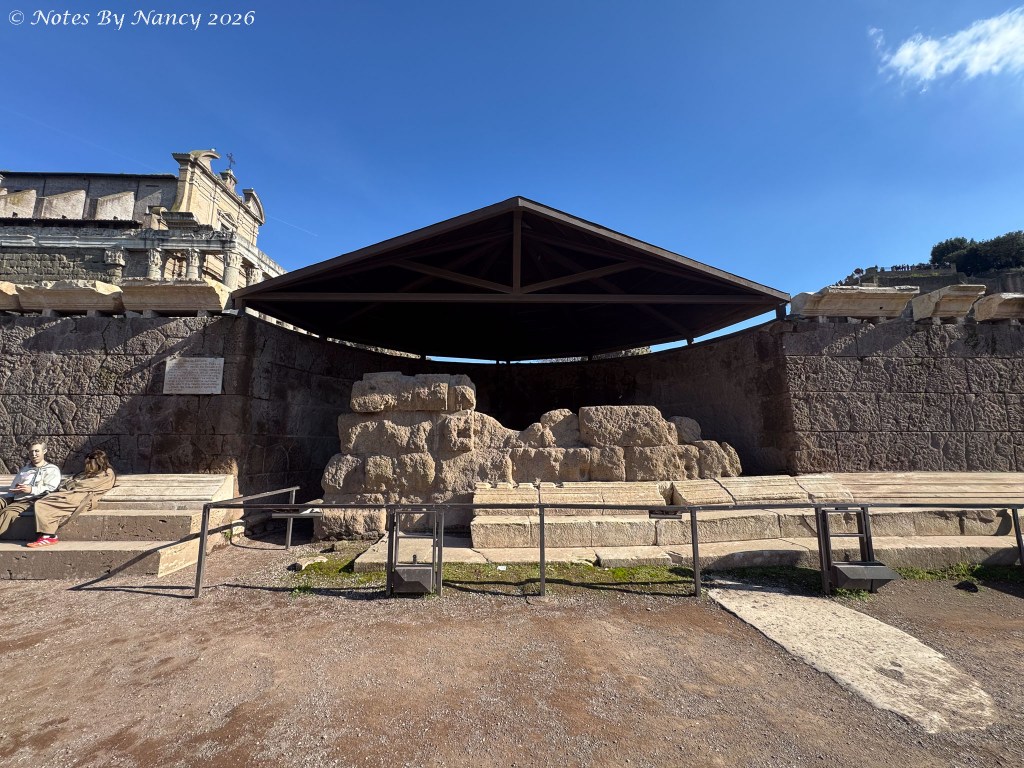
Altar of Caesar – site of his assassination and funeral pyre
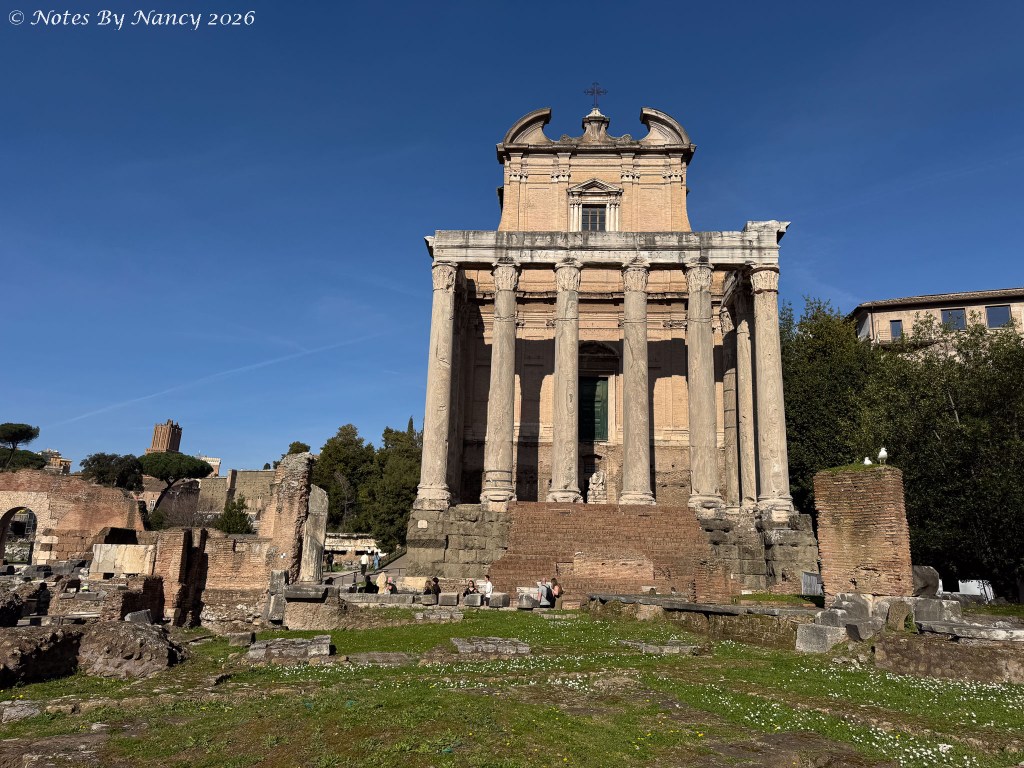
The Temple of Antoninus and Faustina – constructed by Emperor Antoninus Pius in 141 AD to honor his late wife, Faustina.
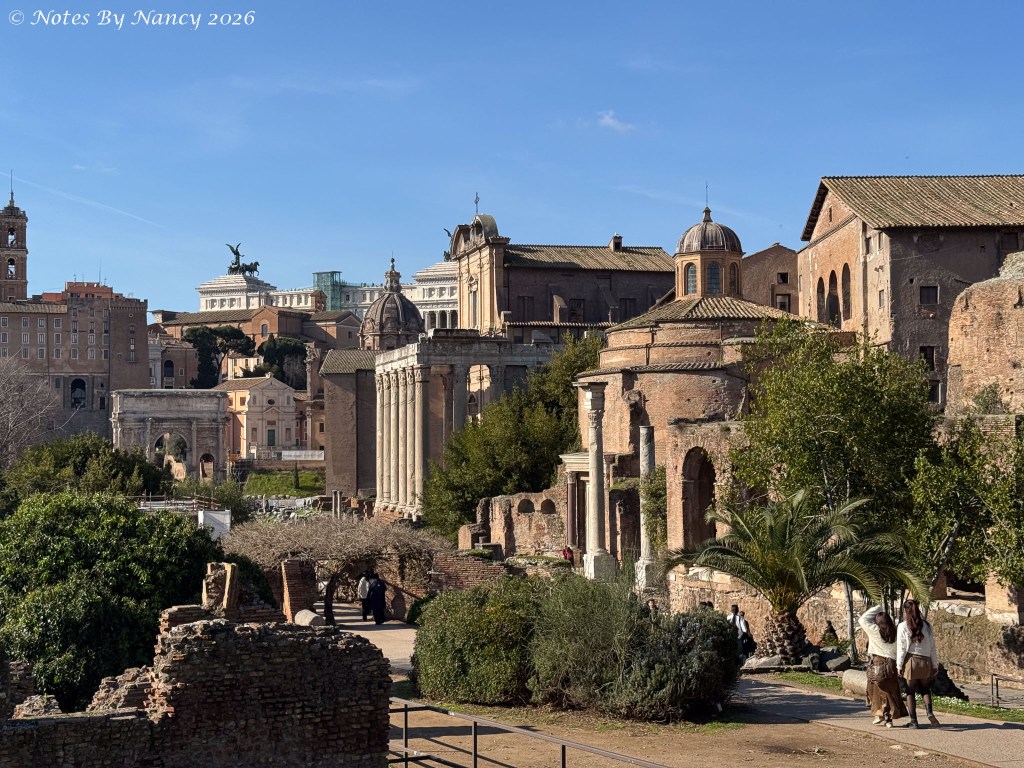
The circular Temple of Romulus is thought to have been dedicated in 309 AD by Maxentius to his deceased son, Valerius Romulus. In the 6th century, it became part of the Forum of Peace which then became the basilica of Saints Cosmas and Damian.
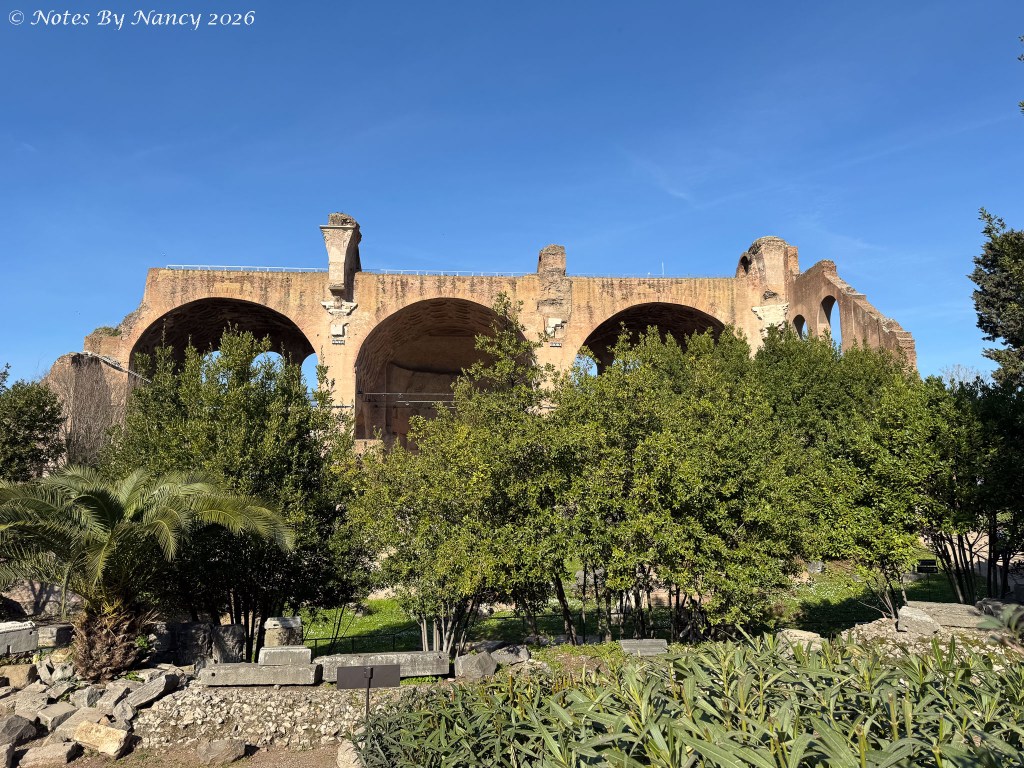
Basilica of Maxentius and Constantine – this was a civic basilica started by Maxentius and was the largest building in the Roman Forum when completed in 312 AD by Constantine. Its base was 100 meters by 65 meters (328 ft × 213 ft). The barrel vaults which remain are 39 meters (128 ft) above the floor.
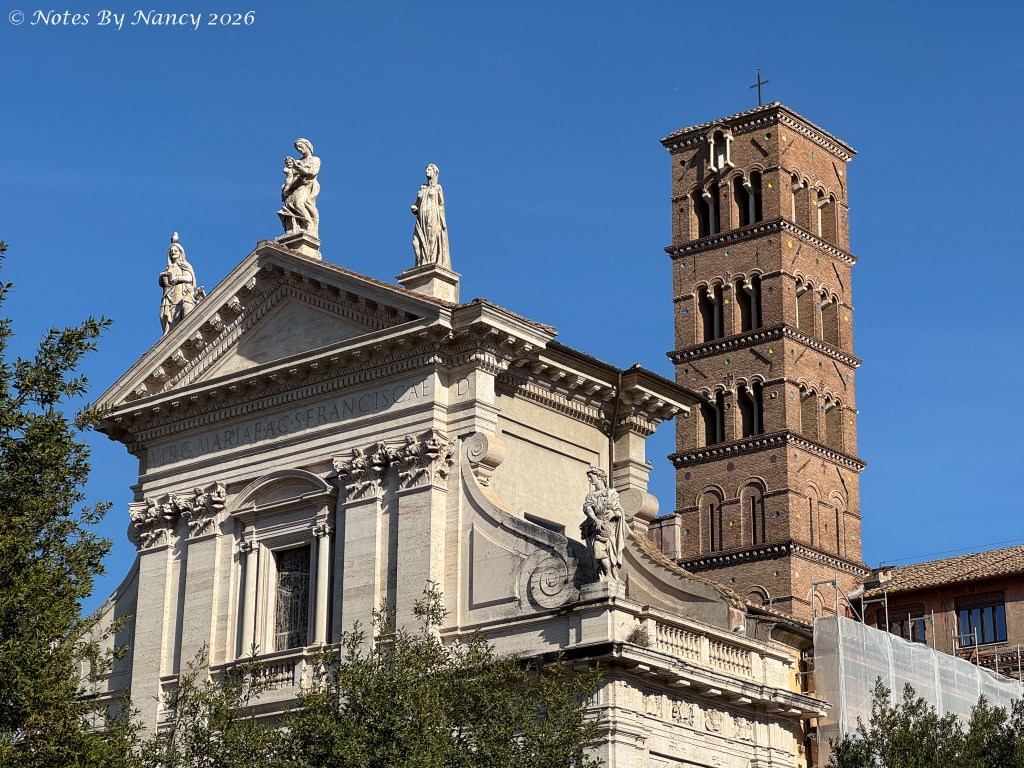
Basilica of Santa Francesca Romana (Catholic church) – founded 8th-10th centuries AD. Current façade from 1615 with 12th century bell tower.
Adjacent to Roman Forum, not actually part of it.
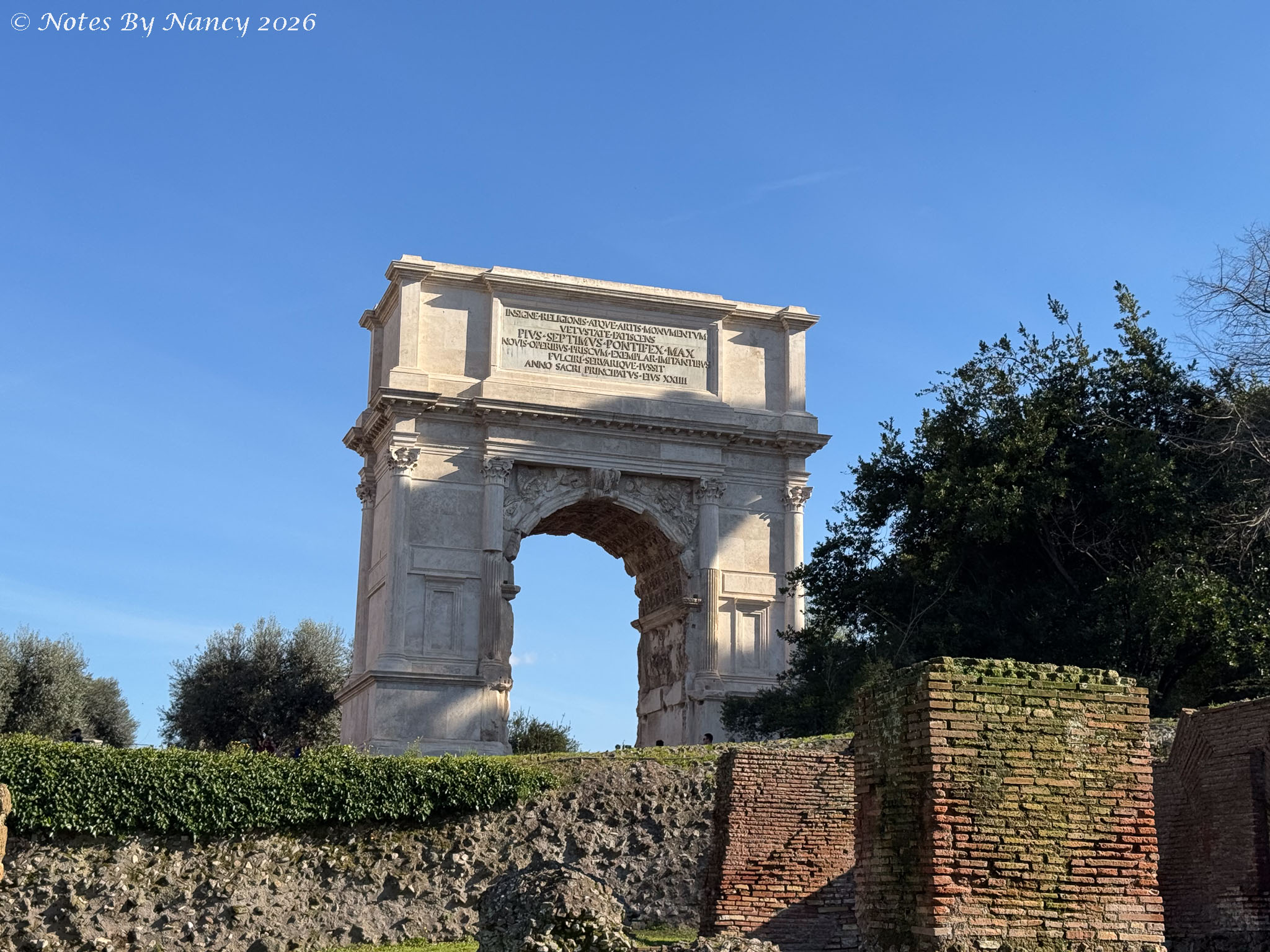
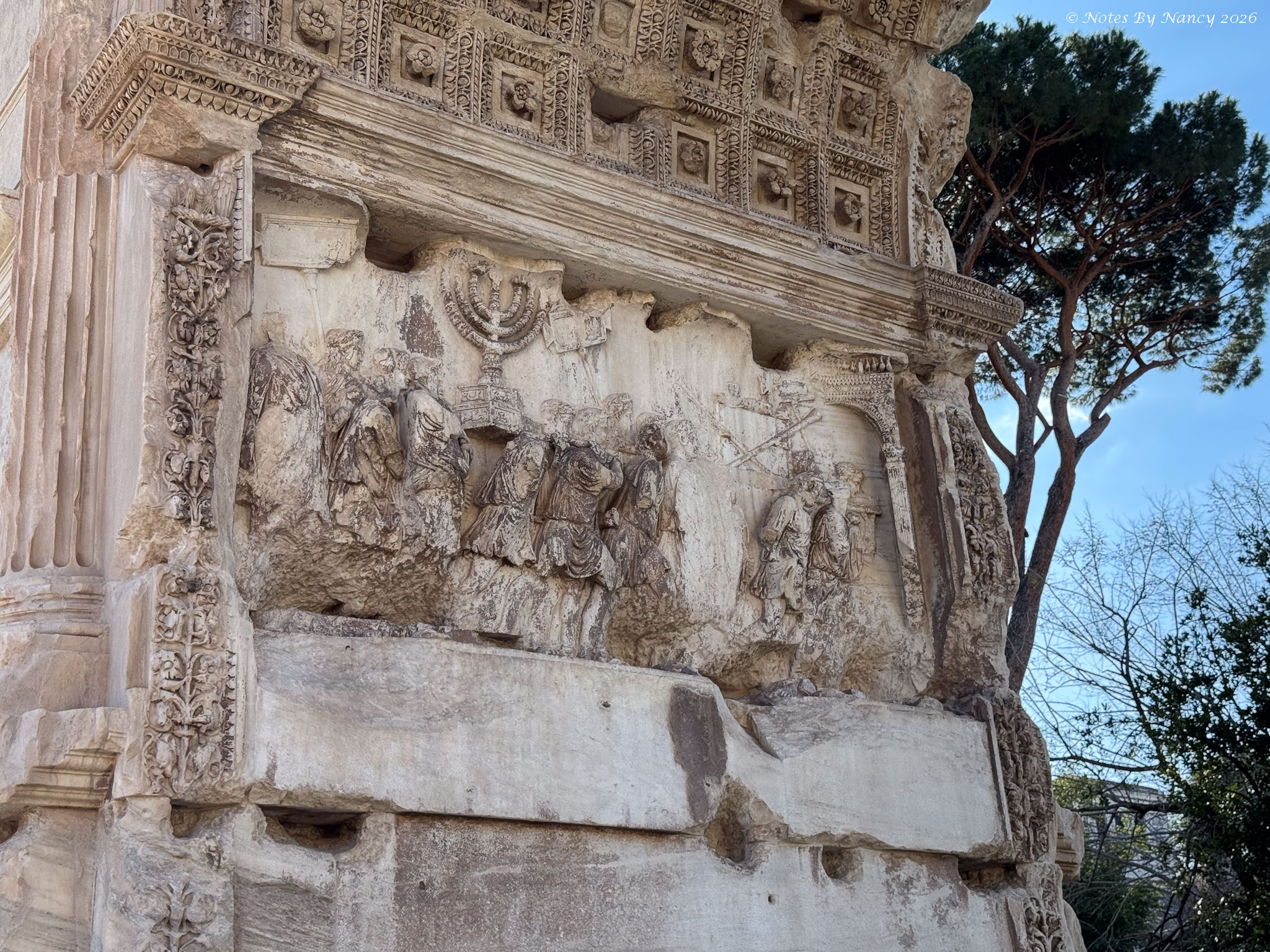
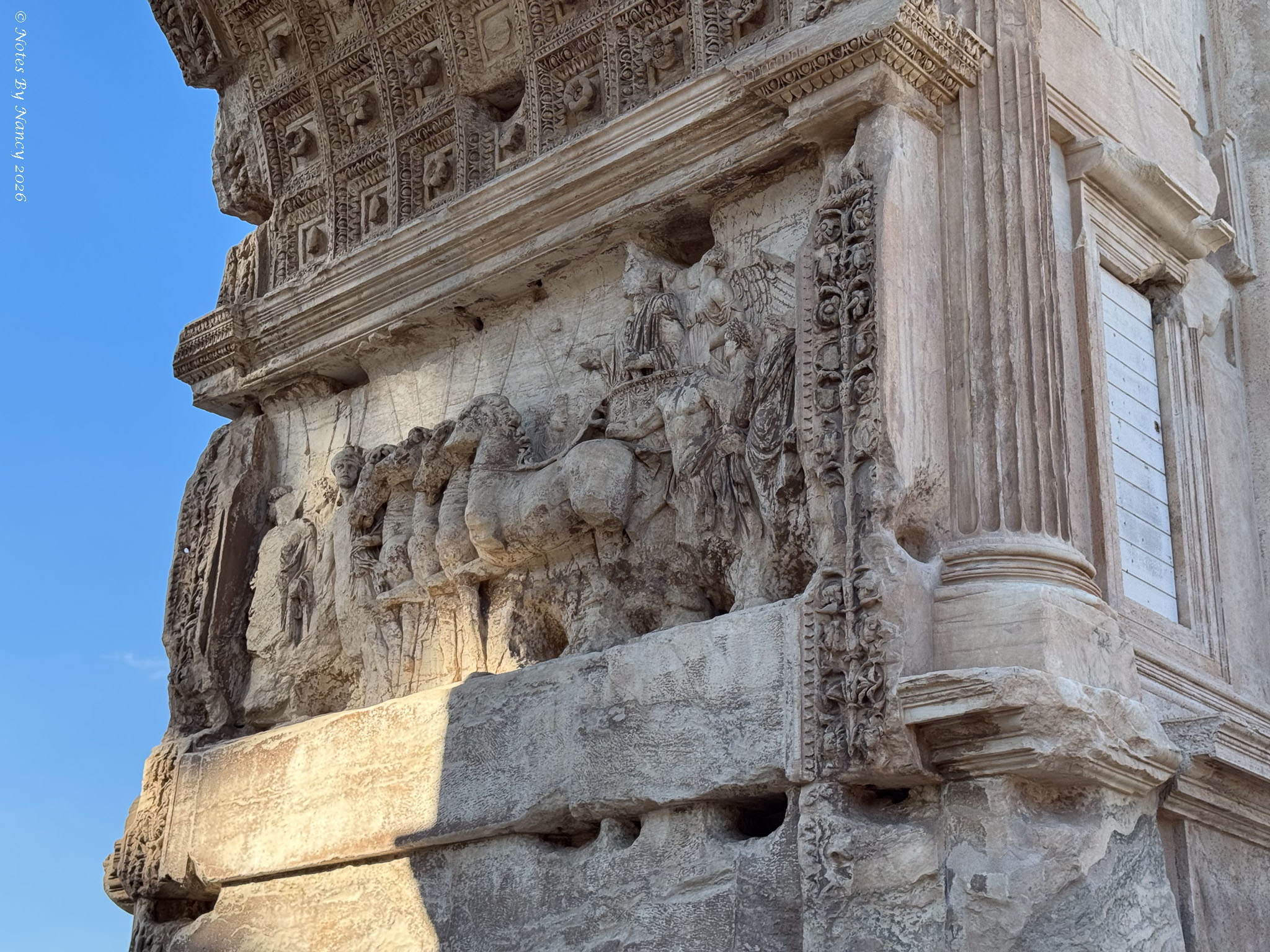
Arch of Titus – constructed in 81 AD by Domitian to honor his brother Titus and the Roman victory resulting in the Fall of Jerusalem in 70 AD. The arch became a symbol of the resulting Jewish diaspora and the menorah depicted in the relief showing the spoils removed from the Temple in Jerusalem was the model used for the emblem of the State of Israel in 1949. This 50-foot tall arch has since been the model of many “triumphal” arches.
The Colosseum
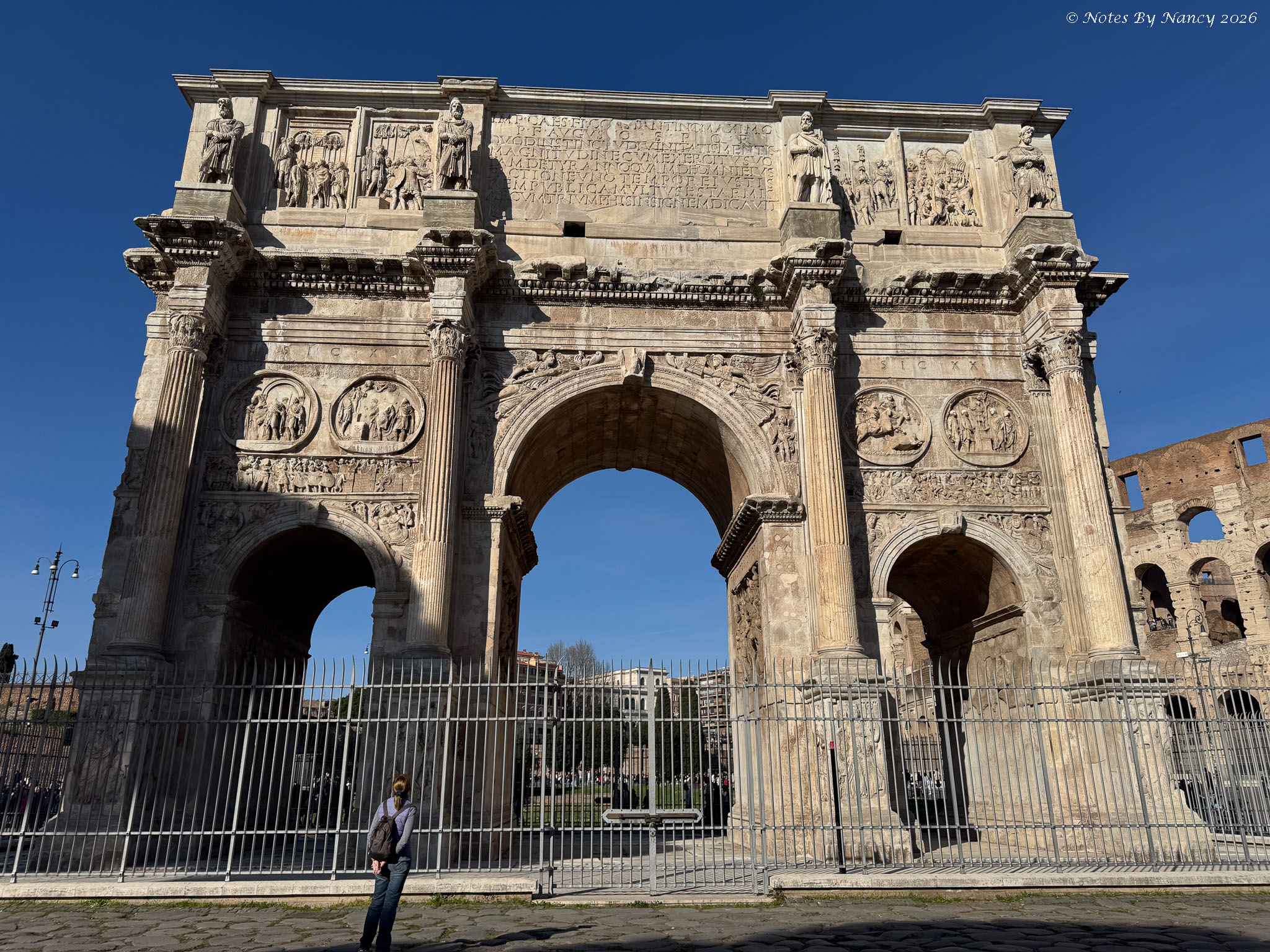
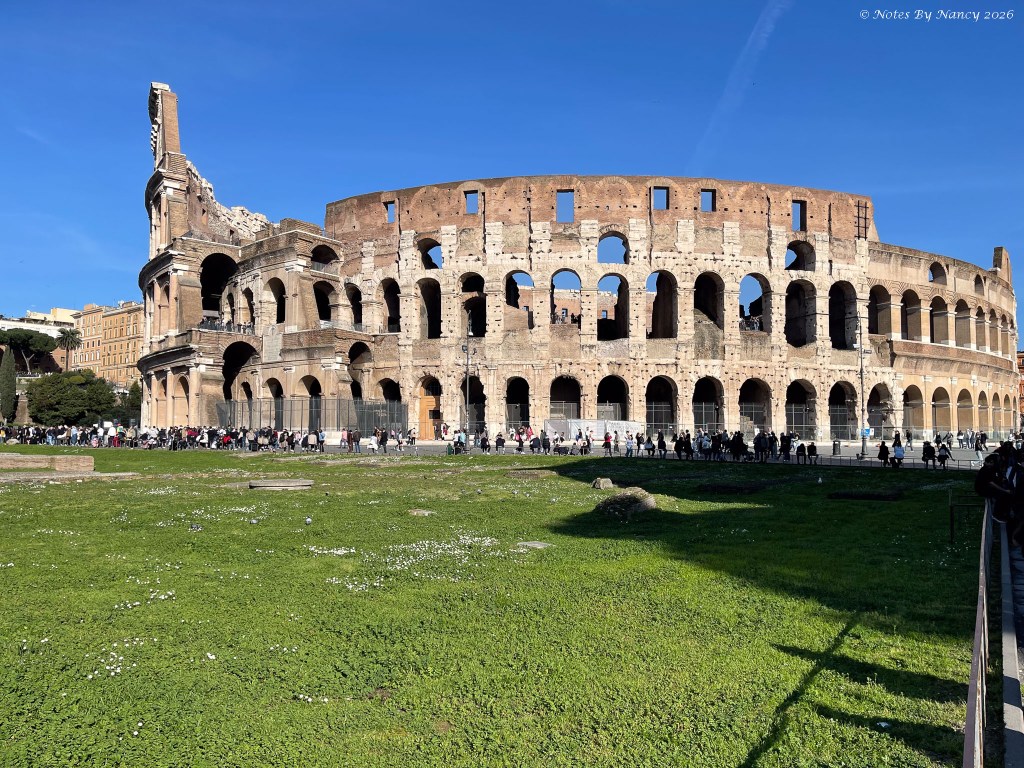
As we walked through the streets of the Forum, we finally saw the iconic building which so identified with the Roman Empire – The Colosseum. Before entering for our tour, we took pictures of it as well as the Arch of Constantine. This is the largest of the Roman arches at 69 feet high, 85 feet wide, and 24 feet deep. Dedicated in 315 AD following Constantine’s defeat of Maxentius in 312, it spans the Via Triumphalis used as the path for victorious military leaders to enter the city.
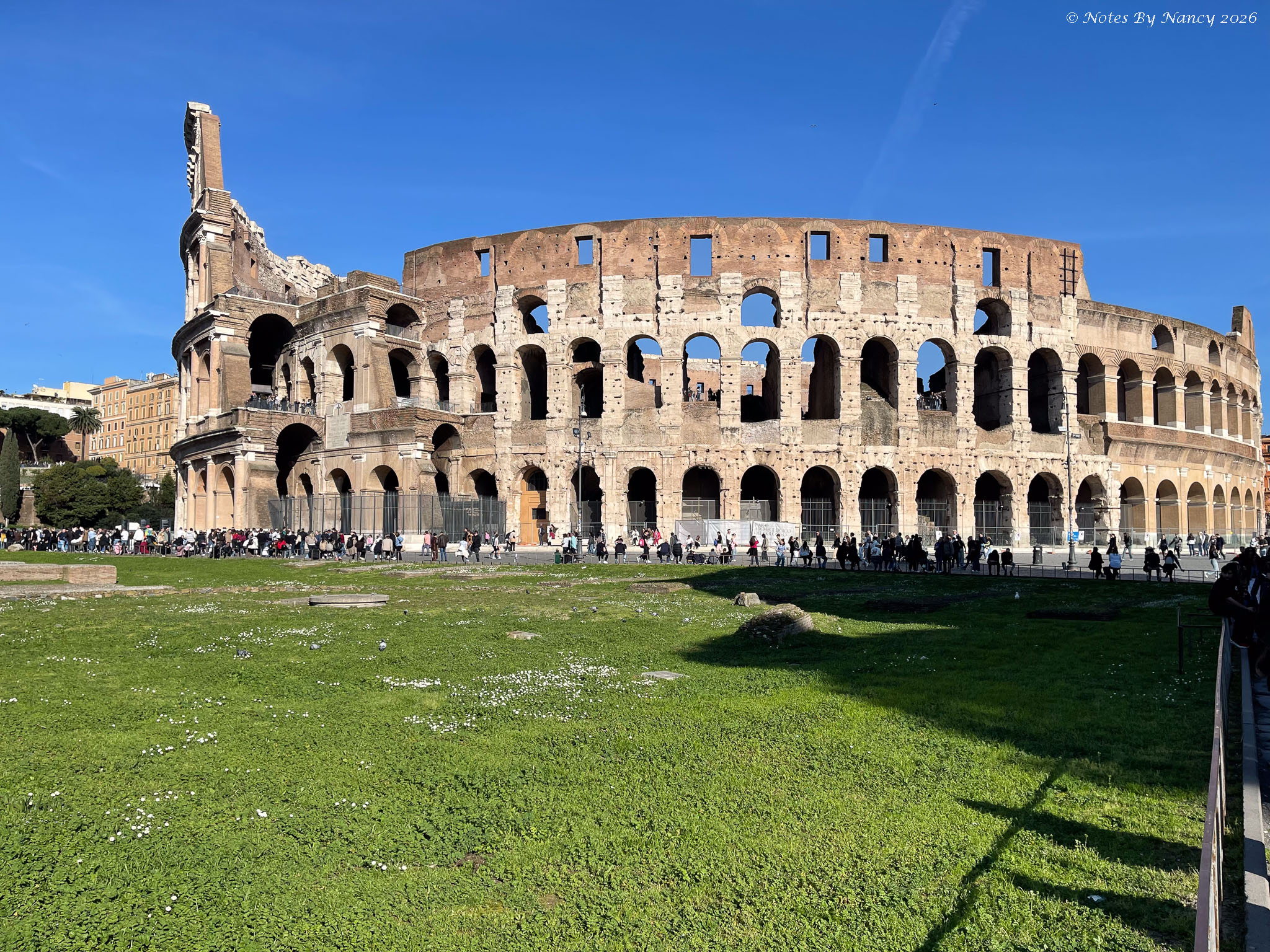
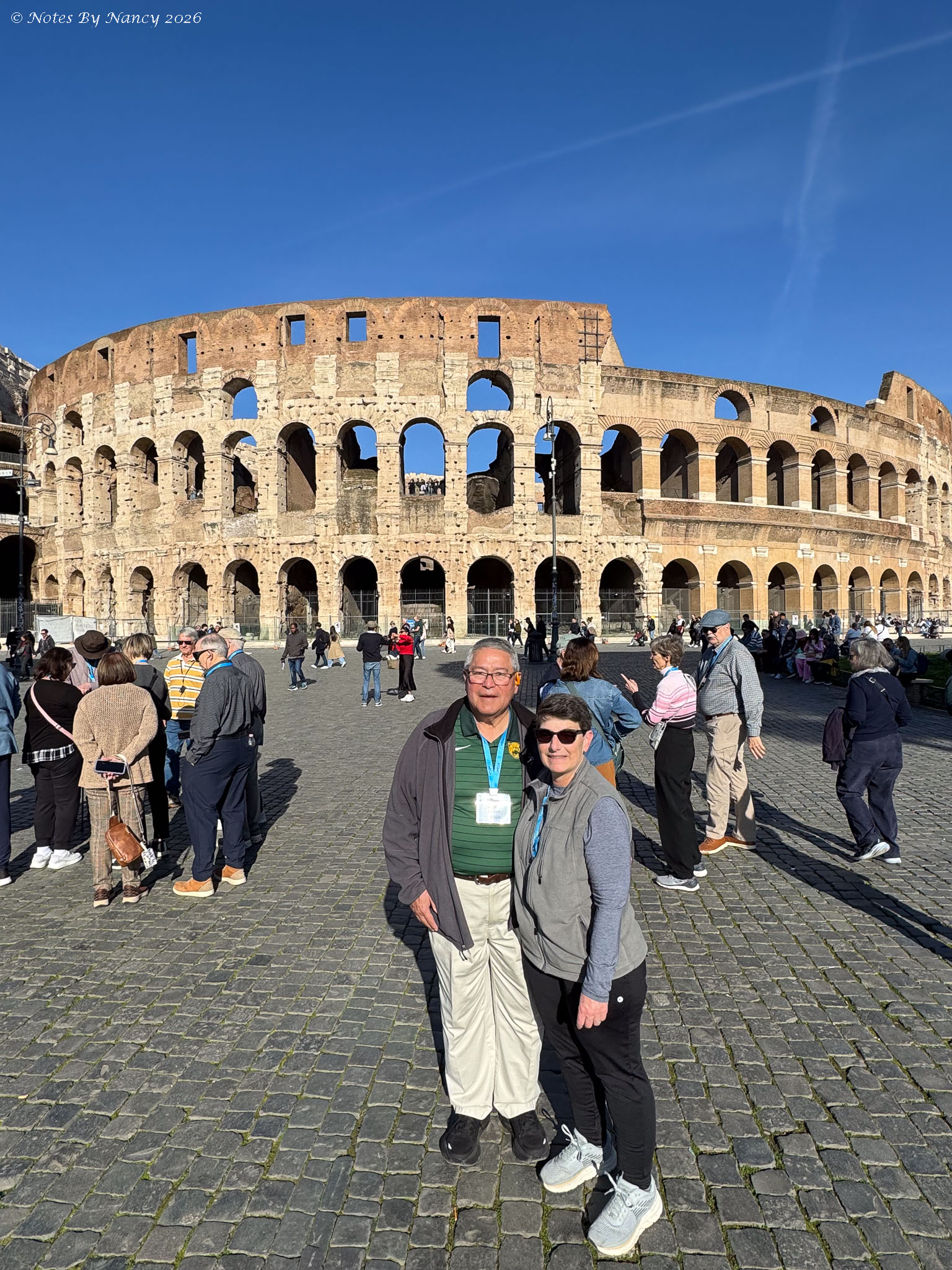
I had always thought the Colosseum was round, but it is actually elliptical. As previously mentioned, it was commissioned by Vespasian in 72 AD and completed by his son Titus in 80 AD. Additional modifications were made during the reign of Titus’s brother, Domitian. From 50-80,000 spectators could be accommodated inside the massive structure built from limestone, tuff, and brick-faced Roman concrete. It is the largest amphitheater ever built.
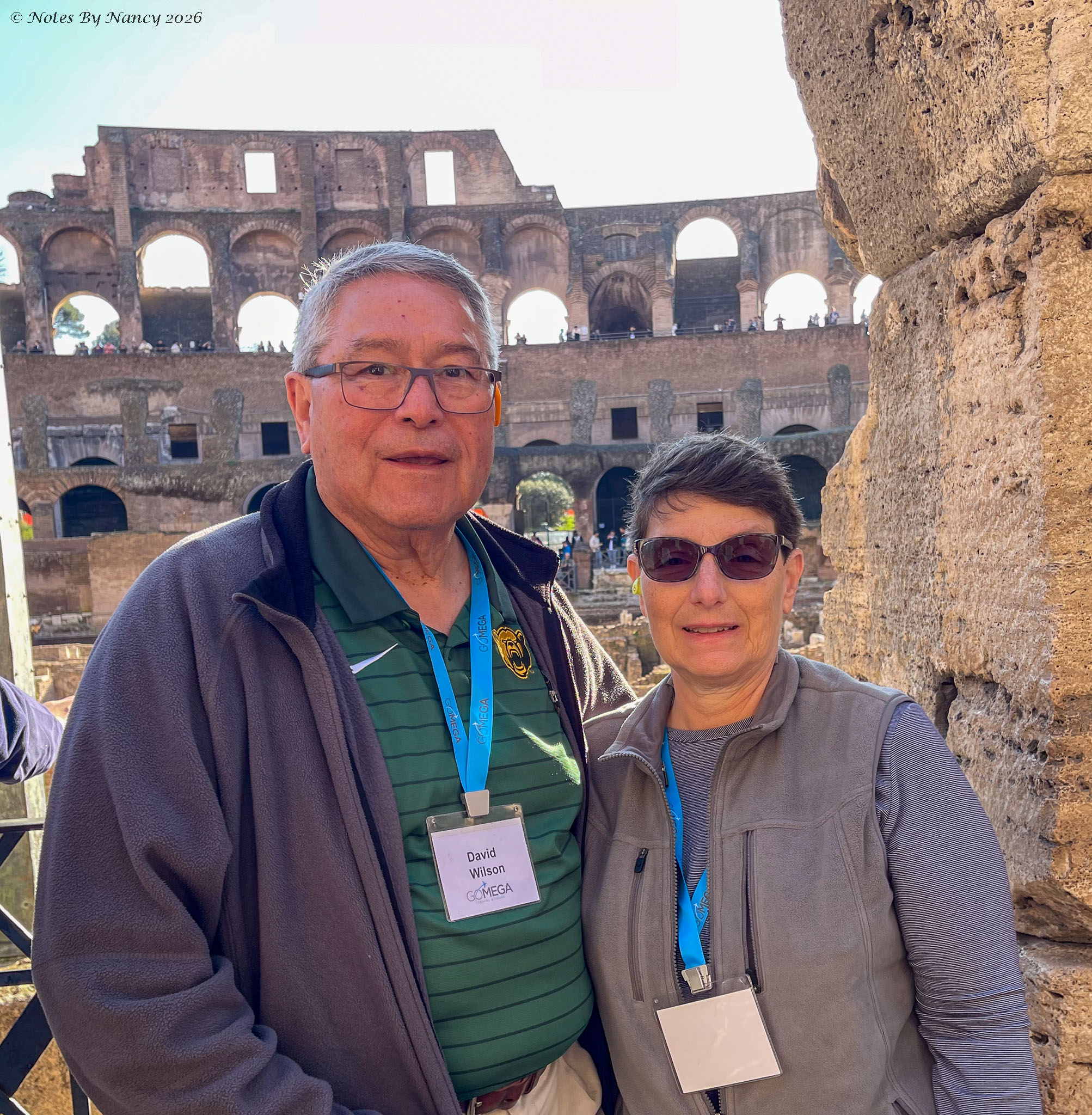
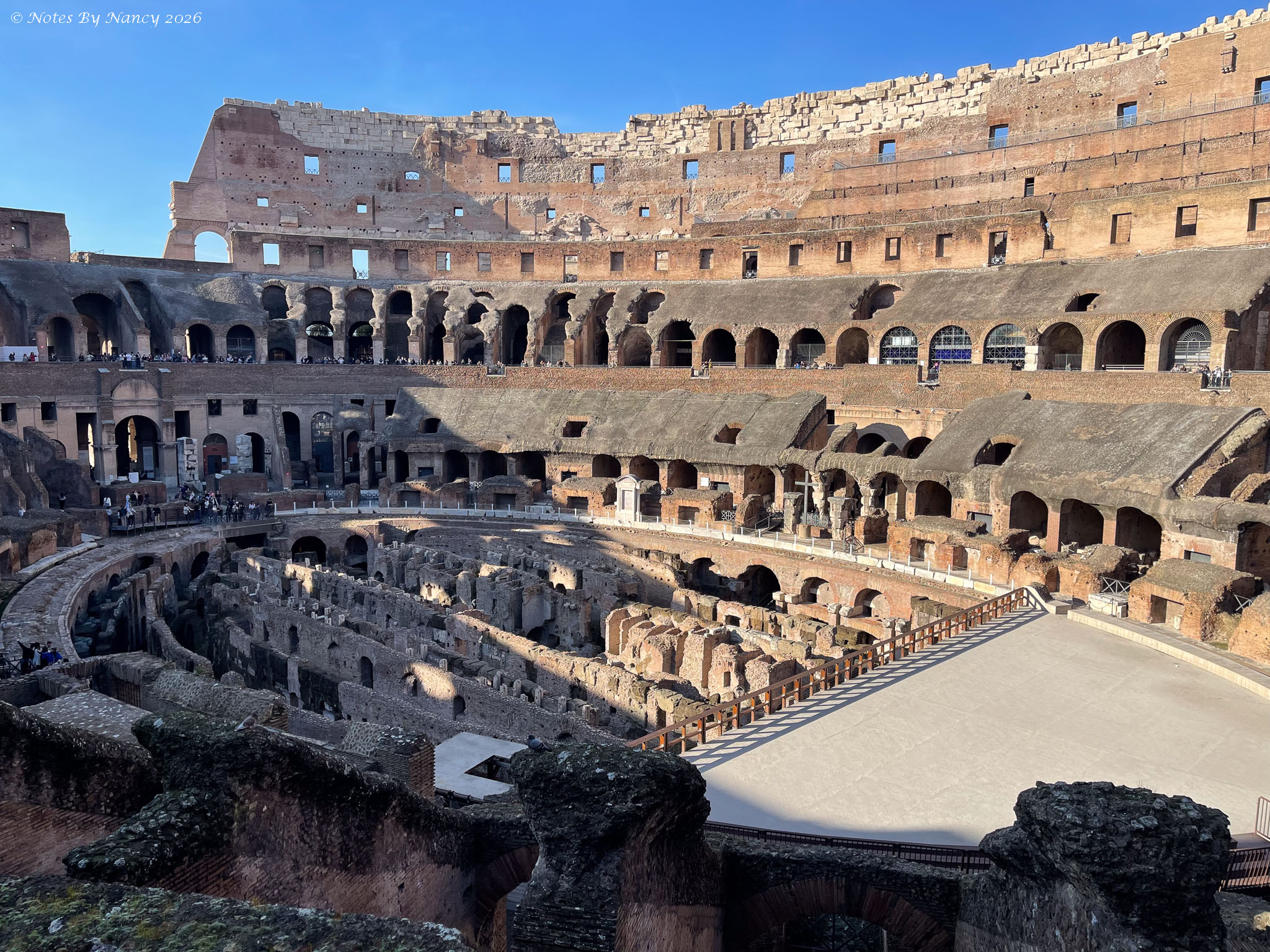
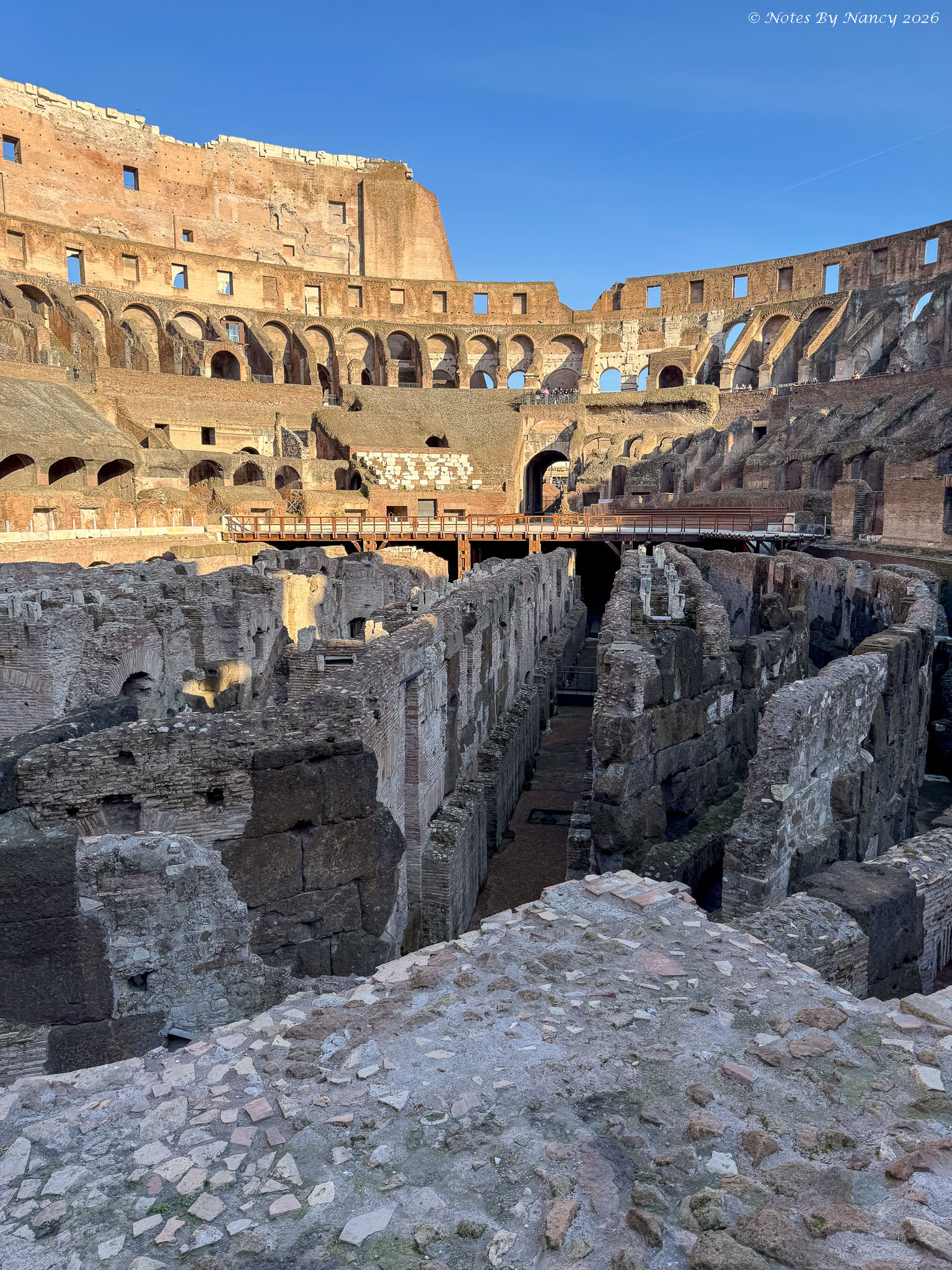
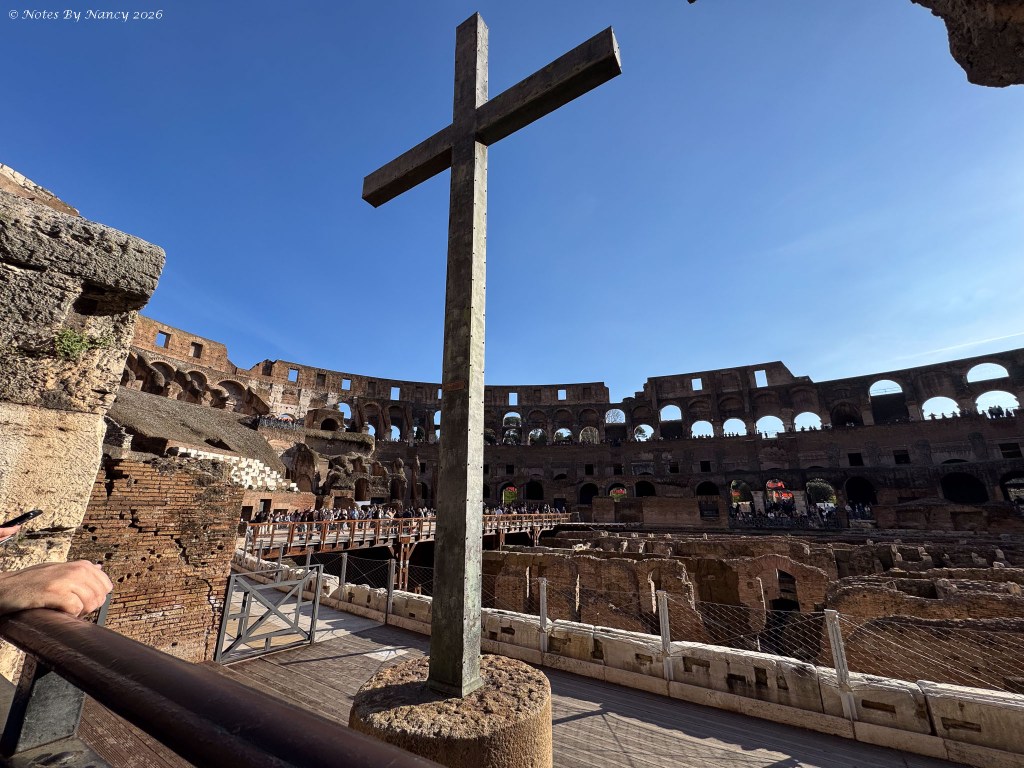
The cross placed inside the Colosseum is in the location where the emperors sat to watch the events. On Good Friday, which is tomorrow as I finally write this, the Pope leads a “Way of the Cross” procession which begins around the Colosseum.
Climbing the steps to this level was a bigger challenge than I initially expected looking at the stairs (two flights probably the equivalent of 3-4 floors) due to the step height and my short legs! I realized when we got to the top that my knees would not be able to handle going back down, so Dave and I, plus a couple of others, took the elevator back down. I could have done it, if I’d had to, but was thankful for the elevator as we still have two more days full of activities.
Dinner
Finally, back at our hotel after a very full day, we were recommended a nearby restaurant (maybe 3 minutes walking) by Flavio which we decided to try out. The young waiter had hardly any accent when speaking English. He said his English was so good because he played online video games! Anyway, the food and wine that he recommended was great – I found out I actually like raw tomatoes when the bruschetta was delivered – at least I liked these tomatoes! We got dessert, too, and were totally stuffed at the end of the meal.
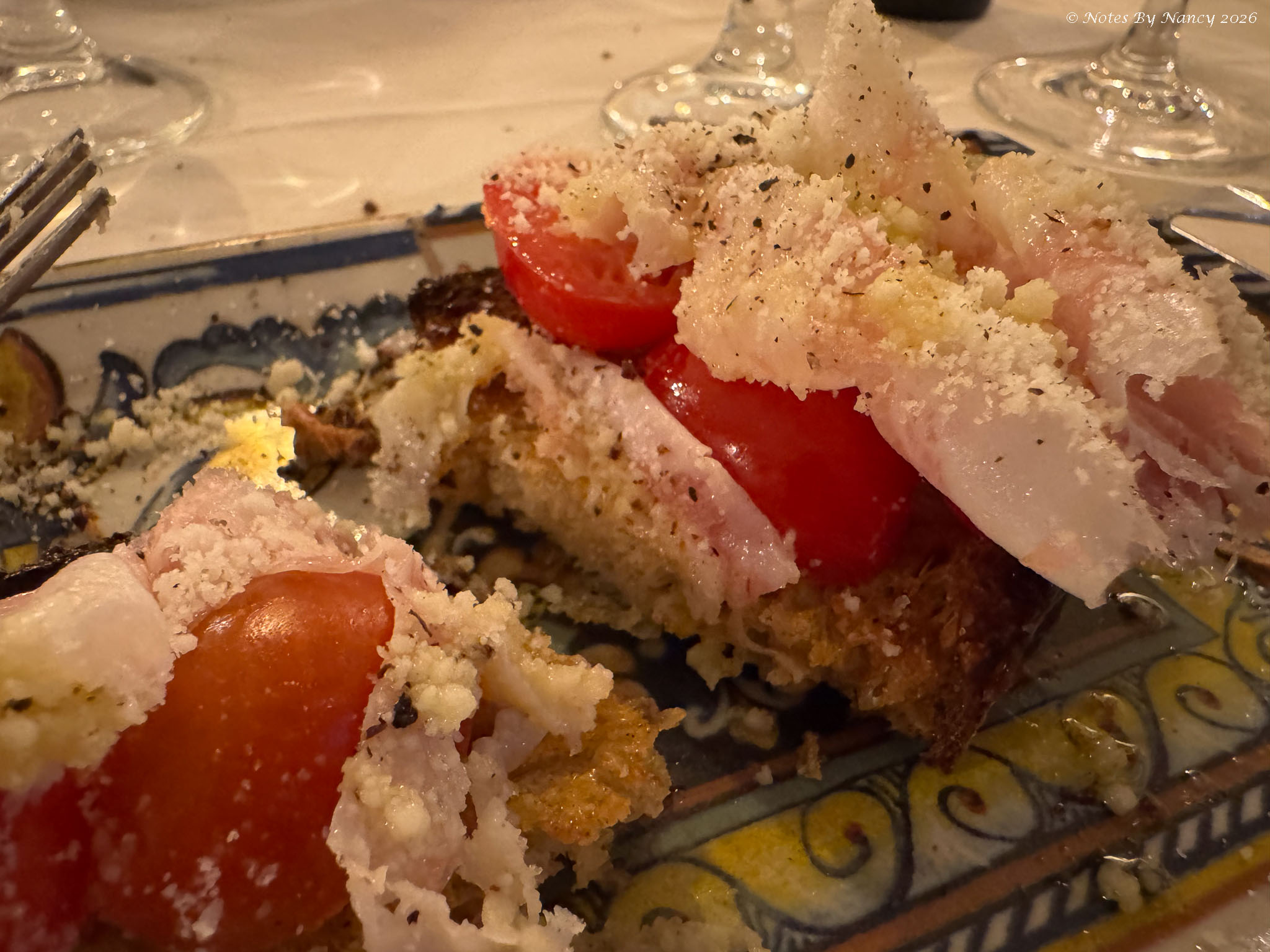
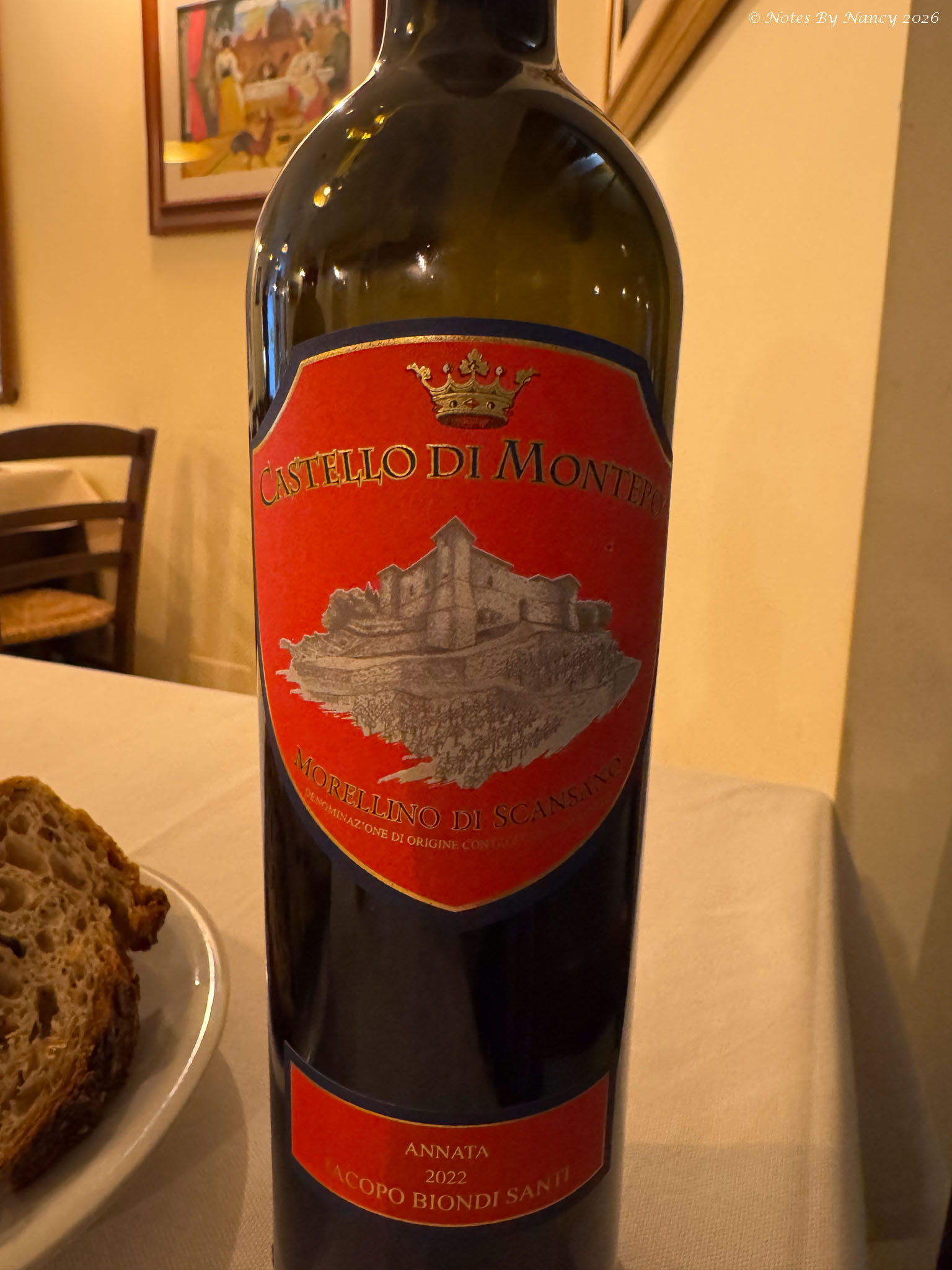
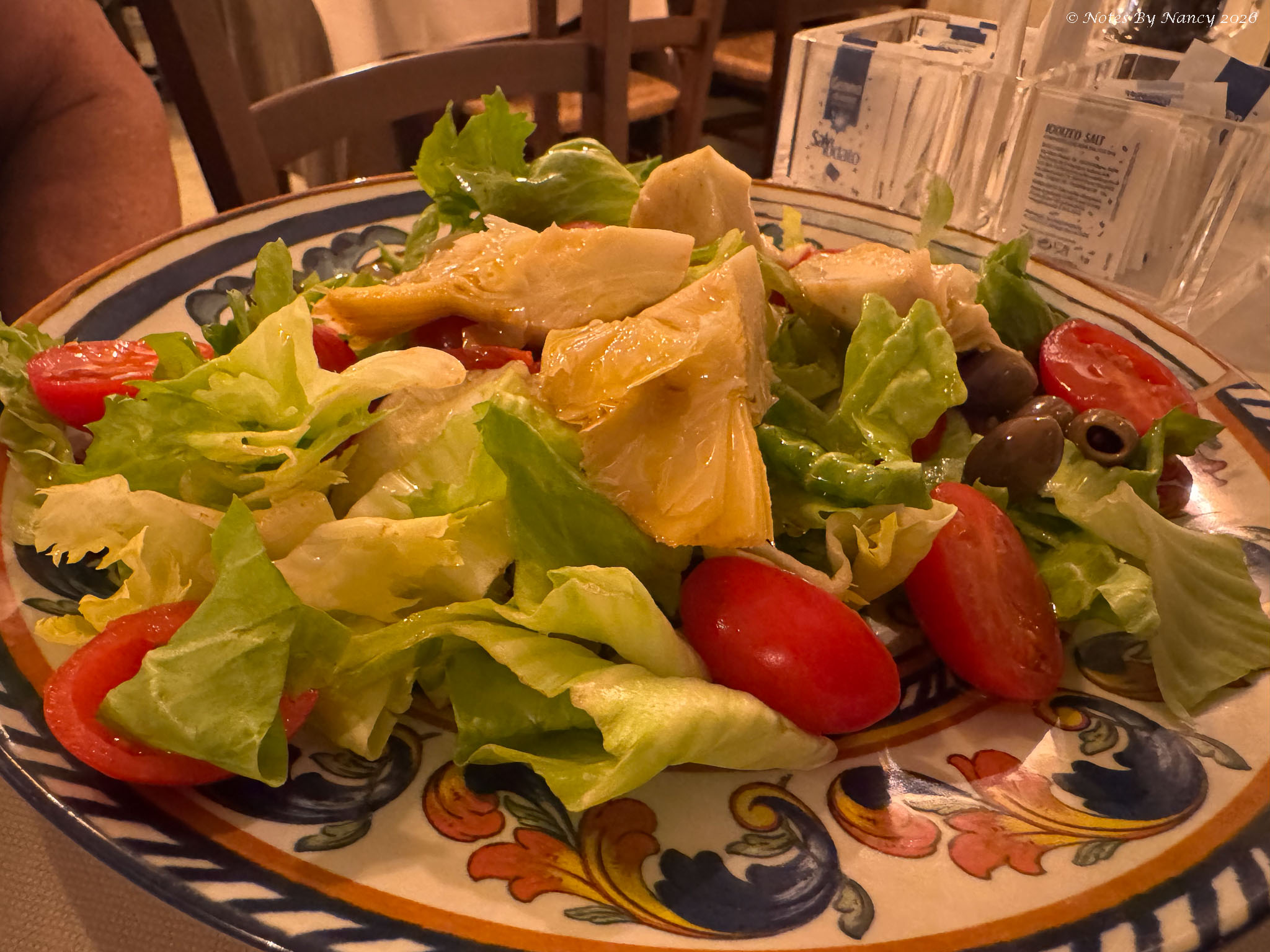
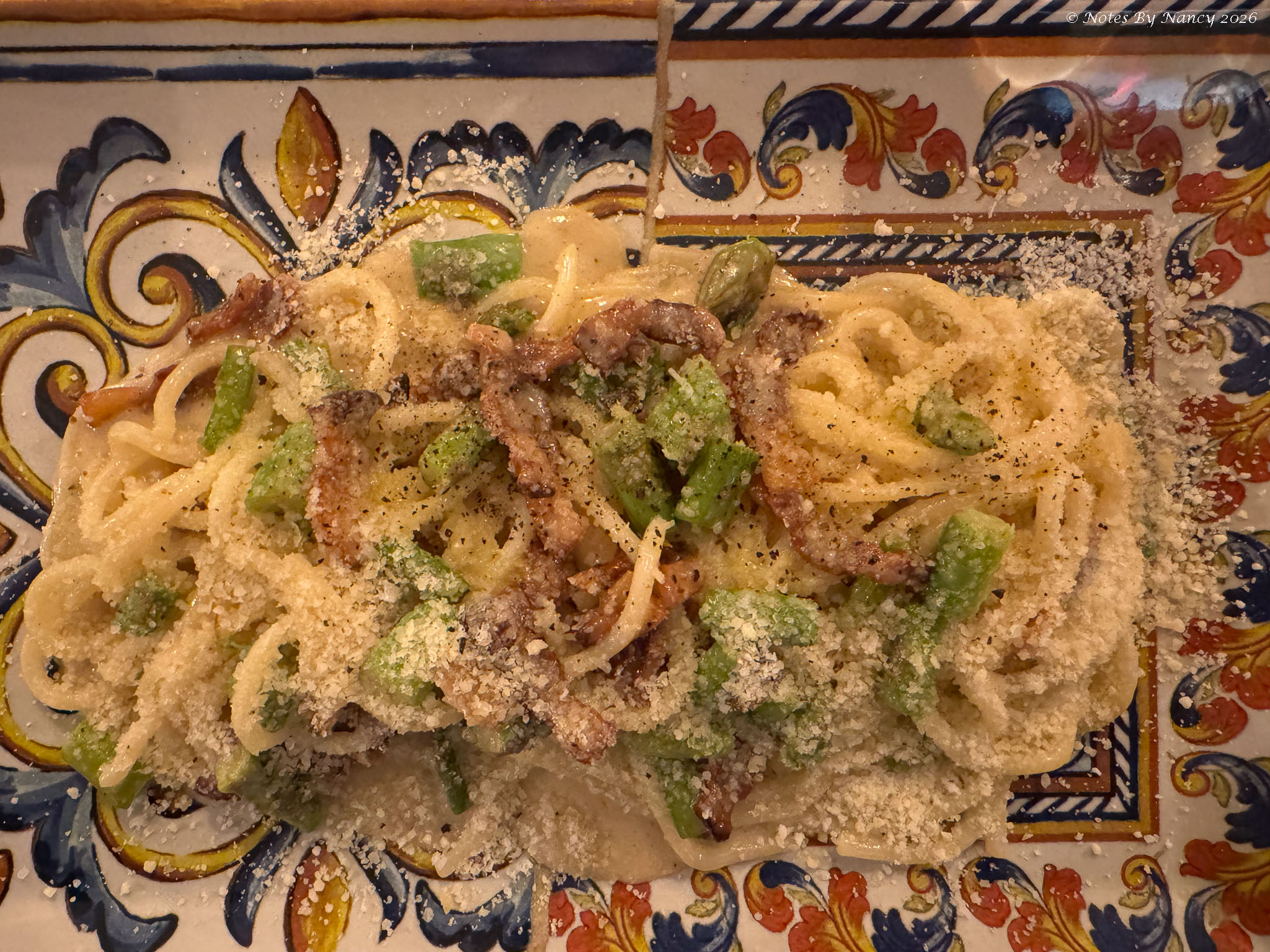
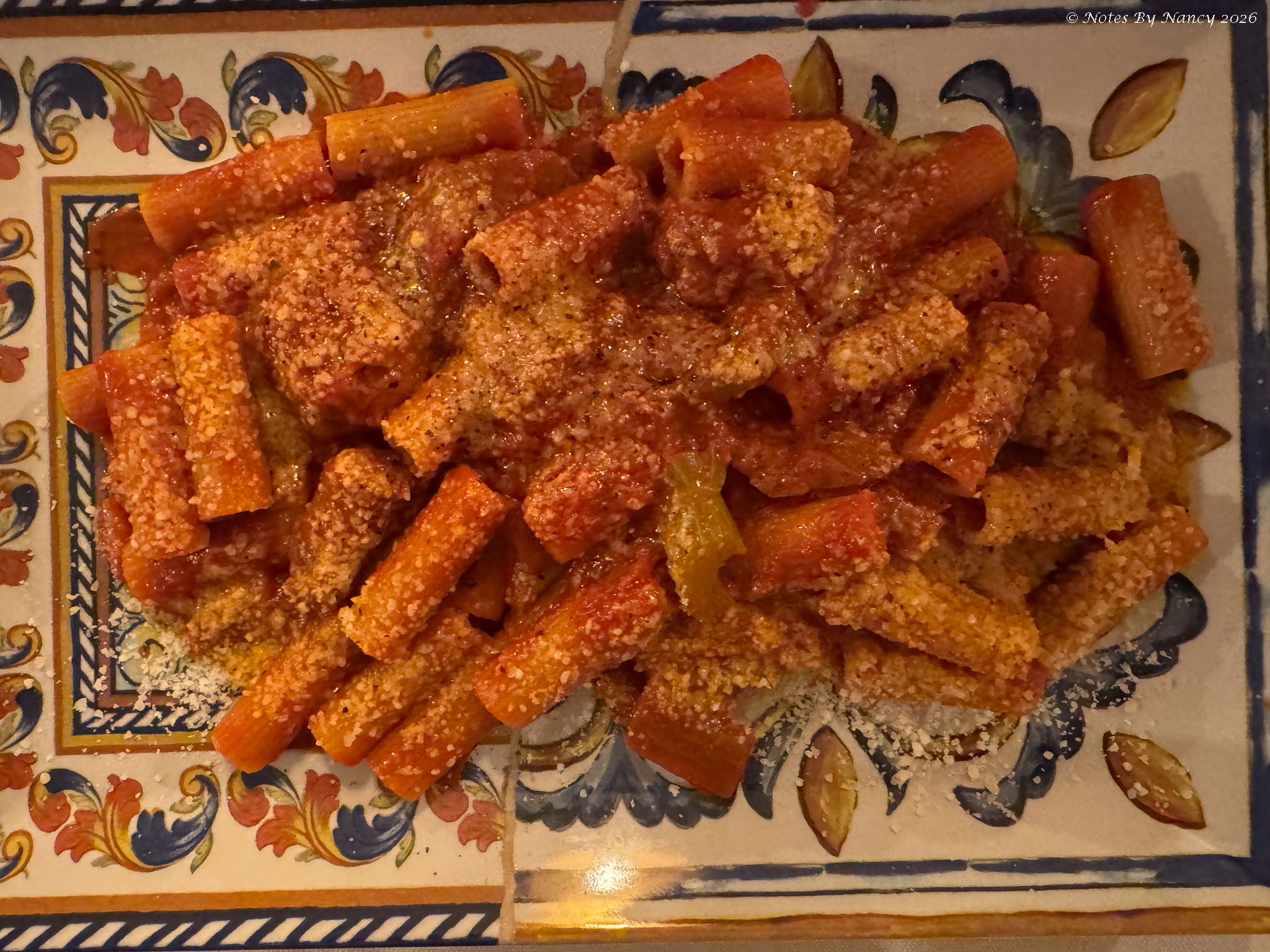
And, yes, the plates are painted to look like they’ve been broken in half and reattached to different patterns!
The end of a fantastic day!
 Notes By Nancy
Leave a comment