
Viking Ocean’s Mediterranean Odyssey Day 13 of 13
Weather Report
Light rain with a high in the mid-60s Fahrenheit, upper teens Celsius.
Today’s Plan
We have booked a tour/transfer from the ship to the Venice airport with Daytrip. Our flight doesn’t leave until nearly 7pm for Istanbul where Dave and I will stay overnight at the airport hotel. Keith and Paula fly out tomorrow, so they will stay overnight at a hotel near Venice airport. With Daytrip, we were able to schedule sightseeing stops along the way in order to arrive at the airport around 4:30pm.
Viking Daily
Last night our final Viking Daily awaited us in our stateroom after dinner. Just another reminder that we must leave this wonderful ship and crew this morning.
Day Tripping with DayTrip
While researching ways to get from the cruise port of Trieste to the Venice Marco Polo Airport, I discovered DayTrip.com. Per Google, the fastest route is 149km (92.5 miles) and should take about an hour and forty-five minutes (1:45). As the second page of the Viking Daily above reminded us that our black luggage tags meant we had to disembark by 9AM, that left a lot of time to kill before we needed to be at the airport for our evening flight if we just did an immediate transfer. With DayTrip, you can book a transfer with sightseeing stops built-in along the way. They had several recommendations for the Trieste to Venice route which I then researched and using their estimated timings, I selected several and adjusted the timings to fill our day.
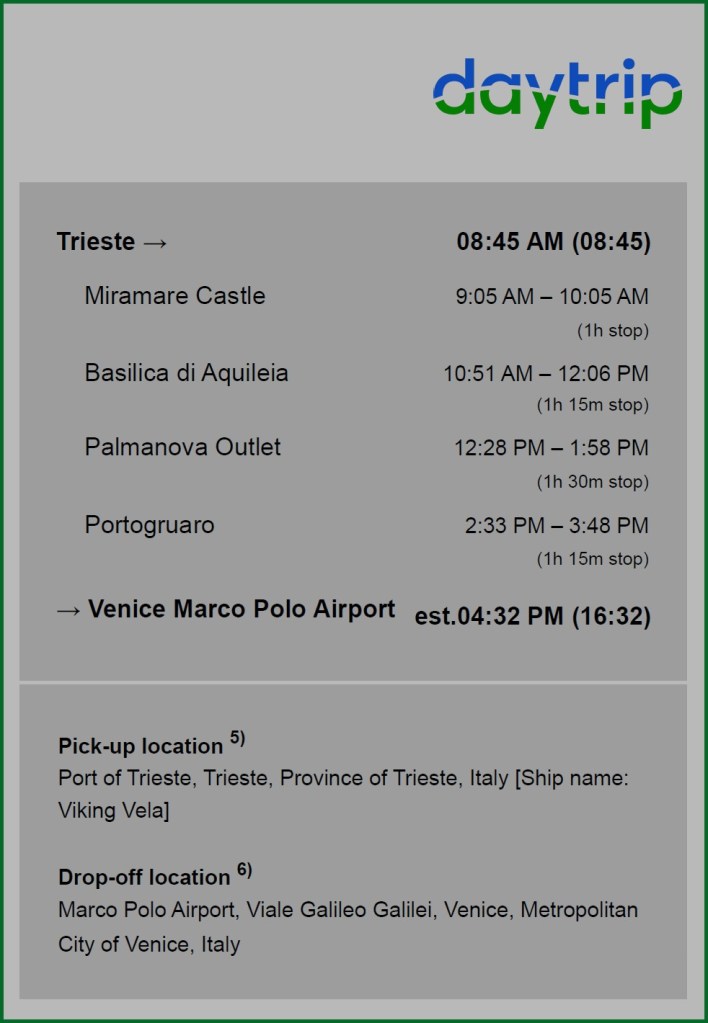
Here’s the itinerary we booked for the four of us.
Port to Miramare Castle
Our driver, Nenad, met us near the cruise terminal in the parking area for pick-ups and drop-offs. It was a little bit of chaos as both Viking Vela and a large MSC cruise ship were disembarking and embarking simultaneously. But, we found each other, loaded the luggage for the four of us into the van, and were off to Miramare Castle just 20 minutes away.
Nenad dropped us off as close as he could get us to the castle while he remained with the van at the parking area. We confirmed the time to return then we walked the 650 meters (0.4 miles) up the hill (it’s paved) to the castle which was depicted on yesterday’s Viking Daily.
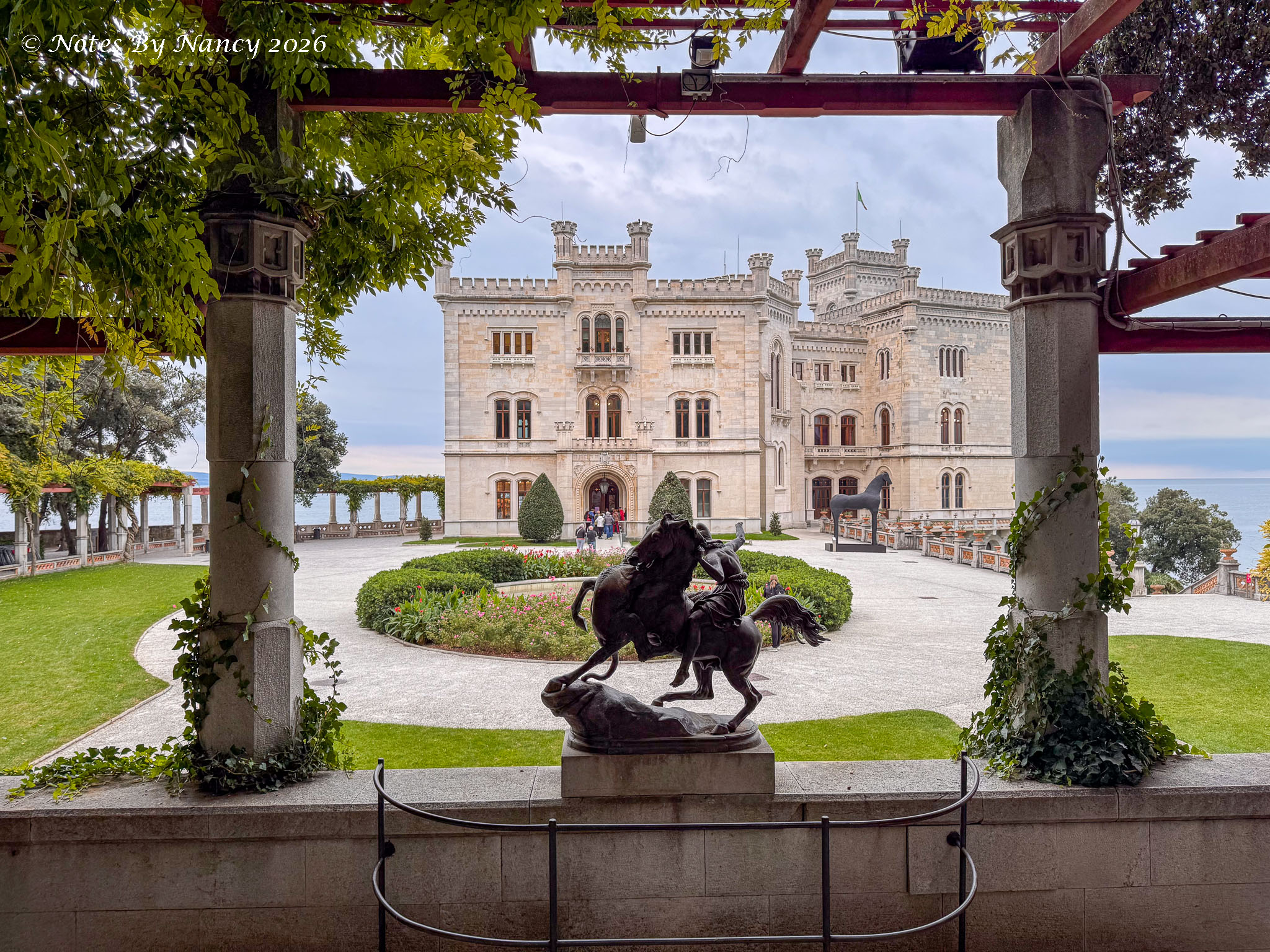
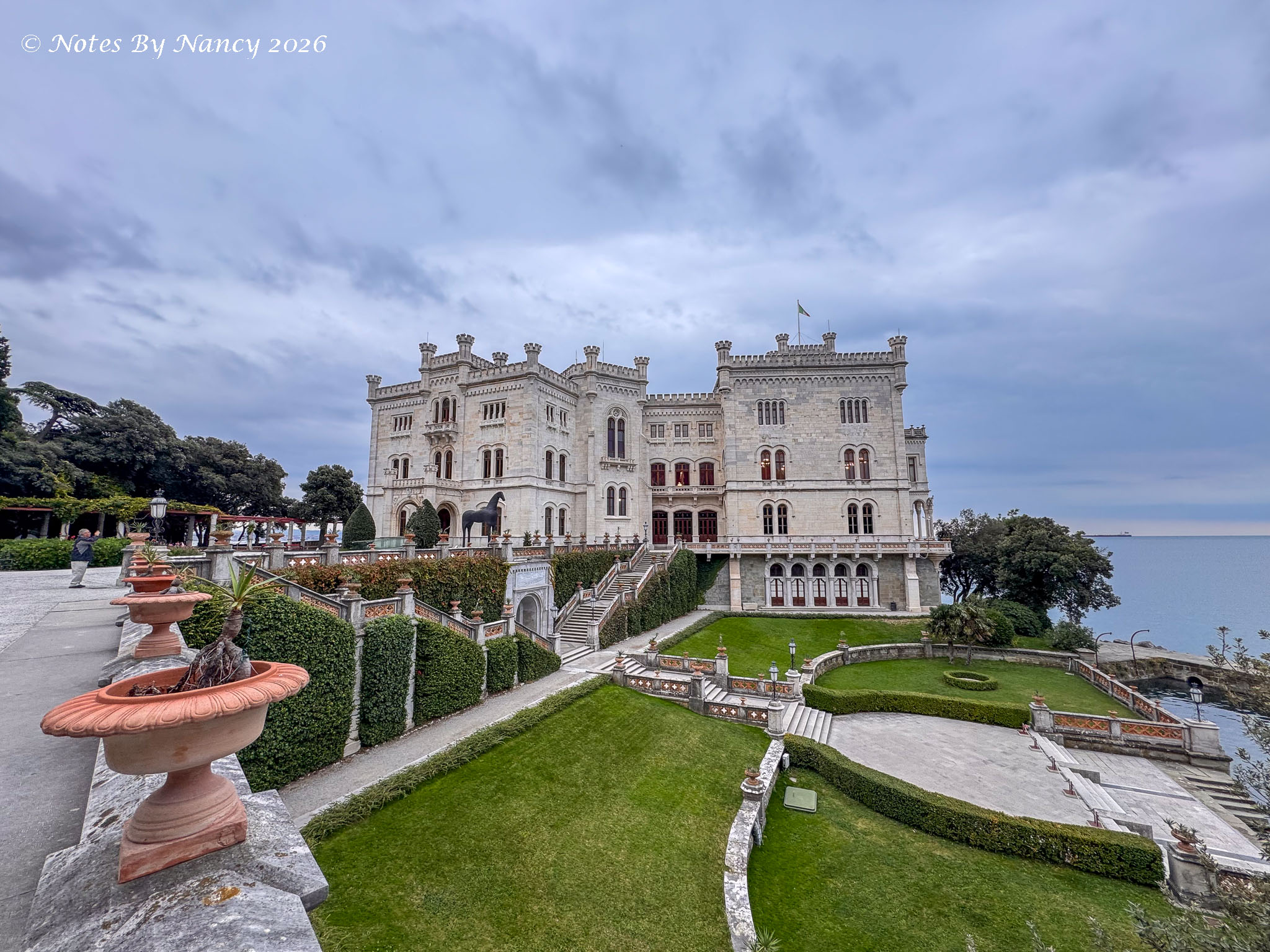
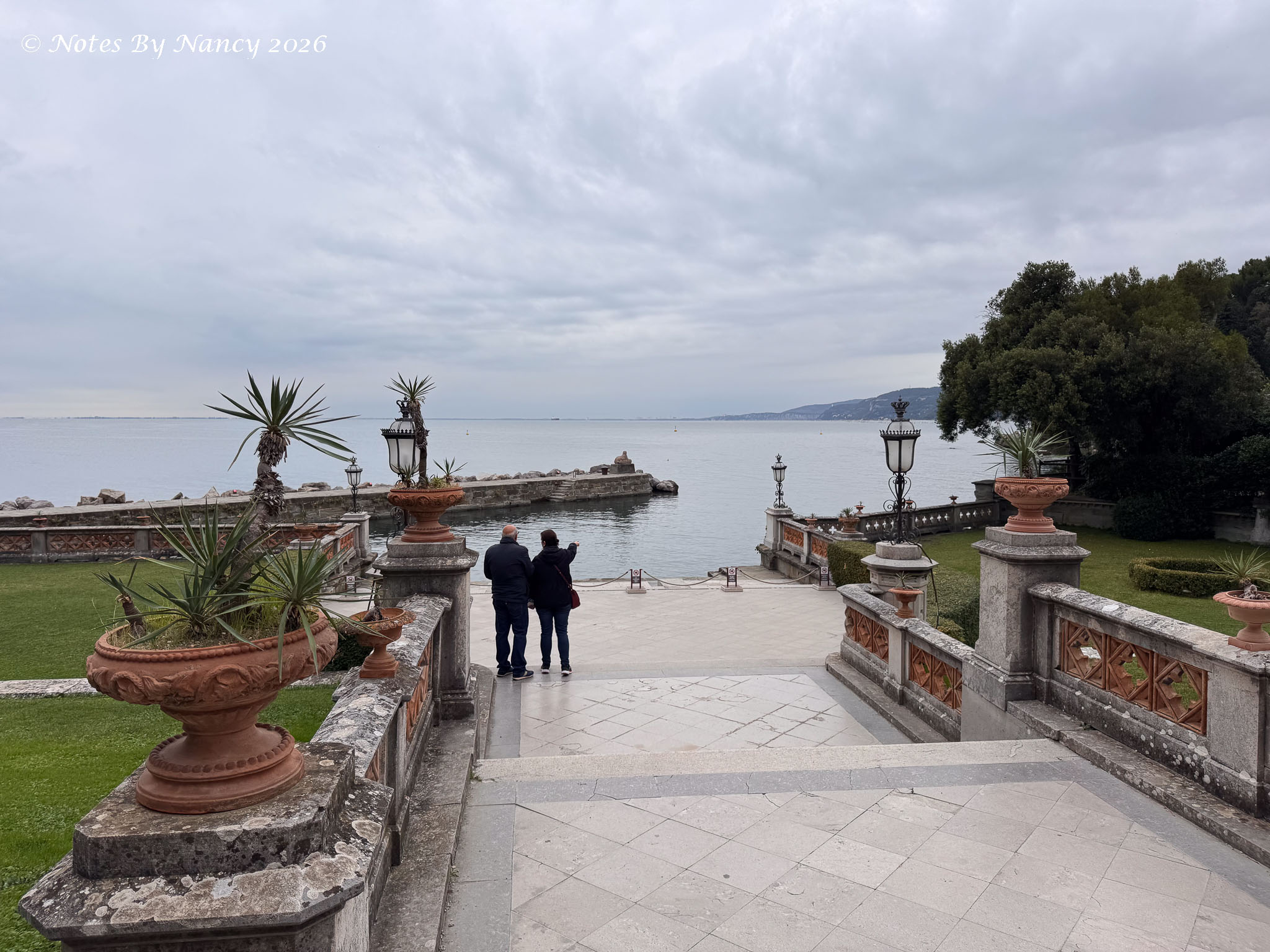
The castle was built for Austrian Archduke Ferdinand Maximilian and his wife, Charlotte of Belgium. The younger brother of Franz Joseph, Emperor of Austria, was named Commander in Chief of the Imperial Austrian Navy in 1854 and chose this site facing the sea to build his grand home. In 1864, Maximilian accepted the ill-fated position of Emperor of Mexico as he would be executed a mere 3 years later at the age of 32 – but that’s another story. While leading the Austrian Navy, he was instrumental in developing Trieste as a military port, and his love of naval representations is reflected in the furnishings and décor of his home.
Construction began after he purchased the property in 1856. The exterior was completed in 1860, but the interior was not finished until mid-1864. Unfortunately, he and Charlotte left for Mexico before the finishing touches were completed on the interior of the house. Following Maximilian’s death, Charlotte returned to Belgium, and the Miramare Castle stayed in the Hapsburg family and was used intermittently by various members until WWI when the region transitioned to Italian rule. Parts of the property were opened to the public in 1929, although Duke Amedeo of Aosta and his family lived there off and on until the middle of 1943. It was used as a school for training German officers. Subsequently, New Zealand troops, then British troops, and lastly American troops used the castle following WWII until 1954. The castle and other buildings as well as the park were restored to the original plans of Maximilian and opened to the public in 1955 with almost all the original furnishings intact.
The 54 acres of park gardens were all created from the rocky outcrop which began with little native vegetation. An amateur botanist, Maximilian brought in trees and plants from around the world – from giant sequoias to ginkgo biloba. If we’d had more time and better weather, it would have been nice to wander the paths. But, after viewing the castle from the outside, it was time to enter and explore the interior.
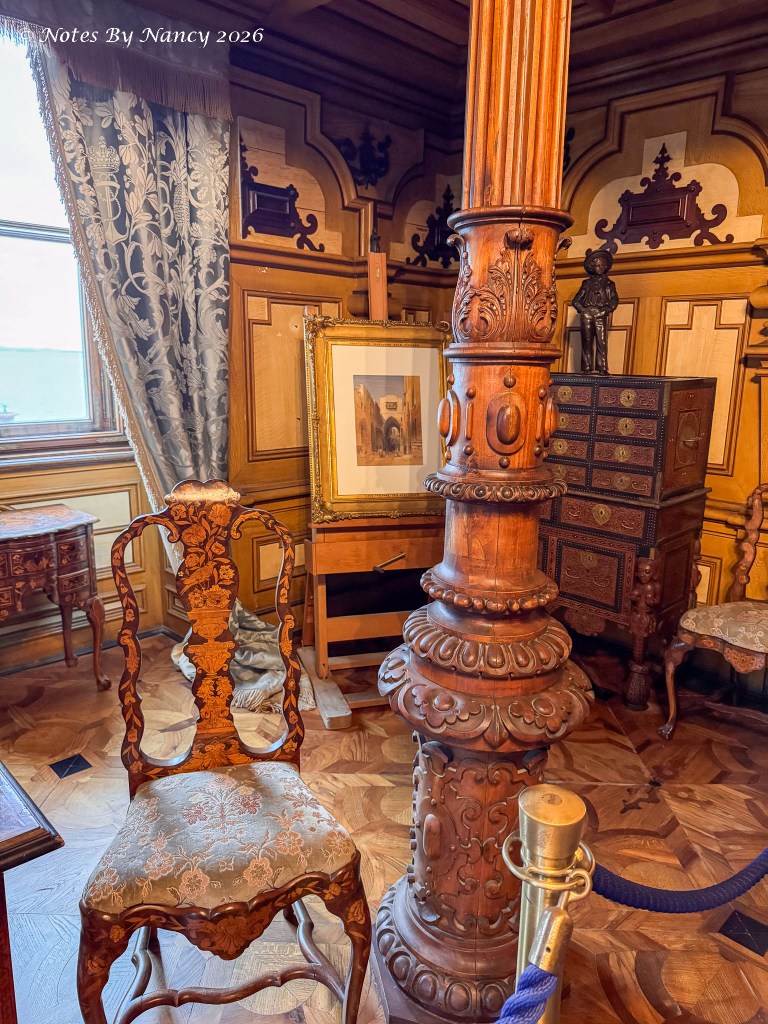
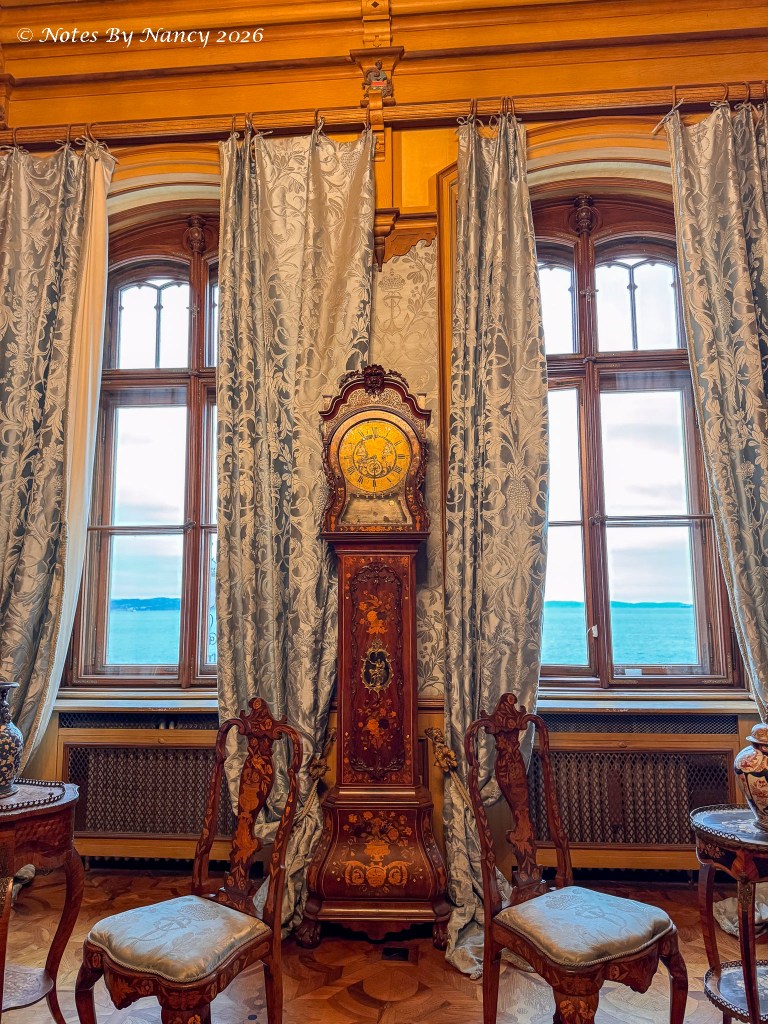
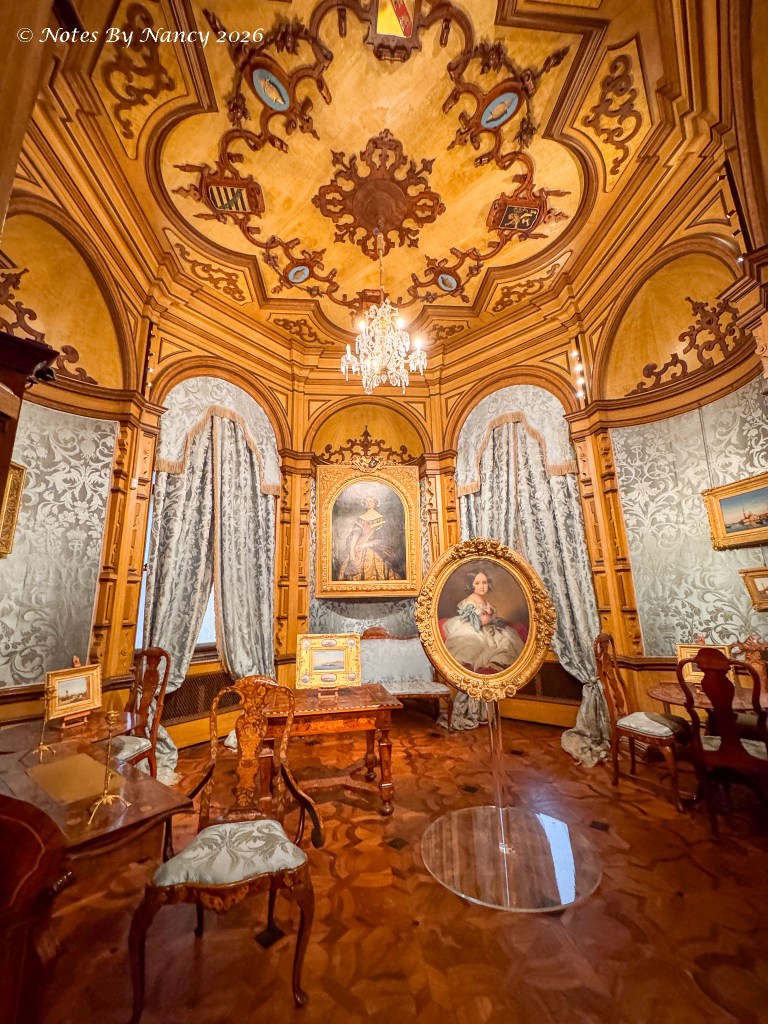
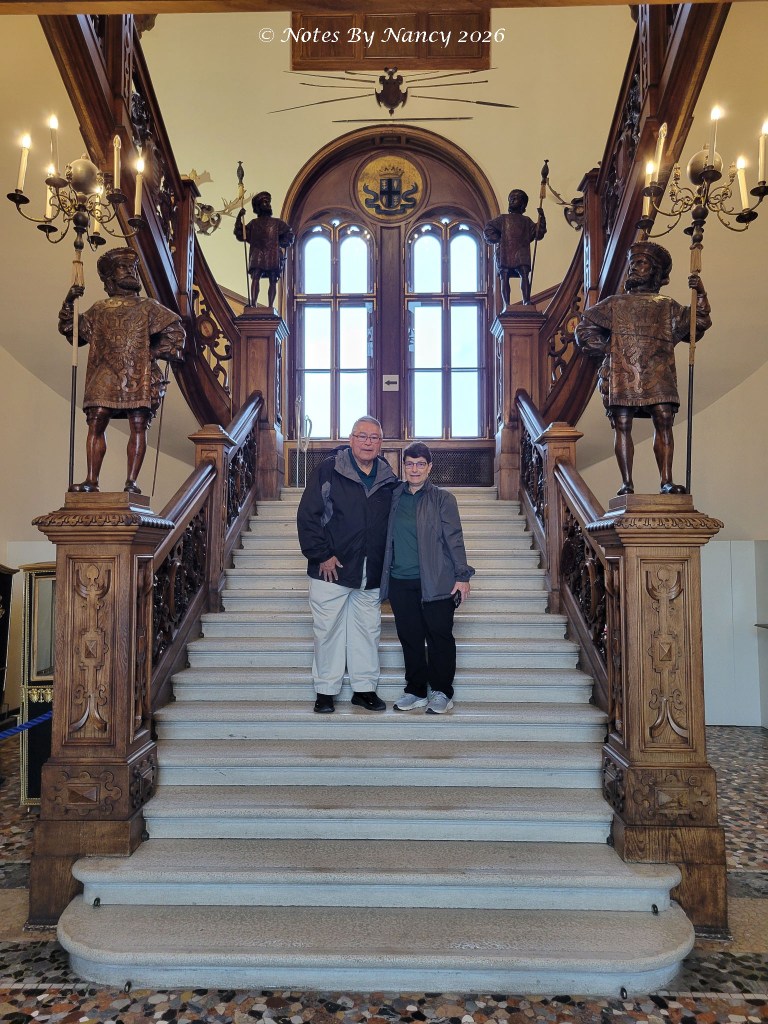
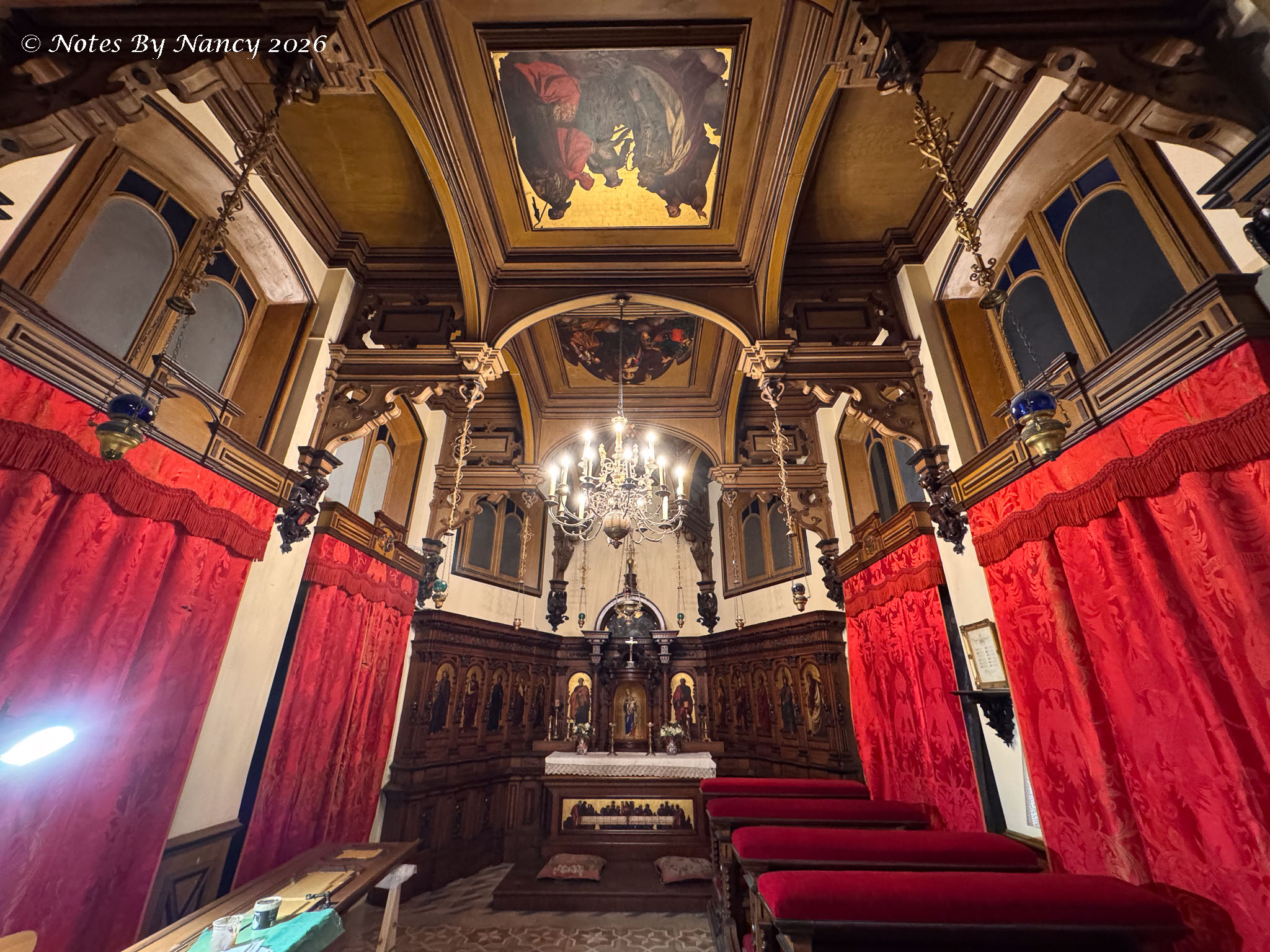
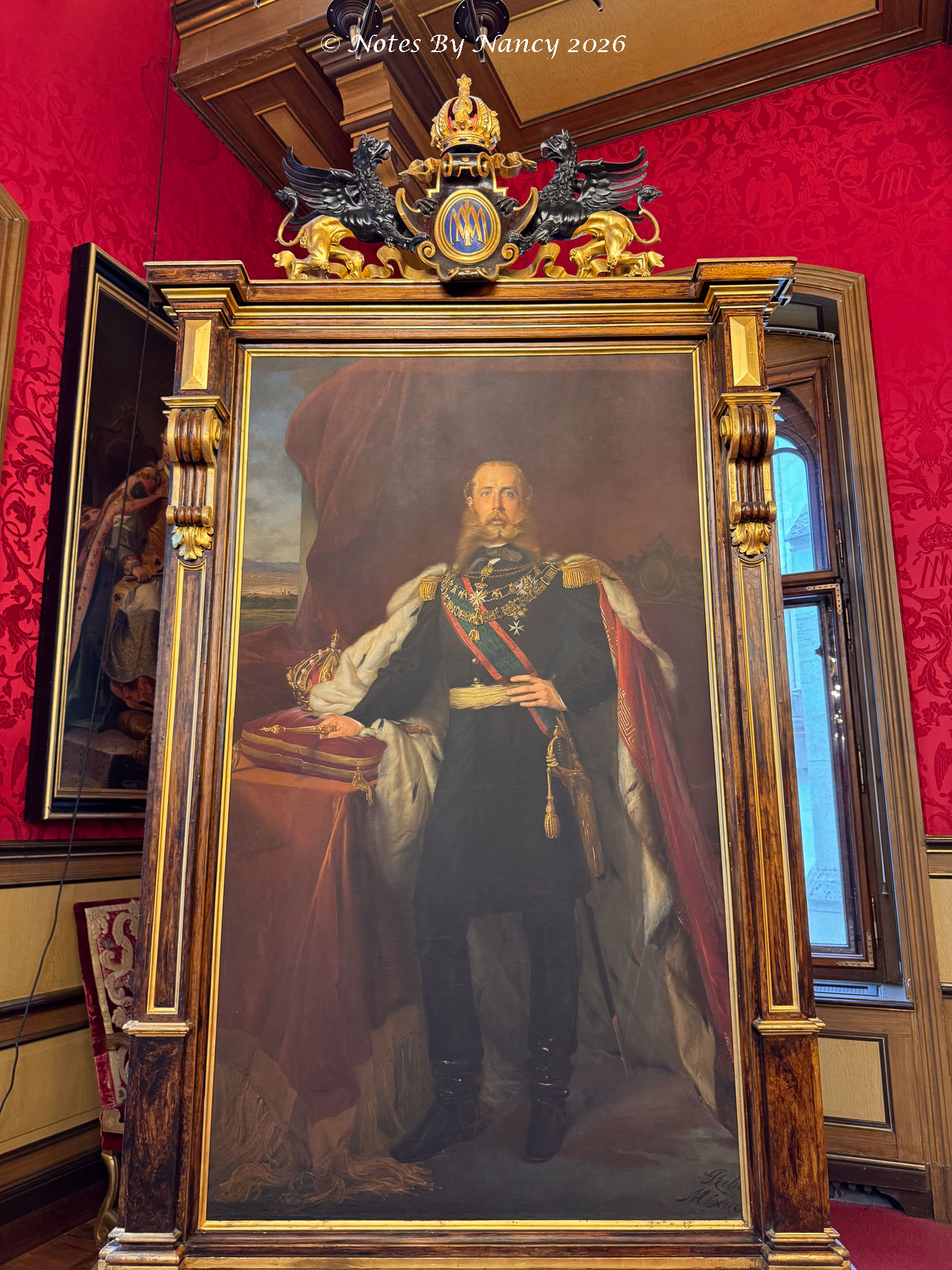
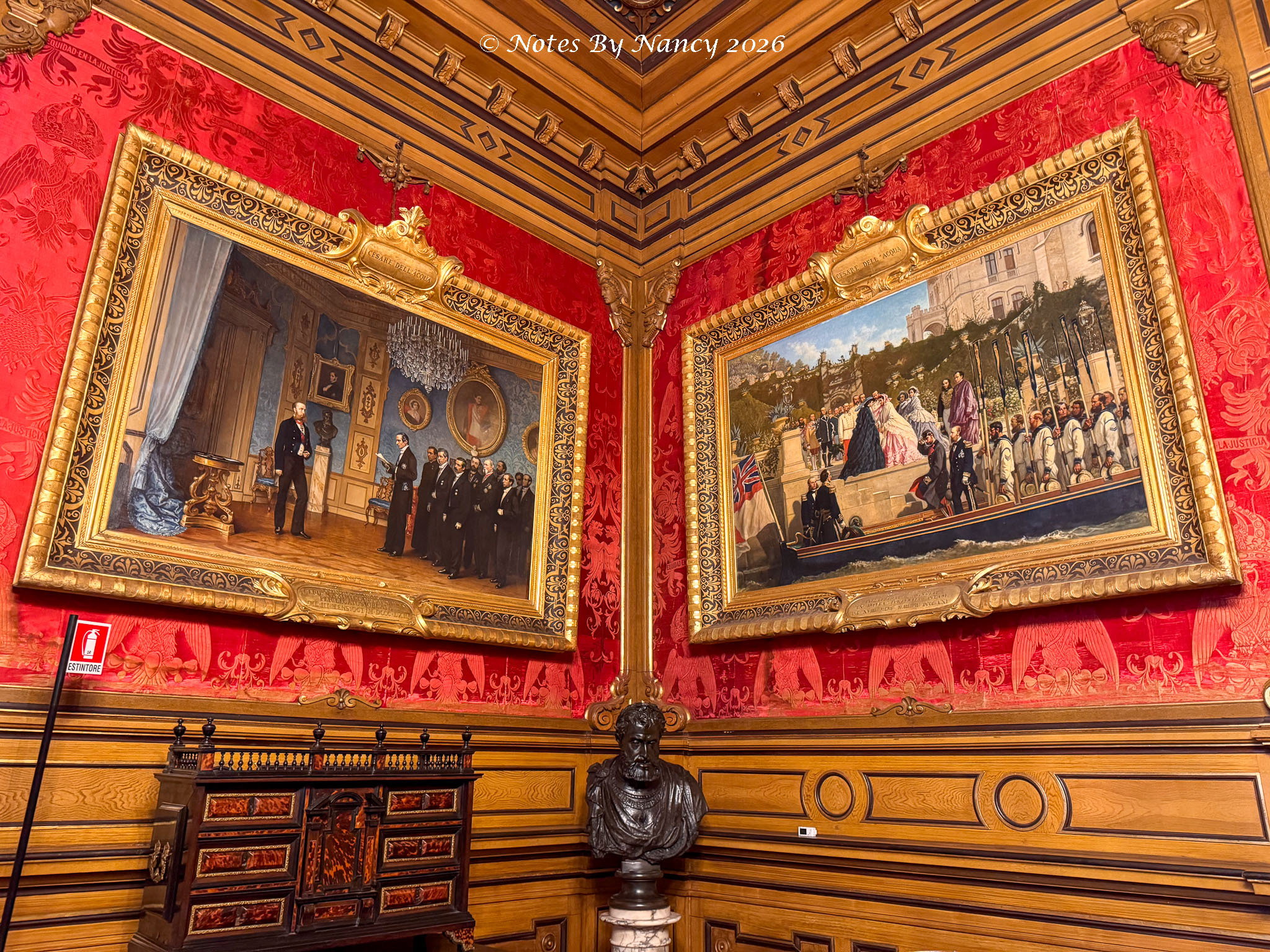
After touring the interior, we walked back down to meet Nenad and were thankful that we had arrived early as now there were several busloads of tourists walking towards us – we’d practically had the place to ourselves!
Miramare to Aquileia
Our next stop was about 45 minutes away and took us back in time several centuries. Along the way, we noticed the Fincantieri Shipyards where Viking’s ships are built, so that was fun to witness.
Our destination was the Basilica di Aquileia also known as Basilica di Santa Maria Assunta. The town of Aquileia with origins in the 2nd century BCE was a large and wealthy Roman city. The original church dates to the early 4th century when it was built by Bishop Theodore following the Edict of Milan signed by Emperors Constantine and Licinius which gave Christians legal status allowing them to worship freely. Additional changes were made over the next 100 years expanding both upwards and outwards. Then, again in the 9th century under Maxentius when additional architectural changes were made, including the crypt. More major changes were made in the 11th century by Poppo creating the essential structures seen today. There were also some restorations in the following centuries to repair earthquake damage. This link to the official website of the church provides a great overview of the development of the site and its importance in the Christian world. This link is only in Italian – so be sure to allow your browser to translate to English!
Today the basilica is part of a larger archaeological park unearthing the remains of the early city. The area was designated a cultural UNESCO World Heritage Site in 1998.
With mosaics and frescoes from the 4th century and later, it is truly a treasure to behold. I had no idea of its full history when we selected it as a stop along the way. It is off the main route – one of those places where you have to be going there to get there, I think! Although we encountered some heavier rain during this stop, I was glad we went. We only spent about an hour there, but I could see spending a whole day there exploring the town and its layers of history.
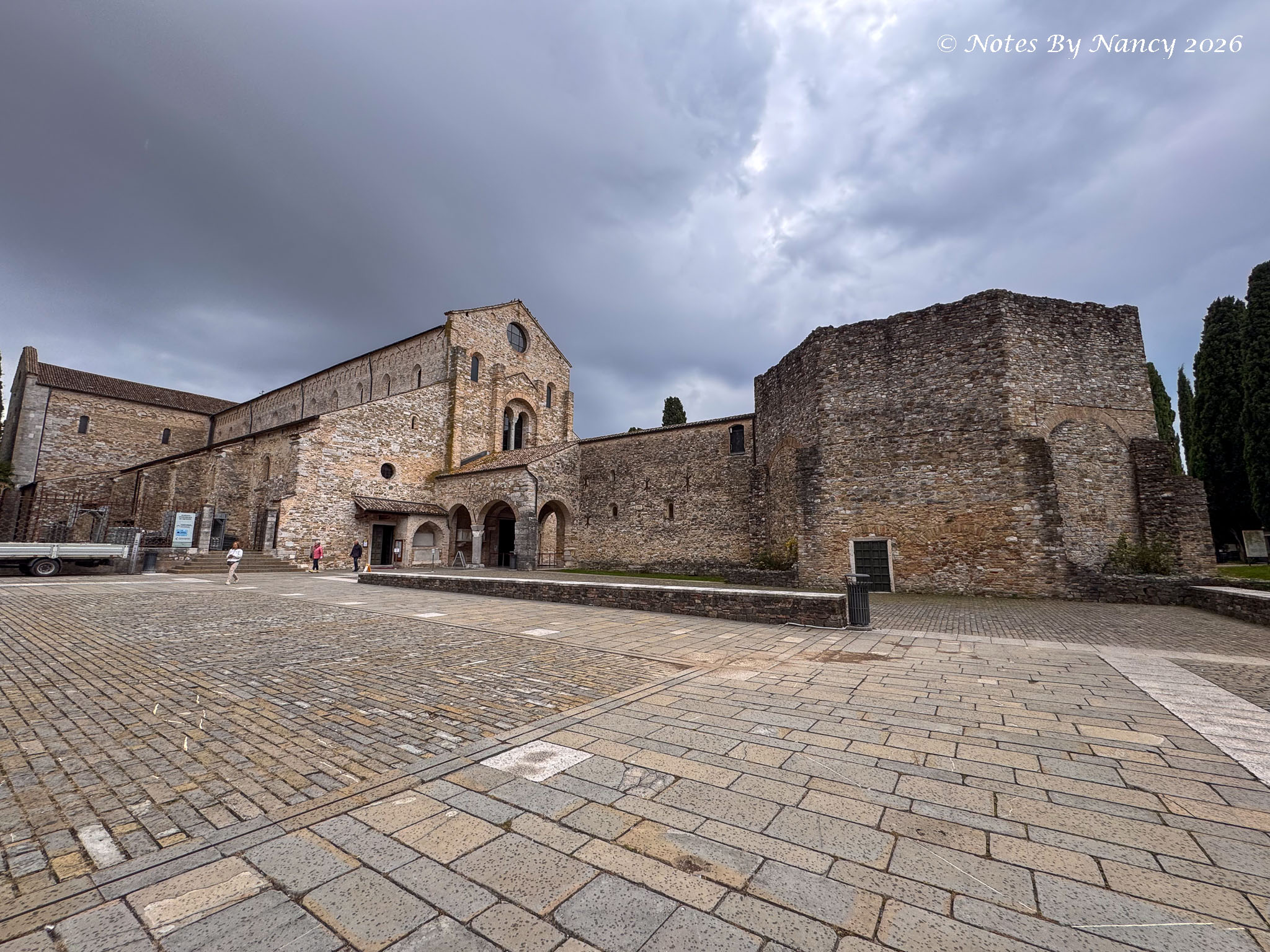
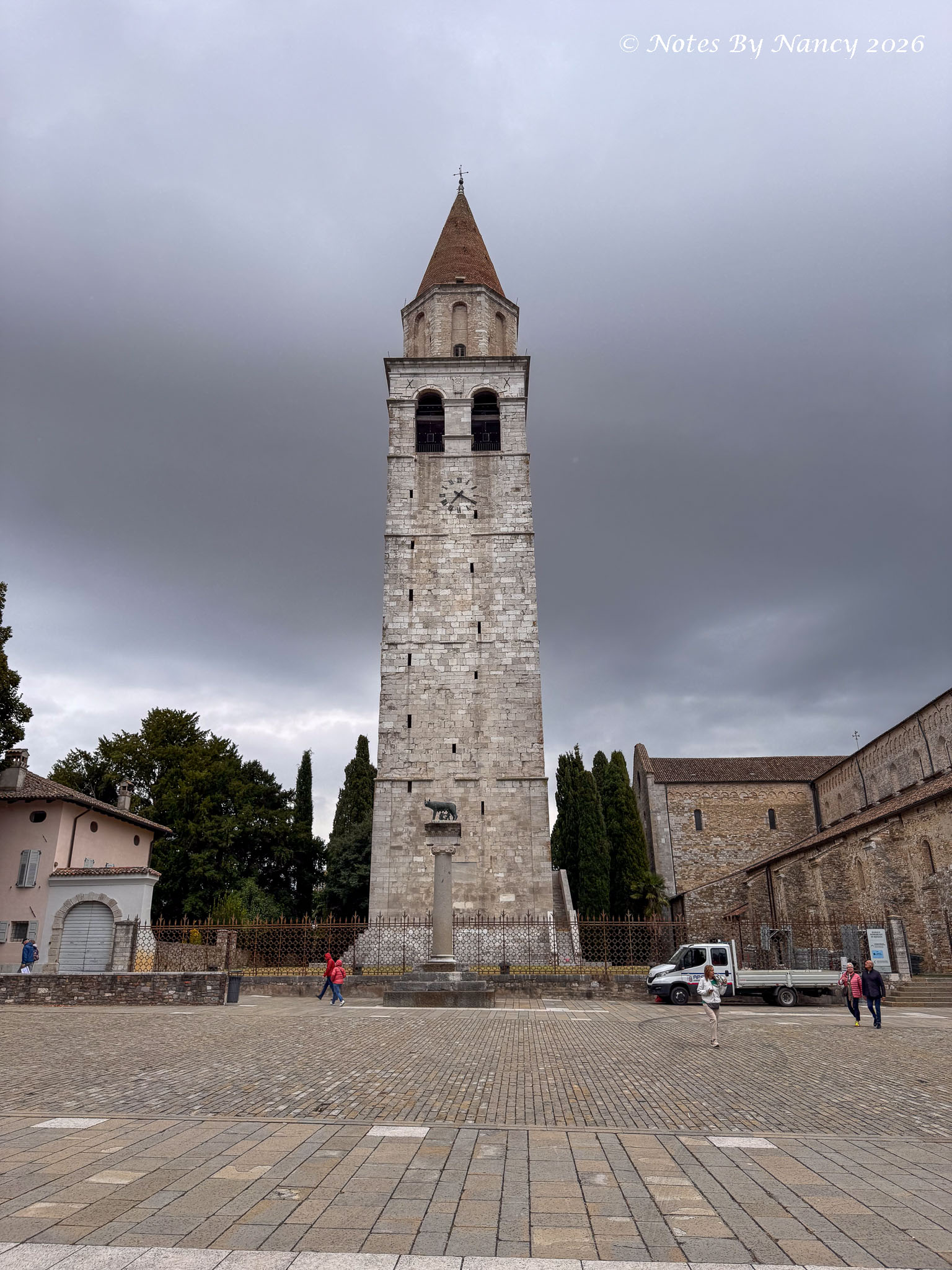
Left: Basilica and Baptistery; Right: Campanile (Bell Tower)
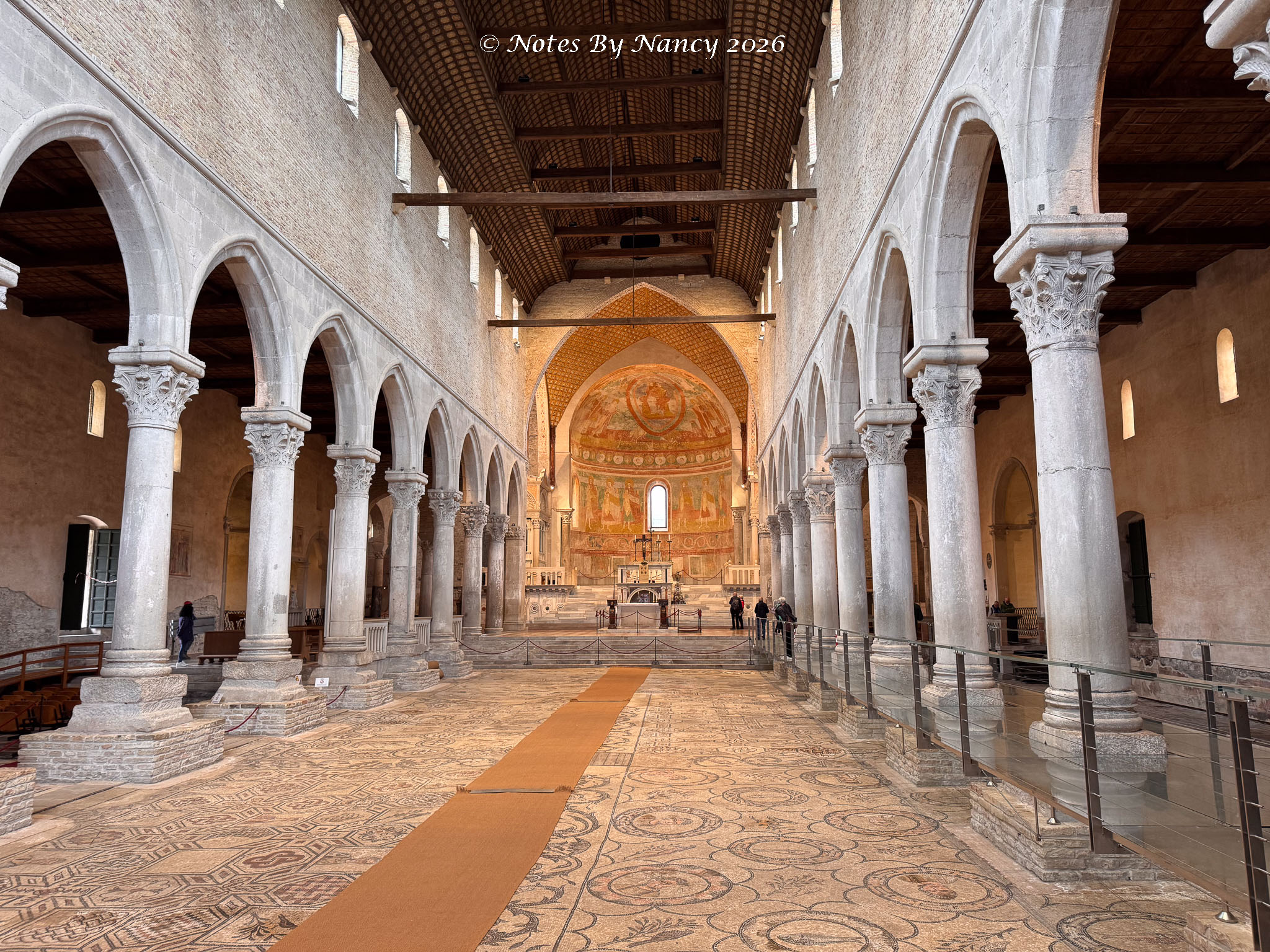
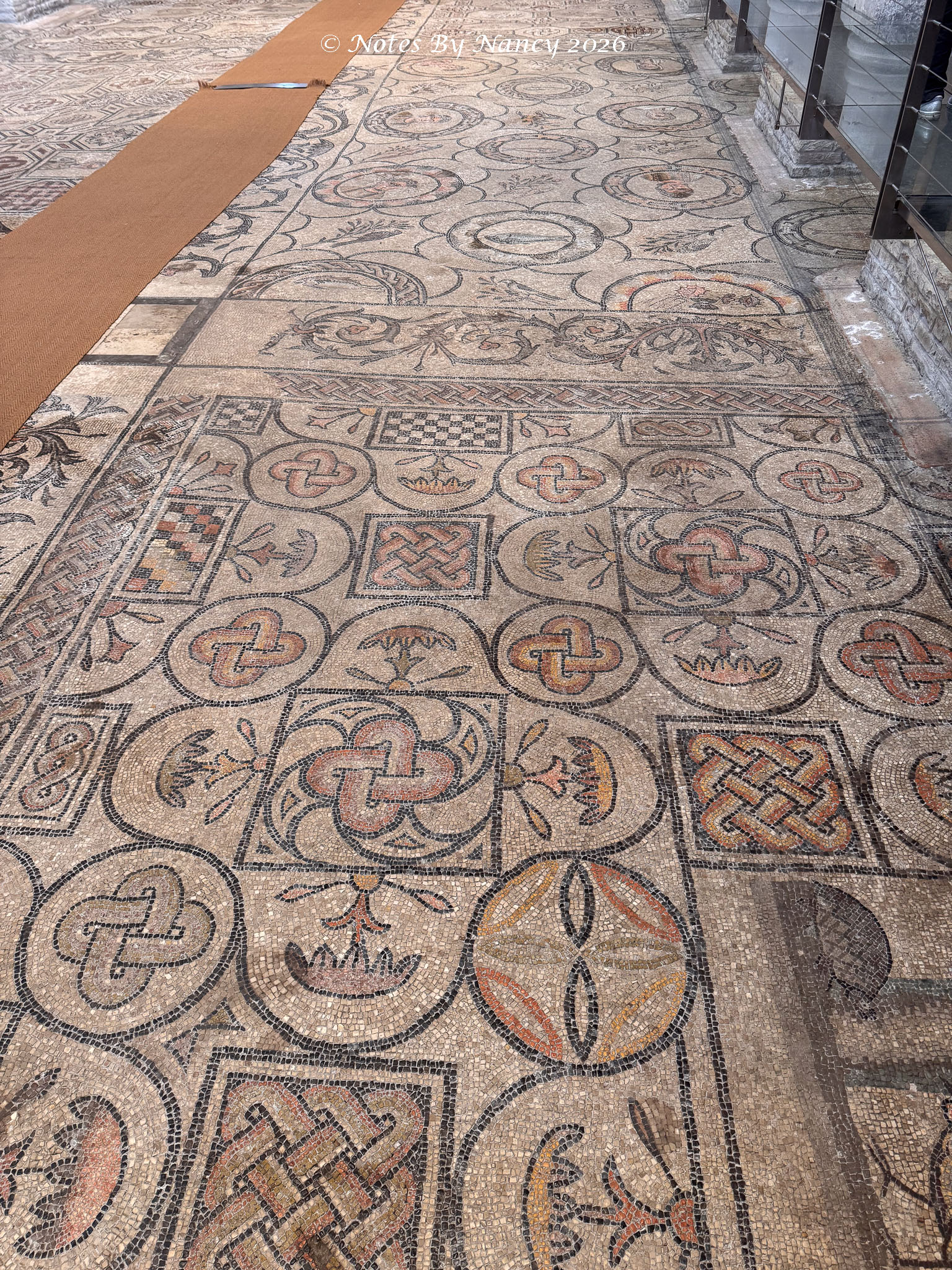
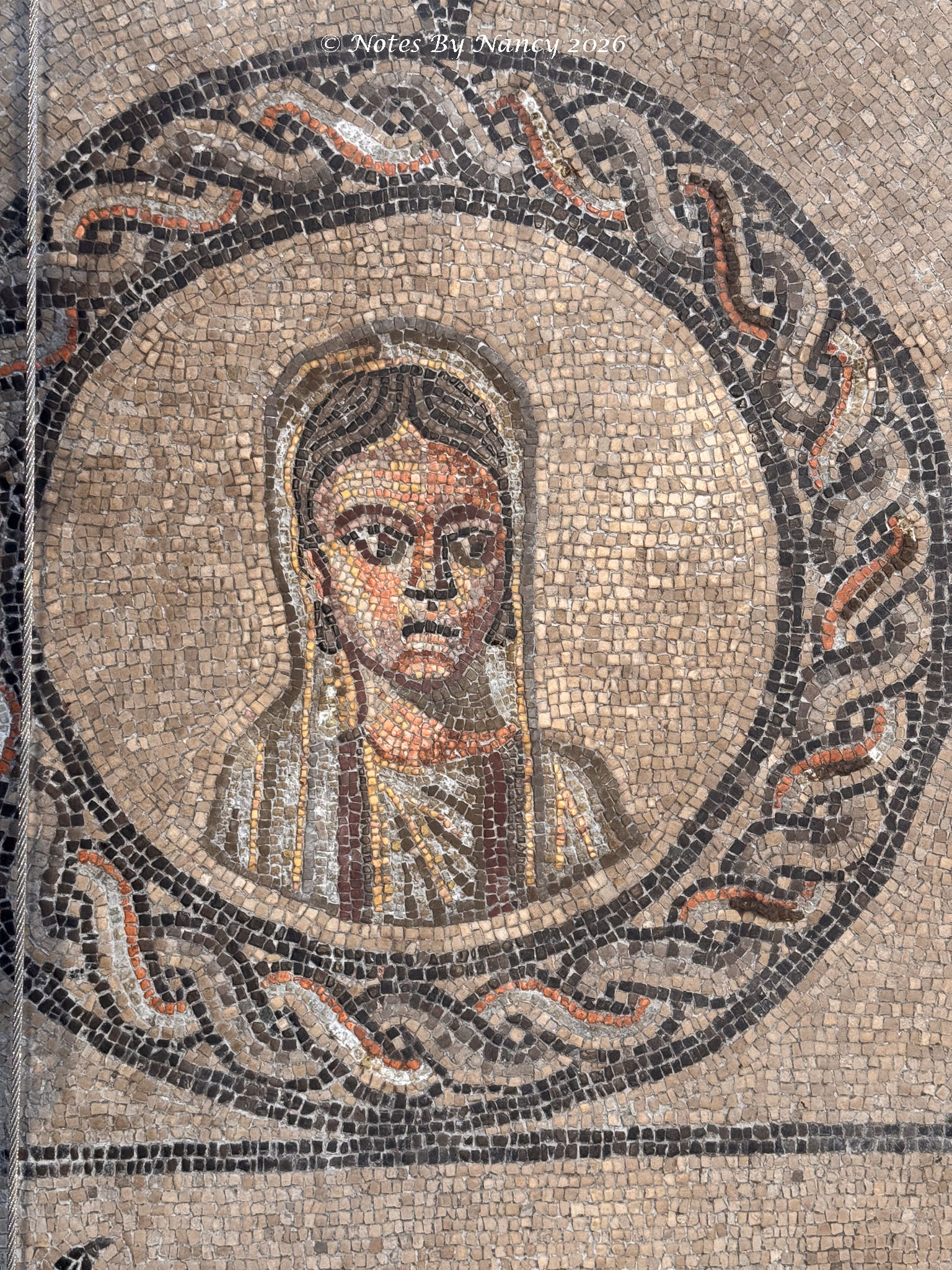
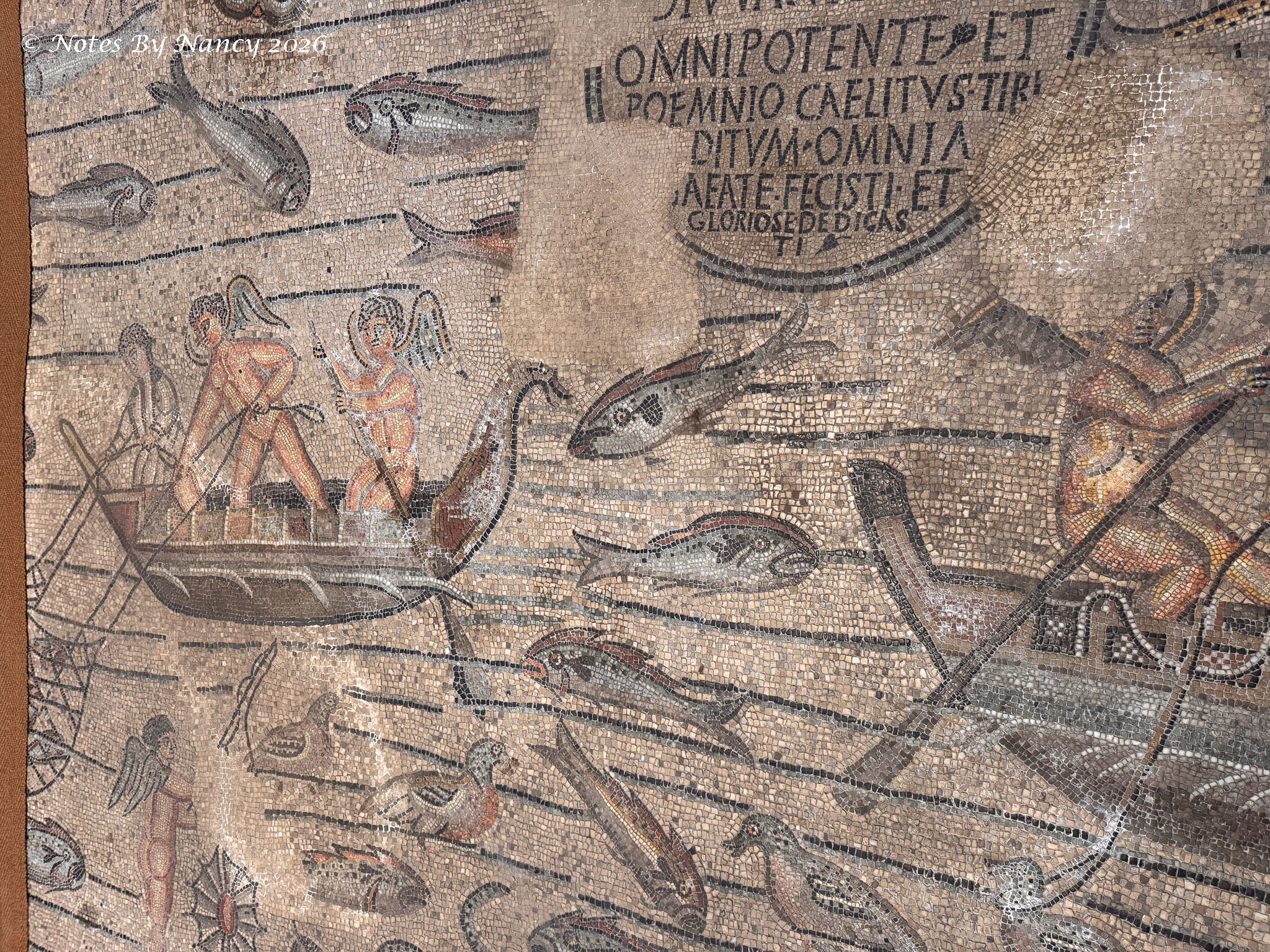
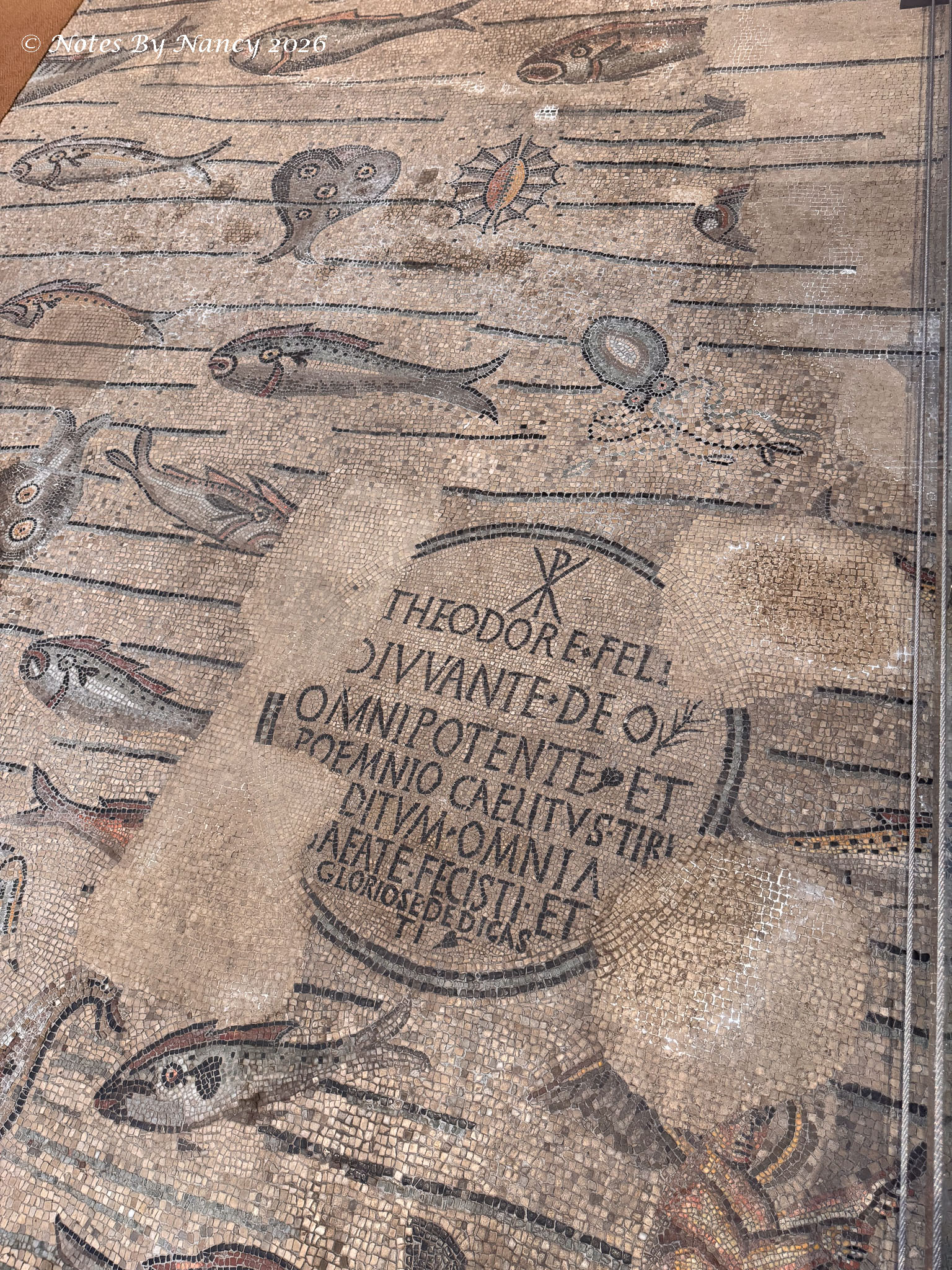
4th Century Mosaic Flooring – bottom right dedication to Bishop Theodore
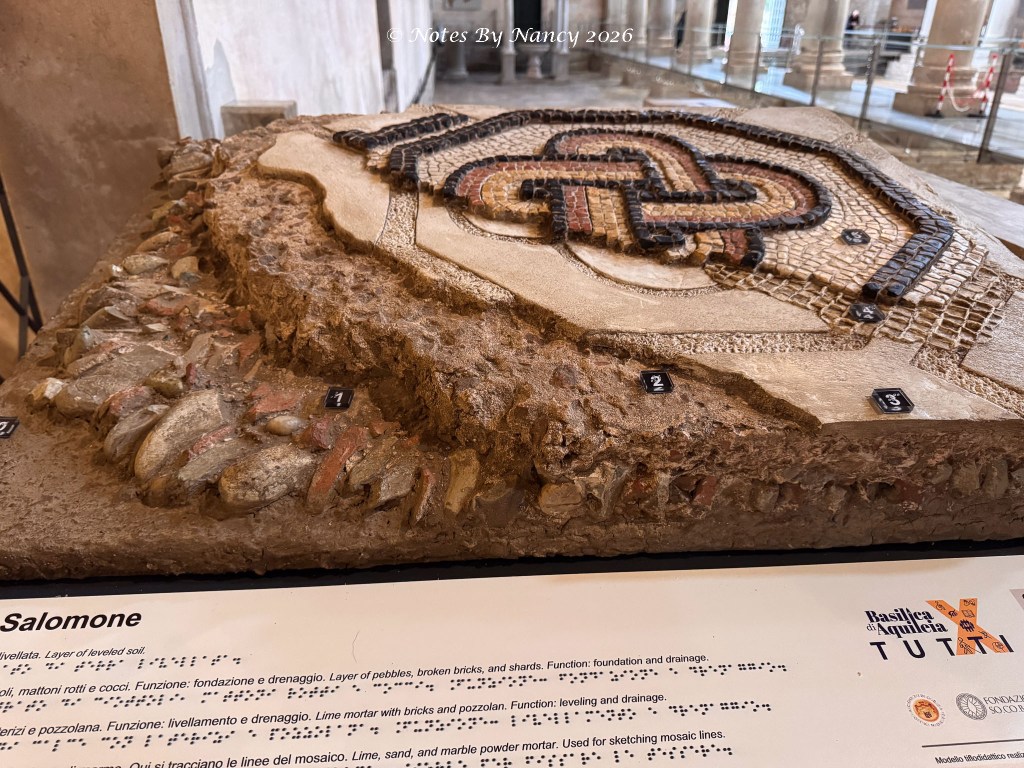
Layers Comprising Knot of Solomon Mosaic Above
- 0 – Terra – Layer of leveled soil
- 1 – Statumen – Layer of pebbles, broken bricks and shards. Function: foundation and drainage
- 2 – Rudus – Lime mortar with bricks and pozzolan. Function: leveling and drainage
- 3 – Nucleus – Lime, sand, and marble powder mortar. Function: Used for sketching mosaic lines
- 4 – Sovranucleus – Very fine lime and marble mortar. Function: Used to set tesserae
- 5 – Mosaico – Stone tesserae about 1cm x 1cm
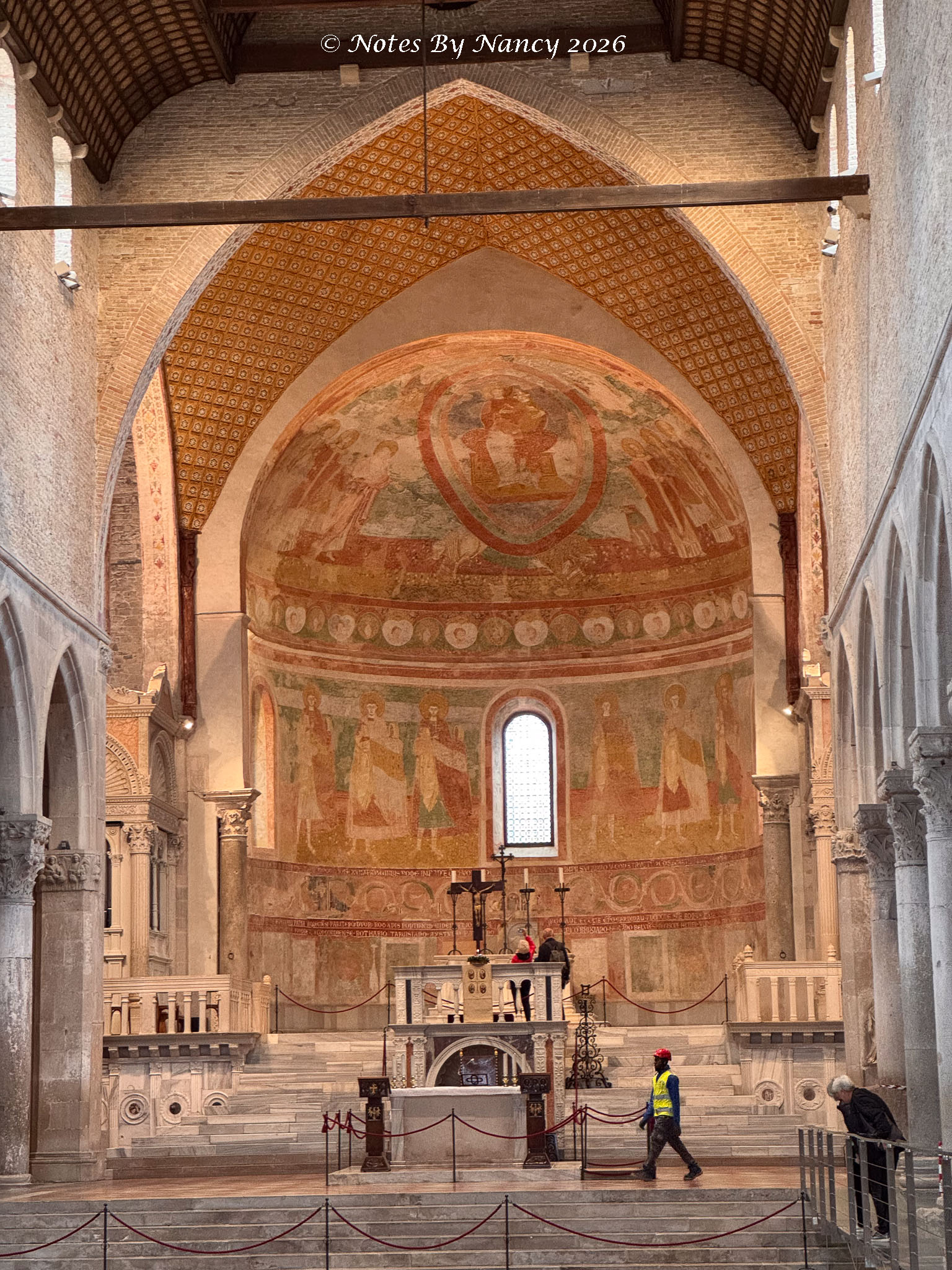
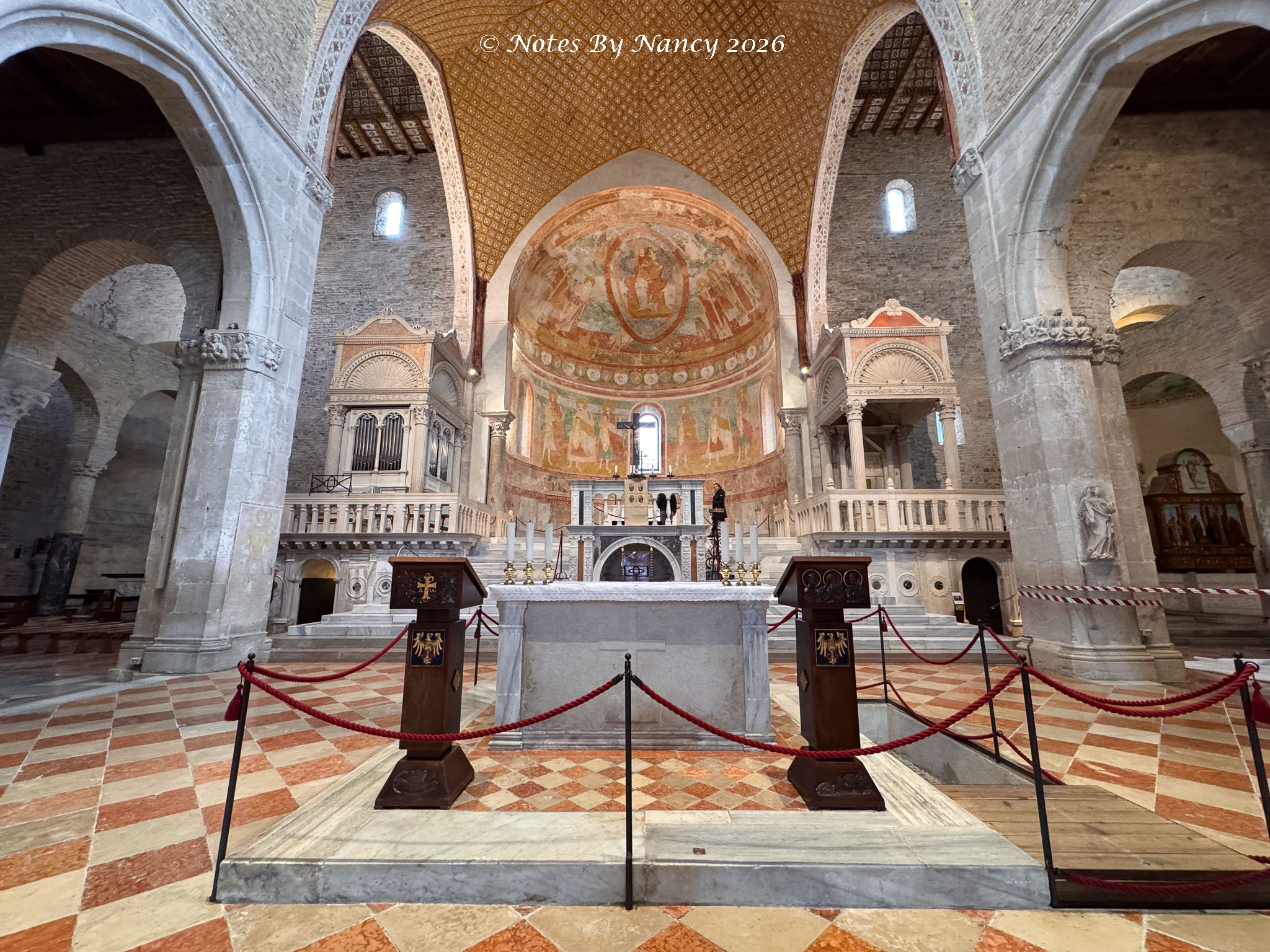
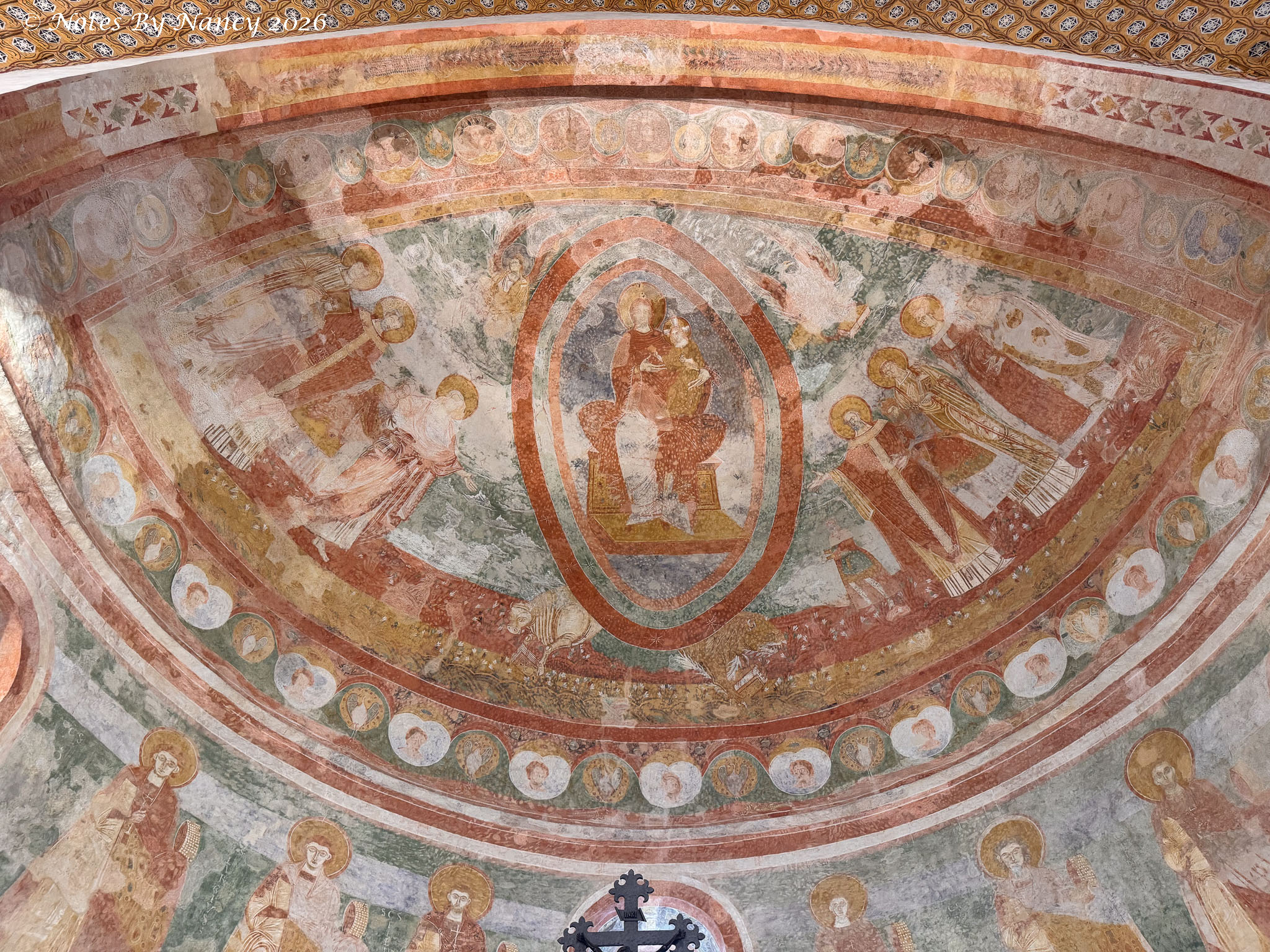
Alter and Apse
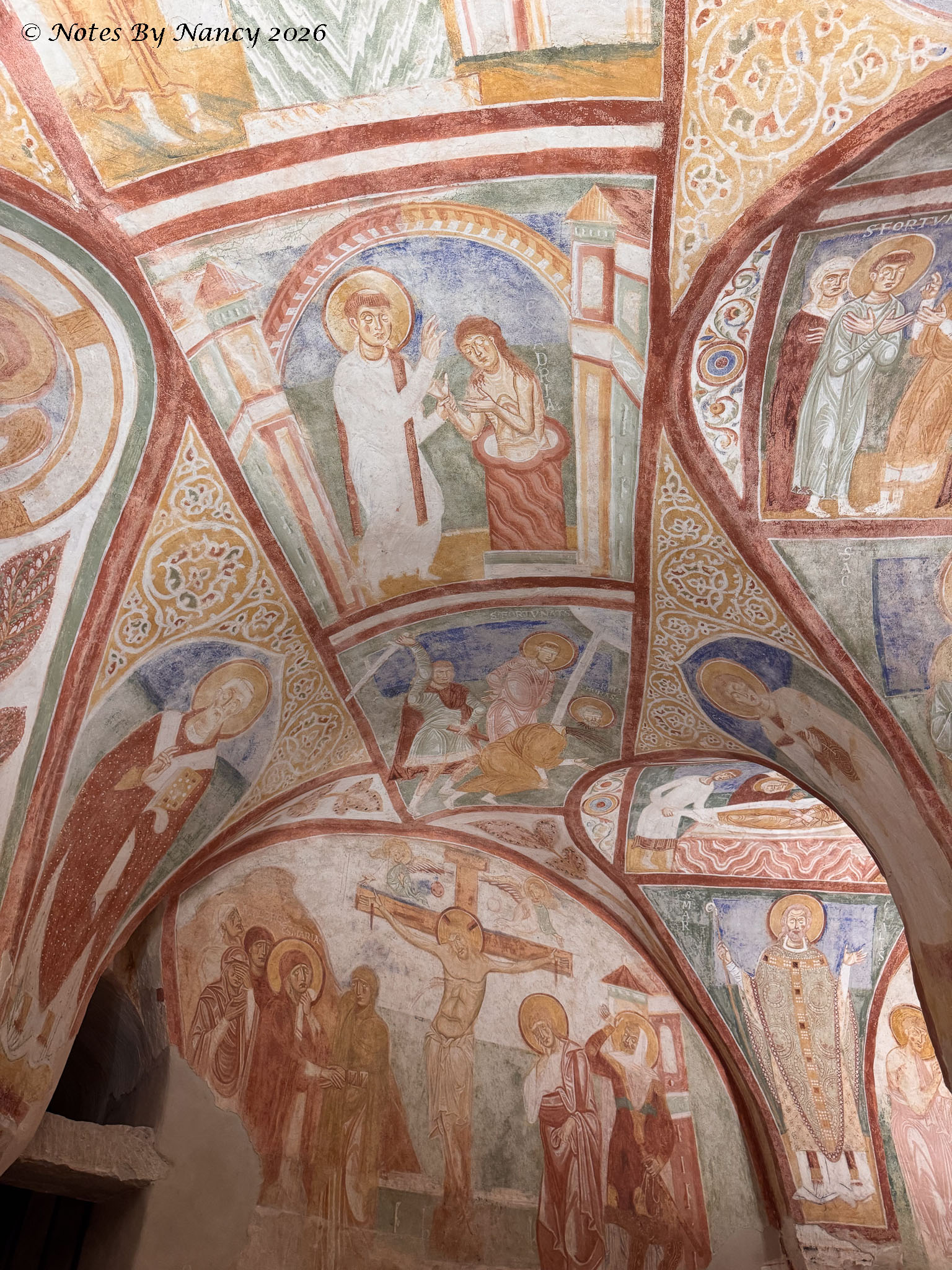
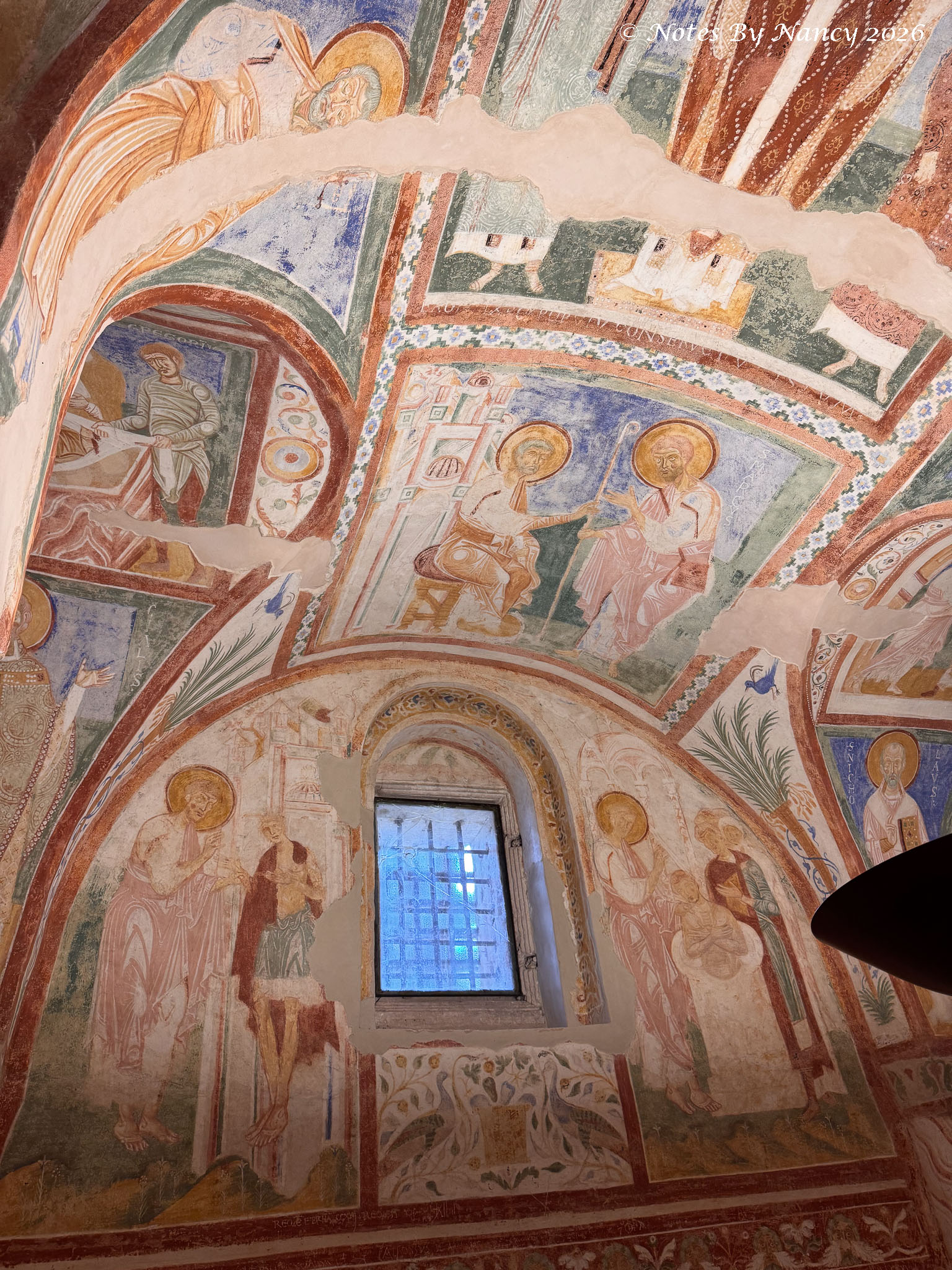
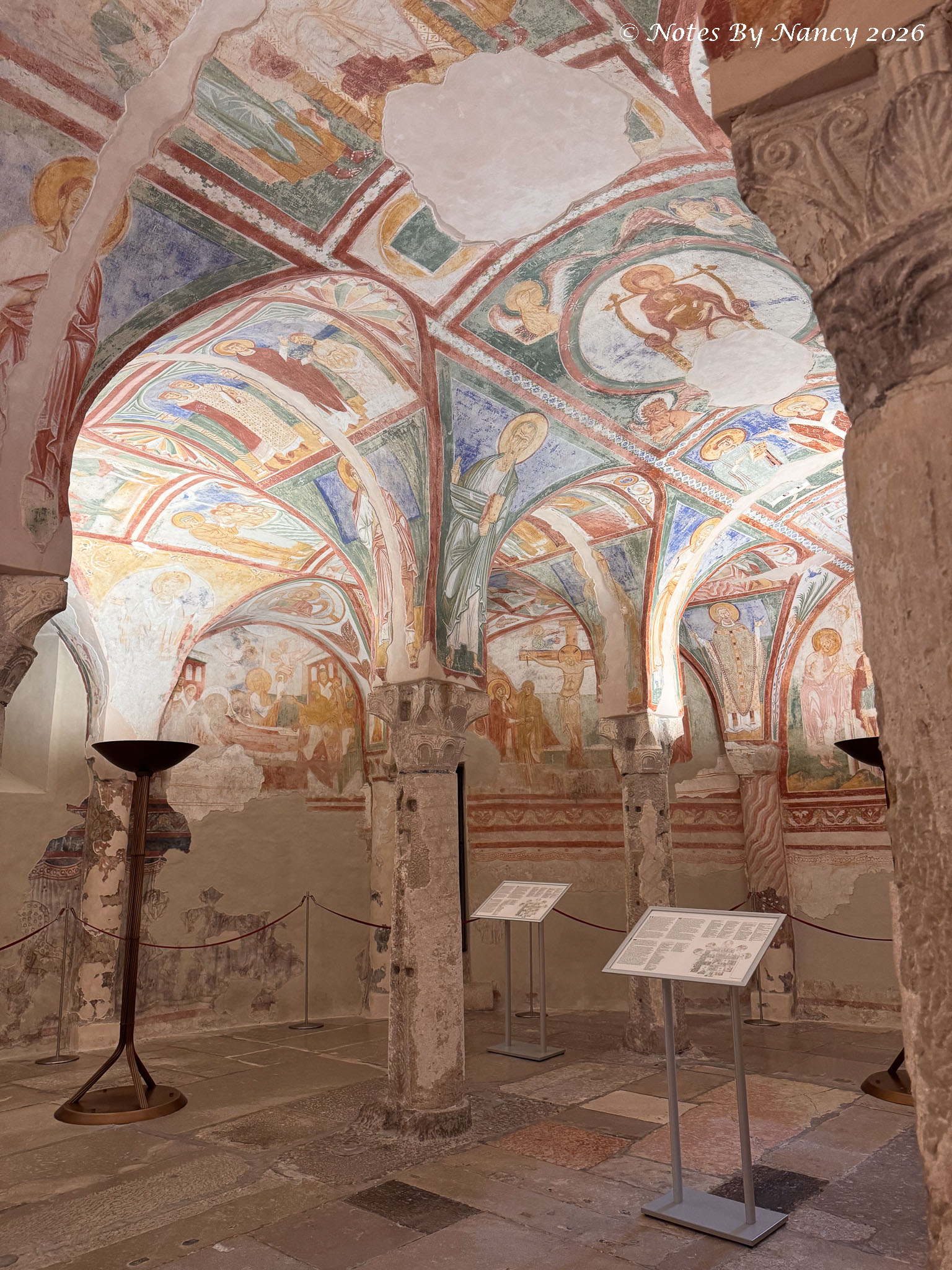
12th Century Frescoes in the Crypt
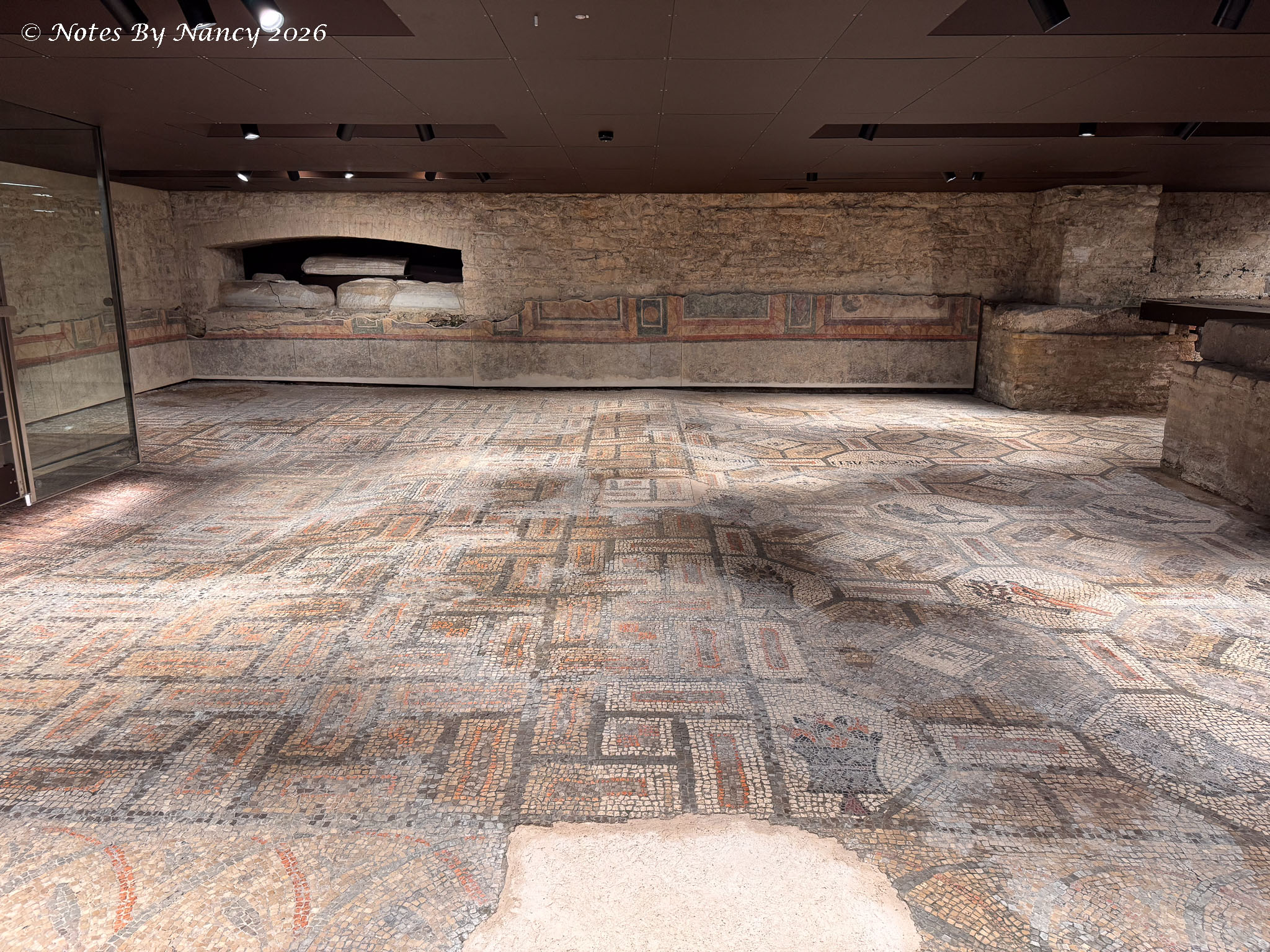
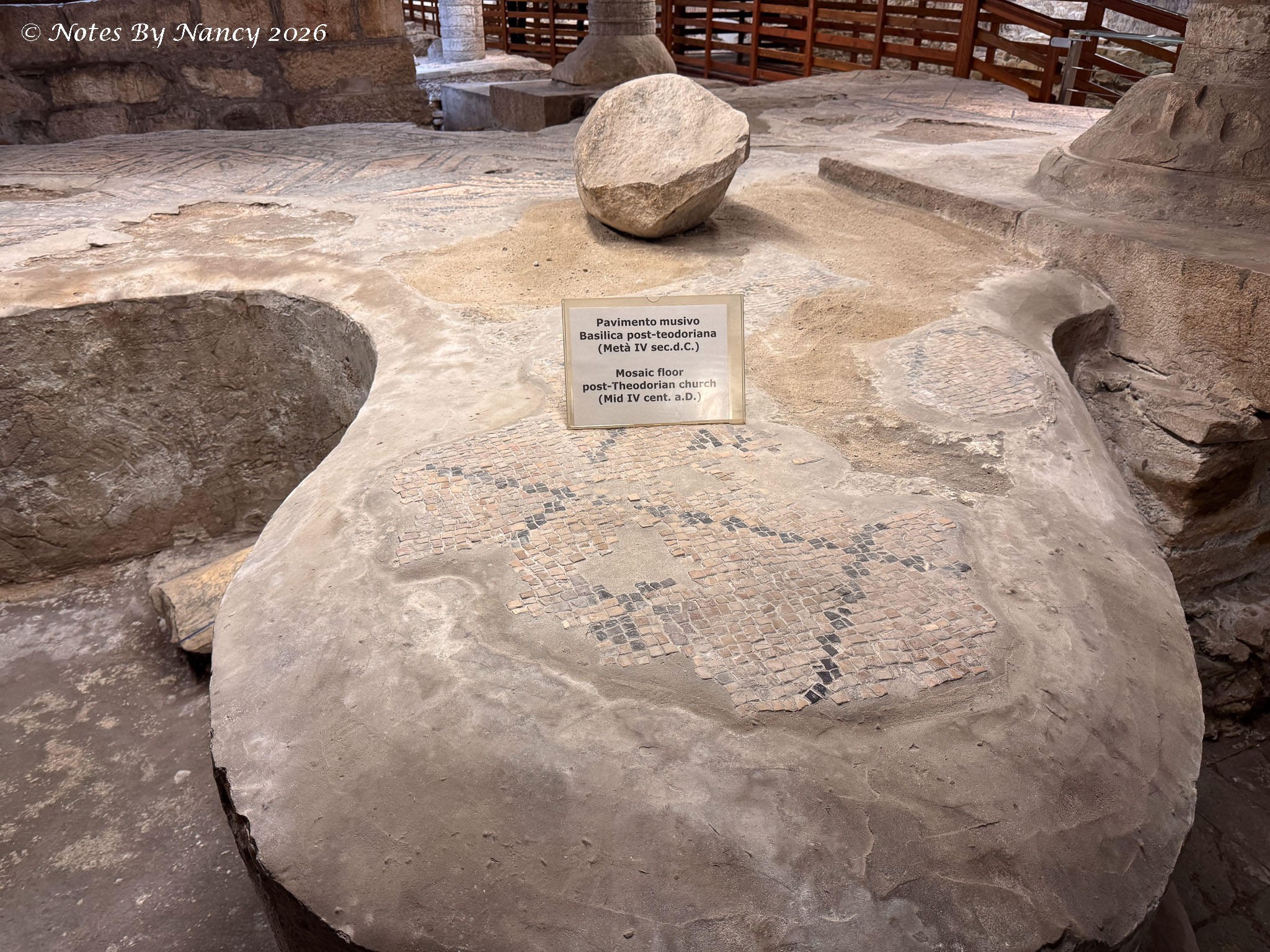
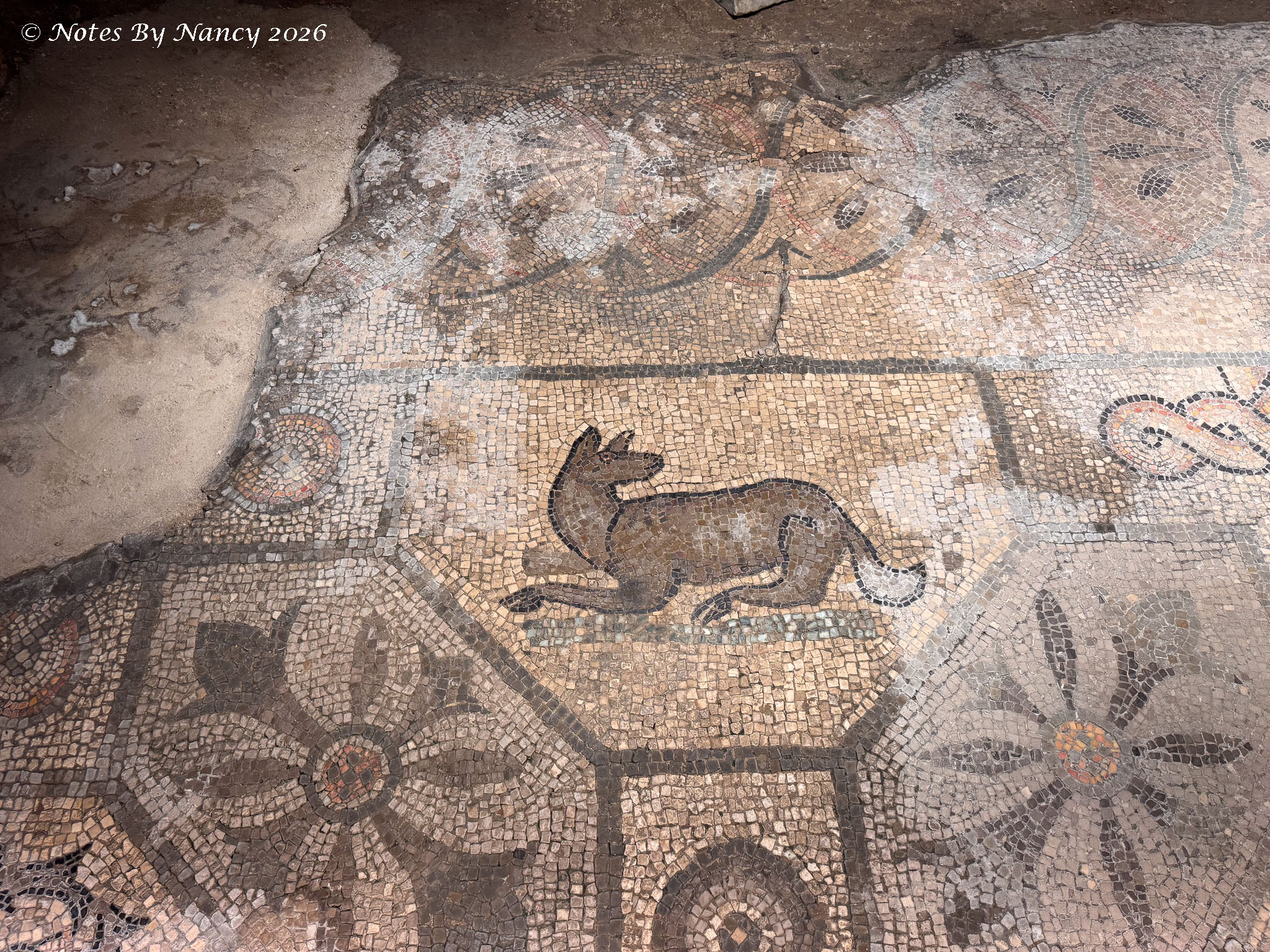
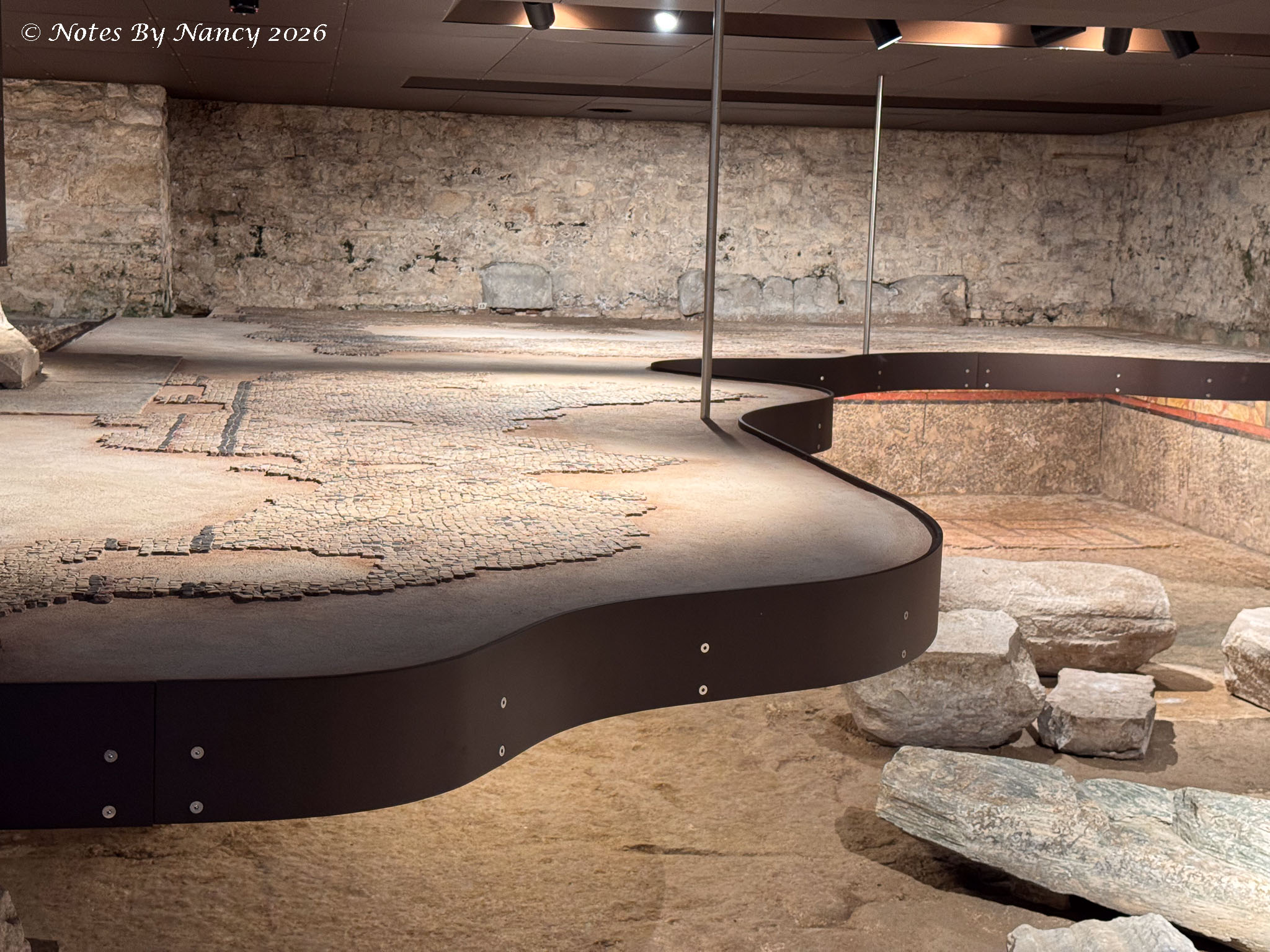
Crypt of Excavations – Remains of 1st Century foundations and 4th Century mosaics a meter higher.
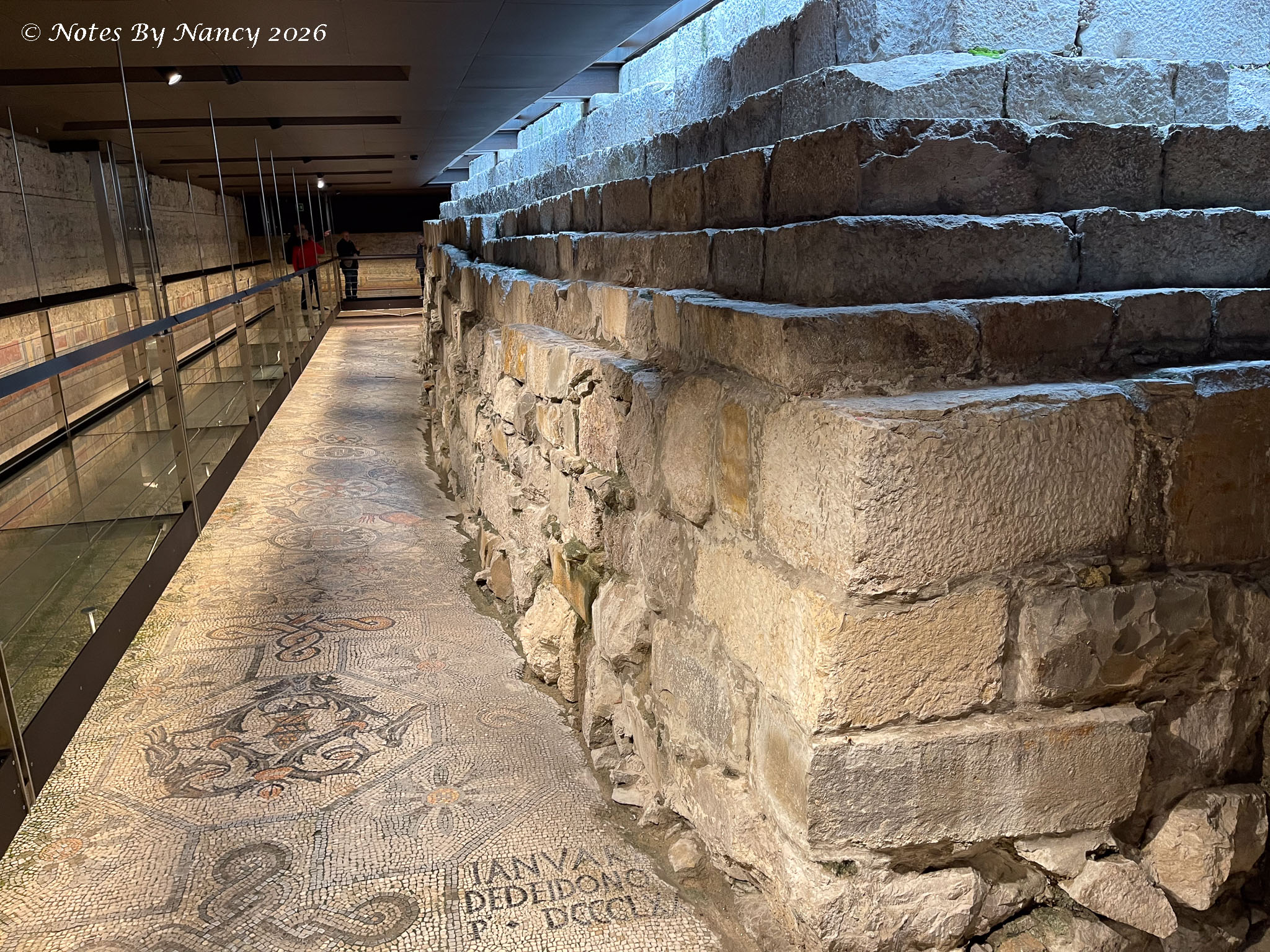
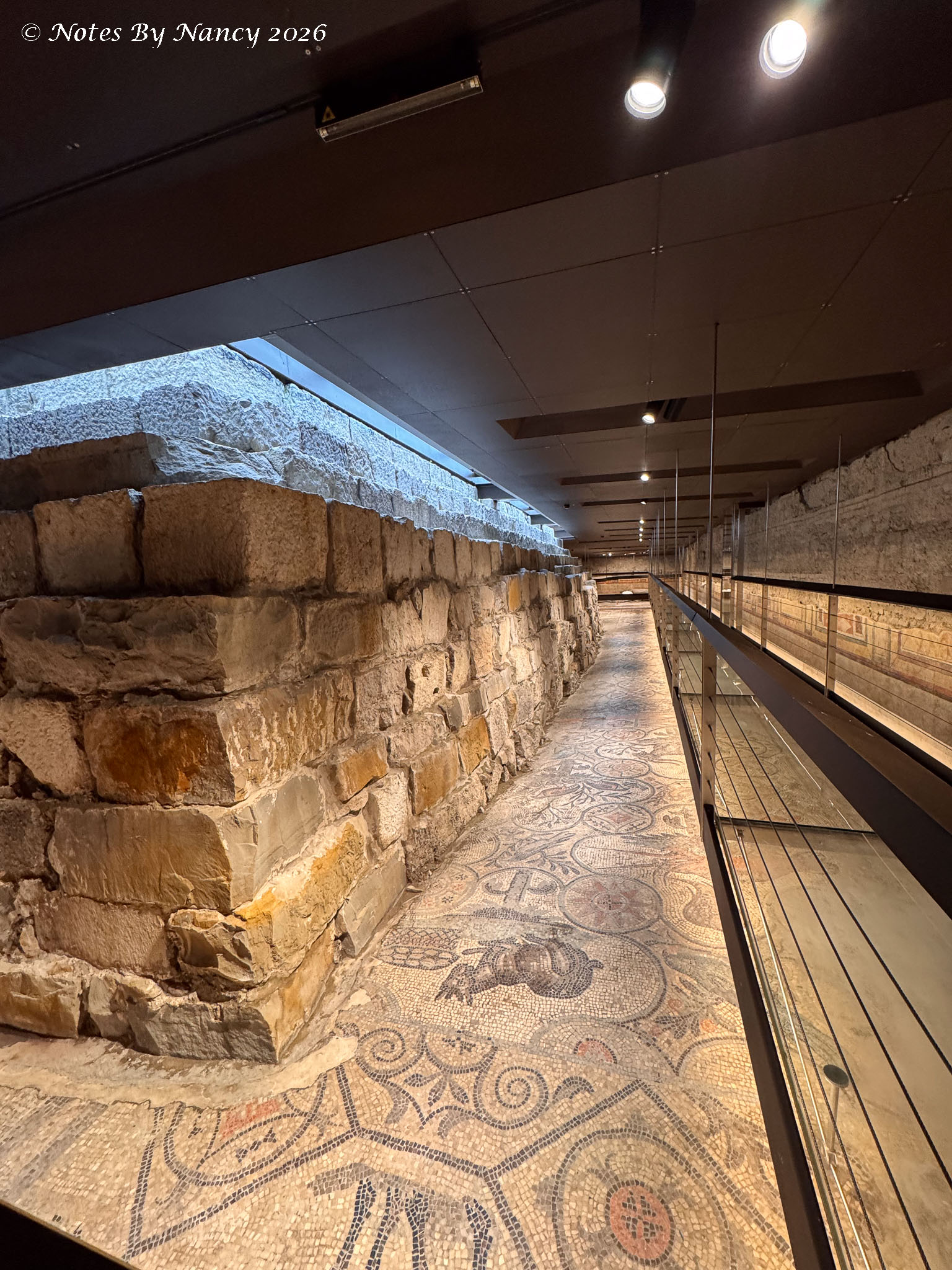
Crypt of Excavations – Foundation of the 12th Century Bell Tower on top of the 4th Century mosaics
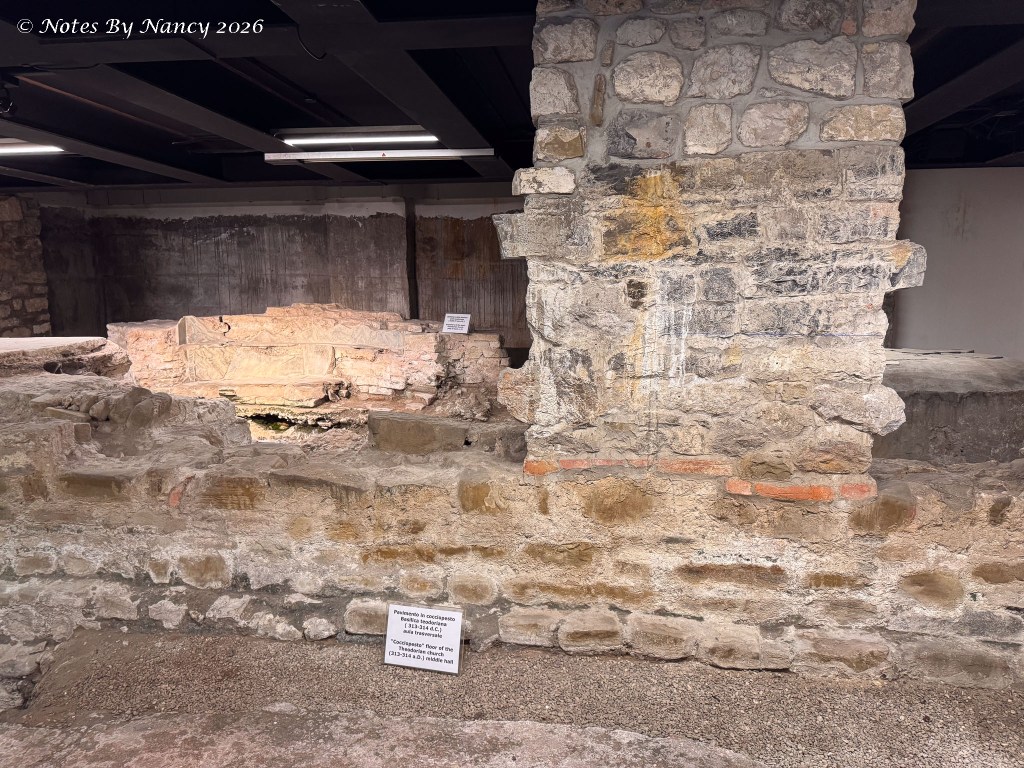
Crypt of Excavations – Remains of the 4th Century Baptistery
A short distance from the basilica are the excavated remains of the Bishop’s Palace (4th-5th Century) which was built upon the foundations of an earlier house from the 1st-2nd Centuries. The displays and signage explaining the layers of the excavations and the exquisite mosaics are very well done. Not technically part of the basilica, this part of the archaeological museum is known as the Domus and Episcopal Palace.
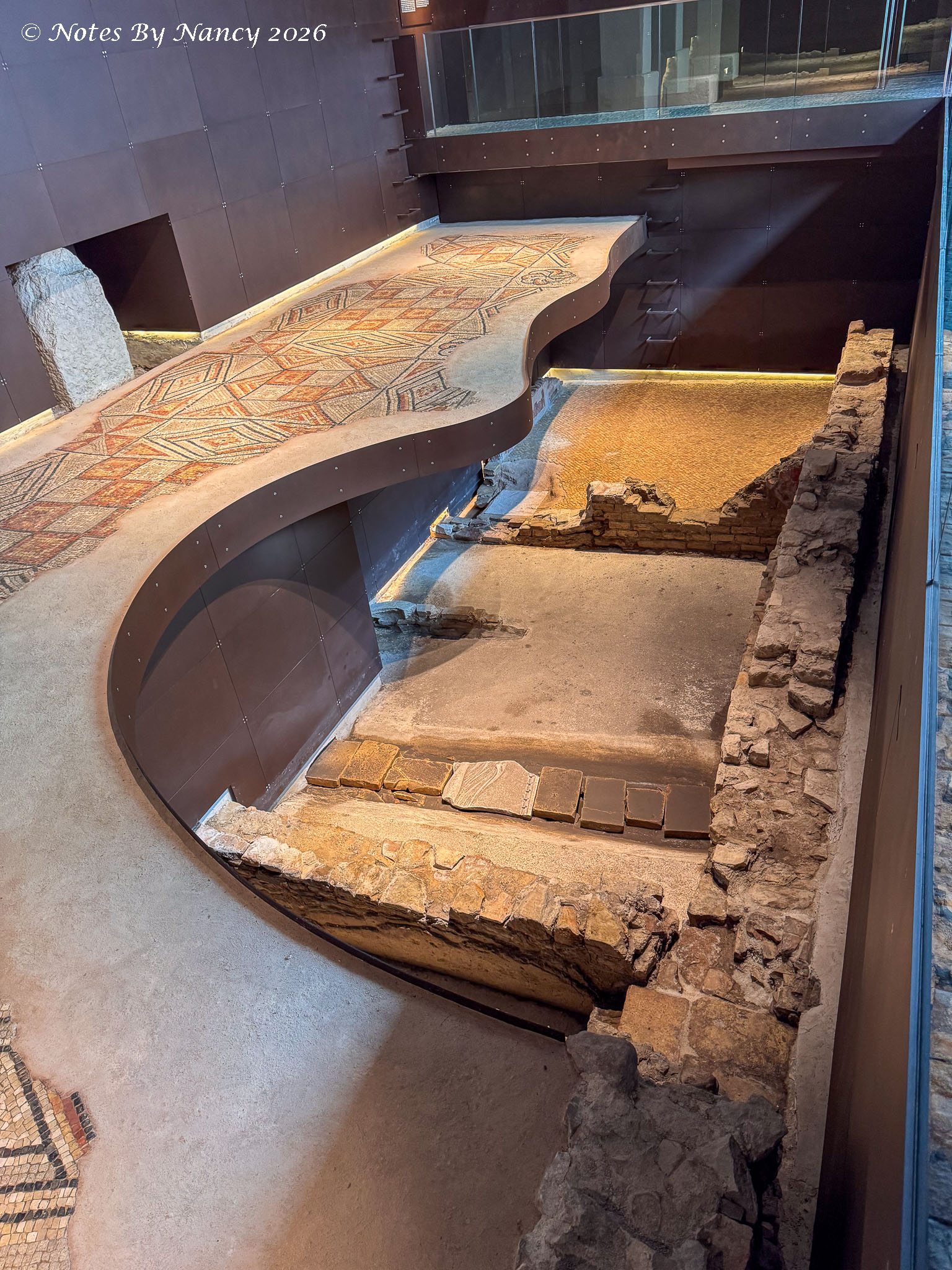
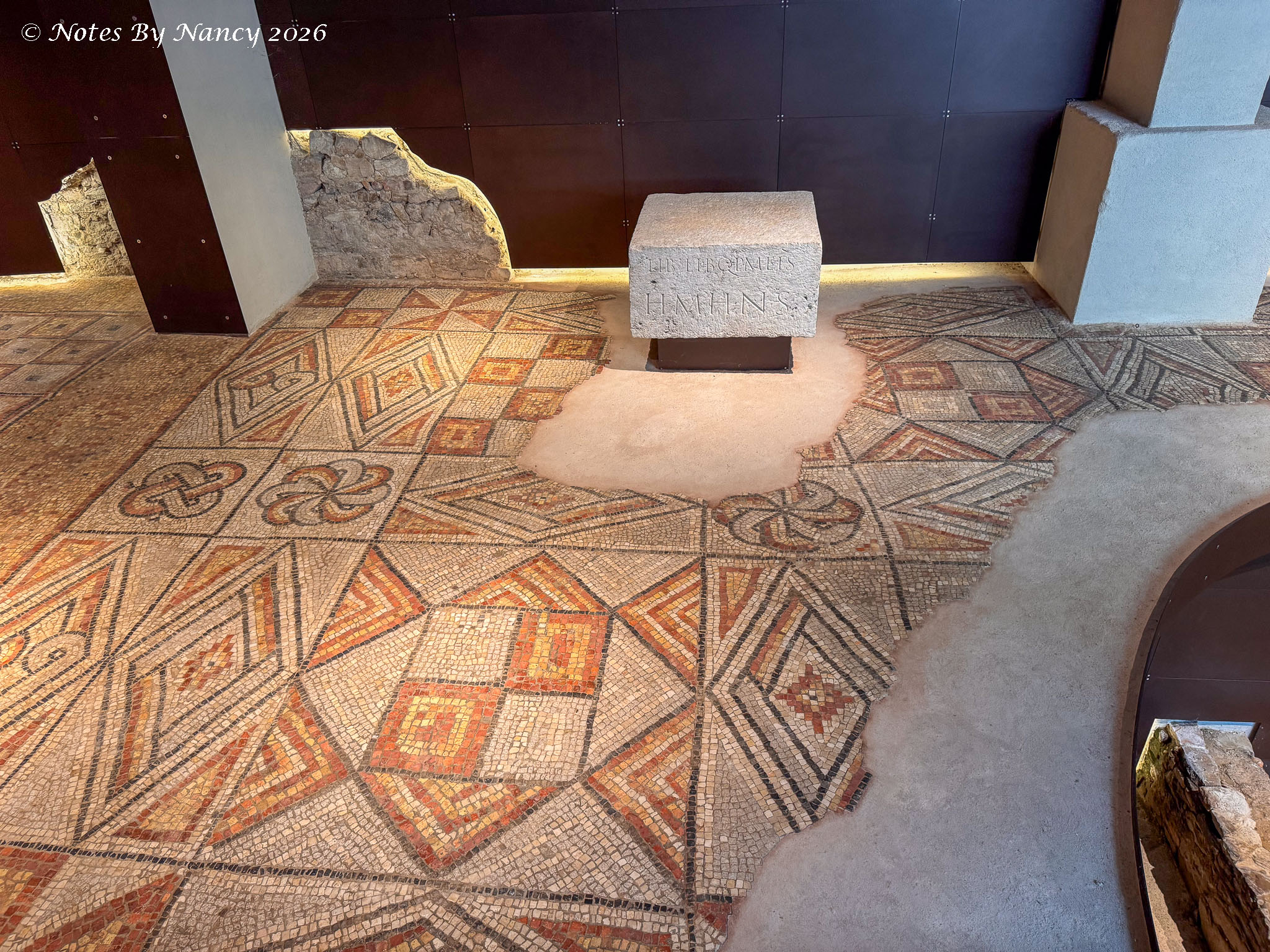
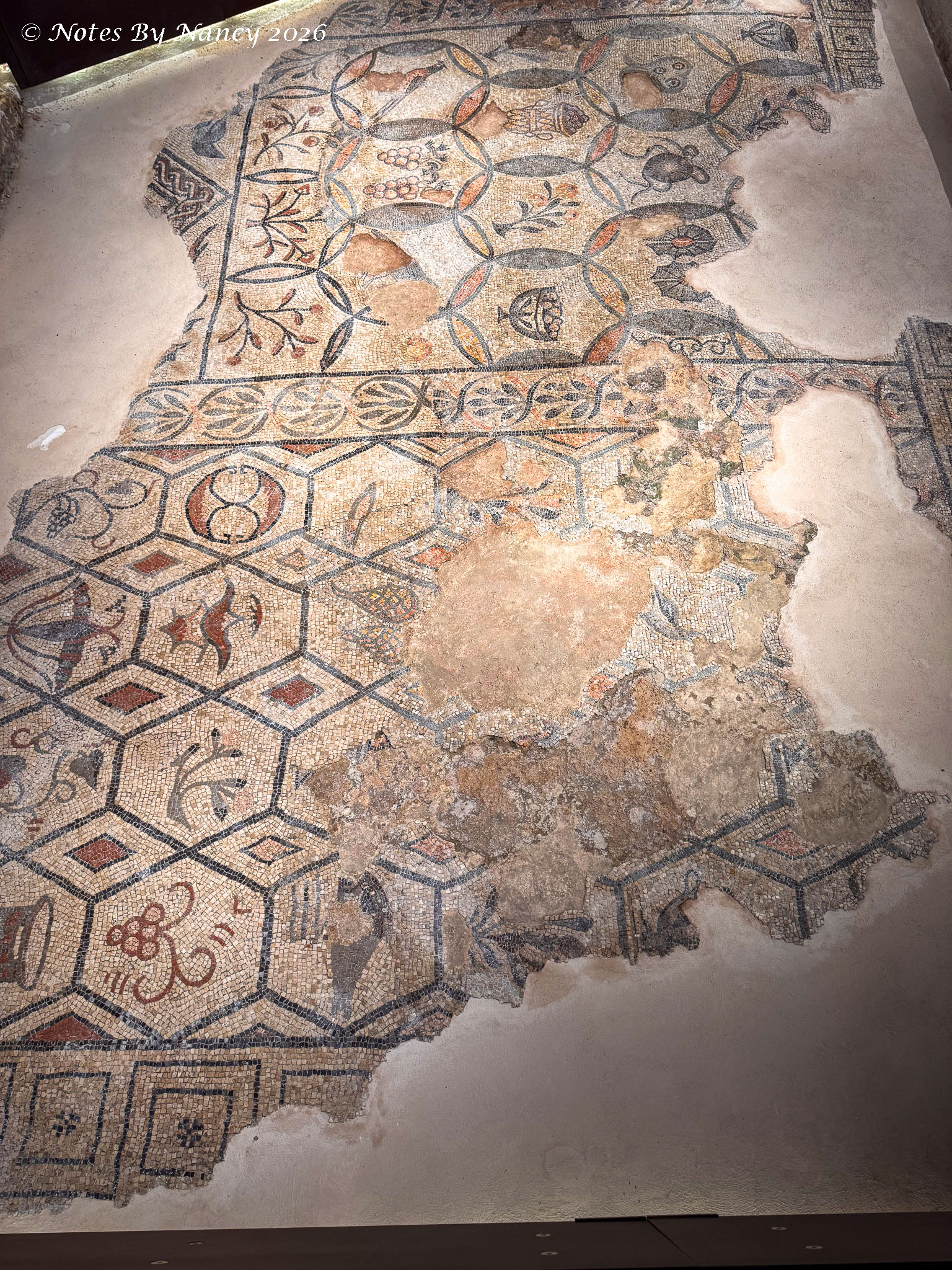
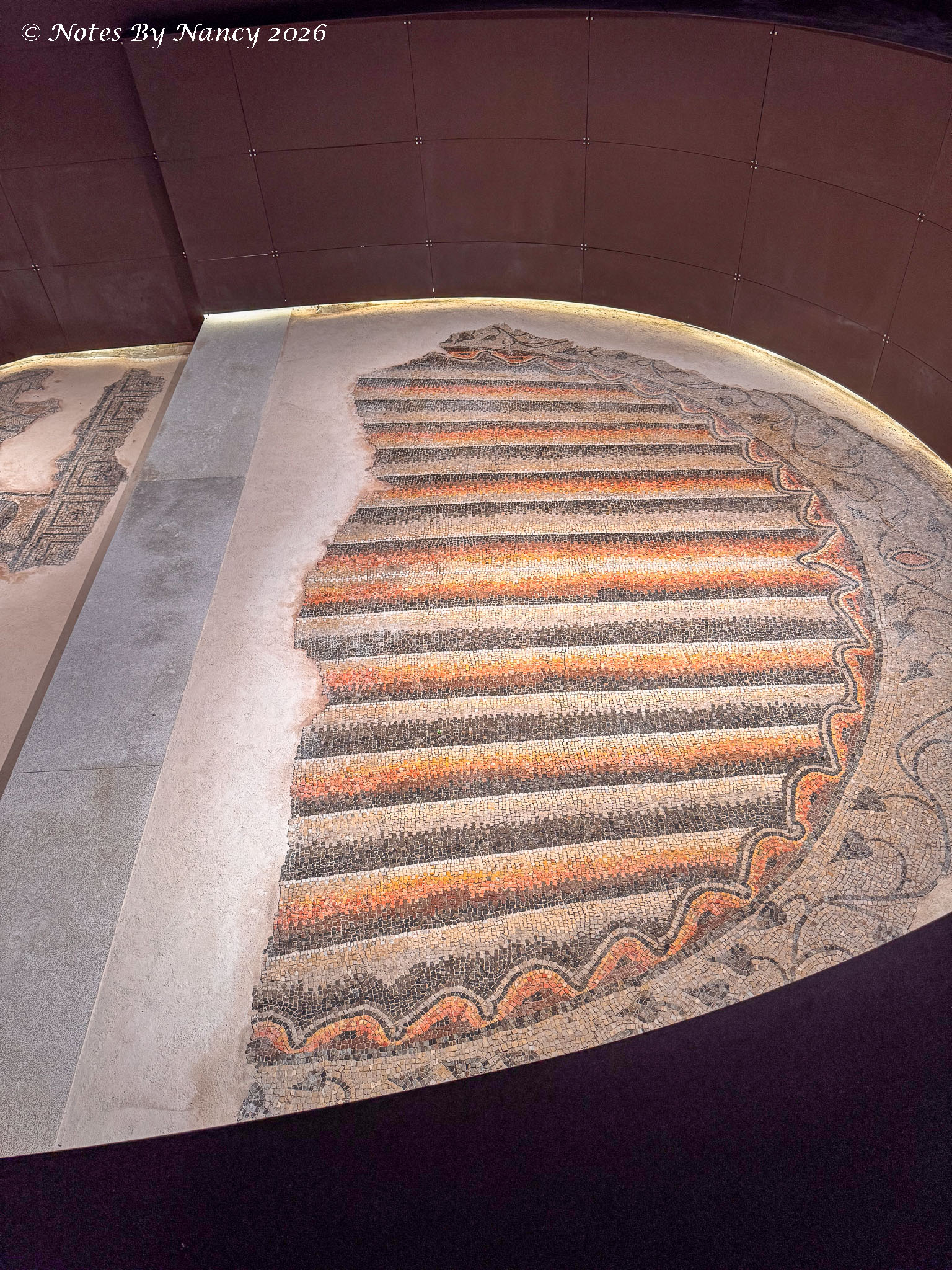
The final building we visited in the basilica complex was the octagonal baptistery constructed in the late 4th to early 5th century by Bishop Chromatius which is attached to the Sudhalle where additional mosaics can be seen.
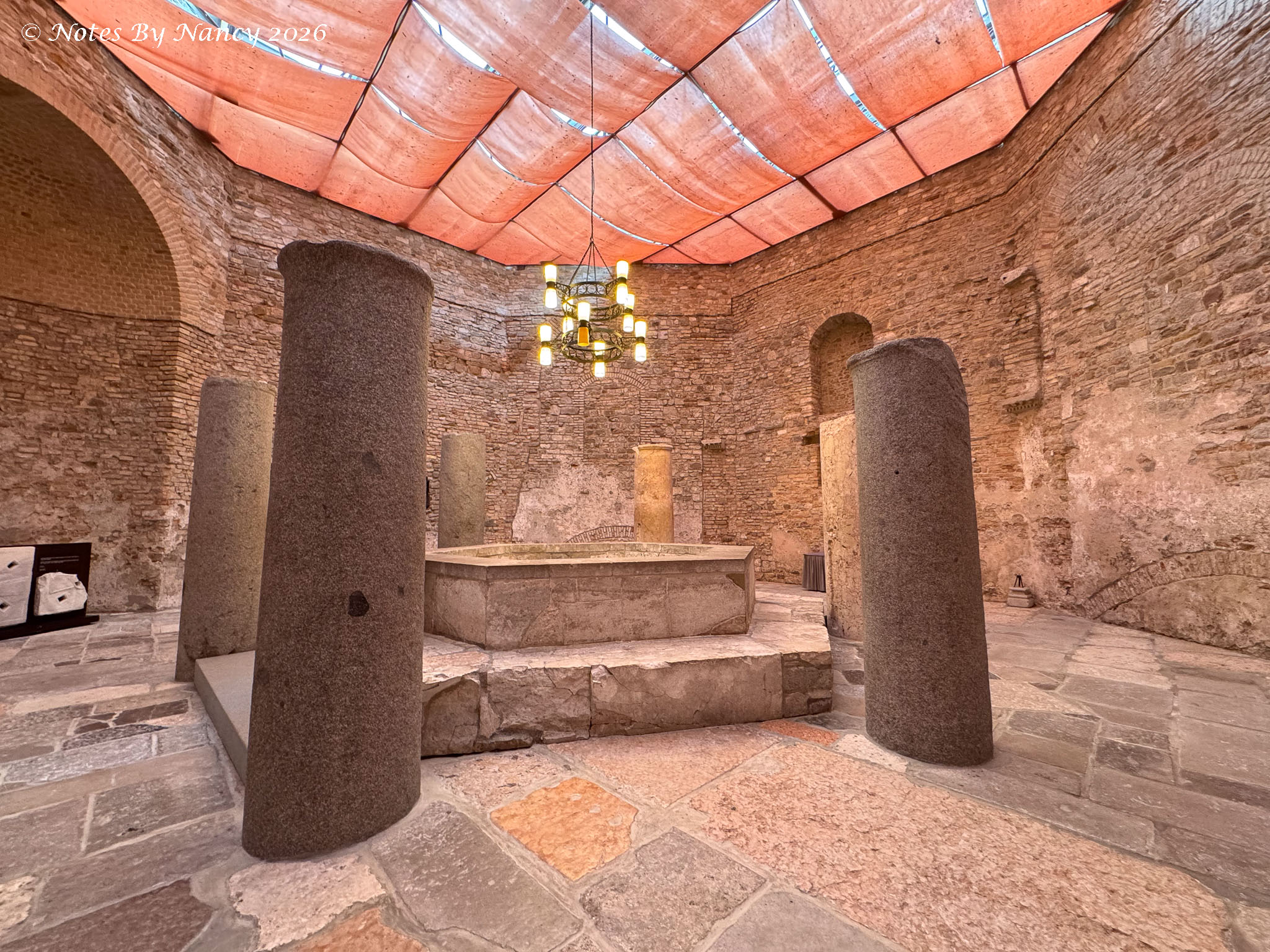
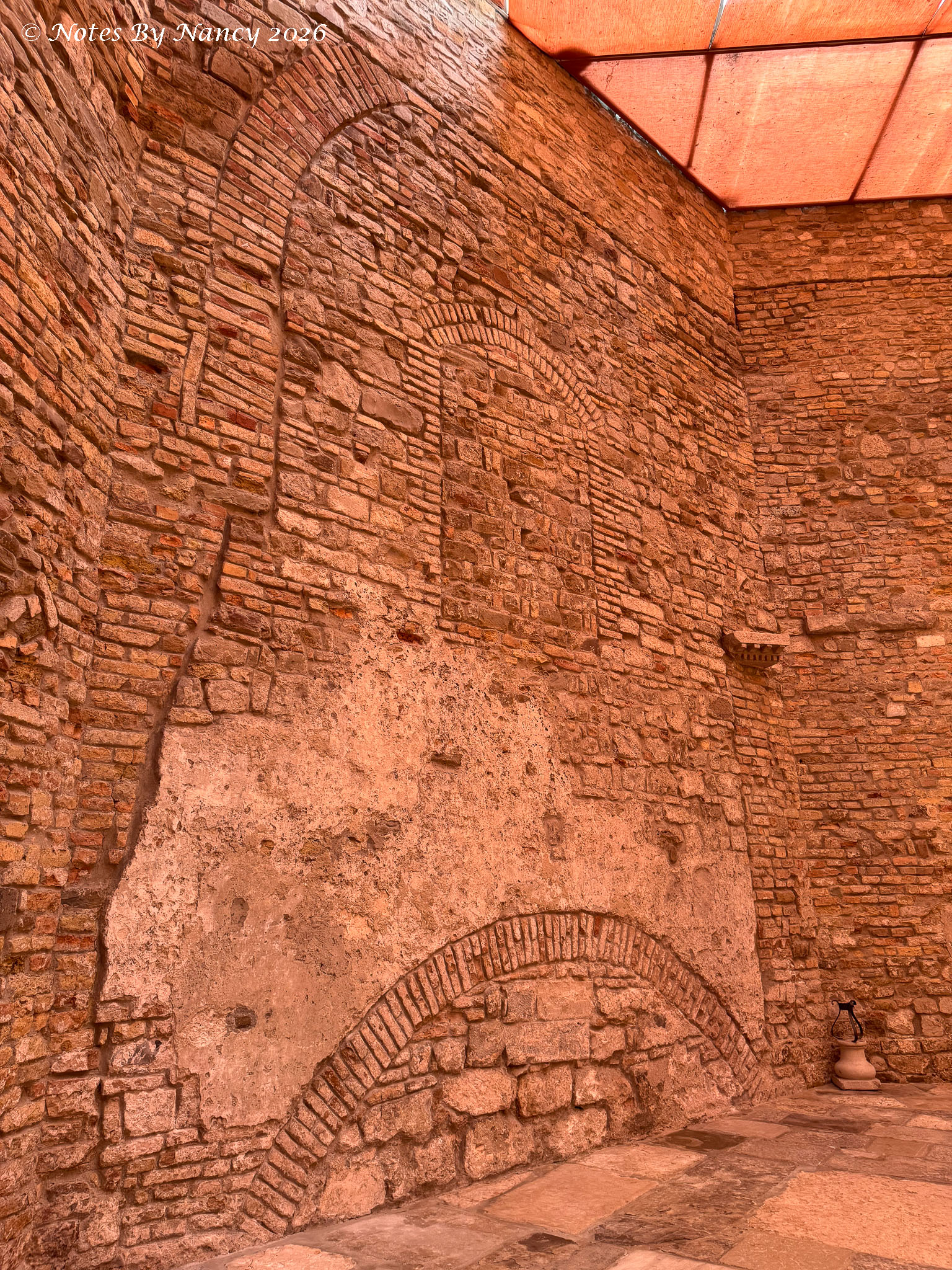
Late 4th Century to early 5th Century Baptistery
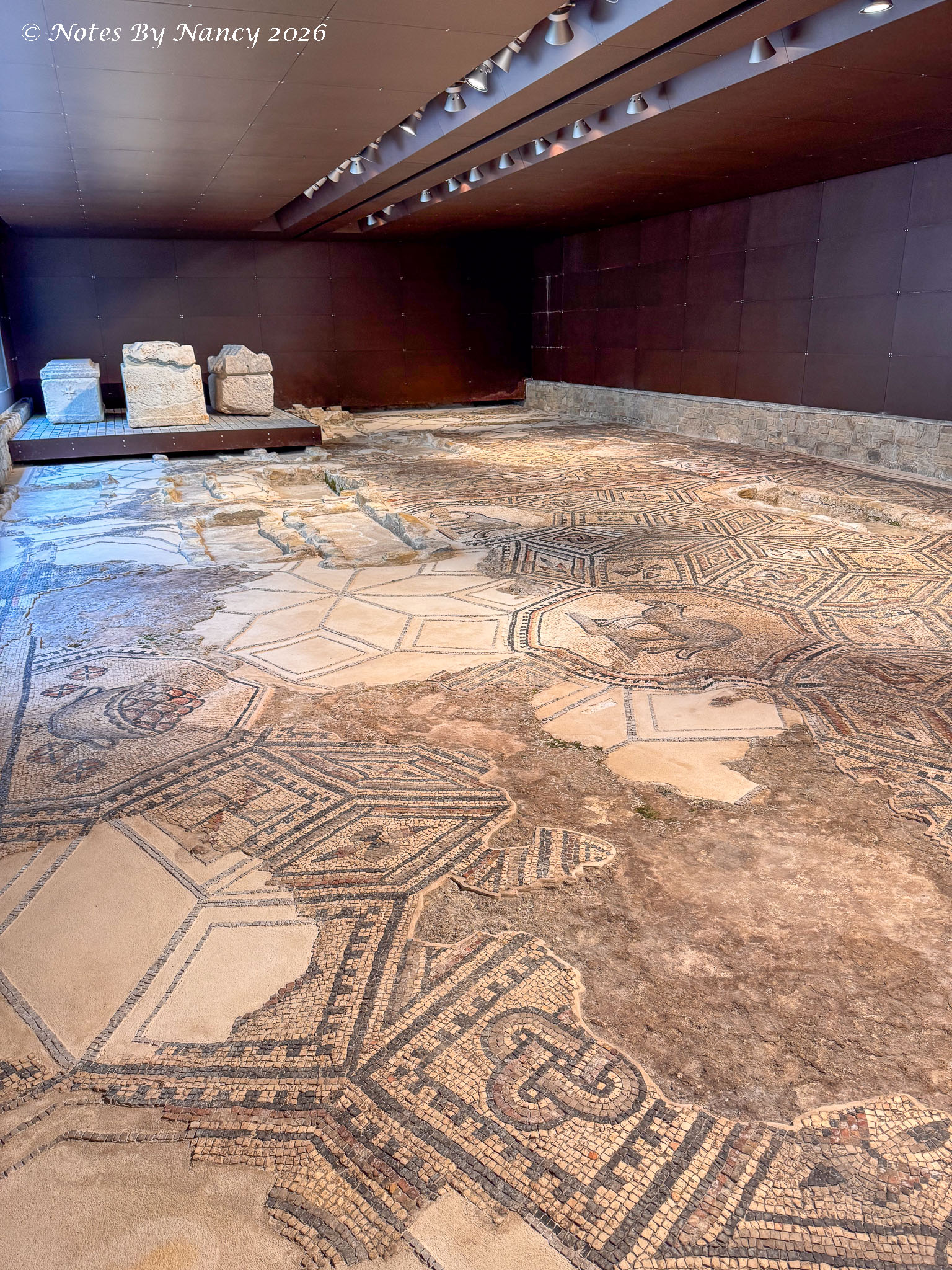
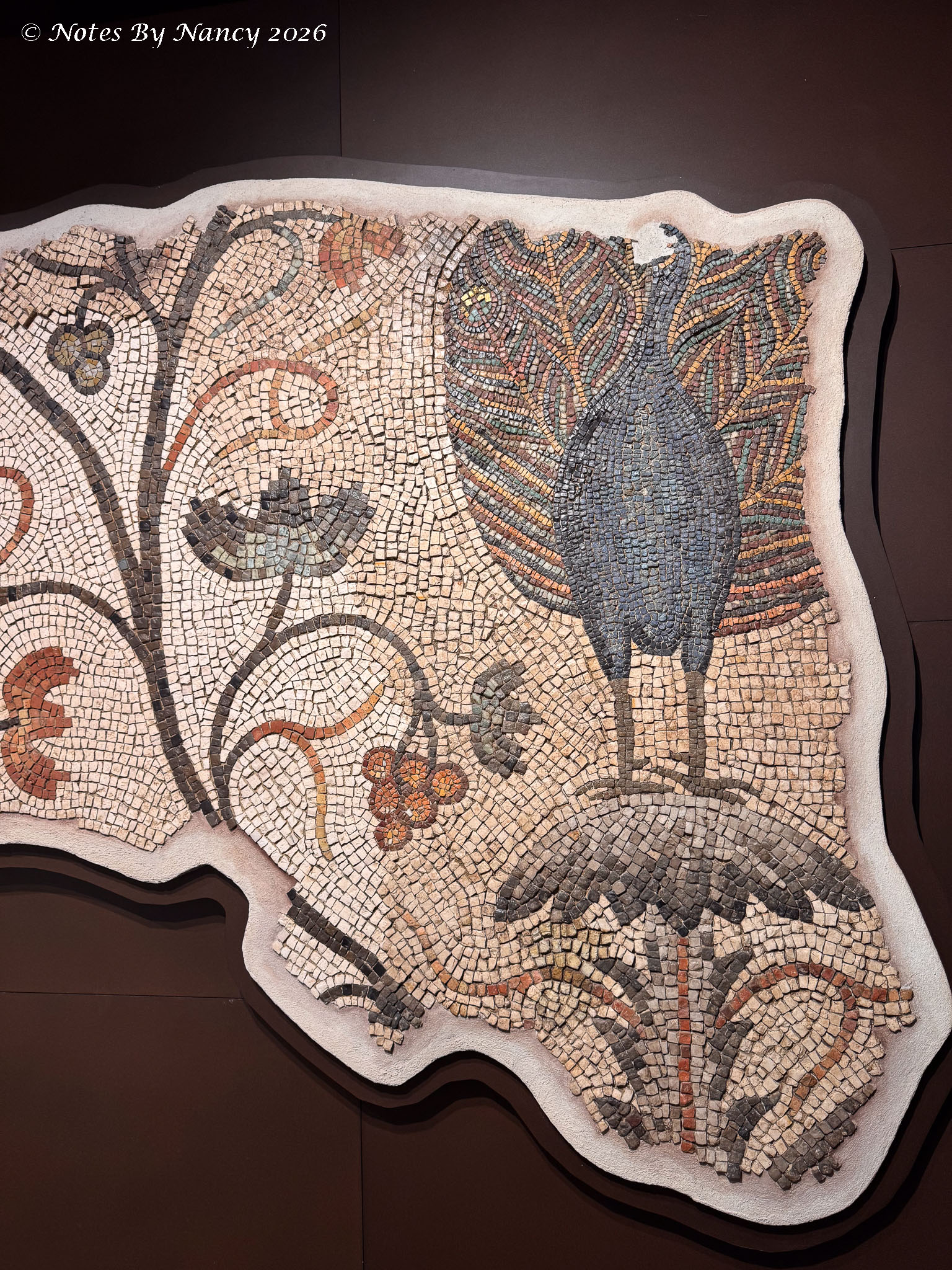
Mosaics in the Sudhalle – which is known for the peacock
A Slight Change of Plan
The Palmanova Outlet was to be our next stop. In my American mindset, I expected it to be a good place to find a restaurant for lunch and kill some more time. When Nenad asked us about why we were going there and we told him what we were thinking, he said unless we were planning to shop, he had a better recommendation for lunch in the town that was next on our stop list – Portogruaro. Our group aren’t shoppers – so we readily agreed that a meal in a restaurant where the locals eat was exactly what we wanted.
The drive was about 1.5 hours and we enjoyed taking in the countryside and overcast skies while talking to Nenad about his life in Italy. He brought us into the central part of the old town of Portogruaro and found a parking spot for the van near the narrow street on which the restaurant was located. He gave us the directions to the restaurant and pointed out key buildings in the area which we could visit after our meal before returning to meet him at the van. It was nice that we could leave everything in the van and not worry about it with him there to keep watch.
The only drawback to not having Nenad with us – we don’t speak Italian and the wait staff at the restaurant, Osteria Trattoria Ai Ciclisti (Restaurant to the Cyclists), spoke no or limited English! But, we still managed to order wonderful food and wine (thanks to Google Translate).
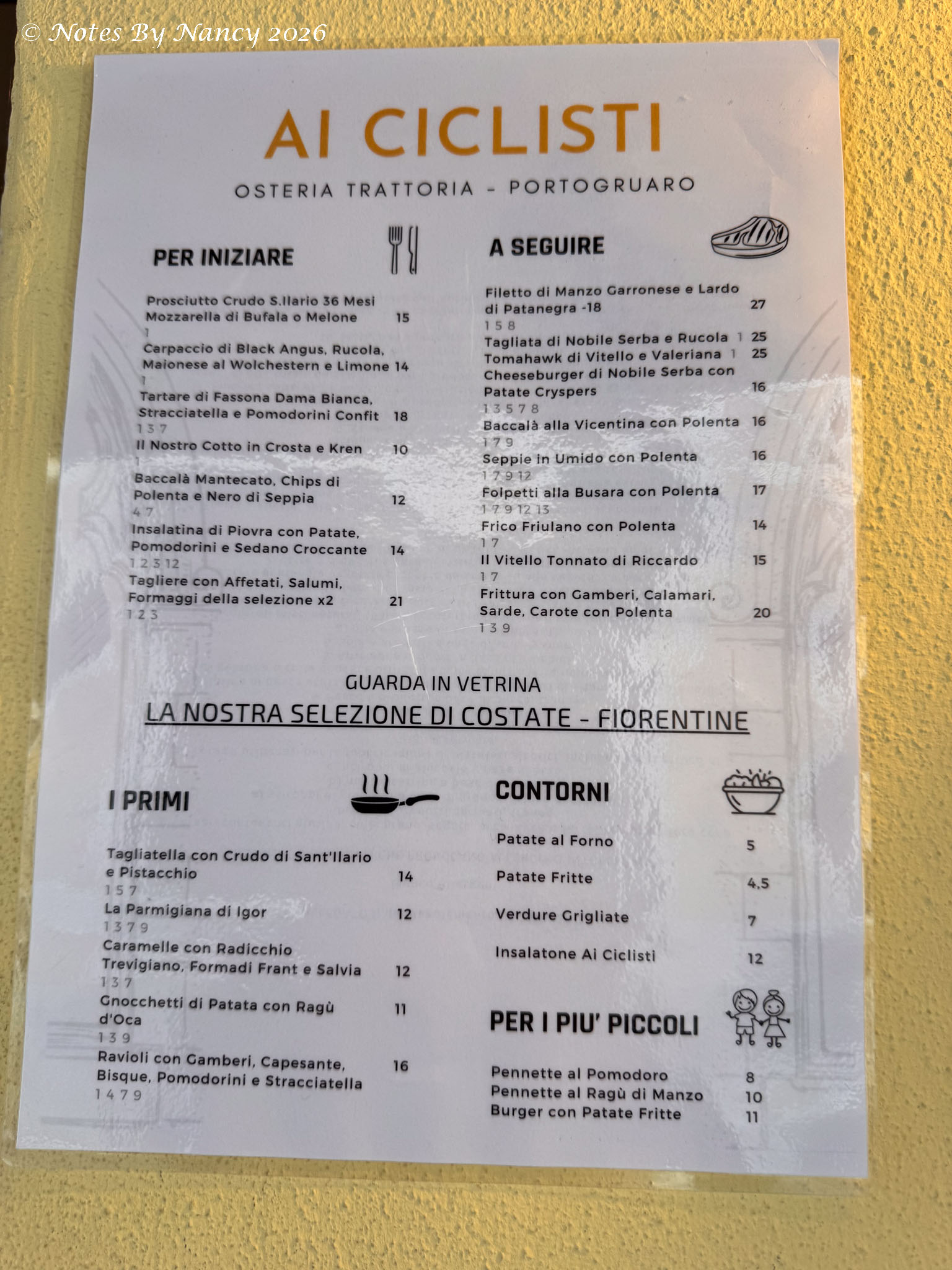
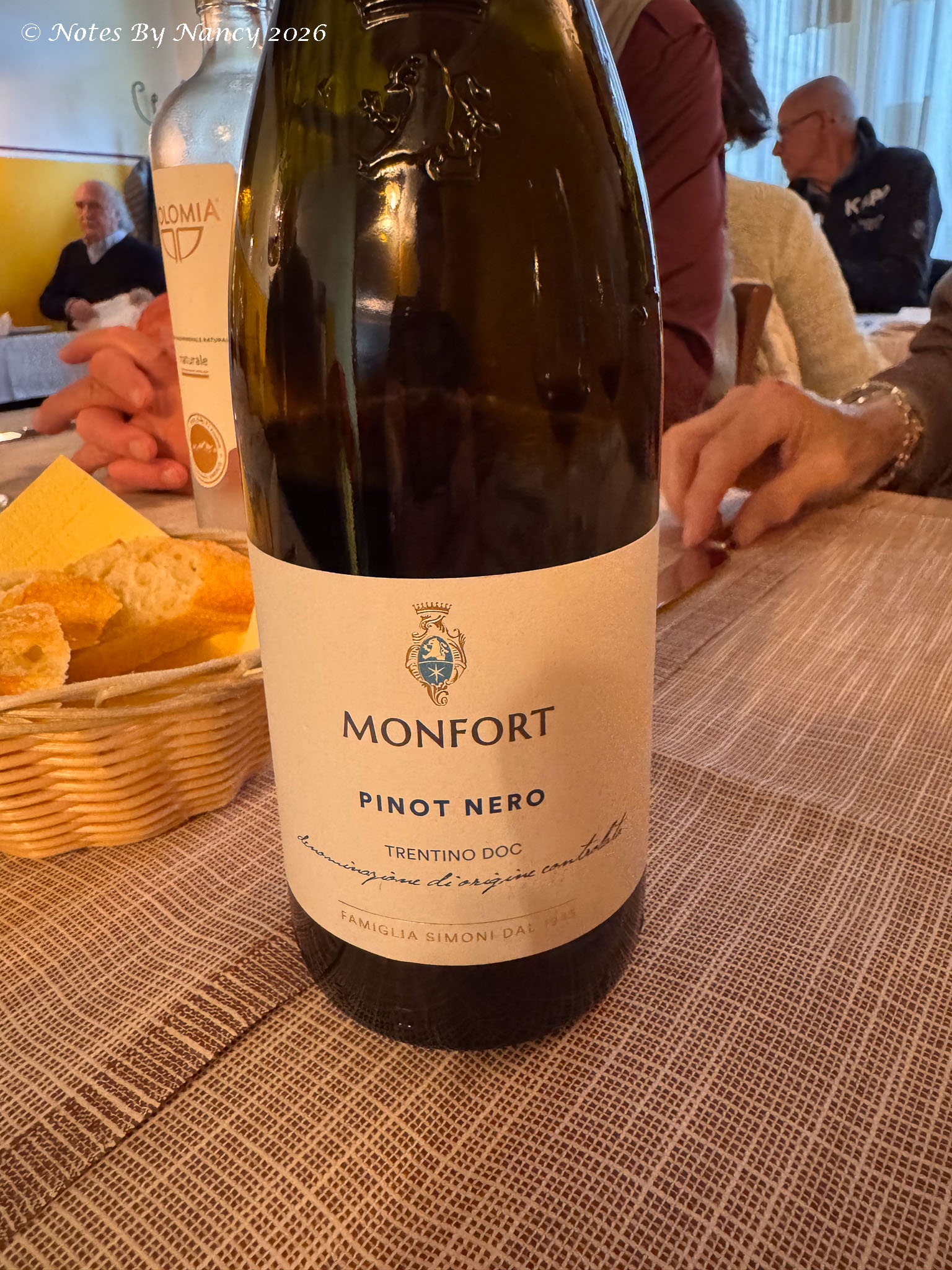
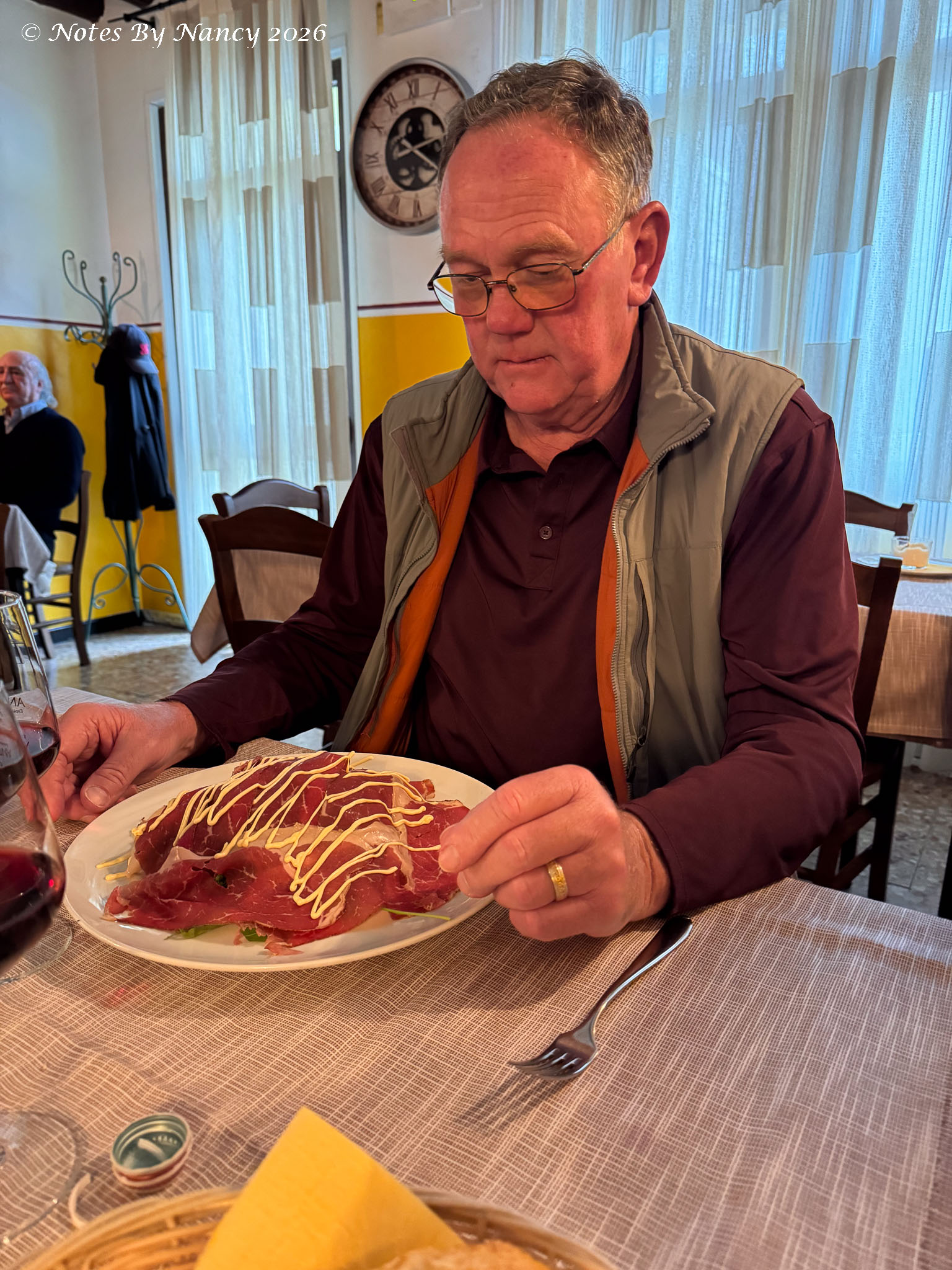
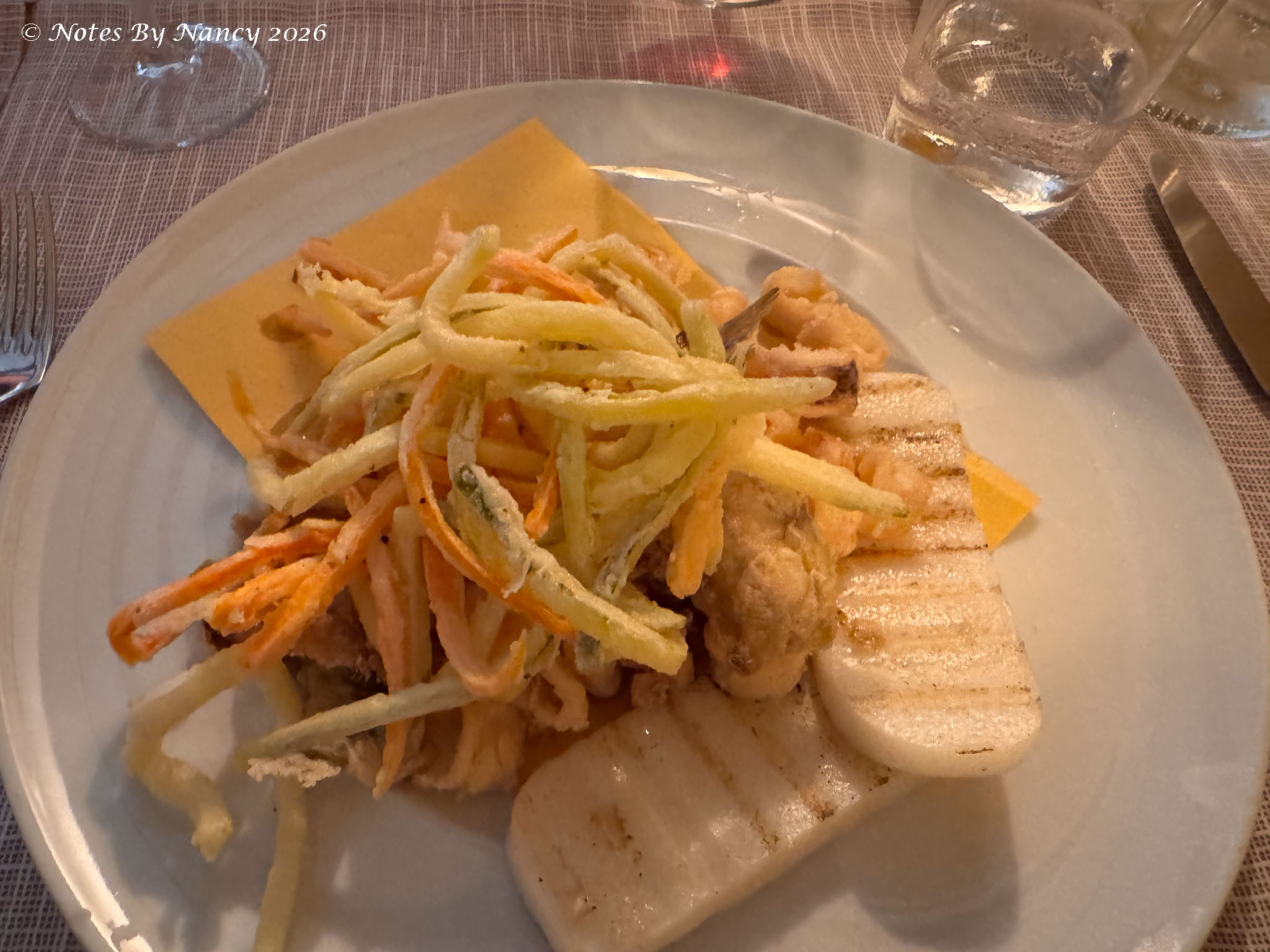
Keith’s beef carpaccio was a little bigger than he was expecting and we all had a good laugh – especially when we realized there was a HUGE pile of lettuce underneath it all! Dave and I both ordered the fried shrimp, calamari, sardines (yuck!), and carrots with polenta. Didn’t realize the carrots were going to be fried as well – but it was all delicious – except the sardines, but they were minimal!
After all that food, we were definitely in need of a walk around the town founded in the 12th century on the banks of the Lemene River connecting it to the Adriatic Sea.
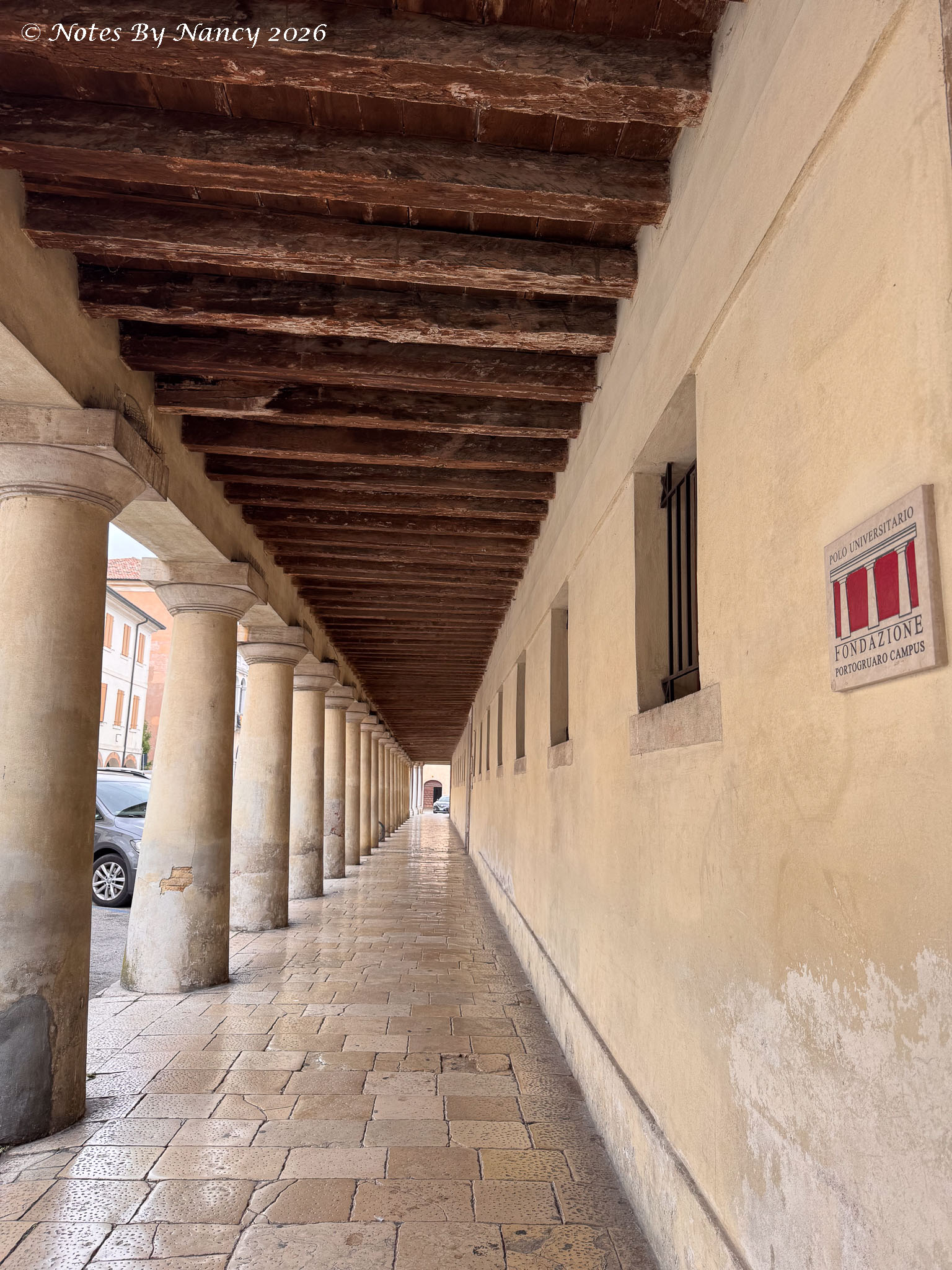
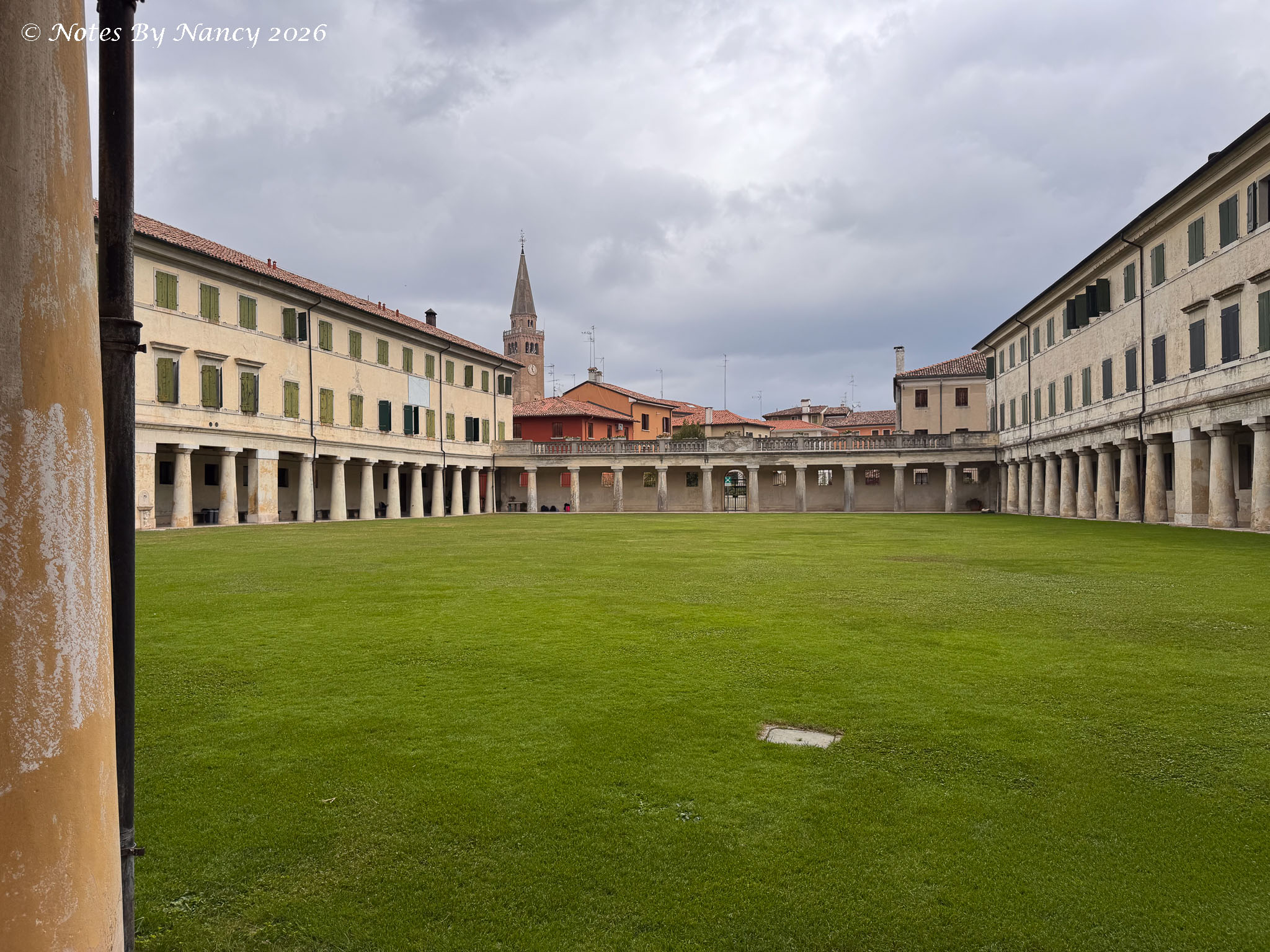
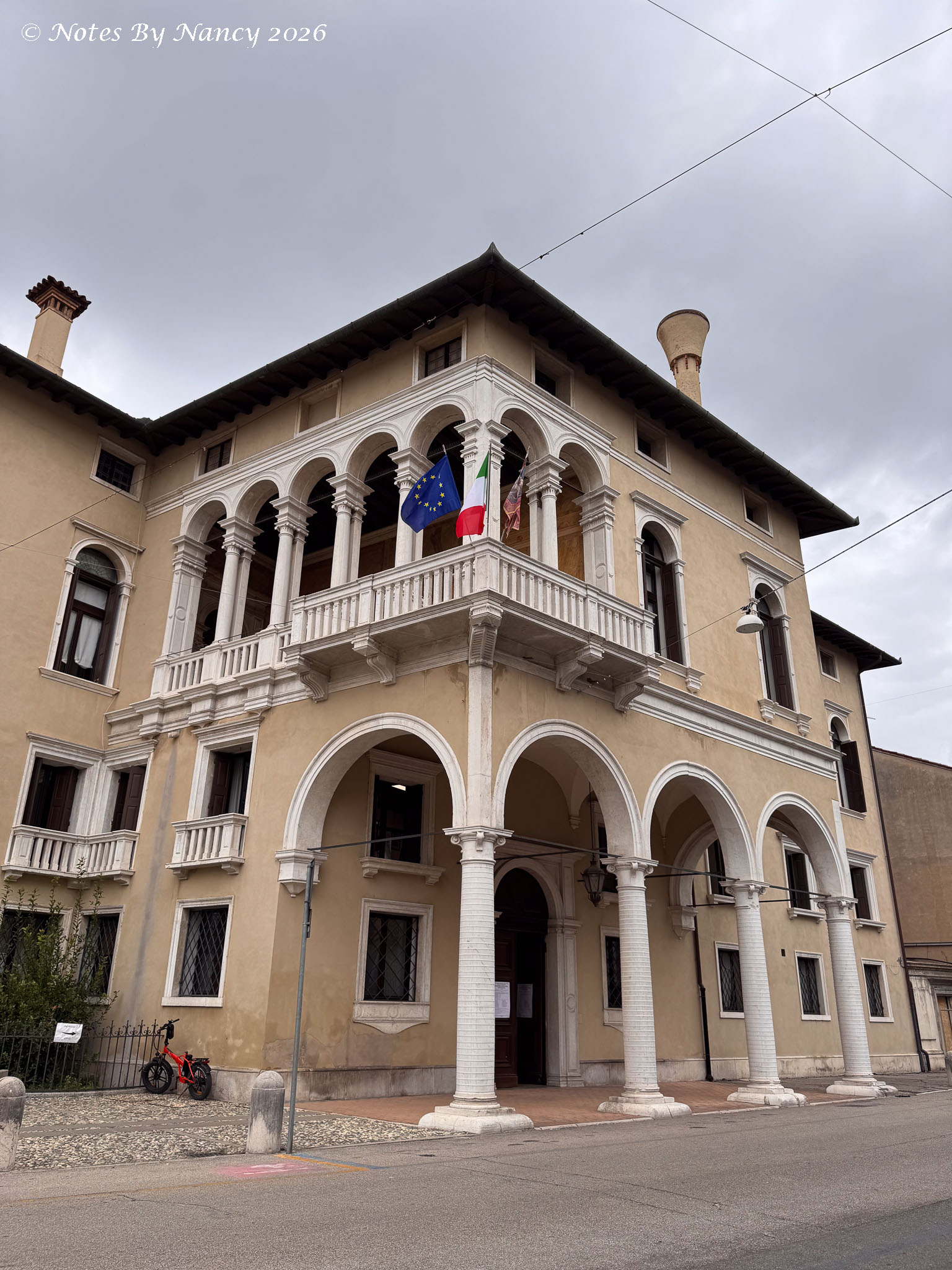
Portogruaro – University (left and center); Registry Office (right)
It seems that Pisa isn’t the only Italian town with a leaning campanile (bell tower)! There is a steel support bar which I suppose is keeping the 12th century tower from crashing into the cathedral? They actually added onto it in the 1800s to make it taller – even though it was already off-kilter!
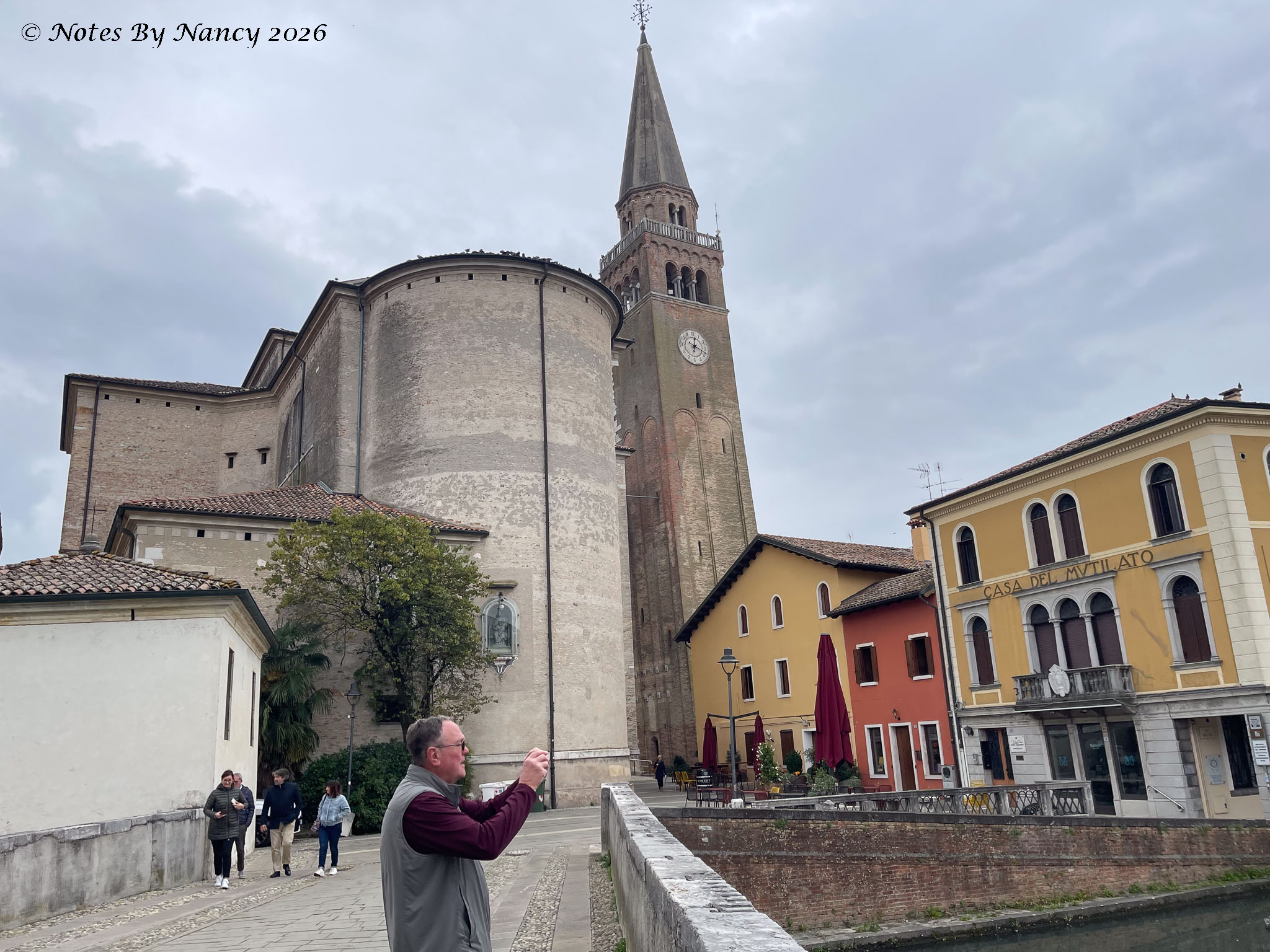
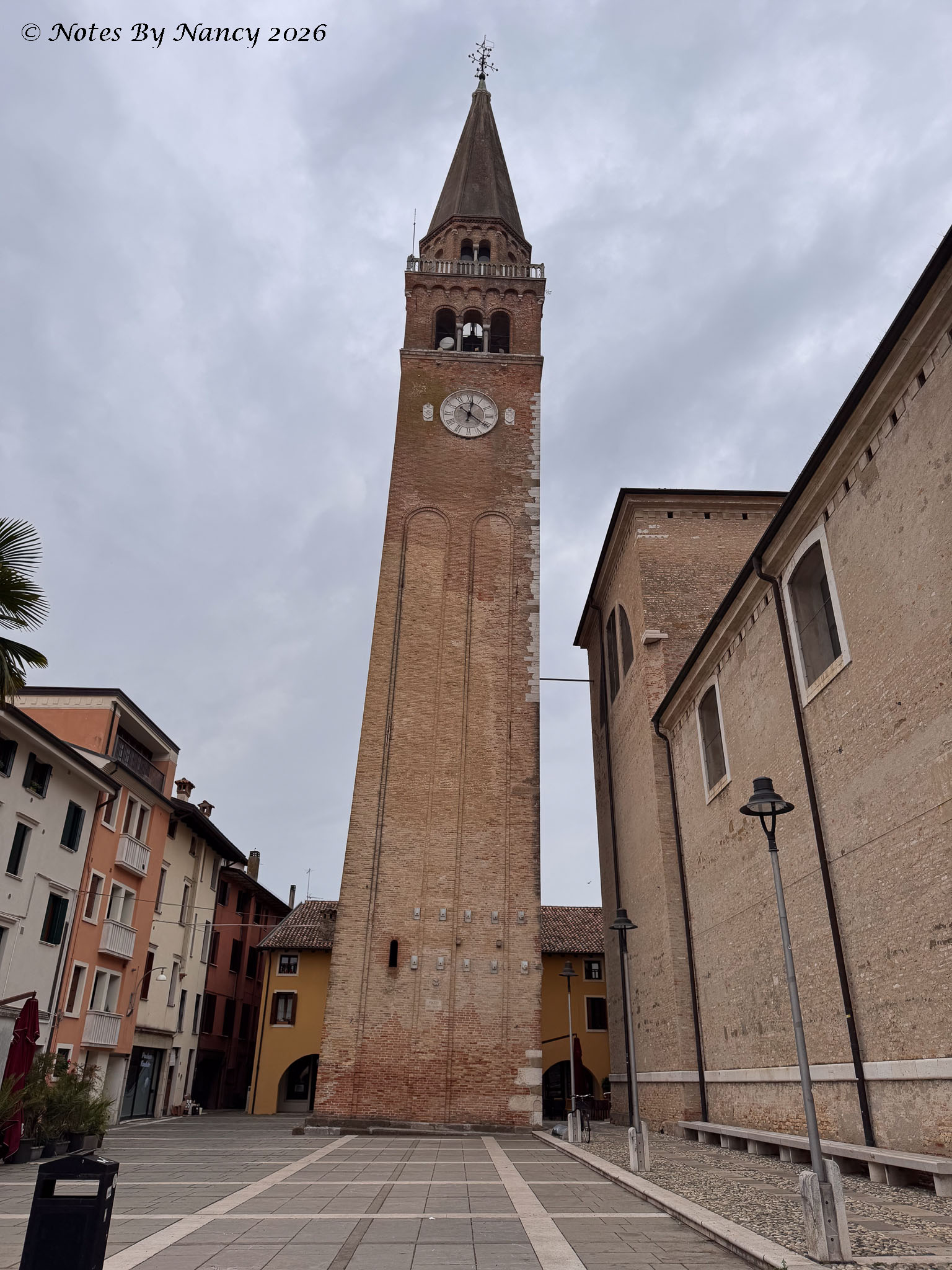
Portogruaro – Duomo and Bell Tower from Via Roma Bridge (left); Bell Tower from Piazza Duomo (right)
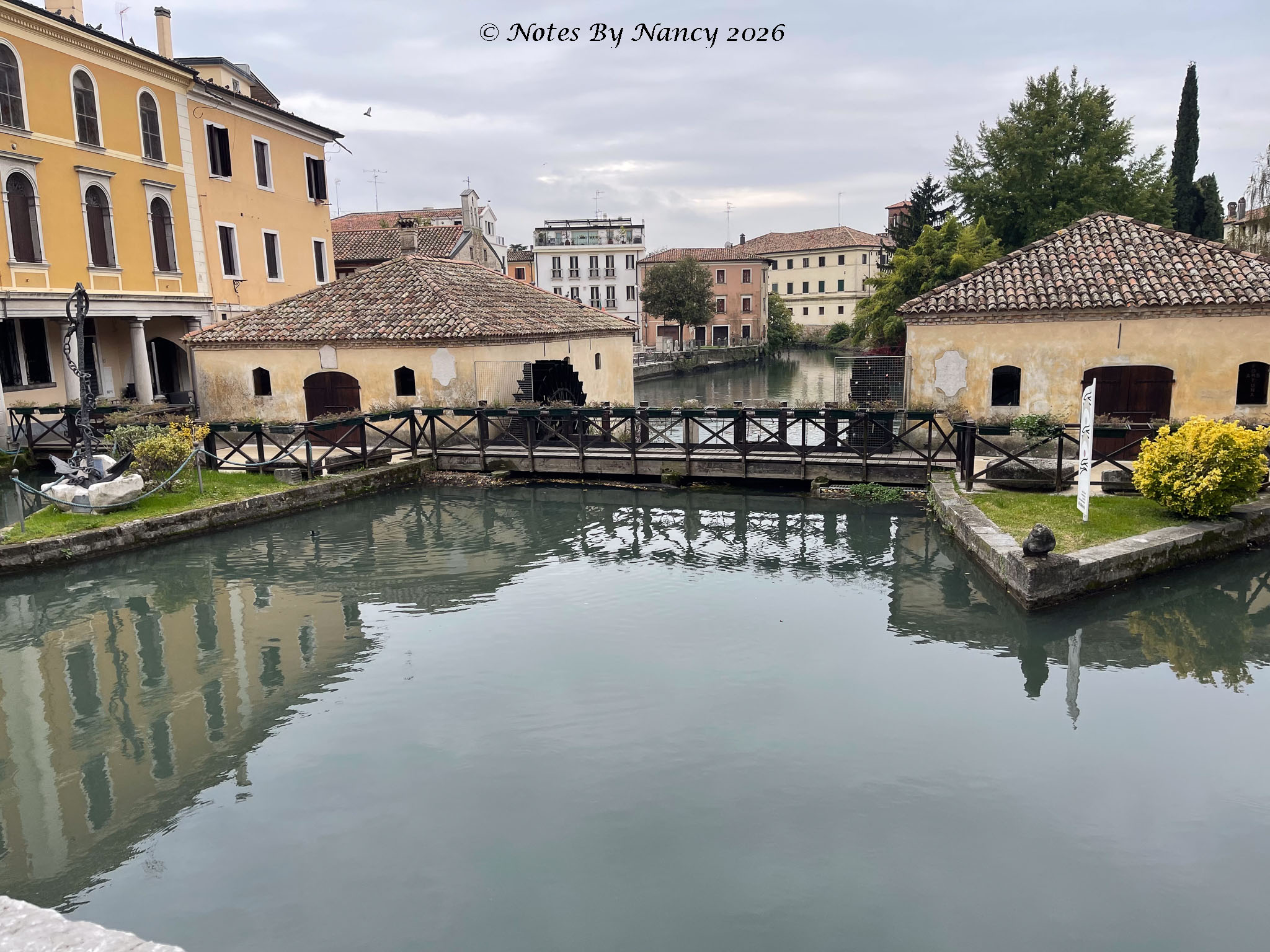
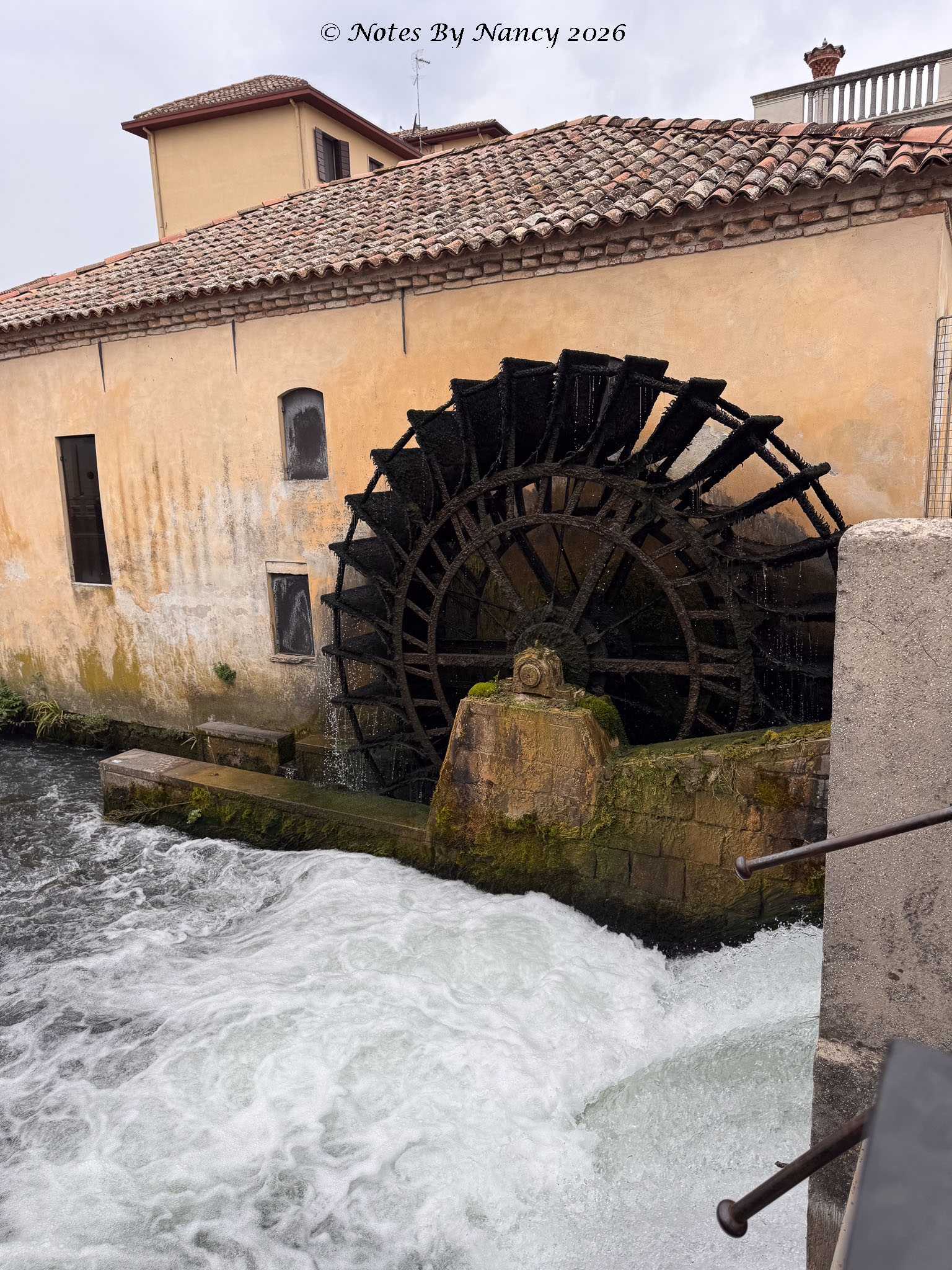
Portogruaro – Mills of Sant’Andrea on the Lemene River
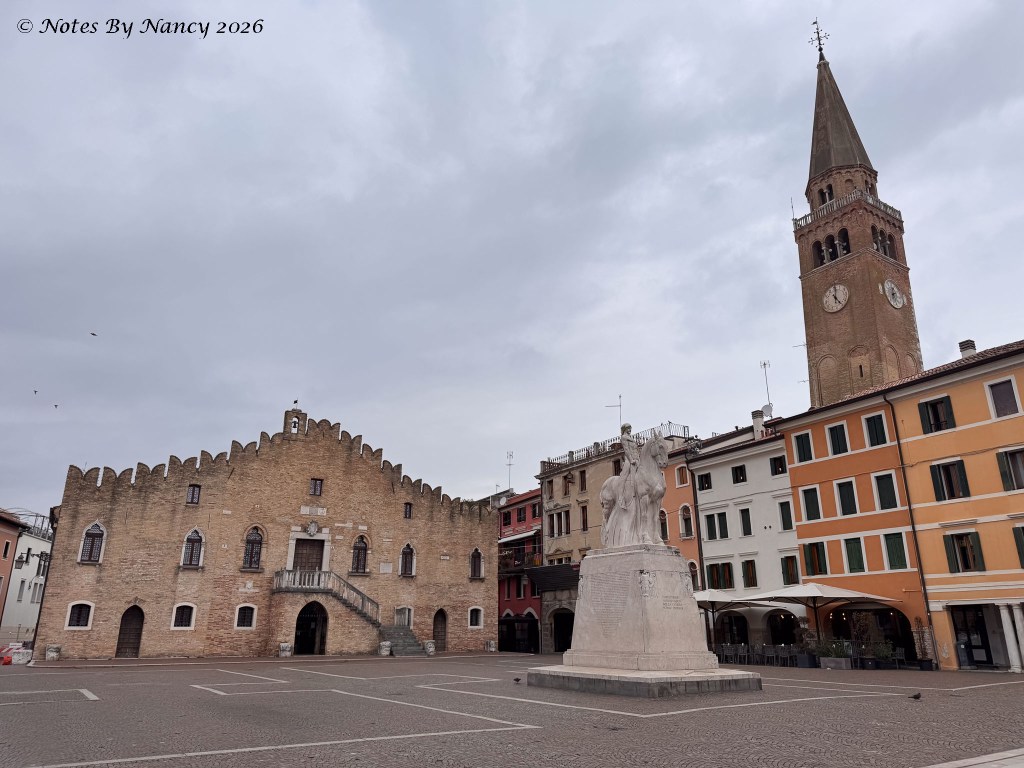
Portogruaro Town Hall and War Memorial from Republic Square
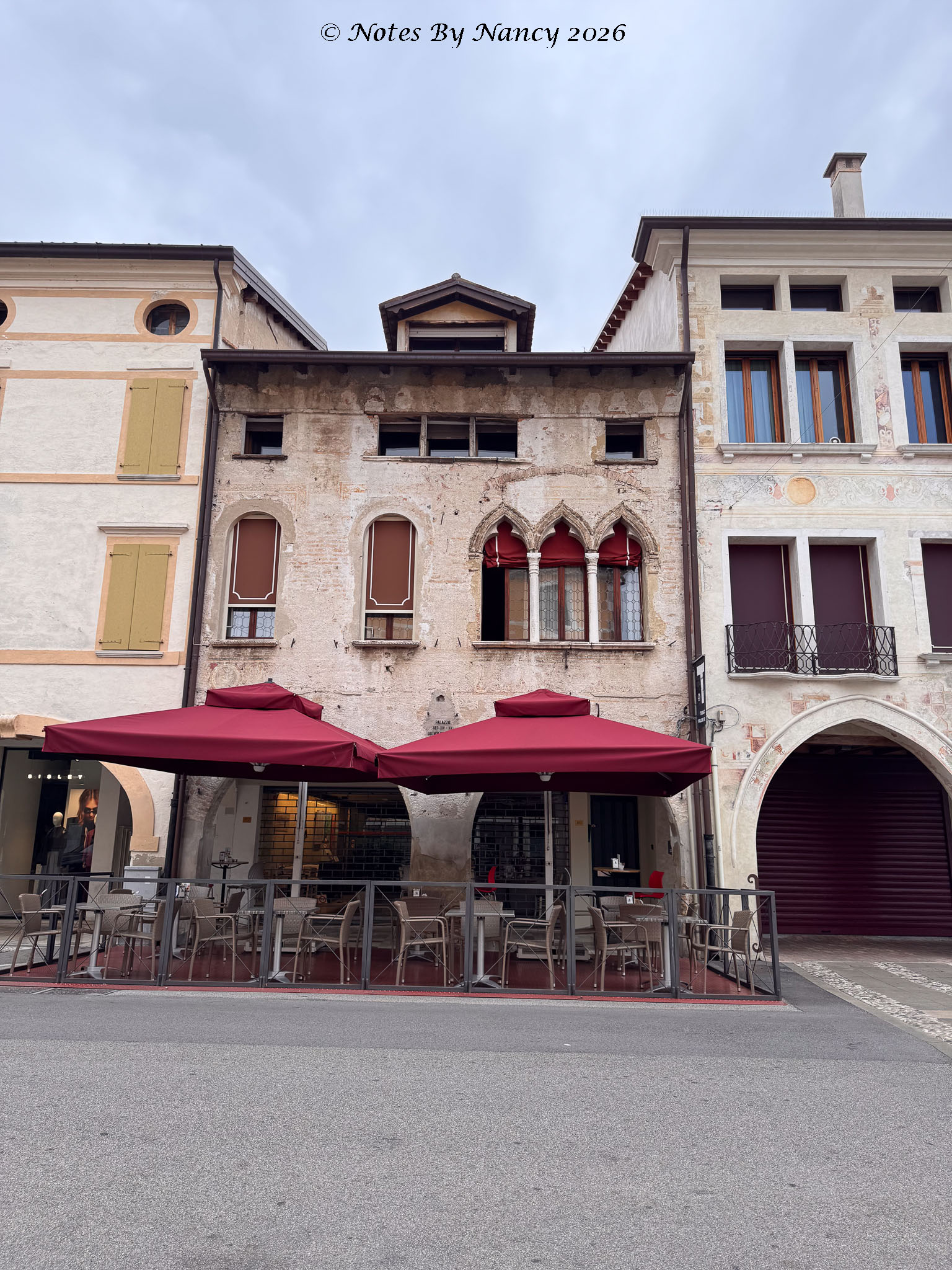
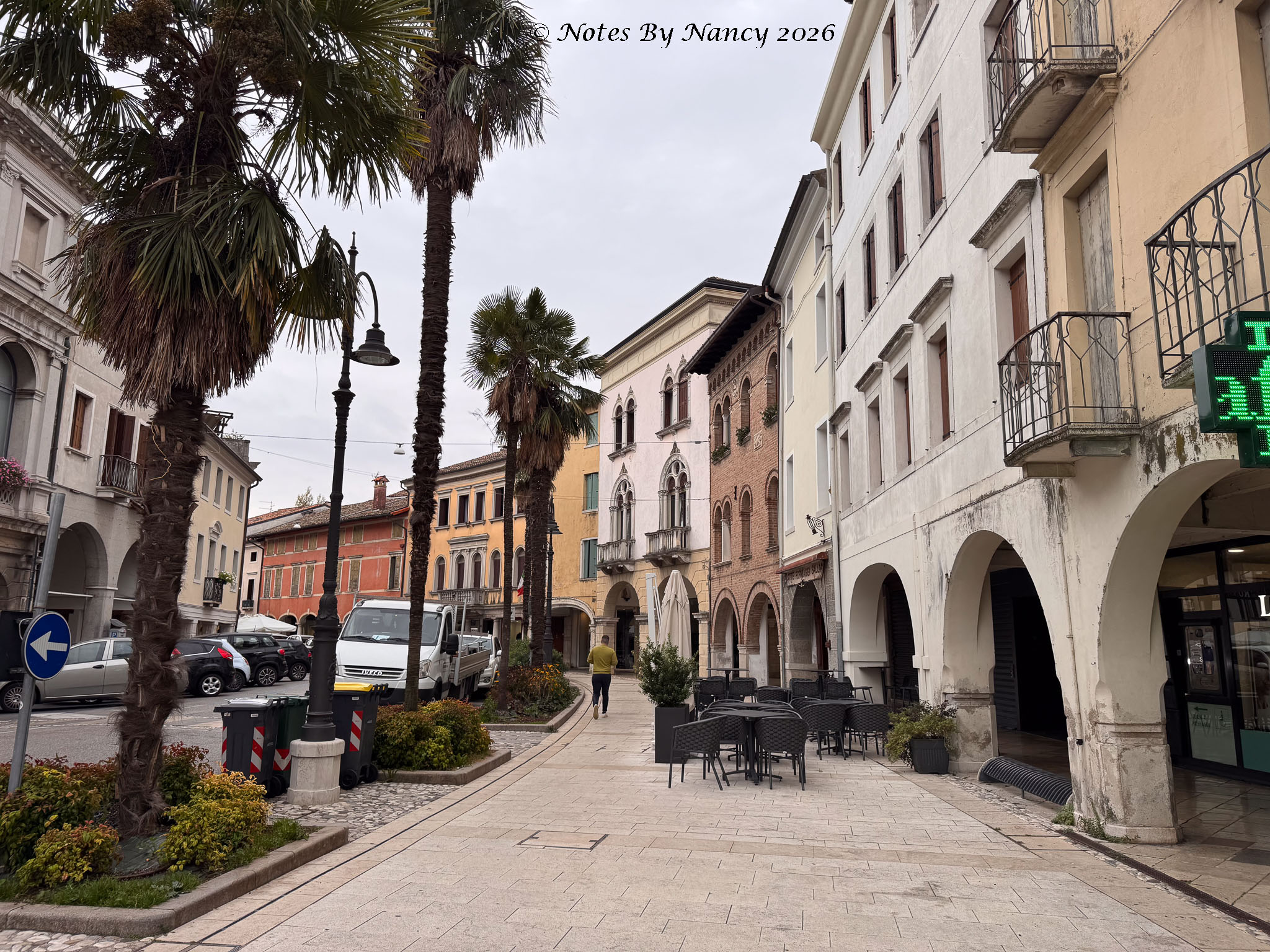
Portogruaro – Along the Corso Martiri della Libertà (Martyrs of Freedom Course)
With it being the off season for tourists and a cloudy, cool day, the squares and streets were almost empty – making it actually a great day for a visit. But even though Portogruaro is only about 50 kilometers (30 miles) from Venice, I suspect it doesn’t usually see those types of crowds making it a nice place to see how the locals live in these “old” Italian towns. Nenad’s recommendation to come here to eat and have more time to explore this town was perfect for us!
End of Our Time in Italy, For Now
After our exploration of Portogruaro, we made our way back to the van and headed towards the airport, dropping Keith and Paula off at their hotel on the way. At the airport, Dave and I said goodbye to Nenad and wished him safe travels back home. Check-in went quickly as we verified that we would not see our checked bags again until Houston. We then found our way to the Business Class Lounge to wait for our Turkish Air flight to Istanbul.
That flight went smoothly. We landed in Istanbul near midnight and walked through the massive airport to the in-airport hotel where we had a reservation. The room was spartan, but we got a decent night’s rest following our long day.
We ate at the hotel’s buffet breakfast the next morning before checking out and heading to the business lounge to wait for our 2pm non-stop flight to Houston. The 13-hour flight got us into Houston around 7pm Houston time. We cleared immigration, found our checked bags and headed home completing another great trip to reflect upon.
I can’t believe it’s taken me so long to get these final posts done (now February 1) for a trip from last October! I may or may not get a final wrap-up post done – who knows? Because now, we are prepping for another trip to Italy at the end of the month. No cruise this time, but a 10-day land trip which I’ll post more about soon.

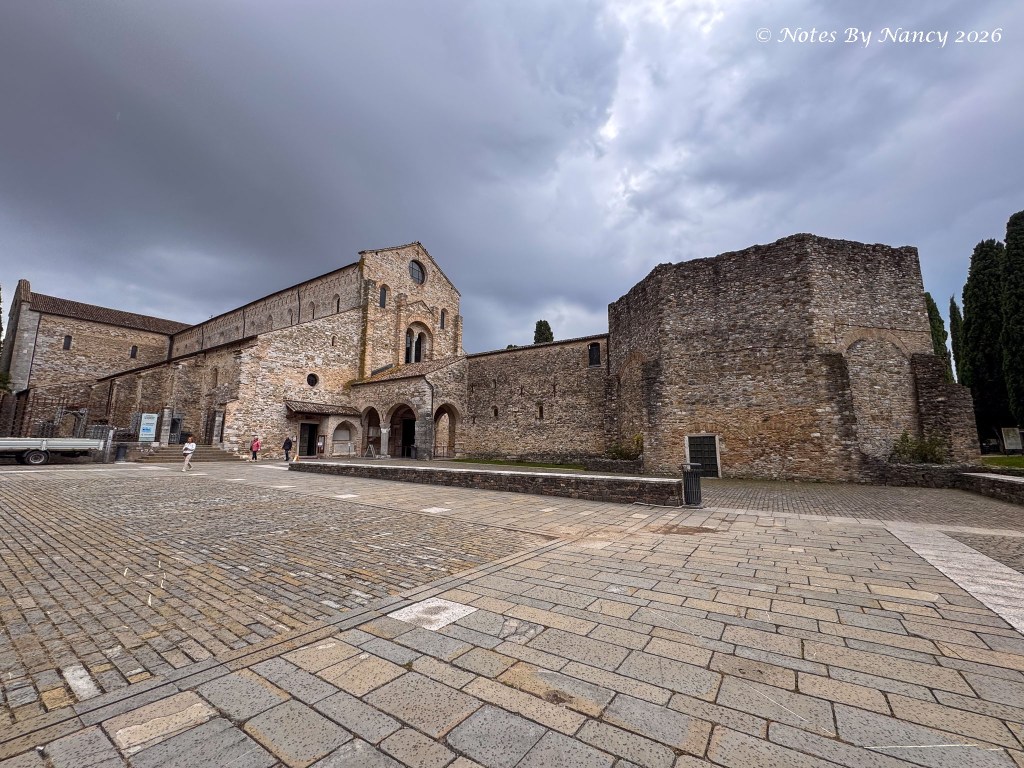
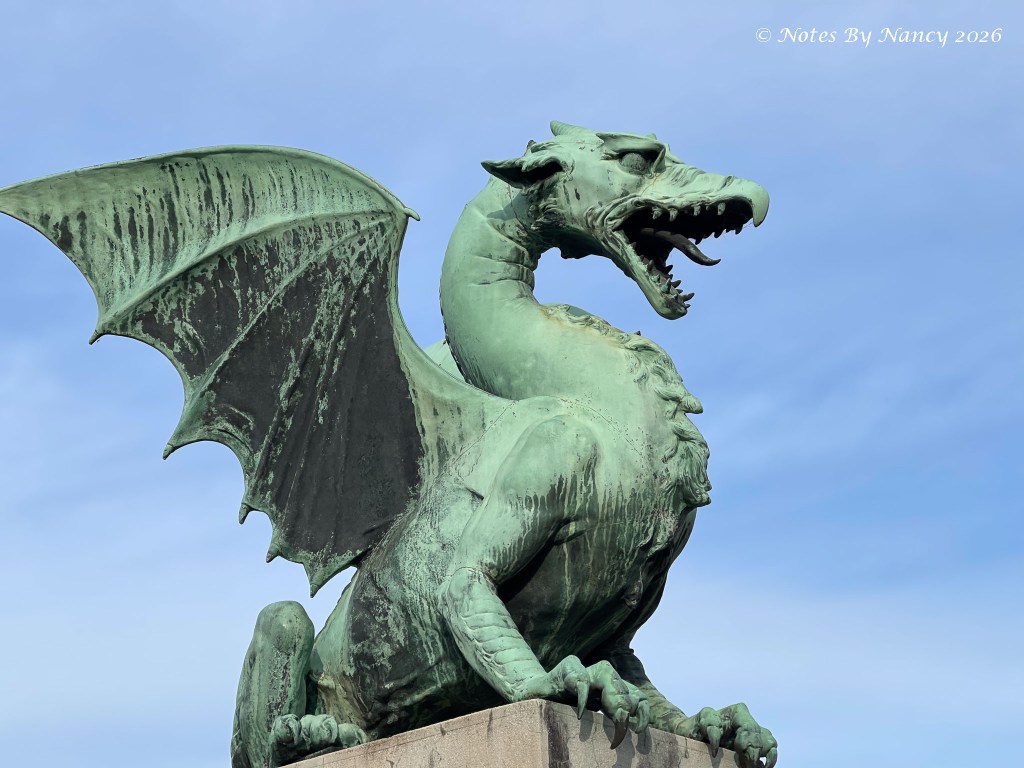
 Notes By Nancy
Leave a comment