
We are now on Day 9 of our adventure and today’s plan is to explore Yellowstone from Madison Junction northward to Mammoth to see the fifth hydrothermal feature of Yellowstone – travertine terraces. This section of road is what is also referred to as the Upper Loop of the Grand Loop, but we are just covering this one western part.
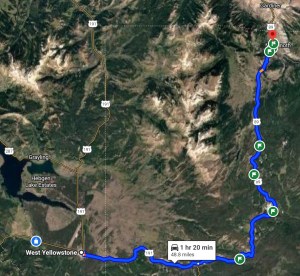
This section of road is what is also referred to as the Upper Loop of the Grand Loop, but we are just covering this one western part.
Gibbon Falls
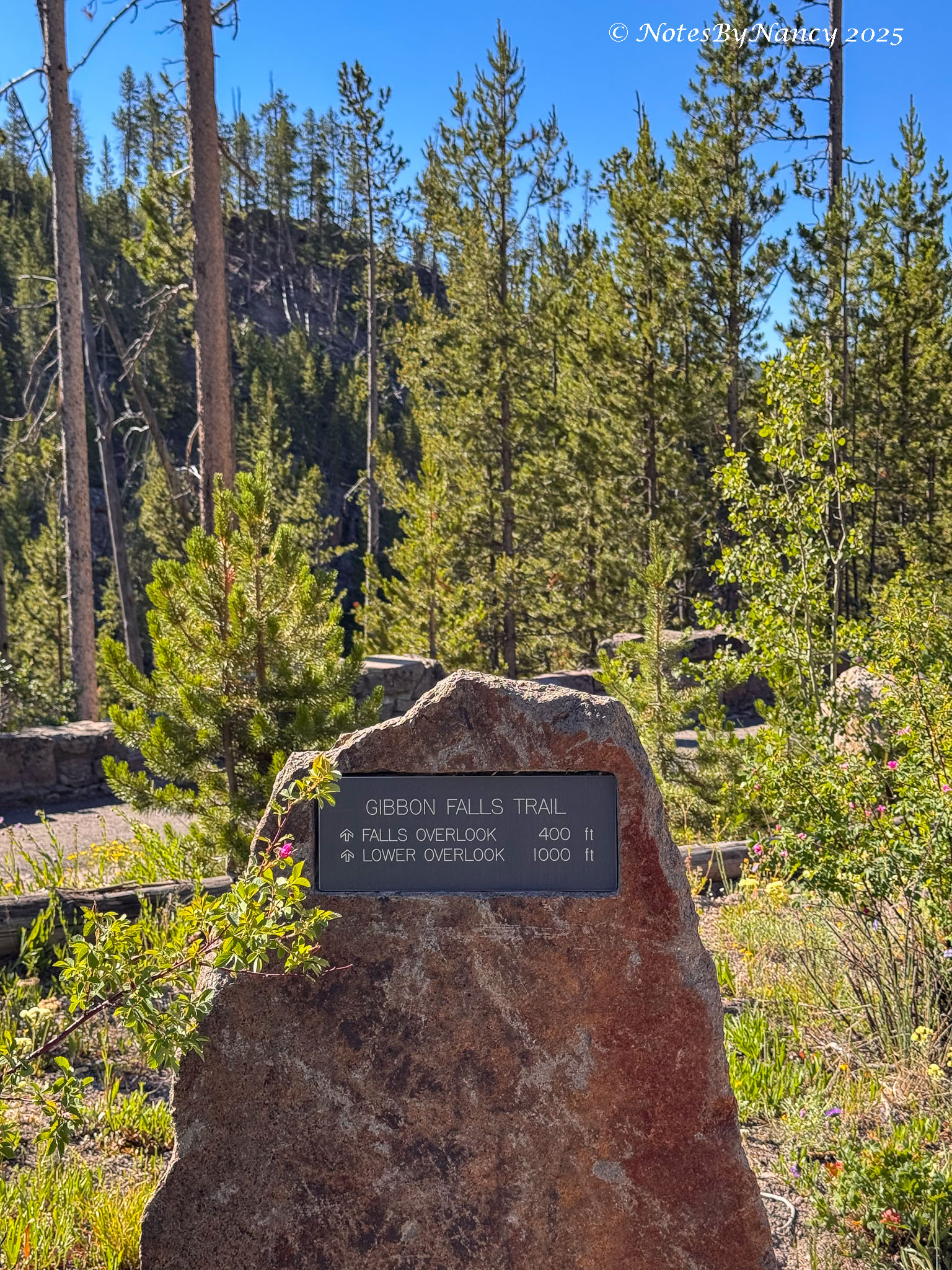
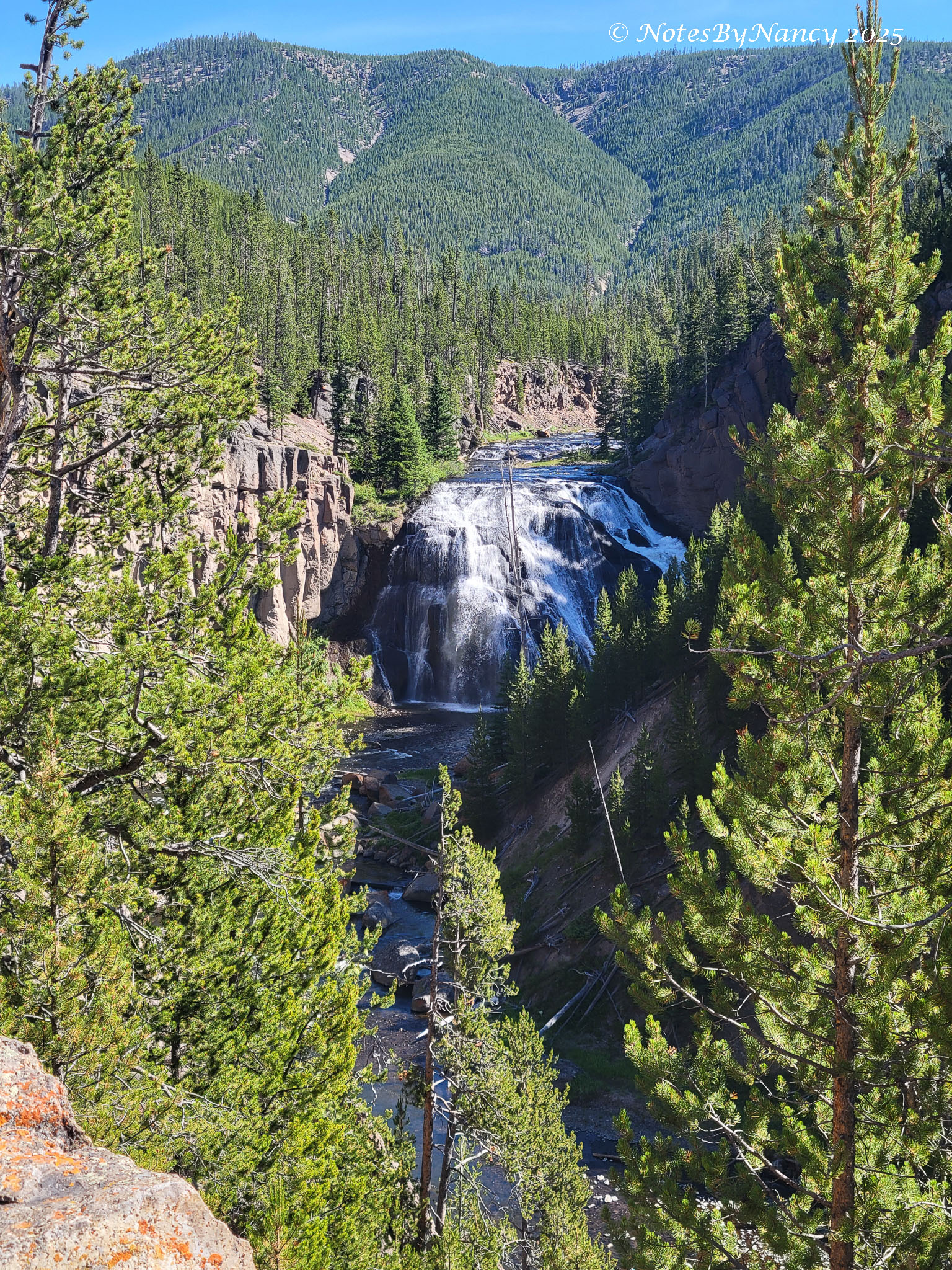
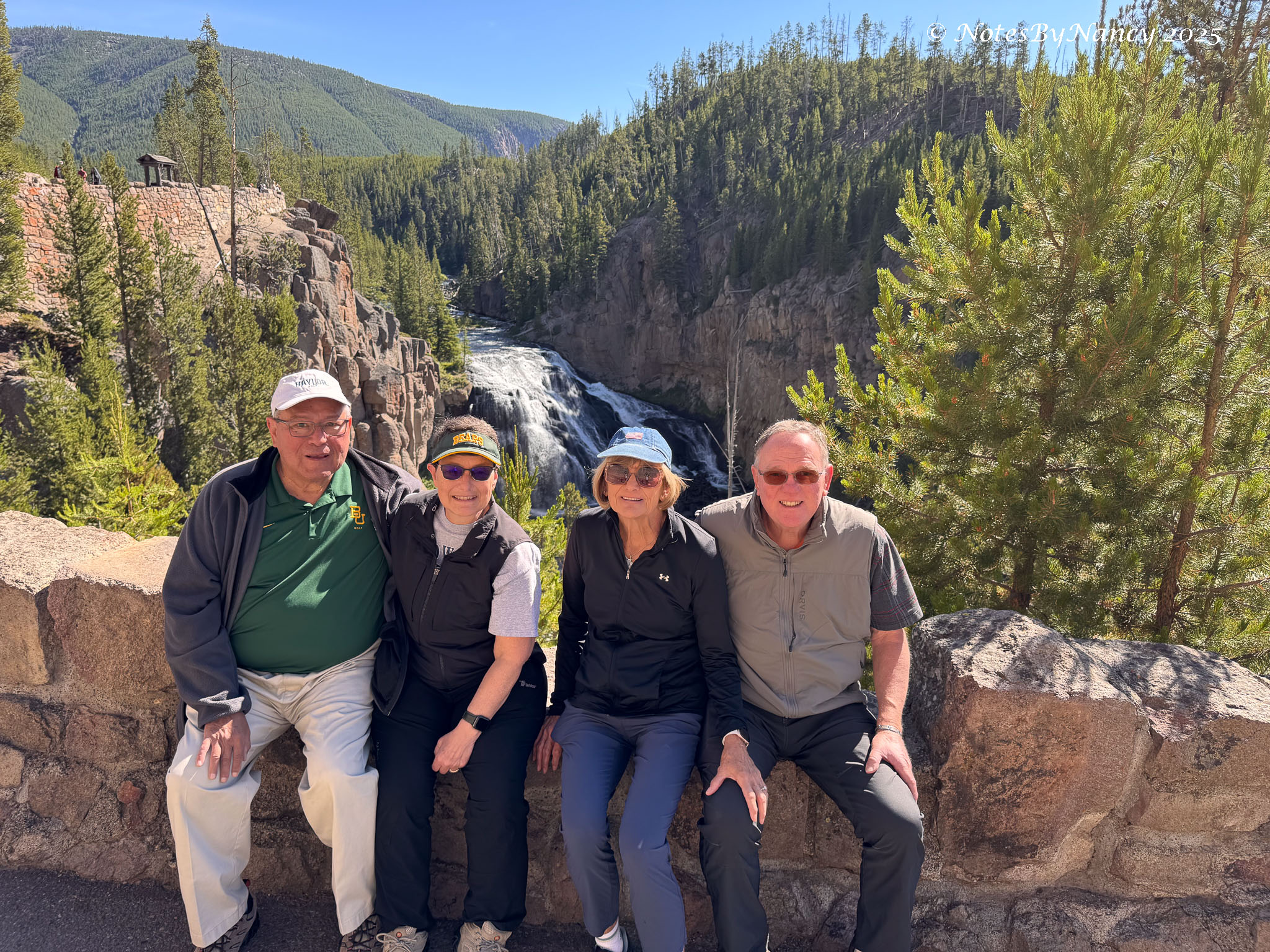
Our first stop was Gibbon Falls. There is an easily accessible pullout and walk to views of the 84-foot waterfall on the Gibbon River about 4.5 miles from where it flows into the Madison River.
Norris Geyser Basin
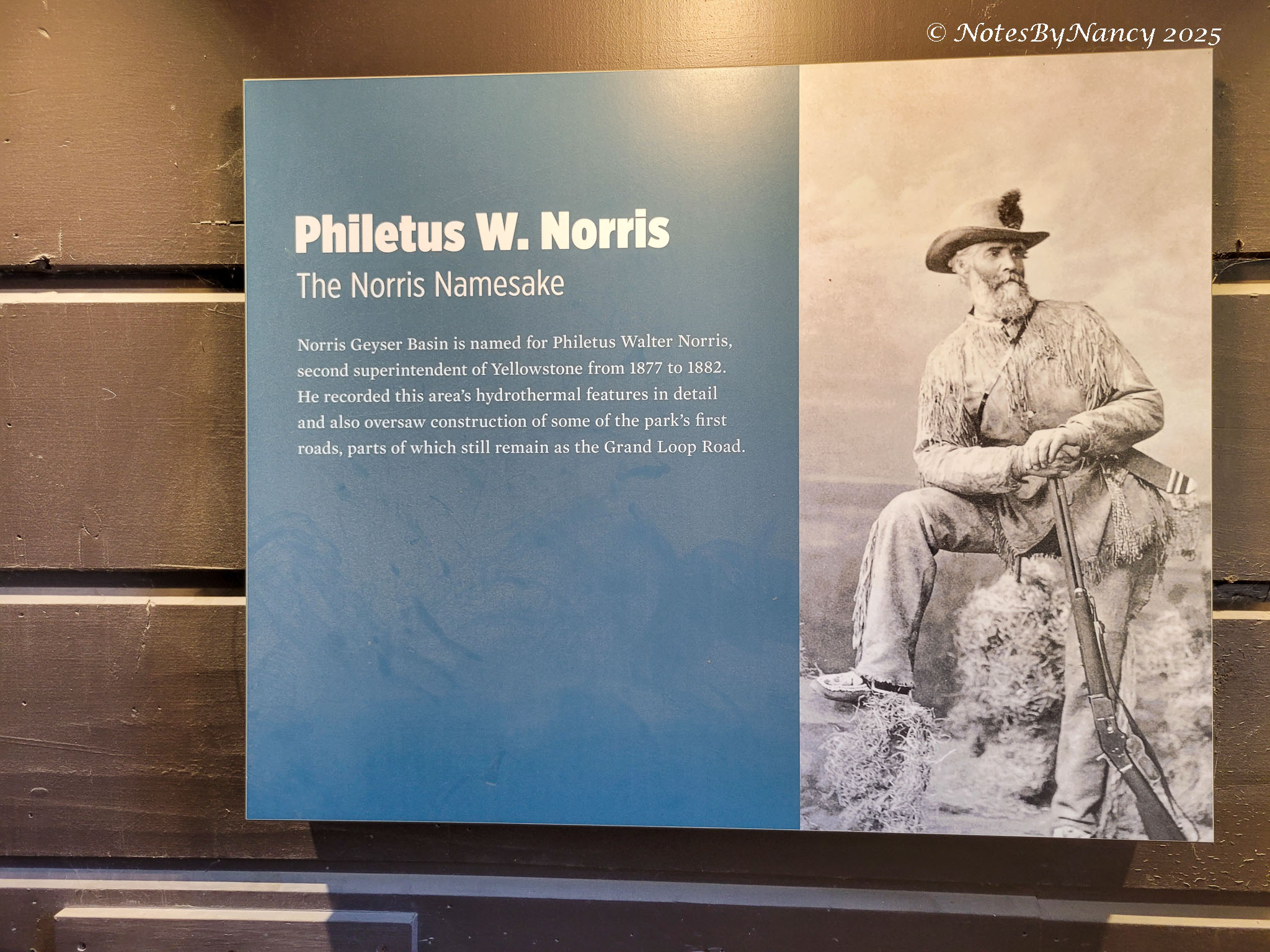
Nine miles from Gibbon Falls is the Norris Geyser Basin. Named for the second superintendent of Yellowstone, this basin is known as the oldest thermal area (approximately 115,000 years old), hottest (a record 459°F (237°C) just 1,087 feet (326 meters) below the surface), most acidic (some features < 2.5 pH) and most dynamic area of the park (a new hot spring was discovered in April 2025).
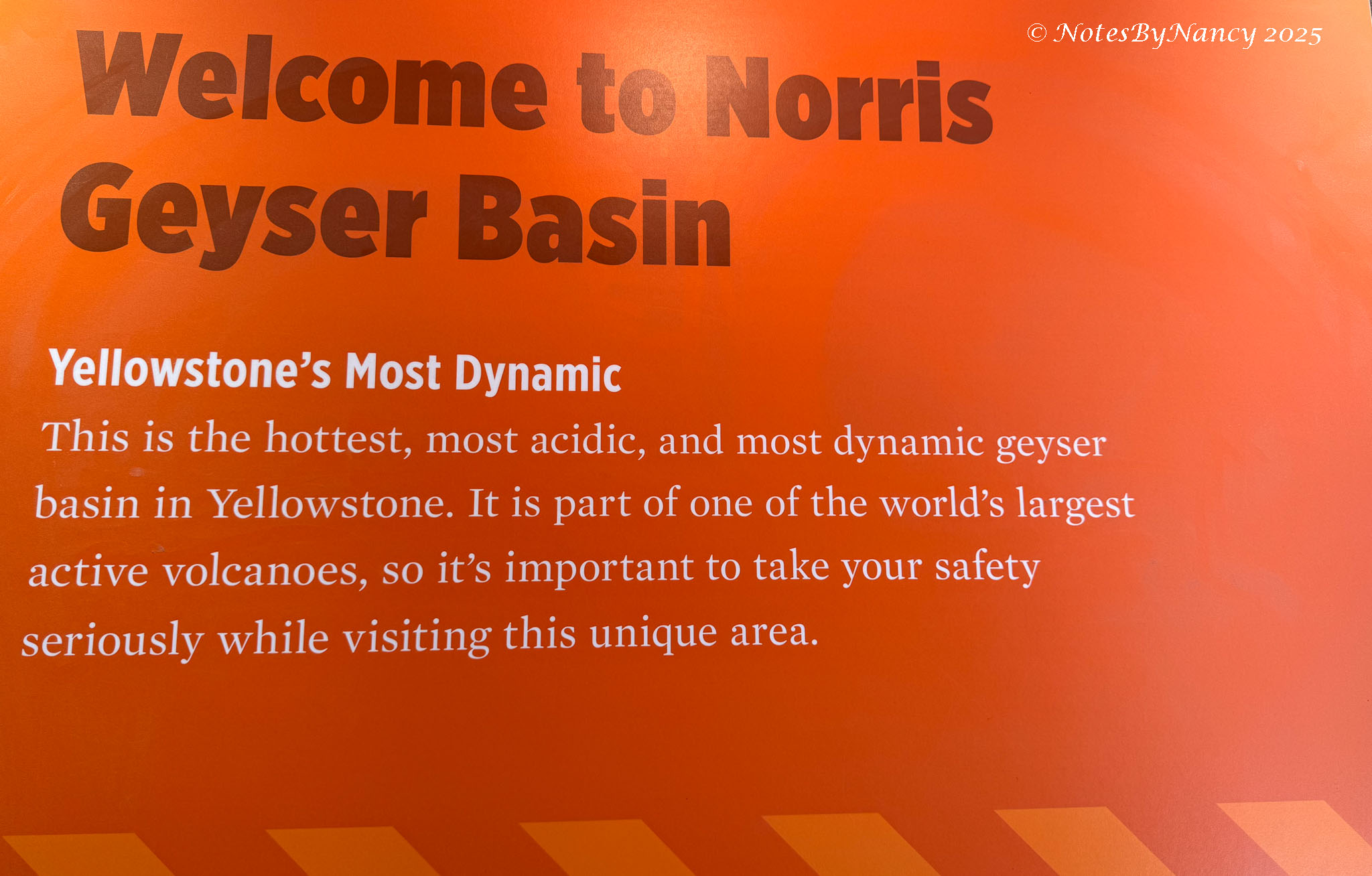
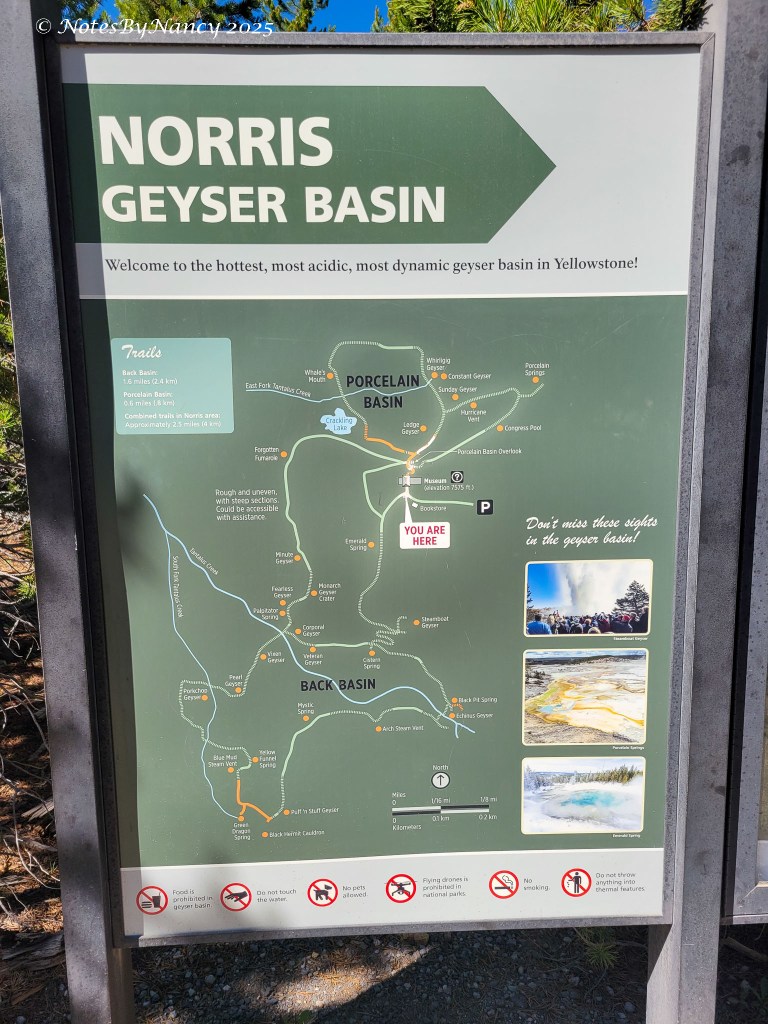
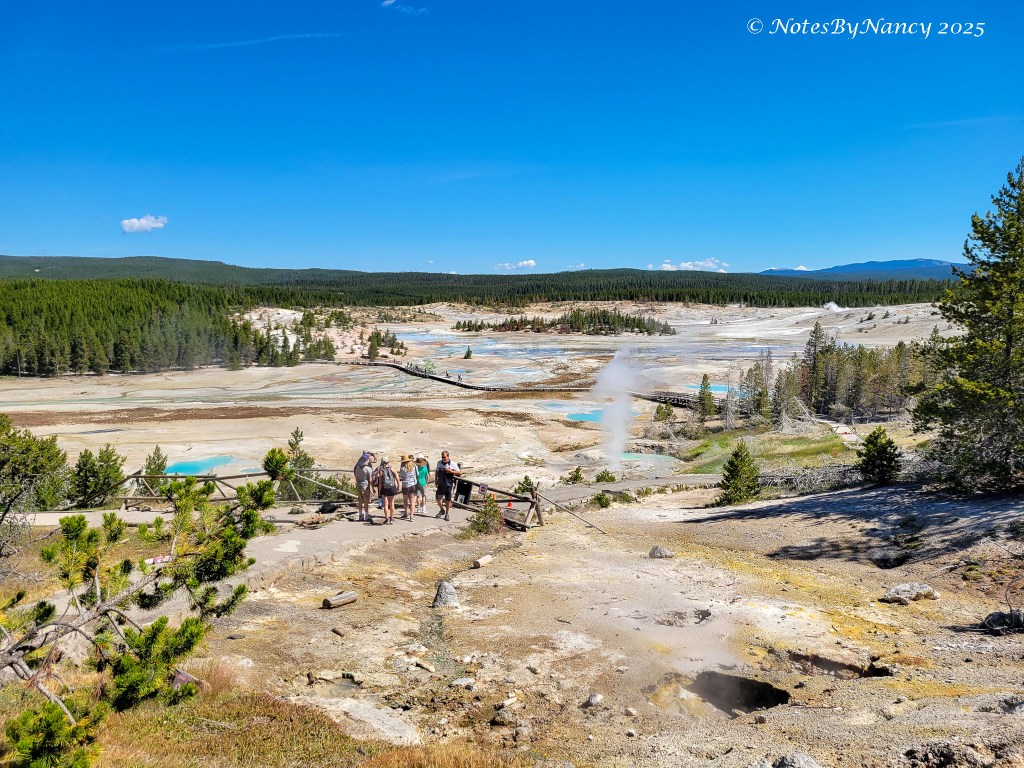
There are two basins within the larger basin – Porcelain Basin and Back Basin (you’d think they’d come up with a better name than “Back” – not much competition with “Porcelain”!). The boardwalk around Porcelain Basin is ¾ mile (1.2km) –The walk around Back Basin is 1.5 miles, has more shade, and also has the world’s tallest active geyser – Steamboat Geyser (300-400 feet), but it has unpredictable eruptions.
We opted for the shorter route, but as there is no shade in this basin, it was a pretty hot walk both from the sun and thermal features which seldom register a temperature under boiling!
Yellowstone National Park – Norris Geyser Basin 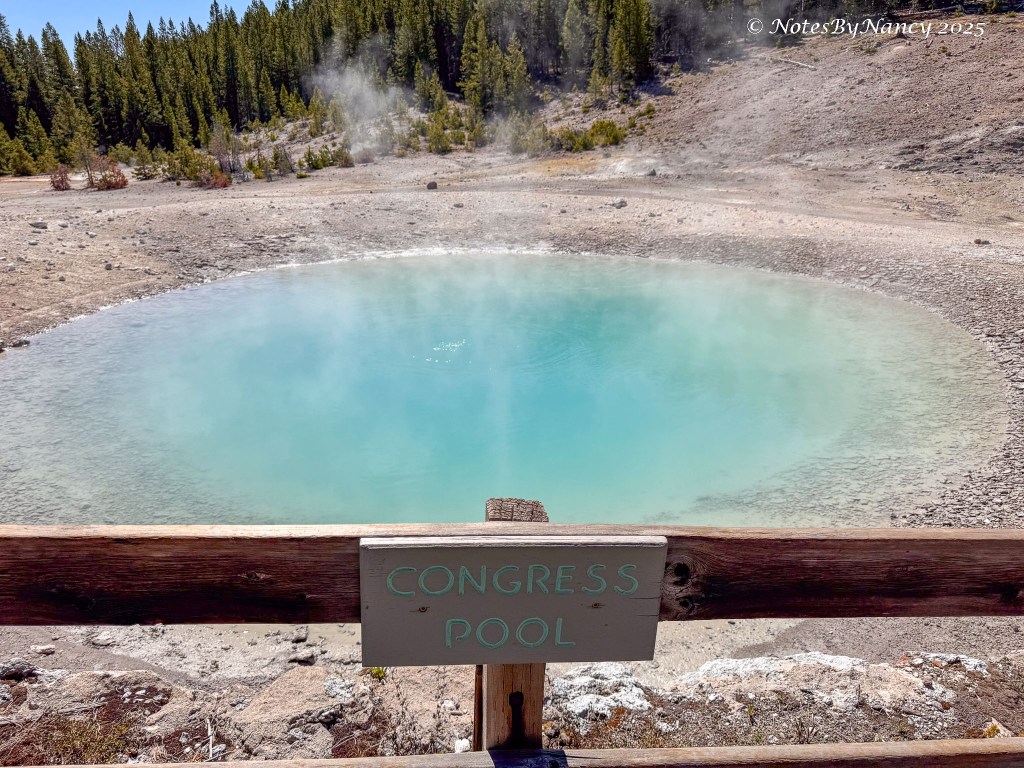
Yellowstone National Park – Norris Geyser Basin – Congress Pool 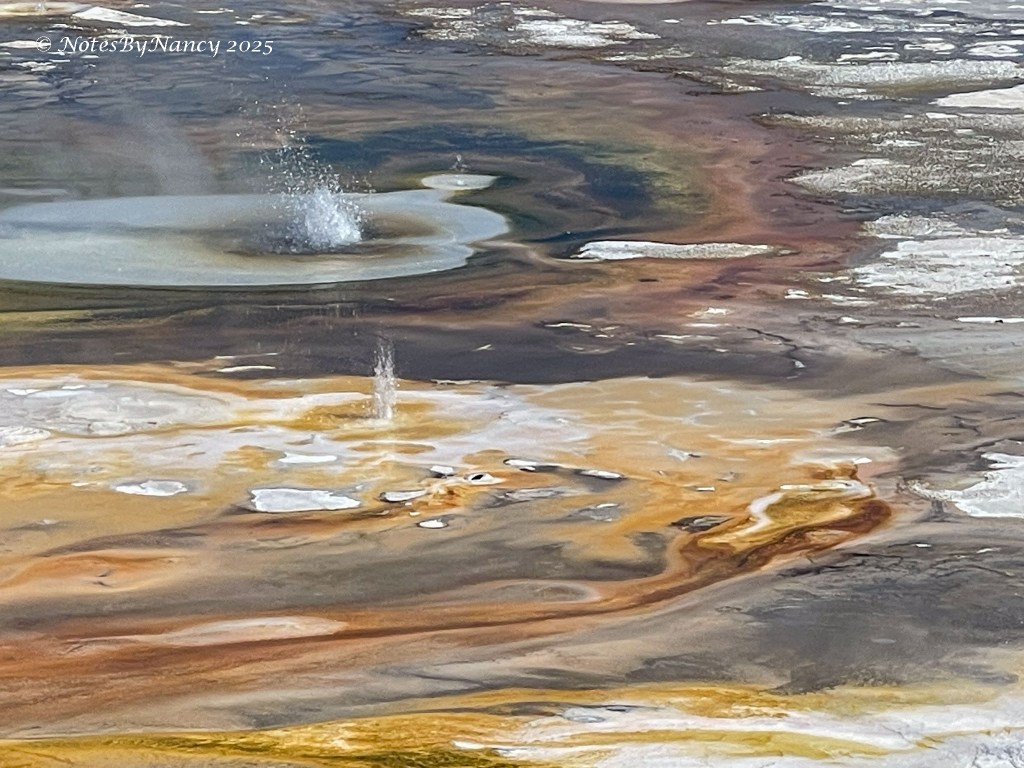
Yellowstone National Park – Norris Geyser Basin 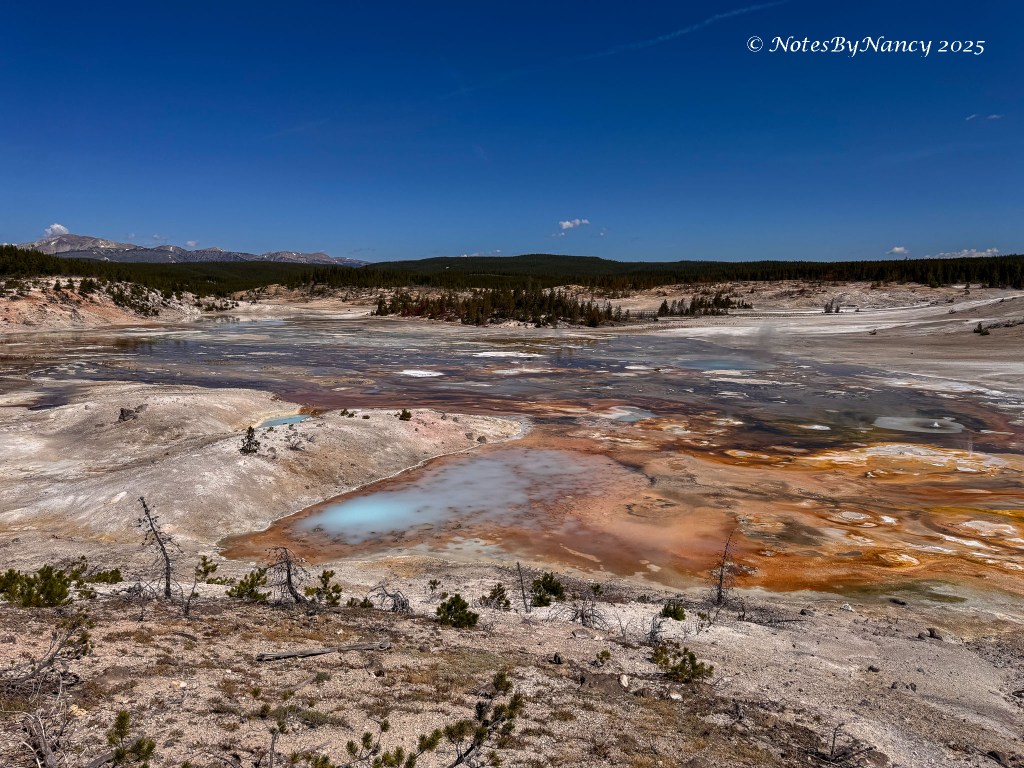
Yellowstone National Park – Norris Geyser Basin 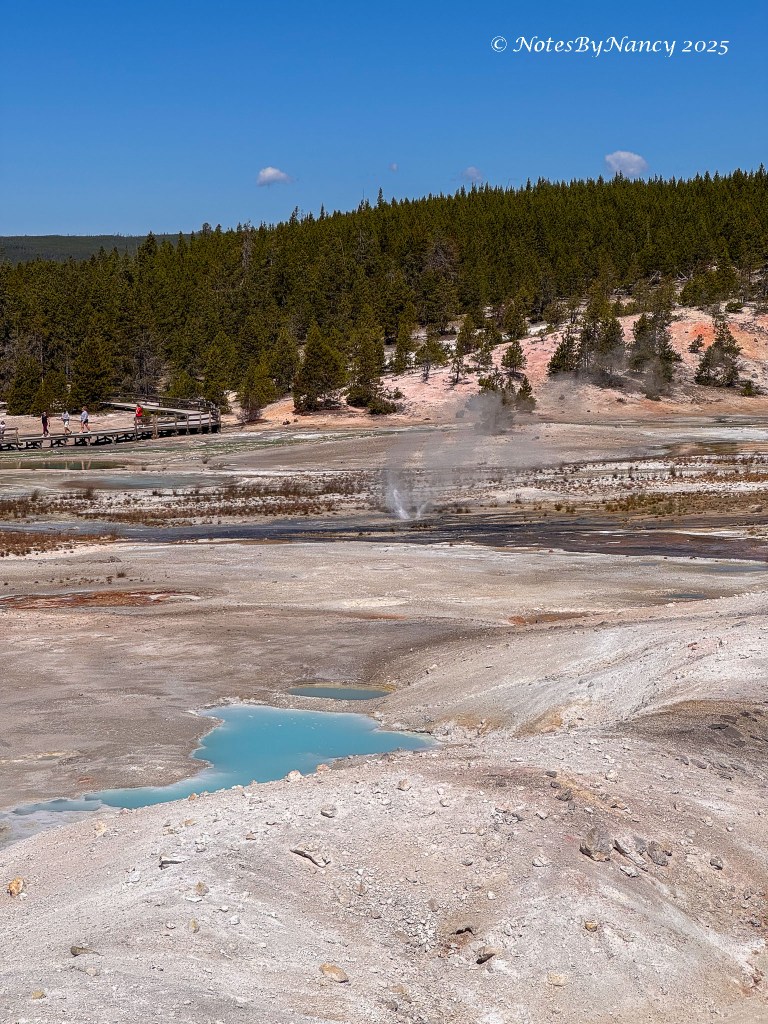
Yellowstone National Park – Norris Geyser Basin 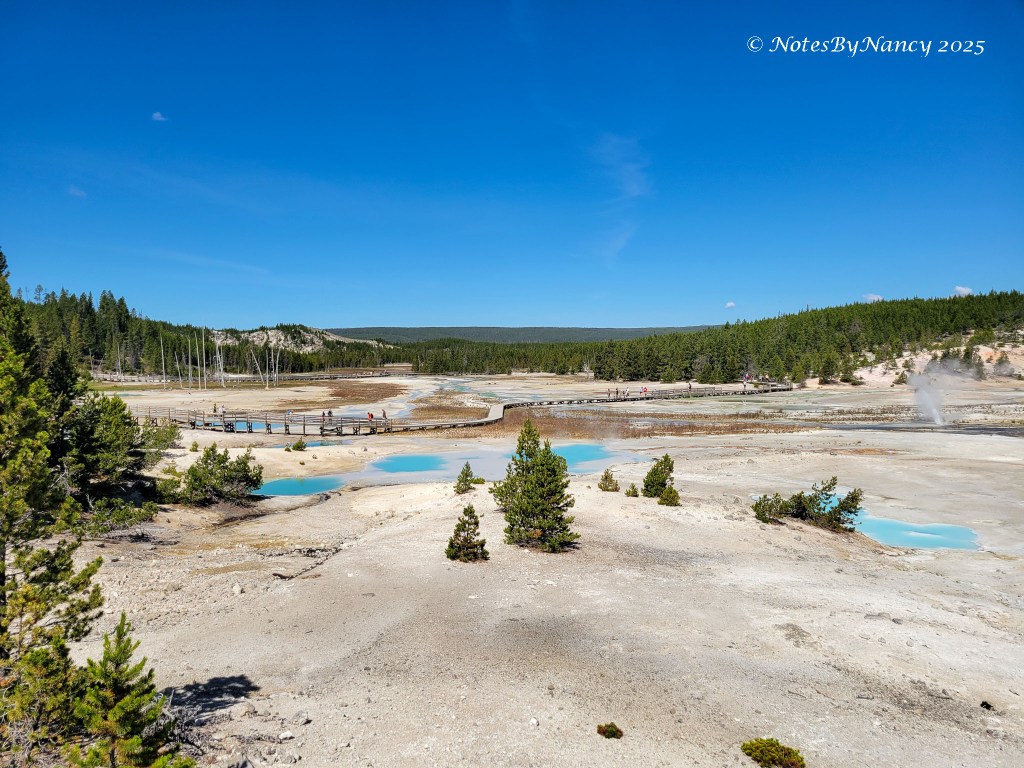
Yellowstone National Park – Norris Geyser Basin 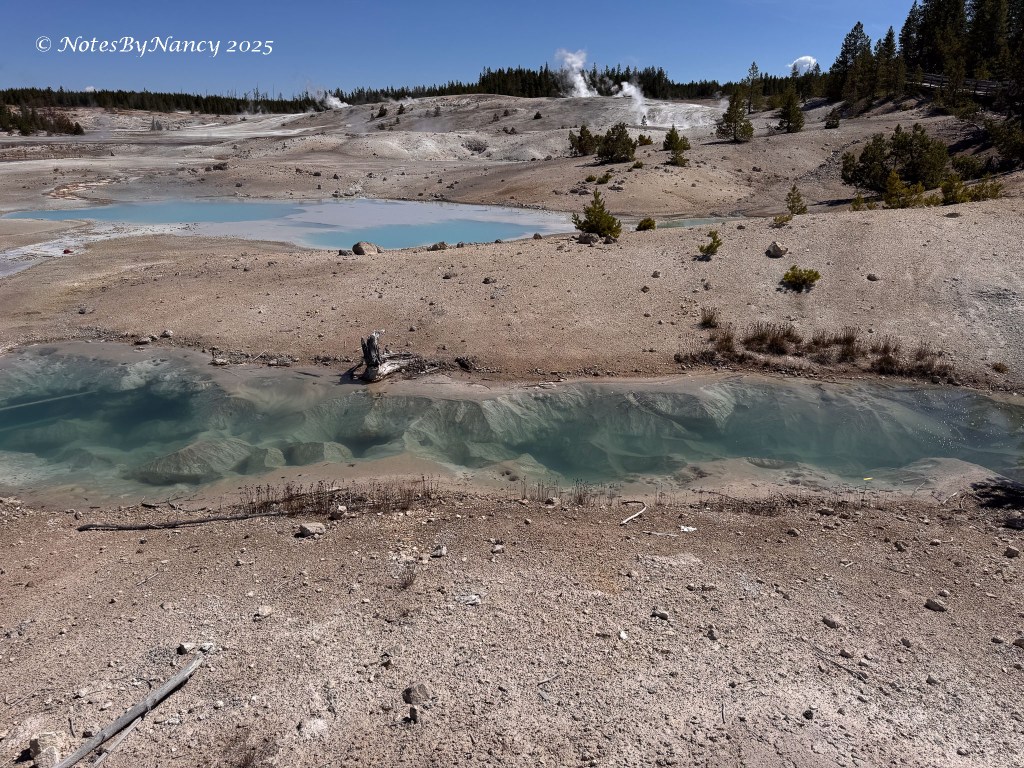
Yellowstone National Park – Norris Geyser Basin 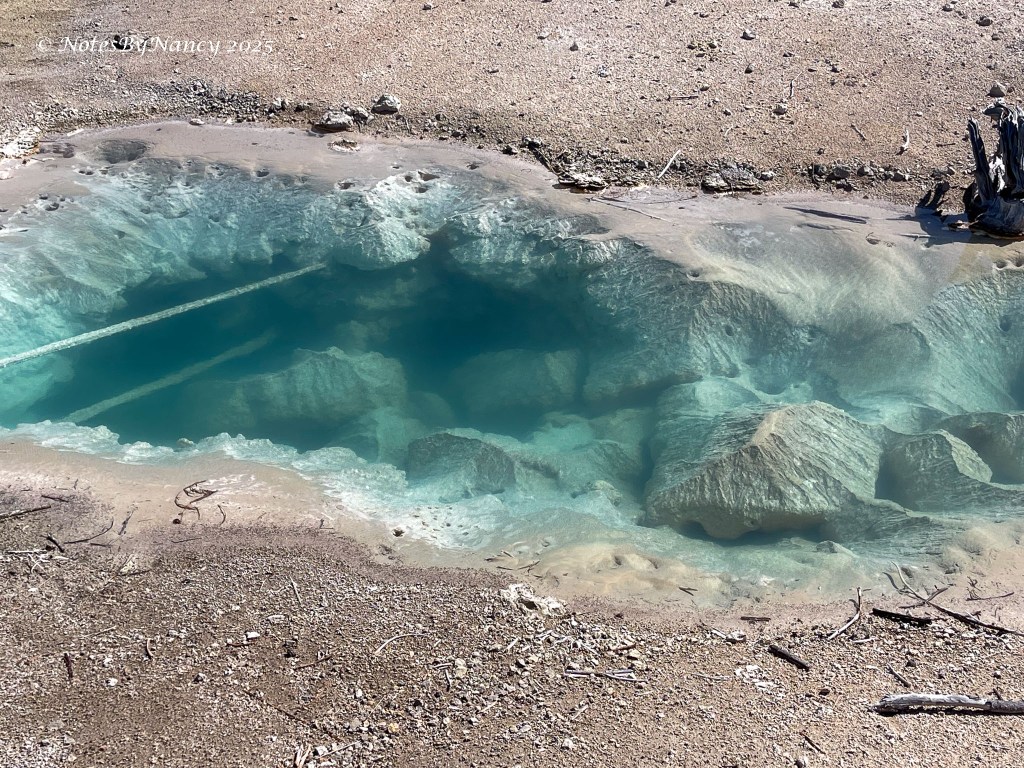
Yellowstone National Park – Norris Geyser Basin 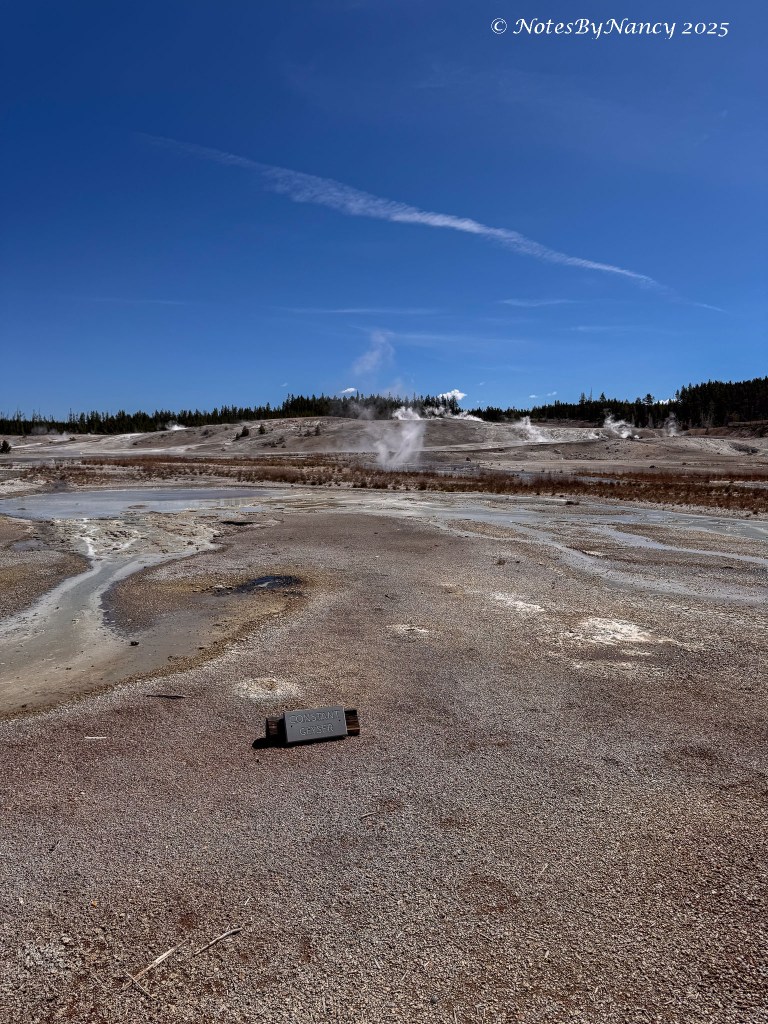
Yellowstone National Park – Norris Geyser Basin 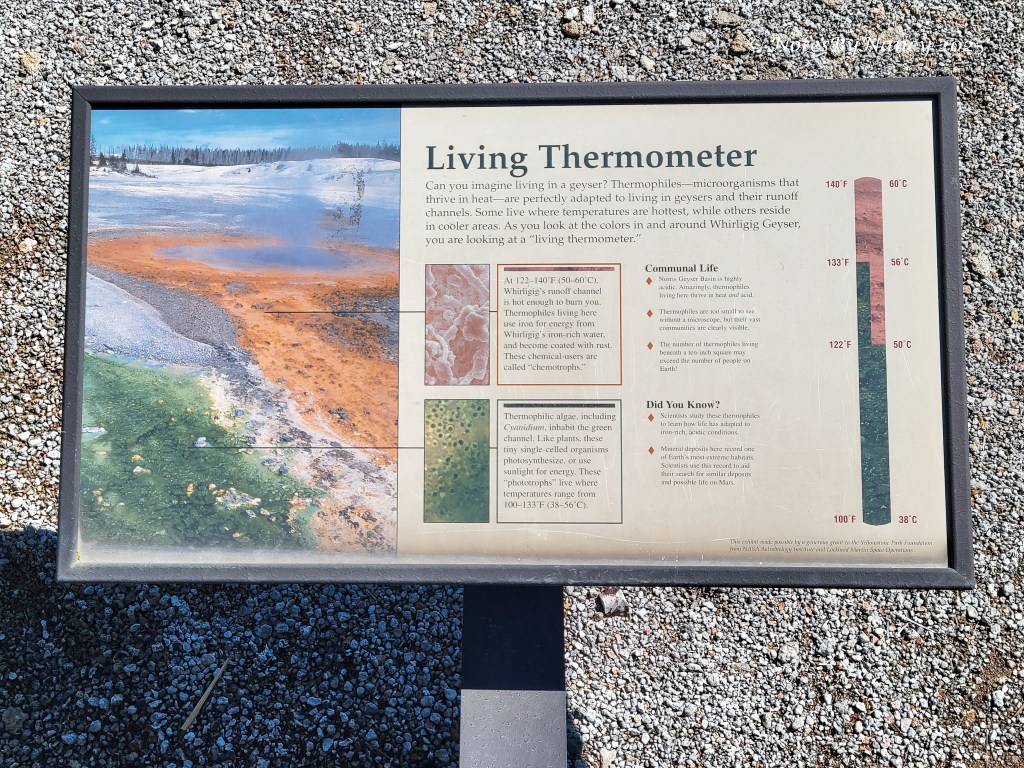
Yellowstone National Park – Norris Geyser Basin 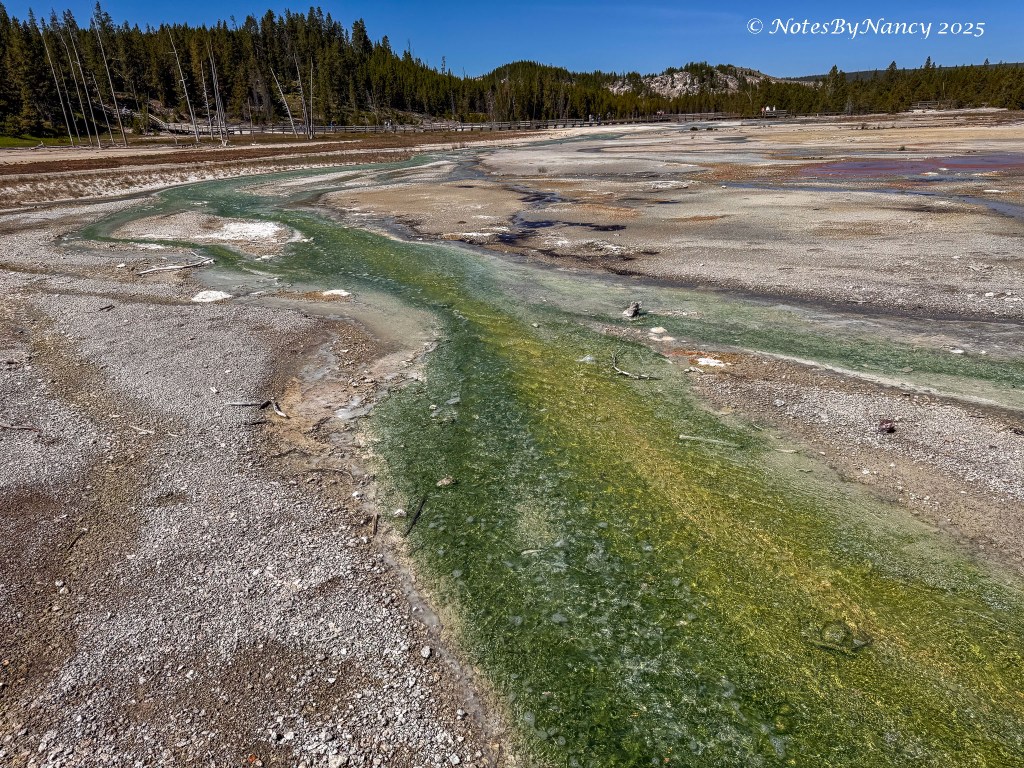
Yellowstone National Park – Norris Geyser Basin 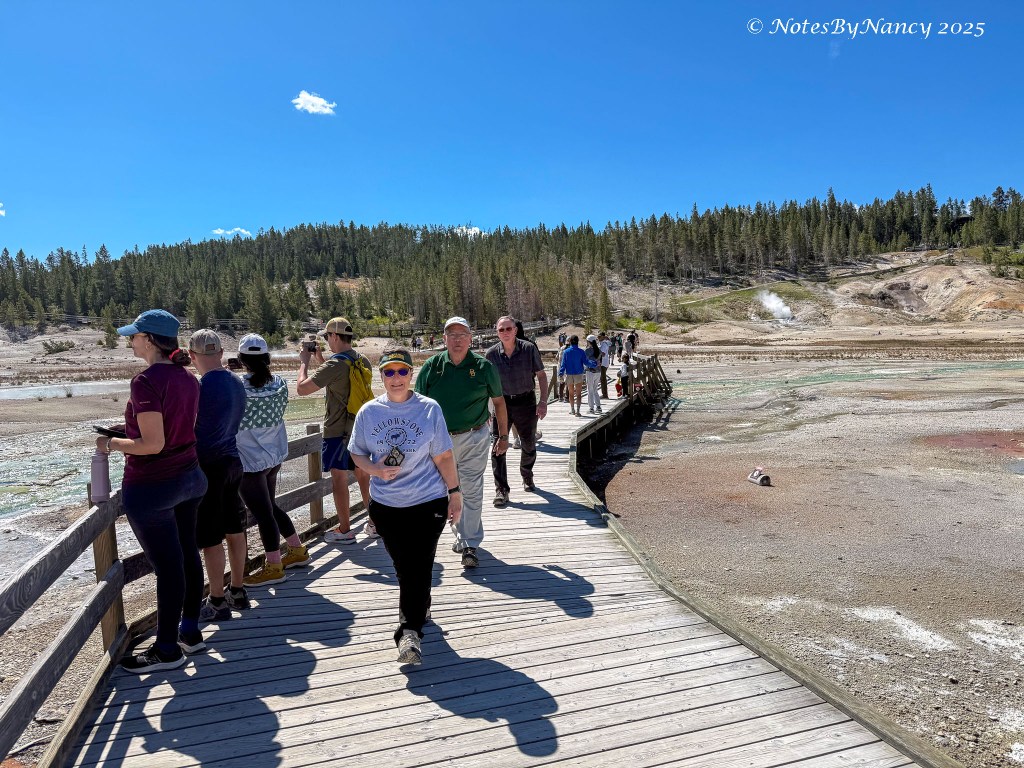
Yellowstone National Park – Norris Geyser Basin 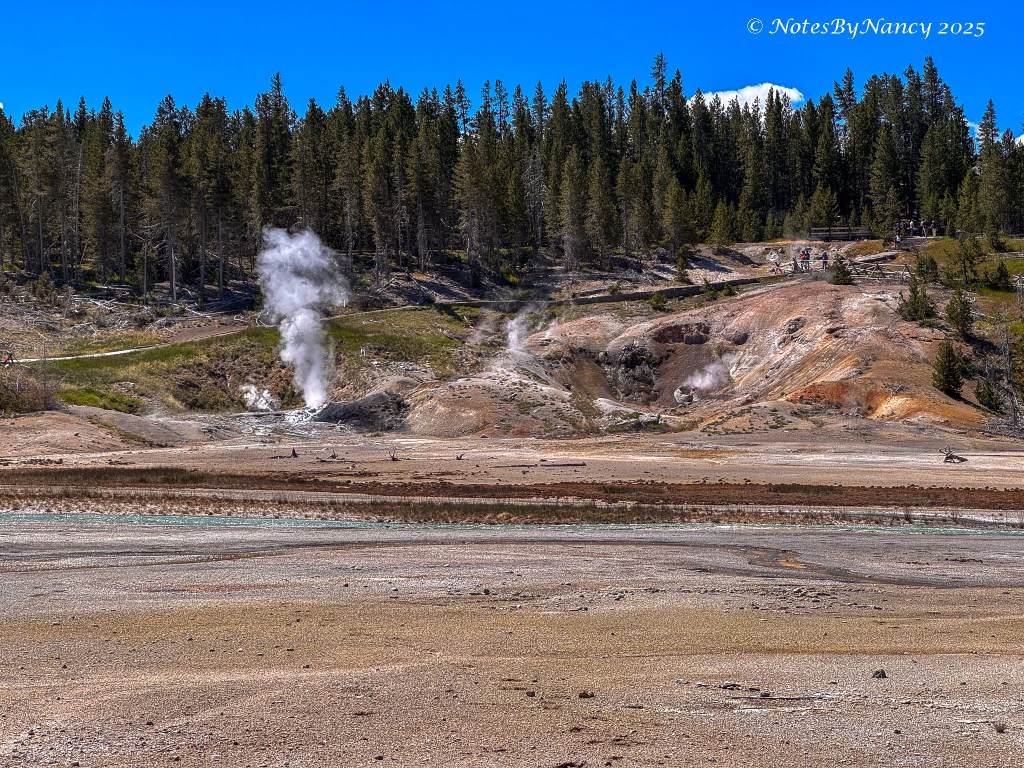
Yellowstone National Park – Norris Geyser Basin 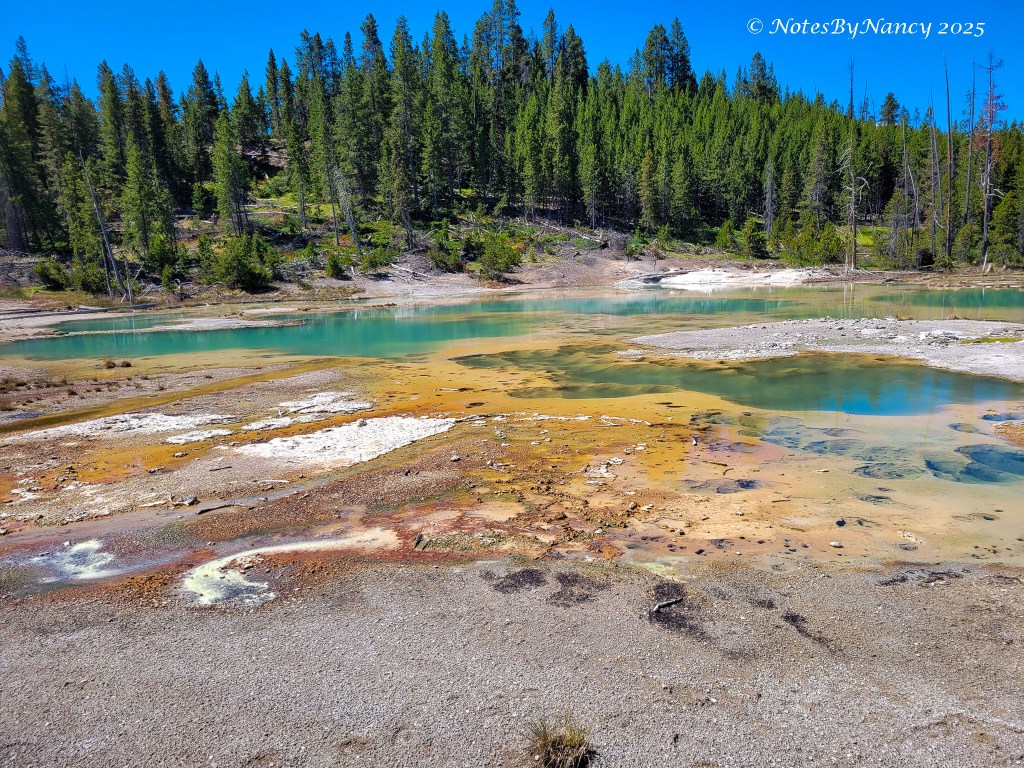
Yellowstone National Park – Norris Geyser Basin 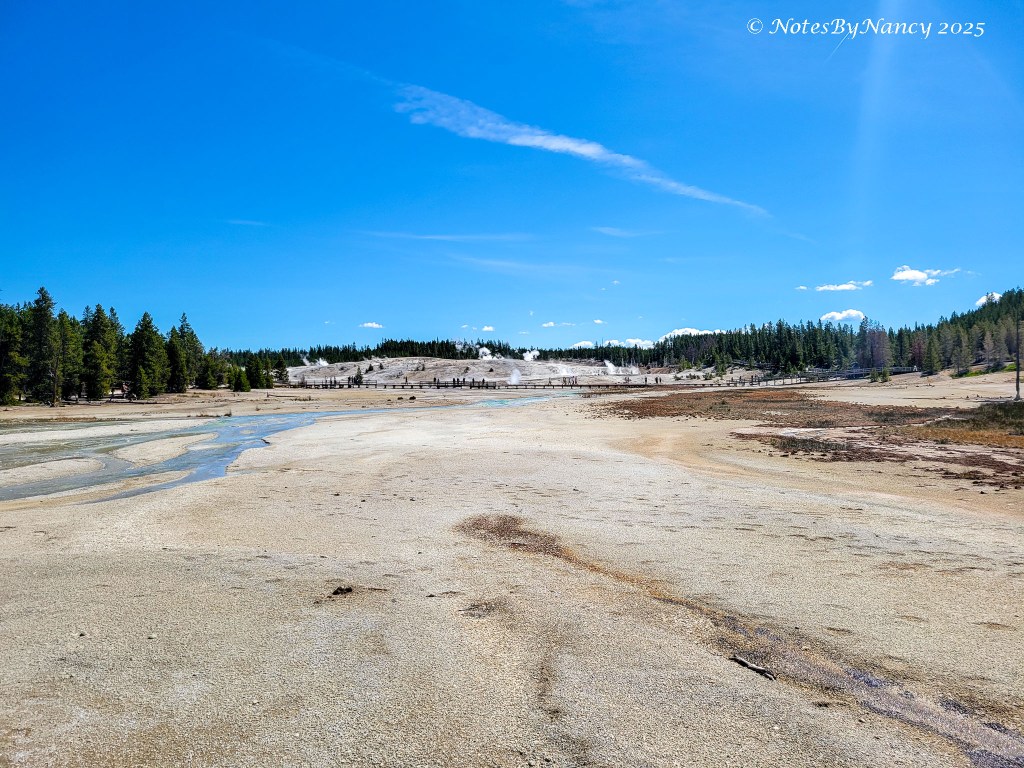
Yellowstone National Park – Norris Geyser Basin 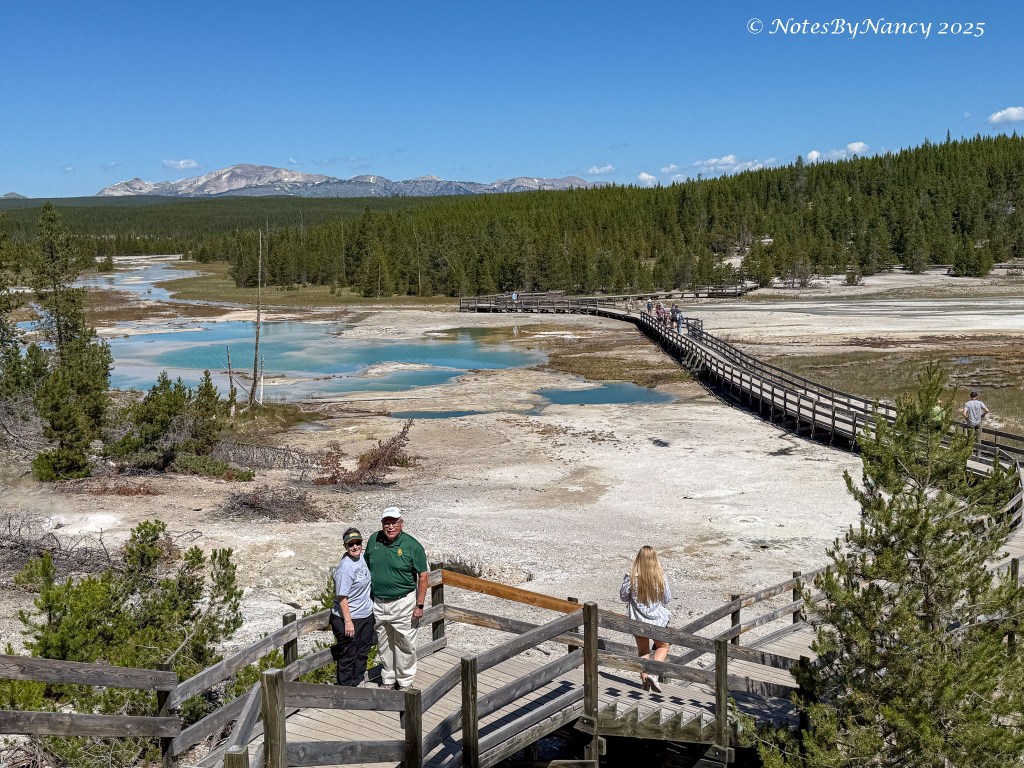
Yellowstone National Park – Norris Geyser Basin 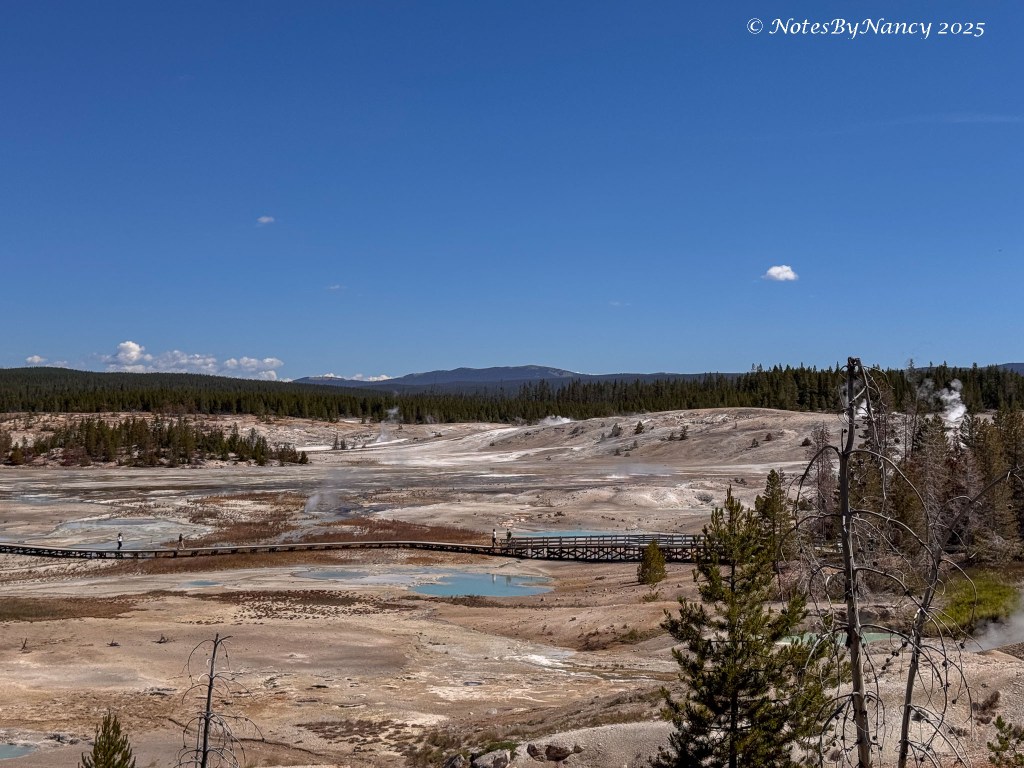
Yellowstone National Park – Norris Geyser Basin 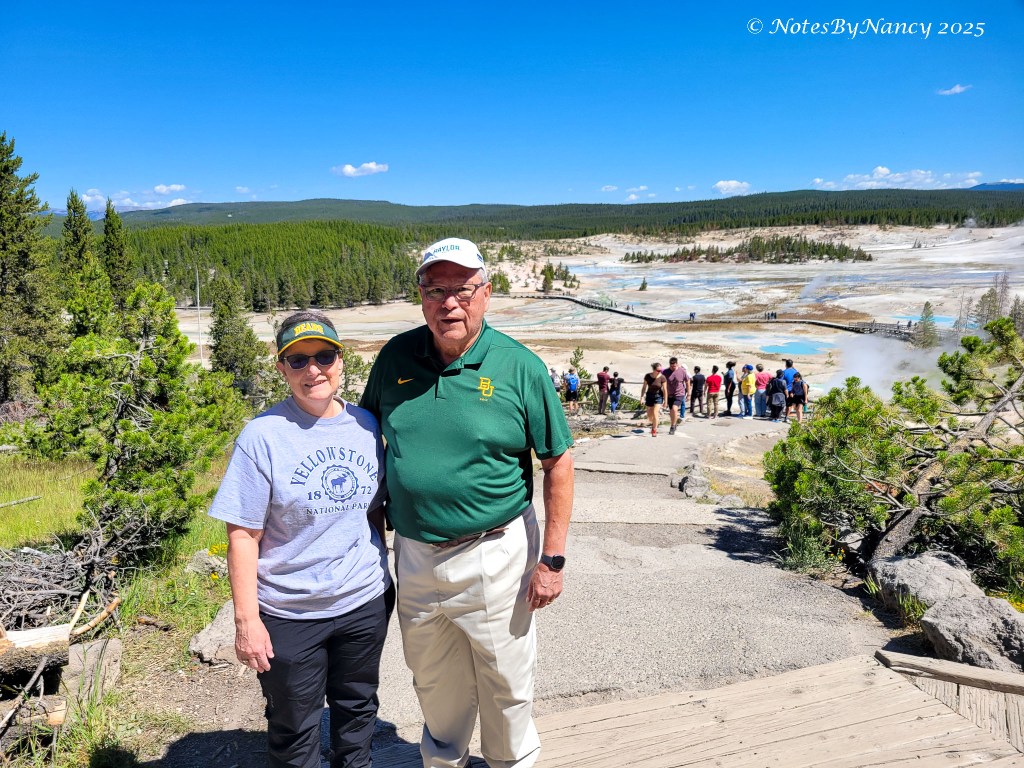
Yellowstone National Park – Norris Geyser Basin
Sheepeater Cliff
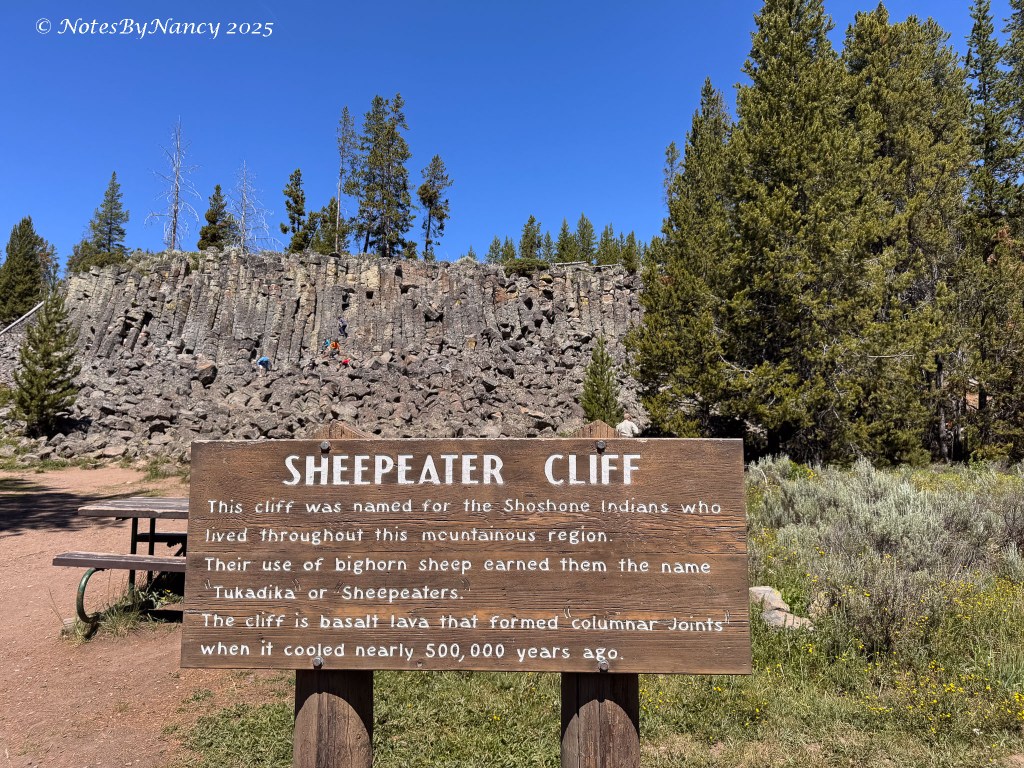
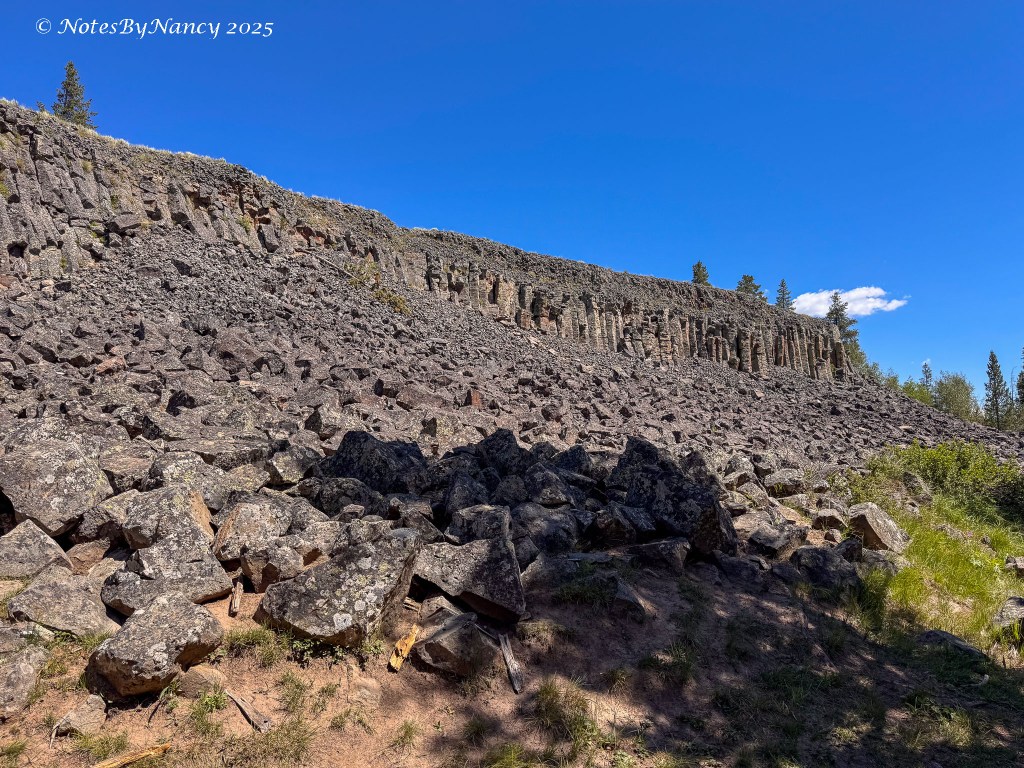
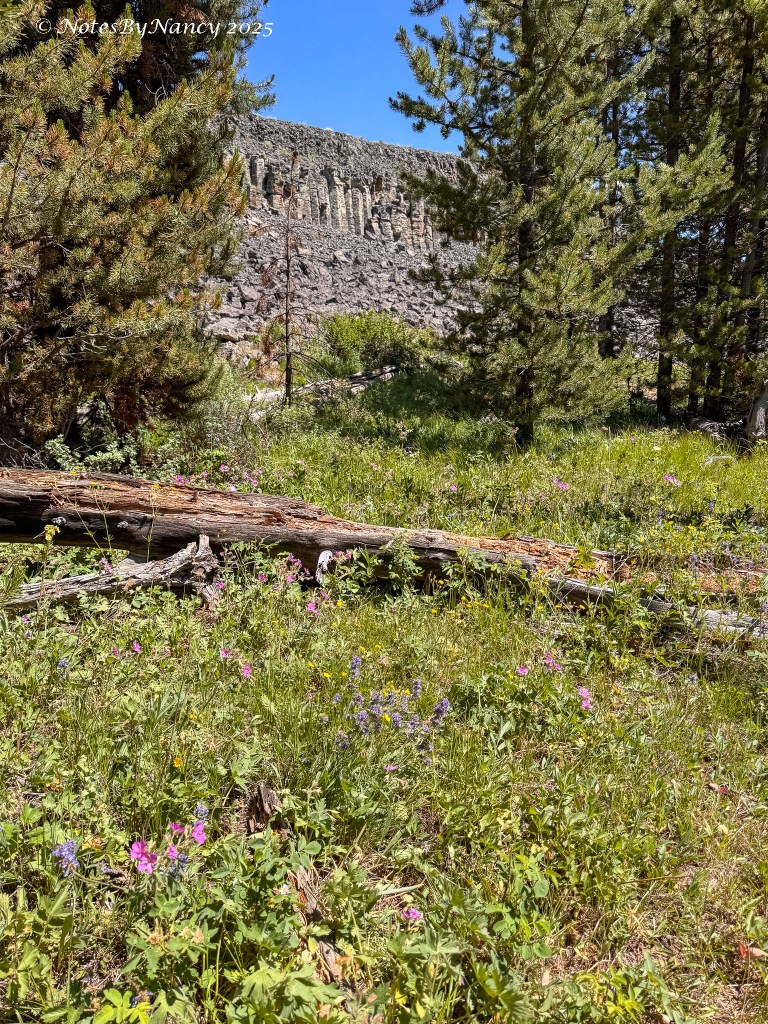
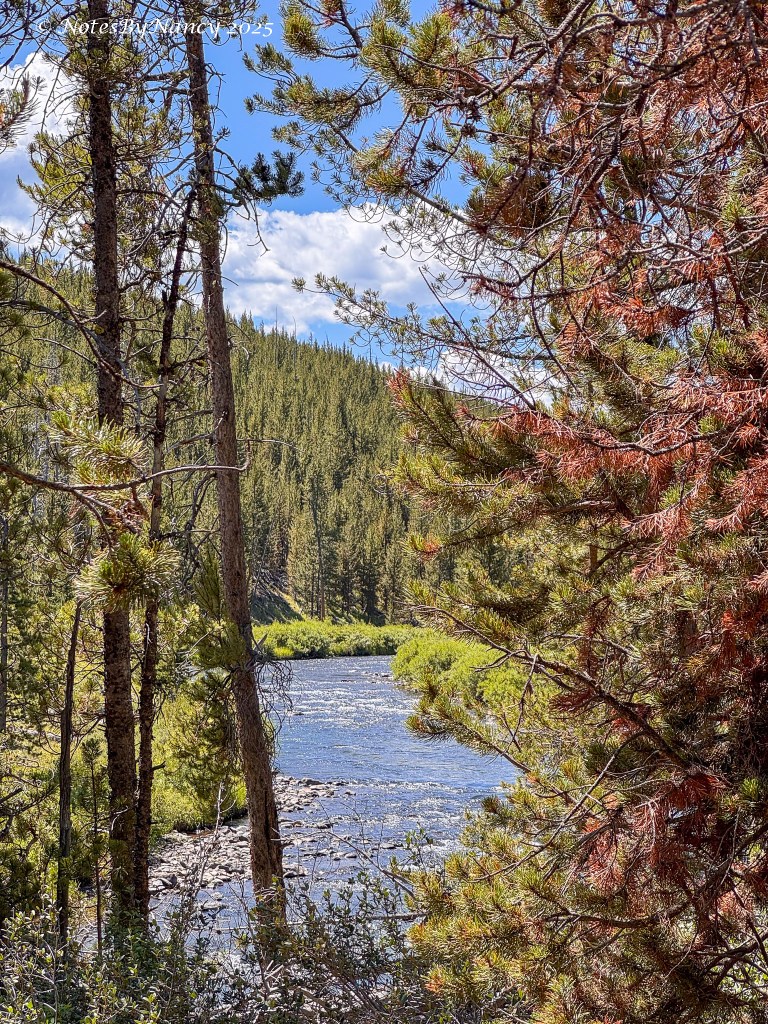
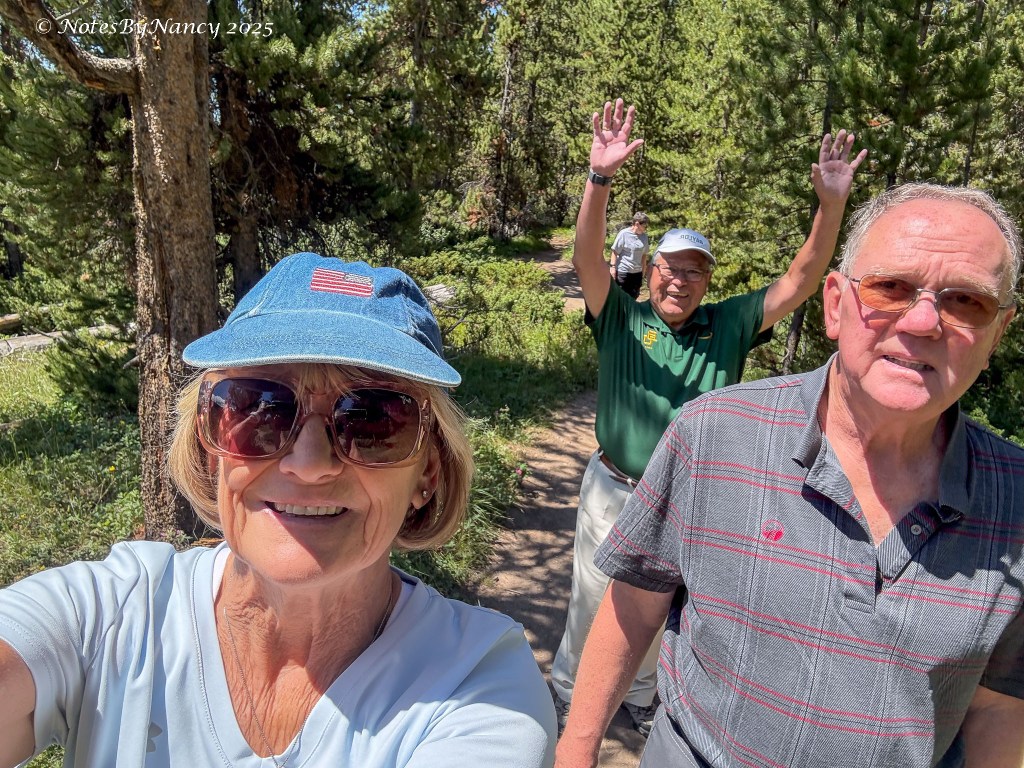
After our walk in Norris, we continued north to our next stop almost 14 miles away – Sheepeater Cliff. You have to turn off the main road and drive maybe a half-mile to the parking lot and picnic area. The name comes from the Tukudika, or Sheep Eaters—a band of Eastern Shoshone Indians. This feature near the Gardner River is a cliff made of columnar basalt, the remains of lava flows from 500,000 years ago. In addition to the part of the cliff easily seen from the picnic area, there is a nice little trail that leads along the river to see more of it.
Golden Gate
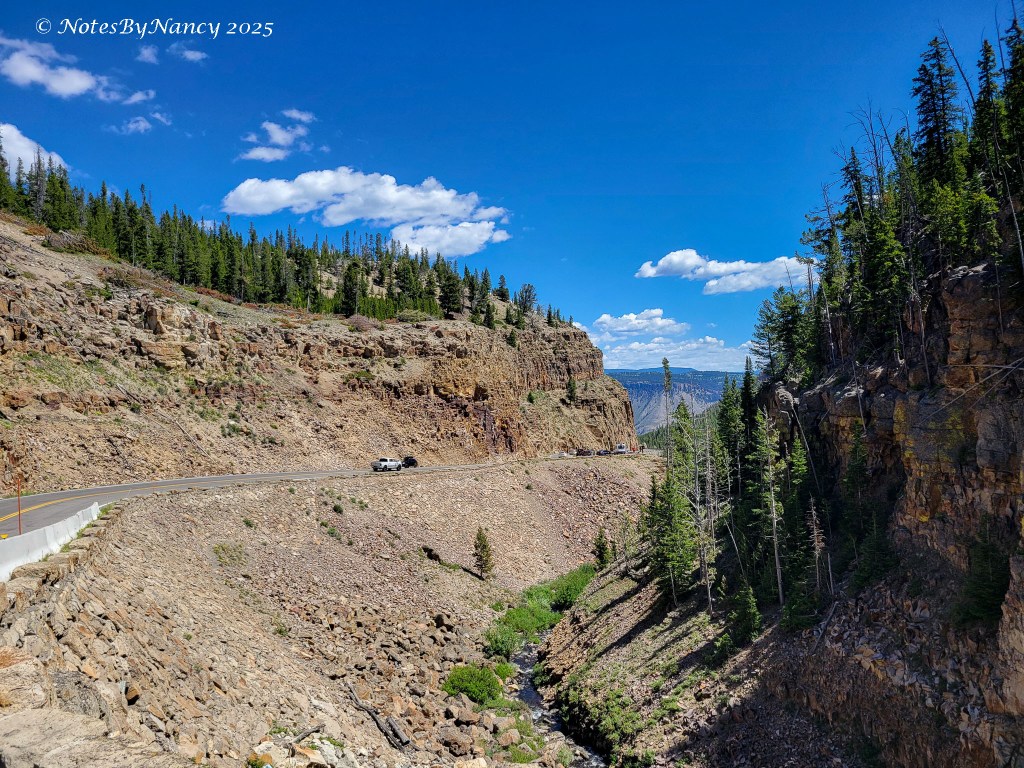
Back on the main road (Hwy 89) towards Mammoth we didn’t suddenly end up in California outside San Francisco. Yellowstone has its own Golden Gate. I can’t imagine building this section of road.
Mammoth Hot Springs
Mammoth Hot Springs is near the North Entrance to Yellowstone from Gardner, Montana. It has a visitor center, hotel, cabins, dining, general store, gift shop, and the historic Fort Yellowstone.
Instead of packing a lunch today, we opted to eat at the Mammoth Hot Springs Hotel Dining Room. It was surprisingly good, and the prices weren’t astronomical given there isn’t any competition. I’m sure the logistics of getting food supplies into the various dining locations in the park is quite interesting.
After eating, Paula and I walked to the area’s thermal feature, the Mammoth Terraces, while the guys brought the car from where we’d parked near the hotel to a parking lot by the Lower Terraces. Luckily, someone pulled out as they pulled into the lot.
The Terraces (Upper and Lower) here are hot springs that rise up through limestone, dissolve the calcium carbonate, and deposit the calcite that makes the travertine terraces. Consequently, these formations are constantly changing and looked very different from when we were here 15 years ago.
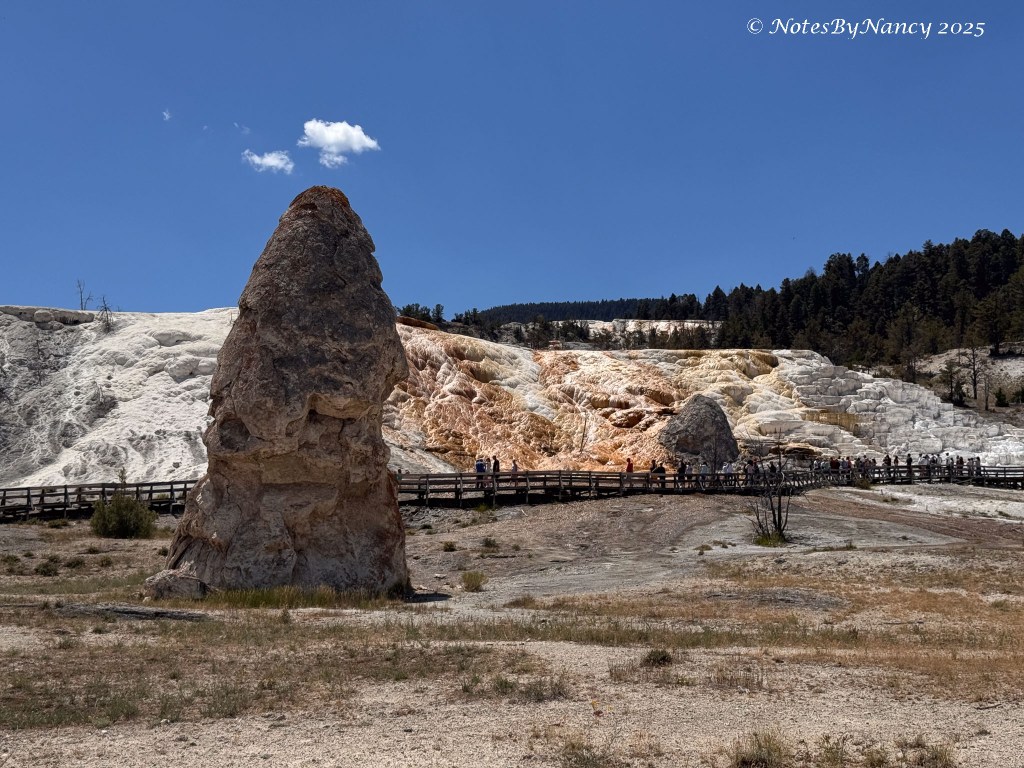
Yellowstone National Park – Mammoth Hot Springs – Liberty Cap 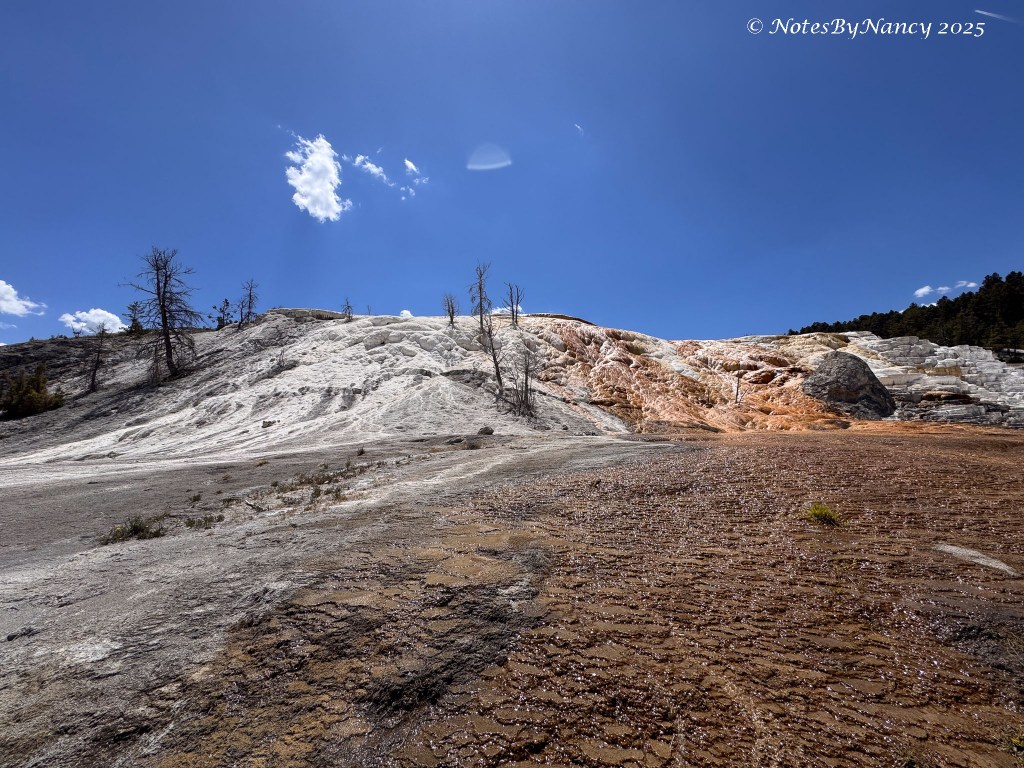
Yellowstone National Park – Mammoth Hot Springs 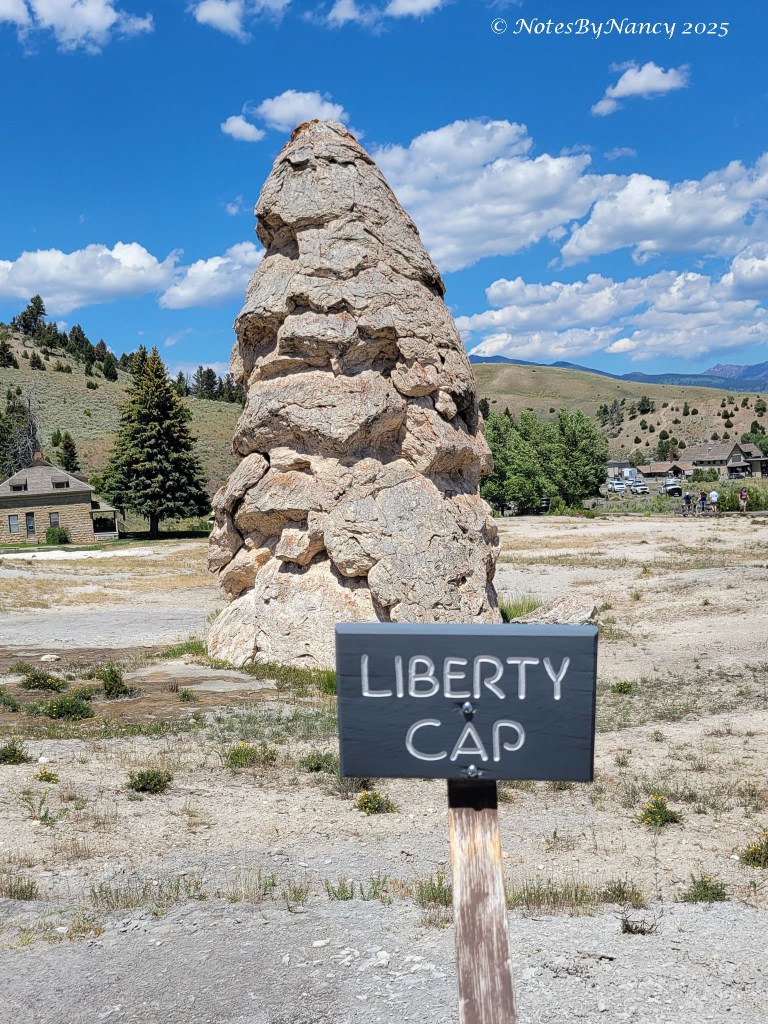
Yellowstone National Park – Mammoth Hot Springs – Liberty Cap 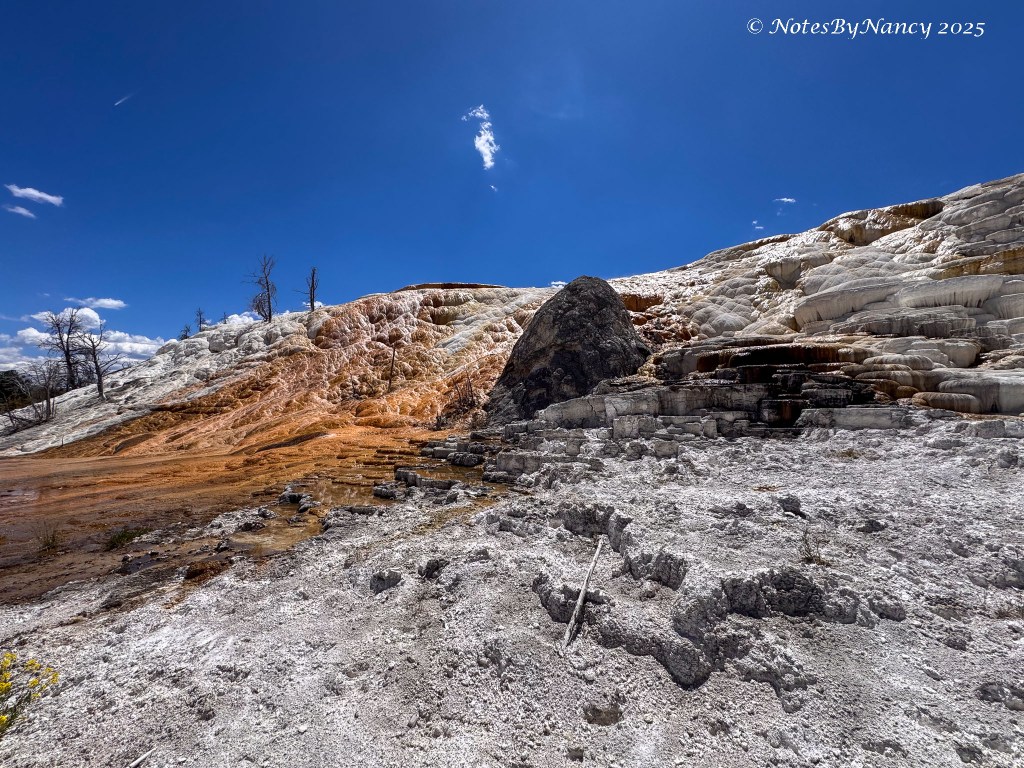
Yellowstone National Park – Mammoth Hot Springs 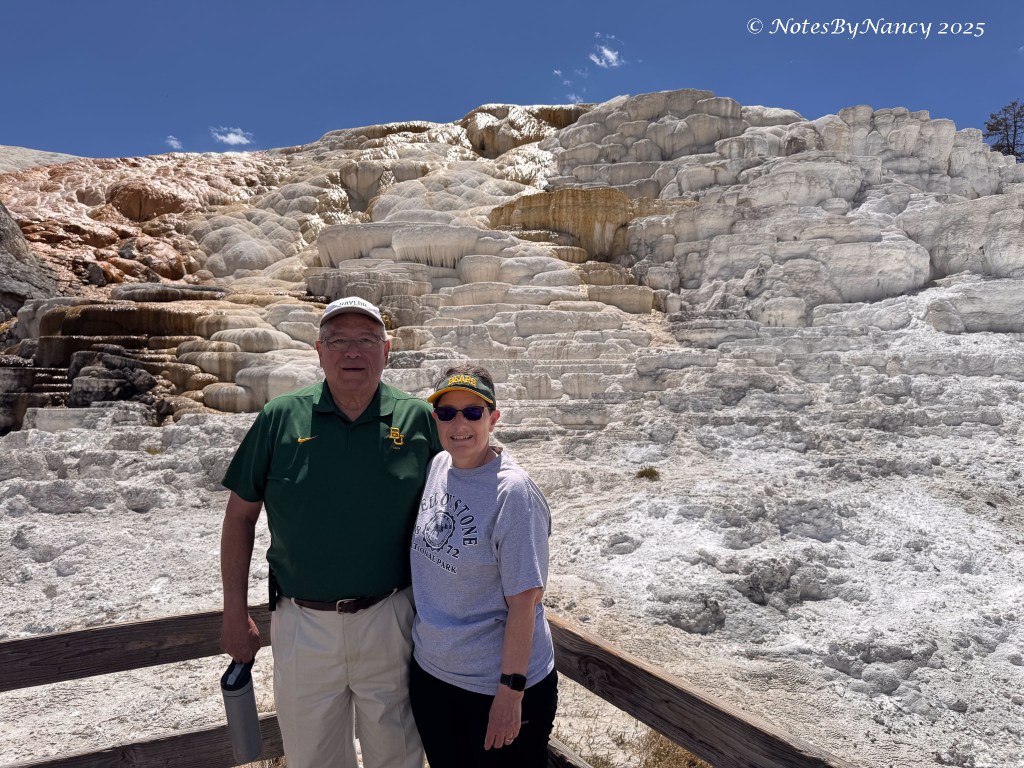
Yellowstone National Park – Mammoth Hot Springs 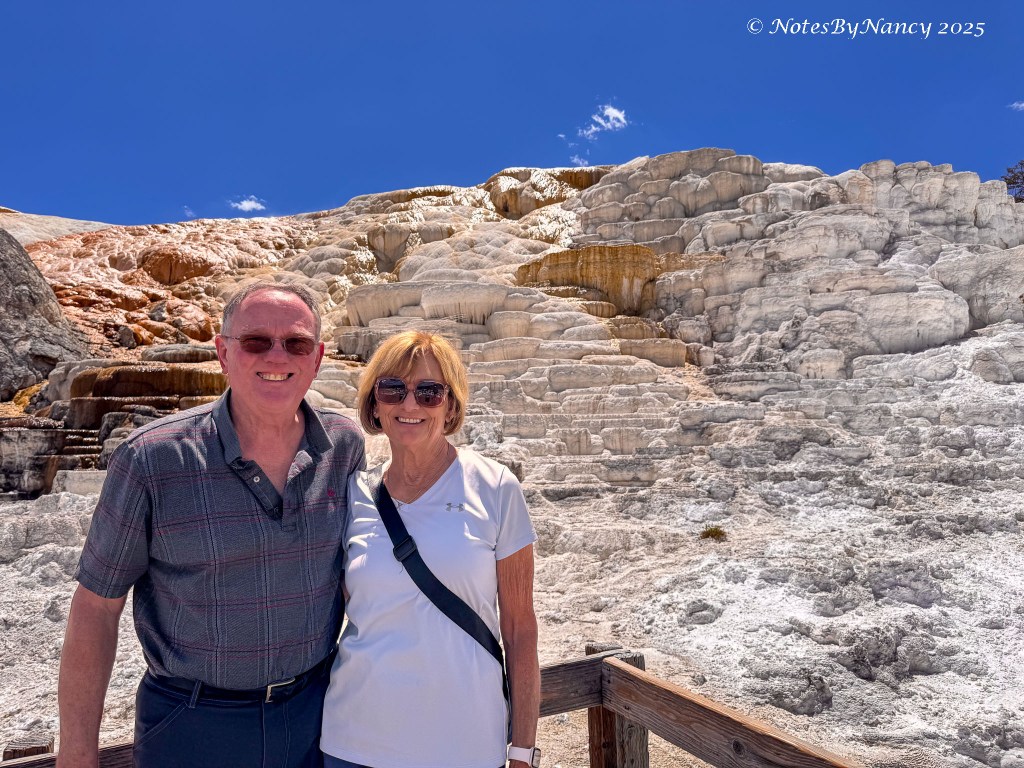
Yellowstone National Park – Mammoth Hot Springs
Back to West Yellowstone
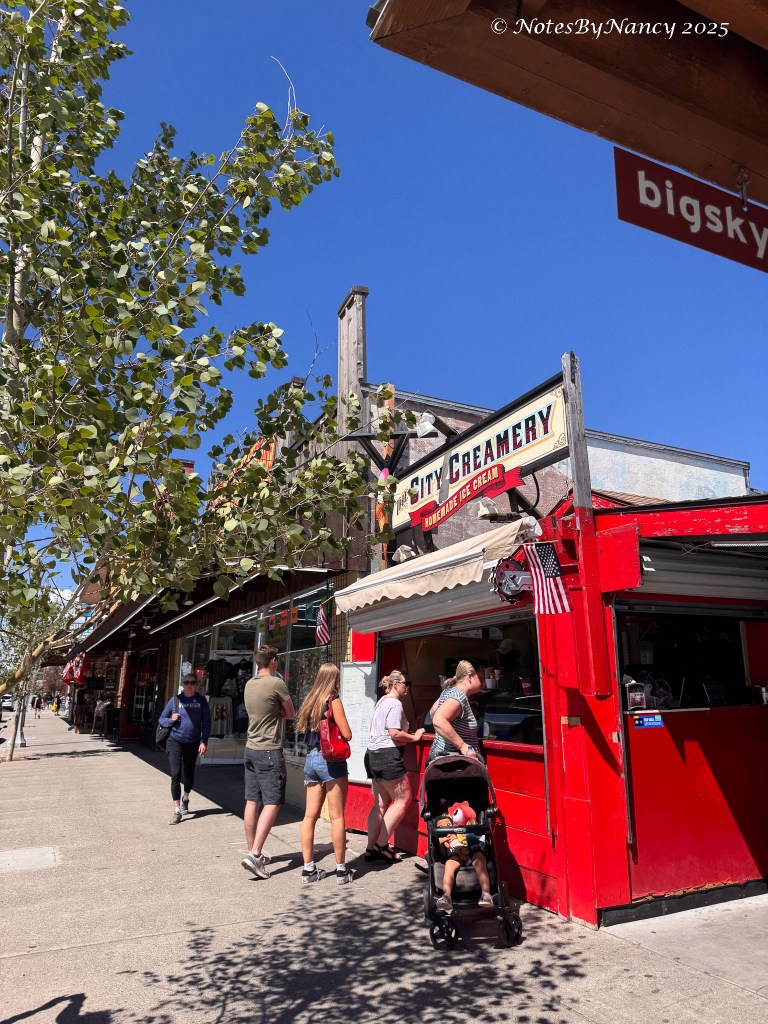
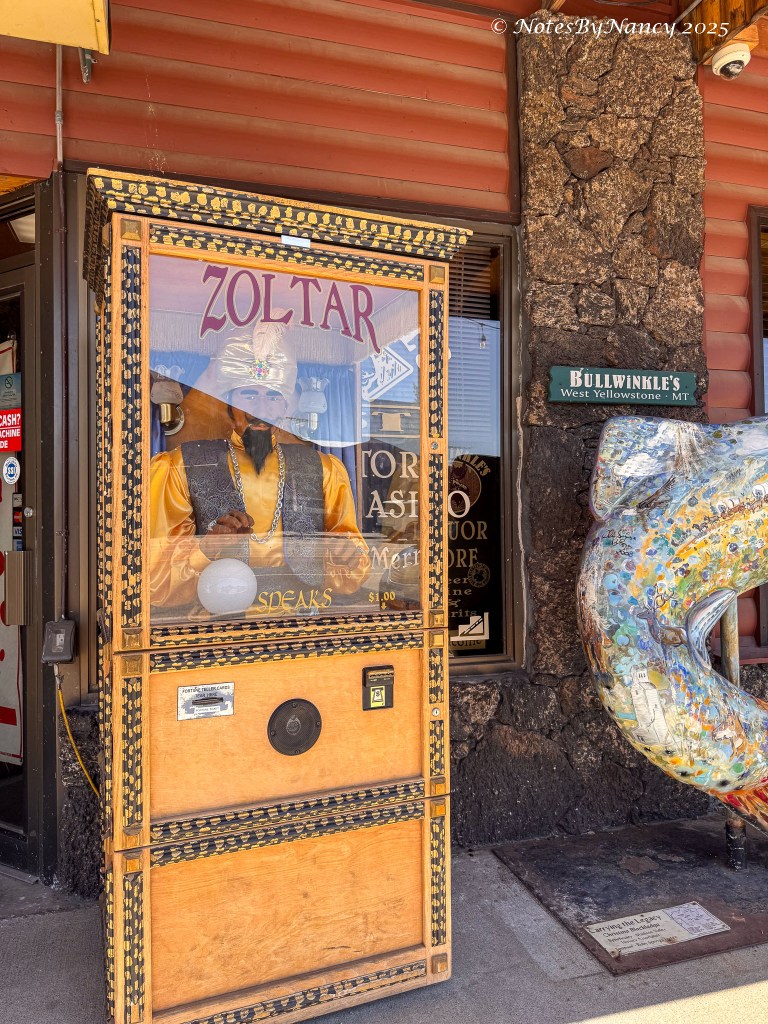
It was about a 50-mile drive back to West Yellowstone, where we decided to try out a local ice cream place and found our friend Zoltar again (we last saw him in the Finger Lakes years ago). No one made a wish.
For dinner, we pulled out the last of the charcuterie and played cards again afterwards.
 Notes By Nancy
Leave a comment