
Weather today – Partly Cloudy and 71 F (22 C).
The included tour today is Golubac Fortress by Foot (1 hour, moderate, afternoon) as the Ullur docks literally adjacent to the fortress, but not until late in the afternoon. Two optional excursions were also available – Hike to Vistas of the Iron Gate (4 hours, demanding, afternoon) and Lepenski Vir (4 hours, moderate, afternoon). We signed up for the excursion to Lepenski Vir which concluded with a tour of Golubac Fortress. Lepenski Vir is a prehistoric site discovered in 1960. Over the course of the next decade the importance of the site during further excavations was recognized and when it was determined that the site would be flooded by the construction of the Iron Gate Hydroelectric Power Station, the entire site was relocated to its present location in 1971 and put under cover.
However, the first part of the day was spent in “scenic sailing” along the Danube admiring the region as we approached the area known as “the Iron Gate”. The name derives from the presence of iron in the mountains and the narrow passage creating a “gate” which could easily be controlled to collect tolls for passage or defend from invaders.
From the Viking online itinerary: Sail through one of Europe’s most dramatic natural wonders, the picturesque stretch famously known as the Iron Gate. Meander through narrow gorges that slice through the Carpathian Mountains to the north and the Balkan Mountains to the south, and marvel at the towering white limestone cliffs draped with forest. Be on the lookout for ancient remains upon the dramatic walls. On the Serbian side, Trajan’s Tablet was laid to mark the construction of a Roman military road; on the Romanian side, marvel at the enormous rock sculpture of Dacian king Decebalus.
Iron Gate
Early in the morning we arrived at the largest dam on the Danube, the Iron Gate Hydroelectric Plant I completed in 1972 as a joint project between Yugoslavia and Romania. It was a double-lock, meaning we entered one lock and were raised then entered a second lock to be lifted again before continuing our way through the gorges in the Carpathian and Balkan Mountains following the now placid Danube along the border between what is now Serbia and Romania. The creation of the dam resulted in tens of thousands of people being evacuated and relocated. Although entire villages are now under water, this dam enabled commerce to navigate safely between the North Sea to the Black Sea.
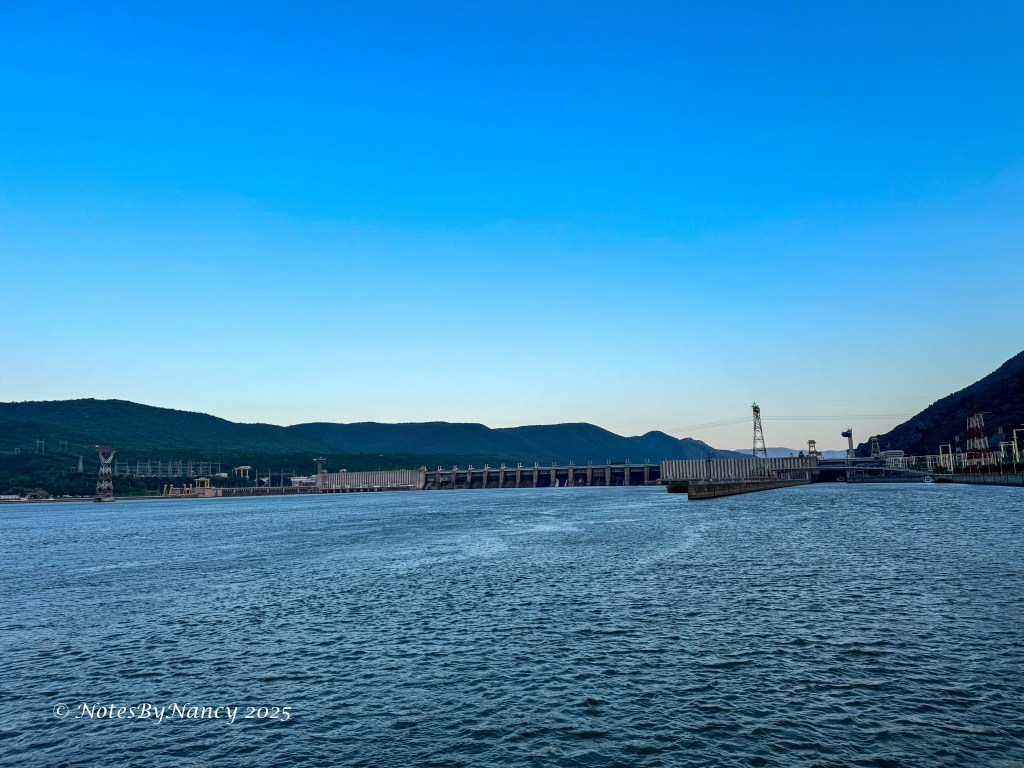
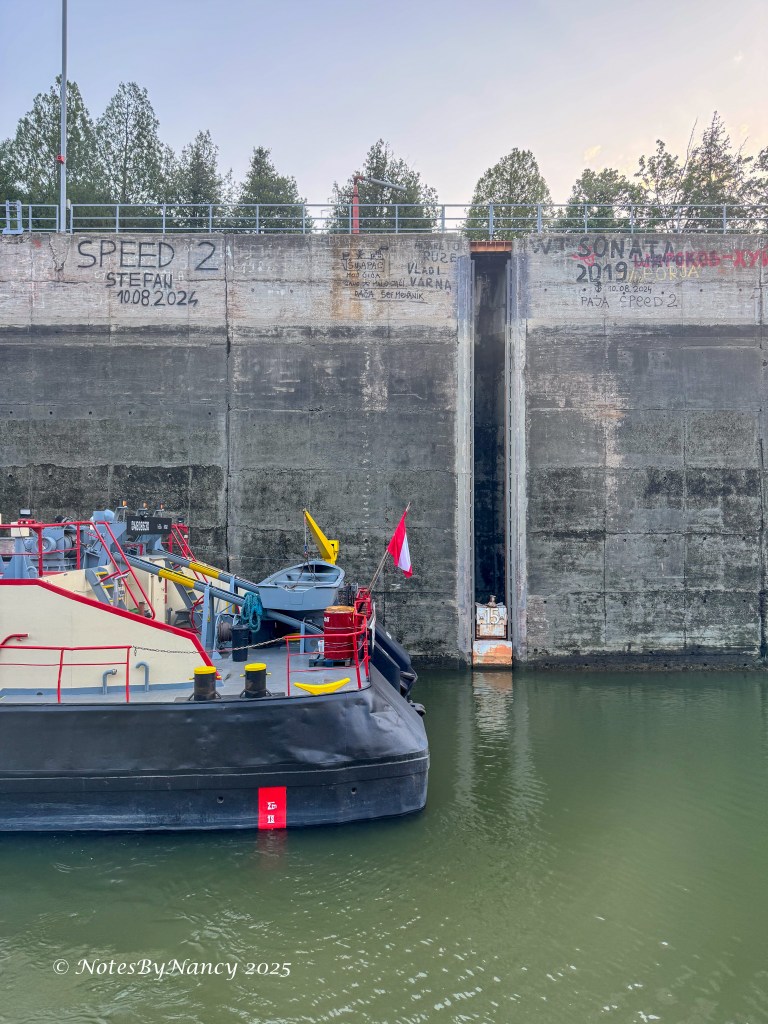
Shortly after leaving the locks, our program director, Sonya, began a commentary over the speakers in the lounge and sun deck about the region and the sites that we passed such as Trajan’s Plaque honoring the Roman road built here by Emperor Trajan in the 2nd century and the rock statue of Decebalus the Dacian king who fought the Romans. I also spotted a “new” plaque dedicated in 2017 to Count István Széchenyi (aka “the greatest Hungarian” 1791-1860) who helped make this section of the Danube navigable as the original plaque from 1885 is now under water due to the dam construction.
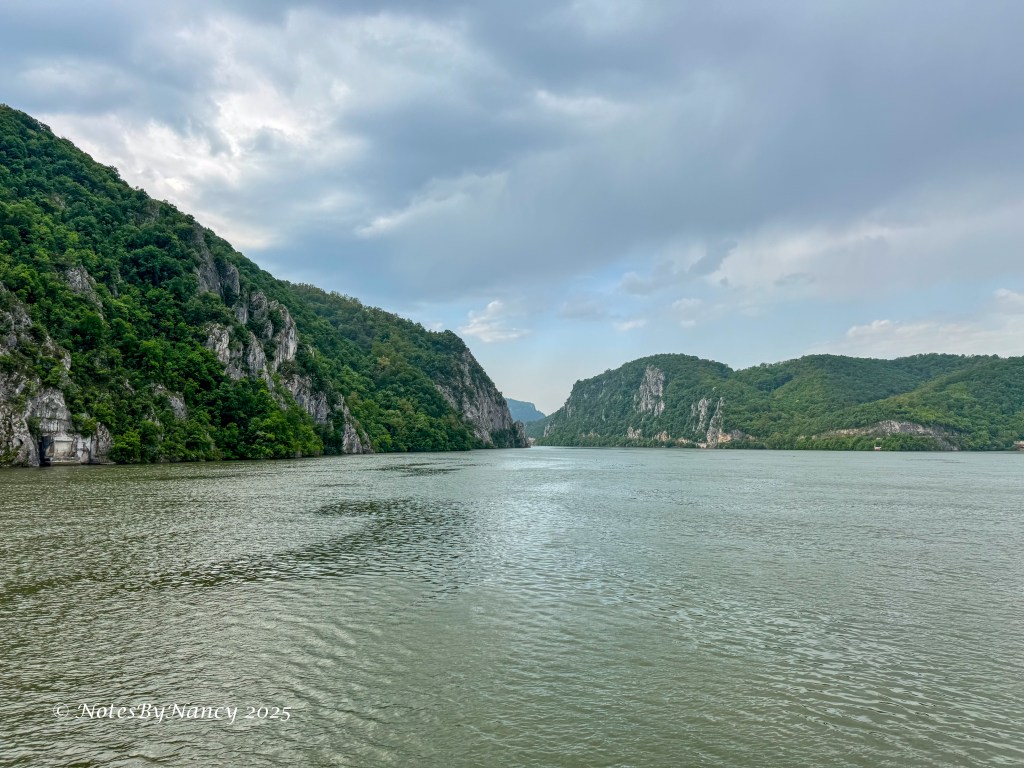
Sights in the Iron Gate Gorges – approaching one of the narrowest points 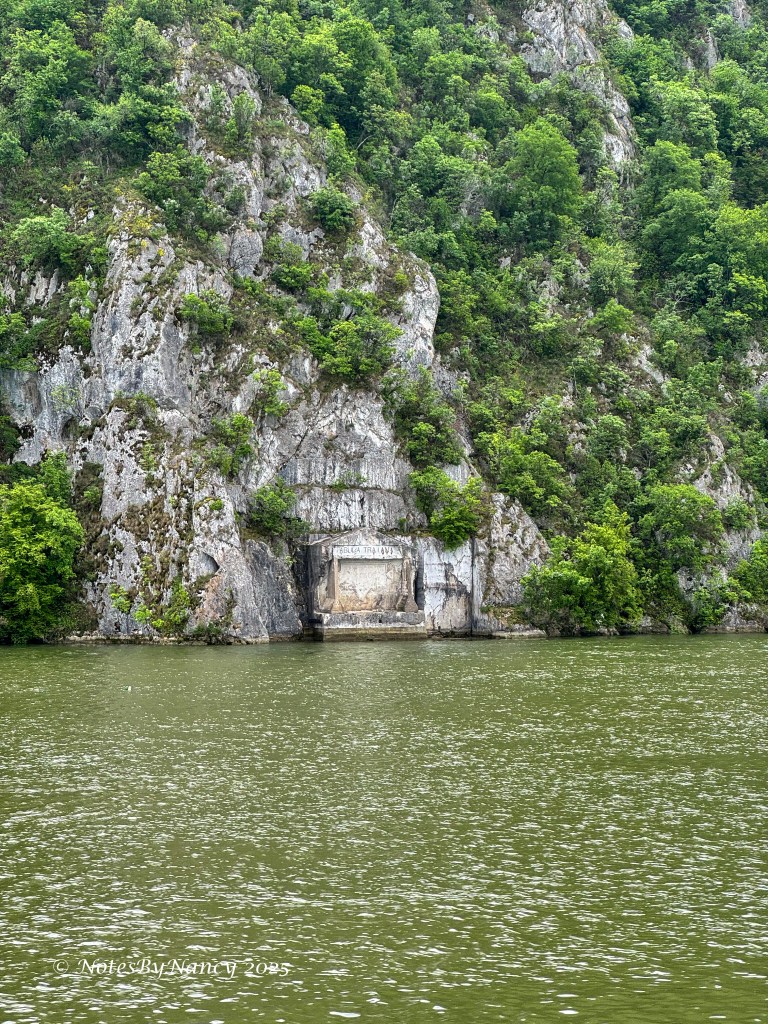
Sights in the Iron Gate Gorges – Trajan’s Plaque 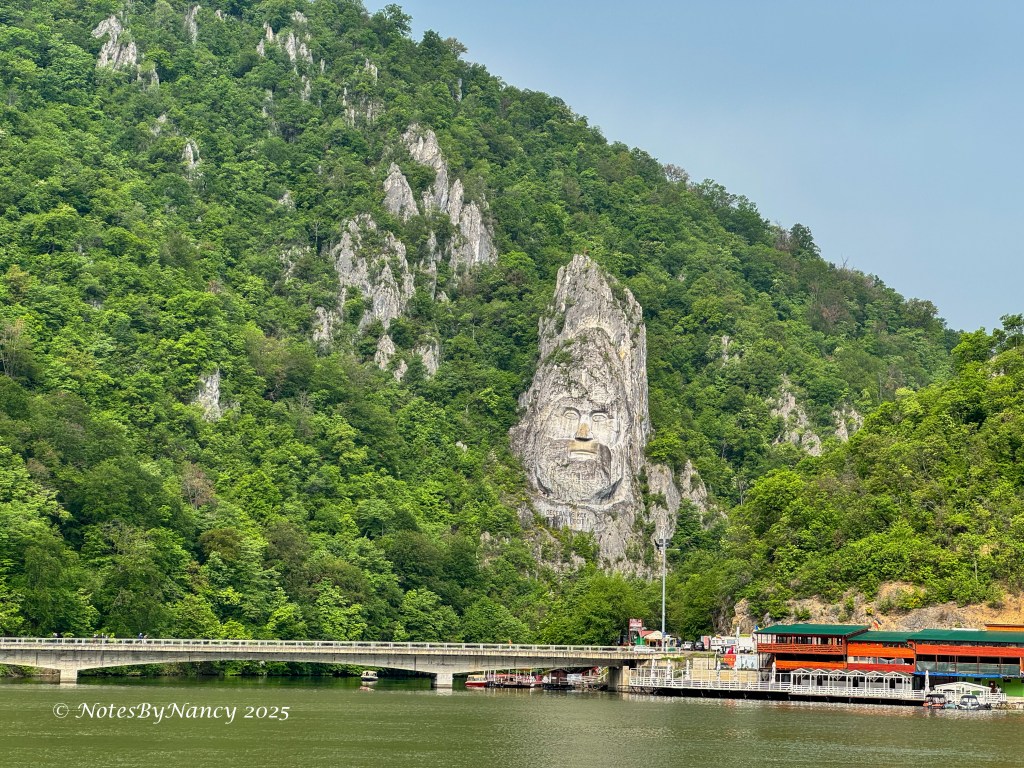
Sights in the Iron Gate Gorges – Decebalus 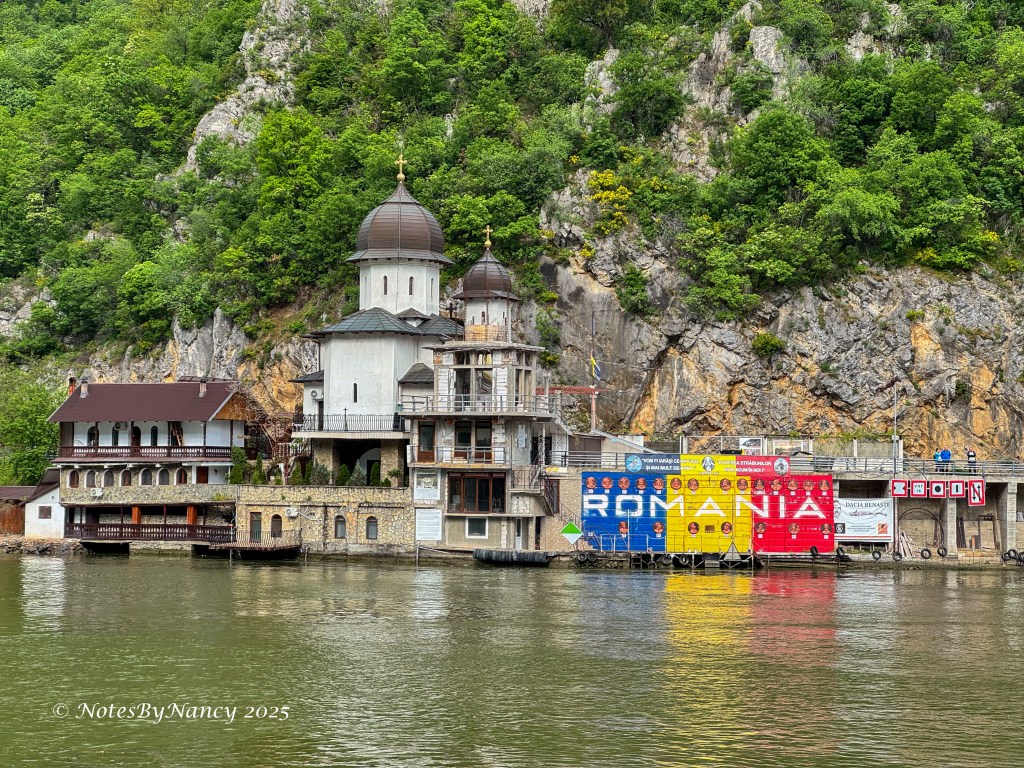
Sights in the Iron Gate Gorges 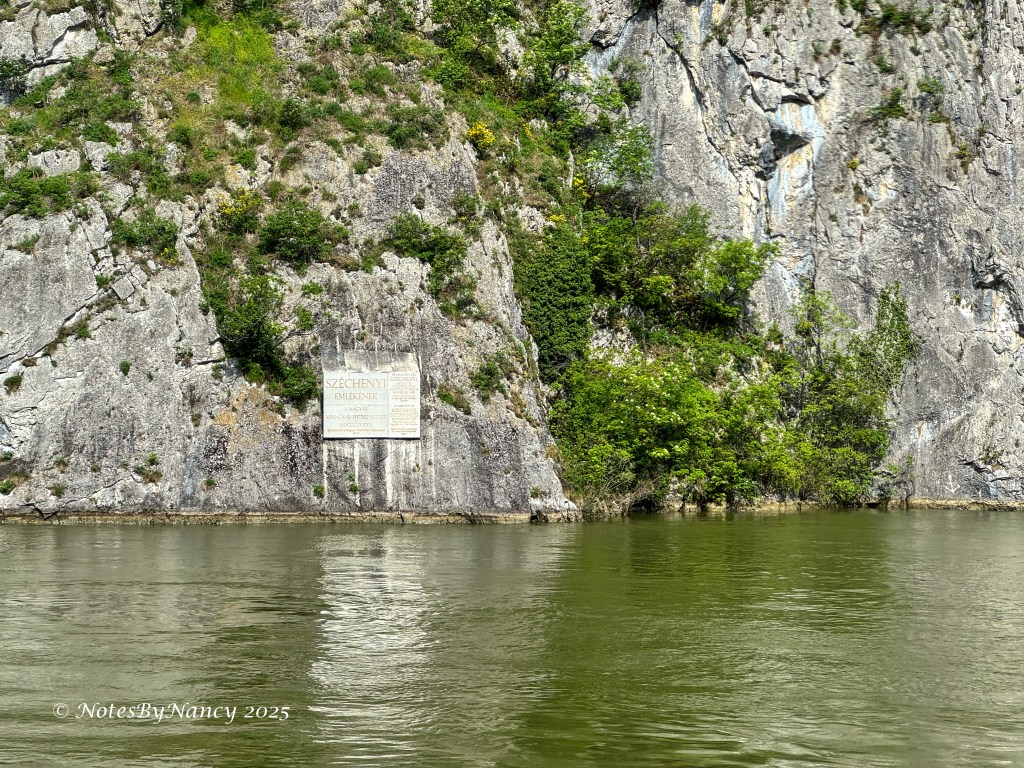
In memory of Széchenyi who originally made this section of the Danube navigable – Hungarian Society for Architects and Engineering 1885
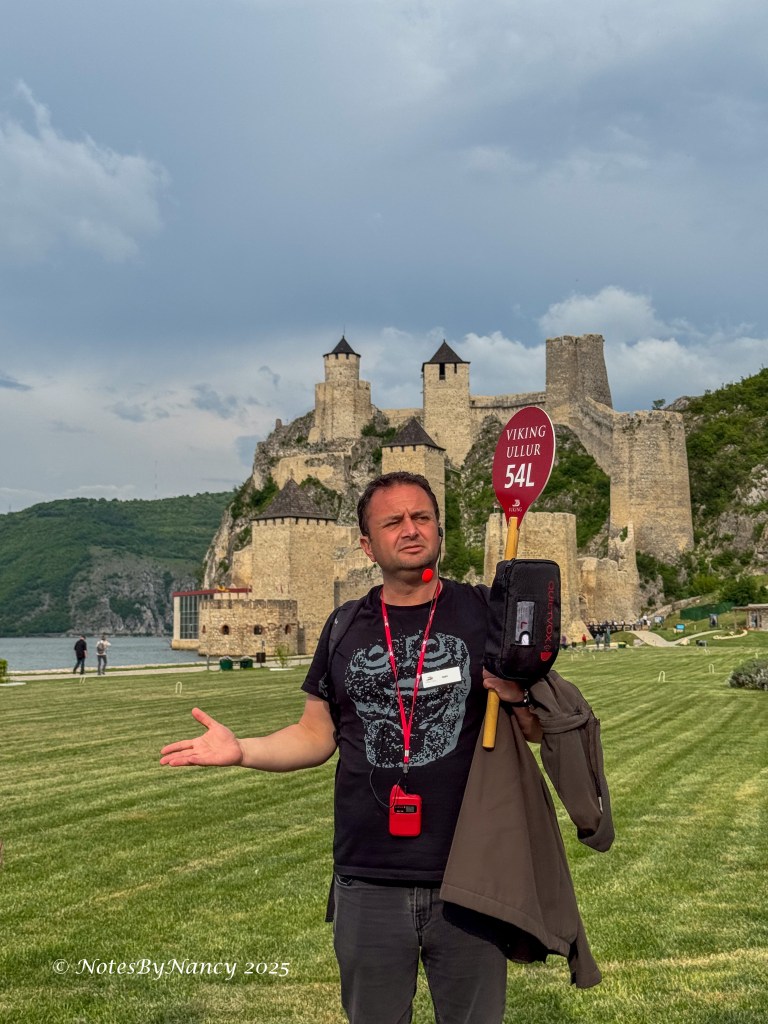
We arrived at the small town of Donji Milanovac (Доњи Милановац) for a brief stop where the optional tour passengers disembarked for their tours and then the ship continued to Golubac. We met our tour guide Ivan (pronounced Evan) and loaded onto the full bus.
Lepenski Vir Excursion
The Viking tour description reads:
Discover one of Europe’s oldest settlements during a visit to the famous Lepenski Vir archaeological site. Founded more than 8,500 years ago along the banks of the Danube River, this important Stone Age find is often called the “first city in Europe.” Upon arrival, enjoy an insightful presentation, guided tour and free time to learn more about this prehistoric settlement and the culture that once flourished here. Your excursion into life along the Danube will take you to the remnants of Golubac Fortress, a medieval town with views of the surrounding landscape, and the eco-village of Kapetan Mišin Breg, where you will visit an art gallery before browsing the handicrafts on display and sampling local favorites such as honey brandy, proja (corn bread) and pohovana kopriva (fried nettles) from a private viewpoint. At the end of your tour, you will return to your awaiting ship.
As we were going from Bucharest to Budapest, we actually did the tour in the reverse from the description above. Which was somewhat unfortunate as we had just finished lunch before starting the tour, then were served food almost immediately on the tour – oh well!
We quickly drove along the Danube through the town of Donji Milanovac which Ivan described as the smallest town in Serbia. It took maybe two minutes as he pointed out the single grocery store, coffee shop, etc. They only need one of each type of business in the small town! He also pointed out how good the road was as the tourists who have been coming enabled them to seek EU funding to improve it, then he warned us to prepare for the change in the road as we made a 180-degree turn to head up the hill away from the river on a series of switchbacks. It was quite bumpy and even more narrow as we ascended. Although a two-lane road, traffic meeting us stopped and pulled as far over as they dared to allow us to pass! These bus drivers are very brave!
Kapetan Mišin Breg
Within a very few minutes we arrived at the “art gallery” to admire the wood carvings (not for sale!) and sample the local Serbian delicacies and more mentioned above. The fried nettle was quite good, but then we come from Texas where fried butter is actually served at the State Fair! The honey brandy was an interesting combination of sweet and strong liquor. I only managed a couple of very small sips to say that I had tried it!
The sculptures from reclaimed wood were quite interesting as well. It is interesting to see what the artist made from various pieces. There is a B&B on the property, so he also has a “wine museum” with all the wine that visitors brought as gifts over the years as is the custom in Serbia. And, the views from this location are exceptional.
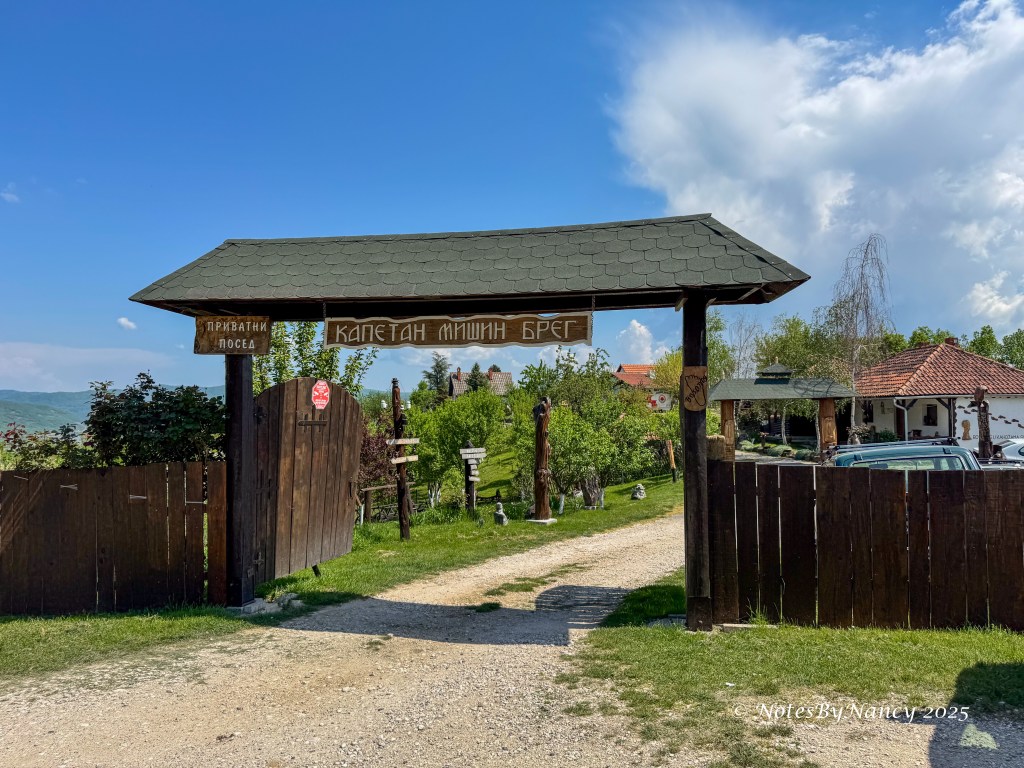
Kapetan Mišin Breg – Art Colony, Restaurant, B&B 
Kapetan Mišin Breg – Art Colony, Restaurant, B&B 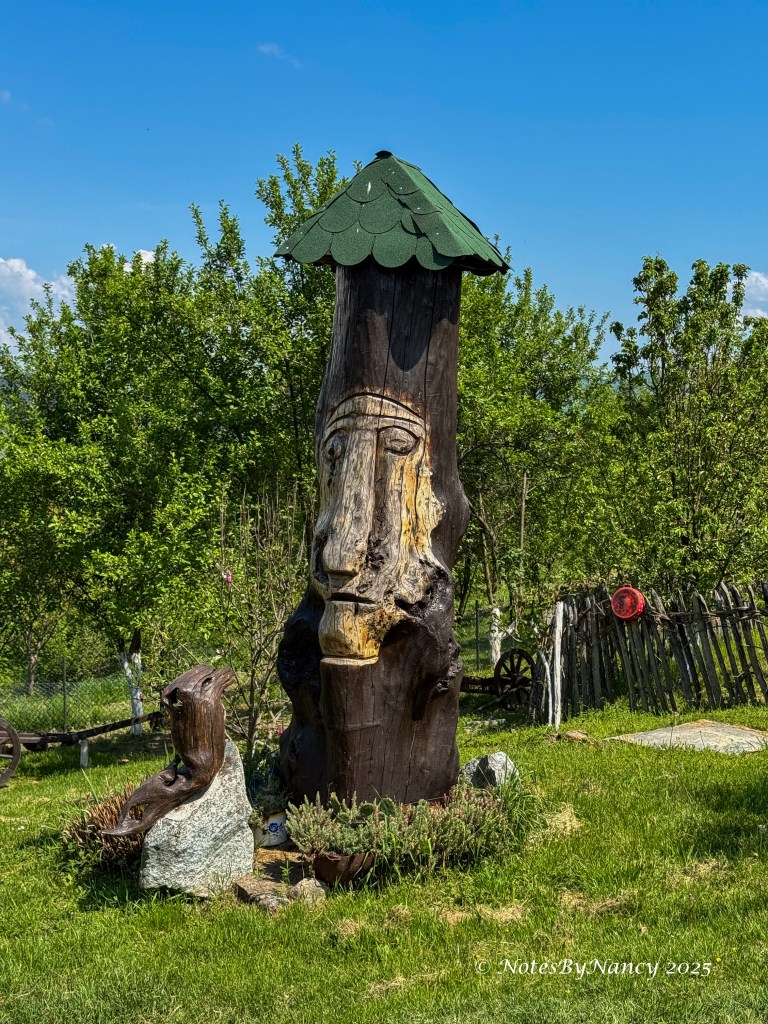
Kapetan Mišin Breg – Art Colony, Restaurant, B&B 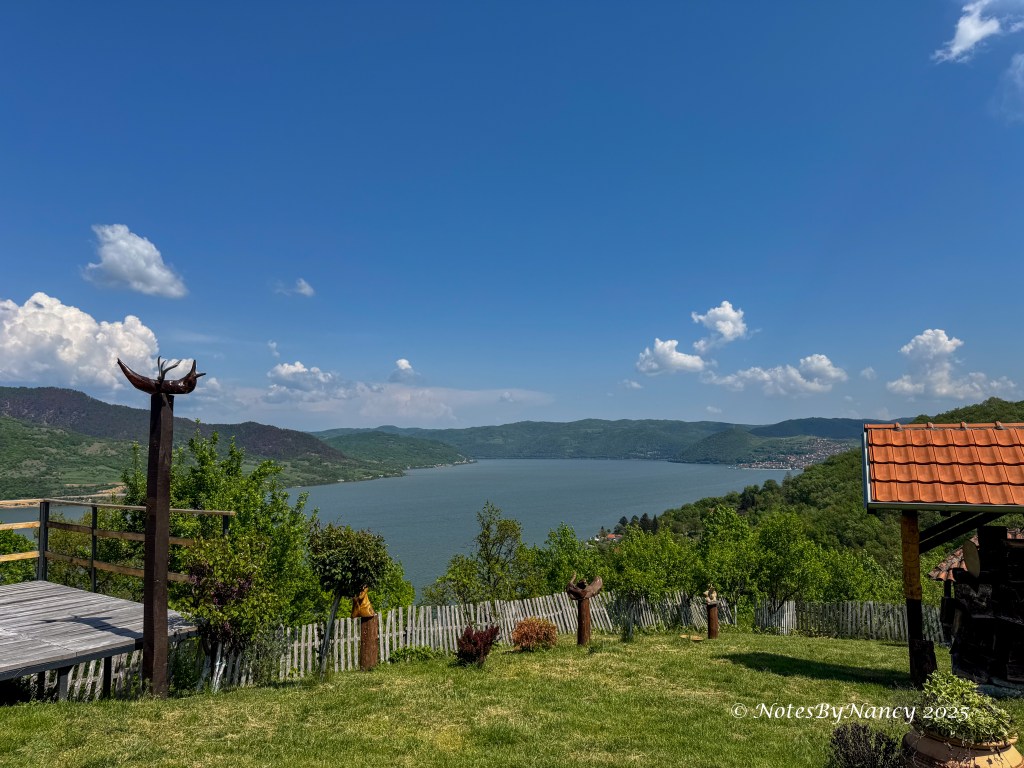
Kapetan Mišin Breg – Art Colony, Restaurant, B&B 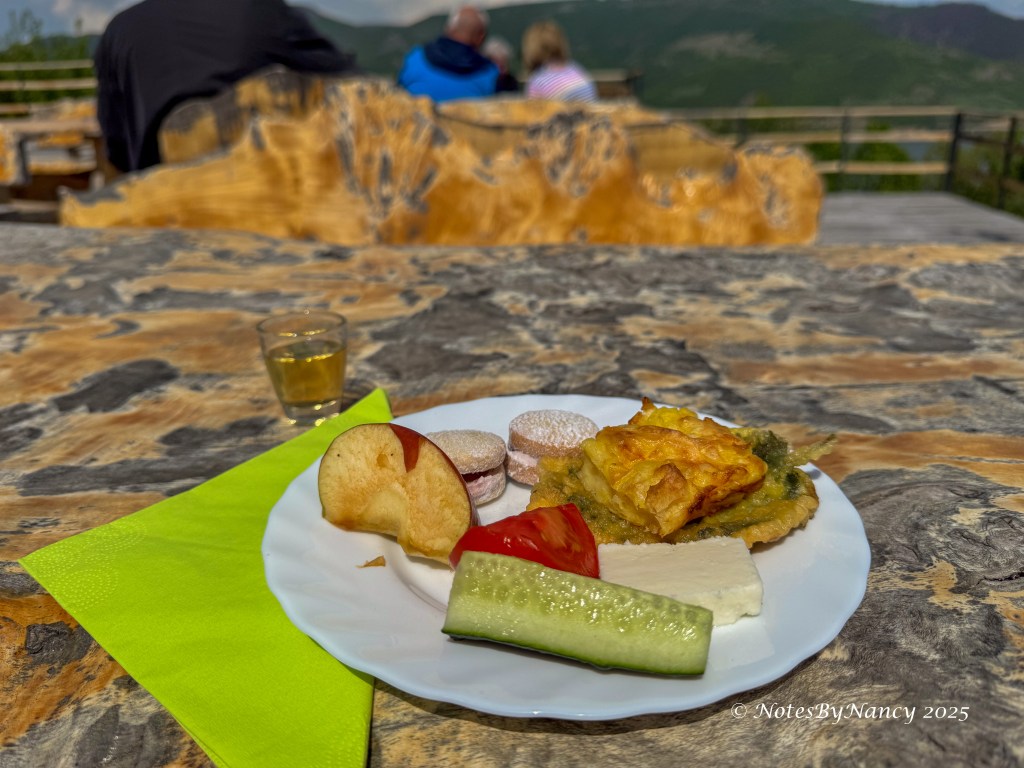
Kapetan Mišin Breg – Our Serbian Delicacies 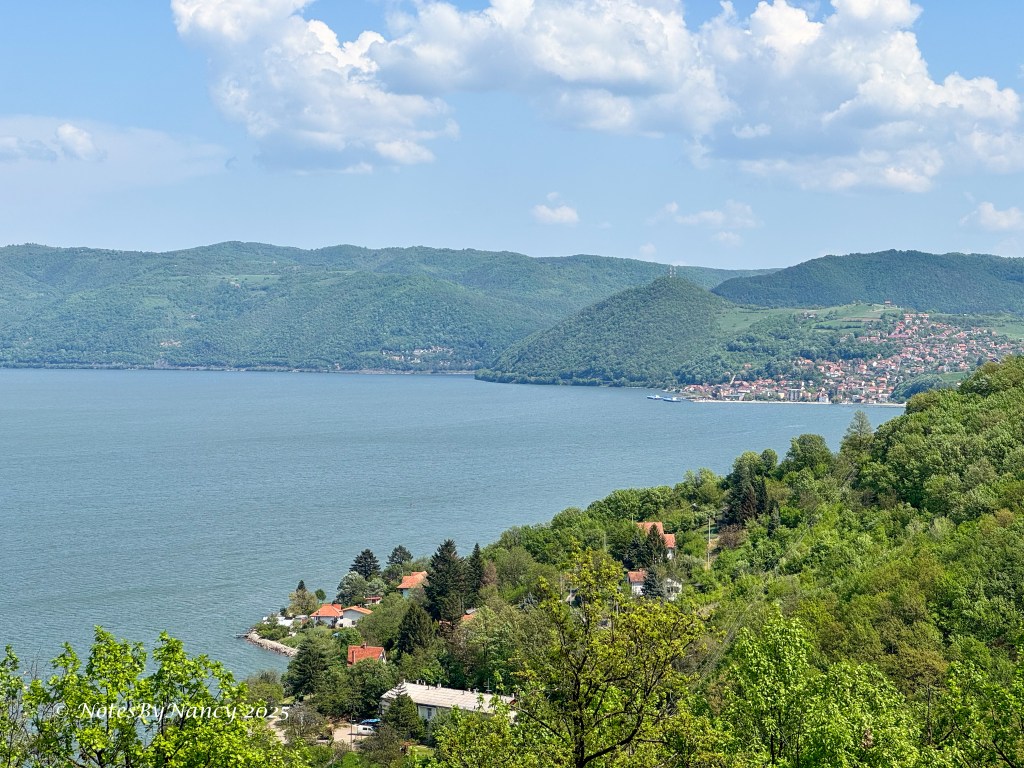
Kapetan Mišin Breg – Art Colony, Restaurant, B&B 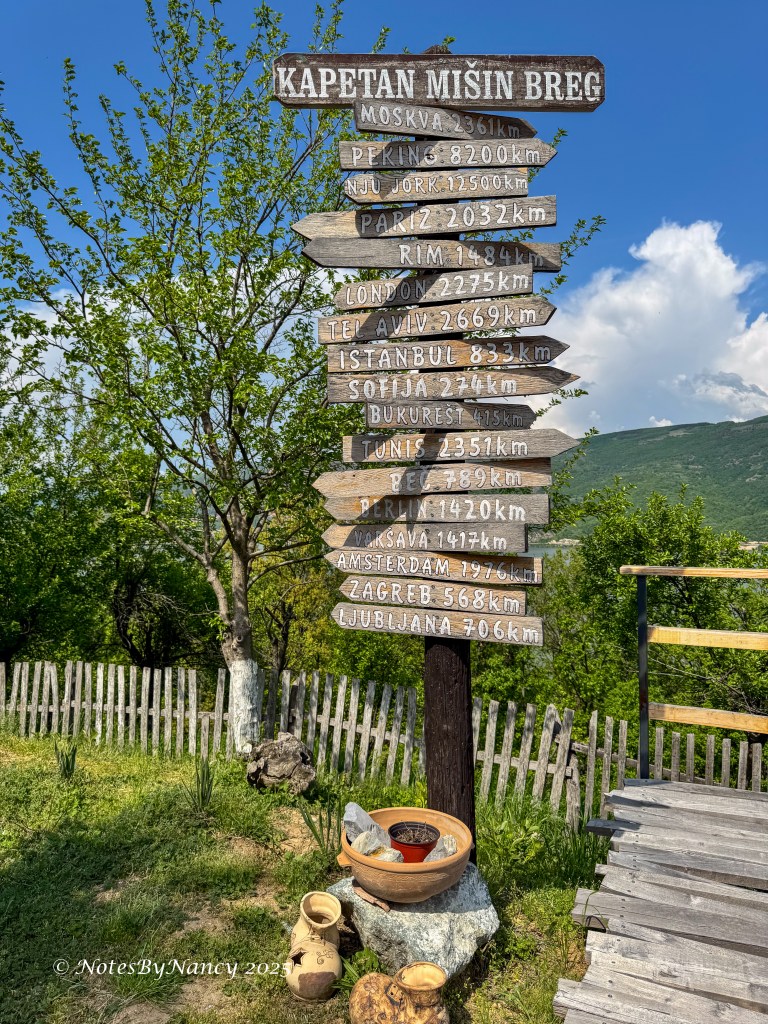
Kapetan Mišin Breg – Art Colony, Restaurant, B&B 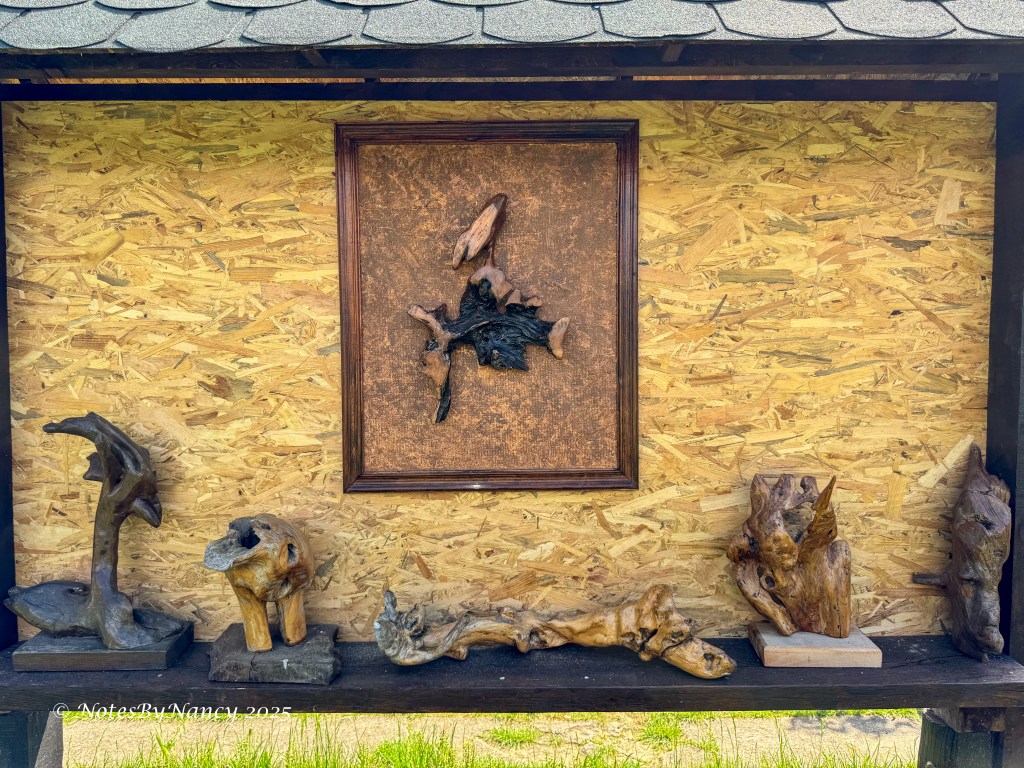
Kapetan Mišin Breg – Art Colony, Restaurant, B&B 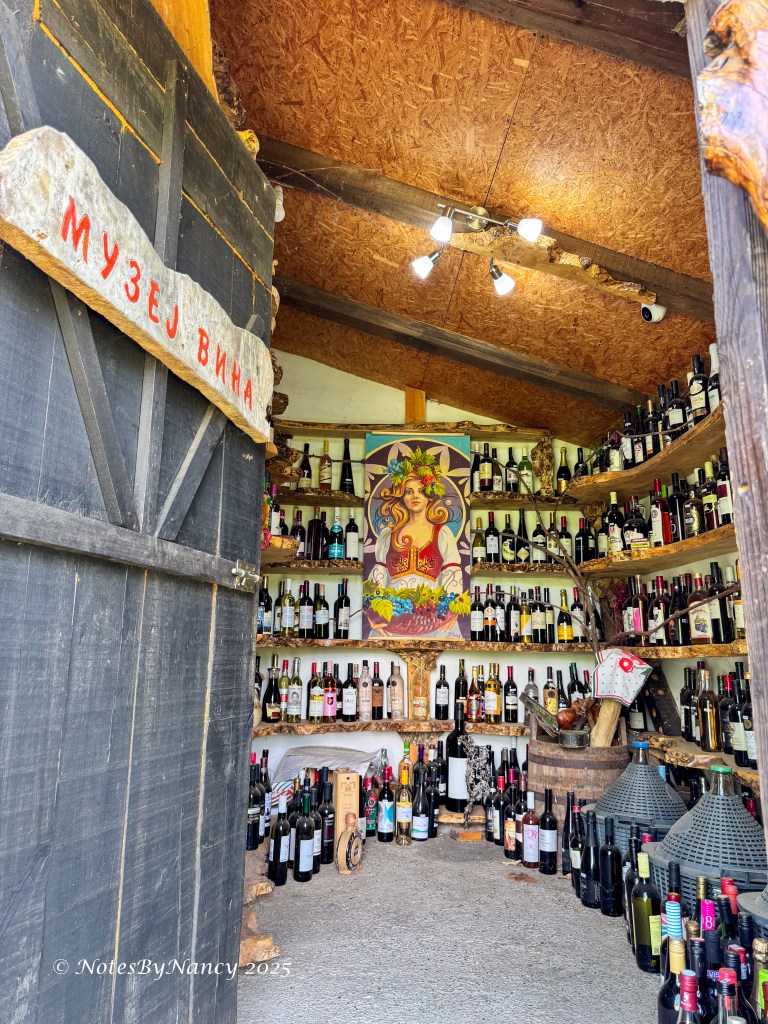
Kapetan Mišin Breg – Wine Museum 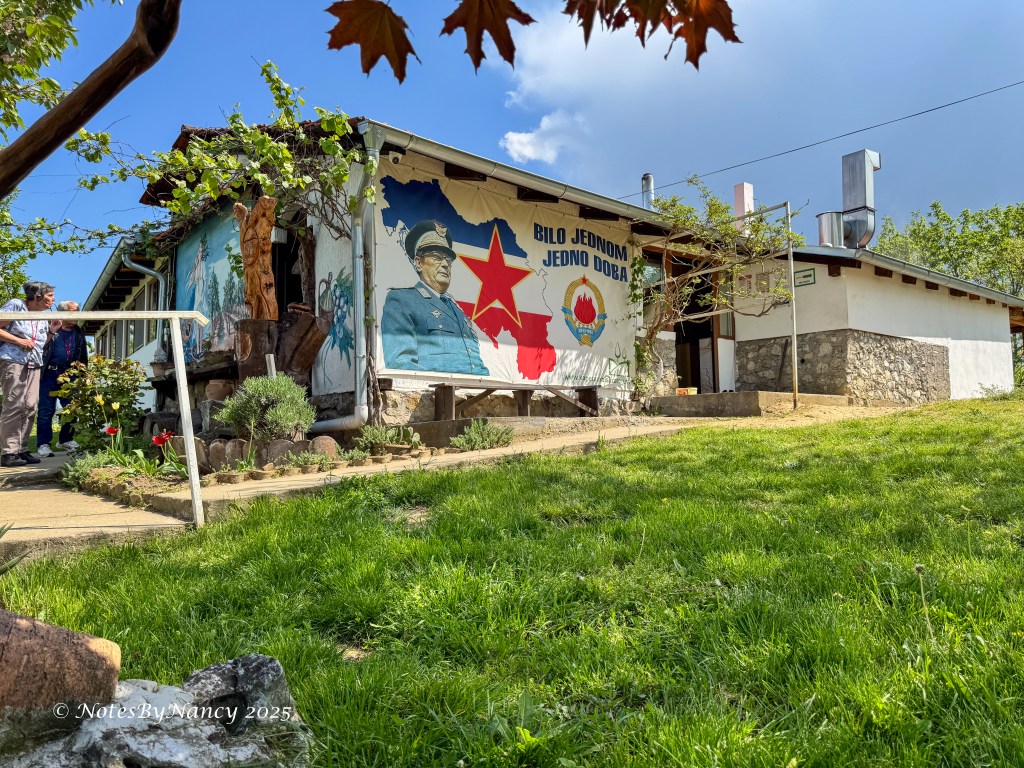
Kapetan Mišin Breg – Tito Wall – “Once Upon a Time” 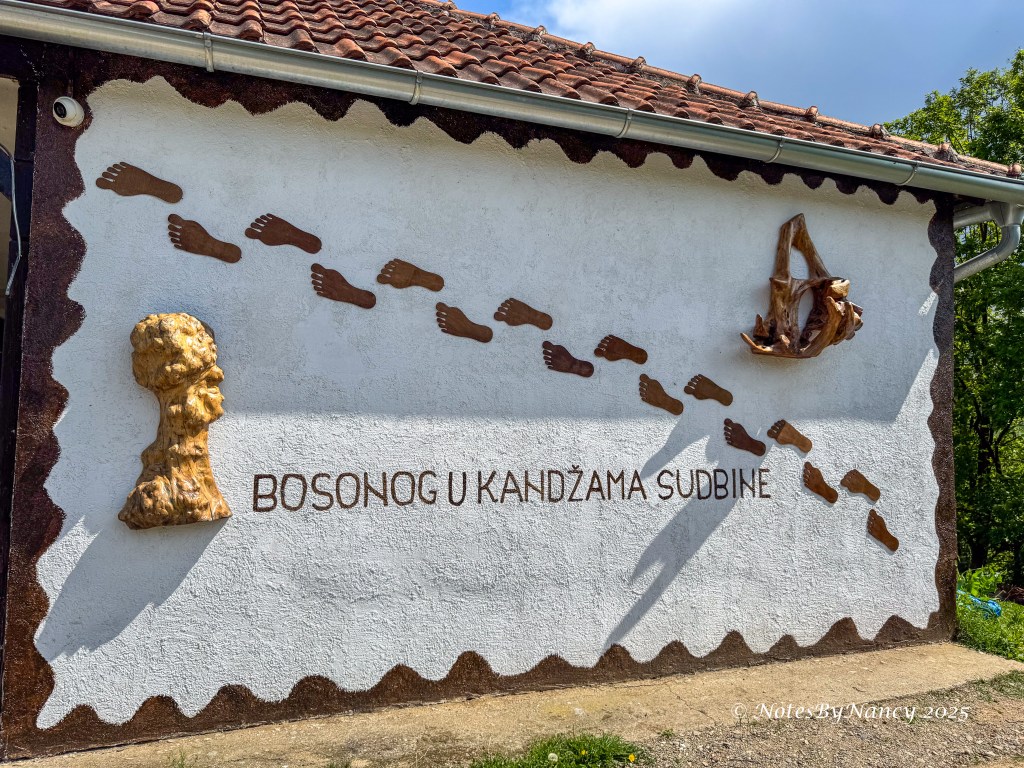
Kapetan Mišin Breg – Transalation: Barefoot in the Clutches of Fate
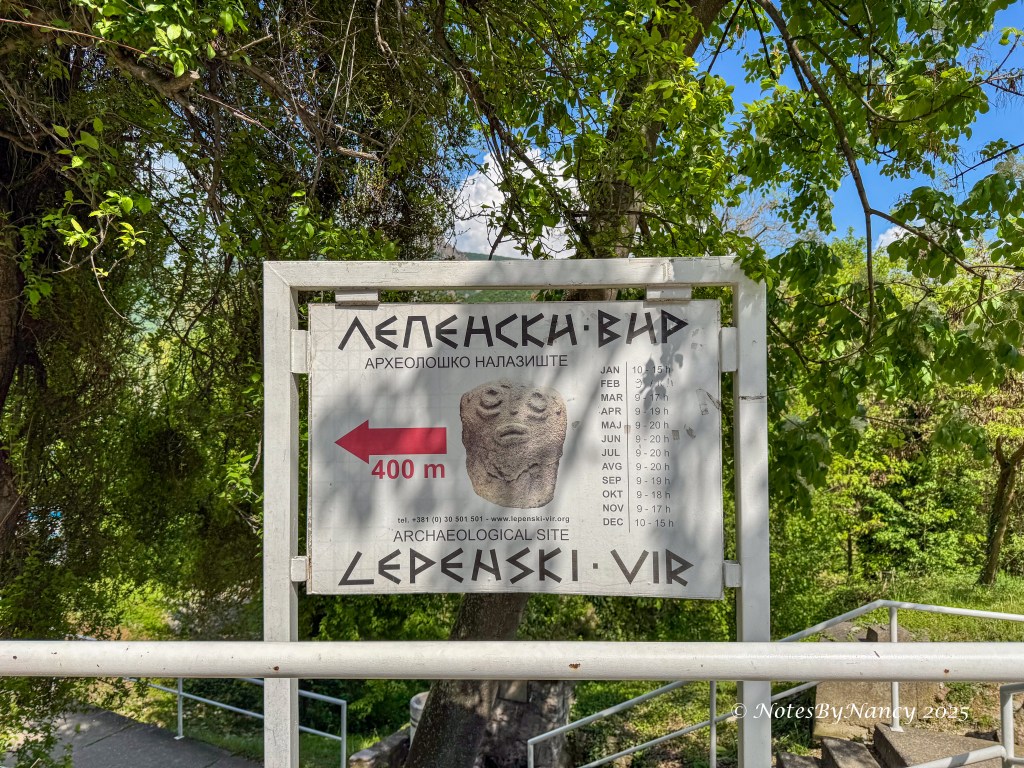
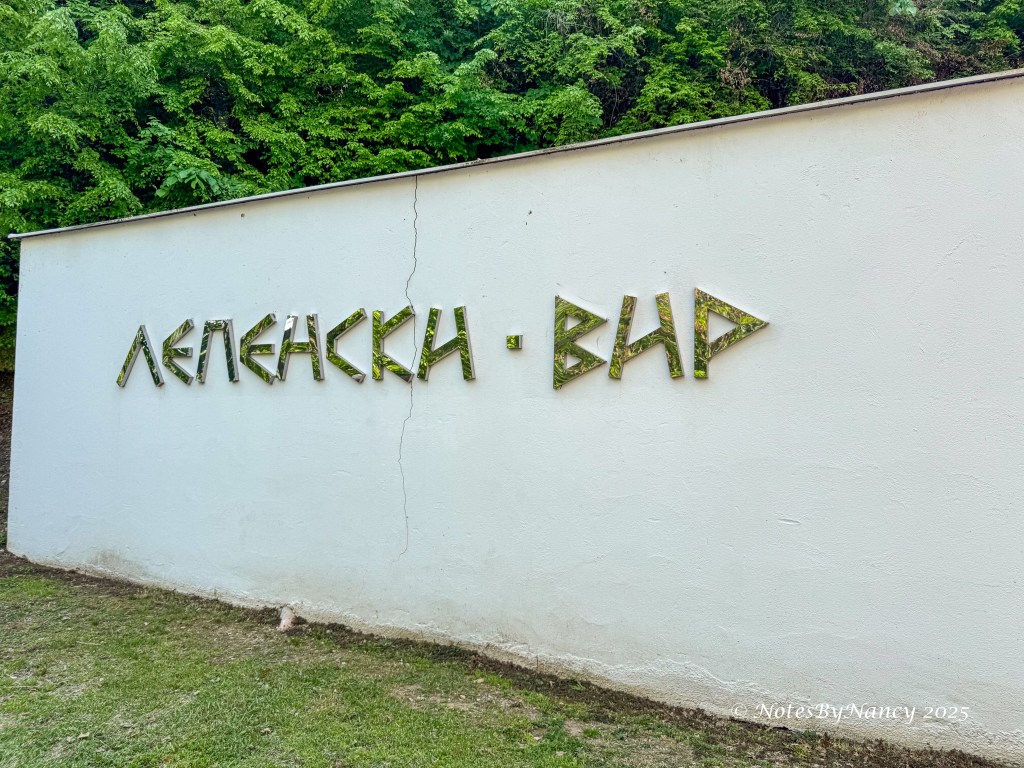
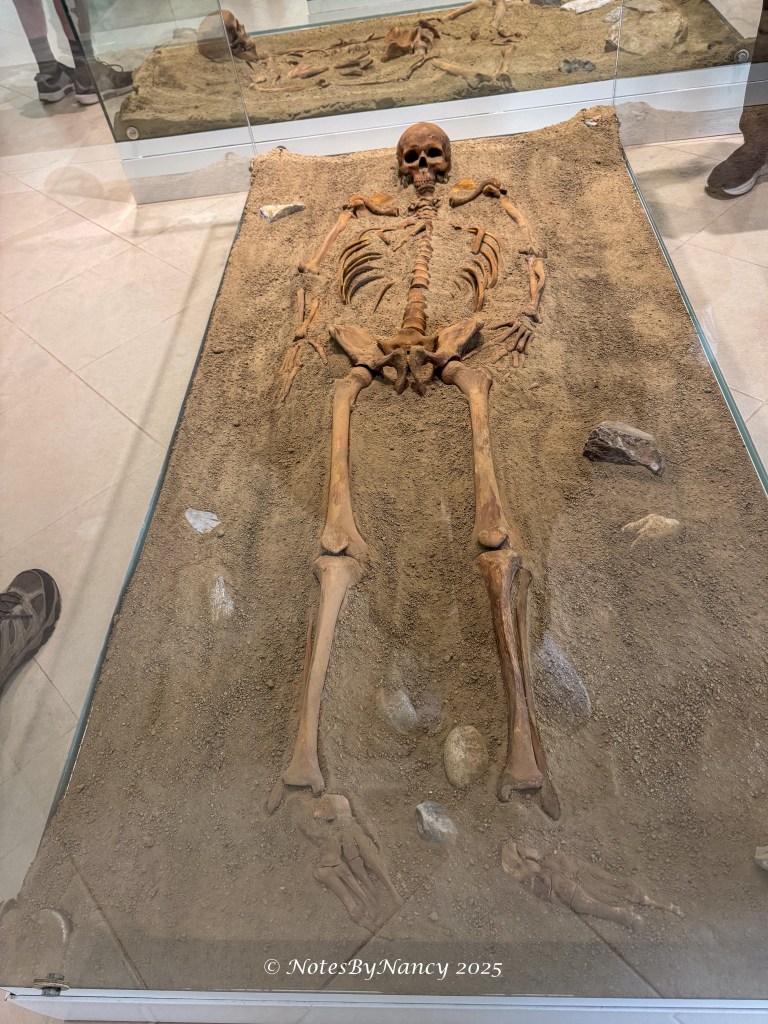
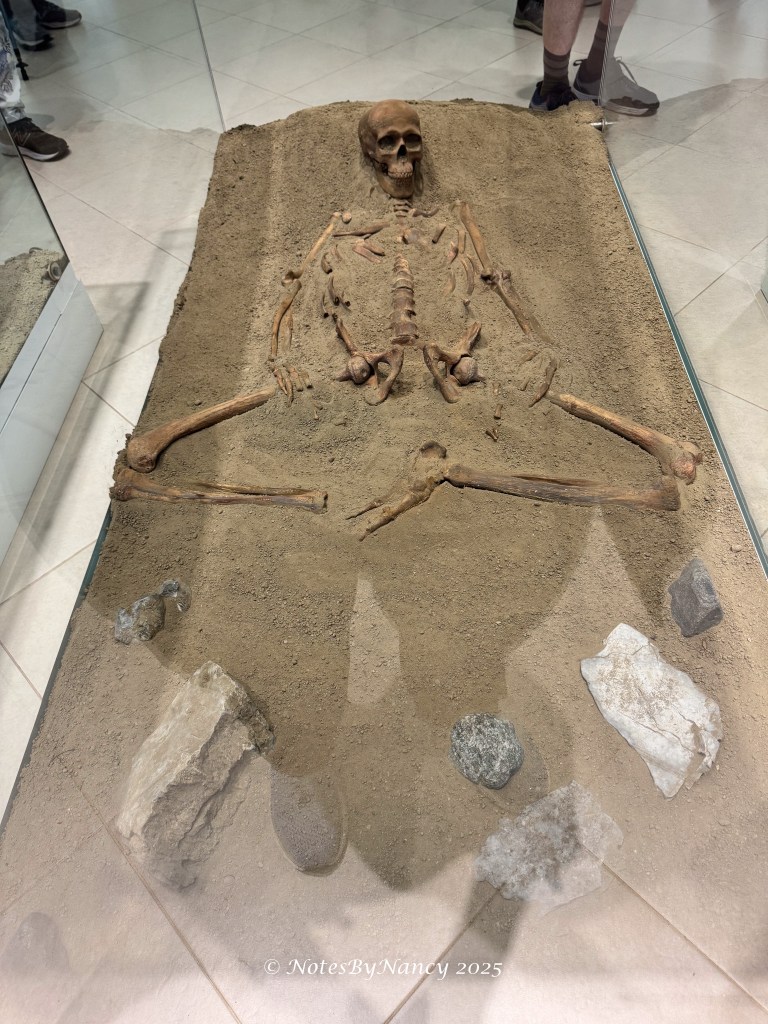
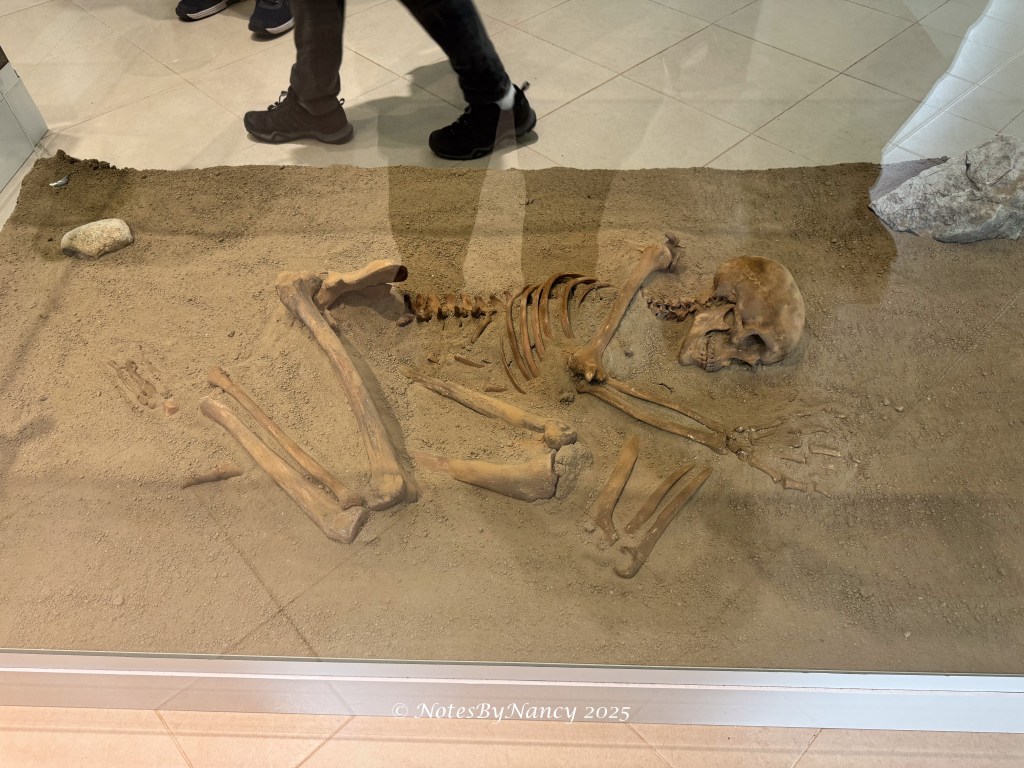
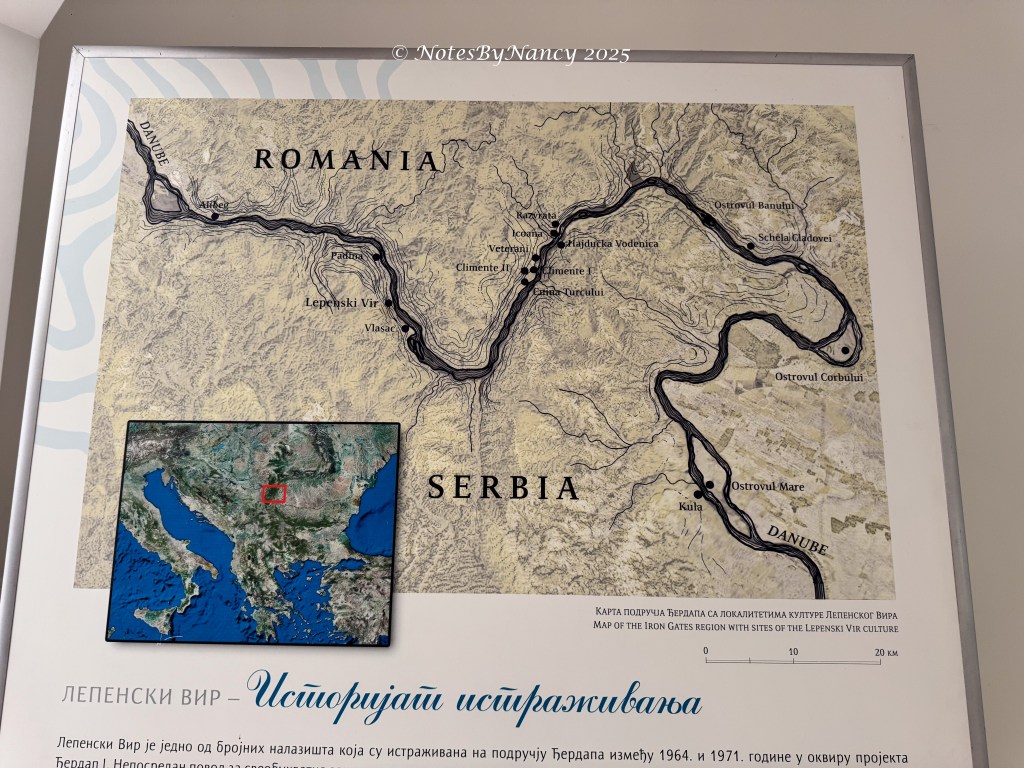
Lepenski Vir
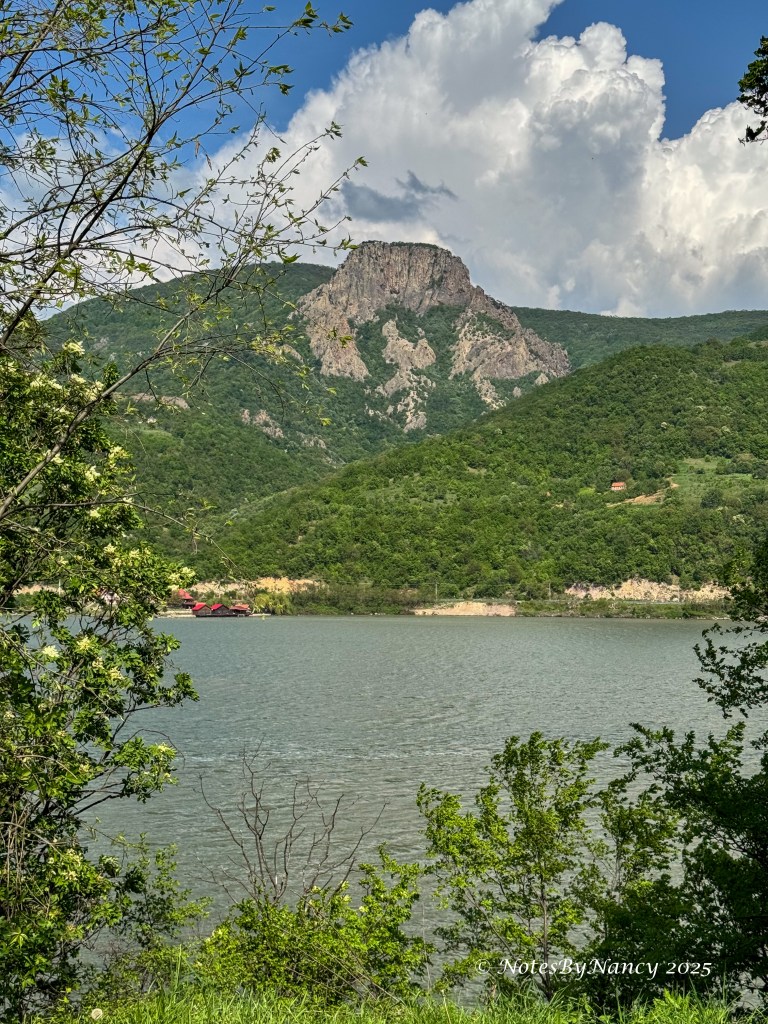
The name of the location is derived from a surname “Lepenski” and “vir” means “whirlpool” reflecting the nature of the river at that point.
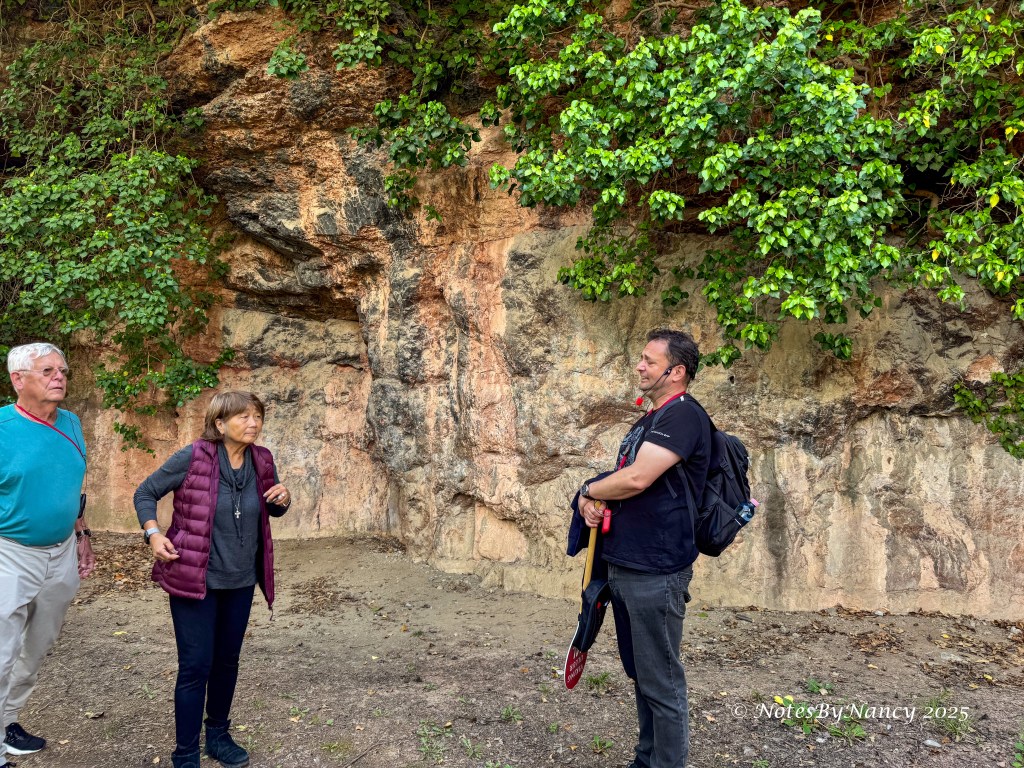
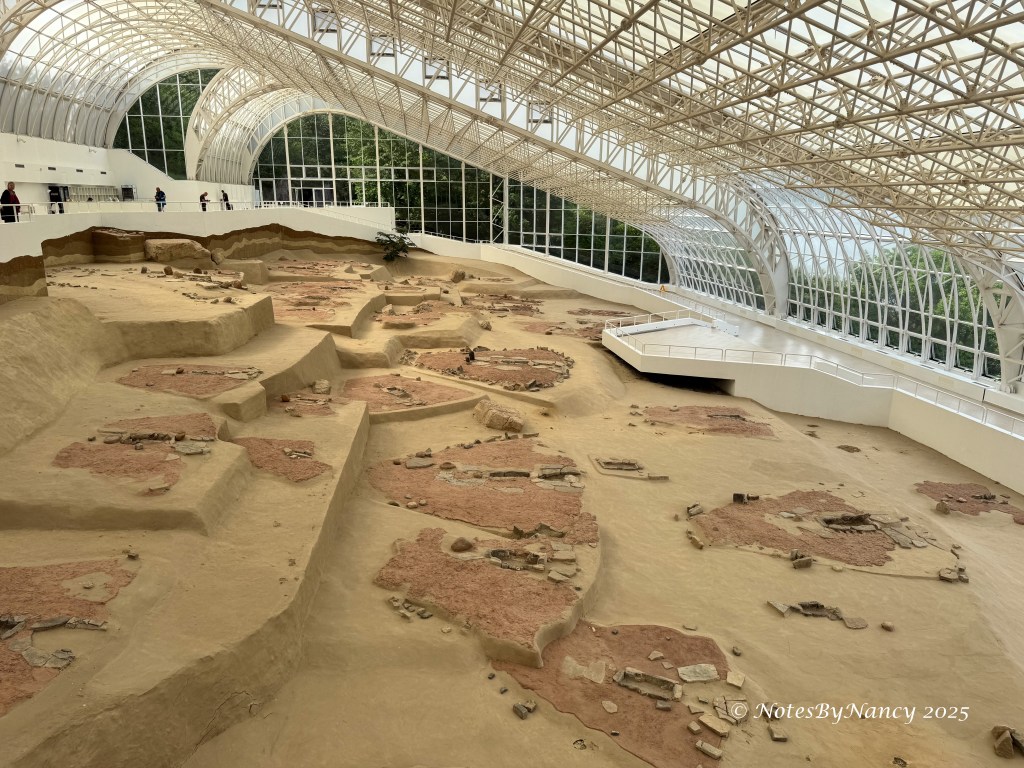
Ivan did an excellent job explaining the history of the site, its significance, and how our visit would go. It is approximately an 8-minute walk along a fairly flat path from the parking lot to the now reconstructed and covered site. Because they used glass and plastic as the covering to allow for natural light to better experience the site, it is like a greenhouse inside and we were glad to be visiting in the Spring!
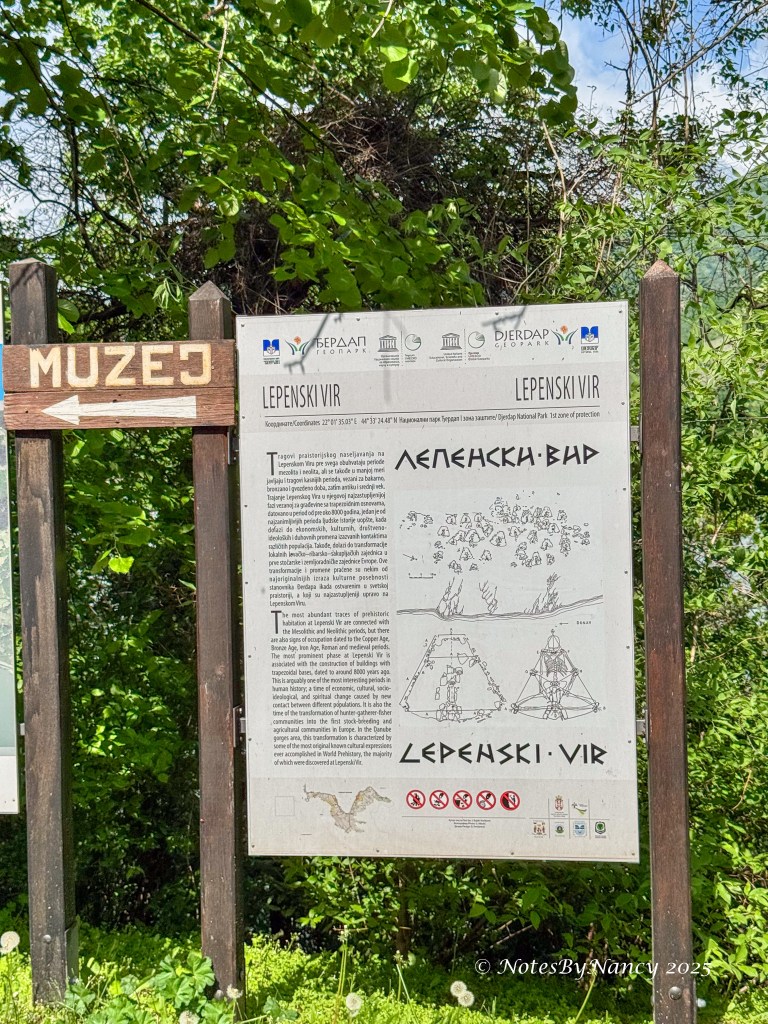
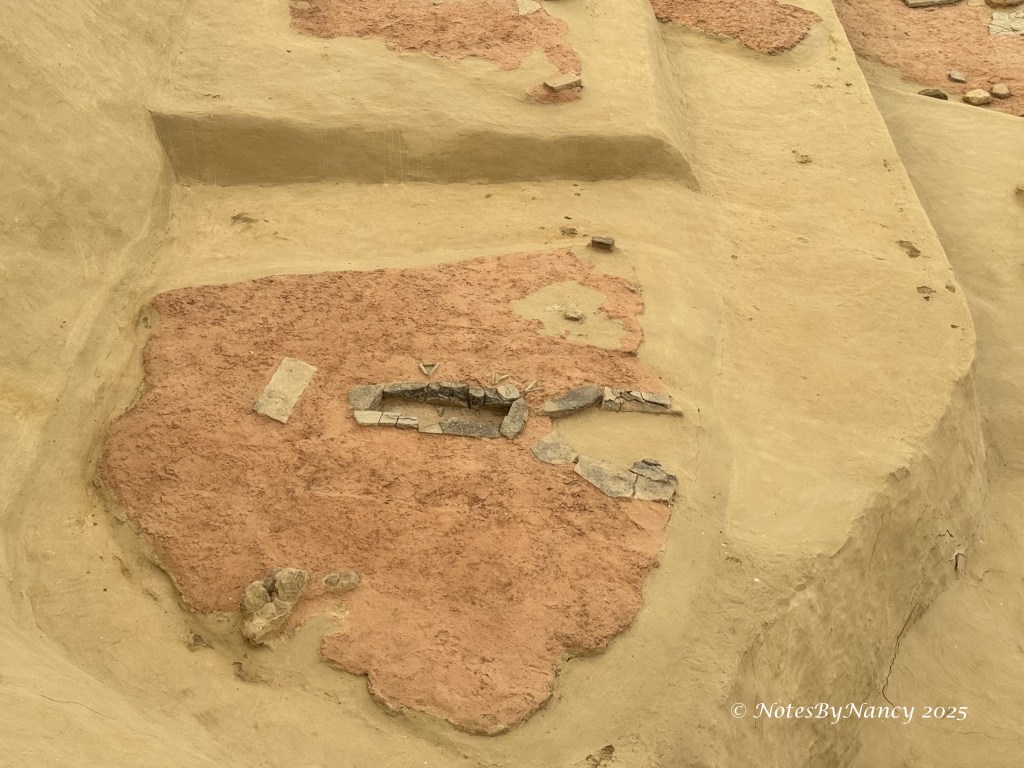
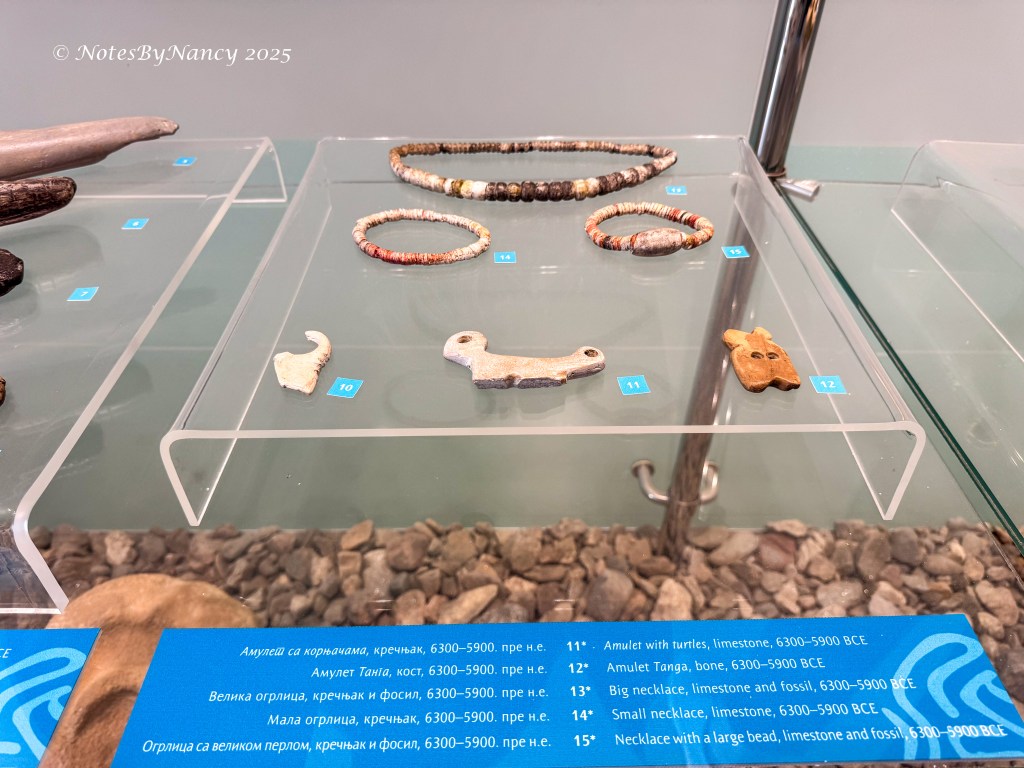
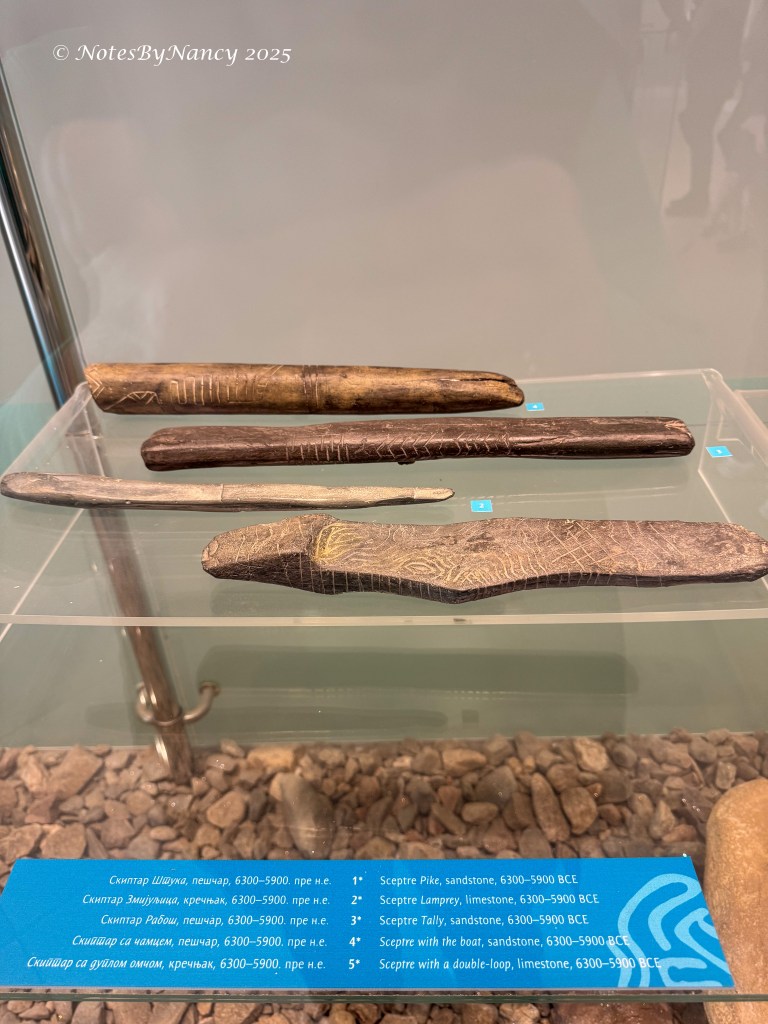
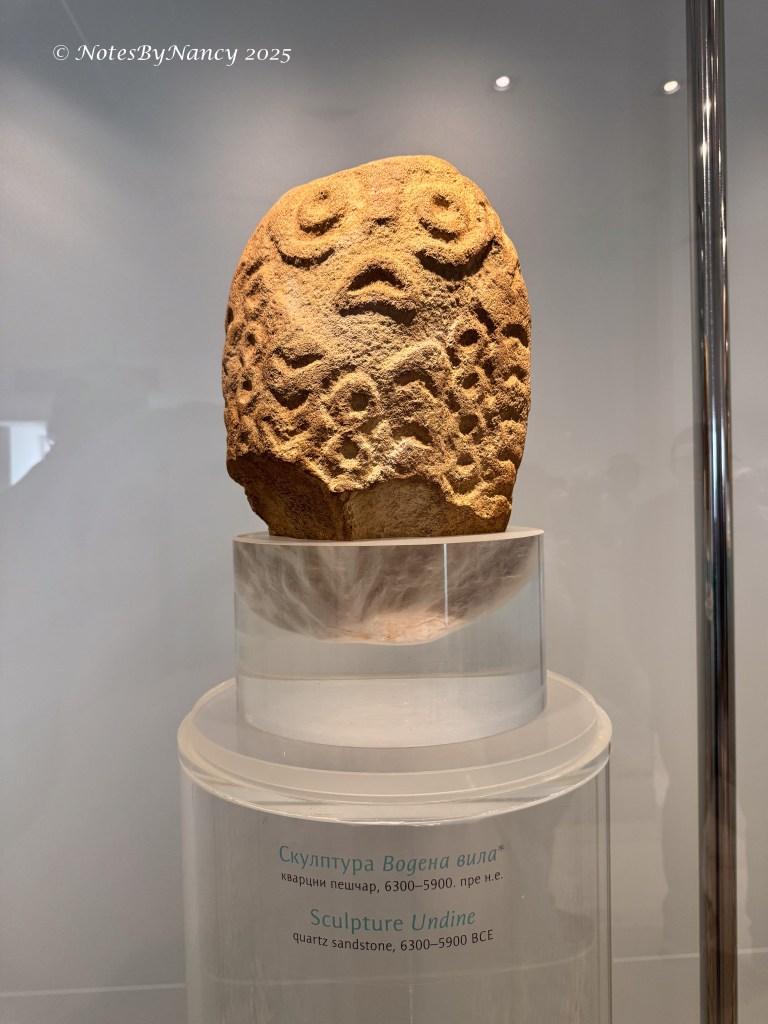
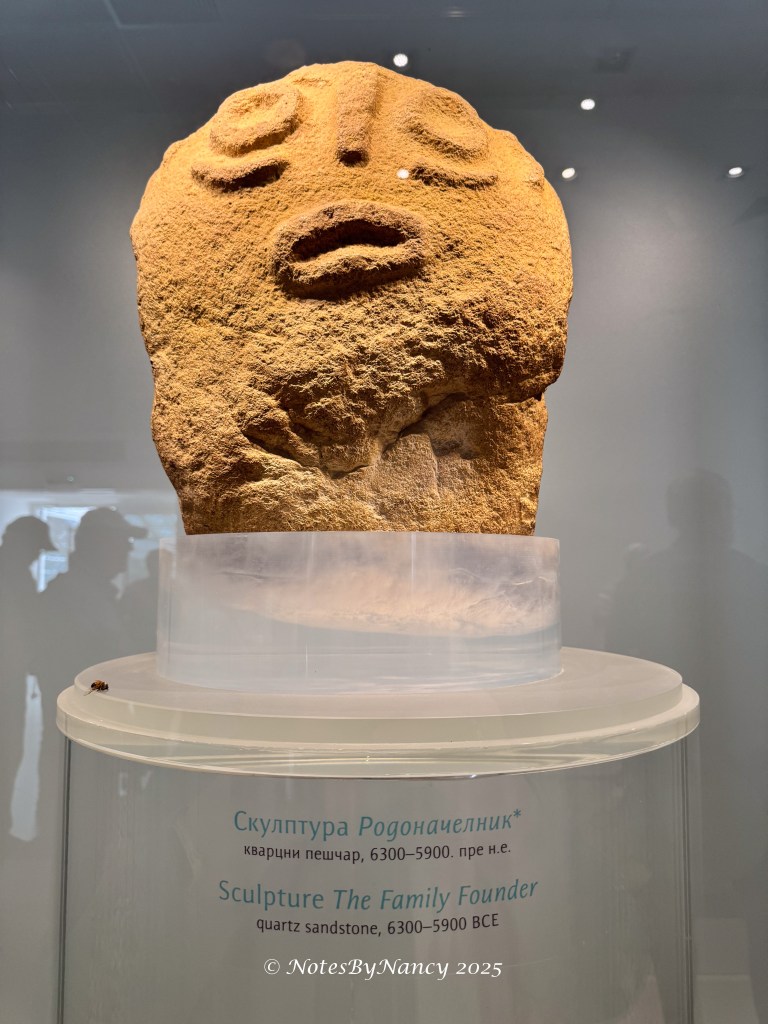
There is a 16-minute documentary video made during the time of the original excavations and discoveries (with English subtitles) that was very enlightening. The base of each home is in the same shape as the mountain across the river from the village. And regardless of size of the individual house, its measurement creates 1/6 of a circle like a slice of pie. This design was found in layers from the Mesolithic to the Neolithic periods – more than 4000 years. The flooring was designed around a fire pit and was made of clay with iron and water which hardened like cement and conducted heat from the fire pit – the first heated flooring in Europe! Whatever materials made up the walls and roof are not known and can only be speculated as to the design. It is thought that the inhabitants probably only used the structures for sleeping as they would be working outside all day. Of the 330 skeletal remains found, all were determined to have died from natural causes – which is amazing. They also determined that this “tribe” lived as much as 50%-100% longer than the average for that time frame and were taller than others – when the average male was 5’ 5”, these people were 5’ 8” to over 6’ tall. This was thought to be due to their diet of sturgeon which existed in the river until the dam was built (unfortunately they didn’t think to put in fish ladders). That they admired and perhaps even worshiped the sturgeon can be seen in the artifacts and sculptures found at the site.
This was an amazing visit as I’d never heard of this site, which has been determined to be evidence of humans in the region as early as 9500 B.C. or many thousands of years before previously thought. The whole story behind its discovery, relocation, and importance was fascinating.
Golubac Fortress
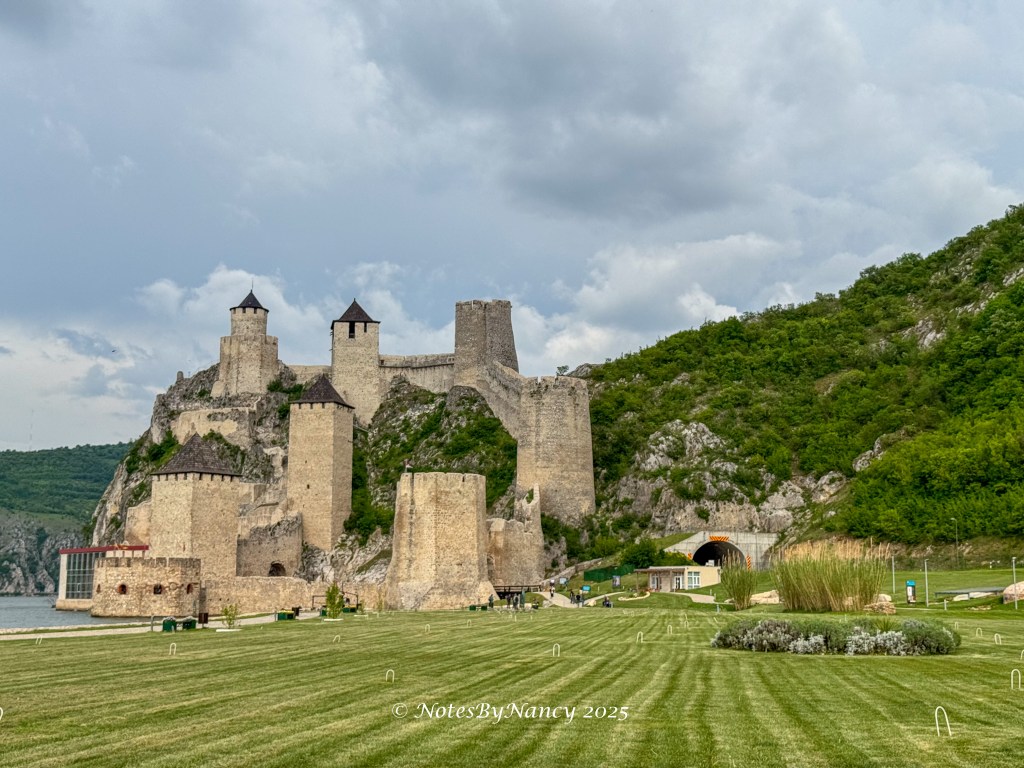
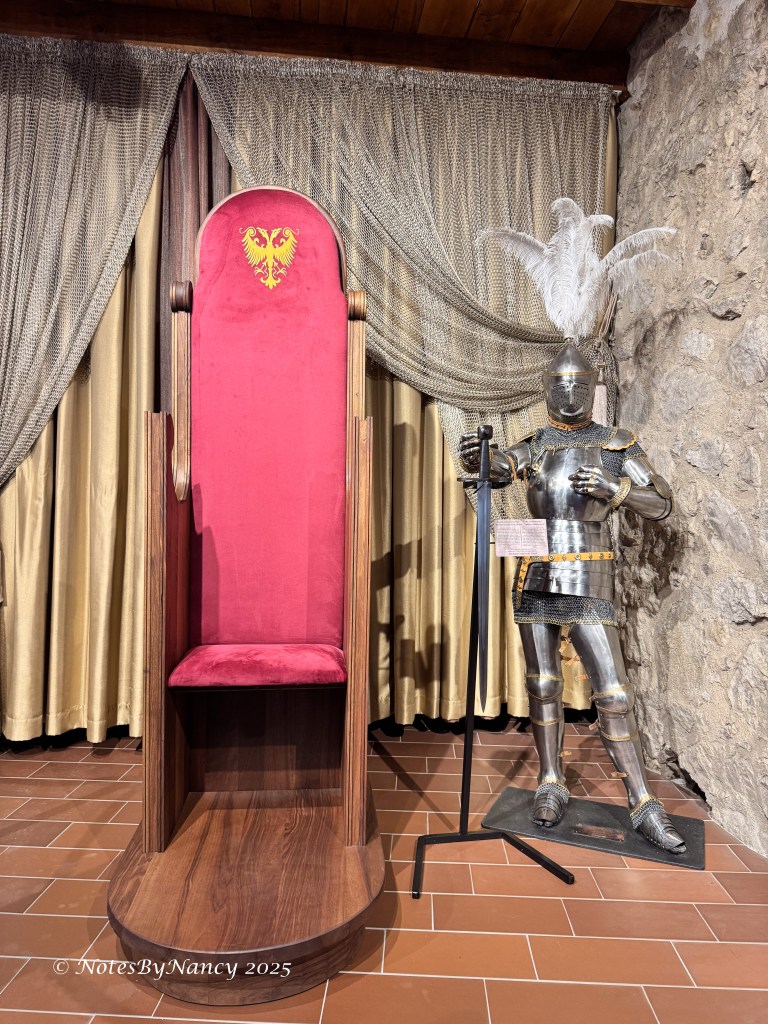
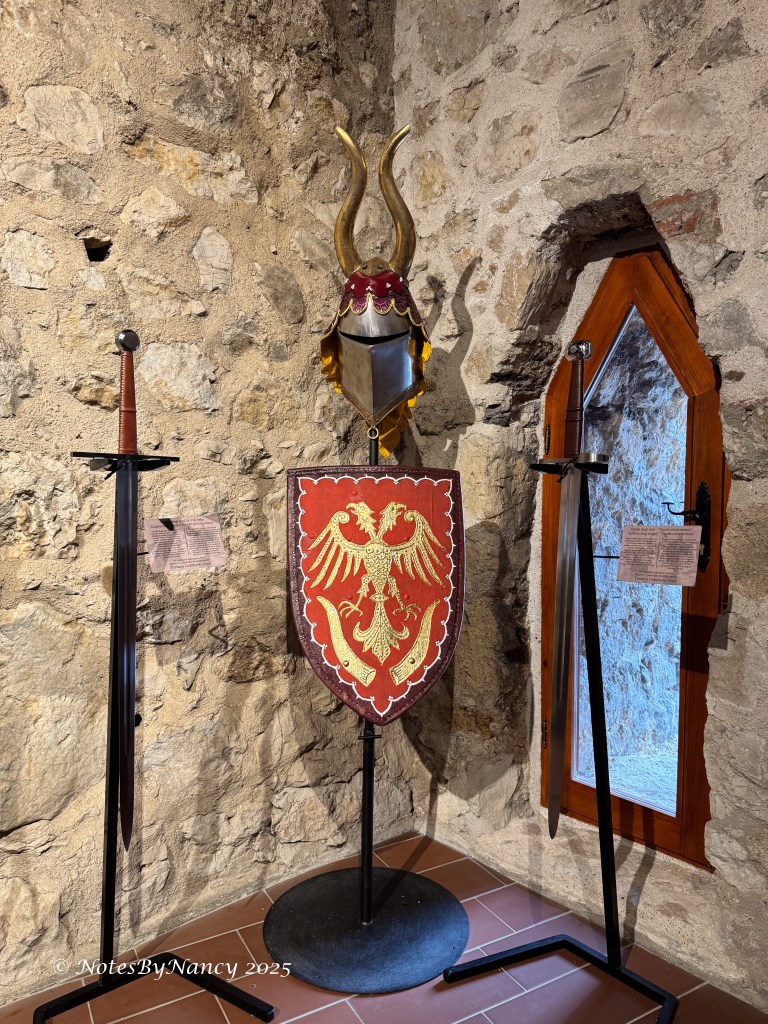
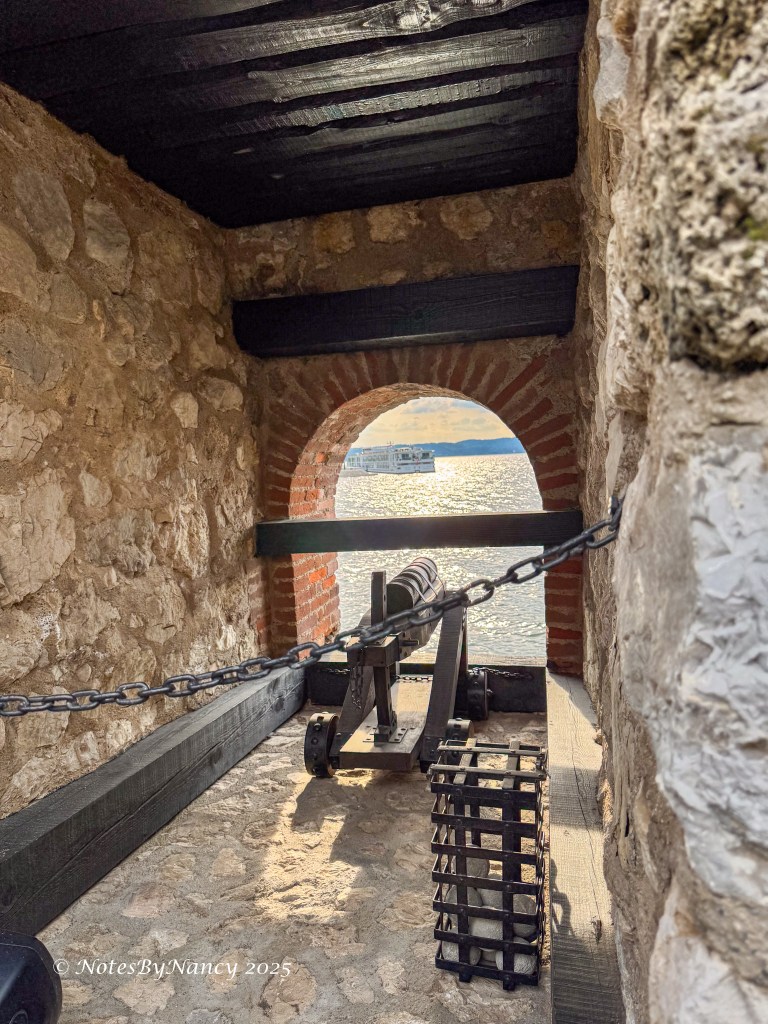
After leaving Lepenski Vir, we arrived at the location of Golubac, Serbia, where the 14th Century Golubac Fortress guards the Danube and the entrance to the Iron Gate. At such an important location, over the centuries it has been under the control of the Serbs, Hungarians, Bulgarians, and Turks.
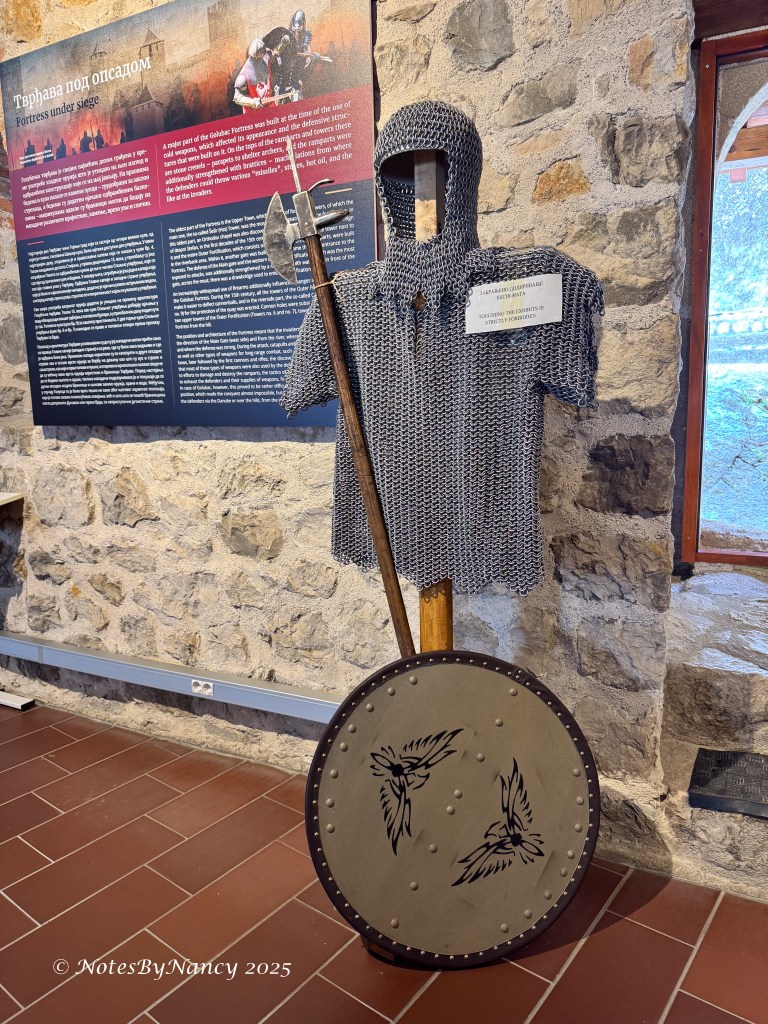
The fortress has been repaired and reconstructed wherever possible for visitors to explore the world of medieval life.

A Taste of the Balkans
While every dinner has a few “destination” options related to the region Viking is sailing, they occasionally have special dinner events where samples of the regional cuisine are served, the restaurant is decorated in that region’s style, and the wait staff wear traditional garb. Tonight was “A Taste of the Balkans”. Unfortunately, we took no pictures! The appetizers were already on the tables when we arrived and consisted of cold cuts, cheeses, and some other things I now don’t remember! For the main, everyone selected either “meat”, “fish”, or “vegetarian”. The “meat” was actually 3 different meats – chicken, lamb, and pork – each with its own preparation. I don’t remember the sides, but the running joke is that all vegetables in the Balkans have bones attached! We were all stuffed and dessert was still to come. They had a yummy crepe-style dessert served to everyone, then four additional desserts to choose from if that wasn’t enough already!
And at this point, I got even further behind in my blog from being in a food coma! Stay tuned though – I’ll eventually finish blogging about the rest of the trip.

 Notes By Nancy
Leave a comment