
While researching tour guides on Tours By Locals for our days in Lisbon, we found a professionally licensed guide with over 25 years of experience that we thought we’d like, Carla C. She also offered transportation and guide services from Porto to Lisbon, in addition to standard tours in Lisbon. She appeared to be available for our dates, so I contacted her about a custom tour for us to include her Porto to Lisbon tour on Friday, a half-day in Lisbon walking tour on Saturday, and a full-day tour to Sintra with stops at Cabo da Roca and Cascais on Monday. She replied with a favorable itinerary and price that seemed fair as she’d have to travel from Lisbon to Porto to get us.
Carla arrived promptly at 10am at our pickup location in a very comfortable Mercedes-Benz van. She’d brought a driver, her husband, Carlos, who was retired from the Portuguese military. This made it convenient for her to talk while he drove plus, he could drop us off close to the places we wanted to visit and pick us up later.
Coimbra
Remember the saying from Note 37? “Braga prays, Coimbra studies, Porto works, and Lisbon gets the money and parties”? Our first stop today was the University of Coimbra located about 75 miles (120km) or an hour and 15 minutes south of Porto. The university was originally founded in Lisbon in 1290 making it the oldest university in Portugal and one of the oldest in continuous operation in the world. It moved to Coimbra in 1308 and alternated with Lisbon until becoming the permanent site in 1537. It started in the Royal Palace, then spread throughout the city making Coimbra “University City” and thus “Coimbra studies”! In 2013, it was designated a UNESCO World Heritage Site. Today, there are over 28,000 students on multiple campuses. As we were there in early May, it was graduation time, and many seniors were gathered in the square taking pictures.

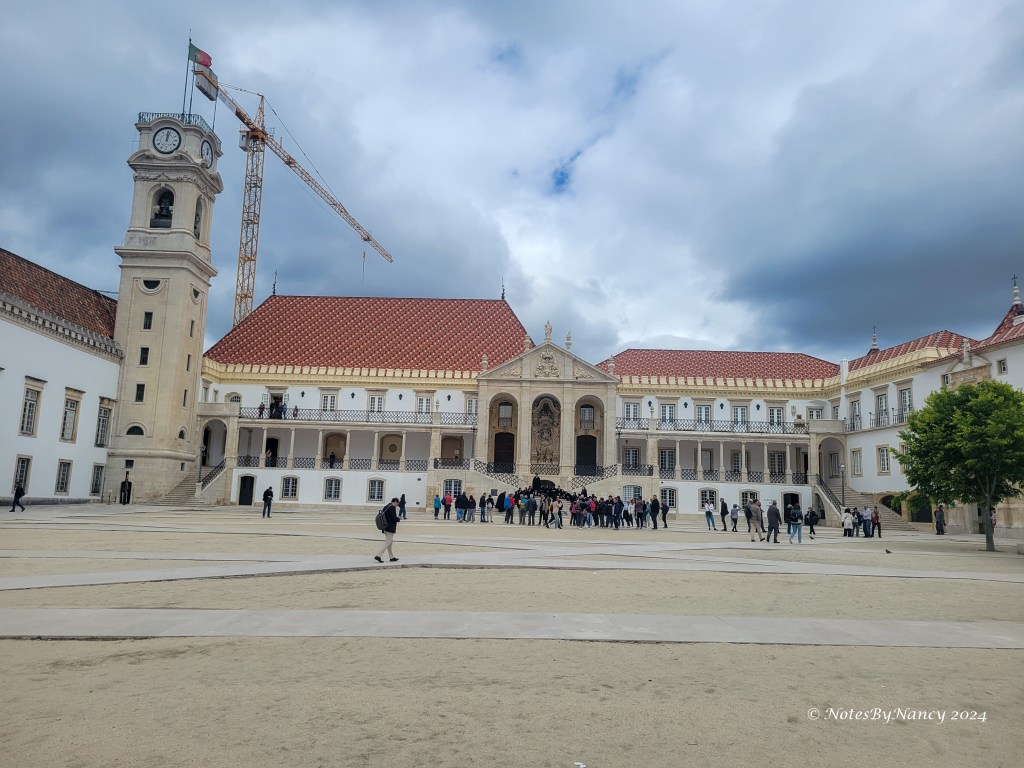
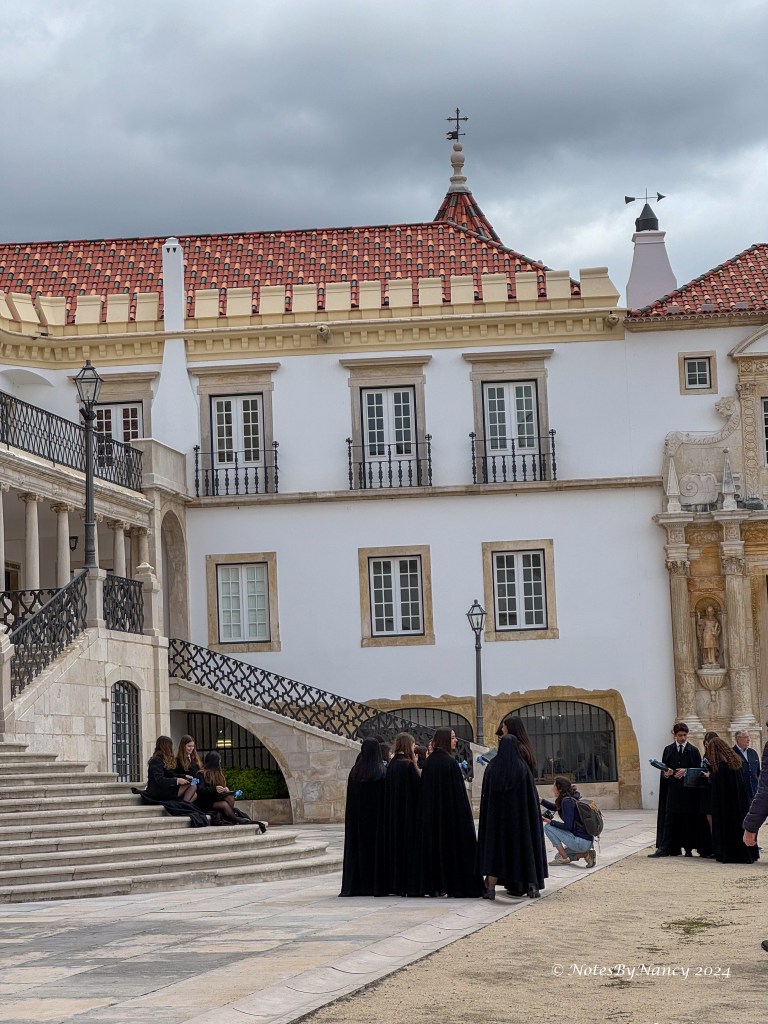
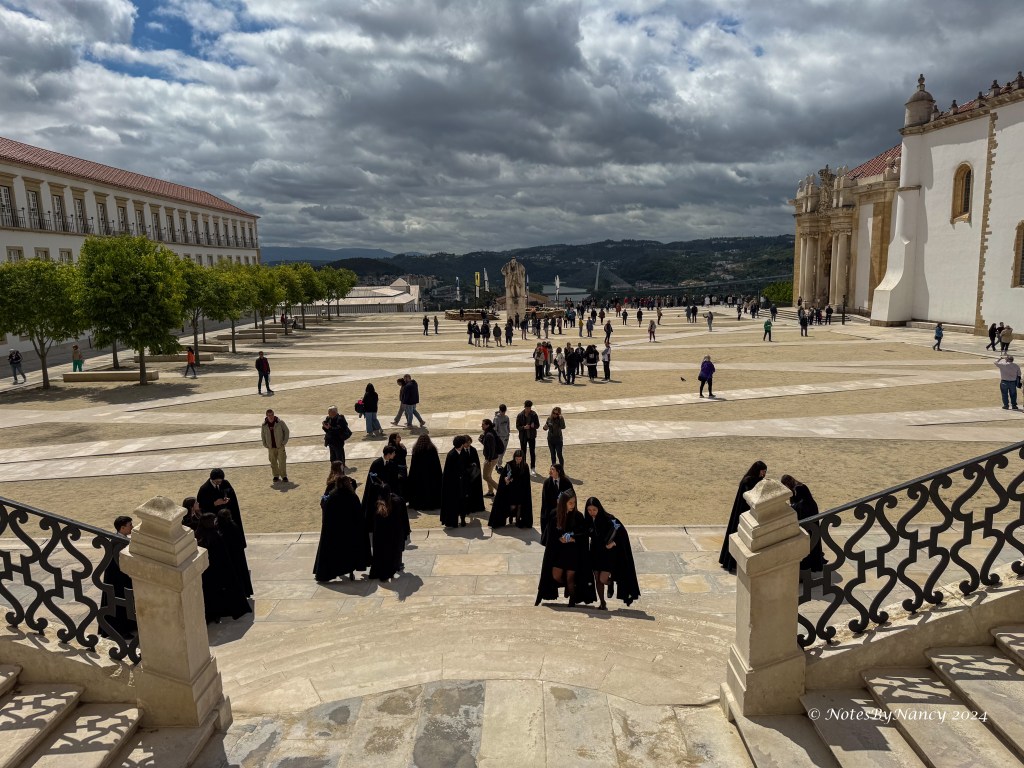
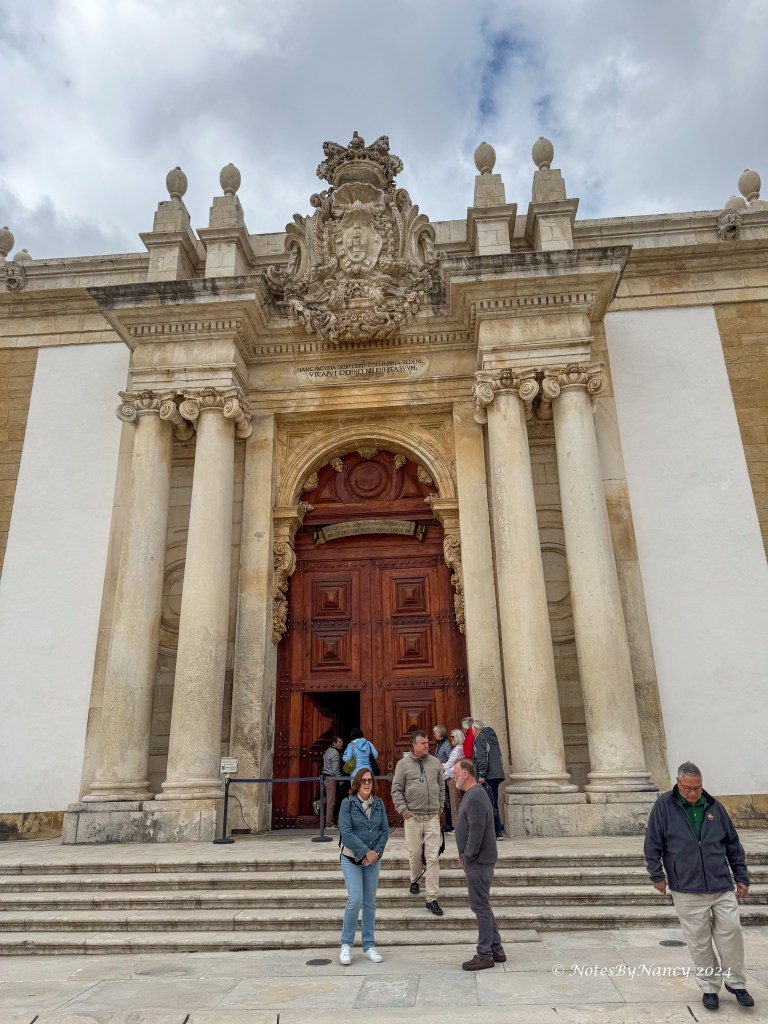
We had pre-purchased timed tickets to see the university’s Baroque Biblioteca Joanina (Joanine Library) considered among the most beautiful libraries in the world. I’m a sucker for libraries – which you may have picked up from some of my other posts! Unfortunately, pictures are not allowed inside, so you’ll have to take my word for it that it lived up to its reputation (however, you can see pictures here on the university website where you purchase tickets). It definitely ranks in my personal top 4 – my other three being Armstrong-Browning Library at Baylor University, the Old Library’s Long Room at Trinity College in Dublin, and George Vanderbilt’s Library at Biltmore.
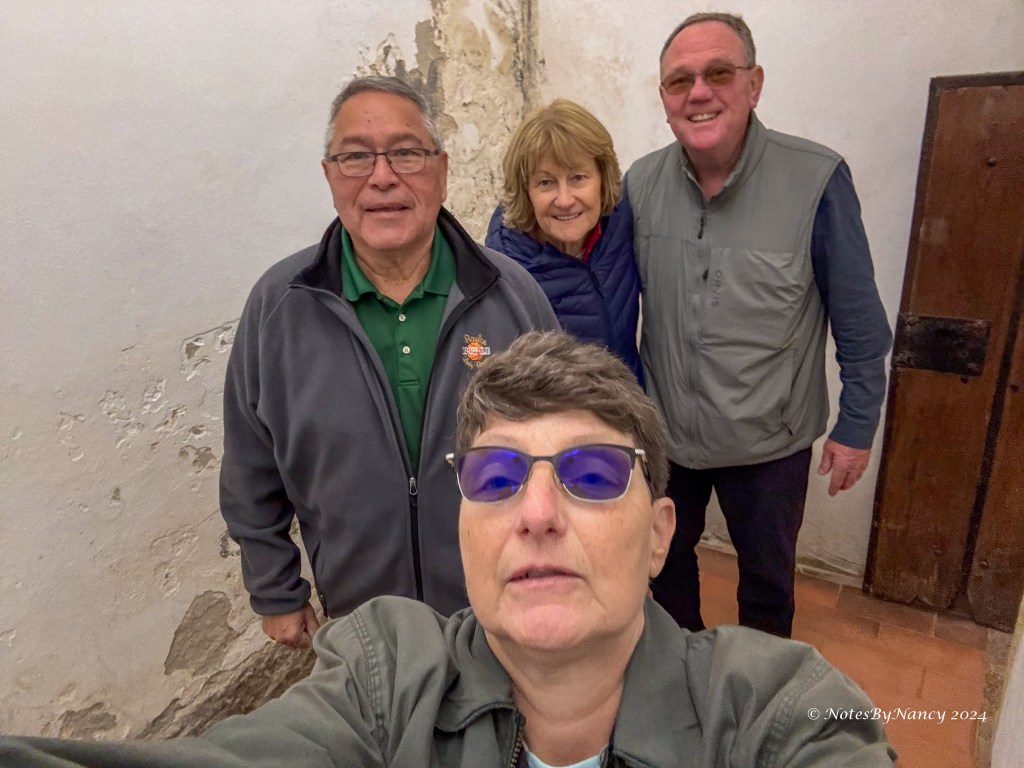
Two things stood out about the Joanine Library building. First, a colony of bats lives behind the bookshelves for pest control. Yes, really! “What a mess!” you may be thinking, but the ornate tables are covered each evening with leather towels to prevent damage from bat droppings. Second, part of the building served as the “academic jail” until 1834. Most prestigious European universities had their own governance and legislation, and having their own jail kept students, professors, and other staff from being thrown in with general criminal populations. I guess I’d never realized that “academic jail” was at one time a literal thing! The contrast of the library’s ornateness with the stark jail cells was striking!
The other interesting and beautiful spaces we toured on the campus were the 12th-century Chapel of São Miguel (St. Michael) with its 2000-pipe organ from 1737, the weapons room, the professor meeting rooms, and the hall where students stand for their public oral exams.
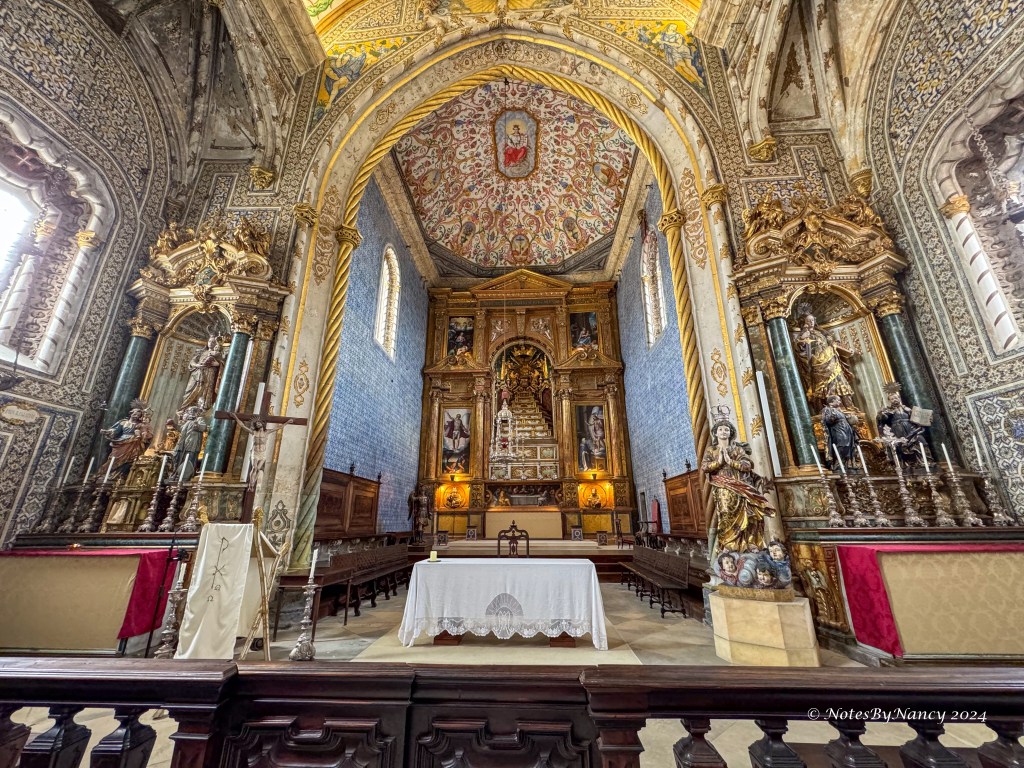
University of Coimbra – Chapel of São Miguel 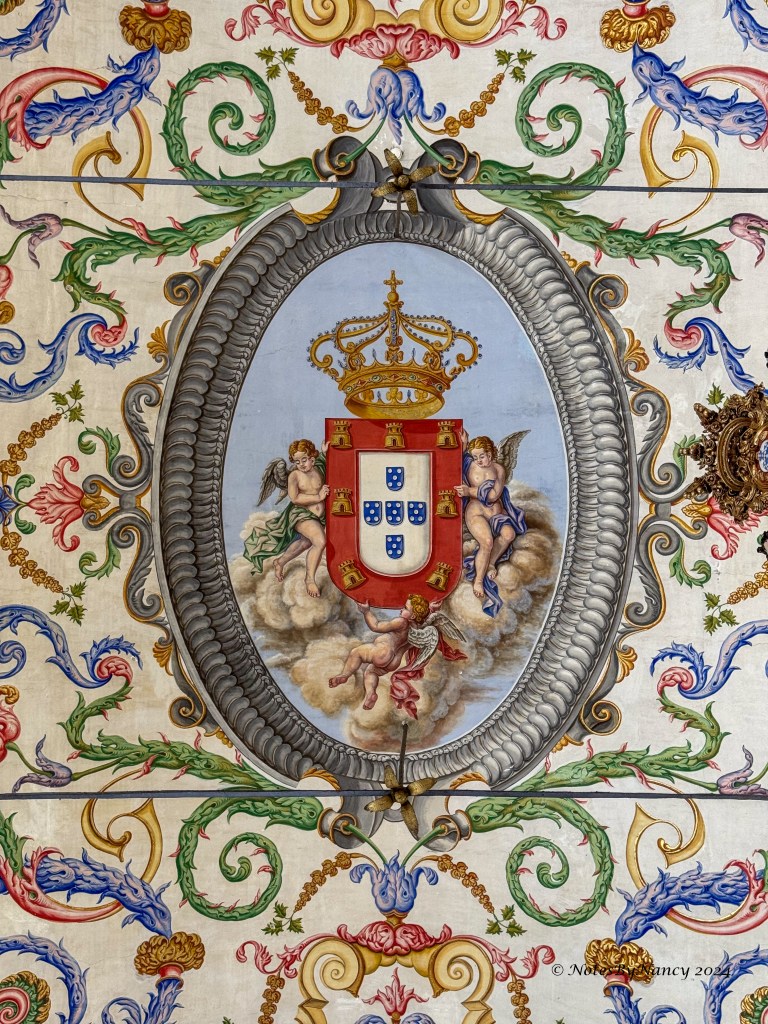
University of Coimbra – Chapel of São Miguel – Ceiling with Portugal’s Coat of Arms 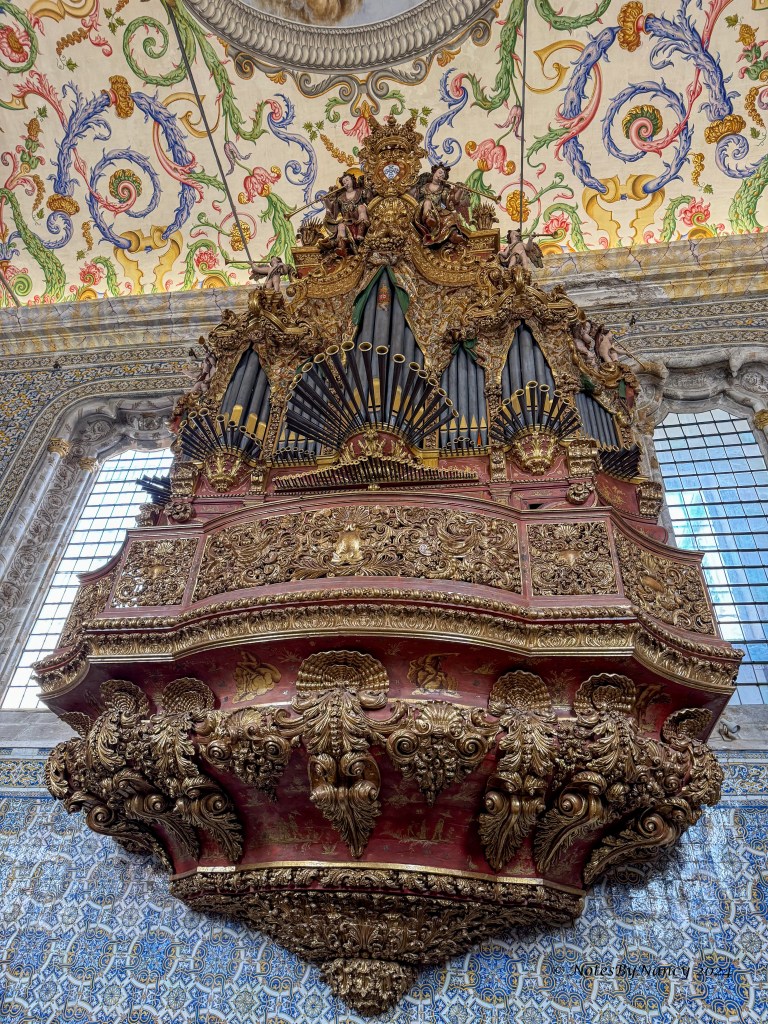
University of Coimbra – Chapel of São Miguel Pipe Organ 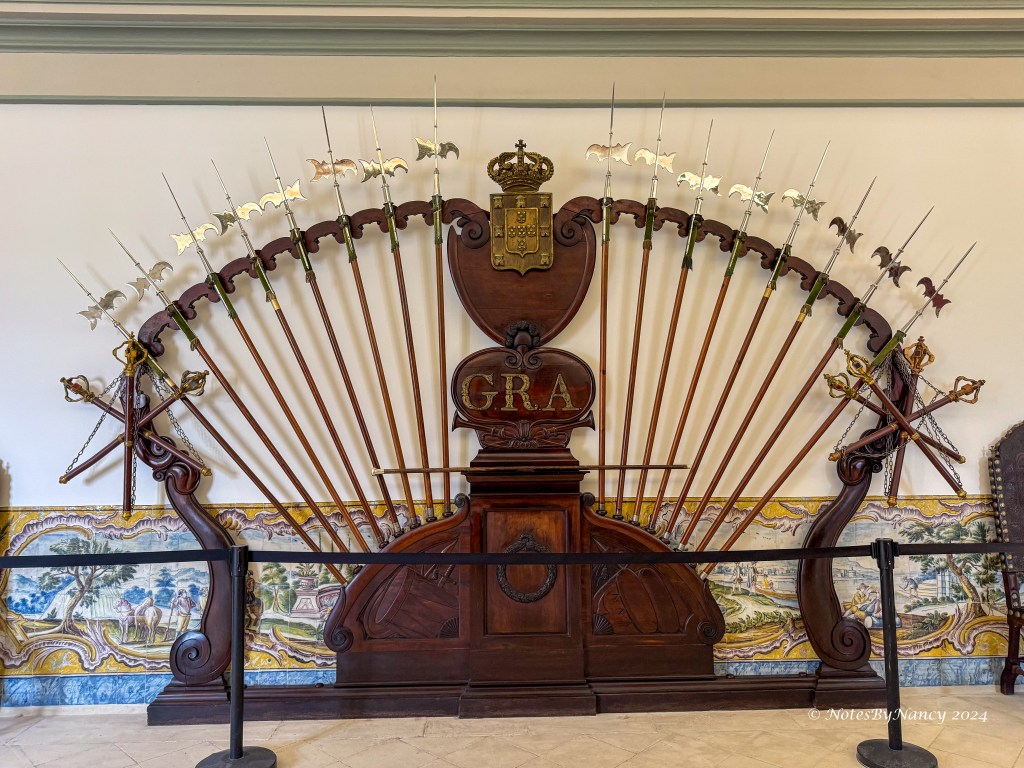
University of Coimbra – Weapons Room 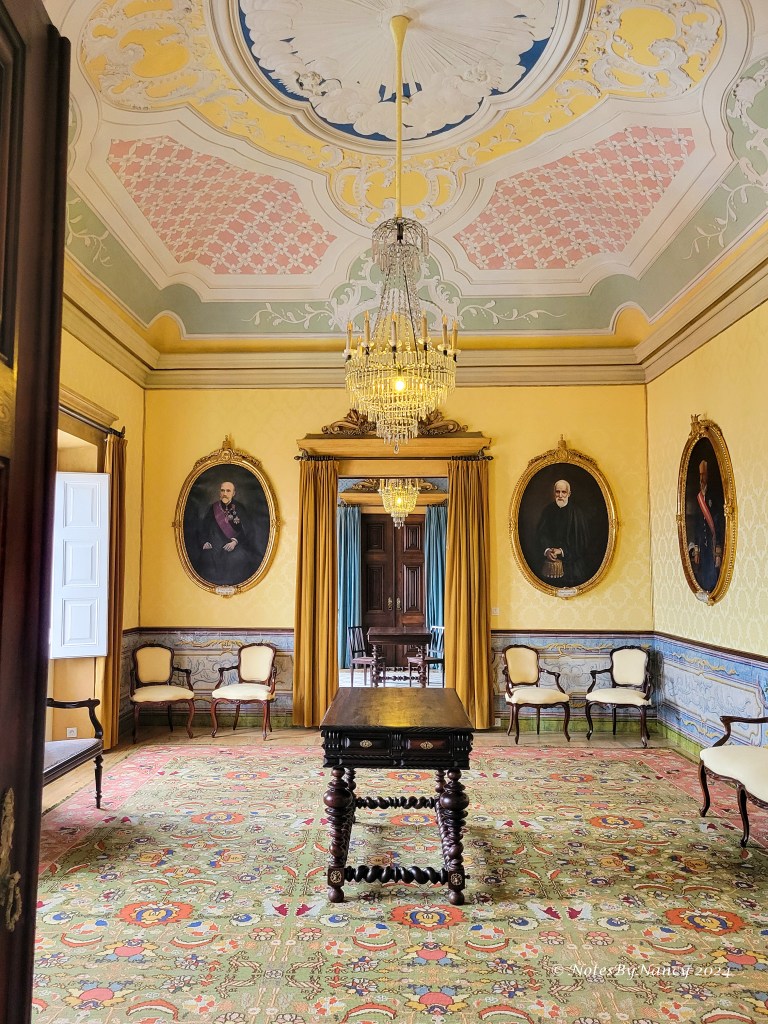
University of Coimbra – Professors Meeting Rooms 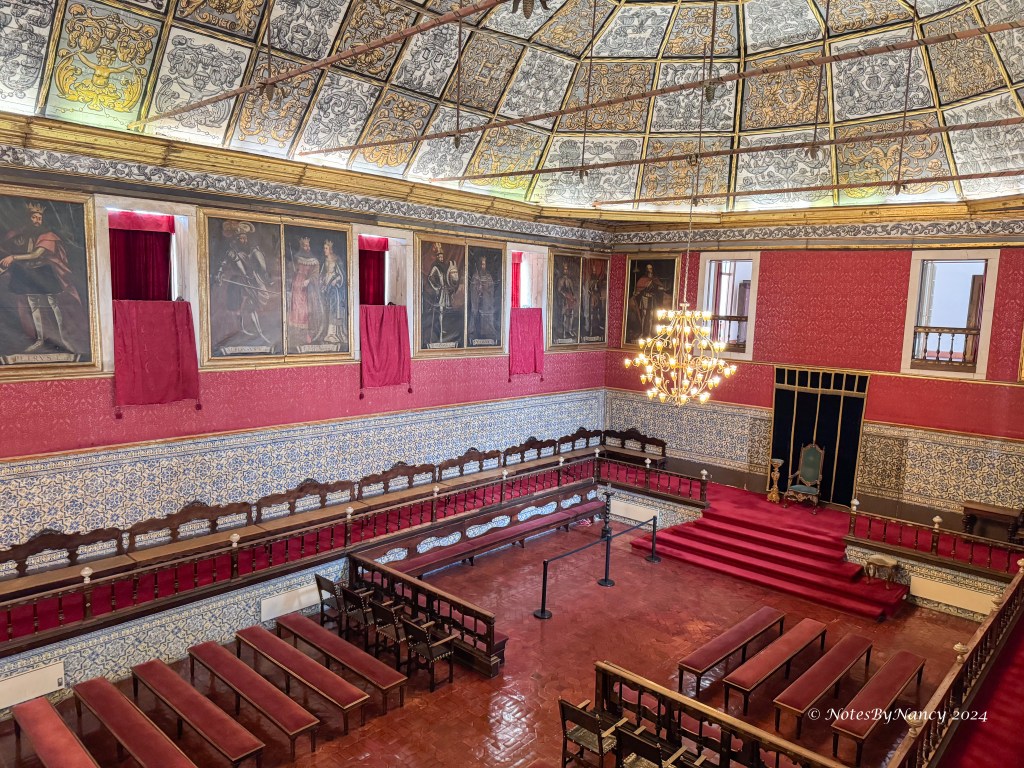
University of Coimbra – Hall where students must stand for oral exams 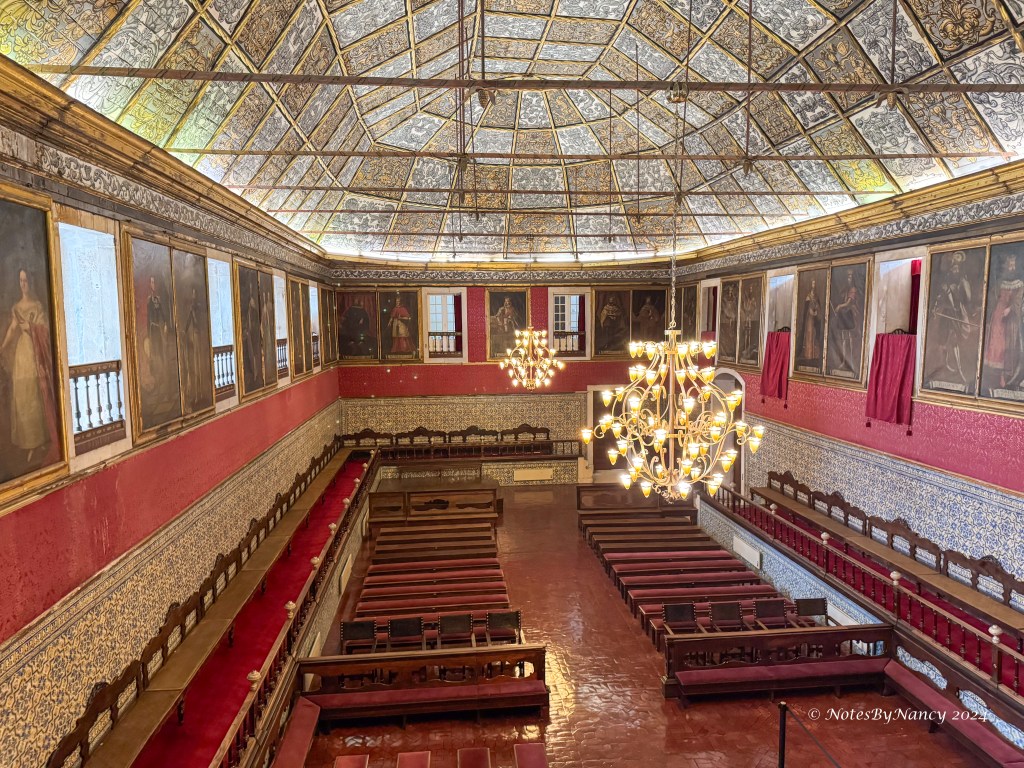
University of Coimbra – Hall where students must stand for oral exams 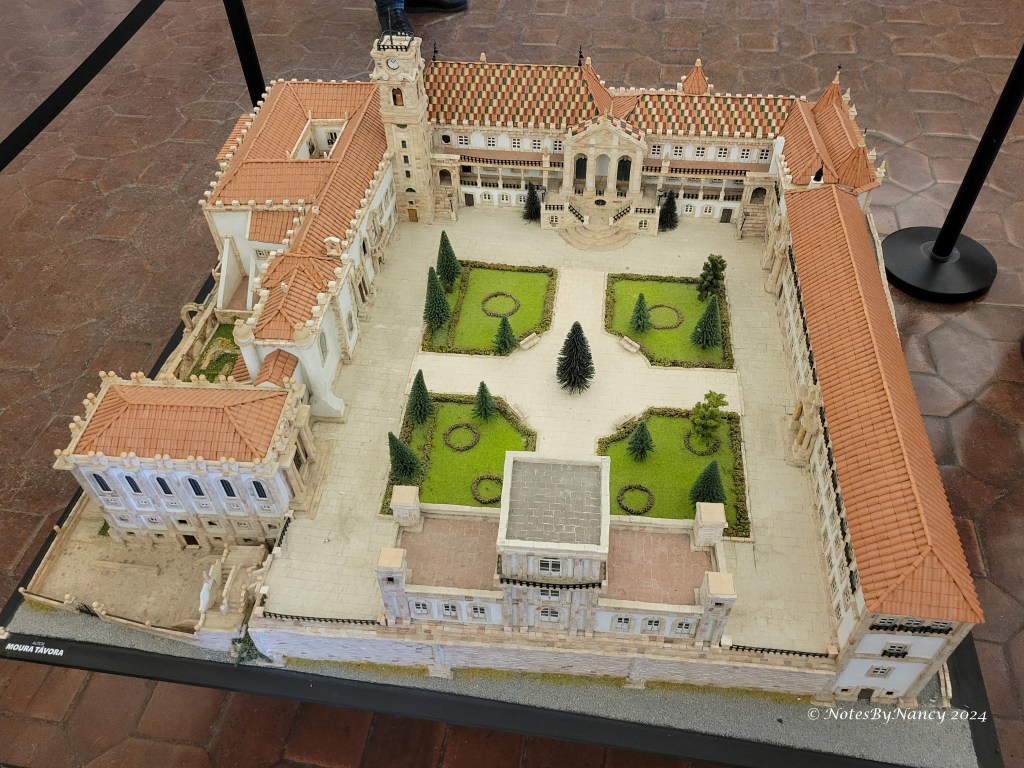
University of Coimbra model – the astronomical observatory on the near side from 1799 was demolished in 1951
Leaving the university, we walked by the Sé Velha, a 12th-century Romanesque cathedral where the second king of Portugal, Dom Sancho I, was crowned in 1185.

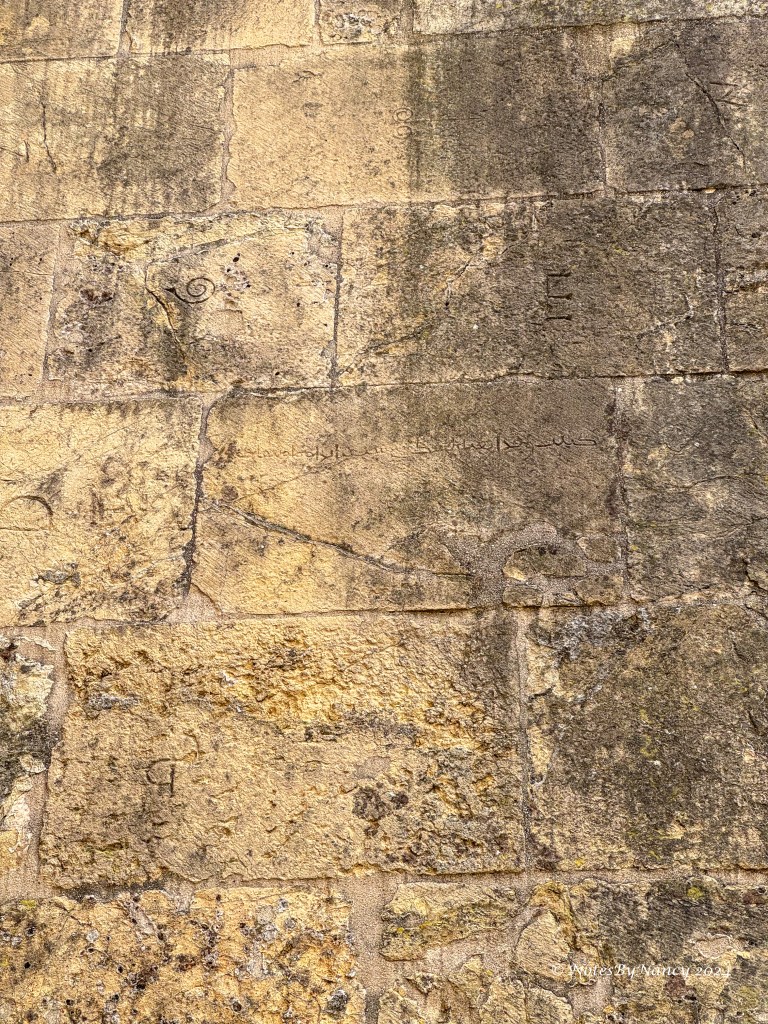

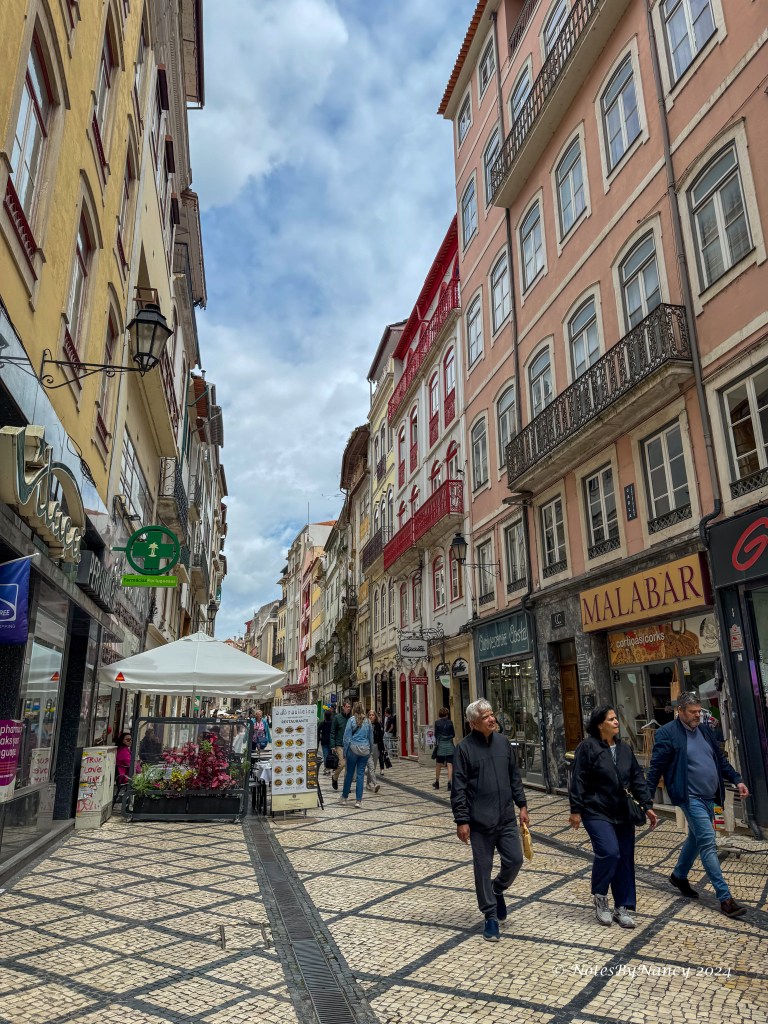
From there we wandered the streets (expertly guided by Carla) to the Torre de Almedina, the medieval tower which marked the entrance to the Arab medina during the occupation by the Moors.
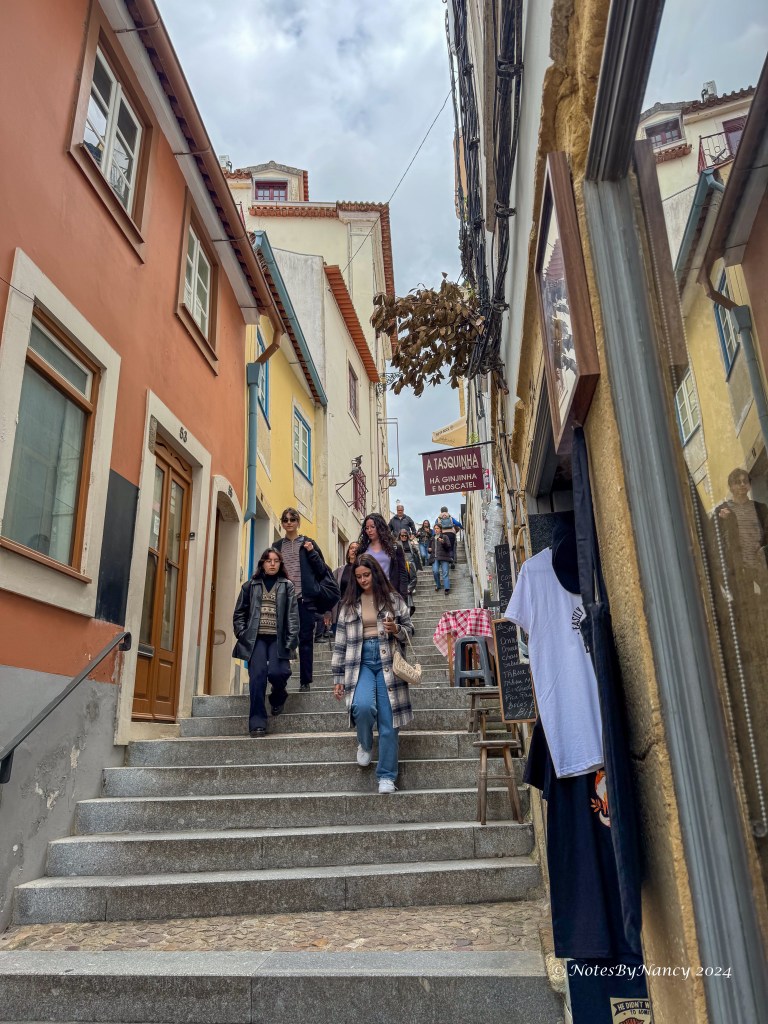


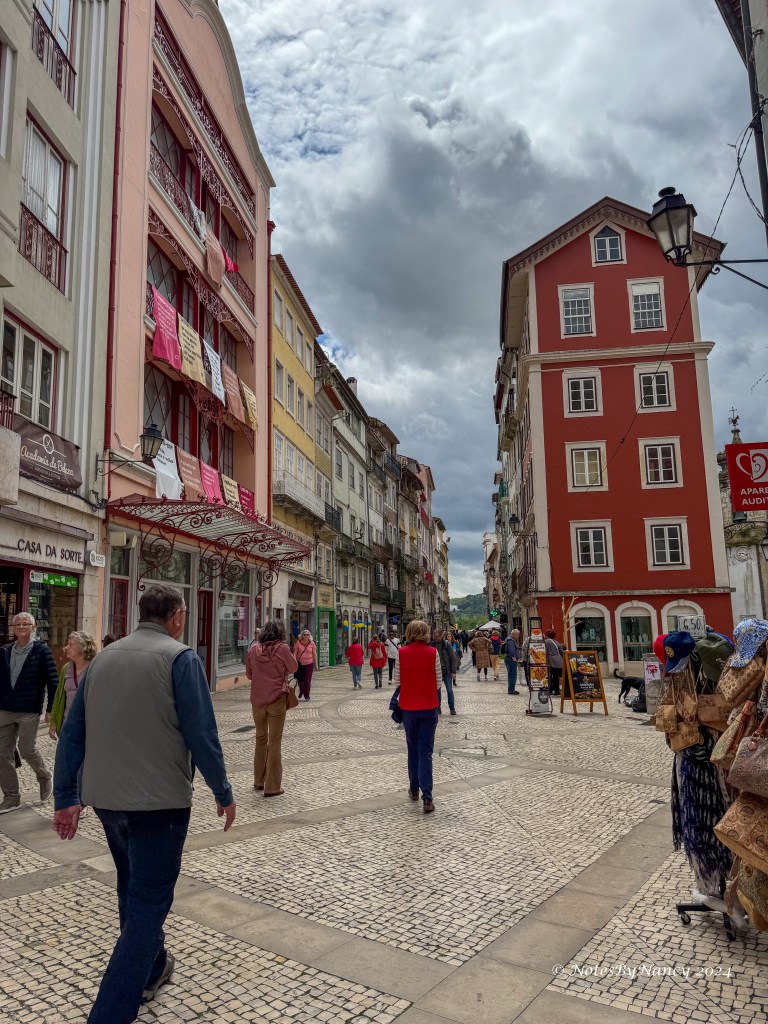
We soon found ourselves on one of the main shopping streets where we reunited with Carlos. Carla had given us the option of eating in Coimbra or at a seafood restaurant in Nazaré about an hour and a half away. We opted for Nazaré. Thus, to tie us over, we stopped in a bakery, Pastelaria Briosa, for drinks and another traditional (and yummy!) Portuguese pastry, Pastel de Tentúgal, which originated at a nearby convent. Without Carla, we wouldn’t have known about this particular pastry. We continued strolling along the street until we reached the Mondego River and walked through the park along the river to meet Carlos waiting at the parking lot exit.

Nazaré
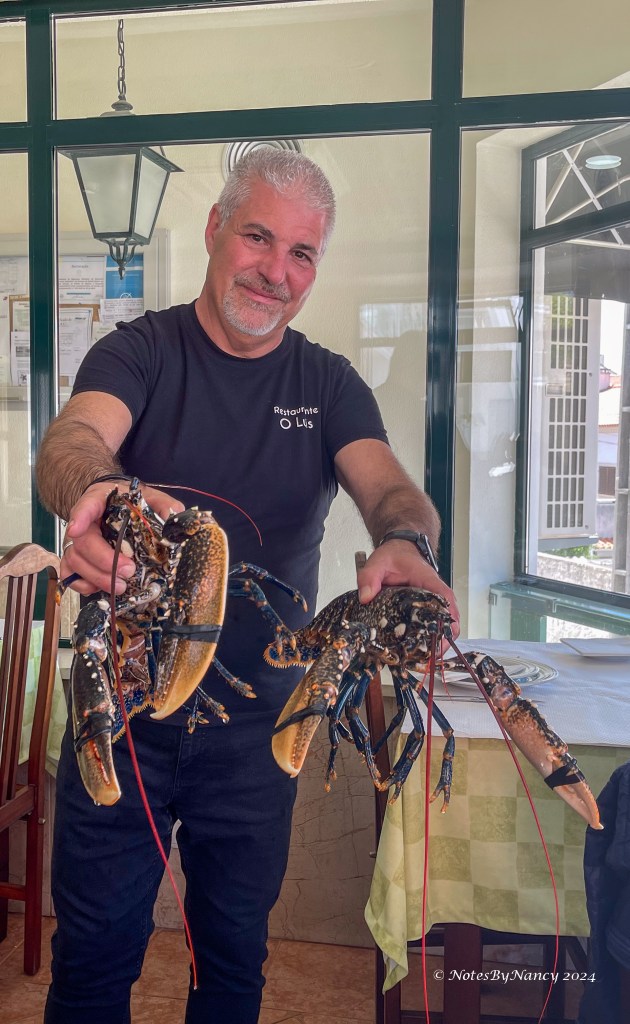
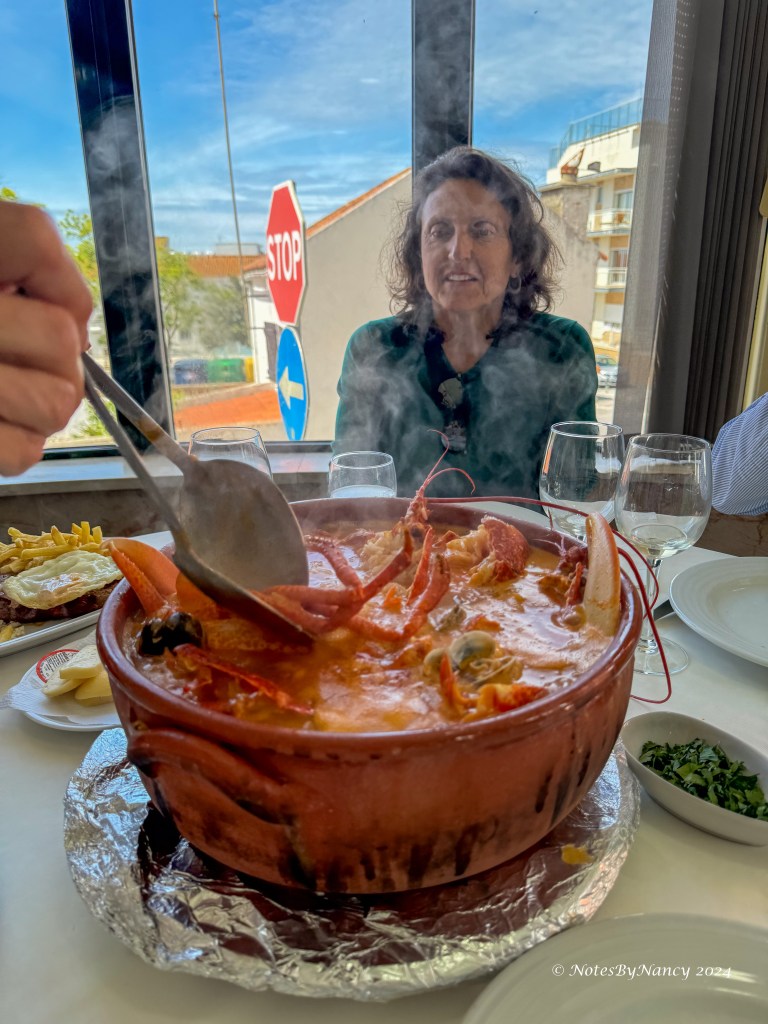
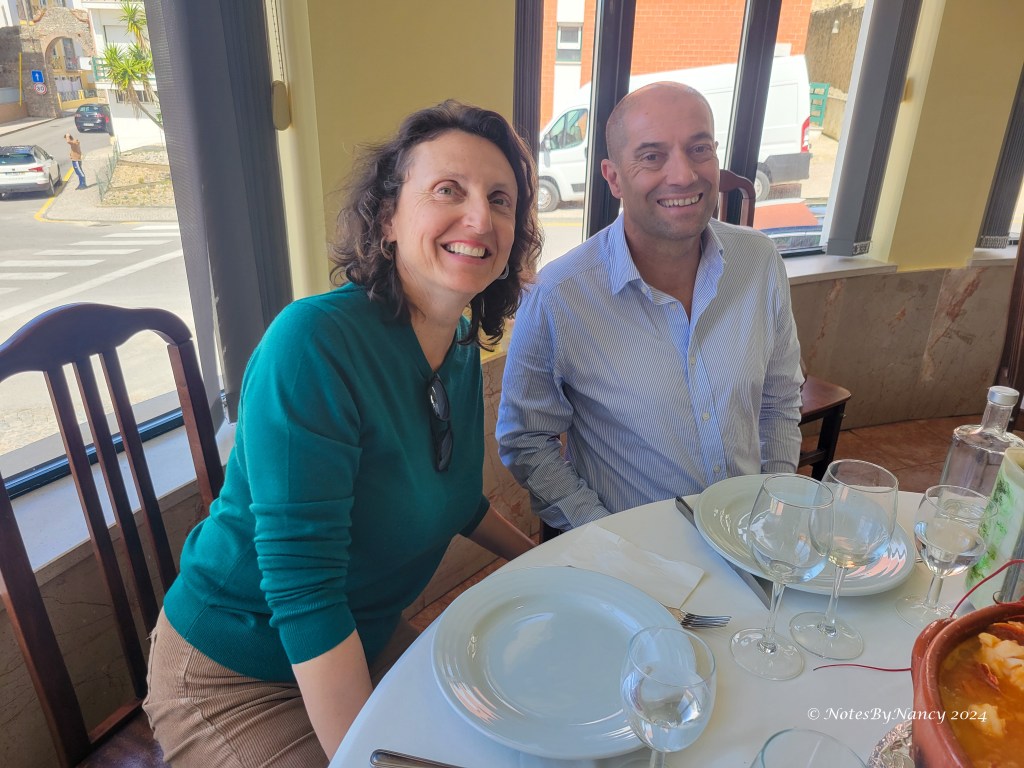
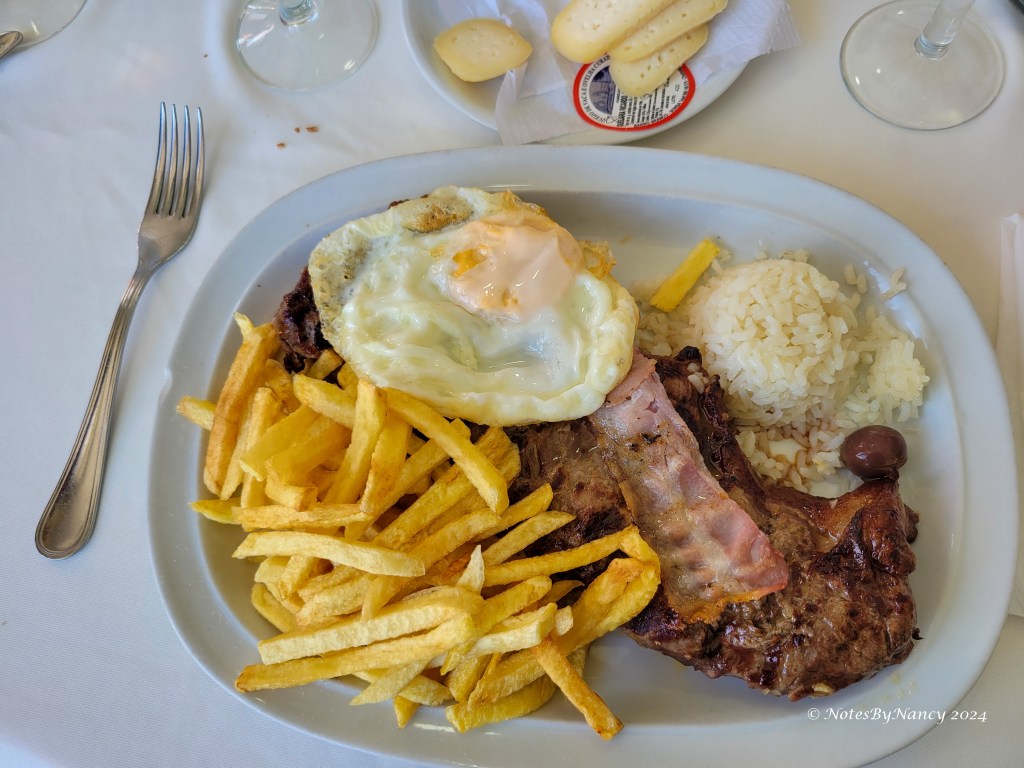
We went straight (okay, not straight, but rather directly) to Restaurant O Luís. Carla had called ahead, and they had stayed open after normal lunch hours for us. Again, having a professional guide with connections paid off! We pretty much had the restaurant to ourselves. Keith got a steak with a fried egg, French fries, and rice (the Portuguese eat a lot of rice and also potatoes), while the rest of us shared a huge pot of seafood rice, another traditional dish. It contained rice (obviously), with two fresh lobsters (shown in pics), mussels, shrimp, and probably some other things, too! It was, of course, delicious! They brought us a small bowl of peri-peri sauce, a spicy pepper condiment, to add if we wanted. It’s made from very hot peppers, but I think they brought us a mild version as it wasn’t as hot as I had expected. On the Scoville scale, it is supposed to rank between Cayenne and Habanero peppers.

Nazaré, once a small fishing village where the fisherman braved gigantic waves, has in recent years become well-known for its seaside resorts on the beach and the lure of those gigantic waves to surfers from all parts of the world. In November 2011, American Garrett McNamara became the first to achieve the feat riding a record-breaking 78-foot wave. That really put Nazaré on the map for surfers chasing the dream of riding 100-foot waves. The most recent, but currently unofficial, record was recorded this past February (2024) by German surfer Sebastian Steudtner on a 93.73-foot wave as measured by drone technology. The huge waves form typically from late October through February as a result of storm winds and the position and depth of the offshore Nazaré Canyon. The HBO documentary series 100 Foot Wave follows surfers in pursuit of the still elusive achievement.
While we had a picture-perfect day to visit Nazaré’s North Beach, it was the wrong time of year for the giant waves. But that didn’t stop a small crowd of tourists from checking out the site with its historic lighthouse and fort (Forte de São Miguel Arcanjo) turned surfing museum. As you walk down the hill to the fort, you pass an interesting 21-foot-tall statue of a surfer with a deer’s head called Veado. It represents Nazaré’s past history as told in the Legend of Nazaré and its recent surfing history.
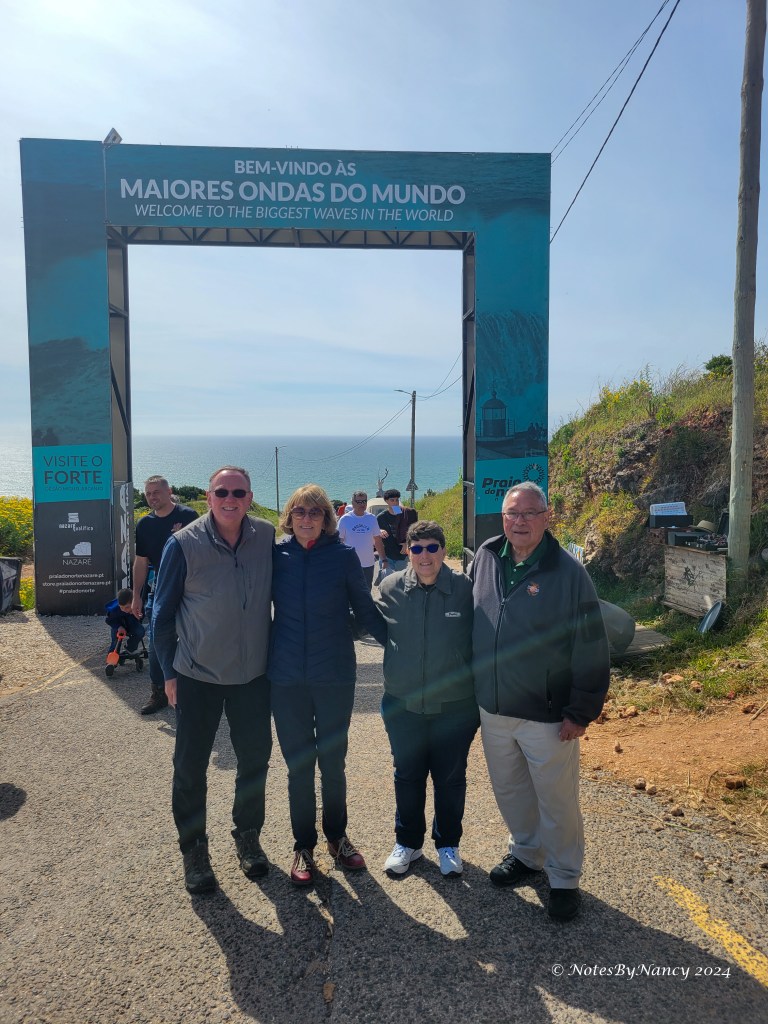
Nazaré – location of 100-foot waves during November – February 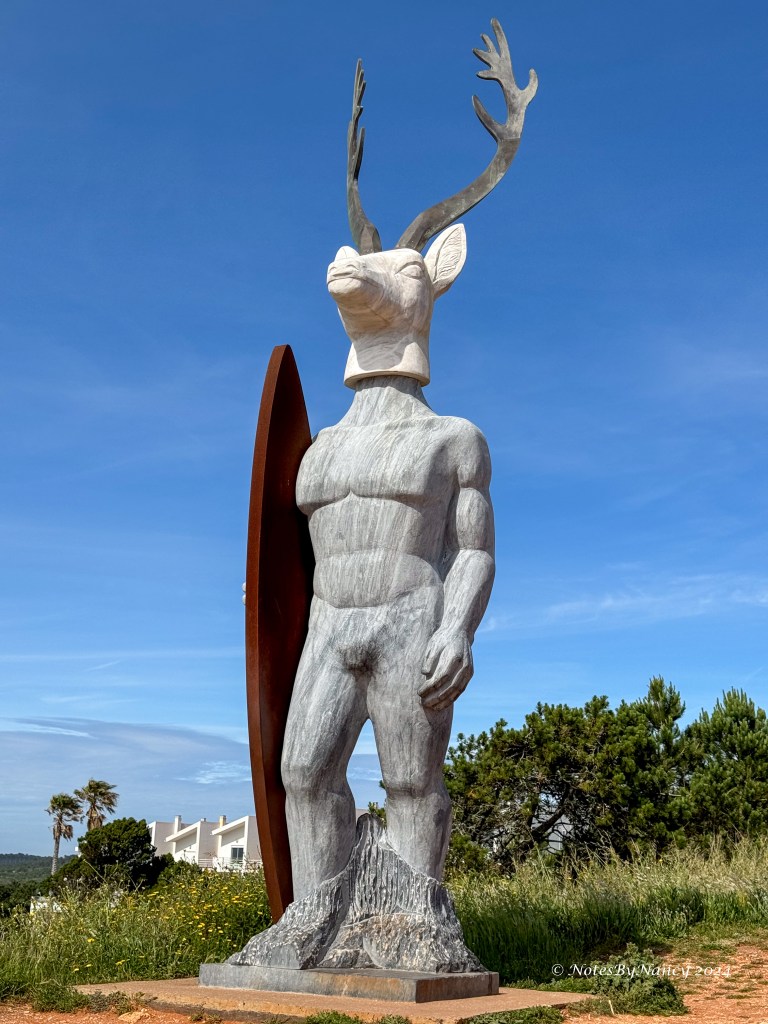
Nazaré – 21-ft-tall Veado 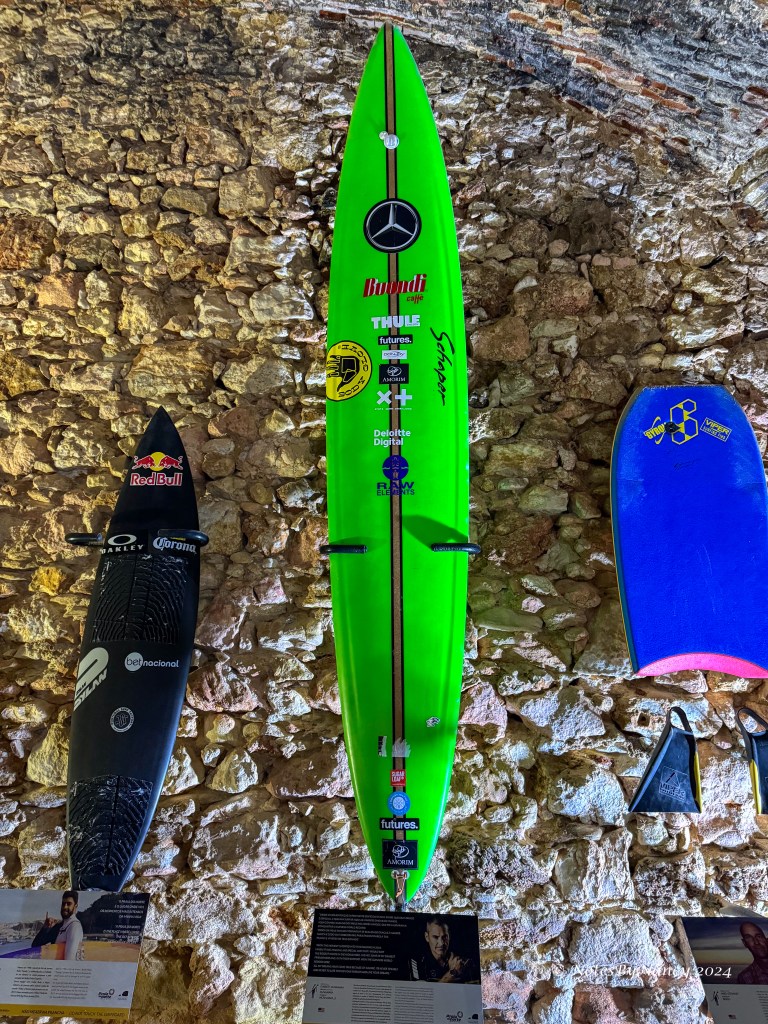
Nazaré – surfboard of Garret McNamara, first to ride the “100-ft” waves in 2012 
Nazaré North Beach – location of 100-foot waves during November – February – but this is May 
Nazaré – Beacon at Forte de São Miguel Arcanjo 1577 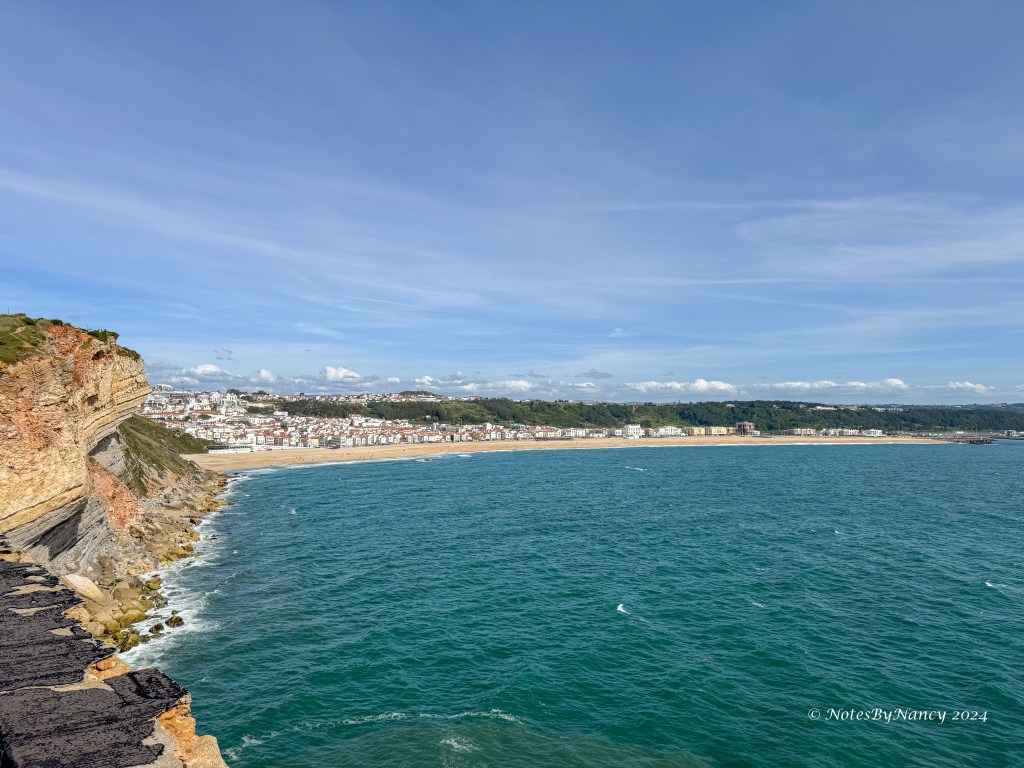
View of Nazaré from Forte de São Miguel Arcanjo 1577 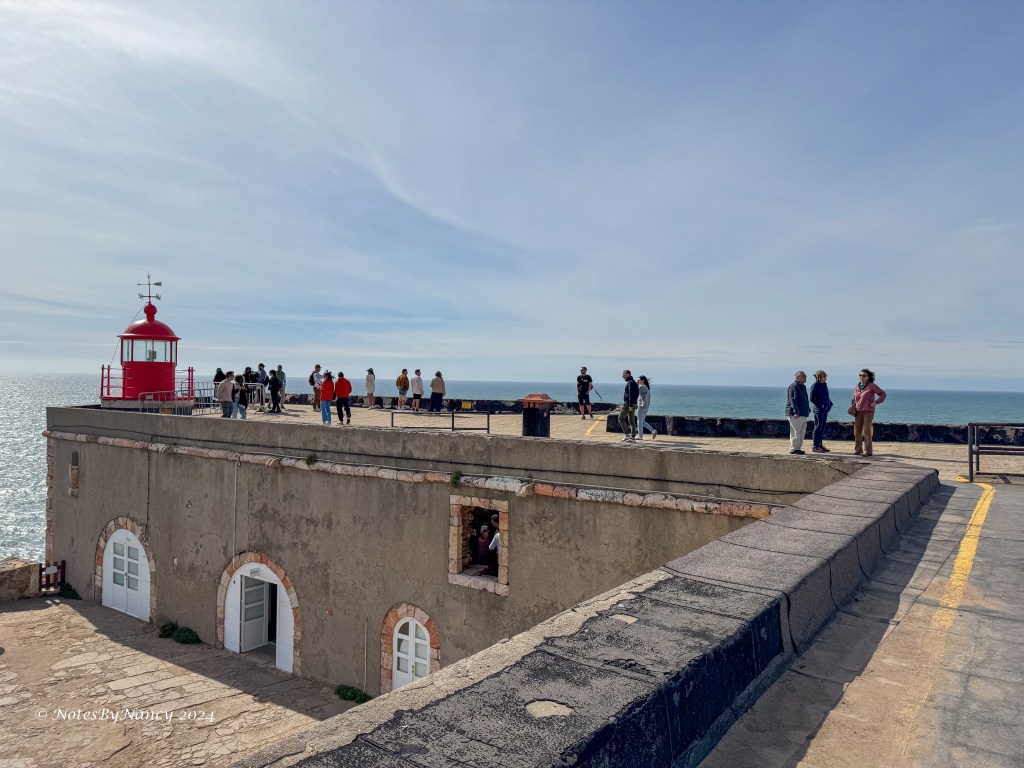
Nazaré – Forte de São Miguel Arcanjo 1577
We climbed back up the hill to Miradouro do Suberco, the overlook to the main town of Nazaré and its beach, where we could see surfing lessons occurring in much more modest waves than those ridden by the professionals during the winter months near the North Beach.


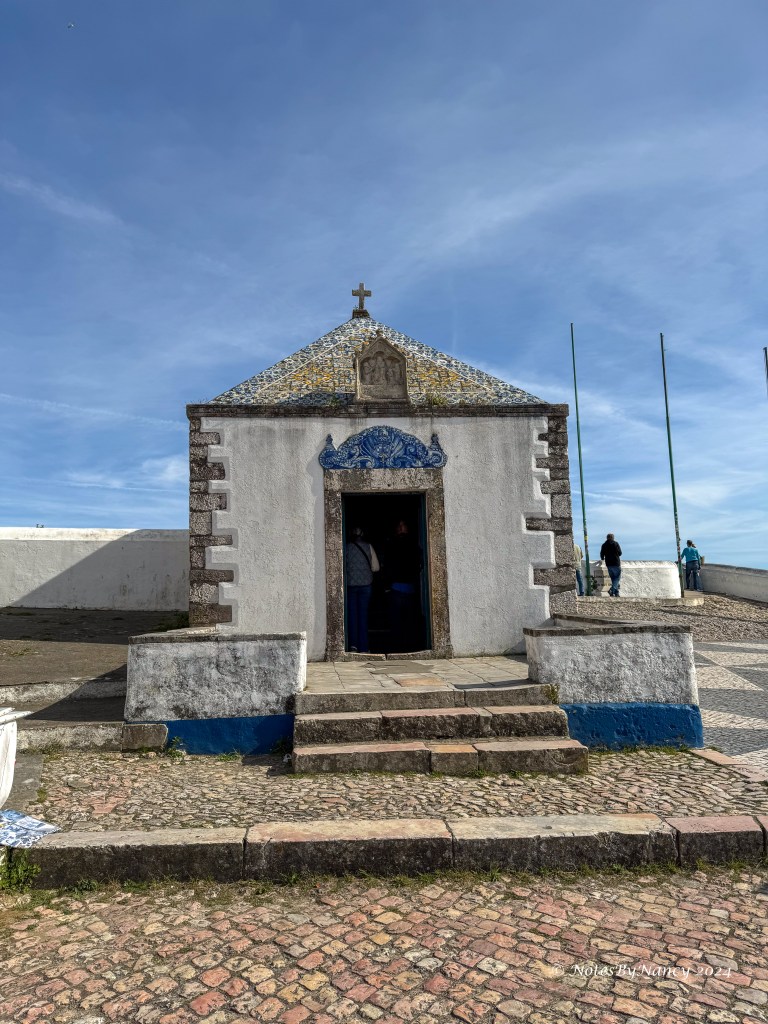
It was getting late in the day, and we still had one more stop a half-hour away before continuing to Lisbon.
Óbidos
The area around Óbidos has been inhabited since the late paleolithic period. Celtic tribes settled here, then the Phoenicians established a trading post, followed by the Romans, then likely the Visigoths. The Moors took hold in the 8th century and built the medieval castle and walls which still exist today forming the heart of Óbidos. The castle was conquered by the Portuguese in 1148 under the reign of its first king, Afonso Henriques. In 1380, the Porta da Vila or Village Door was built as a protective double-walled, elbow-shaped entrance to the village. It was decorated in azulejos and dedicated to the Virgin Mary. Invaders could be trapped inside as the villagers poured hot oil on them from above. Today, Óbidos is one of the best-preserved medieval towns in Europe.
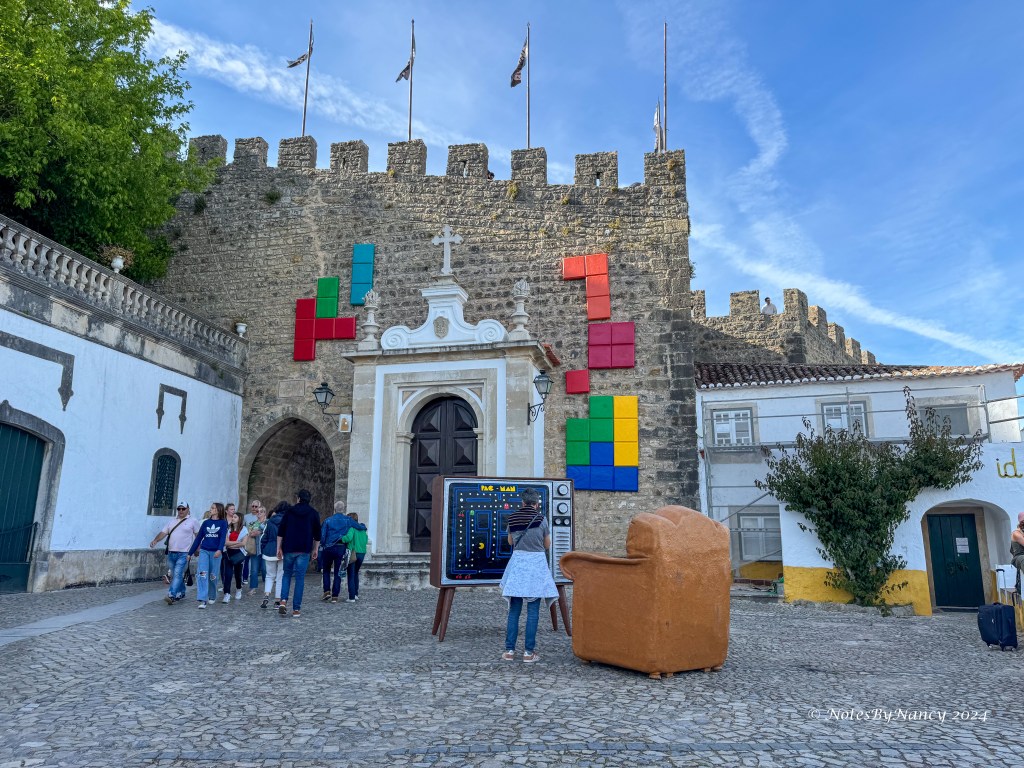
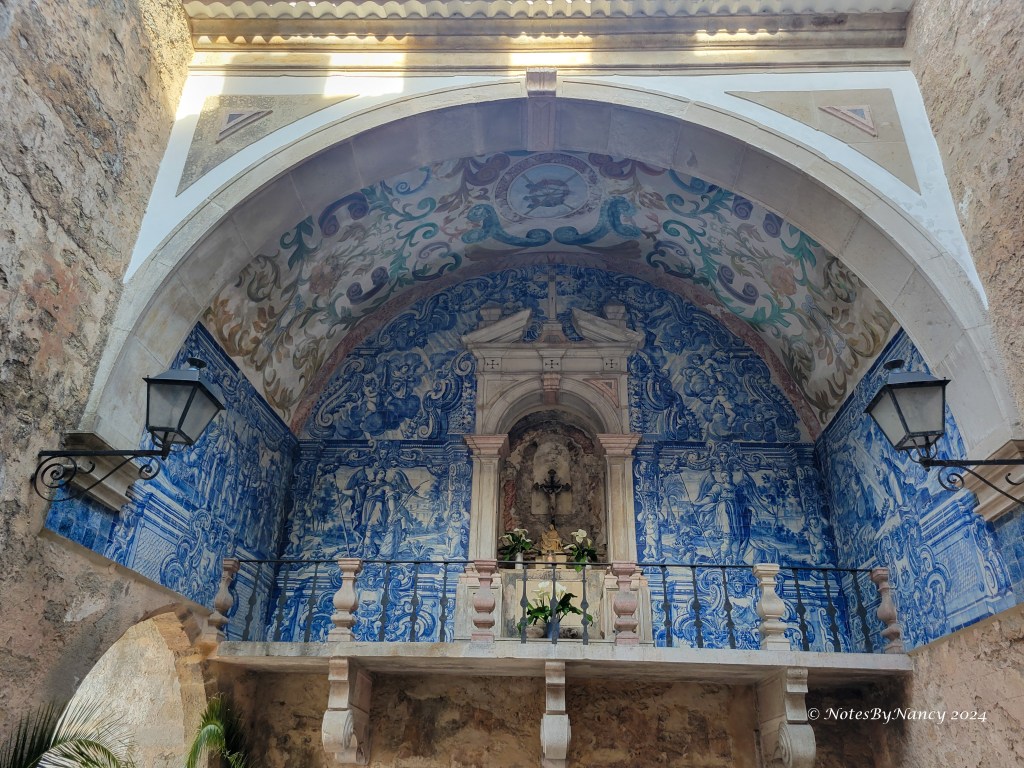
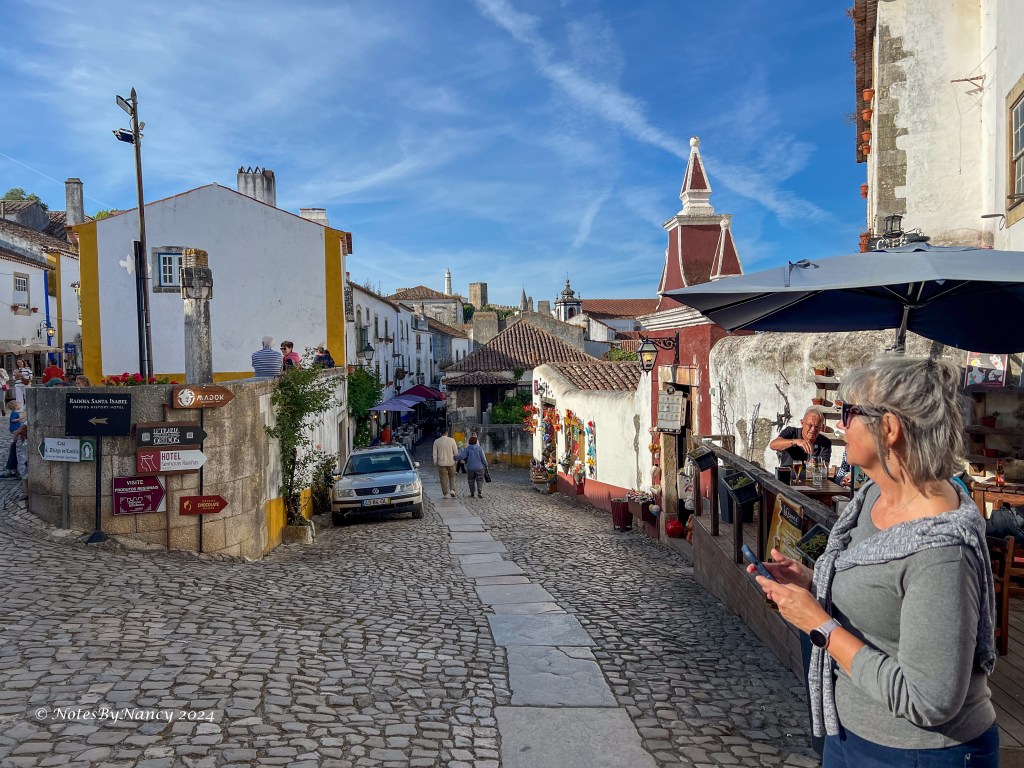
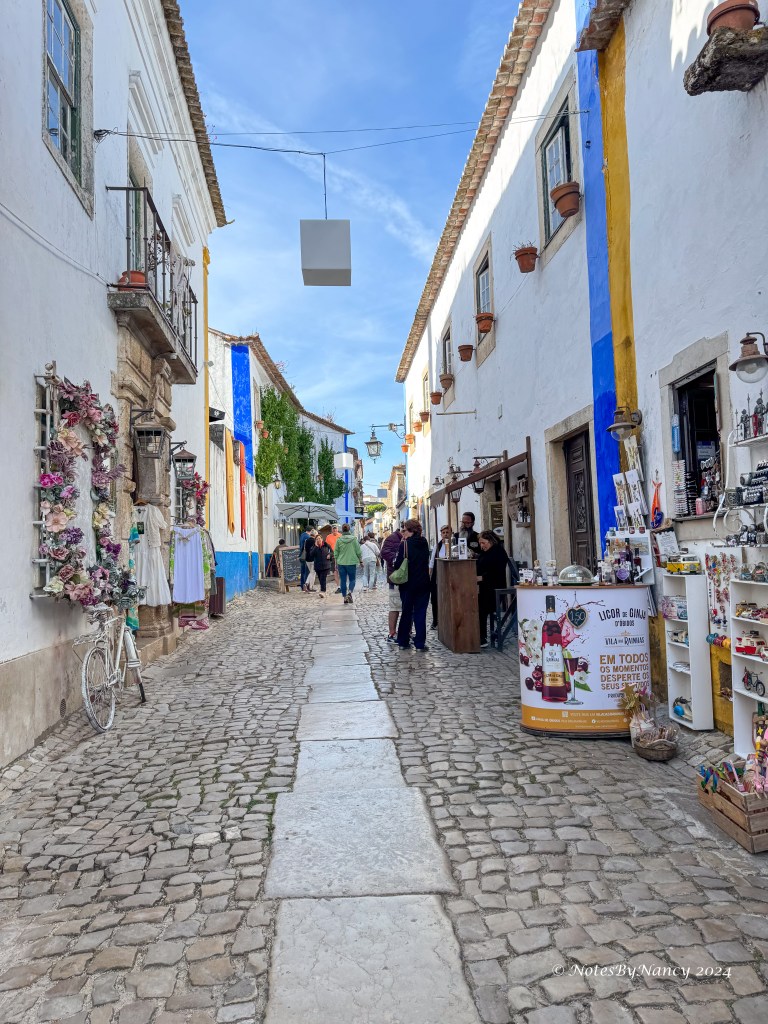
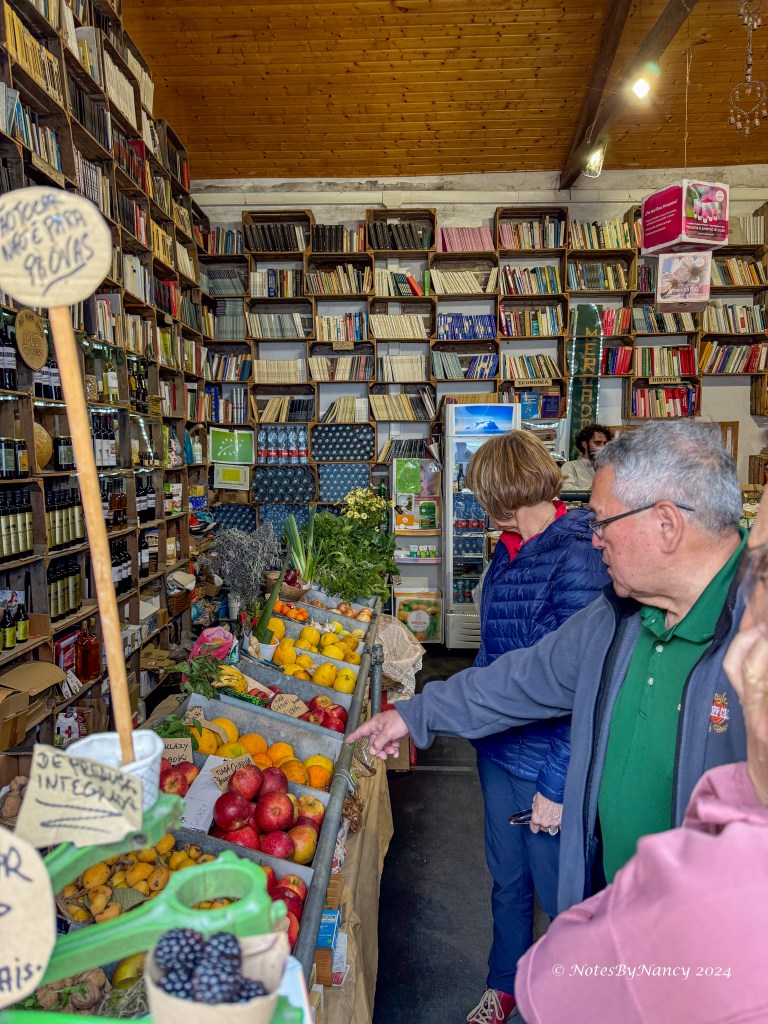
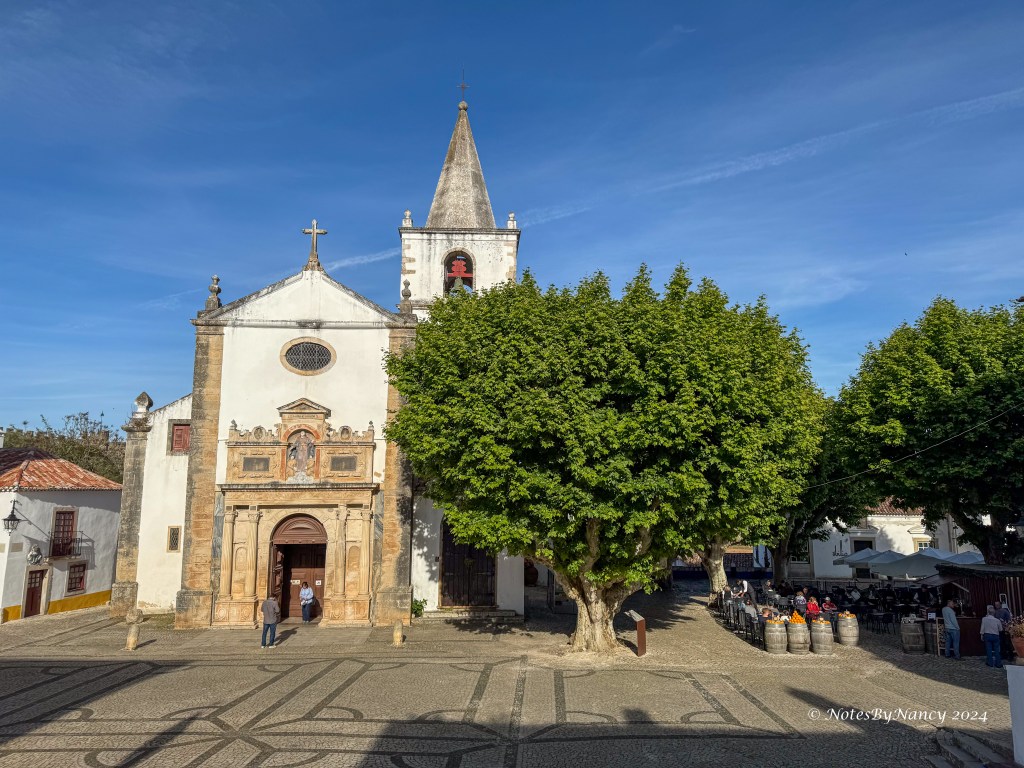
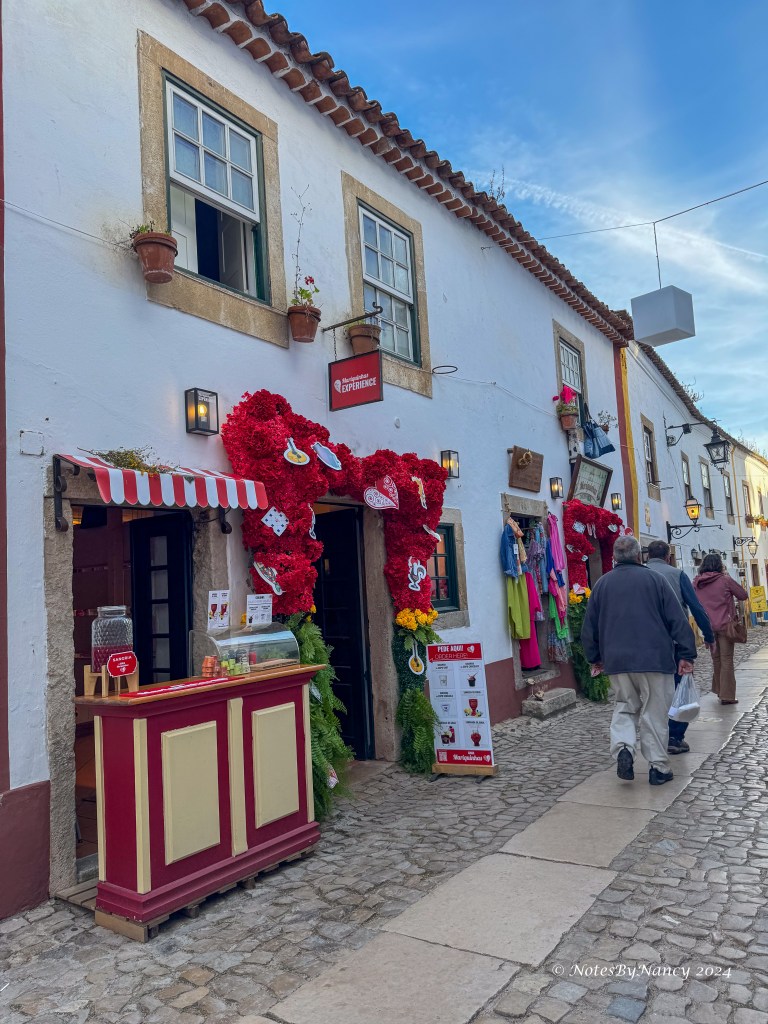
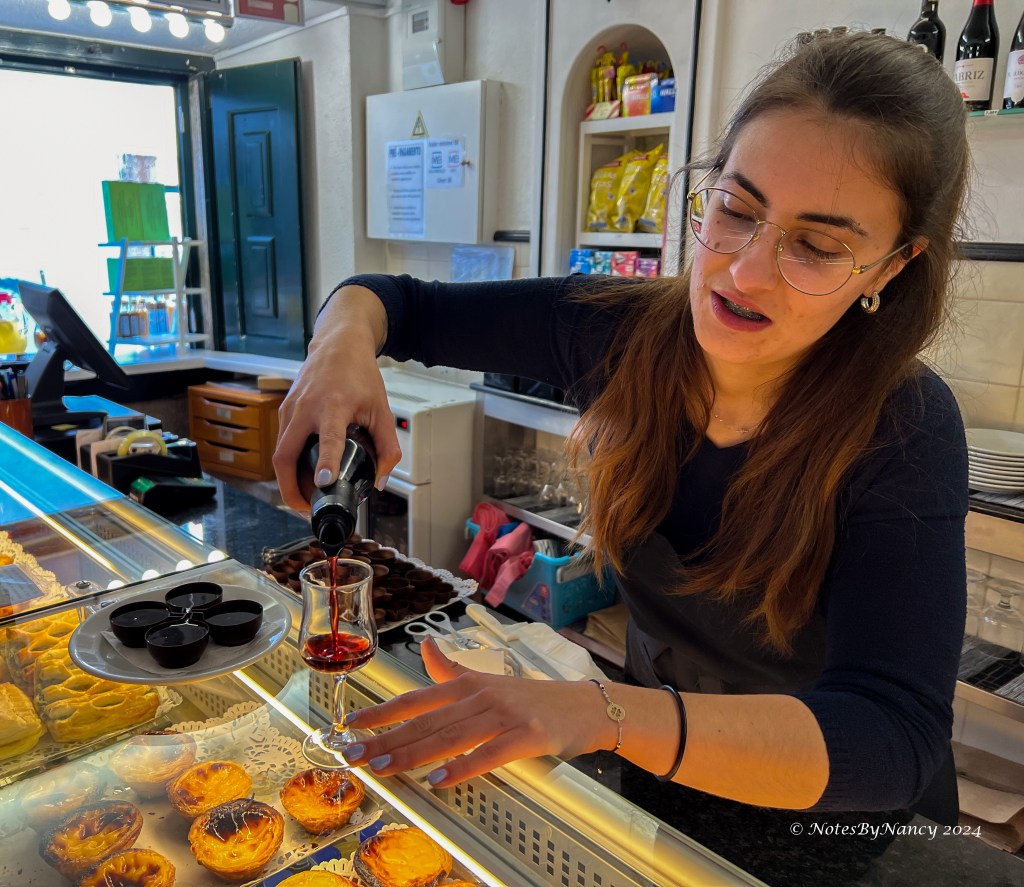
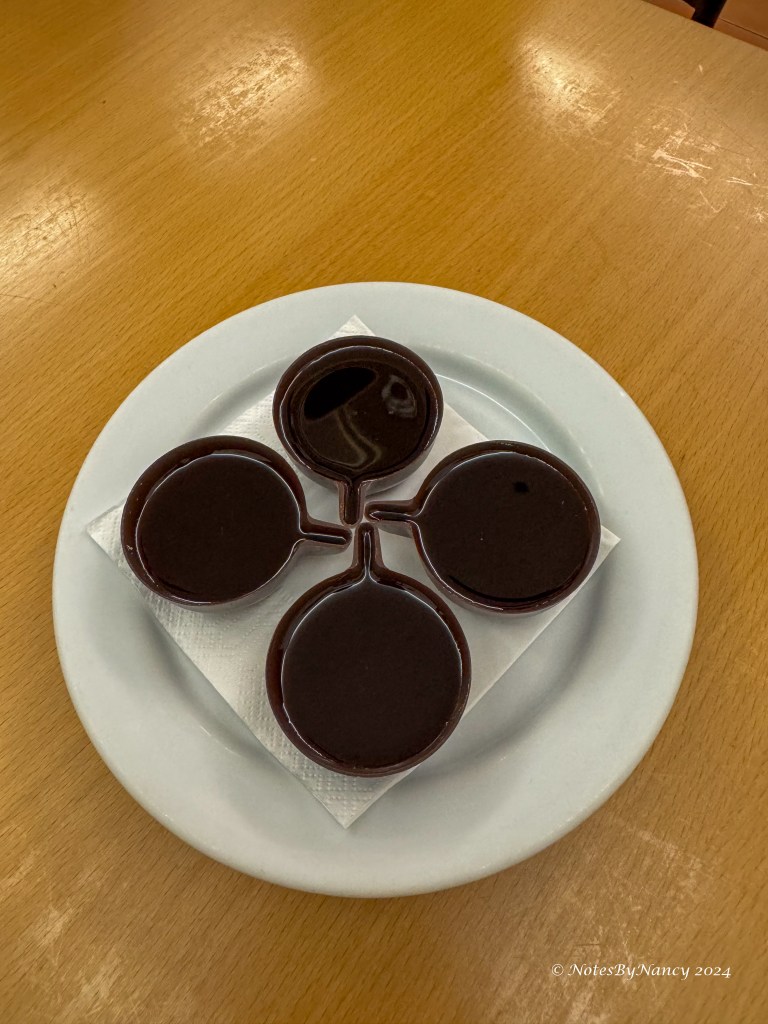
Óbidos is also known for producing another Portuguese delight, Ginjinha (aka Ginja), a cherry liquor. Traditionally, it is served in chocolate cups – so you know we had to try it! Yum! 90% of Ginja is consumed in Portugal, the other 10% is exported to the US. We checked online and both Total Wine and Spec’s carry it, so we didn’t have to buy any there to bring back with us. LOL! We did decide though that we had to stop in yet another bakery to pick up items for our breakfast the next morning at our Lisbon apartment.

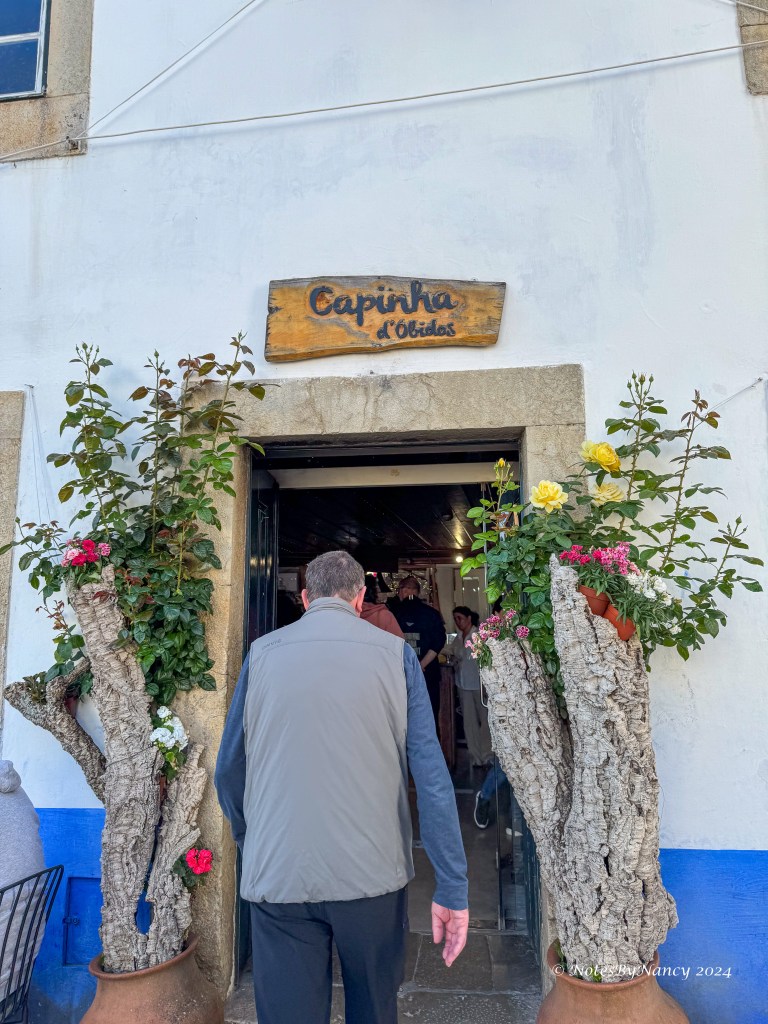
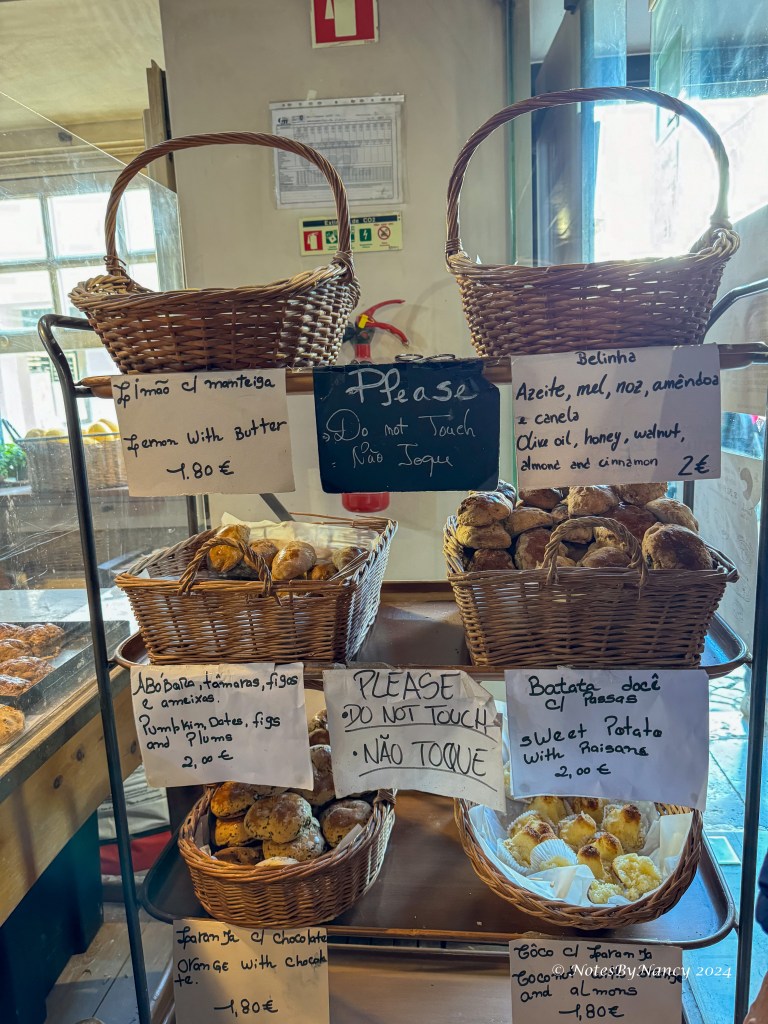
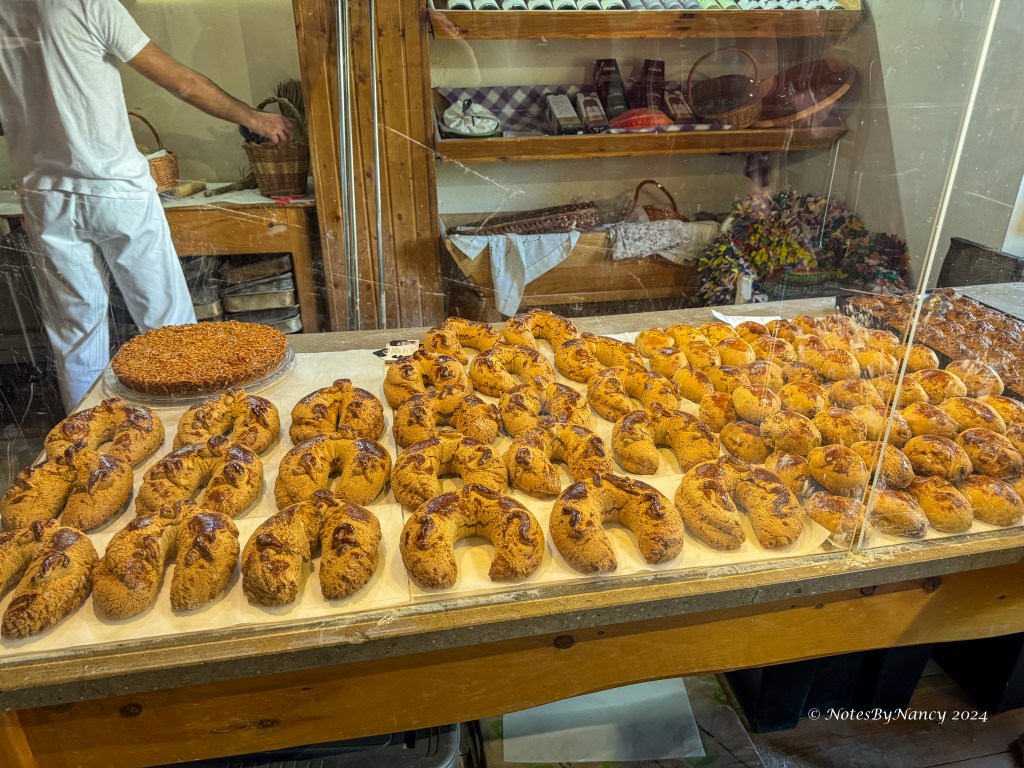
We would have liked to wander around more, but Lisbon was still over an hour’s drive away and we needed to get checked into our apartment rental.
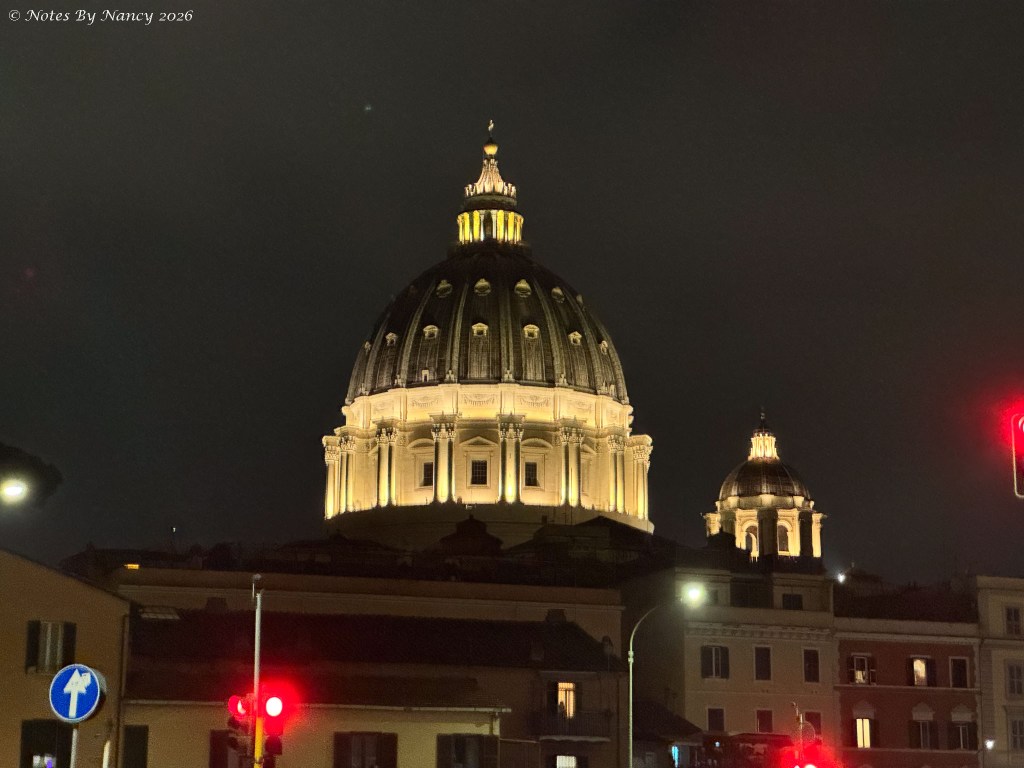
We met back up with Carlos who had dropped us near the Porta da Vila entrance, then parked and waited for us. That really did save us time, allowing us to spend more time with Carla learning about all the places we visited today. We got to experience Lisbon’s evening rush hour and were thankful that Carlos was driving and knew alternate routes to get us quickly to the old part of town where our apartment was located.
The apartment building had a keypad entry to the foyer and the host had provided the code to it as well as the code to a lock box by the door for the apartment key. However, it wasn’t clear which door the lock box was by as there was one by the main entrance, except we couldn’t get it to open. A quick call to the host cleared up our confusion, the lock box she meant was by the apartment door! I don’t know why one of us didn’t go ahead up the stairs (or even the elevator which this building thankfully had) to check – I guess we were all so tired by then! Anyway, Carlos and Carla helped us gather all our luggage and bakery items and get them into the apartment. We agreed on our meeting time with Carla for our walking tour the next morning and said our goodbyes and thanks to Carlos for his excellent driving as we wouldn’t see him again. After only the first day, we decided that our selection of Carla as our guide for multiple days was a fantastic choice!
We were all still full after our late lunch, but we did get into some of our bakery items and wine from Porto that we brought with us for an evening snack, watched some YouTube videos on the big waves at Nazaré, and called it a day!


 Notes By Nancy
Leave a comment